金属交易

Search documents
火爆程度超黄金!市场大举押注:供应短缺撑起牛市,白银、铜新高之后仍是新高
智通财经网· 2025-12-07 23:50
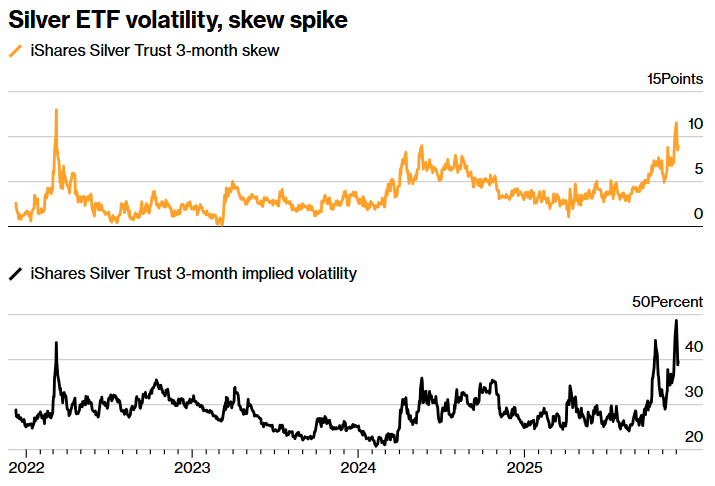
Core Insights - Silver and copper are currently viewed as the most valuable metals for investment, potentially surpassing gold due to supply concerns and increasing demand in electrification and clean energy sectors [1] - As 2026 approaches, the focus of investment is shifting from gold to these industrial metals, indicating a promising trading opportunity [1] - Silver prices have nearly doubled this year, with significant increases occurring in the last two months due to historic supply tightness in the London market and surging demand from India [1][5] - The largest silver ETF, iShares Silver Trust, has seen a significant influx of nearly $1 billion in funds, surpassing the inflow of the largest gold fund, further supporting spot prices [5] Silver Market Dynamics - Silver prices have risen over 11% since October 20, while gold prices have remained stable [5] - The volatility in silver prices has increased, with a notable rise in implied volatility for silver options, reaching the highest level since early 2021 [5][6] - Retail traders are actively participating in the silver futures market, with a surge in trading volume for micro futures contracts [6] - The current silver price is 82% above its five-year average, indicating significant price volatility [6] Copper Market Dynamics - Copper prices have reached historical highs, exceeding $11,600 per ton, with increased volatility in futures contracts [8] - The imposition of tariffs on copper by the U.S. has led to significant changes in copper pricing and trade flows, resulting in record increases in U.S. imports [8][9] - Structural bullish fundamentals for copper suggest limited downside potential for prices, especially amid supply constraints from major mines [8] - The recent decision by the U.S. to reconsider tariffs on primary copper has led to increased transportation of copper materials by traders [8] Global Trade and Supply Concerns - Global trade balance has tightened significantly due to the transfer of raw materials to the U.S., influenced by actual or potential tariffs [9] - The price disparity between U.S. raw materials and global benchmarks has created incentives for materials to remain in the U.S. market [9] - Supply tightness in both precious metals and copper markets is partly attributed to arbitrage trading [9][10]

期铜自历史高位下滑,供应紧张恐慌情绪已开始缓解【12月4日LME收盘】
Wen Hua Cai Jing· 2025-12-05 00:44
12月4日(周四),伦敦金属交易所(LME)铜价周四从历史高位回落,交易商表示,导致本周铜价飙 升的供应紧张恐慌情绪已经开始缓解。 伦敦时间12月4日17:00(北京时间12月5日01:00),三个月期铜收盘下跌37.50美元,或0.33%,报每吨 11,450.00美元,盘中稍早一度触及11,529美元,距离周三创下的每吨11,540美元历史高点仅一步之遥。 LME公布的数据显示,韩国仓库的新净注销量再增50,725吨,此前亚洲地区仓单注销量已于前日突破 50,725吨。 周三LME现货铜合约与三个月合约价差因此一度升至每吨88美元左右,为10月中以来最高,表明市场 对即期金属的需求强劲。周四该溢价回落至62美元左右。 Sucden Financial指出,2025年铜市供需仍维持微弱盈余,但当前任何轻微扰动都可能导致缺口。该经纪 商认为每吨10,830美元是铜价年底前的关键支撑位。 "预计节假日期间流动性将持续恶化。叠加整个金属板块投机参与度居高不下,这将加剧市场出现异常 波动或无序波动的风险,尤其在价差本已收窄的薄弱市场中。" 与此同时,高盛将2026年上半年伦铜均价预测自每吨10,415美元上调至每吨 ...
影响市场重大事件:央行将于2025年12月5日开展10000亿元买断式逆回购操作;OpenAI探讨投资火箭公司与SpaceX展开竞争;“千帆星座”通信在轨业务测试结果符合预期
Mei Ri Jing Ji Xin Wen· 2025-12-05 00:09
每经记者|杨建 每经编辑|彭水萍 |2025年12月5日 星期五| NO.3 "千帆星座"通信在轨业务测试结果符合预期 在12月4日开幕的2025卫星互联网产业生态大会上,垣信卫星CTO李国通透露了"千帆星座"的最新建设 情况。他表示,千帆星座通信在轨业务测试结果符合预期,已全面开展国外应用场景测试,实测业务体 验良好。千帆星座已在马来西亚、蒙古、哈萨克斯坦等国外应用场景开展测试,实测业务体验良好。例 如,与客户在哈萨克斯坦完成4k视频、网页浏览、微信视频通话等业务演示,业务稳定流畅。 NO.4 商务部:加快推进消费新业态、新模式、新场景试点和国际化消费环境建设工作 商务部发言人何亚东在12月4日商务部例行新闻发布会上表示,岁末年初是传统的消费旺季,商务部将 坚持惠民生和促消费紧密结合,扩大优质商品和服务供给,创新消费场景,更好地满足人民美好生活需 要。何亚东介绍,商务部将加快推进消费新业态、新模式、新场景试点和国际化消费环境建设工作,打 造更加舒适便捷的消费环境。同时指导各地打造一批带动面广、显示度高的消费新场景,包括服务消 费、数字消费、绿色消费、人工智能+消费等领域。 NO.5 乘联分会:扩内需增强内循 ...
商品交易巨头火上浇油:Mercuria被爆计划从LME亚洲仓提取超4万吨铜
美股IPO· 2025-12-04 23:43
Core Viewpoint - Mercuria's recent decision to cancel or mark over 40,000 tons of copper delivery from LME warehouses in South Korea and Taiwan reflects a growing demand for physical copper, which may further drive up copper prices amid supply concerns [1][2][4]. Group 1: Market Dynamics - Mercuria's action is expected to increase the premium of spot copper contracts relative to three-month copper futures, indicating heightened demand for physical copper [2]. - The cancellation of warehouse receipts at LME Asian warehouses reached a ten-year high of 50,725 tons, suggesting significant market activity and potential supply shortages [3][4]. - The recent surge in copper prices, with a notable increase of over 30% this year, is largely driven by expectations of supply shortages due to disruptions in major copper-producing countries like Indonesia and Chile [4][5]. Group 2: Supply Chain Implications - The U.S. tariff policies have led to a reorganization of global copper supply, with Mercuria warning of a potential severe shortage in global supply by Q1 of next year [5][8]. - The ongoing disruptions in mining operations, such as those in the Democratic Republic of Congo and the decline in production from Glencore, are exacerbating supply tightness [8]. - The majority of copper in LME warehouses comes from China or Russia, with U.S. import tariffs affecting the flow of copper, yet these supplies can still reach Asian customers [9]. Group 3: Price Forecasts and Market Sentiment - While Mercuria maintains a bullish outlook on copper prices, predicting further increases, Goldman Sachs expresses caution, suggesting that the current price surge may not be sustainable due to adequate global supply [10][11]. - Goldman Sachs forecasts that copper prices will be constrained between $10,000 and $11,000 per ton by 2026, while Mercuria's perspective indicates that current high prices may soon appear low [11][12]. - The market sentiment remains divided, with some analysts predicting a potential oversupply in the coming years, while others highlight the ongoing demand pressures that could sustain higher prices [10][11].

隔夜美股 | 三大指数涨跌不一 Meta(META.US)涨超3.4%
智通财经网· 2025-12-04 22:33
Market Overview - The three major U.S. indices showed mixed results, with the Dow Jones down by 31.96 points (0.07%) closing at 47850.94, the Nasdaq up by 51.04 points (0.22%) at 23505.14, and the S&P 500 up by 7.40 points (0.11%) at 6857.12 [1] - European indices also experienced gains, with the German DAX30 up by 212.58 points (0.90%) at 23895.03, the UK FTSE 100 up by 23.03 points (0.24%) at 9715.10, and the French CAC40 up by 34.61 points (0.43%) at 8122.03 [1] Commodity Prices - Light crude oil futures for January 2026 rose by $0.72 to $59.67 per barrel, a 1.22% increase, while February Brent crude oil futures increased by $0.59 to $63.26 per barrel, a 0.94% rise [2] - Spot gold increased by 0.14% to $4208.73 [4] Cryptocurrency Market - Bitcoin fell by 1.2% to $92310.95, and Ethereum dropped over 1.6% to $3136.99 [3] Macroeconomic Indicators - Initial jobless claims in the U.S. decreased to 191,000, but analysts warn that this figure may be underestimated due to the Thanksgiving holiday [5] - The U.S. Treasury debt surpassed $30 trillion for the first time, with a total of $30.2 trillion in Treasury bills, notes, and bonds, reflecting a doubling since 2018 [6] - The average rate for a 30-year fixed mortgage in the U.S. fell to 6.19%, the lowest since October of the previous year, leading to a 2.5% increase in mortgage applications [6] Company News - Meta Platforms is planning to cut its metaverse budget by up to 30%, indicating a shift in strategy as the anticipated industry competition has not materialized [8] - Apple announced a significant executive reshuffle, with Jennifer Newstead set to become the new General Counsel in March 2026, succeeding Kate Adams [9] - The European Commission is seeking industry feedback on Google's proposed compliance measures to address antitrust concerns related to its advertising technology business, which has faced fines of nearly €3 billion (approximately $3.5 billion) [10]


摩科瑞拟从LME仓库提取逾4万吨铜,加剧供应担忧
Xin Lang Cai Jing· 2025-12-04 22:23
来源:第一财经 知情人士称,因预期供应短缺导致铜价上涨,总部位于瑞士的大宗商品交易商摩科瑞(Mercuria)已发 出通知,计划从伦敦金属交易所(LME)的亚洲仓库提取逾4万吨铜。按当前价格计算,其价值将达到 4.6亿美元。摩科瑞此举有助于提高现货铜合约相对于三个月期铜期货价格的溢价。预期明年铜将出现 短缺的部分原因是印尼和智利的铜矿供应中断,以及需求增长加速,推动LME铜价周三升至每吨11540 美元的纪录高位。 (本文来自第一财经) ...
商品交易巨头火上浇油:Mercuria被爆计划从LME仓库提取超4万吨铜
Hua Er Jie Jian Wen· 2025-12-04 19:18
Group 1 - The recent surge in copper prices is driven by concerns over global supply shortages, particularly due to disruptions in major copper-producing countries like Indonesia and Chile, alongside increasing demand [1][2][4] - Mercuria, a Swiss commodity trading giant, plans to withdraw over 40,000 tons of copper from LME's Asian warehouses, valued at approximately $460 million, which may further exacerbate supply concerns [1][4] - The LME has seen a significant increase in canceled warrants, reaching 50,725 tons, the highest since 2013, indicating heightened demand for physical copper [1][2] Group 2 - The supply tightness is further intensified by production cuts from companies like Ivanhoe Mines and Glencore, with Glencore reducing its output target for next year [3][4] - The uncertainty surrounding U.S. tariffs on copper has led to a surge in imports, with the U.S. copper import volume reaching record highs [4][5] - Analysts are divided on the future of copper prices, with Goldman Sachs expressing caution about the sustainability of the recent price surge, while Mercuria maintains a bullish outlook [5][6]
伦敦金属交易所(LME)三个月期锡涨2.2%,报39895.0美元/吨
Mei Ri Jing Ji Xin Wen· 2025-12-03 10:17
每经AI快讯,12月3日,伦敦金属交易所(LME)三个月期锡涨2.2%,报39895.0美元/吨。 ...
伦敦金属交易所(LME)三个月期铜价格创历史新高,达到每吨11,338美元,最新涨幅1.7%
Mei Ri Jing Ji Xin Wen· 2025-12-03 09:41
每经AI快讯,12月3日,伦敦金属交易所(LME)三个月期铜价格创历史新高,达到每吨11,338美元,最 新涨幅1.7%。 ...
业界大佬:全球铜都在流向美国,这是铜多头“一次大好机会”
美股IPO· 2025-11-30 22:44
Core Viewpoint - The article emphasizes that the influx of copper supply into the U.S. market due to tariff expectations is creating a "must rise" market structure for copper prices, presenting a significant opportunity for copper bulls, while Asian buyers may be forced to accept high premiums to secure supply [1][3]. Group 1: Market Dynamics - The influx of metals into the U.S. market is leading to a risk of further depletion of copper inventories in other regions globally [3]. - The current market structure is characterized by tight supply and rising prices, which is expected to result in higher premiums for Asian buyers [3][5]. - The U.S. is now the largest consumer of copper globally, with significant premiums observed in New York futures prices compared to London benchmarks [5][6]. Group 2: Price Trends and Predictions - The U.S. copper imports are projected to increase significantly in the coming months, with expectations of reaching record levels similar to those seen in Q2 2025 [4]. - The article notes that the current market dynamics, despite existing surpluses, are leading to price increases, indicating a unique situation in the copper market [4]. - There is a potential scenario where U.S. copper prices could rise to $12,000 or $15,000, which would create a supply shortage in China as buyers return from the Spring Festival [7]. Group 3: Premiums and Competition - Traders are currently pushing up premiums for deliverable copper, with some attempting to purchase Chilean copper at premiums exceeding $500 over LME prices [7]. - Codelco, the largest copper producer, has recently set benchmark premiums above $300 per ton for its customers in Korea and China, shocking Asian buyers [7]. - The article suggests that while Chinese buyers are hesitant about high prices now, they are likely to accept them in the near future as supply tightens [7].