低空经济

Search documents
A股三大指数下挫 军工股大回调 AI应用尾盘跳水 贵金属多股创新高,黄金白银下跌
2 1 Shi Ji Jing Ji Bao Dao· 2026-01-13 08:33
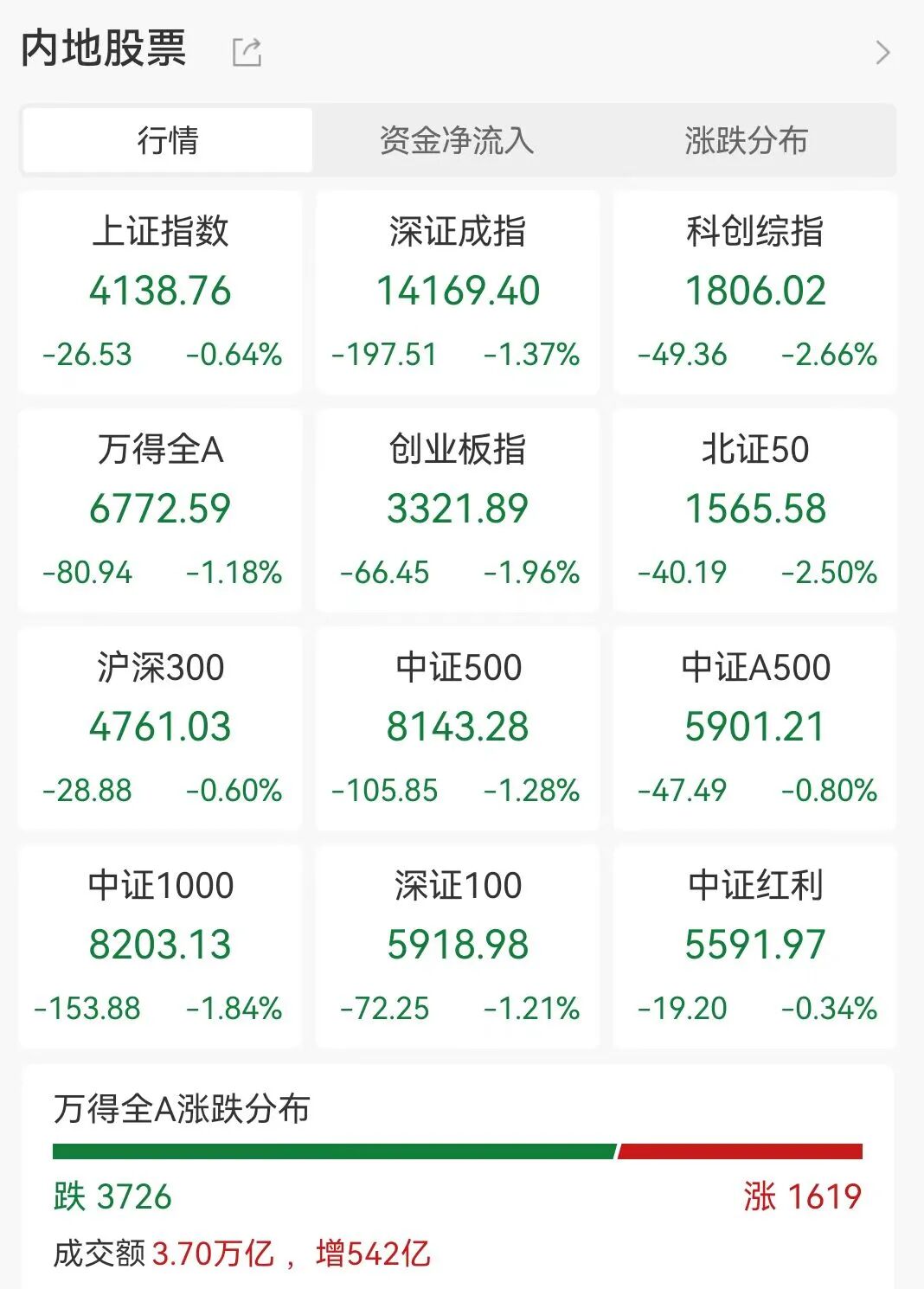
Market Overview - The A-share market experienced a collective pullback on January 13, with the Shanghai Composite Index ending a 17-day winning streak, closing down by 0.64% [1] - The Shenzhen Component Index fell by 1.37%, and the ChiNext Index decreased by 1.96%, with a total trading volume of 3.7 trillion yuan, setting a new historical record [1][2] Sector Performance - Multiple sectors faced significant declines, particularly in commercial aerospace and satellite internet, with nearly 100 stocks dropping over 8% [4] - The large aircraft and military sectors also saw declines, with stocks like Zhongtian Rocket and Leike Defense hitting the daily limit down [4] - The controlled nuclear fusion sector experienced a downturn, with Wangzi New Materials hitting the daily limit down [4] - The communication equipment sector fell, with stocks like Changjiang Communication hitting the daily limit down [4] Stock Movements - Over 1,600 stocks rose, with more than 70 stocks hitting the daily limit up [4] - The commercial aerospace concept stocks suffered heavy losses, with over 60 stocks hitting the daily limit down or dropping more than 10% [4] - Specific stocks such as Aerospace Electronics and Beidou Star Communication saw significant declines, with many military stocks also hitting the daily limit down [6] Investment Insights - The market sentiment has shifted from hesitation to active allocation, driven by a consensus on the current market rally [10] - Investors are advised to avoid speculative risks in popular sectors, particularly in commercial aerospace, and to focus on policy and industry resonance themes such as technological innovation and high-end manufacturing [11] - Key investment areas include sectors with performance support, such as overseas computing power, storage, consumer electronics, and wind energy storage, which still have room for low-cost allocation [10][11]

后年建成全智能工厂
Xin Lang Cai Jing· 2026-01-13 07:26
Core Insights - The Shanghai Municipal Government has released the "Three-Year Action Plan to Support the Transformation and Upgrading of Advanced Manufacturing (2026-2028)", aiming to build a modern industrial system centered on advanced manufacturing [1] - The plan targets the addition of 100 manufacturing enterprises with an annual output value exceeding 1 billion yuan by 2028, bringing the total to over 600 [1] - The initiative aims to drive the addition of 500 industrial enterprises above designated size in the supply chain and significantly increase the proportion of R&D expenses in revenue for manufacturing enterprises [1] Group 1: Structural Upgrading - The plan emphasizes a multi-dimensional industrial upgrade matrix, accelerating iterations in traditional advantageous industries [1] - Specific strategies include petrochemical companies shifting towards new functional materials, steel companies enhancing specialty steel production, and light industry companies creating trendy domestic products [1] - Leading industries will focus on breakthroughs in the integrated circuit industry chain, biomedicine innovation, and intelligent computing chip development, fostering international leading enterprises [1] Group 2: Emerging Industries - The plan promotes simultaneous development of key and emerging industries, including the growth of six major sectors such as next-generation electronic information and smart connected new energy vehicles [1] - New fields like low-altitude economy and commercial aerospace will be explored, with a focus on scaling products like eVTOL and humanoid robots [1] Group 3: Innovation and Incentives - The plan introduces significant incentive policies for core technology breakthroughs, focusing on frontier technologies such as laser manufacturing and quantum technology [2] - Key links in the industrial chain, including integrated circuits and large aircraft, will be prioritized for technological advancements [2] Group 4: Digital and Green Transformation - The "Action for Upgrading Capability and Quality" outlines a transformation path, implementing "AI + Manufacturing" initiatives for digital transformation [2] - By 2027, large enterprises are expected to achieve full coverage of digital applications, with the goal of establishing fully intelligent factories by 2028, achieving a robot density of 600 units per 10,000 people [2] - In terms of green transformation, the plan aims to add over 100 national-level green factories [2]
江苏:加强低空智能飞行控制与管理开发,攻克空地协同一体化管控技术
Jin Rong Jie· 2026-01-13 07:23
江苏省政府发布关于印发江苏省" 人工智能+"行动方案的通知,其中提到,强化 低空经济创新应用。加 强低空智能飞行控制与管理开发,攻克空地协同一体化管控技术。持续深化国土空间基础信息平台建设 与应用,提供实景三维及时型低空数字服务,积极探索大模型在低空运营管理服务中的应用,逐步完善 智能巡检监控、智能 物流配送等服务,拓展 农业植保、低空文旅、应急救援等场景应用,加强空域数 字栅格、多源数据融合等新技术应用。 ...
今年工业经济发展形势如何?将采取哪些措施保增长?访工信部部长
Xin Lang Cai Jing· 2026-01-13 06:22
Core Viewpoint - The construction of a modern industrial system in China is being accelerated, focusing on the integration of technological and industrial innovation to enhance international competitiveness [1] Group 1: Industrial Economic Development - The industrial economy in China is expected to maintain stability and growth, with a focus on four key areas: stability, expansion, innovation, and enhancement [2] - Stability involves supporting key industries and regions that account for 80% of industrial output, implementing growth plans, and ensuring policy support [2] - Expansion focuses on increasing effective demand through flexible manufacturing and promoting new technologies, while also initiating major engineering projects [2] - Innovation aims to enhance value creation by upgrading traditional industries and developing emerging sectors, such as integrated circuits and aerospace [3] - Enhancement emphasizes improving the vitality of enterprises, particularly small and medium-sized ones, by reducing burdens and ensuring timely payments [3] Group 2: Manufacturing Development - The focus during the "14th Five-Year Plan" period will be on intelligent, green, and integrated development of manufacturing, ensuring supply chain security and stability [4] - Traditional industries will undergo renewal through the implementation of targeted upgrade plans and the adoption of smart and green technologies [4] - Emerging industries will be promoted through the establishment of demonstration bases and large-scale application of new technologies [5] - Future industries will be strategically developed, focusing on areas like quantum technology and 6G, with an emphasis on innovation and ecosystem building [5] Group 3: Technological Innovation - The integration of technological and industrial innovation is prioritized to enhance productivity and secure a competitive edge in global markets [6] - High-quality technological supply will be increased through national projects and collaboration between enterprises and research institutions [6] - The role of enterprises in technological innovation will be strengthened, with policies to support R&D investments and enhance participation in major projects [7] Group 4: Digital Transformation - The promotion of digital transformation in manufacturing will be driven by the large-scale application of industrial internet and artificial intelligence [8] - A strong digital foundation will be established by focusing on high-quality data collection and usage, particularly in key manufacturing sectors [8] - The development of industrial internet platforms and smart solutions will be prioritized to enhance connectivity and application in various industries [9]
张晓兰:低空经济加速起飞
Jing Ji Ri Bao· 2026-01-13 00:22
Core Insights - The low-altitude economy in China is experiencing rapid development driven by policy incentives, technological advancements, and diverse application scenarios, positioning it as a core sector for cultivating new productive forces and creating a trillion-yuan emerging industry [1] Policy Framework - The policy framework for the low-altitude economy is continuously improving, with the sector being included in the government work reports for two consecutive years. The 20th National Congress has emphasized accelerating the development of strategic emerging industries, including the low-altitude economy [1] - By 2025, the top-level design for the low-altitude economy will be further implemented, with various departments issuing specific policies for airspace management and scenario promotion, providing a clear path for industry development [1] Technological Breakthroughs - By 2025, significant breakthroughs in core technologies for low-altitude equipment are expected, including the successful first flight of the domestically developed 800 kg electric vertical take-off and landing aircraft AR-E800 and the EH216-S, which is the world's first manned electric vertical take-off and landing aircraft to receive a type certificate [2] - Innovations are focusing on safety and efficiency, with continuous upgrades in battery energy density enhancing endurance, and the integration of AI and laser radar with low-altitude safety management [2] Application Scenarios - Since 2025, application scenarios for low-altitude operations have been diversifying, extending from urban aerial delivery and scenic tours to logistics in mountainous areas, emergency rescue, and public services, showcasing the "low-altitude +" integration effect [2] - Efficiency improvements in agricultural and forestry protection and power inspection drone operations are reported to be 3 to 5 times better than traditional methods, with urban low-altitude logistics achieving minute-level delivery of fresh produce and medicines [2] Infrastructure Development - The low-altitude infrastructure network is rapidly forming a three-dimensional support system, promoting the low-altitude economy as a significant growth driver. Initiatives include the construction of smart drone nests and low-altitude communication networks, along with the establishment of unified low-altitude aeronautical charts and technical standards [3] - Data-sharing mechanisms are being improved to provide a reliable support system for low-altitude flights, addressing hardware bottlenecks in industry development [3] Future Outlook - By 2026, the low-altitude economy is expected to enter a phase of scaled high-quality development, with policies shifting from comprehensive layout to precise empowerment, focusing on airspace management, safety supervision, and standardization [4] - Core technologies are anticipated to advance towards higher safety, longer endurance, and greater intelligence, with significant digital empowerment and accelerated integration of AI and low-altitude technologies [4] - The collaboration within the industry chain is expected to strengthen, creating a closed-loop ecosystem from technology research and development to product manufacturing and application scenarios [4]
信心的种子,不怕任何冬寒(评论员观察)
Ren Min Ri Bao· 2026-01-12 23:21
Group 1 - The core message emphasizes the importance of confidence in driving economic growth and innovation, highlighting the need for determination and practical efforts to overcome challenges [1][3][4] - By June 2025, the number of internet users aged 60 and above in China is projected to reach 161 million, indicating significant growth potential in the silver economy and digital economy [1] - As of November 2025, a total of 611 generative AI services have been registered, with 306 applications or features documented, showcasing the rapid development and application of domestic AI models [1] Group 2 - China's economy is undergoing a profound transformation, shifting from reliance on factor input and scale expansion to a new production capacity that drives quality, efficiency, and dynamic changes [2] - The potential of China's economy is being continuously released through regional coordinated development, rural revitalization, and the enhancement of human capital quality [2] - The unique ecosystem formed by China's super-large market allows innovations to quickly achieve scale effects once they gain market acceptance, as evidenced by the rise of new energy vehicles and live-streaming commerce [2]
2025低空经济产业商业秘密保护工作指引-深圳市市场监督管理局
Sou Hu Cai Jing· 2026-01-12 18:05
Overview - The low-altitude economy is a comprehensive economic form driven by low-altitude flying activities, covering the entire industry chain. Shenzhen is a global hub for the low-altitude economy, with over 1,900 related enterprises and an expected output value exceeding 90 billion yuan in 2024 [1][15]. Importance of Commercial Secret Protection - The protection of commercial secrets is crucial as they represent the core competitiveness of innovative entities in the low-altitude economy. These secrets include drone technology, flight algorithms, business models, and operational data, which are vital for maintaining technological leadership and market competitiveness [16][17]. Characteristics of Commercial Secrets - The commercial secrets in the low-altitude economy are characterized by high technology, scenario dependence, timeliness, full-chain coverage, sensitivity, and military-civilian integration. These characteristics necessitate a robust protection mechanism to safeguard sensitive data and ensure compliance with regulatory requirements [18][19]. Guidelines for Commercial Secret Management - The guidelines provide a comprehensive framework for identifying, managing, and protecting commercial secrets, including processes for collection, identification, approval, classification, and destruction. It emphasizes the establishment of a detailed commercial secret inventory and a robust management system [20][23][49]. Protection and Enforcement Mechanisms - Various enforcement mechanisms are outlined, including administrative, civil, criminal, and arbitration routes. Each route has specific advantages, such as lower thresholds for administrative actions and potential punitive damages in civil cases [3][4]. Public Service Resources - Shenzhen offers three types of public services: guidance on building commercial secret management systems, free online risk assessments for commercial secret management, and one-on-one services for foreign commercial secret protection. These services aim to help enterprises implement targeted protection strategies [4][6].

我市新增20家院士(专家)创新工作站
Xin Lang Cai Jing· 2026-01-12 18:00
转自:成都日报锦观 我市新增20家院士(专家)创新工作站 覆盖人工智能、新材料、生物医药、低空经济等领域 1月12日,记者从市科协获悉,2025年成都市院士(专家)创新工作站新增20家,全市累计建站达300 家,五年来柔性引进两院院士(团队)等高层次专家171名。 记者梳理发现,新建的20家工作站签约了包括中国工程院院士邓龙江在内的31名院士(专家),开展合 作项目33项。值得注意的是,此次新增工作站签约的院士(专家)不少来自省外高校和科研机构。其 中,中国科学院院士刘昌明、郭柏灵分别来自中国科学院地理科学与资源研究所、北京应用物理与计算 数学研究所,还有来自华中科技大学、重庆大学等高校院所的院士(专家)。 据了解,2025年度经批准新建的成都市院士(专家)创新工作站,给予每家25万元的一次性资助。"我 们将持续优化院士(专家)创新工作站服务体系,引导产业园区、科技企业深化与院士(专家)团队的 创新合作,聚焦产业关键技术攻关和产品研发,不断提升企业自主创新能力,加速推进'科产融 合'。"市科协相关负责人告诉记者。 全市累计建站300家 近年来,成都不断优化院士(专家)创新工作站服务体系,依托工作站为产业园区、 ...
开局“十五五” 实干启新程
Xin Lang Cai Jing· 2026-01-12 16:57
Core Viewpoint - The article emphasizes the importance of expanding domestic demand and stabilizing growth as a fundamental strategy for China's economic development, highlighting the collaborative efforts of various provinces to enhance investment and consumption, thereby laying a solid foundation for the "14th Five-Year Plan" period [4][13]. Investment and Consumption - Domestic demand is identified as the primary driving force for economic growth, with a focus on expanding effective investment and releasing consumption potential [4]. - Provinces are actively pursuing major project construction, with Hunan Province planning 2,676 central investment and provincial key construction projects, achieving over 530 billion yuan in cumulative investment by 2025 [5]. - By 2026, various regions aim to stabilize and enhance investment quality, with Hunan proposing a "project planning" initiative to accelerate the construction of key infrastructure projects [5][6]. Consumer Market Development - The article discusses the optimization of consumption policies, with provinces like Jiangsu focusing on expanding service consumption and promoting new consumption hotspots such as the silver economy and AI-driven consumption [6]. - Hunan is set to implement policies to promote service consumption and enhance the effectiveness of consumption upgrade initiatives [6][7]. Private Investment - Private investment is highlighted as a crucial support for growth and employment, with provinces like Fujian and Zhejiang implementing reforms to create a favorable environment for private enterprises [7]. - By 2026, regions will enhance policy incentives to stimulate private investment, focusing on reducing entry barriers and operational costs for private enterprises [7][8]. Technological Innovation and Industry Upgrade - The cultivation of new productive forces through technological innovation is emphasized as a key support for high-quality development [8]. - Provinces are encouraged to balance traditional industry upgrades with the development of emerging industries, with initiatives in places like Hunan and Jiangsu focusing on AI and digital economy advancements [9][10]. Regional Coordination and Collaboration - The article underscores the importance of regional cooperation in driving industrial upgrades, with various regions collaborating on emerging industry chains [11]. - Efforts to facilitate the flow of resources and promote open cooperation are highlighted, with provinces like Fujian and Yunnan working on cross-regional resource optimization and trade partnerships [12]. Conclusion - The development blueprint outlined by various provinces aligns with national strategic deployments while showcasing regional strengths, aiming to contribute significantly to China's modernization efforts by 2026 [13].

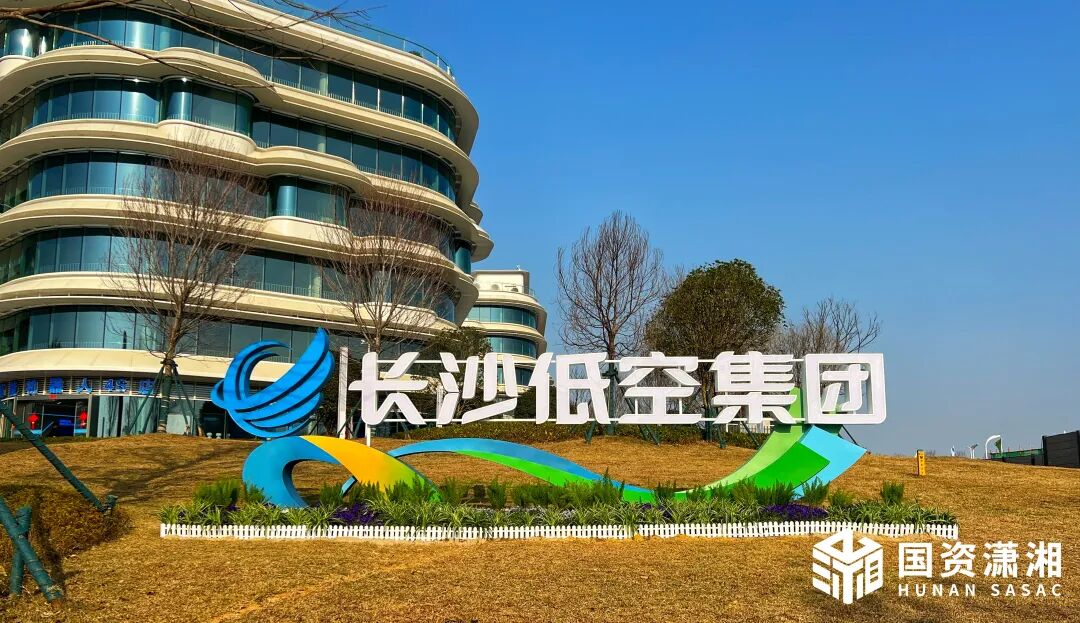
长沙低空集团正式亮相!欲造“低空之城”
Xin Lang Cai Jing· 2026-01-12 12:28
Core Viewpoint - The establishment of Changsha Low Altitude Economic Development Group marks a significant step in the development of low-altitude economy in Hunan, positioning it as a key player in this emerging industry [1][10]. Group 1: Company Formation and Structure - Changsha Low Altitude Group was formed by four state-owned enterprises in Changsha with a registered capital of 200 million yuan, where Changsha Jiao Investment Group holds 85% of the shares [3][12]. - The group aims to integrate the professional advantages of its shareholders, focusing on low-altitude infrastructure construction, operational services, and industry cultivation [4][13]. Group 2: Strategic Importance of Low Altitude Economy - The low-altitude economy is recognized as a strategic emerging industry, essential for fostering new productive forces and driving economic transformation [3][12]. - Hunan has been designated as the first province in China for comprehensive low-altitude airspace management reform, achieving 12 pioneering reform results [3][12]. Group 3: Market Potential and Growth Projections - By 2035, the market size for aerospace and low-altitude economy in China is expected to exceed 10 trillion yuan and 3.5 trillion yuan, respectively, indicating a vast development potential in the low-altitude economy [6][15]. - The low-altitude industry in Changsha is projected to surpass 10 billion yuan by 2024, accounting for two-thirds of the province's total [6][15]. Group 4: Infrastructure and Ecosystem Development - Changsha is developing a comprehensive low-altitude ecosystem, including the establishment of a low-altitude flight service platform and a network of take-off and landing points [4][18]. - The city has signed strategic cooperation agreements with leading enterprises and financial institutions to enhance technology, scene construction, and data sharing [9][18]. Group 5: Future Goals and Applications - The city aims to create a "Low Altitude City" that covers the entire low-altitude field, leveraging its strengths in engineering machinery, artificial intelligence, and navigation technology [7][16]. - By 2030, the low-altitude economy in Changsha is expected to exceed 100 billion yuan, with applications in tourism, logistics, emergency rescue, and urban governance [7][16].