
农业种植

Search documents
云南宸鑫科农业发展有限公司成立 注册资本200万人民币
Sou Hu Cai Jing· 2025-10-23 11:40
Group 1 - Yunnan Chenxin Agricultural Development Co., Ltd. has been established with a registered capital of 2 million RMB [1] - The legal representative of the company is Qiu Zhengmei [1] - The business scope includes rubber crop planting, rubber product manufacturing, and sales, as well as chemical product sales (excluding licensed chemical products) [1] Group 2 - The company is also involved in general cargo warehousing services (excluding hazardous chemicals), import and export of goods, domestic cargo transportation agency, and handling services [1] - The company operates under the principle of conducting business activities independently with its business license, except for projects that require approval [1]
马明龙调研秋收秋种和秸秆禁烧工作时强调 强化服务保障确保秋收秋种有序推进 加强秸秆综合利用实现生态经济效益双赢
Zhen Jiang Ri Bao· 2025-10-22 23:56
Core Insights - The article emphasizes the importance of ensuring food security and promoting green development through effective management of autumn harvest and sowing, as well as the comprehensive utilization of straw [1][2]. Group 1: Agricultural Practices - The local government is focusing on the timely collection and utilization of straw, which is being mixed with livestock manure to produce organic fertilizers, enhancing agricultural productivity [2]. - The rice harvest this year is reported to be better than last year, indicating positive agricultural performance [1]. Group 2: Equipment and Services - The Xuannong Agricultural Machinery Cooperative has 12 drying units with an annual drying capacity exceeding 3,500 tons, providing essential services to local rice farmers [1]. - The local government encourages the use of new drying equipment to improve service for surrounding farmers [1]. Group 3: Policy and Community Engagement - There is a strong emphasis on increasing public awareness of straw burning bans and promoting sustainable practices that benefit both the economy and the environment [2]. - The government is urged to enhance responsibility and urgency among departments to ensure effective support for the autumn harvest and sowing processes [2].
“十四五”时期乡村交通物流条件持续改善 路通了、货畅了,农民“钱袋子”更鼓了
Zhong Guo Qing Nian Bao· 2025-10-22 23:51
Core Insights - The development of rural roads in China has significantly improved logistics and transportation, facilitating the delivery of agricultural products and enhancing rural economies [1][2][5] - The integration of logistics services with rural transportation networks has reduced costs and improved efficiency, allowing farmers to access broader markets [6][7][8] Infrastructure Development - As of now, rural roads in China exceed 4.64 million kilometers, with a high percentage of towns and villages connected by hardened roads, enhancing accessibility for farmers [2][3] - The "14th Five-Year Plan" emphasizes the expansion of infrastructure, including water, electricity, and communication, to rural areas, which supports the growth of logistics networks [1][2] Economic Impact - The rural logistics network has enabled farmers to sell products like winter jujubes more efficiently, with the industry generating over 6 billion yuan in 2024 and increasing farmers' incomes [6][7] - The integration of logistics services has led to a significant reduction in delivery costs, with some areas reporting a decrease of over 40% in transportation expenses [6][7] Tourism and Local Development - Improved transportation infrastructure has boosted rural tourism, with events attracting thousands of visitors and generating additional income for local communities [3][4] - Villages are leveraging their unique cultural and natural resources to develop tourism, creating new revenue streams for residents [4][5] Technological Advancements - The adoption of AI and automation in logistics is enhancing efficiency in delivery services, with innovations like unmanned vehicles being tested in remote areas [8][9] - The integration of postal services with local transportation has streamlined logistics, allowing for faster and more reliable delivery of goods [5][6]
大北农(002385.SZ):第三季度拟每10股派发现金红利0.3元
Ge Long Hui A P P· 2025-10-22 12:45
Core Viewpoint - Dabeinong (002385.SZ) announced a profit distribution plan for Q3 2025, proposing a cash dividend of 0.3 yuan per 10 shares to all shareholders, totaling approximately 128.41 million yuan [1] Summary by Relevant Sections - **Profit Distribution Plan** - The company plans to distribute a cash dividend of 0.3 yuan per 10 shares, which includes tax [1] - The total cash dividend distribution is expected to be 128,411,158.95 yuan (including tax) [1] - **Share Capital Details** - The distribution is based on a total share capital of 4,300,078,565 shares, after deducting 19,706,600 shares repurchased through centralized bidding [1] - The adjusted share capital for the dividend calculation is 4,280,371,965 shares [1] - **Future Profit Allocation** - The company will not conduct capital reserve transfers to increase share capital or issue bonus shares in this distribution [1] - Any remaining undistributed profits will be carried forward to future periods [1]

特朗普下周访日“催投资”,高市早苗拟定一篮子采购计划讨好
Jin Shi Shu Ju· 2025-10-22 09:28
Group 1: Core Insights - Japan's new Prime Minister, Sanae Takaichi, is finalizing a procurement plan that includes American pickup trucks, soybeans, and natural gas, to be presented during the upcoming trade and security talks with President Trump [1] - Takaichi emphasized that the alliance with the U.S. is fundamental to Japan's foreign and security policy, despite not committing to new defense spending targets during the meeting [1][3] - The procurement plan may involve reducing soybean imports from Brazil to increase purchases from the U.S., which already accounts for 70% of Japan's soybean consumption [1] Group 2: Defense Spending and Investments - Japan plans to purchase more U.S. liquefied natural gas (LNG) but will not engage in the Alaskan pipeline project promoted by Trump [3] - A list of candidate investment projects under a $550 billion agreement will be submitted for review before final selection by Trump [3] - Takaichi aims to accelerate defense spending beyond the 2% GDP target set for 2027, indicating a commitment to enhancing Japan's military capabilities [4]
广西壮族自治区防城港市港口区:以金融改革创新破题 全力推动乡村振兴产业发展提速增效
Zhong Guo Fa Zhan Wang· 2025-10-22 07:41
Core Insights - Guangxi Zhuang Autonomous Region's Fangchenggang City is focusing on rural revitalization through financial reforms, addressing issues like financing difficulties and weak services in rural areas [1][2] Group 1: Financial Services Network - The port area has established a comprehensive financial service network, achieving 100% coverage of 17 administrative villages with "Three Rural Financial Service Rooms" [1] - 34 village-level inclusive financial service stations have been upgraded, allowing farmers to access convenient financial services without leaving their villages [1] - The integration of 28 functions, including social security payment and anti-money laundering monitoring, has led to the creation of specialized service stations [1] Group 2: Innovative Credit Service Models - A "village committee recommendation loan" model has been created, simplifying the loan process through recommendations from village leaders [2] - The area has issued over 700 "village committee recommendation loans" totaling 60 million yuan, with products like "Industry Enriching Farmers Loan" exceeding 25 million yuan [2] - The use of big data technology has facilitated the development of tailored financial products for agricultural sectors [2] Group 3: Financial and Industrial Integration - The "pepper economy" initiative has led to the establishment of an investment company involving 17 administrative villages, with land being used as equity [2] - Financial support from companies has reached 1.2 million yuan for pepper cultivation, with projected annual production of 3 million bottles of pickled peppers generating 36 million yuan in revenue [2] - Over 500 villagers are expected to benefit from local employment opportunities, with daily earnings of 120 yuan [2] Group 4: Technological Empowerment - A "Technology Assisting Agriculture" initiative has been launched to support high-tech aquaculture, with 6 million yuan in funding provided since 2023 [3] - The region has attracted 8 new aquaculture enterprises, establishing over 550 land-based round tanks and 40 breeding pools [3] - The projected annual output of shrimp is over 2,330 tons, with a value exceeding 100 million yuan, contributing to the development of a "blue granary" [3]
特朗普没料到,刚给中国“下战书”,加拿大就在背后狠捅自己一刀
Sou Hu Cai Jing· 2025-10-22 07:09
Group 1 - Trump's plan to impose a 100% tariff on all Chinese goods starting November 1 is part of a broader trade war strategy that has escalated since he took office, with previous tariffs increasing from 84% to 125% [4] - The proposed tariffs could create a significant barrier to trade between the US and China, potentially leading to trade stagnation and disruption [4][10] - The immediate reaction in the US stock market was severe, with major indices like the Dow Jones and Nasdaq experiencing significant declines, particularly in the semiconductor sector [6] Group 2 - Canada's economic ties to the US mean that any trade policy changes in the US will have direct repercussions on Canada, which has historically faced challenges during US trade conflicts [7][11] - Canada exports approximately 5 billion Canadian dollars worth of canola to China annually, making it a critical revenue source that is difficult to replace [7] - The potential agreement between China and Australia regarding canola could threaten Canada's market share, prompting Canadian officials to seek to repair trade relations with China [9][12] Group 3 - Canada's foreign policy is shifting towards prioritizing its own interests in relations with China, moving away from a historical pattern of following US actions [10][14] - The Canadian government is attempting to diversify its international strategy by maintaining cooperation with the US while also engaging with other countries [11][12] - This strategic adjustment reflects a broader trend where countries reassess their alliances and trade relationships in light of changing economic pressures [14]


全链条服务 为农业发展带来“金融良方”
Qi Huo Ri Bao Wang· 2025-10-22 01:33
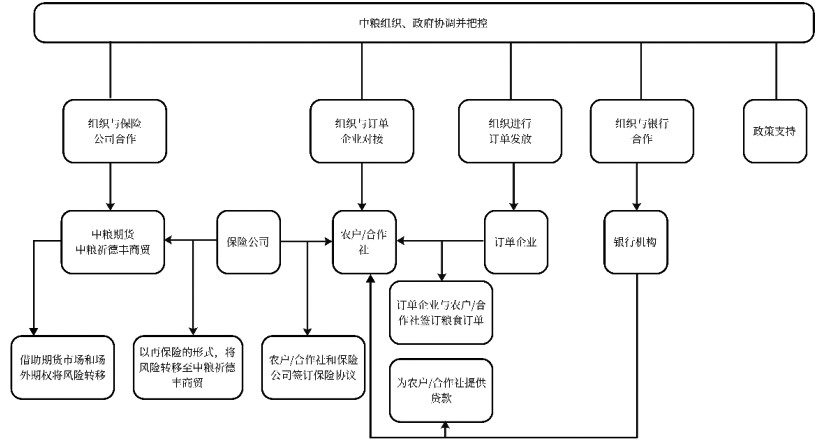
Group 1: Project Background and Importance - The stability and reliability of grain supply are crucial for reducing external uncertainties and ensuring national security and development interests [1] - China's agricultural production capacity has been continuously enhanced, but challenges remain in the grain supply chain due to issues like land non-agriculturalization and international market volatility [1] Group 2: Soybean Revitalization Plan - Soybeans are a significant crop in China, with a long-standing low self-sufficiency rate leading to heavy reliance on imports [2] - The Soybean Revitalization Plan aims to increase domestic production and self-sufficiency through policy support and technological innovation, with two rounds of implementation since 2002 [2] Group 3: Agricultural Cooperation and Financial Innovation - In Heilongjiang Province, the establishment of agricultural cooperatives and modern agricultural practices is encouraged to enhance soybean production [3] - COFCO Futures has developed an innovative financial service model to address risks faced by farmers, ensuring income stability and increasing planting enthusiasm [4] Group 4: Financial Solutions and Risk Management - The "order + insurance + futures + credit" model has been implemented to provide comprehensive risk management for agricultural producers, covering over 400,000 acres of soybeans with an insurance amount exceeding 200 million yuan [4] - The project has facilitated low-interest loans totaling over 63 million yuan for insured cooperative farmers, enhancing the financial support for soybean production [4][6] Group 5: Technological Integration and Data Utilization - The integration of satellite remote sensing technology has been utilized to collect data on crop growth and yield, aiding in the design of suitable insurance products for farmers [5] - The project employs an AI and satellite remote sensing platform to monitor crop conditions and assess risks, ensuring the project's stability [5] Group 6: Closing the Financial Loop - Collaboration between COFCO Futures, banks, and insurance companies has created a closed-loop financial system that addresses the timing discrepancies between loan disbursement and insurance issuance [7][8] - The project has established a unified collection and storage system for insured crops, ensuring timely payments to farmers based on verified yields [8] Group 7: Enhancing Market Access and Sales - COFCO's trading arm provides various purchasing options to solve the selling difficulties faced by farmers, ensuring stable income through guaranteed purchase contracts [9][12] - The introduction of an IP soybean certification system aims to improve the quality and yield of soybeans, promoting order-based agriculture [11] Group 8: Overall Impact and Future Prospects - The project has successfully addressed the needs of agricultural producers, reducing risks and burdens across various production stages, thereby increasing soybean planting enthusiasm [14] - The innovative model serves as a reference for national policy design and the long-term promotion of financial services in agriculture, contributing to rural revitalization [15][16]
贸易反噬!中国拒买美国大豆后,美国农民巨亏450亿美元?
Sou Hu Cai Jing· 2025-10-21 16:50
Core Insights - The article discusses the severe crisis faced by American farmers due to the trade war with China, which has led to a significant drop in soybean prices and a loss of market access [1][3][33] Group 1: Impact of Trade War - American farmers once relied heavily on China as a major buyer, with over 30% of U.S. soybean exports going to China [5] - By 2025, U.S. soybean orders from China are expected to drop to zero, leaving farmers with unsold crops [7] - The trade war has resulted in a 40% price drop for soybeans, causing substantial financial losses for farmers [9][18] Group 2: Financial Consequences - Estimated losses for American farmers have reached approximately $45 billion [11] - Many farmers are facing losses of $100 to $200 per acre, marking the third consecutive year of negative returns [13] - High loan interest rates are exacerbating the financial strain, with agricultural debt projected to reach a ten-year high by 2025 [16] Group 3: Capital Exploitation - The crisis has created opportunities for capital investors, who are acquiring distressed farmland at low prices [22][30] - A notable example includes a capital firm co-founded by the U.S. Vice President, which invests in bankrupt farms [26] - This pattern mirrors past real estate crises, where capital benefits from market downturns by purchasing undervalued assets [28] Group 4: Long-term Outlook - The article suggests that even if the trade war ends, regaining trust and market share in China will be challenging for American farmers [14][33] - The shift in supply chains has allowed Brazil to become the largest supplier of soybeans to China, further diminishing U.S. farmers' prospects [11][33]

“土特产”新气象︱从土特产到金招牌,邮储银行金融赋能常山胡柚产业升级
Xin Lang Cai Jing· 2025-10-21 10:33
Core Insights - The article highlights the successful development of the Changshan pomelo industry in Zhejiang Province, which has reached a scale of over 1.18 million mu and is now part of the 10 billion yuan local specialty product industry chain in Zhejiang [1][2] - The growth of the pomelo industry is significantly supported by innovative financial services from Postal Savings Bank, which has introduced products like "Youyou Loan" to alleviate financing difficulties for agricultural operators [1][2] Financial Support and Innovation - Postal Savings Bank has provided credit support to 318 new agricultural operators in Changshan County, with a total loan balance of 77.7045 million yuan for the "Youyou Loan" program, effectively facilitating financial access for farmers [2] - The bank has also tailored financial service solutions for specific projects, such as a 10 million yuan science and technology credit loan for the construction of the Pomelo Cultural and Tourism Integration Industrial Park [2][3] Industry Growth and Diversification - The Changshan pomelo is evolving from a fresh fruit into various products, including beverages, food ingredients, and cosmetics, aiming for a target of becoming a 10 billion yuan industry [2][3] - The article emphasizes the collaboration between Postal Savings Bank, local government, and agricultural entities in driving the transformation of local specialties into a thriving industry, showcasing the practical implementation of rural revitalization strategies [3]
