
半导体

Search documents
英伟达新平台拉动机柜需求 机壳厂商订单爆满
Jing Ji Ri Bao· 2026-03-22 22:59
Core Insights - The demand for cabinets is expected to triple due to the upcoming release of NVIDIA's Vera Rubin platform, leading to a surge in competition among companies for cabinet resources [1][2] - The new platform requires significantly more power and cooling solutions, necessitating the addition of two to three cabinets as standard, compared to the previous single cabinet requirement [1][2] - The increased demand for cabinets is anticipated to benefit domestic suppliers such as Qincheng, JPP-KY, and Shengming Electric, with orders expected to multiply [1][3] Group 1 - The Vera Rubin platform's single cabinet power consumption is projected to reach 600 kW, which traditional Sidecar configurations cannot support, thus increasing the number of required cabinets [2] - The shift from AC to DC power supply systems in the Vera Rubin series has led to a higher demand for power layers and efficient busbars, necessitating independent Sidecar units [2] - The cooling design has transitioned to a fully liquid-cooled system, requiring additional Sidecar units for heat exchange, further driving up cabinet demand [2] Group 2 - The design and production of Sidecar units involve lengthy processes, including design, validation, stamping, and mass production, which limits capacity [3] - As the Vera Rubin series is set to launch in the second half of the year, major cloud service providers and manufacturers are already engaged in a competitive race for cabinet resources [3] - The increased complexity and specifications of Sidecar units are expected to positively impact the profit margins of cabinet manufacturers [2]

傅里叶(03625) - 全球发售
2026-03-22 22:15
Shanghai FourSemi Semiconductor Co., Ltd. 上海傅里葉半導體股份有限公司 (於中華人民共和國註冊成立的股份有限公司) 股份代號:3625 全球發售 聯席保薦人、聯席保薦人兼整體協調人、聯席全球協調人、 聯席賬簿管理人及聯席牽頭經辦人 上海傅里葉半導體股份有限公司 Shanghai FourSemi Semiconductor Co., Ltd. Shanghai FourSemi Semiconductor Co., Ltd. 上海傅里葉半導體股份有限公司 重要提示 重要提示: 閣下如對本招股章程任何內容存有任何疑問,應諮詢獨立專業意見。 Shanghai FourSemi Semiconductor Co., Ltd. 上海傅里葉半導體股份有限公司 (於中華人民共和國註冊成立的股份有限公司) 全球發售 全球發售項下發售股份數目 : 12,000,000股H股(視乎超額配股權行使與否而定) 香港發售股份數目 : 600,000股H股(可予重新分配) 國際發售股份數目 : 11,400,000股H股(可予重新分配及視乎超額 配股權行使與否而定) 最高發售價 : 每股H股5 ...
傅里叶(03625) - 全球发售
2026-03-22 22:04
香港交易及結算所有限公司、香港聯合交易所有限公司(「香港聯交所」)及香港中央結算有限 公司(「香港結算」)對本公告的內容概不負責,對其準確性或完整性亦不發表任何聲明,並明 確表示概不就因本公告全部或任何部分內容而產生或因依賴該等內容而引致的任何損失承 擔任何責任。 除本公告另有界定者外,本公告所用詞彙與上海傅里葉半導體股份有限公司(「本公司」)於 2026年3月23日刊發的招股章程(「招股章程」)所界定者具有相同涵義。 本公告僅供參考,並不構成任何人士收購、購買或認購本公司任何證券的要約或誘使訂立的 要約邀請。本公告並非招股章程。潛在投資者在決定是否投資發售股份前,應閱讀招股章程 以了解下文所述全球發售的詳細資料。任何有關發售股份的投資決定,務須僅依賴招股章程 所載的資料作出。 本公告不構成出售要約或購買要約的招攬,而在任何作出有關要約、招攬或出售即屬違法的 司法權區內,概不得出售發售股份。本公告不得在美國或任何其他禁止派發的司法權區內直 接或間接發佈、刊發或派發。本公告亦不構成在美國或任何其他司法權區出售、購買或認購 證券的要約或招攬。發售股份並無亦不會根據1933年美國證券法(經不時修訂)(「美國證券法」 ...
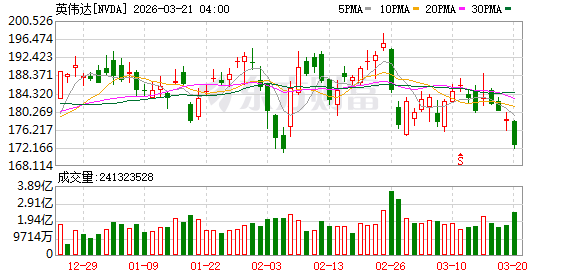
英伟达AI算力预判带来的启示
Zheng Quan Ri Bao· 2026-03-22 17:16
Core Insights - Nvidia's CEO Jensen Huang predicts that AI computing power demand will reach at least $1 trillion by 2027, doubling the previous forecast of $500 billion for 2026, indicating a significant shift in the AI industry landscape [2][3] Group 1: AI Computing Power as a Foundation - Computing power is the core foundation of the AI era, and self-sufficiency is essential for survival [3] - Huang's prediction of a $1 trillion market is based on three trends: the explosion of reasoning, the proliferation of intelligent agents, and the physical implementation of AI [3][4] - The demand for computing power is expected to be a rigid requirement for the next decade as AI penetrates various industries such as manufacturing, energy, transportation, and healthcare [3][4] Group 2: AI Competition and Efficiency - The true driver of the trillion-dollar market is not endless competition in model parameters but the vast, inclusive, and low-cost demand for reasoning [5] - Future data centers will serve as "factories" for producing tokens, with reasoning computing demand expected to exceed training computing demand [5][6] - The industry must shift focus from model training to efficiency and practical application, integrating AI technology into the real economy [6] Group 3: China's Unique Position in AI - China possesses the richest application scenarios, a complete manufacturing system, and a large digital market, making it well-positioned in the AI landscape [6] - The AI market should not solely focus on hardware metrics but leverage application advantages in smart manufacturing, smart vehicles, smart cities, and industrial internet [6] - A positive feedback loop of "application scenarios - algorithm optimization - hardware iteration" should be established to drive domestic computing power upgrades [6]

国泰海通 · 晨报260323|宏观、策略、银行
国泰海通证券研究· 2026-03-22 15:44
Macroeconomic Overview - The policy focus is on the issuance of ultra-long special government bonds and the construction of a unified national market, aiming for high-quality economic recovery through precise investment and institutional optimization [2] - External demand shows more resilience than internal demand, with improvements in shipping and cargo tonnage at major ports, leading to synchronized increases in domestic and foreign shipping prices [2] - Domestic consumption remains weak, particularly in the automotive sector, which is affected by a policy transition period, while real estate sales continue to favor older properties over new ones [2] - Production indicators in coal, steel, and petrochemicals are generally weak, with many core production metrics at low levels compared to the same period last year [2] - Input inflation is driven by rising oil prices, impacting the energy and chemical sectors, while domestic demand remains insufficient to support a rebound in construction materials [2] Market Strategy - The Chinese stock market is expected to find an important bottom and rebound point, with stability being crucial and confidence as a key factor [5] - The Shanghai Composite Index has fallen below critical levels, with the average adjustment across the A-share market nearing 9%, and the CSI 1000 down by 10% [5] - Recent market adjustments are attributed to inflation risks and expectations of financial tightening, alongside a loosening micro-trading structure [5] - Despite external conflicts not directly impacting China, market risk appetite has decreased due to uncertainty [5] - The current market position suggests that blind selling is not advisable, as the Chinese stock market is poised for a significant rebound [5] Energy and Financial Tightening Risks - Investor concerns about energy price shocks and financial tightening are prevalent, with historical references indicating resilience in the market despite such shocks [7] - Risk pricing evolves through three stages: expectation shock, reality shock, and return to growth logic [7] - The end of risk pricing does not require the cessation of risks but rather a stabilization in their intensity [7] - The Chinese central bank emphasizes a supportive monetary stance, which, combined with increased technological investment, can help break the risk narrative [7] Industry Comparison - Financial and stability sectors remain preferred, with high dividend yields offering investment value, recommending sectors such as banking, electricity, highways, and coal [9] - Technology manufacturing and energy transition sectors are expected to benefit from energy shocks, with recommendations for power equipment, new energy vehicles, and engineering machinery [9] - The AI sector is projected to grow significantly, with increased investment expected to accelerate domestic production lines [9] - Domestic demand is anticipated to rise due to stable investment policies and inflation recovery, with recommendations for construction materials, real estate, hotels, and consumer goods [9] Banking Sector Dynamics - The banking industry is returning to a phase dominated by large banks, with state-owned banks expected to increase their asset share to 43.3% by the end of 2025 [12] - City commercial banks are showing strong regional economic resilience, benefiting from fixed asset investments and industrial upgrades [12] - Shareholding banks are generally reducing high-risk business exposure, leading to a decline in market share [12] - The market share of large banks in deposits is projected to rise to 54.0% by October 2025, driven by a shift in deposit dynamics [14] - In terms of loans, large banks maintain a competitive edge, with their market share expected to reach 46.1% by the end of 2024 [15]

国泰海通·策略前瞻丨中国股市有望出现重要底部与击球点
国泰海通证券研究· 2026-03-22 15:44
Core Viewpoint - The micro trading impact is expected to be short-lived, and it is not advisable to blindly sell off at the current position. The Chinese stock market is likely to see an important bottom and rebound zone, supported by a loose monetary stance and diversified reserves [2]. Investment Highlights - The Chinese stock market is expected to find an important bottom and rebound point, with stability as the base and confidence as the key. The Shanghai Composite Index has broken key levels, with the average adjustment of the entire A-share market close to 9% and the CSI 1000 down by 10%. Recent market adjustments are attributed to inflation risks and financial tightening expectations, as well as loosening micro trading structures. Despite external conflicts not directly impacting China, the unclear situation has reduced market risk appetite. The simultaneous adjustment of stocks and bonds has created investment constraints for institutions with high leverage and positions since the beginning of the year. The impact of micro trading shocks is expected to be short-lived, and the current position should not be blindly sold off. While inflation risks are still to peak, it is important to recognize that Chinese assets have improved productivity and a relatively stable security situation, making them scarce even globally [4][9]. Pricing of Energy Shock and Financial Tightening Risks - The pricing of energy shocks and financial tightening risks can be divided into three stages: expectation shock, reality shock, and return to growth logic. Historical references indicate that the U.S. stock market showed resilience and rebound despite the challenges posed by the Russia-Ukraine conflict and multiple Fed rate hikes in 2022. The first stage involves expectation shocks, where oil prices surged and the U.S. stock market fell. The second stage is the reality shock, where the intensity of the conflict did not escalate further, leading to a decline in oil prices and a stabilization of risk pricing. The third stage is the return to growth logic, marked by advancements in the U.S. AI industry and increased capital expenditure. Key insights include that risk pricing ends not with the cessation of risks but when their intensity no longer rises, and the market's growth capability becomes crucial post-risk pricing [5][14]. Industry Comparison - Financial and stable sectors remain preferred, with Chinese technology manufacturing and stable domestic demand being key to breaking the narrative of stagflation. The financial and stability sectors are seen as important stabilizers with high dividend yields, recommending investments in banks, electricity, highways, and coal. The technology manufacturing and energy transition sectors, particularly companies with global competitiveness and cost advantages, are expected to benefit from energy shocks and transitions, recommending investments in power equipment, new energy vehicles, and engineering machinery. The AI sector is anticipated to grow significantly, with increased technology investment expected to drive domestic production growth by 2026, recommending investments in semiconductors, communication equipment, and machinery. Domestic demand is expected to be bolstered by stable investment policies and rising inflation, recommending investments in construction materials, real estate, hotels, and consumer goods [6][15]. Thematic Recommendations - 1. Energy Transition: Focus on new energy infrastructure and advanced energy equipment benefiting from clean energy transitions, with investment opportunities in power grids, new energy storage, and nuclear fusion energy. 2. Computing Power Collaboration: Emphasizing the integration of computing power, electricity, and energy storage, with investment opportunities in computing facilities, digital power grids, and green power operators. 3. Token Globalization: Chinese models are increasingly called upon globally, with investment opportunities in leading model companies and domestic computing power. 4. Commercial Aerospace: The acceleration of low-orbit satellite internet networks and new technology breakthroughs, with investment opportunities in medium and large rocket manufacturing and launch services [22][23][24][26][28].

行业周报:美光业绩超预期+英伟达GTC2026召开,看好算力和存储持续高景气-20260322
KAIYUAN SECURITIES· 2026-03-22 15:21
Investment Rating - The industry investment rating is "Overweight" (maintained) [1] Core Views - The electronic industry index has experienced a decline of 3.77% due to escalating conflicts in the Middle East, with specific sectors like semiconductors and consumer electronics also facing downturns [3] - Micron's Q2 FY2026 revenue reached a record $23.9 billion, showing a 75% quarter-over-quarter increase and a 196% year-over-year increase, with a gross margin of 75% [5] - The demand for AI computing power is expected to surge, with Nvidia planning to build a Groq 3 LPX rack that includes 256 Groq 3 LPUs, providing significant inference acceleration bandwidth [4] Summary by Sections Industry Performance - The electronic industry index fell by 3.77%, with semiconductors down 2.65% and consumer electronics down 5.11% during the week of March 16-22, 2026 [3] Company Performance - Micron's total revenue for Q2 FY2026 was $23.9 billion, with a projected record revenue of $33.5 billion for Q3 FY2026 and a gross margin of approximately 81% [5] - The company is expanding production to meet demand, with capital expenditures expected to be around $7 billion for Q3 FY2026 [5] Price Trends - Major passive component manufacturer Murata has announced price increases of 15%-35% for AI server and high-end automotive-grade MLCC products, indicating a new upward cycle in the global passive components market [5] Beneficiary Stocks - Recommended stocks benefiting from the current trends include Huadian Technology, Shenghong Technology, Zhaoyi Innovation, Huahong Semiconductor, Jiangfeng Electronics, Tuojing Technology, Weicai Technology, and Huafeng Technology [6]
【十大券商一周策略】A股下行空间相对有限,决断看4月!聚焦景气确定性
券商中国· 2026-03-22 14:41
Group 1 - The core viewpoint is that the market is currently facing significant uncertainty due to geopolitical tensions and economic conditions, with a decisive direction expected to emerge around April [2] - The article discusses three key unresolved questions regarding the Iran conflict, U.S. Federal Reserve's focus, and China's economic situation, which are crucial for market predictions [2] - The market has seen some short-term reduction in positions, particularly in previously high-performing sectors, but overall returns have reverted to the starting line since the beginning of the year [2] Group 2 - The article identifies sectors that may maintain independent high prosperity despite geopolitical tensions and high oil prices, highlighting the importance of sectors like optical communication and energy storage [3] - It suggests that sectors with upward trends and less sensitivity to oil prices, such as energy storage and domestic AIDC chains, should be prioritized for investment [3] Group 3 - The current phase is described as potentially the most pressured stage due to the ongoing U.S.-Iran conflict, with a focus on the divergence between stable policy and absolute return strategies [4] - The article emphasizes that the mid-term variables are underestimated, particularly regarding inflation tolerance and the resilience of the U.S. and Chinese economies [4][5] Group 4 - A-shares are expected to have limited downside potential, with the market likely to experience oscillation and structural rotation as it absorbs external pressures [6] - Key sectors to watch include energy-related industries, defensive assets, and technology innovation sectors, with a focus on undervalued consumer segments [6] Group 5 - The market is anticipated to undergo a prolonged period of consolidation due to the impact of the U.S.-Iran conflict and changing expectations regarding interest rates [7] - The article highlights three investment directions: industries benefiting from high oil prices, stable cash flow defensive stocks, and certain growth sectors that may be undervalued [7] Group 6 - China's manufacturing sector is positioned for a value reassessment, with leading industries in coal chemical and power equipment showing resilience and potential for growth [8] - The article notes that China's energy system's completeness reduces vulnerability to external shocks and enhances its role in global energy supply [8] Group 7 - The narrative around the rise of physical assets remains intact, with a focus on energy security and the potential for China's manufacturing sector to serve as a stabilizing force in the global economy [9] - Investment recommendations include sectors related to energy, manufacturing, and consumer goods that are expected to benefit from structural changes in the market [9] Group 8 - The current market adjustment is attributed to concerns over economic stagnation and escalating conflict risks, with a potential for market recovery when sentiment is at its lowest [11] - Investment strategies should focus on sectors that benefit from rising oil prices and those with clear growth prospects, particularly in technology and renewable energy [11] Group 9 - The market is expected to remain under pressure from external factors, but there are positive indicators such as proactive monetary policy and strong early economic data [12] - The article suggests a dual focus on growth and cyclical sectors, with an emphasis on clean energy and resource-related investments [12] Group 10 - The outlook for the market suggests a gradual stabilization post-mid-March, with a focus on both growth and value sectors, particularly in energy and technology [13] - The article encourages investment in sectors that are likely to benefit from ongoing trends in AI and traditional industries undergoing value reassessment [13] Group 11 - The ongoing U.S.-Iran conflict and shifting interest rate expectations are impacting global markets, with a focus on stable domestic policies providing a clearer investment environment [14] - Recommended sectors include defensive strategies, energy independence, and high-growth areas such as AI and energy storage [14]

AI周观察:阿里和小米发布国产模型,美光财报表现良好
SINOLINK SECURITIES· 2026-03-22 14:39
Investment Rating - The report does not explicitly state an investment rating for the industry or specific companies. Core Insights - The report highlights a significant increase in revenue for Micron Technology, with Q2 2026 revenue reaching $23.9 billion, a year-over-year increase of 196% and a quarter-over-quarter increase of 75%, marking a historical high [12] - DRAM revenue accounted for $18.8 billion, showing a year-over-year growth of 207% and a quarter-over-quarter growth of 74%, representing 79% of total revenue [12] - NAND revenue was reported at $5 billion, with a year-over-year increase of 169% and a quarter-over-quarter increase of 82% [12] - The report indicates that the current cycle's core drivers are price and structure rather than shipment volume expansion, with DRAM prices increasing approximately 60% [12] - Micron's gross margin reached 75%, an 18 percentage point increase quarter-over-quarter, with guidance for Q3 indicating further improvement to 81% [12] - The report notes that major players like Micron, Samsung, and SK Hynix are expected to maintain strong profitability and industry positions due to tight supply conditions in the short term [15] Summary by Sections AI Market Developments - The report discusses the rising activity in AI applications, with overseas models like Claude and domestic models like Doubao showing continuous growth [10] - Xiaomi launched the MiMo-V2 series, investing over 16 billion yuan in AI research this year and planning to invest 60 billion yuan over the next three years [11] - OpenAI released the GPT-5.4 mini and nano models, focusing on high-frequency, low-latency performance [11] Financial Performance of Key Companies - Micron's financial performance is highlighted, with a strong demand from customers despite some still only meeting 50% to two-thirds of their needs [15] - The report emphasizes that Micron's capital expenditures are focused on facility construction rather than immediate equipment production, which may affect short-term supply improvements [15]

GTC大会新架构与核心技术要点解读
2026-03-22 14:35
Summary of Key Points from GTC Conference Call Industry and Company Overview - The conference focused on advancements in the semiconductor and AI industry, particularly highlighting the new architectures and products from a leading technology company, likely NVIDIA, given the context of GPUs and AI technologies mentioned. Core Insights and Arguments 1. **Feynman Architecture**: Utilizes 1.6nm process technology, achieving nearly 10x bandwidth density improvement through CPO switch interconnects, addressing interconnect bottlenecks and energy consumption in large-scale AIG clusters [1][2] 2. **Performance Enhancements**: The new Rubin GPU achieves 50 PetaFLOPS in inference speed, approximately 12.5 times that of the previous Blackwell architecture. The Rubin Art cabinet's performance is about 14 times that of the GB200 [2] 3. **Cost Efficiency**: The new generation products have reduced token costs by approximately 90% compared to previous generations, significantly lowering operational expenses [3][4] 4. **VeraWell CPU**: This self-developed CPU platform shows nearly double the efficiency compared to the latest Intel and AMD CPUs, with core counts increased to 88 [4] 5. **Cooling Technology**: Transition to 100% liquid cooling using 45-degree warm water to reduce electricity costs associated with traditional cooling methods [4][5] 6. **Modular Design Impact**: The high modularity of new products reduces the autonomy of ODM manufacturers, shifting their focus from component manufacturing to complete cabinet integration [5] 7. **Interconnect Technology Trends**: Copper interconnects will dominate for the next 3-4 years, with CPO expected to see large-scale deployment by 2027 and mature by 2028-2029 [5][9] 8. **HBM Market Shortage**: There is a structural shortage of about 20% in the HBM market, with Hynix expected to lead HBM4 production by Q2 2026, ahead of Samsung and Micron [1][8] Additional Important Insights 1. **LPU and Rubin GPU Synergy**: The LPU, when paired with the Rubin GPU, can enhance inference performance by approximately 35 times, with throughput improvements of up to 50 times [6] 2. **Spectrum Switch Role**: The Spectrum switch is crucial for interconnecting large-scale clusters, featuring adaptive routing and AI-controlled congestion management [7] 3. **Nemo Cloud Framework**: Offers enhanced security and compatibility compared to OpenAI's framework, ensuring seamless integration with NVIDIA's GPU platforms [4] 4. **Future of CPO**: The deployment of CPO in scale-up networks is expected to be gradual, with initial products available by Q4 2026 and widespread adoption not anticipated until 2028-2029 due to cost considerations [9] 5. **Token Efficiency**: In high-density inference scenarios, the LPU can reduce token production costs by at least 80%, with throughput efficiency improvements of 10 to 50 times depending on the scale of the cluster [10][11] This summary encapsulates the critical advancements and strategic shifts discussed during the GTC conference, highlighting the company's focus on performance, cost efficiency, and technological innovation in the semiconductor and AI sectors.