
外贸

Search documents
广东上半年GDP同比增长4.2% 实现“半年稳”力争“全年好”
Shang Hai Zheng Quan Bao· 2025-07-18 18:23
Economic Performance - Guangdong's GDP reached 68,725.4 billion yuan in the first half of the year, with a year-on-year growth of 4.2%, an increase of 0.1 percentage points from the first quarter [3] - The province's industrial added value grew by 4%, retail sales of consumer goods increased by 3.5%, and foreign trade imports and exports rose by 4% [3] Foreign Trade - Guangdong's foreign trade imports and exports totaled 4.55 trillion yuan in the first half of the year, marking a 4% year-on-year increase, outperforming the national average by 1.1 percentage points [4] - The province accounted for 20.9% of the national foreign trade, contributing 28% to the national foreign trade growth [4] Export Products - Exports of mechanical and electrical products reached 19.6 trillion yuan, growing by 7.2% and representing 67.8% of the province's total exports [5] - High-tech product exports amounted to 505.43 billion yuan, with a growth rate of 13.3%, indicating a significant increase in the "new quality" of export products [5] Industrial Growth - The industrial added value in Guangdong increased by 4% year-on-year, with advanced manufacturing and high-tech manufacturing growing by 5.9% and 6% respectively [6] - The production of high-tech products such as new energy vehicles and industrial robots saw substantial growth, with increases of 14.7% and 34% respectively [6] Investment Trends - Industrial investment in Guangdong accounted for 38.1% of total investment, with significant growth in the automotive and petroleum industries, at 14.6% and 57.9% respectively [7] - The province aims to enhance its industrial structure by focusing on advanced manufacturing and integrating digital and green technologies into traditional industries [7]

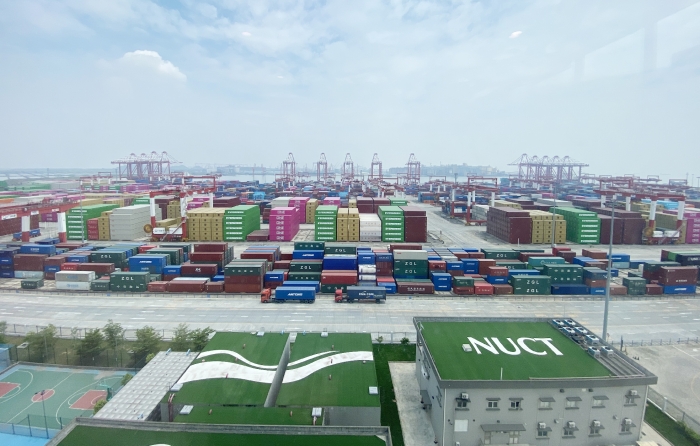
浙江上半年出口首破两万亿元 外贸规模创新高
Zhong Guo Xin Wen Wang· 2025-07-18 16:45
Core Insights - Zhejiang's goods trade import and export reached 2.73 trillion yuan in the first half of the year, a year-on-year increase of 6.6% [1] - Exports surpassed 2 trillion yuan for the first time, reaching 2.07 trillion yuan, with a year-on-year growth of 9.1%, contributing 19.8% to national export growth, ranking first in the country [1] Trade Development Strategies - Zhejiang implemented a "stabilize, expand, and optimize" strategy to support steady foreign trade growth amid external risks [1] - The province launched the "Thousand Teams, Ten Thousand Enterprises to Expand Markets and Compete for Orders" initiative, releasing three batches of 150 provincial-level business exhibition directories, with over 80% focused on emerging markets [1] - A total of 2,124 delegations were organized to participate in overseas exhibitions and trade negotiations, involving 10,388 enterprises and resulting in over 77 billion yuan in intended orders [1] Market Expansion - Zhejiang's exports to the EU, ASEAN, Latin America, the Middle East, and Africa increased by 12.1%, 16.9%, 13.1%, 12.1%, and 11.5% respectively [1] - The province hosted events like "Zhejiang Chain Global - Join Hands to Go Abroad" and the "Trade Bridge" procurement matching session to facilitate precise supply-demand matching between foreign trade enterprises and multinational procurement companies [1] E-commerce and Logistics Initiatives - Zhejiang cultivated 41 new provincial-level cross-border e-commerce export brands and established 24 provincial-level cross-border e-commerce industrial parks [2] - The province introduced the "Overseas Warehouse Action Plan" to promote overseas smart logistics platforms and assist enterprises in exploring new business models like cross-border e-commerce [2] - Initiatives such as "Foreign Trade Professional Services Entering Parks and Enterprises" were launched to gather financial, logistics, and policy resources to support stable foreign trade development [2] Future Directions - Zhejiang plans to encourage local governments to implement stronger policies to support enterprises in participating in key exhibitions and expanding into emerging markets like ASEAN, the Middle East, Latin America, and Africa [2] - The province aims to leverage export-to-domestic sales platforms and promote the development of cross-border e-commerce to continuously foster new growth points in foreign trade [2]
安徽领跑,苏浙紧跟“上分”!上半年外贸“成绩单”出炉
Guo Ji Jin Rong Bao· 2025-07-18 13:40
Group 1: Anhui Province - Anhui's total import and export value reached 458.54 billion yuan, a year-on-year increase of 15.2%, ranking sixth nationally and first in the Yangtze River Delta [3] - Exports of mechanical and electrical products amounted to 222.91 billion yuan, growing by 18.5%, accounting for 71.9% of the province's total exports [3] - Exports of "new three samples" (new energy vehicles, lithium batteries, photovoltaic products) reached 37.13 billion yuan, increasing by 67.8%, highlighting Anhui's leading position in the green low-carbon sector [3] - Anhui's exports of self-owned brand products were 155.98 billion yuan, up 9.1%, making up 50.3% of total exports, indicating a focus on brand building [4] - Trade with Belt and Road countries reached 248.49 billion yuan, a growth of 14.9%, accounting for 54.2% of total trade, showing success in expanding emerging markets [5] - The comprehensive bonded zone in Anhui saw imports and exports of 79.45 billion yuan, a year-on-year increase of 31.6%, contributing significantly to the province's foreign trade growth [5] Group 2: Zhejiang Province - Zhejiang's total import and export value reached 2.73 trillion yuan, a year-on-year increase of 6.6%, with exports surpassing 2 trillion yuan for the first time [6] - The province contributed 19.8% to national export growth, ranking first in the country, due to deep engagement in emerging markets and global supply chain layout [6] - Exports to the EU, ASEAN, Latin America, the Middle East, and Africa grew significantly, effectively compensating for reduced exports to the US [7] - Companies in Zhejiang are diversifying risks through "supply chain going abroad," enhancing flexibility and responsiveness [8] Group 3: Jiangsu Province - Jiangsu's total import and export value reached 2.81 trillion yuan, a year-on-year increase of 5.2%, accounting for 12.9% of the national total [9] - The province's trade structure optimization reflects a shift towards high-quality development, with general trade and processing trade both contributing significantly [10] - High-end market innovations, such as adjustable garden umbrellas, are meeting the demands of markets like the US, supporting sustained growth [11] - Foreign-invested enterprises in Jiangsu had an import and export value of 1.32 trillion yuan, growing by 5.8%, highlighting the province's attractiveness to foreign investment [12]
全球第二大消费市场、出口份额稳超14%……商务高质量发展这五年怎么看?
Zheng Quan Shi Bao· 2025-07-18 11:33
Economic Growth and Consumption - Consumption has contributed approximately 60% to economic growth during the "14th Five-Year Plan" period, highlighting its role as a main engine for growth [1][3] - The total retail sales of consumer goods in China is expected to exceed 50 trillion yuan this year, reflecting strong domestic consumption [2][3] Trade Performance - China's goods trade scale remains the largest globally, with export and import market shares stable at over 14% and 10% respectively [5][6] - The service trade scale ranks second globally, surpassing 1 trillion USD for the first time last year [6] Foreign Investment - China has completed its foreign investment target of 700 billion USD six months ahead of schedule, with actual foreign investment reaching 708.73 billion USD by mid-2023 [8][9] - The negative list for foreign investment access continues to shrink, with all restrictions in the manufacturing sector eliminated [9] Consumption Structure and Innovation - Service consumption has seen rapid growth, with an average annual increase of 9.6% from 2020 to 2024 [3][4] - New consumption models, such as "artificial intelligence + consumption" and "IP + consumption," are emerging as new growth points [3][4] International Trade Relations - The diversification of trade partners is evident, with ASEAN being China's largest trading partner for five consecutive years [7] - The proportion of trade with countries involved in the Belt and Road Initiative is expected to exceed 50% by 2024 [7]
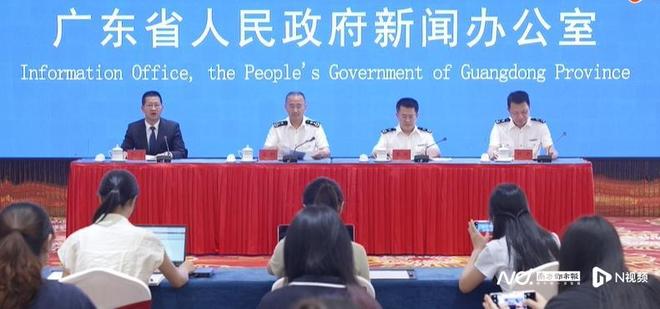
连续8季正增长!广东外贸半年破4.55万亿,占全国超两成
Nan Fang Du Shi Bao· 2025-07-18 09:45
Core Insights - Guangdong's foreign trade achieved a total value of 4.55 trillion yuan in the first half of the year, with a year-on-year growth of 4%, surpassing the national growth rate by 1.1 percentage points, marking eight consecutive quarters of positive growth [4][5]. Trade Performance - The export value reached 2.89 trillion yuan, growing by 1.1%, while imports totaled 1.66 trillion yuan, increasing by 9.5%. All trade metrics set historical highs for the same period [4]. - Guangdong's foreign trade accounted for 20.9% of the national total, an increase of 0.2 percentage points from the previous year, contributing 28% to the national foreign trade growth [4]. Role of Private Enterprises - Private enterprises played a significant role, comprising 64.2% of Guangdong's total foreign trade value, with a total import-export value of 2.92 trillion yuan, reflecting a growth of 4.3% [5]. - The number of foreign trade enterprises in Guangdong reached 130,000, a 7.6% increase, with private enterprises numbering 110,000, up by 8.6% [5]. Trade Partners and Regions - Guangdong's main trading partner, ASEAN, saw an import-export value of 757.13 billion yuan, growing by 5.9%, representing 16.6% of the province's total foreign trade [5]. - Trade with other major partners such as Hong Kong, the EU, Taiwan, Japan, and South Korea also experienced growth, while trade with the U.S. declined by 8.1% [5]. High-Tech Product Exports - High-tech product exports reached 505.43 billion yuan, increasing by 13.3%, with specific categories like machine tools and drones growing by 18.7% and 29.2%, respectively [6]. - Exports of "new three samples" products, which represent green and low-carbon technologies, surged by 28.8% [6]. Import Trends - General trade accounted for 59.2% of the total foreign trade value, with a growth of 2.7%, while bonded logistics and processing trade accounted for 20.1% and 19.7%, respectively [7]. - Consumer goods imports increased by 3.3%, with notable growth in categories such as passenger cars (48.1%), edible oil (39.5%), and dairy products (20.9%) [7].
中经评论:“内外兼修”应对发展变局
Zhong Guo Jing Ji Wang· 2025-07-18 09:25
Group 1 - The total import and export value of goods in China reached 21.7876 trillion yuan in the first half of the year, marking a historical high for the same period, with a year-on-year growth of 2.9% [1] - The total retail sales of consumer goods amounted to 24.5458 trillion yuan, reflecting a year-on-year increase of 5.0% [1] - The integration of domestic and foreign trade is emphasized as a new requirement for the coordinated development of China's foreign trade, driven by the need to utilize both domestic and international markets effectively [1][2] Group 2 - The ability of foreign trade enterprises to utilize both markets and resources is expected to enhance product competitiveness and brand value, facilitating the transition to a higher-end industry and promoting domestic demand expansion [2] - In the previous year, 87,000 industrial enterprises achieved integrated domestic and foreign trade operations, a year-on-year increase of 6.3%, with the proportion of integrated operations reaching 17% [2] - Challenges such as low brand recognition in the domestic market and high costs associated with transitioning from export to domestic sales still hinder foreign trade enterprises [2][3] Group 3 - Recommendations for enhancing the integration of domestic and foreign trade include deepening institutional reforms, aligning with international standards, and improving supply chain infrastructure through collaboration between government and enterprises [3] - The establishment of a unified national market is crucial to eliminate market segmentation and local protectionism, while strengthening intellectual property protection to create a favorable environment for market transition [3] - Companies are encouraged to strengthen their internal capabilities while leveraging external resources to better navigate risks and challenges in the evolving market landscape [3]
三个关键词看山东外贸韧性何来
Qi Lu Wan Bao Wang· 2025-07-18 00:32
Core Viewpoint - Shandong's foreign trade demonstrates resilience amid challenging international conditions, achieving a record high in import and export volumes, contributing nearly 20% to national foreign trade growth [3] Group 1: Main Contributors - Among 100 foreign trade enterprises, 92 are private enterprises, highlighting the significant role of the private economy in Shandong's foreign trade development [4] - Over 60,000 private enterprises engaged in import and export activities in Shandong, with a 76.1% share of the province's foreign trade volume [4] - Private enterprises exported intermediary goods worth 394.3 billion yuan, growing by 8.7%, and imported 33.7 billion yuan worth of major commodities, increasing by 13% [4] Group 2: Structural Transformation - Shandong's private foreign trade enterprises are moving towards high-end products, with high-end equipment exports reaching 34.9 billion yuan, up 58.9% [5] - The export of high-tech products increased by 28.1% to 90.08 billion yuan, indicating a shift towards higher value chains [6] - The share of domestic brands in industrial exports rose to 26.1%, reflecting a transition from "no brand" to "self-owned brand" [7] Group 3: Emerging Markets - Shandong's products were exported to 242 countries and regions, with significant contributions from emerging markets, accounting for over 60% of export growth [9][12] - Exports to ASEAN reached 186.66 billion yuan, growing by 4.1%, while exports to Africa surged by 30.7% [10][11] - Traditional markets also showed growth, with exports to the EU increasing by 10.9% and to Japan and the UK by 6.9% and 15.2%, respectively [12]

谈下半年房地产、消费、物价等,刘元春最新发声
证券时报· 2025-07-17 09:03
Group 1 - Concerns about significant adjustments in the real estate market in the second half of the year are unnecessary [2][3] - Economic growth data for the first half of the year exceeded expectations, but challenges remain for the second half, including external demand pressure and fluctuations in real estate [3][6] - The impact of the real estate sector on the overall macro economy has significantly decreased compared to previous years [3][6] Group 2 - The "old-for-new" policy is expected to stimulate over one trillion yuan in consumption in the second half of the year [4][5] - As of May 31, 2025, the "old-for-new" program has driven sales of 1.1 trillion yuan, with approximately 175 million subsidies issued to consumers [5] - The remaining funds in the second half have the potential to further stimulate consumption due to expanded coverage and local government support [5][6] Group 3 - The current low price phenomenon is related to excessive competition, and measures to address this issue are expected to improve pricing conditions [7][8] - Concerns about a drastic decline in exports are unfounded, as policies and the resilience of exports can maintain the foreign trade balance [8]

影响市场重大事件:国常会研究做强国内大循环重点政策举措落实工作
Mei Ri Jing Ji Xin Wen· 2025-07-17 01:11
Group 1 - China aims to be a promoter of mutually beneficial global industrial and supply chains, emphasizing collaboration and openness [1] - The country is committed to ensuring the stability of global supply chains and contributing to world economic recovery [1] - China will focus on the digital, intelligent, and green transformation of global supply chains [1] Group 2 - The State Council is working on policies to strengthen domestic circulation as a strategic move for stable economic growth [2] - Key actions include boosting consumer spending, optimizing policies for consumption, and increasing investment in emerging sectors [2] - The government aims to enhance the internal dynamics of domestic circulation by addressing existing bottlenecks [2] Group 3 - The government is focusing on high-quality development in the new energy vehicle sector, addressing irrational competition [3] - Measures include cost investigations, price monitoring, and ensuring compliance with payment commitments by major manufacturers [3] - The goal is to establish a long-term mechanism for fair competition and promote innovation and quality improvement [3] Group 4 - China has made significant progress in establishing international standards for quantum dot light conversion films, marking a breakthrough in the nano-display field [4] - The implementation of these standards is expected to accelerate the large-scale production and application of quantum dot films [4] - This development is set to invigorate the trillion-yuan display industry [4] Group 5 - The People's Bank of China in Guangdong has introduced special funding measures to support innovation, consumption, and foreign trade [5] - The "Three 100 Billion" initiative has facilitated loans amounting to 92.9 billion yuan in key sectors [5] - This reflects a commitment to a moderately loose monetary policy to stimulate economic activity [5] Group 6 - Heilongjiang Province has introduced 21 measures to support the development of the ice and snow economy, aiming for high-quality growth [6] - The focus is on developing a modern ice and snow industry system, enhancing sports, culture, equipment, and tourism [6] - The policies are designed to leverage the effects of the Asian Winter Games and position the province as a leading destination for ice and snow tourism [6] Group 7 - There is a growing enthusiasm for foreign debt financing in China, with a significant increase in panda bond registrations [7] - In the first half of the year, panda bond registrations surged by 165%, with total issuance reaching 84.4 billion yuan [7] - This trend indicates strong interest from foreign entities in the Chinese market [7] Group 8 - Guangdong Province is prioritizing the development of embodied robotics and low-altitude economy as key industries [8] - The province aims to enhance traditional industries through digital and green technologies while fostering innovation in new sectors [8] - This strategic focus includes advancements in new energy vehicles and emerging technologies like AI and quantum science [8] Group 9 - Nvidia's CEO highlighted China's unique advantages in developing humanoid robots, citing strong AI capabilities and a robust manufacturing base [9] - The combination of advanced technology and manufacturing strength positions China favorably in the robotics sector [9] - This optimism reflects the potential for significant advancements in robotics technology within the country [9] Group 10 - Beijing's Economic Development Zone has launched funding support policies for 6G technology and industry innovation [10] - The initiative includes financial backing for enterprises involved in major 6G technology projects, with support up to 30 million yuan [10] - The measures aim to enhance competitiveness in core 6G technologies through targeted actions [10]
专家解读2025年中国经济“半年报”
Zhong Guo Jing Ji Wang· 2025-07-16 06:41
Economic Performance - China's economy shows strong resilience and vitality in 2025, with a focus on improving living standards and meeting consumer demands for higher quality products and services [1] - The economy achieved a growth rate of 5.3% in the first half of the year, supported by continuous fiscal and financial policy efforts [2] Foreign Trade - China's foreign trade demonstrates resilience, positioning the country as a stabilizing force in the global trade system, with potential for continued stable growth [1][2] - There is an expectation for a more diversified domestic import structure, supported by ongoing mechanisms to reduce market uncertainties [1] Financial Market - The financial market has performed well despite significant pressures, with positive effects from recent financial policies implemented in September 2022 and May 2023 [2] - Credit support is increasingly directed towards inclusive finance, green finance, and technology innovation finance, with loan growth rates surpassing overall loan growth [2] Real Estate Market - The real estate market is stabilizing, driven by demand for "good houses" in hot cities and regions, indicating a potential recovery [2] - Future real estate policies are expected to stabilize expectations, activate demand, optimize supply, and mitigate risks [2] Competition Issues - Addressing "involution" competition requires distinguishing it from fair competition, with a focus on regulatory standards, legal measures, and policies to boost effective demand and consumer confidence [3]