
炼油

Search documents
伊拉克有望停止进口成品油
Zhong Guo Hua Gong Bao· 2025-09-05 02:38
Group 1 - Iraq's refining capacity has been increased to 1.3 million barrels per day, with plans to stop importing refined oil products by early next year [2] - The Iraqi government aims to reach a strategic goal of 1.65 million barrels per day by March 2024, with self-sufficiency in refined oil products expected by 2024 [2][3] - The country previously imported 16 million liters of gasoline and 7 million liters of diesel and aviation fuel daily, costing approximately $4.5 billion annually [2] Group 2 - The current utilization rate of Iraqi refineries is estimated at only 62% for 2024, prompting increased investment in new refining projects and upgrades [3] - Recent developments include the completion of the Karbala refinery, expansion of the Basra refinery, and reconstruction of the Baiji refinery [3] - By Q2 2025, Iraq's total refined oil imports are projected to drop to 56,300 barrels per day, significantly down from an average of 90,000 barrels per day in 2023 [3]
伊通社编译版:伊朗第十四届政府执政以来,能源基础设施领域上马92个国家级建设项目
Shang Wu Bu Wang Zhan· 2025-09-04 16:51
Core Insights - The Iranian government has launched 92 national-level construction projects in the energy infrastructure sector since taking office [1] Group 1: Oil and Gas Production - The gasoline production capacity of refineries has increased by 5 million liters per day [1] - Daily natural gas production has risen by 34.8 million cubic meters [1] Group 2: Oil Transportation - The Ministry of Oil has initiated three new product transportation pipelines with a total length of 1,000 kilometers [1] - The Abadan-Rafsanjan pipeline project is 450 kilometers long and has a daily transportation capacity of 48 million liters, reducing the need for 1,600 oil tanker trucks [1] Group 3: Refining and Processing - The government has started multiple isomerization and hydrocracking projects to enhance fuel quality [1] Group 4: Petrochemical Projects - Key petrochemical projects include the Persian Gulf Apadana methanol complex with an annual capacity of 1.65 million tons, Ilam Alghafane polypropylene with a capacity of 150,000 tons, and Isfahan Kimia polystyrene with a capacity of 50,000 tons [1] - These projects aim to meet domestic market and export demands [1]
印度能否在能源博弈中持续保持优势?
Qi Huo Ri Bao Wang· 2025-09-03 01:14
Group 1: Industry Overview - India's refinery capacity has reached approximately 258 million tons per year as of mid-2025, ranking it fourth globally in terms of capacity and seventh in refined product exports [2] - The Indian refining industry is characterized by a three-tier structure, with major public sector players like Indian Oil Corporation, Bharat Petroleum, and Hindustan Petroleum, alongside private sector entities such as Reliance Industries and Nayara Energy [2] - India's crude oil production is heavily reliant on imports, with a domestic self-sufficiency rate projected to be only 10% by 2030, indicating significant dependence on foreign sources for energy security [2] Group 2: Demand and Supply Dynamics - India's crude oil demand is expected to grow from approximately 10.9 million barrels per day in 2024 to 12 million barrels per day by 2030, contributing over one-third of global demand growth [4] - Diesel demand is projected to increase by about 540,000 barrels per day, while LPG consumption is driven by government initiatives for clean cooking [4][10] - India is the third-largest crude oil importer globally, with imports reaching 4.84 million barrels per day in 2024, primarily sourced from Russia, Iraq, and Saudi Arabia [4][5] Group 3: Refinery Performance and Profitability - As of mid-2025, India's total refining capacity is approximately 5.15 million barrels per day, with significant contributions from private sector refineries [6] - The profitability of Indian refineries has remained robust, with Reliance Industries reporting a 10.8% year-on-year increase in EBITDA for its petrochemical segment in Q1 FY2025 [6][7] - State-owned refineries have also seen significant profit growth, with Indian Oil Corporation and Bharat Petroleum reporting net profits of 56.9 billion and 61.2 billion rupees, respectively, in the same period [6][7] Group 4: Product Structure and Strategic Shifts - Diesel constitutes 40-45% of total refinery output, driven by stable demand in transportation and industrial sectors, while gasoline accounts for 15-20% [10] - LPG consumption has seen a notable increase, reaching 29.66 million tons in 2024, with expectations to rise to 32 million tons by 2025 [10] - The petrochemical sector is becoming a focal point for strategic transformation among Indian refineries, with plans to increase the conversion of light distillates into chemical feedstocks [11] Group 5: Infrastructure Development - India's oil infrastructure is expanding, with the length of oil and product pipelines increasing from approximately 19,500 kilometers in 2015 to about 20,500 kilometers by 2025 [12] - Strategic oil reserves have been established, with a current capacity of approximately 5.33 million tons, and plans for further expansion to meet emergency storage goals [15] - The infrastructure layout in India is characterized by a collaborative approach between public and private sectors, focusing on both domestic supply and export capabilities [12][16]


美国指责印度买俄油牟利,遭印度高层怒怼,没人逼你买印度成品油
Sou Hu Cai Jing· 2025-09-02 13:10
Group 1 - The trade friction between India and the United States has escalated, with the U.S. imposing tariffs of up to 50% on Indian goods, leading to strong protests from Indian officials [1] - The U.S. government's punitive tariffs are primarily a response to India's significant increase in oil imports from Russia during the Ukraine conflict, which the U.S. views as undermining sanctions against Russia [3] - India has been importing Russian oil at discounted prices, refining it, and exporting the finished products globally, including to the U.S., which accounts for 23% of India's refined product exports [3][4] Group 2 - India's government defends its actions by stating that importing Russian oil and exporting refined products has created economic benefits and helped stabilize global energy prices, contributing to alleviating inflation pressures in Western countries [4] - The U.S. initially encouraged India to increase Russian oil imports to stabilize the global energy market, but has since reversed its stance, leading to feelings of betrayal in India [4] - The U.S. domestic refining industry is facing intense competition from Indian refined products, which are produced at a cost 10-20 USD/ton lower than European counterparts, resulting in a decline in U.S. refinery utilization rates [4][6] Group 3 - The Trump administration's actions are seen as a strategy to protect U.S. domestic interests while indirectly targeting Russian energy revenues and pressuring Russia regarding the Ukraine conflict [6] - Analysts suggest that India has become a victim of the complex geopolitical dynamics, where the weaker party often bears the brunt of pressure in international relations [6]
燃料油日报-20250902
Yin He Qi Huo· 2025-09-02 10:01
Report Summary 1. Report Industry Investment Rating - Not provided. 2. Core Viewpoints - Asian high - sulfur fuel oil supply and inventory remain high in the near term, but the supply pressure in the third quarter is less than expected. The low - sulfur fuel oil spot premium continues to decline, with increasing supply and no specific demand drivers [7]. 3. Summary by Directory First part: Related Data - On September 2, 2025, the FU main contract price was 2847, up 15 from the previous day; the LU main contract price was 3559, up 85 from the previous day. The FU main contract position was 193,000 lots, an increase of 136,000 lots; the LU main contract position was 79,000 lots, an increase of 8,000 lots. The FU warehouse receipts were 119,580 tons, unchanged from the previous day; the LU warehouse receipts were 35,110 tons, also unchanged from the previous day [3]. - The FU10 - 1 spread was 5, down 3 from the previous day; the LU11 - 12 spread was 22, up 8 from the previous day. The LU - FU main contract spread was 712, up 70 from the previous day [3]. Second part: Market Research and Judgment - **Important Information**: Vietnam's Nghi Son tendered to sell 5,000 tons of fuel oil for loading between September 7 - 9. Nigeria's Dangote refinery exported its first batch of gasoline cargo to the US [6]. - **Market Analysis**: For high - sulfur fuel oil, supply pressure decreased in the third quarter. 17% of Russian refinery primary processing capacity was affected by bombings, with an estimated impact on crude oil processing capacity of about 1.2 million barrels per day. Mexican high - sulfur exports declined, and Middle - Eastern high - sulfur exports remained low. Meanwhile, the seasonal power - generation demand for high - sulfur fuel oil is gradually decreasing, but feedstock demand is still supported. The high - sulfur bunker fuel loading volume in Singapore in July reached the highest level since IMO2020. For low - sulfur fuel oil, the spot premium continued to decline, with increasing supply and no specific demand drivers. The logistics of low - sulfur heavy feedstock are expected to be redirected to the Pan - Singapore area. The operation of Nigeria's RFCC unit remains unstable, and the Al - Zour low - sulfur exports have rebounded [7]. - **Other Information**: The Singapore paper - cargo market saw the high - sulfur Sep/Oct spread change from 1.5 to 1.0 USD/ton, and the low - sulfur Sep/Oct spread change from 1.8 to 1.5 USD/ton [8]. Third part: Related Attachments - Multiple graphs are presented, including Singapore high - sulfur and low - sulfur spot premiums, high - and low - sulfur spreads, LSFO - GO spreads, and high - and low - sulfur fuel oil crack spreads [9].
俄罗斯被打得都加不起油了,我们收台时,一定不能这样打
Sou Hu Cai Jing· 2025-09-02 03:05
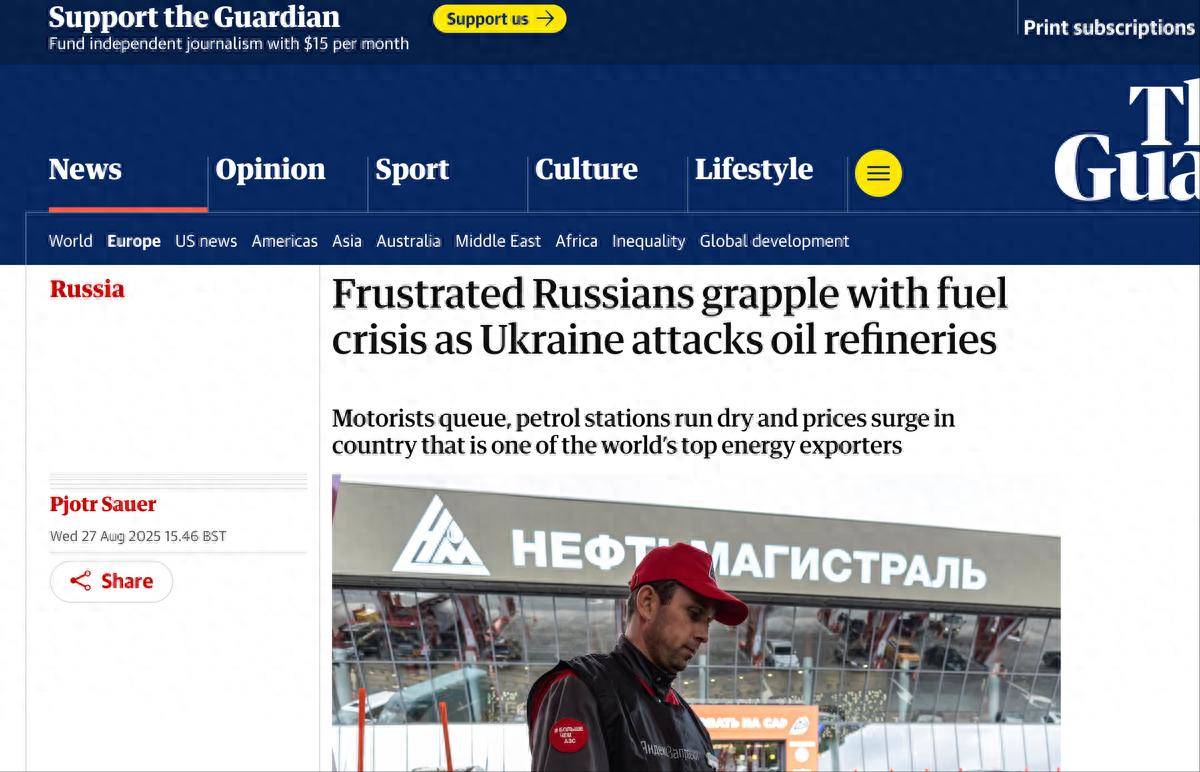
Group 1: Energy Crisis in Russia - Russia is experiencing a rare fuel crisis, with gas stations frequently running out of fuel and citizens waiting for hours to refuel, leading to record-high gasoline prices [1] - Over 17% of Russia's refining capacity has been destroyed due to ongoing drone attacks from Ukraine, resulting in a daily production loss of nearly 1.1 million barrels [1][3] - The situation has led to severe impacts on civilian gasoline markets, with regions like the Far East facing particularly acute shortages [1] Group 2: Impact on Military Operations - The energy system's damage has severely affected the Russian military, particularly the air force, which relies heavily on aviation fuel for training and operations [5] - Tactical mobility is constrained as many gasoline-powered light armored vehicles and rapid assault vehicles are unable to maintain flexibility due to fuel shortages [5] - The military has had to disperse fuel storage points to avoid attacks, which has lengthened supply chains and increased risks for frontline troops [5] Group 3: Economic Consequences - The decline in refining capacity has forced Russia to reduce refined oil exports and increase the proportion of unprocessed crude oil exports, leading to lower unit export revenues [7] - Energy export revenues have significantly decreased, reaching a new low since the war began, exacerbating inflation pressures and causing the ruble to depreciate further [7] - Current inflation rates are around 9%, adding to the economic strain on Russia [7] Group 4: Social and Strategic Implications - The prolonged conflict has permeated everyday life in Russia, with soaring oil prices, reduced public services, and strained local finances affecting the populace [8] - The West's support for Ukraine has systematically weakened Russia, indicating that modern warfare is not just about battlefield victories but also about national resilience and strategic pacing [8] - Lessons from this conflict suggest that any future military actions, such as those concerning Taiwan, should aim for quick and decisive outcomes to avoid prolonged resource depletion [8]
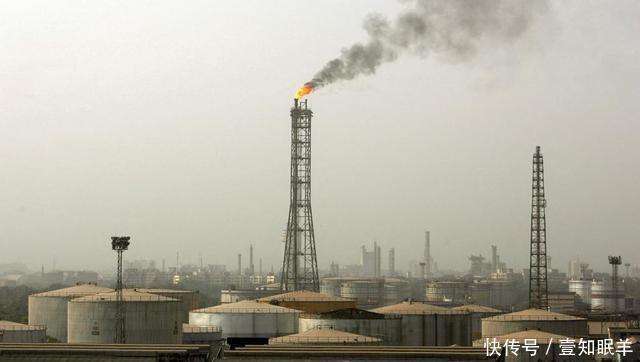
荆门石化暑期航煤供应量超16万吨
Zhong Guo Hua Gong Bao· 2025-09-02 03:02
Core Insights - The company has ensured stable aviation fuel supply during the peak summer demand period through enhanced collaboration with key clients and optimized logistics [1] Group 1: Supply and Demand Management - From June to August, the company's aviation fuel supply reached 167,200 tons, with over 65,000 tons supplied within Hubei province, supporting the stability of the local aviation market [1] - The company has established a regular communication mechanism with customers to closely monitor daily consumption dynamics and flow changes [1] - A refined production and distribution plan has been implemented to manage the increasing demand for aviation fuel during the traditional travel peak season [1] Group 2: Operational Efficiency - The company has developed a high-efficiency collaborative mechanism from production to delivery through a detailed production-sales coordination management system [1] - In the production phase, the company ensures that refining units operate at high loads to secure reliable source supply [1] - For transportation, the company prioritizes road transport within Hubei and surrounding areas for flexibility, while relying on rail transport for long-distance bulk supplies to ensure stable channels [1]
EPA批准小型炼厂生物燃料豁免申请
Zhong Guo Hua Gong Bao· 2025-09-02 02:41
Core Viewpoint - The U.S. Environmental Protection Agency (EPA) has approved a majority of the backlog of small refinery exemptions for biofuel regulations, raising concerns in the biofuel industry about potential demand impacts [1] Group 1: EPA Approval Details - The EPA approved 63 full exemptions and 77 partial exemptions, while rejecting 28 applications, clearing a backlog of 204 pending applications since 2016 [1] - The approved exemptions correspond to approximately 5.34 billion Renewable Identification Numbers (RINs), which are compliance indicators for the U.S. biofuel blending policy [1] - Only 1.39 billion of the RINs have actual compliance value and can still be used for compliance purposes [1] Group 2: Industry Reactions - Growth Energy, representing the ethanol industry, has urged the EPA to balance the blending responsibilities by increasing obligations on other refineries, a process referred to as "responsibility redistribution" [1] - The CEO of Growth Energy, Emily Skor, emphasized the need for the EPA to redistribute every gallon of exempted volume to mitigate the potentially devastating impact on biofuel demand [1] Group 3: Market Impact - Following the announcement, the price of renewable fuel credits related to ethanol blending surged to over $1.16 per credit, up from $1.07 on the previous Thursday [1]
克普勒:亚洲石油产品需求疲软甚至面临零增长局面
Zhong Guo Hua Gong Bao· 2025-09-02 02:34
Group 1: Asia Oil Demand Trends - The demand for oil products in Asia is showing signs of weakness and is expected to continue into next year, with a potential for zero growth in oil product demand [1] - Key factors driving the current fuel demand trend include weakened consumer confidence and the rise of electric vehicles [1] - Analysts predict that oil product demand in the Asia-Pacific region will experience zero growth this year due to oversupply in petrochemical capacity, slowing regional economic growth, aging population, and improved fuel efficiency [1] Group 2: Natural Gas Demand Outlook - The outlook for natural gas demand in Asia is significantly better than that for crude oil, with no predictions indicating that electric vehicles will weaken natural gas demand [1] - A Morgan Stanley forecast suggests that natural gas demand in Asia will grow at an annual rate of 5%, surpassing growth rates in Europe and the U.S. [1] - Natural gas is expected to play a crucial role in meeting the increasing global demand for electrification, becoming a pillar of energy security [1] Group 3: Europe Oil Demand Dynamics - In contrast to Asia, Europe is experiencing unexpected strong growth in oil product demand, with gasoline and aviation fuel demand expected to rise despite the push for electric vehicles [2] - The International Air Transport Association (IATA) has warned of an aviation fuel shortage in Europe due to reduced domestic supply and stable demand growth [2] - The closure of refineries in Europe, driven by stricter environmental regulations, has led to a decline in aviation fuel production and increased reliance on imports [2] Group 4: North America Oil Demand Stability - While U.S. fuel demand is not expected to see significant growth, it is projected to remain stable, driven by winter heating needs and steady air travel demand [2] - However, a decline in gasoline demand is anticipated by 2026, and diesel demand may face pressure due to tariffs impacting freight activities [2]
加拿大艾伯塔省拟投资日本炼油业
Zhong Guo Hua Gong Bao· 2025-09-02 02:34
Core Viewpoint - Alberta province in Canada is considering financial investments in Japan's refining industry to reduce its reliance on oil exports to the United States [1] Group 1: Investment Strategy - Alberta government is in preliminary talks with several Japanese refining companies to explore joint ventures for funding the construction of coking facilities [1] - This would enable Japanese companies to process heavy crude oil produced from Alberta's oil sands [1] - If an agreement is reached, it would mark Alberta's first overseas investment in energy infrastructure [1] Group 2: Market Implications - The initiative aims to leverage the increased oil transportation capacity along the Pacific coast from the recently operational expansion of the Trans Mountain pipeline [1] - Collaborating with Japan could enhance the utilization of this pipeline and support Alberta's plans for new export pipeline projects [1] Group 3: Japanese Refining Capacity - The coking facilities will improve Japan's ability to process heavy crude oil, as most of its refining facilities currently cannot handle high-sulfur heavy crude [1] - Japan's crude oil imports are primarily reliant on the Middle East [1] Group 4: Canadian Oil Export Landscape - Canada is the world's fourth-largest oil producer, but Alberta, as its core production area, is landlocked with limited port resources [1] - Approximately 90% of Canada's crude oil exports are transported to the U.S. via north-south pipelines [1]