石化

Search documents
冲刺万亿GDP城市,温州胜算最大
Sou Hu Cai Jing· 2025-12-14 01:33
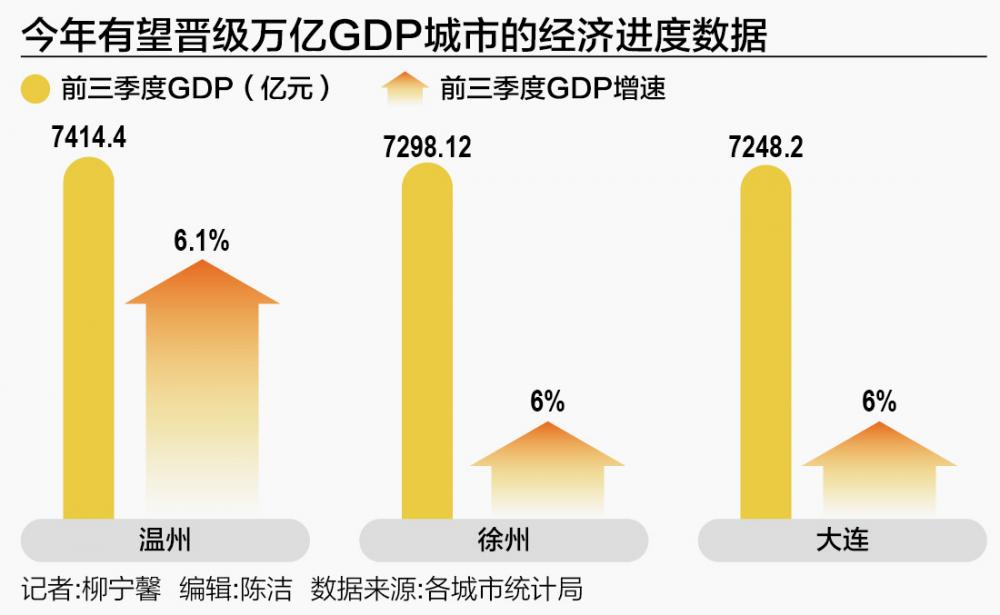
Core Viewpoint - Wenzhou is expected to surpass a GDP of 1 trillion yuan this year, with Xuzhou and Dalian also aiming for this milestone, indicating a trend of ordinary prefecture-level cities joining the ranks of trillion-yuan cities in China [1][3][4]. Group 1: Economic Progress of Cities - Wenzhou's GDP for the first quarter was 240.37 billion yuan, with a growth rate of 6.7%, and it is projected to reach 1 trillion yuan this year [2]. - Xuzhou's GDP for the first three quarters was 729.812 billion yuan, with a growth rate of 6.0% [2]. - Dalian's GDP for the first three quarters was 724.82 billion yuan, with a growth rate of 6.0% [2]. Group 2: Characteristics of Trillion-Yuan Cities - The expansion of trillion-yuan cities includes ordinary prefecture-level cities, with Wenzhou and Xuzhou being notable examples [2][3]. - Cities with GDPs between 700 billion and 800 billion yuan, such as Shaoxing, Yangzhou, Yancheng, and Jiaxing, are expected to be the main drivers for future growth towards the trillion-yuan mark [2][16]. Group 3: Implications for Urban Economic Structure - The trend of expanding trillion-yuan cities reflects a shift in China's urban economic landscape, moving from provincial capitals and sub-provincial cities to ordinary prefecture-level cities [3][17]. - The focus on high-quality urban development emphasizes the need for structural upgrades in industries, income levels, and green development, rather than just quantitative growth [3][18]. Group 4: Wenzhou's Economic Foundation - Wenzhou's economic growth is supported by a robust manufacturing base and a strong private sector, with 83% of its GDP generated by the private economy [7]. - The city aims to establish a dual trillion-yuan industrial cluster by 2025, combining traditional industries with emerging sectors such as digital economy and new materials [7]. Group 5: Future Prospects for Dalian and Xuzhou - Dalian aims to become a trillion-yuan city by 2025, focusing on high-quality development and modernizing its industrial structure [10][12]. - Xuzhou's government has set a target to exceed 1 trillion yuan by 2025, with a focus on becoming a regional hub in Jiangsu province [14][15].


汇聚金融力量 推动辽宁全面振兴
Zhong Guo Xin Wen Wang· 2025-12-13 08:04
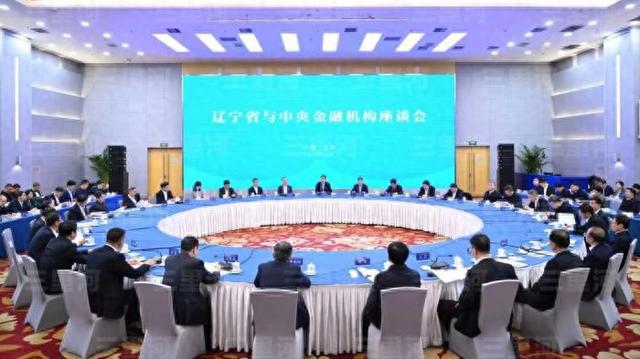
Group 1 - The meeting between Liaoning Province and central financial institutions signifies strong financial support for the comprehensive revitalization of Liaoning, indicating substantial cooperation measures to follow [3][4] - Key themes discussed included increasing financing support, enhancing patient capital, and optimizing financial services, which are crucial for Liaoning's transition to high-quality development [3][4] - Liaoning's proposed "2211" industrial system outlines a clear investment roadmap, targeting 22 advantageous industrial clusters, over 100 industrial chains, and more than 1,000 core enterprises [4][5] Group 2 - The establishment of a normalized cooperation mechanism suggests a shift towards institutionalized and systematic interactions between Liaoning and central financial institutions, indicating a prelude to deeper collaboration [5] - Liaoning's strategic importance is highlighted by its unique geographical position as the only coastal and border province in Northeast China, serving as a key gateway for the region [5][6] - The financial support aims to solidify previous revitalization efforts and assist the region in achieving high-quality development during the critical "14th Five-Year Plan" period [5][6] Group 3 - Financial institutions view Liaoning as a strategic opportunity, with emerging competitive industrial clusters providing quality asset allocation opportunities, particularly in technology innovation and high-end manufacturing [8] - The systematic injection of financial resources into Liaoning is expected to accelerate its economic transformation, addressing the funding needs for traditional industry upgrades, new industry cultivation, and infrastructure development [8] - The meeting not only brings financial resources but also instills confidence in Liaoning's potential for new growth momentum [8]
温州、徐州、大连冲刺万亿GDP城市 谁将晋级?
2 1 Shi Ji Jing Ji Bao Dao· 2025-12-13 00:55
Core Viewpoint - The competition for cities to join the "trillion GDP club" is intensifying, with Wenzhou, Xuzhou, and Dalian as key contenders, highlighting a shift in China's economic growth dynamics towards ordinary prefecture-level cities [1][19][20]. Group 1: Economic Growth and City Development - Wenzhou is expected to surpass a GDP of 1 trillion yuan this year, with Xuzhou and Dalian also aiming for this milestone [2][21]. - Currently, there are 27 cities in the trillion GDP club, with notable representation from various regions including the Yangtze River Delta and the Pearl River Delta [2][21]. - The expansion of the trillion GDP club is characterized by the rise of ordinary prefecture-level cities, indicating a change in the economic landscape of China [2][21][35]. Group 2: Wenzhou's Economic Strategy - Wenzhou's economic growth is supported by a robust manufacturing base and a strong private sector, with 156.4 million registered private enterprises as of November 2025 [6][26]. - The city aims to establish a dual trillion industry cluster by 2025, focusing on both traditional and emerging industries [7][26]. - Wenzhou's industrial transformation has shown significant results, with traditional and emerging industries experiencing growth rates of 11.4% and 12.4% respectively in the first ten months of the year [7][26]. Group 3: Dalian's Economic Challenges and Opportunities - Dalian aims to achieve a GDP of 1 trillion yuan by 2025, with a current GDP of 9516.9 billion yuan projected for 2024 [10][31]. - The city has a strong traditional industrial base, particularly in the petrochemical sector, but faces challenges in transitioning to high-tech manufacturing [11][32]. - Dalian's strategic location and existing industrial foundation provide significant growth potential, despite current limitations in innovation and industry structure [11][32]. Group 4: Xuzhou's Growth Potential - Xuzhou's GDP reached 7298.12 billion yuan in the first three quarters of the year, with a target to exceed 1 trillion yuan by 2025 [12][33]. - The city is positioned as a key player in addressing the economic imbalance between southern and northern Jiangsu province [14][33]. - Xuzhou's development strategy includes leveraging its geographical advantages to become a hub for regional connectivity [14][33]. Group 5: Future Trends in Urban Economic Development - The trend of ordinary prefecture-level cities joining the trillion GDP club is expected to continue, with cities like Shaoxing, Yangzhou, Yancheng, and Jiaxing as potential candidates [15][35]. - The focus on urbanization and collaboration with nearby major cities is crucial for these cities to achieve sustainable growth [36][37]. - Future urban development will prioritize not only GDP growth but also the quality of growth, emphasizing metrics such as per capita GDP and innovation resources [38][37].
龙头贸易商携手上下游企业共筑风险“防火墙”
Zhong Guo Zheng Quan Bao· 2025-12-12 20:17
Core Insights - The article highlights the increasing adoption of futures tools by petrochemical companies in China to manage price risks and enhance competitiveness within the industry [1][2][3] Group 1: Industry Trends - The development of the futures market in China is maturing, leading to a higher participation rate from industry clients [1] - Futures tools are becoming essential for petrochemical companies to mitigate risks associated with volatile raw material prices [1][3] - The collaboration between upstream and downstream enterprises is being reshaped through the use of futures tools, creating a risk defense system across the supply chain [1][3] Group 2: Company Case Study - Longchang Group has established a comprehensive futures and spot trading model, which effectively manages its operational risks while assisting downstream partners in optimizing procurement costs [1][2] - The company has set up a dedicated futures management department to oversee trading processes and risk management [1][2] - Longchang Group's approach includes dynamic management of inventory exposure and the use of financial instruments to hedge against price fluctuations [2][3] Group 3: Downstream Impact - Downstream clients, such as Jiyang Plastic Co., have benefited from risk management tools like options and basis trading, which help stabilize production costs amid price volatility [4][5] - The introduction of "option trading" has allowed smaller enterprises to manage costs more effectively, reducing the financial burden associated with traditional futures contracts [5][6] - The use of futures tools has transformed the procurement strategy of companies from a passive to an active cost management approach, enhancing overall operational stability [7] Group 4: Regional Economic Development - The application of futures tools is significantly contributing to the economic transformation of the Northwest region of China, which is characterized by its reliance on energy, chemicals, and agricultural products [9][10] - Longchang Group is actively involved in training and supporting local enterprises to better utilize futures tools, thereby enhancing their competitiveness and market participation [8][9] - The futures market provides a transparent pricing mechanism that aids in fair trade practices and improves operational efficiency for regional businesses [9][10]
冲刺万亿GDP城市,这座地级市胜算大
2 1 Shi Ji Jing Ji Bao Dao· 2025-12-12 12:18
Core Insights - The expansion of the "trillion GDP club" is a significant highlight of regional economic development in China this year [1][4] - Wenzhou, Xuzhou, and Dalian are expected to join the club, with Wenzhou projected to surpass 1 trillion yuan in GDP this year [2][5][9] Group 1: Economic Performance of Cities - Wenzhou's GDP is expected to exceed 1 trillion yuan, with a growth rate of 6.3% projected for 2024, reaching 9,719 billion yuan [5] - Xuzhou's GDP for the first three quarters is 7,298.12 billion yuan, with a growth rate of 6.0% [15] - Dalian's GDP for the first three quarters is 7,248.2 billion yuan, with a growth rate of 6.0% [11] Group 2: Characteristics of the New Trillion GDP Cities - Among the three cities, two (Wenzhou and Xuzhou) are ordinary prefecture-level cities, indicating a trend of expansion beyond major cities [3][4] - The rise of these cities is expected to reshape China's economic landscape, with a focus on high-quality development and urban renewal [4][19] Group 3: Industrial and Economic Foundations - Wenzhou's economy is supported by a robust manufacturing base and a strong private sector, with 83% of its GDP generated by the private economy [6] - Dalian is focusing on high-quality development, with a strategic emphasis on modernizing its industrial structure and enhancing high-tech manufacturing [14][15] - Xuzhou, as a traditional industrial base, is also undergoing transformation to achieve its GDP goals by 2025 [16] Group 4: Future Trends and Implications - The trend of ordinary prefecture-level cities joining the trillion GDP club is expected to continue, with cities like Shaoxing, Yangzhou, Yancheng, and Jiaxing being potential candidates [17] - The focus will shift from mere GDP growth to the quality of growth, emphasizing structural optimization and the well-being of residents [20]

温州、徐州、大连冲刺万亿GDP城市,谁将晋级?
2 1 Shi Ji Jing Ji Bao Dao· 2025-12-12 12:16
Core Viewpoint - The expansion of the "trillion GDP club" is a significant highlight of regional economic development this year, with cities like Wenzhou, Xuzhou, and Dalian expected to join the ranks of cities with a GDP exceeding one trillion yuan [1][2]. Group 1: Economic Progress of Cities - Wenzhou is projected to surpass a GDP of one trillion yuan this year, with a GDP growth rate of 6.3% expected in 2024, reaching 9,719 billion yuan [5]. - Xuzhou's GDP is anticipated to exceed 1 trillion yuan by 2025, with a current GDP of 7,298.12 billion yuan and a growth rate of 6.0% [13]. - Dalian aims to achieve a GDP of 9,516.9 billion yuan in 2024, with a growth rate of 6.0% in the first three quarters of this year [10]. Group 2: Characteristics of the Expansion - The expansion of the trillion GDP cities includes ordinary prefecture-level cities, with Wenzhou and Xuzhou being notable examples [3]. - Cities with GDPs between 700 billion and 800 billion yuan, such as Shaoxing, Yangzhou, Yancheng, and Jiaxing, are expected to be the main contributors to future expansions [15]. - The trend indicates a shift from provincial capitals and municipalities to ordinary prefecture-level cities, impacting the economic landscape of China [3][15]. Group 3: Industrial Development and Economic Structure - Wenzhou's economy is supported by a robust manufacturing base and a strong private sector, with 83% of its GDP generated by the private economy [5][6]. - Dalian is focusing on developing high-tech manufacturing and has set a target for its new strategic emerging industries, although it faces challenges in establishing core competitiveness [12]. - Xuzhou, as a traditional industrial base, is also undergoing a transformation to enhance its economic structure and achieve balanced regional development [14]. Group 4: Future Outlook and Trends - The future expansion of the trillion GDP club is expected to include more ordinary prefecture-level cities, reflecting a broader trend of economic growth and regional coordination [17]. - The focus will shift from mere GDP growth to the quality of GDP, emphasizing structural optimization and the well-being of residents [18]. - The development strategies of cities like Shaoxing, Jiaxing, and Yangzhou highlight the importance of regional collaboration and integration with nearby major cities [16].

51家页岩砖企业二氧化硫实现“近零排放”,临沂工业源治理见效
Qi Lu Wan Bao· 2025-12-12 08:40
Group 1 - The core focus of the news is on the industrial pollution control efforts in Linyi City during the 14th Five-Year Plan period, highlighting the achievement of near-zero sulfur dioxide emissions from 51 operating shale brick enterprises [1] - Linyi City has implemented comprehensive ultra-low emission transformations in key high-pollution industries such as steel, coking, and cement, with 2 long-process steel companies and 10 cement companies completing provincial-level ultra-low emission transformation [1] - The city has strengthened process control and end-of-pipe treatment in the building materials industry, dismantling 268 illegal biomass boilers and shutting down 350 illegal small glue factories to enhance overall pollution control levels [1] Group 2 - Continuous efforts are being made to prevent summer ozone pollution by focusing on industries that emit volatile organic compounds (VOCs), with a strategy of "one enterprise, one policy" for regular inspections and improvements [2] - The establishment of a smart control system for VOC emissions in 600 key enterprises and the promotion of online monitoring for large gas stations are part of the ongoing technological support to reduce ozone generation potential [2] - A total of 6.07 billion yuan has been secured in central and provincial funding for air pollution control projects, supporting 72 industrial furnace renovations and VOC management initiatives, significantly enhancing the environmental performance of enterprises [3]
统一石化牵头成立“低碳供应链联盟”,为低碳供应链提供助力
Jing Ji Guan Cha Wang· 2025-12-12 07:53
Core Viewpoint - The company recognizes that the reduction of emissions by a single enterprise is limited, and true green transformation must extend throughout the entire supply chain [1] Group 1: Initiatives and Strategies - The company has taken the lead in establishing the "Low Carbon Supply Chain Alliance" to prioritize partnerships that meet carbon reduction standards [1] - The alliance operates under the ISO 20400 sustainable procurement framework, which provides guidelines for integrating sustainability into organizational procurement processes [1] Group 2: Leadership Perspective - The CEO of the company emphasizes that embedding low-carbon actions into every link of the supply chain is essential for achieving long-term sustainability and responding to the demands of the current era [1]

产品碳足迹下降70%以上,全生命周期研发助力统一股份低碳突破
Jing Ji Guan Cha Wang· 2025-12-12 07:52
Core Viewpoint - The company focuses on low-carbon product development from a green product lifecycle perspective, achieving a significant reduction in carbon footprint for core products by over 70% in recent years [1] Group 1: Product Development and Cost Management - The cost of sustainable aviation fuel was previously 2.5 to 6 times higher than traditional kerosene, but through continuous R&D and supply chain optimization, the company has managed to bring costs down to competitive levels [1] - A hydraulic oil product with a 43% reduction in carbon footprint now matches the cost and lifespan of high-carbon products, demonstrating the company's commitment to not passing additional costs onto customers for carbon reduction [1] Group 2: Zero Carbon Premium Strategy - The "zero carbon premium" product strategy challenges the industry perception that low-carbon products are inherently high-cost, offering lower carbon footprints at the same price while providing longer oil change cycles, reduced equipment downtime, and lower energy consumption [1] - This strategy enhances total cost of ownership (TCO) for customers, thereby improving their market competitiveness [1] Group 3: Innovation Methodology - The company's approach is based on the "4R1D" innovation methodology, which promotes green product lifecycle through five dimensions: Reduce, Reuse, Recycle, Bio-cycle, and Degradable [1]
以“双碳”引领,中央经济工作会议提出制定能源强国建设规划纲要
2 1 Shi Ji Jing Ji Bao Dao· 2025-12-12 05:47
Core Viewpoint - The Central Economic Work Conference emphasizes the "dual carbon" goals as a guiding principle for economic work in the coming year, focusing on comprehensive green transformation and the establishment of a new energy system to ensure energy security and transition [1][3]. Group 1: Green Transformation and Energy Strategy - The conference highlights the importance of advancing energy-saving and carbon reduction transformations in key industries, with a focus on creating a strong energy nation through top-level planning [5][10]. - The "14th Five-Year Plan" is identified as a critical period for rapid green and low-carbon transformation, while the "15th Five-Year Plan" will be crucial for achieving carbon peak and green transformation [3][6]. - Energy activities account for over 80% of total carbon emissions, making it a primary battleground for achieving carbon peak goals and building a beautiful China [4]. Group 2: Renewable Energy Development - The conference calls for the expansion of green electricity applications, with renewable energy generation capacity increasing from 40% to approximately 60% [8]. - The current renewable energy landscape includes significant annual additions of wind and solar power, with green electricity now constituting one-third of total electricity consumption [8]. - Key areas for expanding green electricity applications include export-oriented enterprises, large corporations enhancing brand image, and local government mandates for high-energy-consuming sectors [8]. Group 3: Key Industry Transformation - The focus on energy-saving and carbon reduction transformations will target high-energy-consuming and high-emission industries such as steel, non-ferrous metals, building materials, petrochemicals, and data centers [9]. - Successful transformation requires a combination of technology, management, and mechanisms, including the promotion of mature technologies and comprehensive carbon management practices [9]. - The government will support these transformations through subsidies, tax incentives, and green finance to ensure that early adopters benefit [9]. Group 4: Carbon Market Development - Strengthening the national carbon emissions trading market is a key focus, with plans to expand its coverage from the power sector to include steel, cement, and aluminum industries by 2027 [11][12]. - The carbon market is seen as a core policy tool for achieving the "dual carbon" goals, with an emphasis on expanding and deepening its operational mechanisms [12]. - Future developments in the carbon market will include setting scientific quotas, ensuring data authenticity, and exploring financial innovations to mobilize funds towards green and low-carbon sectors [12].