
电池制造

Search documents
动力锂电:钠电团体标准正式发布,产业化加速推进
GUOTAI HAITONG SECURITIES· 2026-01-11 12:59
Investment Rating - The report assigns an "Accumulate" rating for the sodium-ion battery industry, indicating a positive outlook for investment opportunities in this sector [4]. Core Insights - The formal implementation of the "Technical Requirements for Sodium-ion Batteries for Energy Storage" group standard marks a new phase in the standardization of sodium-ion batteries in China, suggesting that the sodium battery industry chain has completed its initial setup and is expected to enter a period of scale expansion [2]. - Sodium batteries are anticipated to become an effective complement to lithium batteries, with cost advantages becoming more apparent as lithium carbonate prices rise. The comprehensive material costs of sodium batteries are projected to be 30%-40% lower than those of lithium batteries after industrialization [4]. - The sodium battery industry is expected to experience significant scale expansion, with companies like CATL launching new sodium-ion battery brands that can compete with lithium iron phosphate batteries in terms of energy density and performance [4]. Summary by Sections Industry Overview - The sodium-ion battery industry is entering a new stage of standardization with the approval of the group standard, which will take effect on February 1, 2026. This standard covers various aspects such as terminology, testing methods, and storage [4]. Investment Recommendations - The report suggests that companies involved in the sodium-ion battery supply chain are likely to benefit first from the industry's growth. Recommended stocks include CATL, Rongbai Technology, and Zhongwei Co., with related stocks such as Dingsheng New Materials and Zhenhua New Materials also highlighted [4]. Financial Projections - Financial forecasts for key companies in the sodium battery sector indicate positive earnings growth, with CATL expected to have an EPS of 19.29 yuan per share in 2026, and Rongbai Technology projected to reach an EPS of 1.02 yuan per share in the same year [5].


21对话|比亚迪孙华军:反超特斯拉,藏着死磕磷酸铁锂的20年
2 1 Shi Ji Jing Ji Bao Dao· 2026-01-09 14:52
Core Insights - BYD has surpassed Tesla in global electric vehicle sales for the first time, achieving a total of 2.2567 million pure electric vehicles sold in 2025, marking a year-on-year growth of 27.86% [2] - The foundation of BYD's success lies in the development of lithium iron phosphate (LFP) batteries, which were initially considered unsuitable for electric vehicles due to their lower energy density [2][3] - The strategic decision to focus on LFP batteries was driven by safety concerns and the availability of raw materials in China, as opposed to the reliance on cobalt and nickel used in ternary batteries [3][4] Development Timeline - BYD began exploring LFP technology in 2002, with the first LFP battery used in a plug-in hybrid model, the F3DM, launched in 2008 [4] - The company faced challenges between 2017 and 2019 when the electric vehicle market cooled, leading to a temporary shift in focus towards ternary batteries due to their higher energy density [5][6] - In 2019, BYD made a pivotal decision to refocus on LFP technology, leading to the development of the "blade battery" which improved space utilization and safety [6][7] Technological Innovations - The blade battery design allowed for a higher space utilization rate of over 60%, enabling a range of 600 kilometers, which was a significant improvement over previous designs [6][18] - The manufacturing process for the blade battery involved overcoming significant engineering challenges, including precision in stacking and cutting the battery cells [20][21] - BYD's commitment to LFP technology has resulted in a robust R&D team of approximately 10,000 members, emphasizing the company's dedication to innovation in battery technology [21] Market Position and Future Outlook - BYD's sales began to recover in the latter half of 2020, with total electric vehicle sales reaching 190,000 units that year, and over 600,000 units sold in 2021 [7] - The company has established a competitive edge through vertical integration of its supply chain, which became particularly advantageous during global shortages of chips and batteries [7][8] - Looking ahead, BYD plans to continue investing in LFP technology while also addressing challenges such as charging speed and safety standards in response to new regulations [24][25]



宁德时代:第四届董事会第十二次会议决议公告
Zheng Quan Ri Bao· 2026-01-09 14:27
Group 1 - The core point of the article is that Ningde Times announced the approval of two significant resolutions during its fourth board meeting, including a capital increase for its subsidiary and the adoption of Chinese accounting standards for financial reporting [1] Group 2 - The company approved a proposal regarding capital increase and related transactions for its subsidiary [1] - The company also resolved to uniformly adopt Chinese Accounting Standards for preparing financial reports [1]
退税率降3%!储能电池出口新变动
行家说储能· 2026-01-09 12:10
Core Viewpoint - The Ministry of Finance and the State Taxation Administration announced adjustments to the export tax rebate policy for photovoltaic and battery products, effective from April 1, 2026, which includes the cancellation of VAT export rebates for these products [1]. Group 1: Policy Changes - From April 1, 2026, the VAT export rebate for photovoltaic products will be canceled [1]. - The VAT export rebate rate for battery products will be reduced from 9% to 6% from April 1, 2026, until December 31, 2026, and will be completely canceled starting January 1, 2027 [1]. - The export consumption tax policy for products subject to consumption tax will remain unchanged, continuing to apply the consumption tax rebate (exemption) policy [1]. Group 2: Export Performance - In the first half of 2025, China's energy storage battery exports reached 45.6 GWh, a year-on-year increase of 174.6%, accounting for 35.9% of the total battery exports in the country [1]. - By October 2025, the export value of energy storage batteries and electric vehicle batteries exceeded $65 billion, with global shipments of lithium-ion battery cells expected to grow by 75% annually [1].
地方政府与城投企业债务风险研究报告:郑州市
Lian He Zi Xin· 2026-01-09 11:22
Group 1: Report Industry Investment Rating - No relevant content found Group 2: Core Views of the Report - Zhengzhou, as the capital city of Henan Province and a national central city, has obvious location advantages, high - level economic development, and a reasonable industrial structure. However, the government debt burden is heavy. The economic development of its districts, counties, and functional areas varies greatly, and the debt situation of different regions also shows differences. The debt burden of most of Zhengzhou's bond - issuing urban investment enterprises has increased, and the short - term debt - paying pressure is prominent [4]. - Multiple policies support the regional development of Zhengzhou, and the city has received strong support in fiscal transfer payments and special fund allocations. The government at all levels in Zhengzhou has strengthened the monitoring and management of debt to actively resolve hidden debts and control debt risks [4][12]. Group 3: Summary According to the Directory I. Zhengzhou's Economic and Fiscal Strength (1) Regional Characteristics and Economic Development of Zhengzhou - Zhengzhou has significant location advantages and convenient transportation. It is the center of the "Central Plains Economic Zone", with a "double - cross" railway network and is one of the highest - level international comprehensive transportation hubs. It also has a well - developed aviation and port system [5][7]. - Zhengzhou has a high level of urbanization. By the end of 2024, its permanent population was 13.086 million, ranking first in Henan Province, with an urbanization rate of 81%, 1 percentage point higher than the previous year and higher than the provincial average [6]. - In 2024, Zhengzhou's GDP was 1.45321 trillion yuan, ranking first in Henan Province, with a growth rate of 5.7%. The per - capita GDP was 111,100 yuan, also ranking first. From January to September 2025, its GDP was 1.118978 trillion yuan, with a year - on - year growth of 5.4% [8]. - Zhengzhou has a reasonable industrial structure, with six leading industrial clusters contributing over 90% to above - scale industries. The added value of above - scale industries and six leading industries has maintained a growth trend [9]. - Multiple policies support Zhengzhou's development. In 2024, Zhengzhou received 50.65 billion yuan in transfer payments and 6.95 billion yuan in ultra - long - term special treasury bond funds, and also obtained special fund support in various fields [12]. (2) Fiscal Strength and Debt Situation of Zhengzhou - In 2024, Zhengzhou's general public budget revenue ranked first in Henan Province, with acceptable quality and strong self - sufficiency. However, the government fund revenue decreased year - on - year, and superior subsidies contributed to the comprehensive financial resources [14]. - By the end of 2024, Zhengzhou's government debt burden was relatively high in Henan Province, with a debt ratio of 196.04% and a debt - to - GDP ratio of 27.10%, ranking 15th and 4th respectively among prefecture - level cities in the province [15]. II. Economic and Fiscal Conditions of Zhengzhou's Districts, Counties, and Functional Areas (1) Economic Strength of Zhengzhou's Districts, Counties, and Functional Areas - The overall economic development level of Zhengzhou's districts, counties, and functional areas is high, but there are significant regional differences. Jinshui District has the strongest economic strength, and Jinshui and Gongyi have the highest per - capita GDP [17]. - Zhengzhou has a clear industrial spatial layout. The electronic information industry is mainly concentrated in four functional areas, while other industries are distributed in different districts and counties according to their characteristics [21]. - In 2024, Jinshui District was the only area with a GDP exceeding 200 billion yuan. The four functional areas accounted for about 33% of Zhengzhou's GDP. The GDP growth rate of the Airport Economic Zone was as high as 13.0% [24]. (2) Fiscal Strength and Debt Situation of Zhengzhou's Districts, Counties, and Functional Areas - **Fiscal Revenue**: In 2024, Zhengdong New Area, Economic Development Zone, and Jinshui District had a general public budget revenue exceeding 10 billion yuan. The tax revenues of most regions decreased, and the fiscal revenue quality varied. The core urban areas had a high tax ratio, while the subordinate counties and cities were more dependent on non - tax revenues [26]. - **Debt**: By the end of 2024, the government debt of all regions in Zhengzhou increased. The Airport Economic Zone had the largest debt stock. Some regions had a high debt ratio, while the debt ratio of Zhongmou County decreased significantly. The governments at all levels have strengthened debt management and risk control [35]. III. Debt - paying Ability of Zhengzhou's Urban Investment Enterprises (1) General Situation of Zhengzhou's Urban Investment Enterprises - As of September 30, 2025, there were 27 bond - issuing urban investment enterprises in Zhengzhou, mainly at the municipal level and in Zhengdong New Area, with AA and AA+ as the main credit ratings. One enterprise was put on the credit rating watch list in 2024 [43]. (2) Bond - issuing Situation of Zhengzhou's Urban Investment Enterprises - In 2024, the bond - issuing scale of Zhengzhou's urban investment enterprises decreased slightly year - on - year, mainly concentrated in the Airport Economic Zone and the municipal level. Affected by debt - resolution policies, the net bond financing scale of most regions shrank significantly [46]. - In 2024, the net bond financing of Zhengzhou's urban investment enterprises was 5.119 billion yuan, and the net inflow state continued in the first three quarters of 2025 [48]. (3) Debt - paying Ability Analysis of Urban Investment Enterprises - By the end of 2024, the debt scale of Zhengzhou's bond - issuing urban investment enterprises continued to grow, mainly concentrated in the municipal level and the Airport Economic Zone. Most regions' debt burden increased [51]. - The short - term debt - paying pressure of Zhengzhou's urban investment enterprises is prominent. The coverage ratio of cash - like assets to short - term debt is generally low. The net cash inflow from financing activities decreased significantly year - on - year in 2024 [51]. (4) Support and Guarantee Ability of Fiscal Revenue for the Debt of Bond - issuing Urban Investment Enterprises - In 2024, except for the Airport Economic Zone, the ratio of "total debt of bond - issuing urban investment enterprises + local government debt" to comprehensive financial resources in Zhengzhou's municipal level and other regions was between 195.76% and 517.99%, with Gongyi having the highest ratio [62].
4GWh储能电池项目落地河北石家庄
起点锂电· 2026-01-09 10:20
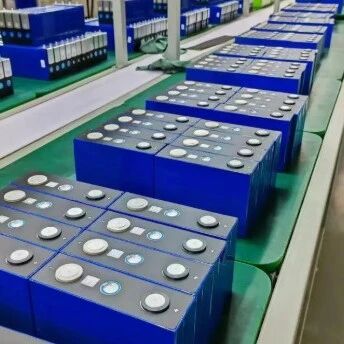
Group 1 - The Hebei Shijiazhuang City Luquan District Data and Government Service Bureau plans to approve the environmental impact report for the construction project of Chunseng New Energy (Shijiazhuang) Co., Ltd., which aims to produce 4GWh of energy storage batteries [2] - Chunseng New Energy (Shijiazhuang) Co., Ltd. is located in the Li Village of Luquan District, Shijiazhuang City, Hebei Province, with a total investment of 500 million yuan, and plans to build two production lines with an annual output value of 4GWh for energy storage batteries [3] - Upon completion, the project is expected to produce 73 million units of energy storage batteries (32140-15Ah) annually [3] Group 2 - The company was established in September 2025, and its business scope includes battery manufacturing, sales, and recycling of used power batteries from new energy vehicles, among other services [3]

亿纬锂能再闯港股 “押注”大圆柱电池
Zhong Guo Jing Ying Bao· 2026-01-09 09:07
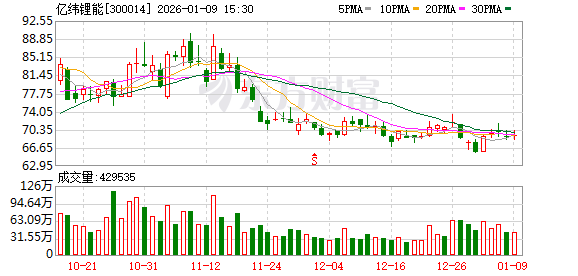
Core Viewpoint - EVE Energy has refiled its IPO application with the Hong Kong Stock Exchange on January 2, 2026, after the initial application expired. The updated prospectus indicates a shift in fundraising focus from a project in Malaysia to the construction of a factory in Hungary for the production of 46 series cylindrical batteries, driven by the growing European electric vehicle market [2][3][8]. Group 1: IPO and Fundraising Changes - EVE Energy's initial IPO application submitted on June 30, 2025, became invalid after six months due to the expiration of the prospectus [3]. - The company clarified that the re-filing is a normal procedure under Hong Kong regulatory policies and does not significantly impact the overall IPO process [3]. - The fundraising plan has been adjusted to focus on the Hungarian project, with the Malaysian third-phase project removed from the investment scope [7][8]. Group 2: Business Focus and Financial Performance - EVE Energy's main business is in the lithium battery sector, with product categories including consumer batteries, power batteries, and energy storage batteries. The revenue share of consumer batteries decreased from 23.5% in 2022 to 18.3% by Q3 2025, while energy storage batteries increased from 26% to 37.9% during the same period [3]. - The company reported a revenue of 45 billion yuan for the first three quarters of 2025, a year-on-year increase of 32.17%, but net profit decreased by 11.70% to 2.816 billion yuan [3]. - The gross margin for consumer batteries remained high at 26.8%, while power batteries had a margin of 15.3%, and energy storage batteries had a lower margin of 11.2%, impacting the overall gross margin [3]. Group 3: Market Position and Competitive Landscape - In 2024, EVE Energy's power battery shipment volume was 30.3 GWh, capturing approximately 2.8% of the global market, ranking fifth among Chinese manufacturers and ninth globally [4]. - The company has been expanding its production capacity, with construction projects increasing by 42.74% year-on-year as of Q3 2025. The debt ratio stood at 63.5%, higher than that of its competitor CATL at 61.27% [4]. - EVE Energy aims to leverage its competitive advantage in the cylindrical battery sector, having established a 20 GWh factory and becoming a major supplier for next-generation electric vehicle models [5]. Group 4: International Expansion and Revenue Trends - EVE Energy's revenue is primarily derived from the domestic market, with the share of domestic revenue increasing from 65.2% in 2022 to 76.6% by Q3 2025. However, overseas revenue is also on the rise [6]. - The company has adjusted its overseas production focus, shifting from Malaysia to Hungary, where the new factory is strategically located near major automotive clients to better meet their needs [7][8]. - The Hungarian factory is expected to have a production capacity of 30 GWh and is projected to commence operations in 2027, focusing on the 46 series cylindrical batteries [7].

深蓝汽车取得软包锂离子电池电解液浸润方法专利
Sou Hu Cai Jing· 2026-01-09 08:40
声明:市场有风险,投资需谨慎。本文为AI基于第三方数据生成,仅供参考,不构成个人投资建议。 来源:市场资讯 天眼查资料显示,深蓝汽车科技有限公司,成立于2018年,位于重庆市,是一家以从事科技推广和应用 服务业为主的企业。企业注册资本32810.8278万人民币。通过天眼查大数据分析,深蓝汽车科技有限公 司共对外投资了8家企业,参与招投标项目1608次,财产线索方面有商标信息26条,专利信息4252条, 此外企业还拥有行政许可11个。 国联汽车动力电池研究院有限责任公司,成立于2014年,位于北京市,是一家以从事电气机械和器材制 造业为主的企业。企业注册资本93000万人民币。通过天眼查大数据分析,国联汽车动力电池研究院有 限责任公司共对外投资了3家企业,参与招投标项目133次,财产线索方面有商标信息9条,专利信息660 条,此外企业还拥有行政许可44个。 国家知识产权局信息显示,深蓝汽车科技有限公司取得一项名为"一种软包锂离子电池电解液浸润方法 及其应用"的专利,授权公告号CN115939524B,申请日期为2022年10月。 ...
西北有色金属研究院等成立超能科技公司
Zheng Quan Shi Bao Wang· 2026-01-09 07:13
Core Viewpoint - A new company, Xi'an Qinchuan Super Energy Technology Co., Ltd., has been established with a registered capital of 60 million yuan, focusing on battery manufacturing and energy storage technology services [1] Company Overview - The legal representative of the company is Li Chengshan [1] - The registered capital of the company is 60 million yuan [1] - The business scope includes battery manufacturing, energy storage technology services, new materials technology research and development, sealing component manufacturing, sales of new ceramic materials, and manufacturing of special ceramic products [1] Shareholding Structure - The company is jointly held by the Northwest Nonferrous Metal Research Institute and Xi'an Rare Metal Materials Research Institute Co., Ltd. [1]
电动汽车需求退潮冲击电池巨头 LG新能源四季度意外录得营业亏损
智通财经网· 2026-01-09 07:11
电池制造商面临的挑战也在增加。福特已经取消了与 LG 一项价值 9.6 万亿韩元的电池协议,并且随着 其缩减电动汽车雄心,正在解散与 SK Innovation 旗下电池部门 SK On 的美国合资企业。德国的 Freudenberg Battery Power Systems 在退出电池业务之际,也取消了与 LG 新能源的一项价值 3.9 万亿韩 元的协议。LG 新能源还将其与本田汽车在俄亥俄州合资运营的一家电池工厂的设施及其他资产出售给 这家日本汽车制造商,以提高运营效率。 除了电动汽车转型政策支持的倒退,LG 新能源还面临着美国关税的阻力以及与中国竞争对手日益激烈 的竞争。此外,该公司仍试图摆脱去年 9 月其与现代汽车在佐治亚州合资工厂遭遇的前所未有的移民搜 查事件的影响,当时有数百名韩国工人被拘留。 随着电动汽车前景恶化,LG 新能源一直在加大其能源存储系统(ESS)业务,并在亚利桑那州和密歇根州 建设两条生产线。 智通财经APP获悉,由于主要市场电动汽车需求的缓慢回落,韩国最大的电池制造商LG新能源的前景 黯淡,该公司报告第四季度初步运营利润出现意外亏损。该公司称,截至12月31日的三个月内,营业亏 ...