自动驾驶

Search documents
金融科技领域的 “脱欧时刻”
Xin Lang Cai Jing· 2026-01-23 09:39
Group 1 - The core point of the article is the acquisition of Brex by First Capital Investment International Group for $5.15 billion, marking an unremarkable end to Brex's journey as an independent company [2][11] - Brex, founded nine years ago, aimed to disrupt traditional financial institutions like American Express but faced challenges in recent years, including a significant drop in valuation from a peak of $12.3 billion in early 2022 to a current valuation of $3.9 billion [3][12] - The acquisition price of $5.15 billion, split equally between cash and stock, is less than half of Brex's peak valuation, indicating substantial losses for some investors [3][12] Group 2 - Brex's co-founder and CEO, Pedro Franceschi, expressed optimism about the merger, stating it would maximize the advantages of the entrepreneurial model [4][13] - First Capital views the acquisition as relatively small, representing only 3.5% of its current market value of approximately $149 billion, and emphasizes Brex's technological value [4][13] - The decision to sell rather than pursue an IPO reflects the board's assessment that going public may not be the best way to maximize shareholder value, especially after observing the poor performance of many IPOs last year [3][12]


广州南沙搭建“规则转换桥” 个税优惠成引才“金钥匙”
Zhong Guo Xin Wen Wang· 2026-01-23 09:23
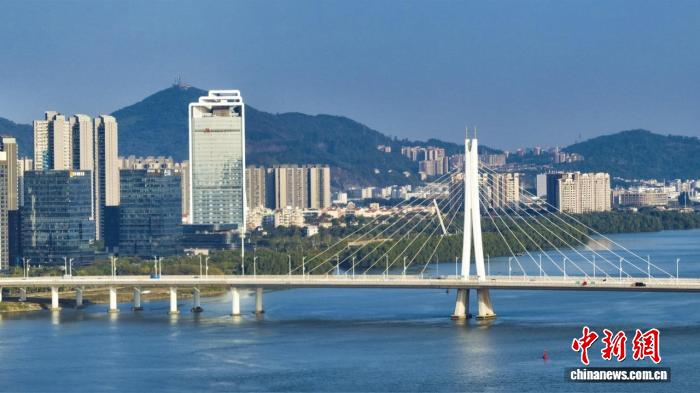
Core Viewpoint - Guangzhou Nansha District is leveraging personal income tax incentives to attract talent from Hong Kong and Macau, effectively creating a "bridge" for policy adaptation that enhances the appeal of the region for professionals [1][2]. Group 1: Tax Incentives - Nansha offers unprecedented personal income tax benefits, allowing Hong Kong and Macau residents to have their tax burdens aligned with those in their home regions, thus eliminating the income "loss" due to tax system differences [2][3]. - Since the implementation of the tax policy, a total of 150 million yuan in tax reductions has been granted, benefiting 1,073 residents from Hong Kong and Macau, with an average tax burden reduction of over 50% [3]. Group 2: Talent Recruitment - The tax incentives have played a crucial role in the recruitment of key talents, such as a senior algorithm engineer from Hong Kong, which has led to significant technical upgrades within companies [1][2]. - The number of Hong Kong and Macau residents working in Nansha and filing personal income taxes has nearly doubled, indicating a substantial increase in talent acquisition and satisfaction [3].
九识智能正式进驻阿布扎比,RoboVan在阿开启常态化运营
Mei Ri Jing Ji Xin Wen· 2026-01-23 08:22
Group 1 - The core message highlights the official launch of the Metal Park smart warehouse in Abu Dhabi, UAE, and the full operational deployment of the RoboVan fleet by the company [1] - The company has obtained its first autonomous vehicle operation license in the UAE, marking a significant milestone in its strategic expansion in the Middle East [1] - This achievement signifies the successful establishment of China's L4 autonomous driving technology in the Gulf region, completing a full compliance, scaling, and practical application loop [1]
Alphabet周四尾盘上涨0.5%
Zhong Guo Qi Che Bao Wang· 2026-01-23 03:58
Core Viewpoint - Alphabet's stock increased by 0.5% following the launch of Waymo's autonomous taxi service in Miami [1] Group 1 - Alphabet's Waymo has initiated an autonomous taxi service in Miami [1] - The launch of the service is a significant step in the expansion of Waymo's operations [1]

300万ADR持仓,木头姐为何持续加仓文远知行
Ge Long Hui· 2026-01-23 03:52
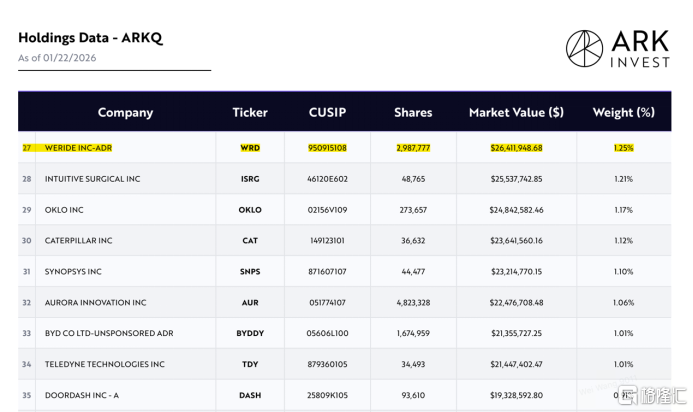
Group 1 - ARK Invest has been continuously increasing its stake in autonomous driving technology company WeRide since December 2025, holding nearly 3 million ADRs valued at approximately $30 million as of January 22, 2026, making WeRide one of the top five holdings in its Autonomous Technology & Robotics ETF [1][2] - ARK Invest's latest report, "Big Idea 2026," predicts that autonomous ride-hailing (Robotaxi) will increasingly capture market share in the ride-hailing sector and could dominate urban public transportation [2] - The continuous investment in WeRide reflects ARK Invest's strong confidence in the future development of the Robotaxi industry and its long-term strategic positioning [2] Group 2 - WeRide, founded in 2017, aims to transform human mobility through autonomous driving and is the only company globally with autonomous driving licenses in eight countries, conducting R&D, testing, and operations in over 40 cities across 11 countries [3] - WeRide went public on NASDAQ on October 25, 2024, becoming the first global stock for general autonomous driving and Robotaxi, and later listed on the Hong Kong Stock Exchange on November 6, 2025, marking it as the first Robotaxi stock in Hong Kong [3] - The company focuses on developing safe and reliable autonomous driving technologies, particularly in the areas of Robotaxi, Robobus, and advanced driver-assistance systems (ADAS) [3] Group 3 - WeRide's autonomous taxi fleet has surpassed 1,000 vehicles, reaching 1,023 units, and operates in over ten major cities globally, with commercial operations in Guangzhou, Beijing, and Abu Dhabi [5] - The Abu Dhabi fleet is approaching single-vehicle breakeven, and WeRide's ADAS business has secured partnerships with major OEMs, aiming to complete the SOP for its end-to-end ADAS solution by the end of 2025 [5]

特斯拉无安全员Robotaxi向公众开放,关注港股通汽车ETF易方达(159121)投资机会
Mei Ri Jing Ji Xin Wen· 2026-01-23 03:42
Core Insights - Tesla has officially launched a Robotaxi service without safety drivers and plans to gradually increase the proportion of its autonomous vehicle fleet [1] - The company anticipates that operational costs will drop below $0.2 per mile once large-scale operations commence, and believes that autonomous driving will become "very common" by 2026 [1] Industry Impact - This move signifies the transition of Level 4 autonomous driving from testing to large-scale commercial operations, validating both the technological feasibility and initial business model [1] - The development is expected to create clear demand stimulation and valuation anchoring for the global smart driving industry chain [1] Investment Opportunities - The Hang Seng Hong Kong Stock Connect Automotive Theme Index consists of 40 stocks related to the automotive industry within the Stock Connect framework, covering leading automakers and key players in the intelligent supply chain [1] - Investment products like the E Fund Automotive ETF (159121) track this index, providing investors with convenient tools to participate in the intelligent development of the automotive industry [1]
未知机构:招商电新马总信息快递123马斯克在2026世界经济论坛发言-20260123
未知机构· 2026-01-23 02:25
Summary of Key Points from the Conference Call Industry and Company Involved - The discussion primarily revolves around the renewable energy sector, specifically solar energy, robotics, and autonomous driving technologies, with a focus on companies like SpaceX and Tesla, as well as various related firms in the solar and robotics industries [1]. Core Insights and Arguments 1. **Mass Production of Robots**: - By 2026, robots will be capable of performing more complex tasks, with large-scale production expected to begin, potentially leading to significant sales by the end of 2027 [1]. - Related companies include: JunDa Co., Dike Co., and Chunhui Zhikong [1]. 2. **Solar Energy as the Optimal Solution**: - Solar energy is highlighted as the best energy solution, with plans for SpaceX to launch solar-powered AI satellites and collaborate with Tesla to establish 100GW of solar capacity in the U.S. [1]. - Future plans include the construction of a space-based solar power station to support data centers [1]. - Companies to watch in this sector include: Dongfang Risheng, Shanghai Port, and Haiyou New Materials [1]. 3. **Advancements in Autonomous Driving**: - The transition towards fully autonomous driving is underway, with Tesla's insurance becoming more affordable and the imminent proliferation of autonomous taxis in the U.S. [1]. 4. **AI Development Projections**: - By 2030, AI is projected to surpass human intelligence collectively [1]. 5. **Electricity Supply as a Bottleneck**: - The supply of electricity remains a critical bottleneck for AI development, with a note on the strength of China's electricity system and its solar energy capabilities [1]. Other Important but Potentially Overlooked Content - The mention of various companies involved in the solar equipment and robotics sectors, such as Maiwei Co., Aotwei, Kaidi Co., Zhenyu Technology, Xinjie Electric, Meihu Co., and Fusa Technology, indicates a broad ecosystem of players that could benefit from these advancements [1]. - The reference to North American power equipment companies like Siyuan Electric, Igor, Jinpan Technology, and Shima Power suggests potential investment opportunities in the power supply chain related to these technologies [1].

港股开盘 | 恒指高开0.87% 自动驾驶走强 小马智行-W(02026)等涨超3%
智通财经网· 2026-01-23 01:35
Group 1 - The Hang Seng Index opened up by 0.87%, and the Hang Seng Tech Index rose by 0.96%, with strong performance in the autonomous driving sector and active tech stocks like Alibaba and JD.com [1] - Dongwu Securities believes that the Hong Kong stock market is in a trend of oscillating upward, but faces short-term challenges due to differing views on overseas factors, particularly regarding the U.S. AI tech earnings reports [1] - Guolian Minsheng Securities is optimistic about the revaluation of China's AI sector, supported by a solid industrial catalyst timeline, with significant model releases expected in early 2026 from major companies like Google and Meta [1] Group 2 - Morgan Stanley anticipates that the upward momentum in A-shares and Hong Kong stocks will continue until the Lunar New Year, with Hong Kong stocks expected to outperform A-shares [2] - Guojin Securities notes that as the domestic economy recovers and major overseas economies shift to accommodative monetary policies, the valuation advantages of Hong Kong stocks will become more pronounced [2] - Guojin Securities also predicts significant improvements in liquidity for the Hong Kong market by 2026, suggesting that the valuation recovery trend is likely to continue [2]
2025年几家自动驾驶公司的采访总结
自动驾驶之心· 2026-01-22 09:07
Core Algorithm - The industry has shifted towards end-to-end solutions, moving away from modular approaches, at least in public discourse [1] - The introduction of world models is prevalent, with some companies using them to generate training data, while others incorporate them into end-to-end models to enhance performance [1][8] - There is a divergence in opinions regarding the necessity of language models (VLA) in autonomous driving, with some companies arguing that language is not essential for driving tasks [1][11] Simulation and Infrastructure - The closed-loop systems have evolved from data-driven to simulation testing and training loops [2] - 3DGS is highlighted as a crucial technology for building simulation environments, as emphasized by Tesla at CVPR 2025 [5] - Infrastructure is critical, with companies like Xiaomi and Li Auto noting its benefits for development efficiency [3][14] Organizational Capability - Organizational ability is vital, as large autonomous driving teams face significant management challenges [4] - Team culture and collaboration are emphasized as essential for overcoming complex technical and management issues [5] Technical Choices Comparison - A comparison of various companies' technical choices reveals differing approaches to core technologies and the role of world models and simulation tools [9] - Companies like Li Auto advocate for a training loop that evolves from imitation to self-learning, while NVIDIA emphasizes interpretability and reasoning in AI [9] Key Non-Core Factors - R&D infrastructure and engineering efficiency are crucial for the success of autonomous driving technologies [14] - Simulation and synthetic data are becoming essential for addressing corner cases that real-world data cannot cover [14] - The scale of computing power and chip adaptation is critical, as autonomous driving is not just a software issue but also a hardware challenge [15] User Experience and Safety - User experience and safety are paramount, with companies like Xiaomi stressing the importance of balancing advanced technology with user concerns [17] - The need for a dual-stack safety mechanism is highlighted, ensuring that even aggressive end-to-end models have a fallback to traditional rule-based systems for safety [19]


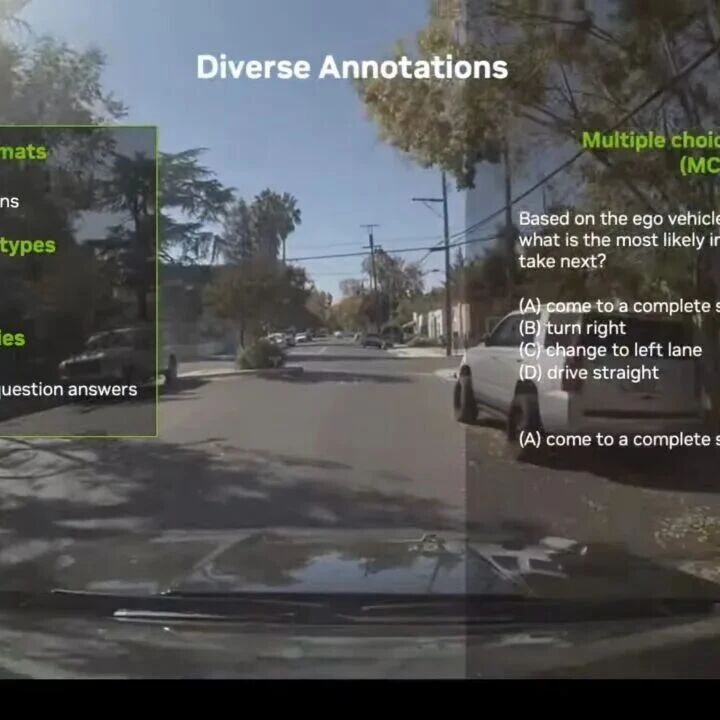
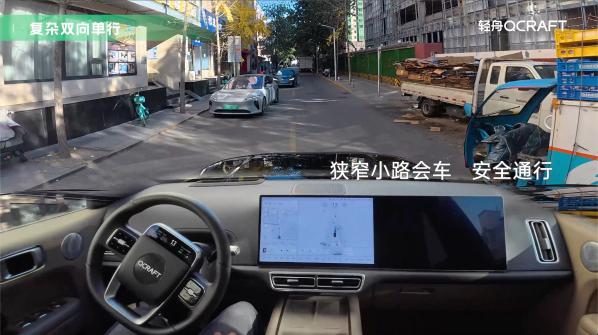
安全端到端首发量产轻舟智航单芯片跑通城市NOA
Zhong Guo Jing Ji Wang· 2026-01-22 09:04
Core Insights - QCraft has announced the mass production of the industry's first city NOA solution based on a single Horizon 6M chip, which is now available in the Li Auto L series [1] - The solution utilizes 128 TOPS computing power to deliver an advanced urban NOA experience, emphasizing the efficient use of computing resources [1] - QCraft's co-founder and CEO, Dr. Yu Qian, highlighted the company's pioneering approach in identifying the potential of a single chip for urban NOA and achieving high performance [1] Group 1 - The mass production solution is based on QCraft's innovative end-to-end safety model, which comprehensively covers urban travel scenarios [1] - The system features human-like defensive driving capabilities, ensuring safety throughout the driving process by anticipating and mitigating risks in complex environments [2] - The safety model integrates with the vehicle's HMI, providing real-time insights into system decision-making, moving away from traditional "black box" models [4] Group 2 - The solution is designed to efficiently handle various urban driving scenarios, including traffic lights and city cruising, by automatically adjusting driving rhythms [6] - The system's smooth action planning enhances passenger comfort by avoiding abrupt stops and hesitations in complex situations [6] - The successful mass production of the single Horizon 6M city NOA demonstrates QCraft's capabilities in large-scale production and optimization, making advanced driving assistance more accessible to a wider range of vehicles [6]