
Breweries

Search documents
青岛啤酒增长乏力,并购黄酒来提升业绩丨封面观酒
Sou Hu Cai Jing· 2025-05-08 13:00
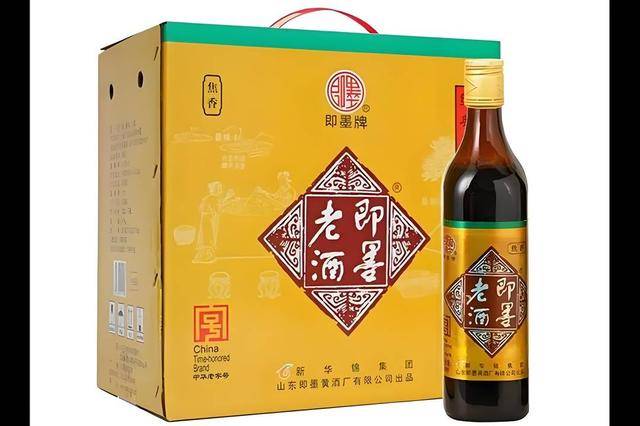
Core Viewpoint - Qingdao Beer is taking a significant step in its diversification process by acquiring 100% equity of Shandong Jimo Yellow Wine Factory for 665 million RMB [1][3]. Group 1: Acquisition Details - On May 7, the company signed a share transfer agreement with Xinhua Jin Group and Shandong Lujin Import and Export Group to acquire the entire equity of Jimo Yellow Wine [3]. - The acquisition price is 665 million RMB, which includes the amount of profit and loss adjustments during the price adjustment period [3]. - After the completion of the transaction, Jimo Yellow Wine will become a wholly-owned subsidiary of Qingdao Beer and will be included in the company's consolidated financial statements [3]. Group 2: Company Background - Jimo Yellow Wine, established in 1949, is a significant representative of traditional Chinese yellow wine, known for its unique flavor and rich cultural heritage [3]. - The brand "Jimo" was awarded the title of "Chinese Time-Honored Brand" by the Ministry of Commerce in 2006, and its traditional brewing technique is recognized as a provincial intangible cultural heritage [3]. Group 3: Financial Performance - In 2024, Jimo Yellow Wine achieved a main business income of 166.41 million RMB, representing a year-on-year growth of 13.5% [4]. - The net profit for the same year was 30.47 million RMB, showing a year-on-year increase of 38.0% [4]. - As of December 31, 2024, Jimo Yellow Wine had total assets of 908 million RMB and a net asset value of 203 million RMB [4]. Group 4: Strategic Rationale - The acquisition aligns with Qingdao Beer's strategy to drive high-quality development through innovation and expand its non-beer business for diversified growth [5]. - The complementary sales effect between "Jimo Yellow Wine" and Qingdao Beer products is expected to enhance market competitiveness and open new growth avenues [6]. - The overall performance of the yellow wine market has been stable, contrasting with the declining growth in the beer sector, where Qingdao Beer reported a revenue decrease of 5.3% in 2024 [6].

Shock Top: A Bold Rebrand for a Craft Beer Icon
Globenewswire· 2025-05-08 11:00
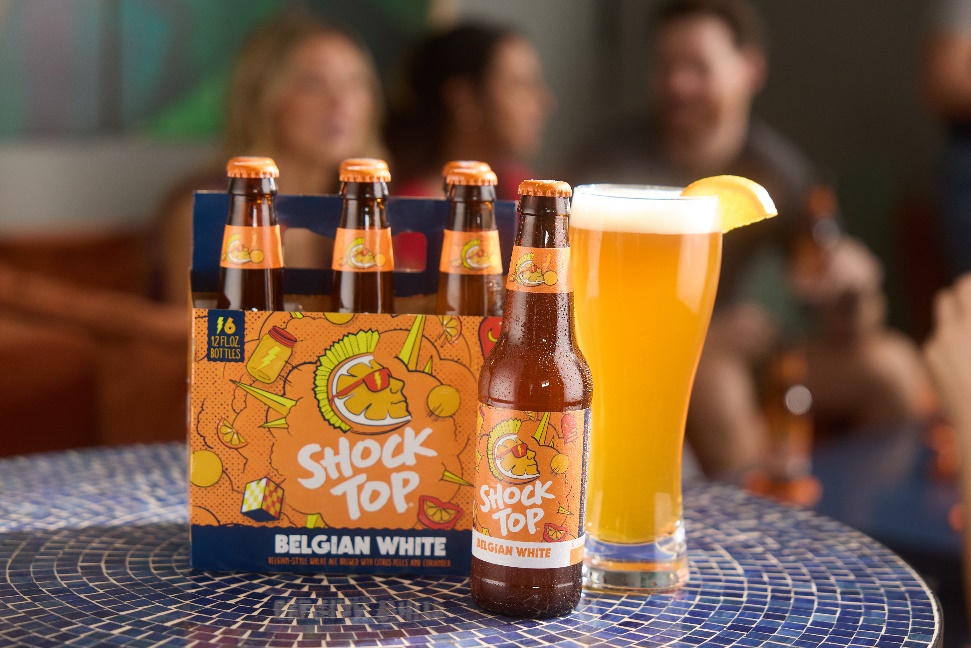
Core Viewpoint - Shock Top, a craft beer brand under Tilray Brands, Inc., is undergoing a significant rebranding effort to attract a new generation of beer drinkers with modern packaging, a new logo, and an integrated marketing campaign [1][5]. Group 1: Rebranding and Marketing Strategy - The rebrand introduces a new visual identity featuring the Wedgehead icon, designed to be bolder and more contemporary, symbolizing an uplifting experience [2]. - Shock Top's beer lineup will be refreshed, starting with the Belgian White and including seasonal favorites like Cosmic Berry and Lemonade Shandy, all featuring vibrant visuals [4]. - The marketing strategy includes digital media investments, partnerships with universities, and in-stadium experiences to engage new consumers [5][6]. Group 2: Market Positioning - The rebranding comes at a time when consumers are leaning towards above-premium options, positioning Shock Top to appeal to both loyal fans and new drinkers seeking unique flavors [5]. - The brand aims to grow its market share by embracing unexpected flavors and experiences, aligning with current consumer trends [5]. Group 3: Company Background - Shock Top was founded in 2006 with the launch of its Belgian White Ale and is known for its bold flavors and fun approach to brewing [7]. - Tilray Brands, Inc. operates globally in the lifestyle and consumer packaged goods sector, focusing on innovative products that create memorable experiences [8].

上市啤酒企业减员数量曝光:百威亚太减员4000人,燕京、华润减员上千人
Sou Hu Cai Jing· 2025-05-08 09:54
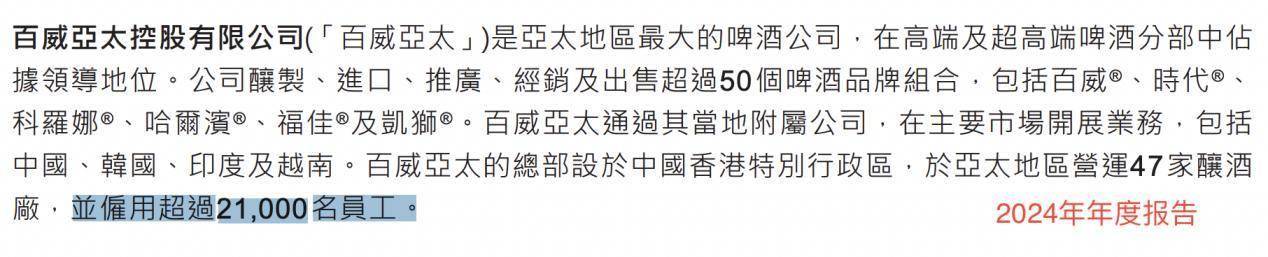
Employment Changes - Budweiser APAC reduced its workforce from approximately 25,000 employees in 2023 to over 21,000 in 2024, resulting in a decrease of about 4,000 employees, which is a reduction rate of approximately 16% [1] - Yanjing Beer reduced its workforce by 1,440 employees, with total employees dropping from 21,405 in 2023 to 19,965 in 2024 [2][5] - China Resources Beer employed around 26,000 people in 2024, down from about 27,000 in 2023, a decrease of 1,000 employees [6] - Qingdao Beer saw a reduction of 817 employees, with total employees decreasing from 30,687 in 2023 to 29,870 in 2024, a reduction rate of 2.66% [8] Financial Performance - Budweiser APAC's beer sales in 2024 were 8.481 million kiloliters, a year-on-year decline of 8.8%, with revenue of $6.246 billion, down 7%, and normalized EBITDA of $1.807 billion, down 6.3% [2] - Yanjing Beer achieved beer sales of 4.0044 million kiloliters in 2024, a year-on-year increase of 1.57%, with revenue of 14.667 billion yuan, up 3.20%, and net profit attributable to shareholders of 1.056 billion yuan, up 63.74% [6] - China Resources Beer reported a total revenue of 38.635 billion yuan in 2024, a slight decline of 0.76%, with net profit attributable to shareholders of 4.739 billion yuan, down 8.03%, and a gross margin of 42.6%, which is an increase of 1.2 percentage points [8] - Qingdao Beer reported revenue of 32.138 billion yuan in 2024, a decrease of 5.3%, while net profit attributable to shareholders was 4.345 billion yuan, an increase of 1.81%, and net profit excluding non-recurring items was 3.951 billion yuan, up 6.19% [10]



果然财经|青啤6.65亿收购即墨老酒,头部品牌的双向奔赴?
Qi Lu Wan Bao· 2025-05-08 08:57
Core Viewpoint - Qingdao Beer has announced the acquisition of 100% equity in Shandong Jimo Huangjiu Factory from Xinhua Jin Group and Lujin Group for a total consideration of RMB 665 million, marking the highest merger and acquisition amount in the domestic Huangjiu industry in the past five years, and signifies the company's entry into the Huangjiu market [1] Group 1: Market Environment - The Chinese beer industry has faced a challenging market environment, with production declining from 38.12 million kiloliters in 2018 to 35.90 million kiloliters in 2023, and a projected further decline of 0.6% in 2024 [1] - Qingdao Beer's revenue for 2024 is reported at RMB 32.138 billion, a decrease of 5.3% year-on-year, although net profit attributable to shareholders increased by 1.81% [1] Group 2: Strategic Diversification - The acquisition of Jimo Huangjiu is a significant step in Qingdao Beer's diversification strategy, aimed at enriching its product line and expanding market channels to offer more diverse choices to consumers [2] - The seasonal sales patterns of beer and Huangjiu create a complementary effect, with Qingdao Beer’s revenue heavily concentrated in the second and third quarters, while Jimo Huangjiu's peak sales occur in the fall and winter [4] Group 3: Huangjiu Market Dynamics - The Huangjiu market is characterized by small and fragmented segments, with total sales revenue of RMB 21 billion in 2023, accounting for only 2% of the overall liquor market [5] - Jimo Huangjiu, while recognized as a leading brand in Northern China, has struggled with market penetration, achieving only 15% of its revenue from Northern markets in 2024 [5] Group 4: Growth Potential - Jimo Huangjiu has shown growth potential, with a reported revenue of RMB 166 million in 2024, reflecting a year-on-year increase of 13.5%, and a net profit of RMB 30.47 million, up 38% [5] - The acquisition is expected to enhance Jimo Huangjiu's market penetration in Northern China, leveraging Qingdao Beer's extensive distribution network of 1.2 million retail outlets [7]
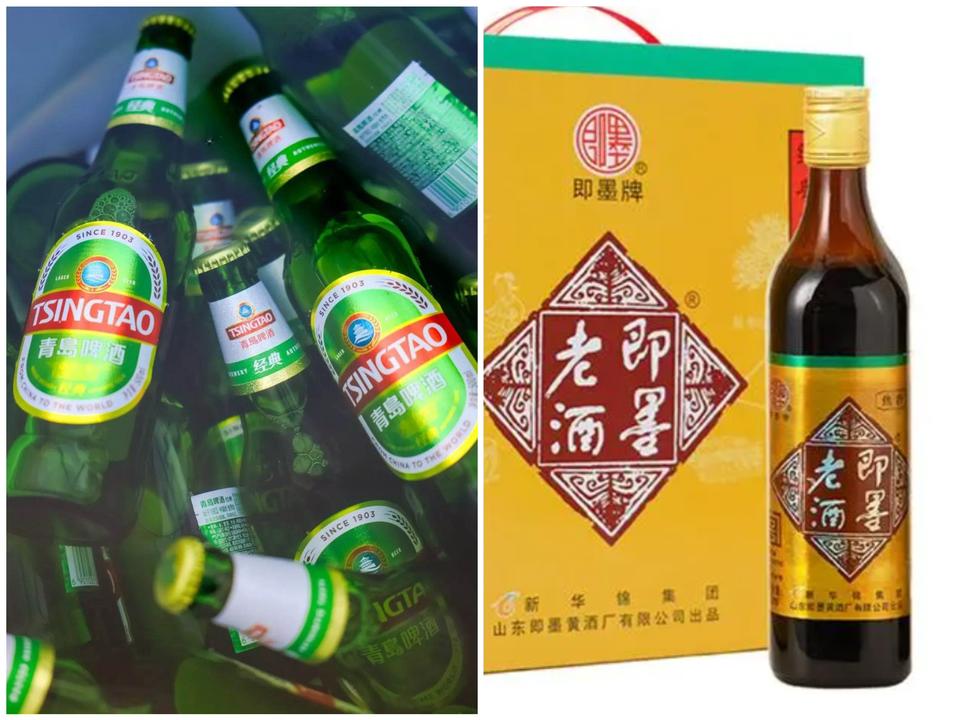
东吴证券:一季度啤酒行业恢复性增长 期待旺季量价提速
Zhi Tong Cai Jing· 2025-05-08 08:14
Core Viewpoint - The beer sector is experiencing a recovery in Q1 2025, with revenue of 20.043 billion yuan, a year-on-year increase of 3.68%, and a net profit of 2.519 billion yuan, up 10.62% year-on-year, indicating a positive trend after a challenging 2024 [1][2]. Group 1: Revenue and Profit Trends - In 2024, the beer sector faced pressure with a revenue of 68.038 billion yuan, down 1.67% year-on-year, while net profit reached 7.290 billion yuan, up 6.05% year-on-year [2]. - Q1 2025 shows a recovery with revenue at 20.043 billion yuan, a 3.68% increase, and net profit at 2.519 billion yuan, a 10.62% increase year-on-year [1][2]. Group 2: Volume and Price Dynamics - The beer market has faced challenges in volume and price since 2024, attributed to weak consumer recovery and proactive inventory management by leading companies [3]. - Despite a weak price performance in Q1 2025, sales have shown signs of recovery, indicating potential for improved volume and price dynamics moving forward [3][4]. Group 3: Cost and Margin Analysis - Cost elasticity has been steadily realized since 2024, with gross margin levels improving throughout the year [3]. - In Q1 2025, while the price per ton has decreased, cost elasticity has continued, leading to sustained improvements in gross margin [3][4]. Group 4: Future Outlook and Investment Opportunities - The operational rhythm is expected to support a recovery in volume and price, particularly as Q2 and Q3 2025 enter a low base period [4]. - The current low inventory levels in distribution channels, combined with the approaching peak beer consumption season, present investment opportunities in companies like Qingdao Beer and Yanjing Beer [5].

“哈啤”转型 百威亚太战略调整下的本土化探索
Xin Lang Cai Jing· 2025-05-08 08:01
Core Insights - The global beer industry is undergoing significant adjustments, with Budweiser APAC's 2024 financial report highlighting typical characteristics of this transitional period [1] - Despite a challenging environment, Budweiser APAC's Harbin Beer has shown positive transformation through product innovation and channel optimization [1] Financial Performance - Budweiser APAC's total revenue for 2024 decreased to $6.246 billion, reflecting a year-on-year decline [1] - Net profit fell by 14.8%, indicating pressure from market competition and fluctuating consumer conditions [1] Product Innovation - Harbin Beer’s zero-sugar product line experienced a remarkable growth of 122%, driven by collaborations with the NBA to engage younger consumers [1] - The introduction of the zero-sugar ice pure series has achieved a nationwide coverage of 85% in convenience stores, with a penetration rate of 19.3% among the 25-34 age group [3] Strategic Focus - Budweiser APAC plans to focus on core brands, specifically Budweiser and Harbin Beer, as part of its 2025 strategy [2] - The appointment of Cheng Yanjun as CEO signals a commitment to enhancing local decision-making efficiency and leveraging his technical background for supply chain optimization [3] Market Adaptation - Harbin Beer is actively adjusting its channel strategy to address the decline in traditional nightlife venues, with a 30% increase in sales of low-sugar, low-alcohol products expected by 2025 [4] - The brand is expanding its online sales, which have increased by 18%, and improving its convenience store presence with a 25% growth in the East China region [9] Cultural Integration - Harbin Beer is transforming its century-old industrial heritage into a cultural IP, utilizing tourism and product sales to enhance brand engagement [6] - The integration of industrial tourism with product sales, such as offering a beer case with museum entry, is creating new consumer touchpoints [6] Future Challenges - Harbin Beer must continue to seek breakthroughs in brand rejuvenation and value reconstruction to appeal to younger consumers [10] - The new CEO emphasizes the need for localized strategies to rebuild connections with consumers, focusing on product and channel innovation [10]
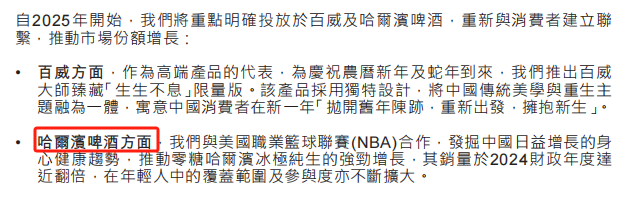
白酒公司高管集体降薪,有人一年少了四百万
21世纪经济报道· 2025-05-08 03:52
Core Viewpoint - The article discusses the contrasting employment trends in the beer and liquor industries during the current adjustment period, highlighting that while beer companies have reduced their workforce significantly, liquor companies, particularly leading brands, have increased their employee numbers despite facing revenue declines [2][11]. Employment Trends in Beer Industry - Over the past year, the beer industry has seen a reduction of over 6,000 employees across 10 listed companies, with major players like Budweiser APAC and China Resources Beer each reducing their workforce by over 1,000 [5][8]. - The overall employment in the beer sector has decreased to below 300,000, primarily due to declining sales and revenue in the industry [2][5]. - The reduction in workforce is attributed to decreased demand for production and sales roles, particularly for temporary workers during peak seasons [8][9]. Employment Trends in Liquor Industry - In contrast, the liquor industry has experienced an increase of over 3,900 employees, with only 7 out of 22 listed liquor companies reporting reductions [9][12]. - Leading liquor companies such as Kweichow Moutai and Yanghe Brewery have added over 1,000 employees each, indicating a robust demand for production roles [9][12]. - The increase in employment is partly driven by the need to meet production demands and the social responsibility of state-owned enterprises to maintain employment levels [12][13]. Salary Adjustments - While the overall employment levels in liquor companies have increased, there has been a notable reduction in executive compensation, with many high-ranking officials seeing salary cuts of hundreds of thousands [16][17]. - In contrast, the average salary for non-executive employees has remained stable or even increased in some companies, such as Water Well and Kweichow Moutai, which reported a rise in average non-executive salaries [20][21]. Future Outlook - The article suggests that the current adjustment period for the liquor industry is not yet over, and further developments in cost-cutting measures and employee compensation will need to be monitored [21].






未知机构:青岛啤酒全资收购山东即墨黄酒开启全新增长曲线青岛啤酒今日-20250508
未知机构· 2025-05-08 02:20
Summary of Conference Call Records Company and Industry Involved - **Company**: Qingdao Beer (青岛啤酒) - **Industry**: Huangjiu (黄酒) Industry Key Points and Arguments 1. **Acquisition Announcement**: Qingdao Beer announced the acquisition of 100% equity in Jimo Huangjiu from Xinhua Jin Group and Lujin Group for a total consideration of RMB 665 million, including adjustments for profit and loss during the price adjustment period [1] 2. **Financial Performance of Jimo Huangjiu**: In 2024, Jimo Huangjiu achieved a revenue of RMB 166 million, representing a year-on-year growth of 13.5%. The net profit reached RMB 30.47 million, with a year-on-year increase of 38.0%, resulting in a net profit margin of 18.3% [1] 3. **Asset Overview**: As of December 31, 2024, Jimo Huangjiu reported total assets of RMB 908 million and net assets of RMB 203 million [1] 4. **Valuation Metrics**: The acquisition price corresponds to a Price-to-Sales (PS) ratio of 4.0x, Price-to-Earnings (PE) ratio of 21.8x, and Price-to-Book (PB) ratio of 3.3x [1] 5. **Industry Trends**: The Huangjiu industry is undergoing a period of competitive optimization and product upgrades, which is expected to drive profitability improvements in the medium to long term [2] 6. **Market Positioning**: Leading companies in the Huangjiu sector are enhancing their offerings by focusing on younger and premium products. Recent price increases by leading brands indicate a clear trend of market optimization [2] 7. **Regional Influence**: Jimo Huangjiu, as a representative of Northern Huangjiu, holds significant influence in the North China market. The acquisition by Qingdao Beer is expected to further develop Northern Huangjiu and enhance its market presence [2] 8. **Future Growth Opportunities**: The Huangjiu industry is anticipated to experience new growth opportunities, with recommendations to focus on leading brands such as Kuaijishan and Guyuelongshan [2] 9. **Strategic Expansion**: Since the recent restructuring, Qingdao Beer has been actively expanding its portfolio, including the acquisition of assets from Qingdao Beverage Group, aiming for a revenue target of RMB 10 billion and a profit target of RMB 1 billion by 2029 [2] 10. **Synergy Potential**: The acquisition of local high-quality Huangjiu assets is expected to enhance Qingdao Beer's product lineup and leverage existing distribution channels for greater synergy [2]
燕京啤酒:5月7日接受机构调研,汇添富基金、广发证券参与
Zheng Quan Zhi Xing· 2025-05-07 10:34
Core Viewpoint - Yanjing Beer is focusing on the growth of its flagship product, Yanjing U8, and is committed to enhancing its product structure and market presence, particularly in mid-to-high-end segments, while achieving significant sales growth in 2024 and Q1 2025 [2][5]. Group 1: Company Strategy and Market Development - The company is advancing its Yanjing U8 flagship product strategy and increasing its focus on mid-to-high-end products, aiming to optimize its product structure and enhance competitiveness [2]. - Yanjing Beer is actively expanding into emerging markets and upgrading its sales channel structure to achieve nationwide distribution and sales growth [3]. Group 2: Cost Management and Efficiency - In 2024, the company experienced a decrease in production costs due to lower raw material and fuel prices, alongside improvements in production efficiency through technological upgrades [4]. - The company is implementing a comprehensive management system to enhance governance, green development capabilities, and value creation [4][6]. Group 3: Financial Performance - In Q1 2025, Yanjing Beer reported a beer sales volume of 995,000 kiloliters, with Yanjing U8 maintaining over 30% growth; revenue reached 382.68 million yuan, a 6.69% increase year-on-year, and net profit attributable to shareholders was 16.53 million yuan, up 61.10% [5][7]. - The company's main revenue for Q1 2025 was 3.83 billion yuan, with a gross margin of 42.79% and a debt ratio of 32.81% [7]. Group 4: Analyst Ratings and Forecasts - Over the past 90 days, 29 institutions have rated the stock, with 23 buy ratings and 6 hold ratings; the average target price is 15.01 yuan [7][8]. - Analysts have provided profit forecasts for 2025, with net profit estimates ranging from 14.25 billion yuan to 14.96 billion yuan [8].
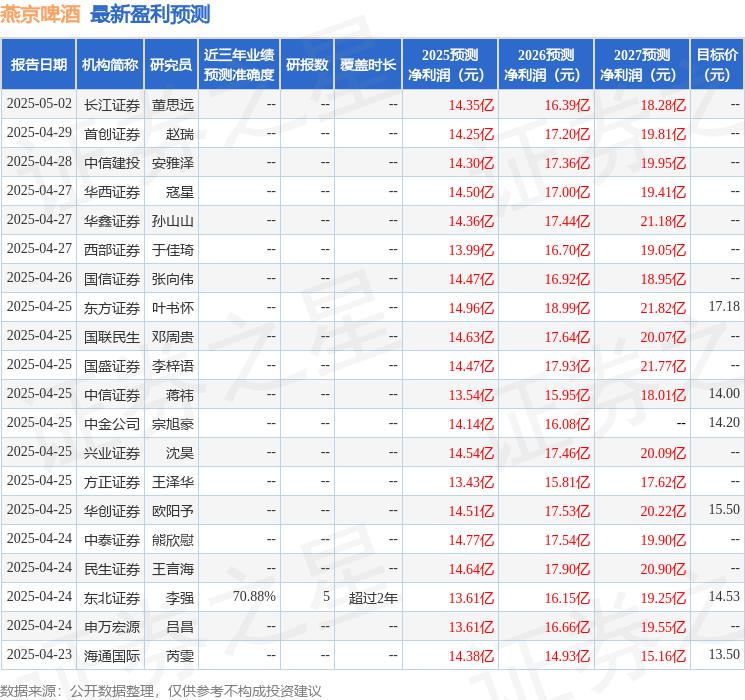
青岛啤酒:拟以6.65亿元收购即墨黄酒100%股权
news flash· 2025-05-07 10:16
青岛啤酒(600600)公告,公司拟以6.65亿元受让新华锦(600735)集团和鲁锦集团合计持有的即墨黄 酒100%股权。本次交易完成后,即墨黄酒将成为青岛啤酒全资子公司。即墨黄酒成立于1949年,注册 资本5500万元,2024年实现主营业务收入1.66亿元,净利润3047万元。青岛啤酒表示,本次收购将推动 公司多元化发展,拓宽产品线和市场渠道,增强可持续发展能力。 ...