超市

Search documents
独家 | “快乐猴”超市门头沟店开业在即 美团在京试水“硬折扣”
Bei Jing Shang Bao· 2025-10-13 10:46
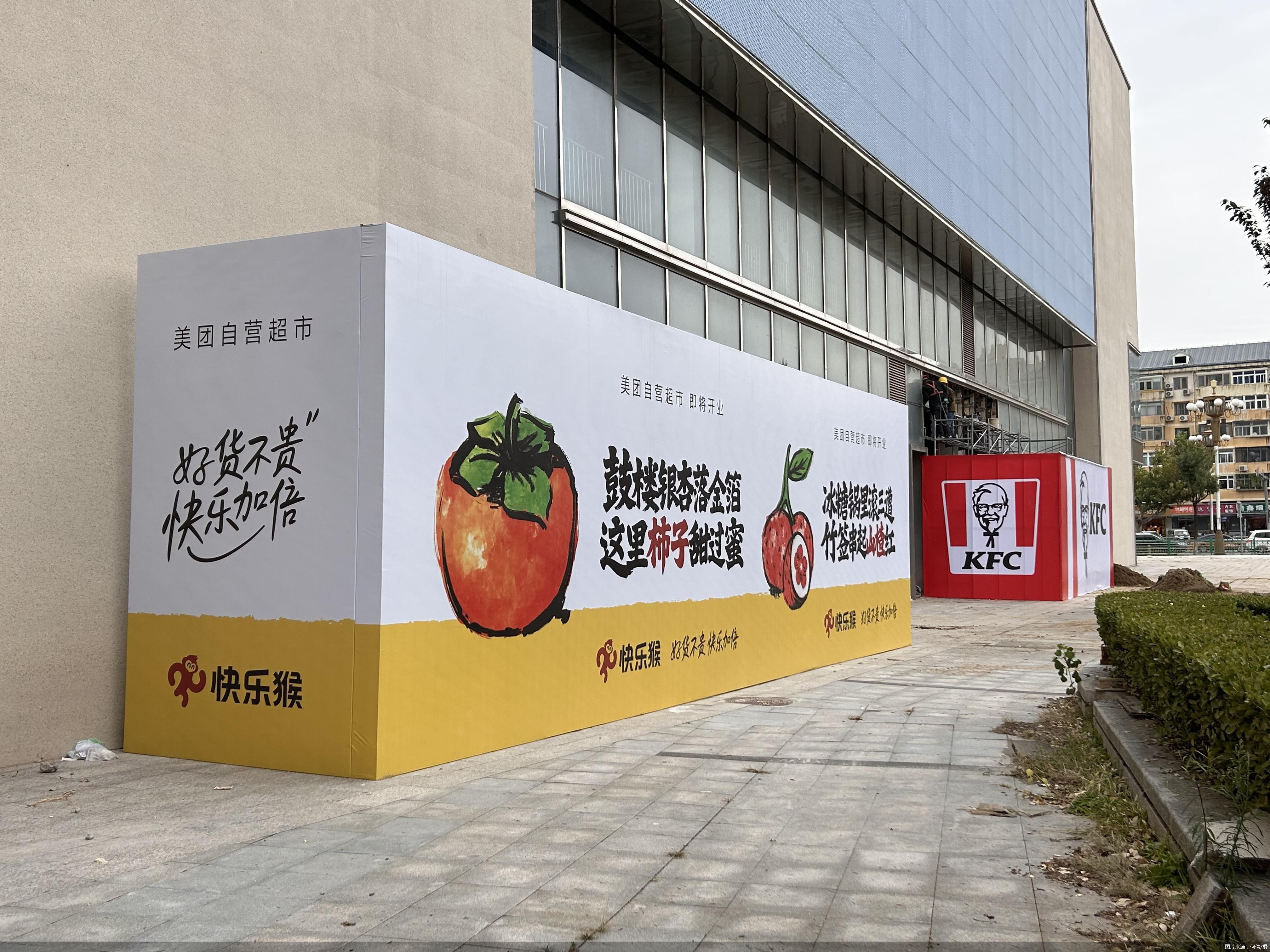
Core Insights - Meituan's self-operated supermarket "Happy Monkey" will open its first store in Northern China on October 24, located in the Mentougou Commercial Plaza, covering an area of approximately 1,000 square meters. This marks the fifth store opened by Meituan in two months [1][5] - The "hard discount" sector has become a competitive battleground, with major players like Hema and JD.com, as well as traditional supermarkets like Wumart and Yonghui, firmly established in the Northern market. Supply chain efficiency is a critical challenge for Meituan to overcome in order to succeed [4][6] Company Expansion - After testing the waters in Hangzhou, Meituan is now focusing on Beijing, with promotional activities for the new store including giveaways of items like electric bikes and camping cars on opening day. The store will also gradually introduce online ordering and offline delivery services [5][6] - Another Happy Monkey store is set to open in Sanhe City, Langfang, Hebei Province, on October 17, indicating Meituan's accelerated expansion in the discount supermarket sector [6] Market Positioning - Happy Monkey aims to create a consumer memory of "affordable prices," with products like 23.9 yuan per box of pure milk and 5.9 yuan for four freshly baked egg tarts attracting attention. The store targets price-sensitive customers, contrasting with Meituan's other brand, Xiaoxiang Supermarket, which emphasizes online ordering and quick delivery [6][10] - The first store in Beijing is strategically located in a densely populated area, ensuring a sufficient order density. This location strategy is also applied to other Happy Monkey stores in Hangzhou and Langfang [7] Competitive Landscape - Major players in the discount supermarket sector have established significant advantages in private label products, with brands like Aoleqi and Hema NB having over 90% and 60% of their sales from private labels, respectively. This trend poses a challenge for Happy Monkey to develop localized private label products that cater to Northern tastes [8][12] - The competition in the hard discount sector is intensifying, with various companies racing to expand their market presence. Hema's recent rebranding and expansion of its community supermarket chain exemplify this trend [11][12] Operational Challenges - Meituan's entry into the discount supermarket space requires navigating different operational dynamics compared to its online business, including in-store layout and product display [11] - Happy Monkey's success will depend on its ability to respond to dynamic consumer demands, develop distinctive private label products, and implement refined operational strategies to build customer loyalty [12]


一根橡皮绳留住老客户
Bei Jing Wan Bao· 2025-10-13 07:56
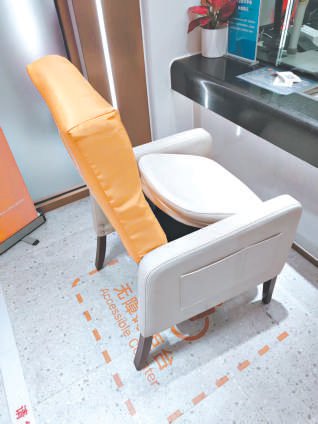
Core Insights - The article emphasizes the importance of age-friendly facilities in commercial spaces, highlighting the varying interpretations of "starting from the heart" by different operators [1][10] Group 1: Age-Friendly Facilities - The Industrial and Commercial Bank of China (ICBC) has implemented age-friendly designs, including specially designed seating that assists elderly individuals when standing up, and clear signage for accessibility [9] - The market at Zhao Jun Sheng has tailored its services to meet the needs of elderly customers, with staff providing assistance and offering practical solutions like free installation services for purchased items [8][9] Group 2: Navigation Challenges - Many commercial spaces, such as the Super Extreme He Sheng Hui, have unclear navigation signs, leading to confusion among elderly customers trying to locate stores [3][4][5] - The design of the Dajixiang commercial street includes steps without ramps, making it difficult for wheelchair users and the elderly to access certain areas [6][7] Group 3: Customer Experience - Elderly customers often face challenges due to poorly designed facilities, such as unclear directional signs and the presence of stairs without accompanying ramps, which can deter them from visiting these commercial areas [10][11] - The article suggests that simple changes, like unified signage and the addition of ramps, could significantly improve the experience for elderly customers [11]

中百集团涨2.09%,成交额1.48亿元,主力资金净流入722.45万元
Xin Lang Cai Jing· 2025-10-13 06:00
Core Viewpoint - Zhongbai Group's stock price has experienced significant volatility, with a year-to-date decline of 44.04%, while recent trading shows slight recovery [1][2]. Financial Performance - For the first half of 2025, Zhongbai Group reported operating revenue of 4.618 billion yuan, a year-on-year decrease of 19.13%, and a net profit attributable to shareholders of -255 million yuan, down 79.50% year-on-year [2]. - The company has cumulatively distributed 919 million yuan in dividends since its A-share listing, with no dividends distributed in the past three years [3]. Stock Market Activity - As of October 13, Zhongbai Group's stock price was 7.32 yuan per share, with a trading volume of 148 million yuan and a turnover rate of 3.13%, resulting in a total market capitalization of 4.850 billion yuan [1]. - The stock has appeared on the "Dragon and Tiger List" 18 times this year, with the most recent appearance on April 14, where it recorded a net purchase of 533.776 million yuan [1]. Shareholder Information - As of August 31, Zhongbai Group had 99,800 shareholders, a decrease of 2.57% from the previous period, with an average of 6,568 circulating shares per shareholder, an increase of 2.63% [2]. Business Overview - Zhongbai Group, established on January 9, 1990, and listed on May 19, 1997, is primarily engaged in commercial retail, operating large chain supermarkets and department stores, with additional involvement in pharmaceuticals, logistics, property management, and import-export trade [1]. - The company's main business revenue composition includes 91.07% from merchandise sales and 8.93% from other income [1]. Industry Classification - Zhongbai Group is classified under the Shenyin Wanguo industry as part of the retail trade sector, specifically in general retail and supermarkets, and is associated with concepts such as new retail, community group buying, duty-free concepts, prepared dishes, and cold chain logistics [2].

步步高涨2.15%,成交额6.26亿元,主力资金净流出875.62万元
Xin Lang Zheng Quan· 2025-10-13 05:30
Group 1 - The core viewpoint of the news is that Bubu Gao's stock has shown significant fluctuations, with a year-to-date increase of 44.30% and a recent drop of 10.52% over the past 20 days [1] - As of October 13, Bubu Gao's stock price was 5.70 CNY per share, with a total market capitalization of 15.326 billion CNY [1] - The company has been active in the stock market, appearing on the "Dragon and Tiger List" 10 times this year, with the most recent appearance on September 9, where it recorded a net buy of -51.15 million CNY [1] Group 2 - Bubu Gao operates primarily in the retail sector, with its main business revenue composition being 64.34% from supermarkets, 27.44% from other businesses, 6.01% from department stores, and 2.21% from logistics and advertising [1] - As of June 30, the number of shareholders increased by 96.50% to 88,500, while the average circulating shares per person decreased by 49.11% to 17,105 shares [2] - For the first half of 2025, Bubu Gao reported a revenue of 2.133 billion CNY, representing a year-on-year growth of 24.39%, and a net profit of 201 million CNY, which is a significant increase of 357.71% [2] Group 3 - Since its A-share listing, Bubu Gao has distributed a total of 1.677 billion CNY in dividends, with no dividends paid in the last three years [3] - As of June 30, 2025, Hong Kong Central Clearing Limited is the tenth largest circulating shareholder, holding 10.5068 million shares as a new shareholder [3]

京城超极合生汇、大吉巷等热门地,暗藏哪些不适老槽点?
Bei Jing Ri Bao Ke Hu Duan· 2025-10-13 02:50
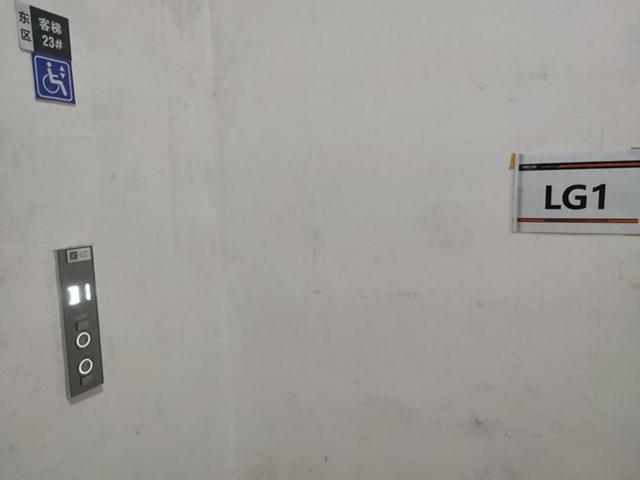
Core Viewpoint - The article highlights the challenges faced by elderly individuals in navigating commercial spaces in Beijing, emphasizing the need for better accessibility and clearer signage to enhance their shopping experience [1][23]. Group 1: Navigation Challenges - Elderly customers often struggle to find their way in large commercial spaces due to confusing floor designations and unclear signage, leading to frustration [3][4][6]. - The Super Extreme He Shenghui shopping center has a complex layout where the labeling of floors (e.g., LG0, L3) does not correspond clearly with elevator buttons, causing confusion for both elderly and younger visitors [6][7]. - Staff members at these locations also exhibit uncertainty about directions, indicating a systemic issue with navigation aids within the commercial environment [4][7]. Group 2: Accessibility Issues - The Dajixiang commercial street, which opened in May, features a sunken design that poses challenges for wheelchair users, as there are no ramps available at key entry points [8][10]. - The Wangfujing Outlet UPTOWN has received complaints regarding its underground parking, where multiple steps hinder access for elderly individuals [12]. - Overall, many commercial spaces lack adequate accessibility features, such as ramps and clear directional signs, which are essential for accommodating elderly customers [10][12]. Group 3: Service Adaptations - Some vendors, like those in the Zhao Jun Sheng market, have implemented small but meaningful service adaptations, such as providing rubber bands to help elderly customers secure their purchases [14][16]. - The China Industrial and Commercial Bank has made significant improvements in its design to cater to elderly clients, including lower transaction counters and enhanced seating arrangements [19][21]. - The bank also offers various supportive items, such as wheelchairs and magnifying glasses, to assist elderly customers during their visits [21][23]. Group 4: Broader Implications - The article suggests that while many commercial entities promote a customer-centric approach, the actual implementation of accessibility features varies significantly, reflecting differing levels of commitment to serving elderly populations [23]. - Simple changes, such as unified signage and the addition of ramps, could greatly improve the shopping experience for elderly individuals, highlighting the importance of intention behind design choices [23].
于东来:胖东来对标的是世界顶级公司,我想让顾客生活更方便美好,而不是挣了多少钱【附超市行业市场分析】
Qian Zhan Wang· 2025-10-12 02:24
Core Insights - The founder of Pang Donglai, Yu Donglai, aims to elevate the supermarket industry by benchmarking against top global companies like Google, Amazon, and Apple, focusing on enhancing customer convenience and well-being rather than merely profit [2][8] - Pang Donglai operates under a "Three High Model" which emphasizes high salaries, high benefits, and high service quality, setting a new standard in the retail sector [2][4] - The company has successfully transformed 11 stores for other retailers, resulting in sales increases of 4 to 9 times and customer traffic growth of 6 times, showcasing its effective management practices [3][4] Company Overview - Pang Donglai was established in 1997, headquartered in Xuchang, Henan Province, with a registered capital of 56.6 million RMB, and operates across various sectors including supermarkets, electronics, and logistics [2][3] - The company has not expanded its physical stores outside the province but has become a mentor for national retail enterprises, providing management standards and operational guidance [2][3] Financial Performance - In 2024, Pang Donglai reported nearly 17 billion RMB in revenue, over 600 million RMB in taxes, and 800 million RMB in profit, with an average employee monthly income exceeding 9,000 RMB [4] - The founder initially projected a profit of 20 million RMB for 2023 but ended up achieving 140 million RMB, indicating strong business performance [4] Industry Context - The Chinese supermarket industry is undergoing significant changes, with traditional hypermarkets facing declining foot traffic and the rise of community discount stores and membership-based models [4][6] - Supermarkets accounted for 12.7% of China's commodity circulation channels in 2021, but the hypermarket model is under pressure, while regional leaders like Pang Donglai thrive through localized operations and customer loyalty [4][6] Future Outlook - The supermarket industry is expected to see further consolidation through mergers and acquisitions, with market concentration increasing [6] - By 2028, the market size of the Chinese supermarket industry is projected to grow at a compound annual growth rate of 2%, reaching 3.55 trillion RMB [6]
云姨夜话丨如雨般连绵不绝的“调改”不是零售业的终局
Qi Lu Wan Bao· 2025-10-11 12:31
Core Insights - The retail industry in China is undergoing significant transformation, with a shift towards smaller, fresh, and discount-oriented formats as indicated by the report "2025 China Retail Channel Evolution Trends" [3] - Major players like AEON and Yonghui Supermarket are adapting their business models to meet changing consumer demands, with AEON launching a new format and Yonghui implementing the "Fat Donglai" model for store adjustments [3][6] - The success of these transformations is reflected in impressive sales growth, with Yonghui's adjusted stores seeing over 100% year-on-year sales increase during the recent holiday period [7] Retail Industry Trends - The trend towards smaller retail formats is accelerating, with a focus on fresh produce and discount offerings [3] - The "invisible commercial war" among retailers is intensifying, as seen with AEON's new store opening and Yonghui's strategic adjustments [3] - The retail landscape is increasingly competitive, with companies needing to innovate continuously to survive [8] Company Strategies - Yonghui Supermarket is actively optimizing its supply chain and store formats, having eliminated 28% of inefficient suppliers and focusing on long-term partnerships with core enterprises [6][7] - The introduction of proprietary brands and products is a key strategy for Yonghui, aiming to enhance customer experience and drive sales [7] - The emphasis on product development and design capabilities is becoming crucial for retailers to differentiate themselves in a crowded market [7] Leadership Perspectives - Industry leaders like Ye Guofu and Ye Zhijian emphasize the importance of innovation and adaptation in the retail sector, viewing it as a continuously evolving field [6][8] - The upcoming "2025 China Supermarket Adjustment Conference" highlights the industry's focus on aligning with global best practices and enhancing customer convenience [8]


超1.7万家实体店,倒在2025上半年
Sou Hu Cai Jing· 2025-10-11 03:27
Retail Industry Overview - The total retail sales of consumer goods in China reached 24.55 trillion yuan in the first half of the year, with a year-on-year growth of 5.0%, slightly up from 3.7% in the same period last year [2] - Online retail sales amounted to 7.43 trillion yuan, growing by 8.5%, while offline retail sales were 17.12 trillion yuan, with a growth of 3.75%, indicating a shift in consumer shopping habits towards online platforms [2][5] Store Closures - In the first half of 2025, at least 1.71 million stores closed across various sectors, including major brands like Walmart, Starbucks, and Haidilao [2] - The supermarket sector saw at least 720 store closures, including national and regional brands such as Yonghui Supermarket and Hema [3][4] - The restaurant industry faced nearly 10,000 closures, while the apparel sector saw around 4,500 stores shut down [2][6] Supermarket Sector Challenges - Traditional supermarkets are experiencing accelerated closures due to increased competition from e-commerce and the rise of instant retail, which has grown from 36.6 billion yuan in 2017 to 650 billion yuan in 2023 [6] - Many supermarkets are closing underperforming stores and focusing on online business to adapt to changing consumer preferences [6][7] Department Store and Shopping Center Decline - The department store sector reported a year-on-year growth of only 1.2%, with at least 23 department stores and shopping centers closing in the first half of 2025 [8][9] - The decline is attributed to outdated business models and a lack of unique product offerings, leading to decreased foot traffic [11][12] Tea and Coffee Shop Closures - The tea and coffee sectors saw significant closures, with at least 6,673 tea and coffee shops shutting down in the first half of 2025 [13] - Brands like Heytea and Nayuki faced substantial store reductions, reflecting a market consolidation where only strong brands survive [15][20] Apparel Industry Adjustments - The apparel sector experienced a 3.1% year-on-year growth, with at least 4,563 clothing stores closing, including major brands like Semir and GU [21][24] - The closures are driven by high inventory levels, brand aging, and a shift towards larger store formats, which require higher operational efficiency [24][25][27] Cinema Industry Struggles - The cinema industry is facing a crisis, with a high vacancy rate of 30-40% and at least 38 cinemas closing in the first half of 2025 [28][30] - Factors contributing to this decline include high fixed costs, reliance on blockbuster films, and competition from streaming services [30][31][32] Other Industries - Various other sectors, including pet care, home improvement, and education, also experienced closures, indicating a broader trend of market contraction [34]



一周关闭25家门店,优衣库、GUCCI、永辉持续调整
3 6 Ke· 2025-10-09 11:16
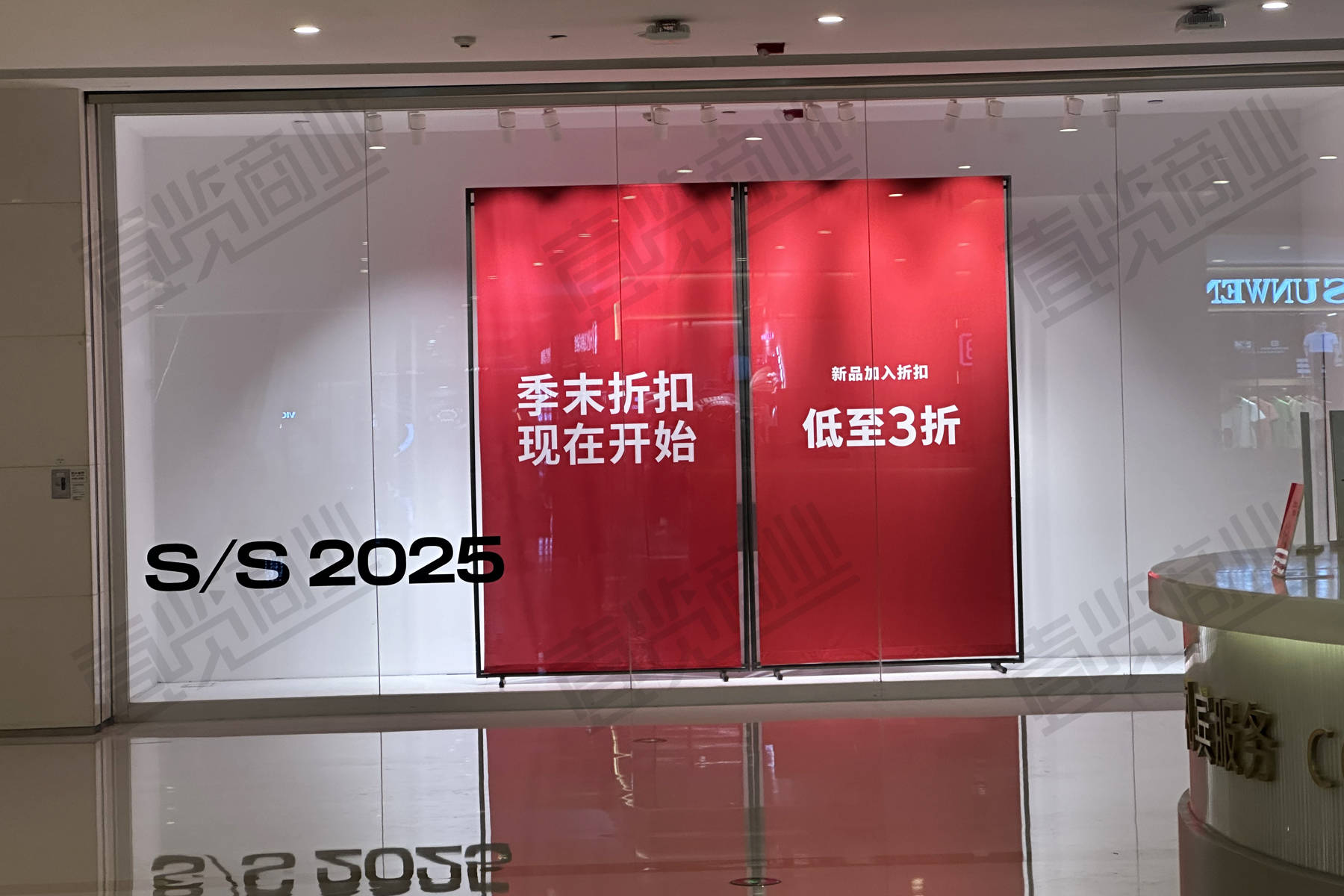
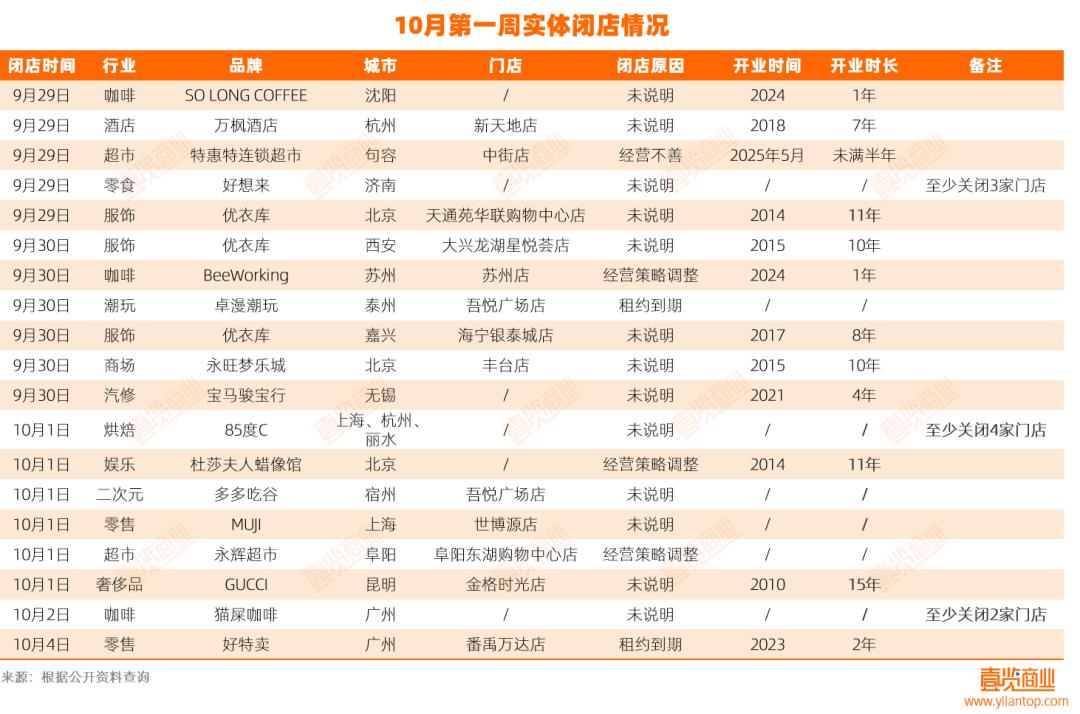
Core Insights - In the first week of October, a total of 17 brands closed at least 25 stores, indicating a significant trend in the retail and service sectors [1] Group 1: Industry Overview - The restaurant industry is the most affected, with 8 store closures, including 4 coffee shops and 4 bakery stores, all from the same brand, 85°C [4] - The apparel and supermarket sectors also experienced notable adjustments, with Uniqlo closing 3 stores in Beijing, Xi'an, and Jiaxing, each operational for 8 to 11 years [4] - Supermarkets saw 2 closures, including Yonghui Supermarket and Tehui Chain Supermarket, with the latter closing within 6 months of opening due to poor management [5] Group 2: Company Performance - Fast Retailing, Uniqlo's parent company, reported a total revenue of 1,790.1 billion yen (approximately 91.3 billion RMB) for the first half of the fiscal year 2024-2025, a 12% year-on-year increase, but with a 3% revenue decline in the Greater China region [4] - Gucci has faced a significant revenue drop of 25% to 1.46 billion euros in Q2, with a 26% decline in overall revenue for the first half of the year, leading to multiple store closures [5] - Kering Group plans to increase its store closure target from 50 to 80 by 2025, with Gucci expected to account for nearly half of these closures [5][6]
淘小胖超市领航三线市场做“烟火气”
Sou Hu Cai Jing· 2025-10-09 09:23
安阳,乃至大部分华北地区,于十一及中秋节当日连下数天大雨(雨天通常影响超市客流)。不过,从 淘小胖安阳店的客流及销售表现来看,其的进店客流"饱满",生意很好,似乎没有受到雨天影响。 中秋节当天,《商业观察家》走访了淘小胖位于三线城市的一家店——河南安阳吾悦广场店,以探淘小 胖发展变化。 ...