
商业地产

Search documents
凯德投资探路轻资产拓展模式 在中国市场新发布两款新品牌
Jing Ji Wang· 2025-12-10 10:02
Core Insights - CapitaLand Investment has launched two new commercial real estate brands, "Raffles·Jie" and "CapitaLand One Center," in response to the evolving consumer market in China [1] - The new brands aim to cater to different consumer segments, with "Raffles·Jie" targeting high-income consumers seeking quality living and "CapitaLand One Center" focusing on middle-income families and white-collar workers within a 3-5 km radius [1] - The company is shifting towards asset revitalization and value release as the commercial real estate sector enters a maturity phase, indicating a new demand explosion point [1] Company Strategy - CapitaLand Investment is expanding its management output projects, with seven projects in cities like Changsha, Wuhan, Ningbo, and Wuxi, expected to launch by 2026 [2] - The company has a retail lease portfolio of 10,200 contracts covering over 4,600 brands, continuously expanding its brand pool and introducing first stores in various cities [2] - CapitaLand is facilitating the international expansion of nearly 60 Chinese brands, including Pop Mart and Miniso, by connecting tenants and retail partners through an integrated service platform [2]
万达首次赎回优质万达广场,仅一天就转手!
Jin Rong Jie· 2025-12-10 08:40
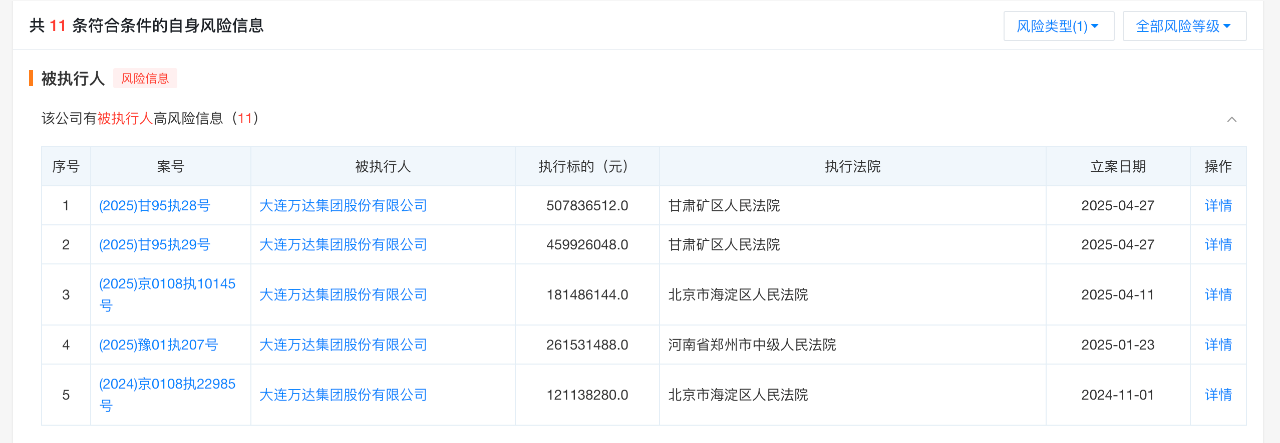
Core Viewpoint - Wanda is taking measures to alleviate its debt pressure exceeding 6.9 billion yuan by redeeming and subsequently selling the Yantai Zhifu Wanda Plaza, which is interpreted as a financing arrangement [1][3]. Group 1: Asset Transactions - On December 2, Wanda redeemed the Yantai Zhifu Wanda Plaza, regaining shareholder status, with the original shareholders exiting the project [1]. - The next day, Wanda transferred the ownership of Yantai Zhifu Wanda Plaza to Suzhou Lianshang Jiuhao, indicating a rapid succession of ownership changes [1]. - Suzhou Lianshang Jiuhao was established on August 22 of this year, with a registered capital of 10 million yuan, focusing on commercial complex management and consulting services [1]. Group 2: Financial Performance - Yantai Zhifu Wanda Plaza generates an annual rental income of approximately 120 million yuan, with a net rental yield exceeding 6%, making it a valuable cash flow asset within Wanda's portfolio [2]. Group 3: Debt Situation - Wanda Group currently has over 10 entries of execution information, with a total amount exceeding 6.9 billion yuan [3]. - To address financial strain, Wanda has previously sold multiple Wanda Plaza projects, including a significant transaction involving 48 companies for an estimated 50 billion yuan [5][6]. Group 4: Strategic Implications - The transaction involving Yantai Zhifu Wanda Plaza is seen as part of a broader strategy to secure financing through asset management, potentially involving collateral or layered financing [6]. - Analysts suggest that Wanda may continue to sell non-core assets to ensure stable cash flow in the current market environment [6].

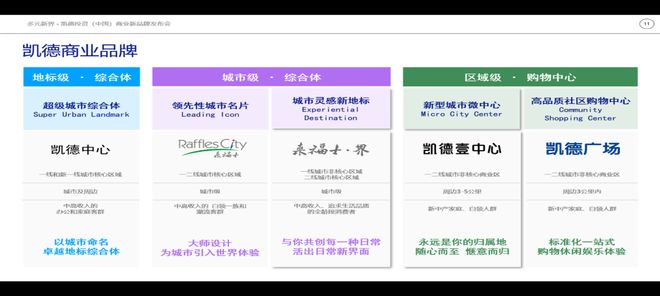
两大商业新品牌迎来首发 凯德投资探路轻资产拓展模式
Zhong Guo Jing Ying Bao· 2025-12-10 08:13
Core Insights - CapitaLand Investment has launched two new commercial brands, "Raffles City·Jie" and "CapitaLand One Center," aimed at enhancing its commercial portfolio in China [1][2] Group 1: Brand Positioning - "Raffles City·Jie" is positioned as an urban-level complex targeting middle to high-income consumers who seek quality living [2] - "CapitaLand One Center" is designed as a regional shopping center catering to new middle-class families and white-collar workers within a 3-5 kilometer radius [2] Group 2: Market Trends - The Chinese commercial real estate sector is entering a phase focused on optimizing existing assets, with a growing demand for revitalizing low-efficiency properties [2] - CapitaLand's management output strategy has been driving scalable growth, and the new brands are expected to serve as future growth engines [2] Group 3: Strategic Partnerships - CapitaLand Investment signed a management contract with Wuxi Binhu Jianfa Group to develop the first "Raffles City·Jie" in Wuxi, Jiangsu Province, based on a park-style commercial model [2] - A memorandum of cooperation was established with Liangxi Technology City Group to explore potential projects in industrial park operations and property management [2] Group 4: Expansion Plans - CapitaLand has expanded its management output projects to seven locations, including Changsha, Wuhan, Ningbo, and Wuxi [2] - The company is also advancing multiple projects in Shanghai, Jiangsu, Zhejiang, the central and western regions, and the Guangdong-Hong Kong-Macau Greater Bay Area, covering diverse asset categories such as shopping centers and industrial parks [2]
中小体量商业的进阶之道:在“平凡”底色上创造不凡价值
Sou Hu Cai Jing· 2025-12-10 05:46
第二类,是"突破传统":重新定义边界,激活片区价值。 商业的辐射力,不应被物理形态所束缚。位于北京中关村的融科天地,其商业部分同样约2万平,最初 定位是配套自身写字楼。但它突破了"配套"的局限,敏锐洞察到整个片区对品质生活的强烈需求,积极 引入特色餐饮、精品咖啡、生活美学等优质商户。它不仅服务了楼内白领,更成为了辐射周边社区的品 质消费高地,反哺写字楼,形成了资产价值的良性循环。 第三类,是"平凡不平庸":精准操盘,盘活存量资产。 更多项目处于普通的社区或街区。它们的进阶之路,在于极致的精细化运营。以"科创麒麟汇"的公寓底 商为例,约20间铺位,通过统一的整体规划,精准布局业态:避开与周边大型商业的直接竞争,引入社 区食堂、精品生鲜、特色便民服务等,并搭配部分品质餐饮与咖啡馆。这种"统一规划,业态互补"的模 式,迅速形成了浓厚、便利的商业氛围,成功吸引并留住了客群,将平凡的底商盘活为富有活力的社区 商业节点。 中小体量商业的进阶之道:在"平凡"底色上创造不凡价值 在商业地产领域,人们的目光常常被那些动辄十万平以上的大型综合体所吸引。然而,构成中国商业毛 细血管的,却是大量三、五万方甚至更小的中小体量项目。这些 ...

西南这座四线小城,华润、万达、新城、王府井抢着进!
3 6 Ke· 2025-12-09 22:27
Core Insights - Yibin, known as "China's Liquor Capital," has transformed into a popular tourist destination, expecting to receive 97.38 million visitors and generate 89.8 billion yuan in revenue by 2024 [1] - The city's GDP has surged from 152.59 billion yuan in 2015 to 400.58 billion yuan in 2024, marking a significant economic leap [1] - Yibin has shifted from a traditional industrial base of coal and liquor to new sectors like digital economy and green energy, branding itself as the "Power Battery Capital" [1] Economic Growth - Yibin's GDP growth reflects a strategic shift in its industrial structure, moving towards a dual focus on liquor and new energy sectors [1] - The city has established two major industrial clusters: liquor and power batteries, contributing to its economic transformation [1] Commercial Development - Yibin's commercial landscape has evolved significantly, with existing commercial space exceeding 1.24 million square meters, predominantly in the form of small to medium-sized retail [3] - The city has undergone three phases of commercial development: initial exploration (2009-2010), rapid expansion (2011-2015), and stable growth (2016-present) [4][10] Urban Structure - The urban commercial structure has been reshaped, with a focus on the core areas of Cuiping District and Xuzhou District, which are now the main commercial hubs [17] - Five major commercial zones have emerged, characterized by a blend of historical and modern elements, enhancing the city's commercial vitality [19] Young Population and Consumer Trends - The establishment of a university town has significantly increased the young population, with student numbers rising from 25,000 to 100,000, fostering a vibrant consumer base [29] - Young consumers are driving demand for diverse and experiential consumption, leading to the emergence of new retail formats and cultural experiences [29] Policy Initiatives - Yibin's government has implemented a comprehensive policy framework aimed at boosting consumption, with an estimated investment of 1 billion yuan to stimulate various sectors [30] - Specific measures targeting employment, trade, and tourism have been introduced to create a favorable environment for consumer spending [30] Tourism and Cultural Integration - Yibin's tourism sector has shown robust growth, with a significant increase in visitor numbers and spending, particularly during holiday periods [31] - The city is leveraging its cultural heritage and natural resources to enhance its tourism appeal, aiming to become a regional consumption center [31][32]

2026北京夜经济新地图来了,又有新玩法
3 6 Ke· 2025-12-09 22:21
Core Insights - The transformation of urban consumption logic in Beijing is shifting from "convenient consumption" during the day to "purposeful visits" at night, indicating a growing focus on high-quality night economy projects that enhance the appeal of destinations [1] - Night economy is not merely about food and drinks; it aims to create unique experiences that attract consumers specifically for nighttime activities, thus becoming a key indicator of a city's commercial charm and quality of life [1] - The prosperity of the night economy allows individual commercial entities to evolve from mere consumption points to destinations worth visiting, opening up imaginative growth opportunities for urban consumption [1] Scene Specialization - Nighttime is characterized as a prime time for "emotion-driven consumption," contrasting with daytime's focus on functional needs, thus creating a unique appeal that can convert casual passersby into dedicated visitors [2] - Exclusive nighttime scenes serve as a crucial tool to overcome homogenization in commercial competition, enhancing user engagement and allowing businesses to become integral participants in defining urban nightlife culture [2] Nighttime Attractions - The collaboration between Liangma River International Style Waterfront and Blue Harbor exemplifies a successful night economy model, transforming daytime perceptions into a romantic nighttime experience with light shows and outdoor dining [3][5] - The Blue Harbor, positioned as an "international consumption-friendly business district," features over 400 international fashion and lifestyle brands, catering to diverse consumer needs and hosting annual cultural events [5] Performance Metrics - During the 2025 Beijing Chaoyang International Light Consumption Season, the number of visitors to Liangma River's boat tours increased by 8%, with revenue rising by 20.5%, while Blue Harbor saw a 20% increase in foot traffic and over 10% in sales [6] Business Model Innovation - The integration of multiple business formats is essential for enhancing repurchase rates and creating a "one-stop" nighttime consumption experience, which is vital for both emerging and established commercial projects [7] - Sanlitun Taikoo Li has become a key player in Beijing's nighttime economy, continuously adjusting its business offerings and hosting artistic light displays that attract visitors [8][10] Event-Driven Engagement - Huaxi LIVE at Wukesong has established itself as a vibrant hub for nighttime activities, hosting over 80 large-scale events annually and attracting more than 20 million visitors, thus redefining the nightlife experience in the region [12][14] Cross-Industry Collaboration - The 21 District BLOCK at Chaoyang He Sheng Hui has successfully transformed nighttime foot traffic into robust consumer spending through a diverse mix of dining and entertainment options, including themed events and immersive experiences [15][17] Marketing and Policy Support - The growth of Beijing's night economy is significantly supported by policy initiatives and comprehensive marketing strategies, combining "policy + scene + marketing" to enhance nighttime consumer engagement [18] - The "Night Capital 2.0" initiative, launched in 2025, aims to promote nighttime hotspots through digital platforms and special events, further enriching the nighttime consumption landscape [19] Thematic Activities - Various districts in Beijing are launching unique nighttime economic activities, such as themed street events and light festivals, to invigorate nighttime consumer engagement and enhance the overall appeal of the city [20] Future Developments - The upcoming Bayli Tingyun Town is expected to contribute significantly to Beijing's night economy by offering a multifaceted lifestyle destination that combines dining, entertainment, and cultural experiences [22][24] - The integration of technology and culture is anticipated to unlock new opportunities for the night economy, enhancing the attractiveness and warmth of nighttime consumption in Beijing [25]

新引擎,新航道:人民币机构资本重塑中国商业地产投资格局
CBRE· 2025-12-09 14:39
Investment Trends - Insurance capital has become the backbone of RMB capital, significantly investing in industrial logistics, retail, office buildings, and complexes, with a total investment of over 1,370 billion RMB in industrial logistics alone[7] - The proportion of insurance capital in large transactions has risen sharply, approaching 100% in the first half of 2025, as foreign investment activity declines due to geopolitical factors[19][20] Market Dynamics - The vacancy rate for long-term rental apartments is expected to stabilize around 15% by 2028, with a peak supply of rental housing anticipated in 2025[10] - The supply of high-standard warehouses is projected to decrease by nearly 60% from 2026 to 2028 compared to the previous three years, leading to improved vacancy rates[74] REITs Development - By October 2025, a total of 76 public REITs had been issued, with a cumulative scale of 2,059 billion RMB, of which 1,100 billion RMB was from property rights REITs, accounting for 53.42% of total issuance[52] - The asset types for public REITs have expanded to include commercial real estate, with significant participation from various sectors including logistics, retail, and data centers[63][64] Rental Market Insights - The average rent for long-term rental apartments in Shanghai has decreased by 2.5% in the first three quarters of 2025, while the occupancy rate remains above 85%[86] - The penetration rate of centralized long-term rental apartments in Shanghai is currently only 11.5%, indicating substantial growth potential in this market segment[94]
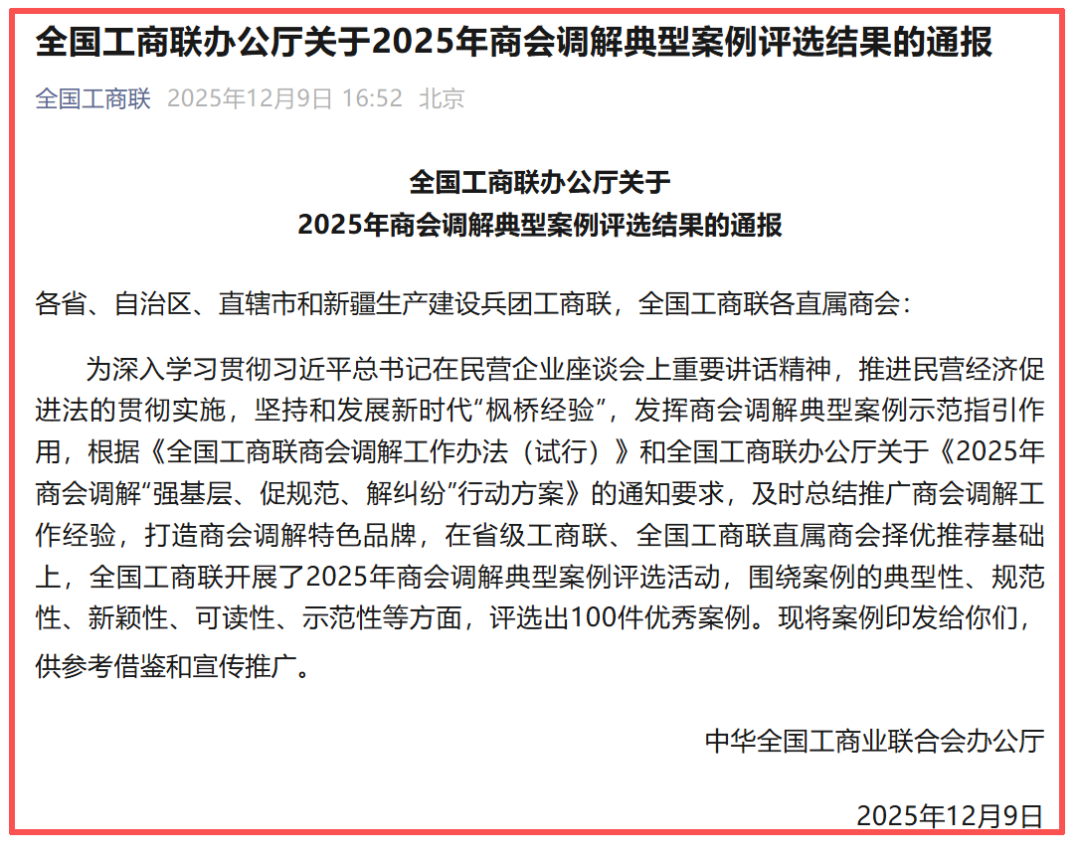
喜报:贵阳西南国际商贸城企业商会调解案例入选全国典型案例
Xin Lang Cai Jing· 2025-12-09 13:36
Core Insights - The article highlights the successful mediation of a rental dispute involving over a hundred tenants at the Guiyang Southwest International Trade City, showcasing the effectiveness of the local business association's mediation efforts [2][8]. Group 1: Background of the Dispute - In August 2024, over a hundred tenants in the Guiyang Southwest International Trade City faced significant challenges, including reduced foot traffic, increased vacancy rates, and declining sales, exacerbated by unfulfilled promises of rent reductions from the management [3][9]. - The high rental costs were pushing these businesses to the brink of survival, raising concerns about a potential mass exodus of tenants, which could disrupt the overall business ecosystem of the trade city [3][9]. Group 2: Mediation Process - The business association quickly responded by forming a special task force, adhering to the principle of "mediation first, rapid response," and conducted thorough research to understand tenant grievances and management's commitments [4][10]. - A four-party negotiation mechanism was established, involving tenants, the business association, government departments, and the management, facilitating effective dialogue and resolution [4][10]. Group 3: Outcomes of Mediation - Following extensive negotiations, the management agreed to implement a rent reduction plan, providing an average annual rent reduction of approximately 130,000 yuan per tenant, benefiting over a hundred tenants [4][10]. - The successful mediation not only alleviated the financial pressure on tenants but also stabilized the management's operations, demonstrating a win-win outcome for both parties [13]. Group 4: Broader Implications - Guiyang's business association has a long-standing history of mediation, having established 46 mediation committees since 2015, which have effectively resolved numerous commercial disputes [5][11]. - The province of Guizhou has developed a "five-party linkage" mechanism involving various legal and business entities, enhancing the support for mediation efforts and achieving a mediation success rate of 83% with a satisfaction rate of 92% [6][12][13].
RiskRaider风险雷达|万达的时间换空间,一次主动的债务风险管控
Sou Hu Cai Jing· 2025-12-09 12:06
保留11%的高票息、设置多次强制赎回,万达为4亿美元债务展期增添了安全缓冲垫。 "如果该议案未能批准,发行人及附属担保人可能无法在原到期日偿还债券本金及利息。"在12月8日向债券持有人发布的同意征求通知中,万达商管坦诚地 揭示了眼前迫近的流动性压力。 面对2026年初密集到期的两笔总计7亿美元债券,万达商管主动出手,计划对其中一笔2026年2月到期的4亿美元债券发起同意征求。 核心诉求是将到期日从2026年2月13日延长至2028年2月13日,为企业争取至关重要的两年缓冲期。 市场持续的低迷与融资环境的整体收紧,构成了万达此次行动的大背景。万达商管在方案中坦言,多重因素对公司经营造成了不利影响,尤其体现在现金流 层面,加大了短期流动性压力。 中国企业资本联盟首席经济学家柏文喜指出,万达商管近一年来通过出售资产、提前回购债券等方式消耗了大量流动性。目前,公司的账上现金需要优先保 证2026年1月另一笔3亿美元债券的兑付。 因此,对2月到期的这笔4亿美元债券,谋求展期成为现实选择。这次展期,本质上是企业在主动进行流动性管理,以时间换取化解风险的空间。 与简单的延期支付不同,万达此次提出的方案包含了一系列精心设计的 ...
凯德投资推出“来福士·界”和“凯德壹中心”两大新产品线
Bei Jing Shang Bao· 2025-12-09 07:15
Core Insights - CapitaLand Investment has launched two new commercial brands: "Raffles City·Jie" and "CapitaLand One Center," targeting different consumer segments and enhancing its commercial portfolio [1] Group 1: Brand Positioning - "Raffles City·Jie" is positioned as an urban-level complex located in core city areas, aimed at middle to high-income consumers seeking quality lifestyle [1] - "CapitaLand One Center" is designed as a regional shopping center in mature commercial districts, catering to new middle-class families and white-collar workers within a 3-5 km radius [1] Group 2: Project Development - CapitaLand Investment has signed a management contract with Wuxi Binhu Jianfa Group to develop the first "Raffles City·Jie" in Wuxi, focusing on the "first store economy" and creating a relaxed, youthful, and thematic ecological consumption environment [1] - The first batch of non-standard commercial projects in China is set to open in the first half of 2026, including Bi Xiang Chu Xiang in Changsha and Yi Wei Lin in Wuhan [1] - CapitaLand has expanded its management output projects to seven in cities like Changsha, Wuhan, Ningbo, and Wuxi, with more projects in Shanghai, Jiangsu-Zhejiang, Central-Western regions, and the Greater Bay Area [1] Group 3: Retail Strategy - CapitaLand Investment currently manages 10,200 retail leases in China, covering over 4,600 brands, with a continuous expansion of its brand pool [2] - The company is actively introducing first stores, city first stores, and CapitaLand first stores to enhance its retail offerings [2]