
基金

Search documents
黄金现在还可以配置吗?
Sou Hu Cai Jing· 2026-02-27 06:41
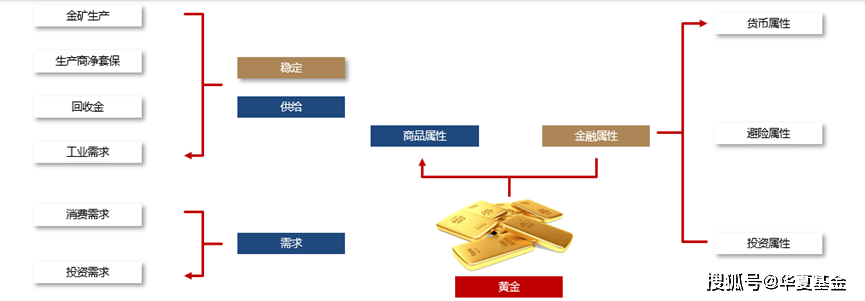
Key Points - The recent rise in gold prices is attributed to ongoing geopolitical tensions in the Middle East, particularly between the US and Iran, which has led to increased demand for gold as a safe-haven asset [1] - Central banks globally have maintained a high level of gold purchases, with a total of 863 tons added in the previous year, indicating strong support for gold prices [2] - The Federal Reserve is expected to continue its interest rate cuts in 2026, which would likely weaken the dollar and increase the attractiveness of holding gold [3] Gold's Attributes - Gold is a strategic and scarce resource with multiple attributes, including commodity, currency, safe-haven, and investment characteristics, playing a crucial role in economic security and international trade [4] - Financial attributes significantly influence gold price formation, with market conditions such as monetary policy and inflation impacting its value [6] Market Dynamics - The ongoing geopolitical risks, such as the conflict in Ukraine and potential financial instability from frozen Russian assets, have heightened the appeal of gold as a secure investment [10] - The correlation between gold prices and market volatility, as measured by the VIX index, indicates that gold often spikes during periods of heightened market fear [15] Future Outlook for Gold - The US national debt is projected to exceed $40 trillion, which may negatively impact the dollar's creditworthiness and support gold prices [17] - Interest rates are a critical factor for central banks' gold reserve decisions, with current high real interest rates suggesting significant room for decline, which historically correlates with rising gold prices [18][21] Investment Considerations - Gold is viewed as a "ultimate safe-haven asset," with current upward momentum driven by credit reconstruction and geopolitical uncertainties, making it a strategic asset for portfolio diversification [23] - Despite being at historical highs, gold can still enhance portfolio performance and hedge against inflation, with recommendations for investors to consider gold ETFs for lower costs and better liquidity [24][25]

盘中成交超28亿元,30年国债ETF(511090)近13个交易日净流入8.19亿元
Sou Hu Cai Jing· 2026-02-27 06:33
Core Insights - The 30-year government bond ETF (511090) has seen active trading, with a turnover of 13% and a transaction volume of 2.871 billion yuan as of February 27, 2026, at 14:09 [1] - Over the past year, the average daily trading volume of the 30-year government bond ETF has been 8.108 billion yuan [1] - In the last 13 trading days, there have been net inflows on 9 days, totaling 819 million yuan [1] Market Trends - The 30-year government bond futures saw a slight decline of 0.01%, while the 10-year, 5-year, and 2-year contracts experienced minor increases of 0.02%, 0.01%, and 0.01% respectively as of February 27 [1] - The RMB exchange rate has entered a rapid appreciation phase, with both onshore and offshore RMB surpassing the 6.84 mark, reaching a nearly three-year high [1] - The strengthening of the RMB has positively impacted the offshore bond issuance environment, making offshore RMB bonds (dim sum bonds) increasingly attractive due to their local currency denomination, lower costs, and reduced exchange rate risks [1] Issuance Dynamics - In February alone, the issuance scale of dim sum bonds has exceeded 120 billion yuan [1] - Although Chinese dollar bonds benefit from lower repayment costs, they face rising hedging costs and exchange rate exposure risks, especially with the Federal Reserve entering a rate-cutting cycle [1] - The restructuring of the offshore debt market for Chinese entities has become a clear trend [1][2]
兴业银锡股价涨5.01%,中信保诚基金旗下1只基金重仓,持有4.65万股浮盈赚取12.14万元
Xin Lang Ji Jin· 2026-02-27 06:20
Group 1 - The core viewpoint of the news is that Xingye Silver Tin has seen a significant increase in stock price, with a rise of 5.01% to 54.75 CNY per share, and a total market capitalization of 97.216 billion CNY [1] - Xingye Silver Tin Mining Co., Ltd. is located in Chifeng City, Inner Mongolia, and was established on August 23, 1996. The company primarily engages in the mining and smelting of non-ferrous and ferrous metal resources [1] - The main revenue composition of the company includes silver (34.80%), tin (30.81%), zinc (19.32%), lead (5.12%), iron (3.34%), antimony (2.90%), copper (2.01%), gold (0.66%), bismuth (0.32%), and other minerals (0.72%) [1] Group 2 - From the perspective of fund holdings, one fund under CITIC Prudential has a significant position in Xingye Silver Tin, with 46,500 shares held, representing 0.51% of the fund's net value, ranking as the tenth largest holding [2] - The CITIC Prudential CSI 500 Index (LOF) A fund has a total scale of 204 million CNY and has achieved a year-to-date return of 13.9%, ranking 743 out of 5,574 in its category [2] - The fund has a one-year return of 40.88%, ranking 1,250 out of 4,326, and a cumulative return since inception of 202.72% [2]

超200亿,跑了!
Zhong Guo Ji Jin Bao· 2026-02-27 06:15
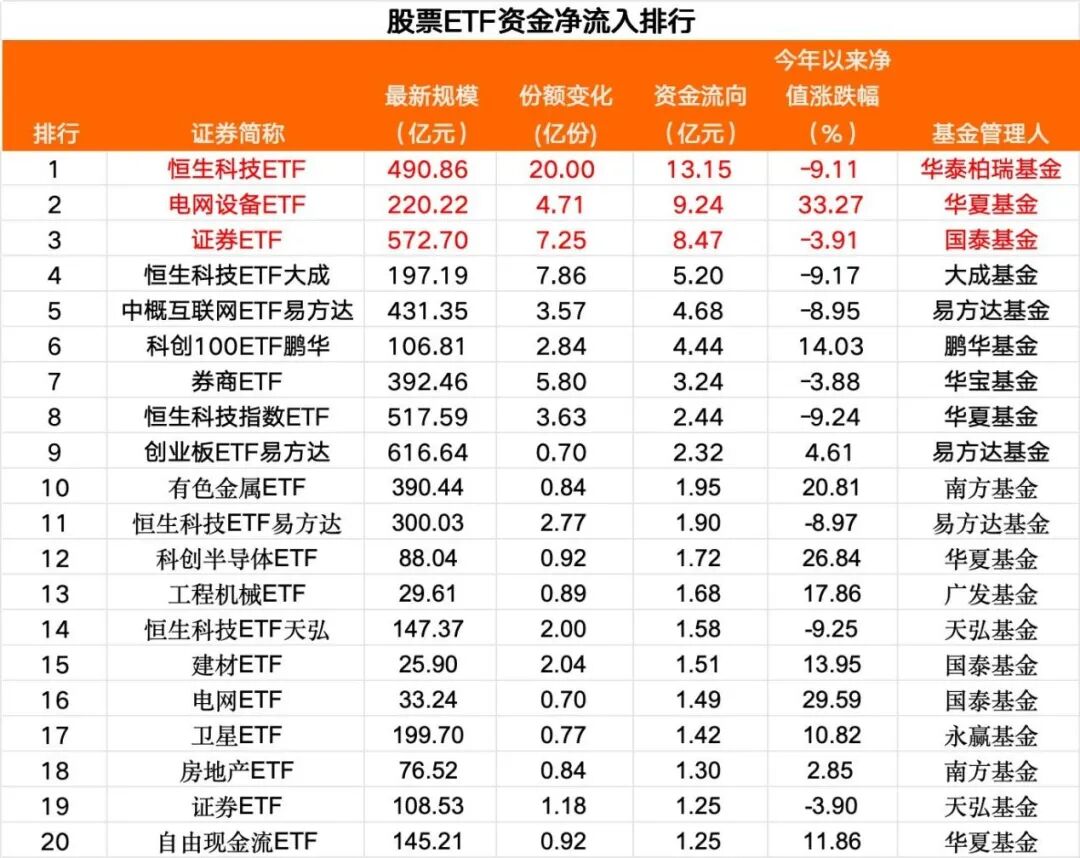
Core Viewpoint - On February 26, the A-share market experienced a high-level fluctuation phase after continuous gains, with a net outflow of over 23.5 billion yuan from stock ETFs, indicating a shift in investor sentiment as some funds opted to exit the market [1][2]. Summary by Category Market Overview - The total trading volume in the A-share market reached 2.54 trillion yuan on February 26, with a total of 1,344 stock ETFs amounting to 4.13 trillion yuan in total scale [2][6]. - The overall market saw a net outflow of 226.5 billion yuan, marking the second consecutive trading day of net outflows [2]. ETF Performance - On February 26, 80.73 million shares of stock ETFs were redeemed, leading to a net outflow of over 23.5 billion yuan, with 23 ETFs seeing inflows exceeding 1 billion yuan [2][3]. - The top three ETFs by net inflow were the Hang Seng Technology ETF (13.15 billion yuan), the Electric Grid Equipment ETF (9.24 billion yuan), and the Securities ETF (8.47 billion yuan) [4][6]. Sector Analysis - The Hang Seng Technology Index saw the highest net inflow of 25.07 billion yuan, while the CSI 500 Index experienced the largest net outflow of 60.08 billion yuan on the same day [3][5]. - From a five-day perspective, the Hang Seng Technology Index-related ETFs attracted over 13.2 billion yuan, and the China Internet 50 Index-related ETFs attracted over 3.7 billion yuan [3]. Fund Management Insights - Leading fund companies like E Fund and Huaxia Fund reported significant inflows in their ETFs, with E Fund's China Internet ETF reaching a scale of 431.35 billion yuan and a net inflow of 4.79 billion yuan [6]. - Huaxia Fund's Electric Grid Equipment ETF and Hang Seng Technology Index ETF also saw substantial inflows, with net inflows of 9.24 billion yuan and 2.44 billion yuan, respectively [6].
南方基金旗下恒生科技ETF南方(520570)放量上行,低位配置价值凸显
Sou Hu Cai Jing· 2026-02-27 06:09
Group 1 - The Hang Seng Technology Index rebounded, reaching 5156.06 points, up 0.91% from the previous trading day, with a trading volume of 11.73 billion shares and a turnover of 32.5 billion HKD, indicating a moderate increase in trading activity [1] - The current PE-TTM of the Hang Seng Technology Index is 21.35 times, which is at a historical low of 26.0% over the past year, providing a significant valuation advantage compared to the STAR 50 Index (165 times) and the NASDAQ 100 Index (34 times) [1] - The market sentiment is gradually improving, as evidenced by the Hang Seng Index rising 0.96%, reflecting a recovery in overall market sentiment [1] Group 2 - The moderate rise in the Hang Seng Technology Index reflects a gradual repair of market sentiment, supported by the AI partnership emphasis from Anthropic, alleviating concerns about traditional software companies being replaced by AI [2] - The Hang Seng Technology ETF (520570) closely tracks the Hang Seng Technology Index and includes 30 large-cap, liquid tech companies listed in Hong Kong, making it a key tool for capturing trends in the Hong Kong tech sector [2] - The combination of low historical valuations, continued inflow of southbound funds, and the acceleration of AI commercialization suggests that the index may continue to experience structural upward movement in the short term, with a sustained recovery logic in the medium term [2]
公募基金新发前两月规模超2100亿元 规模及数量均创近4年同期新高
Cai Jing Wang· 2026-02-27 06:09
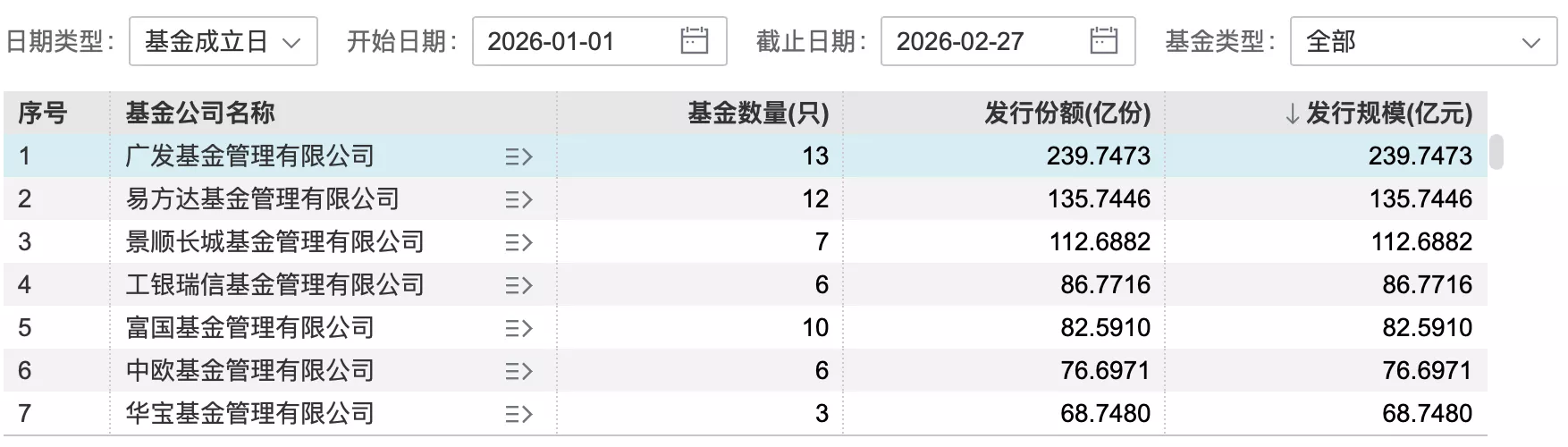
Group 1 - The public fund issuance market has seen a strong start in 2026, with 230 new funds launched and a total issuance scale exceeding 210 billion yuan, marking a historical high for the same period in the past four years [1][6] - The increase in new fund issuance is attributed to the positive performance of equity markets, which has boosted investor risk appetite and accelerated the shift of funds from savings to equity assets [1][9] - The market is experiencing structural changes, with a significant shift from bond-dominated new funds to equity-dominated ones, and a notable rise in the proportion of passive index products and ETFs [1][5] Group 2 - In the first two months of 2026, the number of new funds increased by 29.94% compared to the same period in 2025, and by 21.69% compared to 2023 [2] - The post-Spring Festival period saw a surge in new fund launches, with 18 new funds starting subscription on the first trading day and 36 new funds planned for issuance in the first week after the holiday [3] - Equity products (both stock and mixed funds) accounted for 71.37% of the new fund issuance, with passive investments gaining traction, particularly in sectors like non-ferrous metals and battery technology [3][7] Group 3 - The top fund companies have shown significant advantages in the current issuance landscape, with GF Fund leading with 13 products and nearly 24 billion yuan in issuance [4][5] - The total issuance scale for new funds in 2026 has reached 210.2 billion yuan, nearly doubling compared to the same period in previous years [6] - The active equity funds launched in 2026 totaled 78, with a combined fundraising scale of approximately 75.23 billion yuan, indicating strong investor interest [7][8] Group 4 - The market is expected to continue favoring equity funds, with the issuance pace closely tied to market performance, suggesting a sustained "slow bull" market [9] - The industry is moving towards a high-quality development phase, with increased emphasis on performance and investor experience, while smaller firms are encouraged to adopt differentiated strategies [5][9]
华安基金翁启森:如何打造具有超额收益的主动权益平台
点拾投资· 2026-02-27 05:55
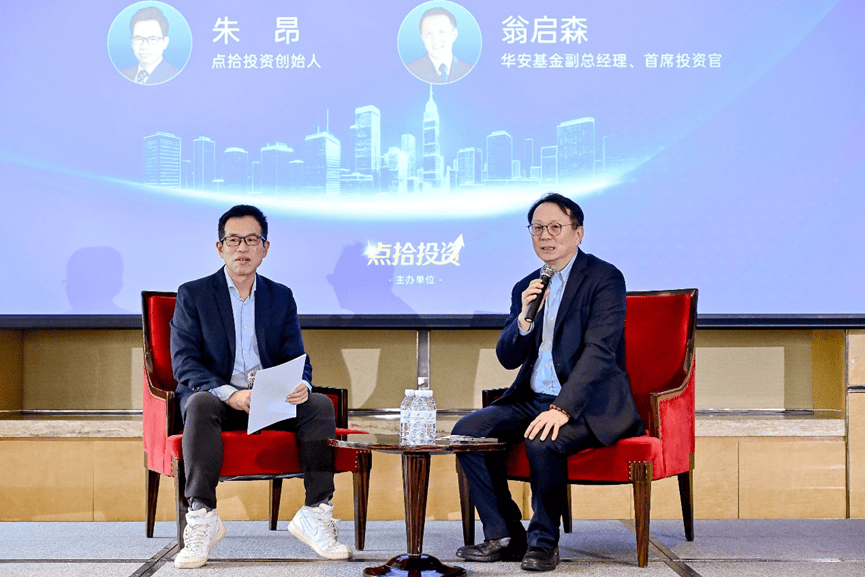
Core Viewpoint - The article discusses the return of active equity investment and how it can generate excess returns in the context of a diversified financial era, emphasizing the importance of talent and a learning-oriented investment research platform [1][5]. Group 1: Active Equity Investment Landscape - The active equity investment sector has been challenged by the rise of index ETFs, leading to discussions on how to navigate this shift and find new opportunities for excess returns [4][5]. - The capital market is entering a phase of diversified financial products, with approximately 40-50 trillion yuan in bank wealth management expected to be redirected into various investment avenues [5][15]. - The future of active equity is seen as a multi-faceted development, where clarity in product characteristics and risk-return profiles is crucial for investor acceptance [6][15]. Group 2: Investment Research and Team Dynamics - A successful investment research platform should be a learning organization that encourages collaboration and discussion among team members to enhance both breadth and depth of investment capabilities [2][9]. - The ability to generate alpha is becoming more complex due to rapid changes in emerging industries, necessitating a platform-based approach to investment research rather than relying solely on individual expertise [8][11]. - The cultivation of talent within the organization is emphasized, with a focus on developing fund managers who can adapt to diverse industry backgrounds and collaborate effectively [10][11]. Group 3: Role of Technology and AI - The integration of AI tools into the investment research process is highlighted as a means to enhance data analysis and improve understanding of market dynamics [10]. - AI is seen as a valuable asset in helping fund managers refine their investment strategies and understand their performance relative to market benchmarks [10][12]. Group 4: Long-term Performance and Manager Assessment - Long-term performance assessment of fund managers is crucial, with a focus on relative performance against benchmarks rather than short-term fluctuations [14]. - The importance of psychological resilience in fund managers is noted, particularly in navigating challenging market conditions [14].

华安基金翁启森:如何打造具有超额收益的主动权益平台
Sou Hu Cai Jing· 2026-02-27 05:29
Core Viewpoint - The forum highlighted the return of active equity management and its potential to generate excess returns in the evolving financial landscape of China [1][3]. Group 1: Active Equity Management - Active equity management has been challenged by the rise of index ETFs, leading to discussions on how to navigate this shift and achieve excess returns [3][4]. - The current market environment is characterized by a multi-faceted investment landscape, with a significant amount of capital moving away from traditional bank deposits into various financial products [3][4]. - The active equity sector is expected to recover from a downturn experienced between 2022 and 2024, supported by regulatory adjustments and a shift in investor preferences [3][4]. Group 2: Investment Team Dynamics - A successful investment team should be a learning organization that encourages collaboration and the sharing of expertise among its members [1][7]. - The ability to adapt to interdisciplinary industries is crucial, as many emerging sectors require knowledge across multiple fields [6][7]. - The focus should be on identifying and enhancing the unique strengths of each fund manager to optimize their investment strategies [5][6]. Group 3: Talent Development - The cultivation of talent within the organization is essential, with a belief that new talent can be developed more rapidly than in the past [8][9]. - The organization has implemented a talent training system to ensure a continuous influx of capable individuals into the investment management space [8][9]. - The experience of fund managers is critical, with a preference for those who have a broader exposure to various industries before taking on investment roles [10][11]. Group 4: Embracing Technology - The integration of AI tools into the investment research process is becoming increasingly important, allowing for enhanced data analysis and decision-making [9][10]. - AI can assist fund managers in understanding market dynamics and refining their investment portfolios, although it cannot replace the depth of human cognition [9][10]. - The organization is actively exploring how to leverage AI to improve its research capabilities and investment strategies [9][10]. Group 5: Market Trends and Client Needs - The financial market is entering a new era where understanding client risk tolerance and investment preferences is paramount [14]. - There is a growing demand for diverse financial products that cater to varying risk-return profiles, reflecting a shift in investor expectations [14]. - The organization emphasizes the importance of aligning investment products with client needs to ensure satisfaction and comfort in their investment choices [14].
2月26日港股通汽车ETF(159323)份额减少100.00万份,最新份额1.04亿份,最新规模1.33亿元
Xin Lang Cai Jing· 2026-02-27 05:27
Group 1 - The Hong Kong Stock Connect Automotive ETF (159323) experienced a decline of 3.15% on February 26, with a trading volume of 57.16 million yuan [1] - The fund's shares decreased by 1 million, bringing the total shares to 10.4 million, with a reduction of 10 million shares over the last 20 trading days [1] - The latest net asset value of the fund is calculated to be 133 million yuan [1] Group 2 - The performance benchmark for the Hong Kong Stock Connect Automotive ETF is the adjusted return of the CSI Hong Kong Stock Connect Automotive Industry Theme Index [1] - The fund is managed by Huaxia Fund Management Co., Ltd., with the fund manager being Hua Long [1] - Since its establishment on December 30, 2024, the fund has achieved a return of 27.56%, while the return over the past month is -1.38% [1]
马年开局,全球投资实力派周寒颖新基发行
Xin Lang Cai Jing· 2026-02-27 05:14
Core Viewpoint - The A-share market has experienced significant volatility since 2026, with the Shanghai Composite Index fluctuating around 4100 points, while over 80% of Shenwan's primary industries have seen annual gains, indicating a continued profit-making effect despite increased industry differentiation and the difficulty of identifying a single investment theme [1][5]. Group 1: Fund Launch and Manager Profile - In 2026, the company launched the new fund, Invesco Great Wall Hengrui Select Mixed Fund (code: 026376), managed by Zhou Hanying, who possesses extensive global investment capabilities and focuses on cost-effectiveness in investment [1][5]. - Zhou Hanying emphasizes a multi-dimensional comparison across individual stocks, industries, and sectors for balanced allocation, and her managed products have won awards, including the "Five-Year Open-End Stock Continuous Excellence Golden Bull Fund" in 2025 [1][5]. Group 2: Investment Strategy and Performance - Zhou Hanying's investment philosophy is evident in the changes in the holdings of her representative product, Invesco Great Wall Growth Star Fund, which has shifted focus from new and old energy sectors to home appliances and electronics, and then to non-ferrous metals, adapting to economic growth and industry upgrades [2][6]. - The fund's diversification strategy is highlighted by a maximum industry weight of 16% and a top ten stock concentration of 48.30%, significantly lower than the market average, indicating a focus on risk optimization and stability in volatile markets [2][6]. Group 3: Current Market Focus and Opportunities - Zhou Hanying identifies three key investment areas: non-ferrous metals, high-end manufacturing, and consumer services, suggesting that the current market volatility may provide opportunities for investment in these sectors [3][8]. - In the non-ferrous metals sector, she notes a transformation in upstream metal pricing frameworks and the emergence of new demands driven by global electrification trends, positioning copper and aluminum as strategic energy resources [8]. - The high-end manufacturing focus includes companies capable of achieving breakthroughs in the domestic supply chain, covering sectors such as AI, power equipment, and military technology [8]. Group 4: Market Timing and Fund Flexibility - Zhou Hanying believes that the current market correction may serve as a strategic entry point for investments, particularly as historical data suggests that the period from December to April is effective for fundamental pricing [9]. - The Invesco Great Wall Hengrui Select Mixed Fund is designed to maintain a stock position of 60% to 95%, with up to 50% of its stock assets allocated to Hong Kong stocks, allowing for flexible investment opportunities across both A-share and Hong Kong markets [9].