
数字经济

Search documents
京沪粤领衔中国基础研究十强省市
Di Yi Cai Jing· 2025-10-14 07:43
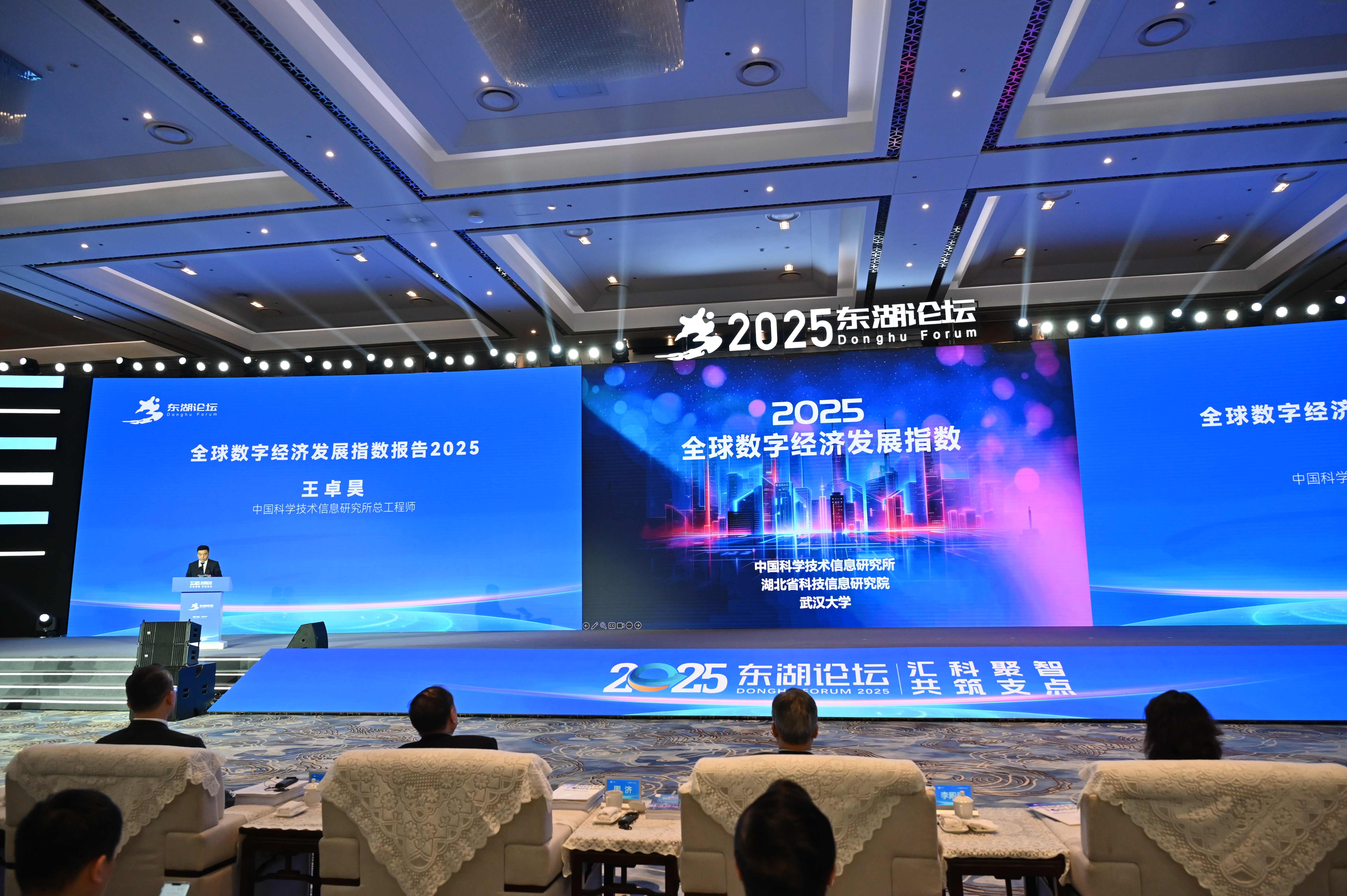
Core Insights - The 2025 East Lake Forum in Wuhan aims to establish itself as a premier platform for the release of research findings and innovative ideas [1] Group 1: Digital Economy Development - The "Global Digital Economy Development Index 2025" report indicates that in 2024, the United States, China, and the United Kingdom will lead the global digital economy rankings, with San Francisco, Beijing, and New York as the top cities [5] - China's digital economy is characterized by four significant trends: continuous enhancement of digital infrastructure, notable effects of digital innovation, accelerated iteration of emerging industry technologies, and deepening integration of industrial digital transformation [5] - The core digital economy industries in Hubei are projected to grow steadily, increasing their share of Hubei's GDP from 5.0% in 2018 to 9.6% in 2024, positioning Hubei as a "digital engine" for central China [5] Group 2: Innovation and Research Competitiveness - The "Wuhan Science and Technology Innovation Center Index Report 2025" shows a 14% increase in Wuhan's innovation capability, with knowledge creation leading the growth [6] - The "China Basic Research Competitiveness Report 2025" ranks Hubei 6th nationally in basic research competitiveness, with strengths in various scientific disciplines [8] - The "Global Enterprise Innovation Index 2025" from Wuhan University highlights that China has 67 companies in the top 100 of five future industries, ranking third globally [8][9] Group 3: Regional Innovation Dynamics - China's future industry innovation resources are concentrated in the Beijing-Tianjin-Hebei, Yangtze River Delta, and Guangdong-Hong Kong-Macau regions, showcasing a "multi-point leading, cluster advancement" spatial development pattern [9] - Hubei is recognized as a strategic support for central China's rise, although it still has significant gaps compared to the leading regions [9] Group 4: Collaborative Initiatives - A technology cooperation framework agreement was signed between the Zhejiang and Hubei provincial science and technology departments to enhance cross-regional innovation collaboration [10]

现代化人民城市,浙江如何“高水平”建设?
Zhong Guo Xin Wen Wang· 2025-10-14 02:53
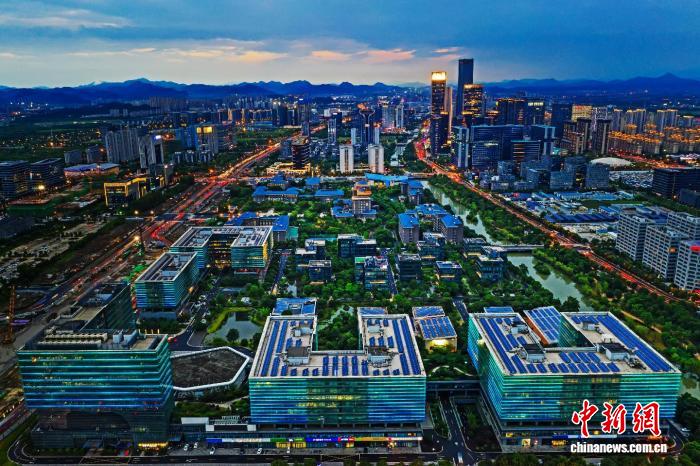
Core Viewpoint - Zhejiang aims to build a high-level modern urban environment that is innovative, livable, beautiful, resilient, civilized, and smart, enhancing urban attractiveness and sustainable development [1][5]. Group 1: Urban Development Strategy - The transition from rapid urbanization to stable development emphasizes quality over quantity, focusing on improving existing urban areas rather than expanding them [1][3]. - Innovation is identified as the core engine for urban development, with a focus on integrating technology, education, and talent systems [3][5]. - The Hangzhou Future Science and Technology City is highlighted as a significant innovation hub, projecting a revenue of 636.54 billion yuan from its digital economy core industries in 2024, marking a 10.4% increase [3]. Group 2: Quality of Life and Community Engagement - The government emphasizes the importance of addressing citizens' needs, such as housing and infrastructure, to ensure that urban development benefits all residents [5][6]. - By 2027, goals include achieving full coverage of water supply and sewage treatment in surrounding villages, with a 90% rate for unified delivery of liquefied gas [5]. - A comprehensive housing supply system is to be established, with over 1,600 future communities planned [5]. Group 3: Cultural and Historical Preservation - The protection of unique historical and cultural elements is crucial for enhancing urban charm, with plans to integrate cultural heritage with modern urban identity [6]. - The government aims to create a "Zhejiang Courtesy" brand, promoting cultural richness as a means to beautify cities [6]. - Seven key tasks have been outlined to strengthen urban connections, foster innovation, and improve service delivery through a "city brain" model [6]. Group 4: Long-term Vision - The goal is to establish a modernized urban environment by 2030, with full realization by 2035, reflecting a commitment to sustainable and inclusive urban development [6].
天津河北区:做好四篇“文章” 高质量完成“十四五“规划
Zhong Guo Fa Zhan Wang· 2025-10-13 17:47
我们树牢"办一流教育"的雄心壮志,成为全国首批学前教育普及普惠区,代表全市首批通过国家义务教 育优质均衡发展区评估,天津二中、天津一中河北学校、河北小外等一批学校发展态势强劲。找准"破 题点",聚焦群众反映强烈的物业管理难题,以物业小切口撬动基层大治理,在全市首创党建引领"阳光 物业"小区治理新模式,已建成示范小区73个,老百姓的家园更靓了、日子更美了、生活更幸福了。 徐刚表示:接下来,我们将高点定位、深度谋划"十五五"时期发展,围绕打造现代服务业升级版和科技 创新一并谋划中长期发展规划,坚定不移、一步一个脚印地走下去,我们有信心、更有决心,让老工业 基地在新时代焕发全新活力,也欢迎大家来日新月异的河北区转一转、看一看。 河北区副区长田强、河北区委社会工作部部长仲旭、河北区住建委主任罗云、意风区管委会主任郑霞出 席并回答媒体关心的问题。 二是做好"改革"文章,在集聚要素资源上下功夫。党中央赋予天津"改革开放先行区"的定位,我们不断 增强改革魄力,推进生产关系同新质生产力发展相适应,促进资本、技术、人才等要素集聚融合。敢为 人先开展机构改革,在全市率先成立区数字经济发展办公室、数字产业发展集团,创新设立文化创意 ...
两岸专家热议“台商投资大陆的新热点”
Sou Hu Cai Jing· 2025-10-13 14:26
Group 1 - The core viewpoint of the articles emphasizes the potential for cross-strait industrial integration and the new opportunities for Taiwanese businesses investing in mainland China, particularly in high-tech and service sectors [1][2][3] - The demand for high-end technology and smart solutions in mainland China is driving the growth of five new industries: digital economy, artificial intelligence, new materials, new energy, and high-end equipment manufacturing [1] - Taiwanese businesses have significant advantages in sectors such as semiconductors, precision manufacturing, and digital economy, and are encouraged to invest more in these areas to participate in the modernization of the industrial system [1] - The aging population and changing consumption patterns in mainland China are creating substantial growth opportunities in elder care, childcare, health management, and medical rehabilitation services for Taiwanese businesses [1] Group 2 - Taiwan's strengths in traditional manufacturing, high-tech, and service industries position it as a key player in China's modernization process, with a shift from manufacturing-driven to consumption-driven economic growth [2] - The transformation of cross-strait economic cooperation is moving from traditional OEM (Original Equipment Manufacturer) models to innovative collaboration, reflecting both the internal demands of mainland industrial upgrades and the collaborative drive of Taiwanese enterprises [2] - Taiwanese businesses are encouraged to leverage the advantages of a shared cultural background and the vast mainland market to develop their own brands and core technologies, enhancing global competitiveness [2][3] - The investment focus of Taiwanese businesses in mainland China is shifting from manufacturing and primary services to cultural creativity and healthcare, indicating a need for adaptation to new market dynamics [3]
美元命运早已定格?如果美国衰落了,犹太资本将转移到这2个国家
Sou Hu Cai Jing· 2025-10-13 10:32
Core Insights - The article discusses the declining trust in the US dollar as a global currency, particularly in light of recent Federal Reserve actions and rising US debt levels [2][5][17] - It highlights the potential shift of capital towards China and India as alternative investment destinations due to their economic strengths and growth prospects [2][7][9][17] Group 1: US Dollar and Economic Challenges - The US dollar's dominance is being questioned as the Federal Reserve's recent interest rate cuts have not instilled confidence in the capital markets, leading to a slight decline in the dollar index [2][5] - The US national debt is projected to exceed $35 trillion by 2025, with fiscal deficits becoming increasingly unmanageable, raising concerns about the long-term stability of the dollar [2][5] - The article draws parallels between the current situation of the US dollar and the historical decline of the British pound, emphasizing the loss of connection between currency and real economic performance [5][17] Group 2: Capital Migration to Asia - China is positioned as a strong alternative for capital due to its complete industrial chain and significant foreign investment in sectors like semiconductors and renewable energy [7][9] - India is experiencing rapid growth in its digital economy, with a 15% annual growth rate, attracting global tech capital due to its young population and consumption potential [9][11] - The article notes that capital is increasingly establishing a presence in Asia, with strategic investments and partnerships being formed to ensure flexibility and adaptability in response to global market changes [11][15] Group 3: Jewish Capital and Investment Strategies - Jewish capital is characterized by a cautious approach, focusing on trends rather than speculation, and is actively seeking stable political and economic environments for investment [11][13] - The establishment of family offices by Jewish capital in Asian financial centers indicates a long-term commitment to the region, rather than a temporary retreat from the US [15][18] - The migration of Jewish capital reflects broader global restructuring trends, as investors seek to diversify their portfolios and reduce reliance on the US market [18]

靠山不能只吃山
Jing Ji Ri Bao· 2025-10-13 00:02
Group 1 - The core viewpoint emphasizes the importance of diversifying the economy in resource-rich regions to avoid the "resource curse" and ensure sustainable development [1][2][3] - The recent 8-day cultural tourism event in Ordos City attracted over 300,000 visitors and generated more than 190 million yuan in tourism revenue, showcasing the potential of the cultural tourism economy [1] - The vision of the resource-rich region of Jungeer Banner is to "rely on coal but not depend on coal," indicating a strategic shift towards green development and economic transformation [1] Group 2 - Resource-rich areas should proactively plan for the future by moving beyond simple resource exploitation and focusing on diversified industrial development, including investments in technology and modern services [2] - For regions experiencing resource decline, it is crucial to break away from path dependence and focus on new growth points, while also enhancing ecological restoration and human capital development [3] - The example of Shiguai District in Baotou City illustrates how resource-dependent areas can innovate and transform by developing wind power, cultural tourism, and digital economy sectors [3]
宏观周报:科学看待当前经济发展态势-20251012
KAIYUAN SECURITIES· 2025-10-12 13:42
Domestic Macro Policy - The central government is focusing on the formulation of the 15th Five-Year Plan, emphasizing long-term strategic adjustments to macroeconomic policies rather than short-term gains[4] - The National Development and Reform Commission (NDRC) announced a new policy financial tool worth CNY 500 billion to support effective investment[5] - The People's Bank of China (PBOC) is shifting its monetary policy focus from "implementation" to "execution," aiming for a moderately loose monetary policy[8] Infrastructure and Industry - Policies are being introduced to stabilize growth in key industries such as steel, petrochemicals, and machinery, with an emphasis on capacity reduction[6] - The steel industry aims for an average annual growth of around 4% in value added over the next two years[7] Real Estate Policy - Cities like Guangzhou and Wuhan are implementing measures to optimize land use and stimulate demand, including interest subsidies for home loans[9] - The focus is on utilizing existing urban land effectively as China enters a "stock era" in urban development[9] Trade Relations - The U.S.-China trade conflict is escalating, with the U.S. imposing a 100% tariff on Chinese products starting November 1, 2025[12] - China has responded with export controls on rare earth technologies, affecting various critical sectors[11] Overseas Macro Policy - The U.S. government is facing a shutdown due to funding issues, impacting federal employees and public services[15] - The Federal Reserve's future interest rate decisions remain uncertain, with discussions around potential rate cuts to address labor market concerns[16] Market Trends - In the first week of October, major overseas stock indices, including the S&P 500 and Nasdaq, experienced declines of approximately 2.43% and 2.53%, respectively[18] - Gold prices continued to rise, with COMEX gold reaching USD 3,986.20 per ounce, reflecting a 2.68% increase[19] Risk Factors - There is a risk of divergence in domestic and international monetary policies, with domestic policy execution potentially falling short of expectations[20]
科技镇长团,“链”上显身手
Nan Jing Ri Bao· 2025-10-12 00:43
Group 1 - The Nanjing Science and Technology Town Mayor Team has signed 312 industry-university-research contracts in one year, amounting to over 830 million yuan [1] - The team has established 102 various innovation platforms and visited over 2,900 enterprises, providing significant support for local industrial development [1][2] - The team has facilitated the application of 1,287 patents and provided financing connections for 399 enterprises, amounting to nearly 900 million yuan [1] Group 2 - The Nanjing Science and Technology Town Mayor Team is structured around industry chains, allowing members to leverage their professional expertise and connections to solve technical challenges faced by enterprises [2][3] - The team has successfully connected various enterprises with academic institutions to overcome technological bottlenecks, exemplified by a collaboration that improved a microarray chip scanner's design [2] Group 3 - The team has been instrumental in bridging talent resources, actively connecting local and overseas talents to enhance innovation and industrial development [7][8] - The Nanjing Science and Technology Town Mayor Team has initiated joint training programs with universities, attracting 206 graduate students for research practices in local enterprises [8] Group 4 - The upcoming 18th batch of the Nanjing Science and Technology Town Mayor Team will continue to focus on industry-based collaboration, aiming for long-term empowerment in technology and industrial innovation [9]
从留学生到CEO:一位越南姑娘的创业之路
人民网-国际频道 原创稿· 2025-10-11 09:18
Core Insights - The article highlights the journey of a Vietnamese entrepreneur, Lai Nguyen Shan Xin, who transformed from a student in China to the CEO of a company in Vietnam, showcasing the impact of cross-cultural experiences on career development [1][7]. Group 1: Education and Early Career - Lai Nguyen Shan Xin moved to China for studies, initially inspired by a Chinese pop music group, which sparked her interest in the country [2]. - She attended Beijing Language University, where she interacted with peers from diverse backgrounds, broadening her perspective [3]. - After graduation, she joined Kuaishou Technology during a critical phase of its overseas market expansion, where she contributed to building projects from scratch despite being an intern [3][6]. Group 2: Career Development and Entrepreneurial Journey - Following her tenure at Kuaishou, she received an opportunity from TikTok, which allowed her to leverage her skills in the digital economy [5]. - Observing the rise of Vietnam's digital economy, she decided to return to Vietnam to establish her own MCN company, focusing on content e-commerce and digital creativity [7]. - As CEO, she emphasizes a shift from being an executor to a decision-maker, learning to view problems from a managerial perspective and understanding the importance of team dynamics [9]. Group 3: Leadership Philosophy and Future Aspirations - The CEO advocates for a focus on unique business values rather than rigid evaluation standards, reflecting a deeper understanding of company operations [9]. - She expresses a commitment to continuous learning and leveraging cross-cultural advantages as key factors in her rapid growth [9]. - With the upcoming Global Women's Summit in Beijing, she highlights the potential for women in AI, cross-border e-commerce, and content creation, aiming to amplify the voices of Asian women [9].

产绿联动打造园博科创湾区
Bei Jing Wan Bao· 2025-10-11 07:07
Core Viewpoint - Fengtai District is promoting the integrated development of the Garden Expo Park and Zhongguancun Fengtai Park West Area, aiming to create a vibrant science and technology innovation bay area through the "green and blue" ecological landscape [1][2] Group 1: Planning and Development - The draft plan for the Fengtai District West Area and Garden Expo Park covers an area of approximately 623.5 hectares, with urban construction land totaling about 43,000 square kilometers and a total above-ground building scale of approximately 2.96 million square meters [1] - The regional functional positioning includes becoming a new coordinate for digital economic innovation, a hub for ecological and cultural tourism in western Beijing, and a model for waterfront garden communities [1] Group 2: Spatial Structure and Features - The spatial structure is defined as "one axis, one belt; two areas integrated; multiple corridors permeating; multiple points activating," with key components including the Garden Expo Avenue and the Yongding River vitality belt [1] - The plan emphasizes the creation of a new urban park complex that integrates green spaces, transitioning from a "water-city separation" to a "water-green city symbiosis" [2] Group 3: Industrial Focus and Opportunities - The development will leverage Fengtai's two main industries: rail transit and aerospace, focusing on digital economy, smart manufacturing, and aerospace industries to create an integrated industrial bay area [2] - The initiative aims to enhance the ecological value and waterfront vitality of the Garden Expo Park area, driving overall development in the Hexi region [2]