
农产品贸易

Search documents
香港举办对接会助力内地农产品开拓国际市场
Xin Hua She· 2025-08-15 13:53
Core Viewpoint - The second "Facilitating Mainland Quality Agricultural Products to Explore International Market Exchange and Cooperation Conference" was held in Hong Kong, aiming to enhance the connection between mainland agricultural products and the global market [1] Group 1: Event Overview - The event was co-hosted by the Central Government's Liaison Office in Hong Kong, the Ministry of Agriculture and Rural Affairs, and the Hong Kong Trade Development Council, with approximately 100 attendees [1] - The conference provided direct display opportunities and precise matching services to facilitate the effective connection of mainland agricultural products with the global market [1] Group 2: Government Statements - The Deputy Minister of the Economic Department of the Liaison Office, Zhou Qiang, emphasized that the supply of agricultural products from the mainland to Hong Kong is not only a commercial act but also a political task with a glorious historical legacy [1] - Zhou Qiang highlighted the increasing demand for collaborative development in the industrial and supply chains of quality agricultural products between the mainland and Hong Kong, suggesting the exploration of complementary cooperation models [1] Group 3: Future Plans - The Director of the Agricultural Trade Promotion Center, Peng Tingjun, stated that efforts will continue to leverage Hong Kong's unique advantages to create a "China Quality" brand [1] - There are plans to establish a high-level national agricultural exhibition group to showcase the green, safe, and high-quality characteristics of mainland agricultural products through Hong Kong as an international window [1] Group 4: Market Response - The Secretary for Environment and Ecology of the Hong Kong SAR Government, Tse Chin-wan, expressed hopes for the local industry to seize opportunities and deepen food trade cooperation with the mainland, enhancing the economic role of the Guangdong-Hong Kong-Macao Greater Bay Area [2] - The event saw active participation from Hong Kong buyers and channel merchants, with procurement intentions exceeding 700 million HKD, covering various high-quality agricultural products [2] - Three supply and sales agreements were signed during the event, involving products such as wine and rice noodles [2]

英媒:中国进口商锁定巴西进口大豆,美大豆出口商今年或错失数十亿美元的对华销售机会
Huan Qiu Wang· 2025-08-14 10:41
Group 1 - Brazil is filling a critical supply gap for soybeans, while the U.S. is missing out on sales opportunities to China worth billions due to tariff issues [1][3] - Chinese importers have completed soybean orders for September, totaling approximately 8 million tons, all sourced from South America, with an additional 4 million tons for October, which accounts for half of their expected demand [3] - Analysts suggest that China's significant soybean purchases in Q3 indicate that the industry is stockpiling in advance to mitigate potential supply risks in Q4 [3] Group 2 - U.S. soybean exports to China may still have some room until the end of 2025 or early 2026, but ongoing tariffs could limit sales volumes [3] - There is a potential shortfall of 2 to 5 million tons in soybean supply from Brazil to meet China's import needs [3] - In 2024, China is expected to import 105 million tons of soybeans, with 22.14 million tons (21.1%) from the U.S. and 74.65 million tons (71.1%) from Brazil, indicating a dominant reliance on Brazilian soybeans [4]

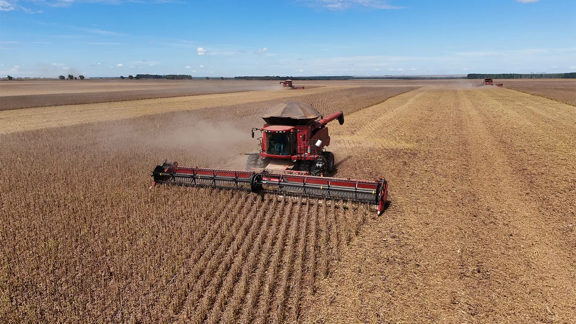
中方出手,“这一决定很重大”
Huan Qiu Shi Bao· 2025-08-13 04:06
Core Viewpoint - The Chinese Ministry of Commerce has preliminarily determined that imported canola seeds from Canada are being dumped, leading to the implementation of a temporary anti-dumping measure with a deposit rate of 75% [1][3]. Group 1: Anti-Dumping Measures - The Ministry of Commerce decided to impose a temporary anti-dumping measure on imported canola seeds from Canada, requiring a deposit of 75.8% from all Canadian companies [3]. - This measure is aimed at protecting the domestic canola industry from the impact of low-priced dumped products, as there is a causal relationship between dumping and substantial damage to the domestic industry [3]. Group 2: Trade Relations and Reactions - The latest anti-dumping measure follows China's imposition of a 100% tariff on Canadian canola oil and oilseed meal since March, in response to Canada's announcement of tariffs on Chinese electric vehicles and steel products [3]. - Analysts suggest that this move will increase pressure on the Canadian government to address trade frictions with China [4]. - The Chinese Ministry of Commerce has also initiated anti-dumping investigations on Canadian pea starch and has identified dumping in brominated butyl rubber, leading to further deposit requirements [4].
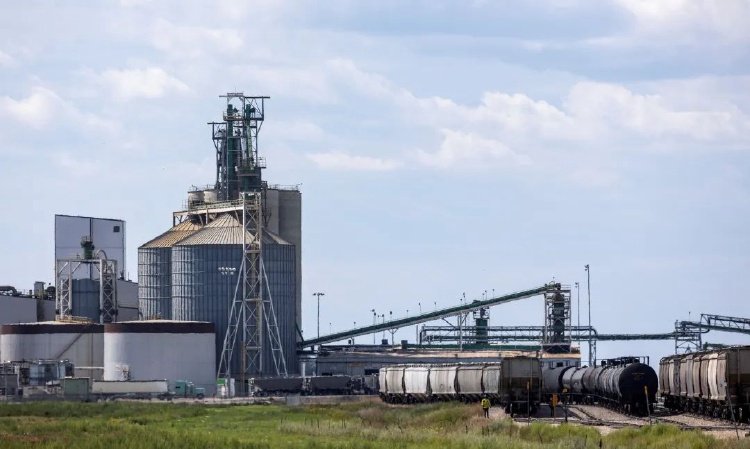
菜系:商务部初裁加菜籽倾销,多头行情起势
Guo Tou Qi Huo· 2025-08-12 11:44
Report Summary 1. Report Industry Investment Rating - The report suggests a bullish outlook for the domestic vegetable oilseed complex (菜系), recommending a long - position trading strategy [15]. 2. Core Viewpoints - The preliminary anti - dumping ruling on Canadian rapeseed has effectively blocked Canadian rapeseed from the Chinese market. While the final ruling may change, significant improvement in China - Canada economic and trade negotiations is needed for Canadian rapeseed to re - enter the Chinese market. This is positive news for domestic vegetable oilseed futures prices, with an expected short - term pattern of strong domestic and weak external markets [15]. 3. Summary by Related Catalogs Anti - Dumping Investigation and Preliminary Ruling - On September 9, 2024, the Ministry of Commerce launched an anti - dumping investigation into Canadian rapeseed. On August 12, 2025, it was preliminarily determined that Canadian rapeseed was being dumped, causing material damage to the domestic rapeseed industry, and there was a causal relationship between the two [2]. - Starting from August 14, 2025, importers are required to provide a 75.8% deposit to Chinese customs when importing Canadian rapeseed [4][9]. Policy Interpretation - The deposit is a temporary anti - dumping measure. The temporary anti - dumping measure period is generally no more than 4 months and can be extended to 9 months in special cases. The final anti - dumping tax will be determined by the State Council Tariff Commission based on the final investigation results [7][14]. - The final ruling is expected to be announced by March 9, 2026 at the latest. If the final ruling confirms dumping, there will be a "more refund, less no - supplement" policy. If the final ruling does not levy an anti - dumping tax, the deposit will be refunded [10][11][13]. Impact on the Market - The anti - dumping preliminary ruling has blocked Canadian rapeseed from the Chinese market. The final ruling may change, but significant improvement in China - Canada economic and trade negotiations is needed for Canadian rapeseed to re - enter the Chinese market. This news is positive for domestic vegetable oilseed futures prices, and it is expected that rapeseed trade will shrink after the decline in rapeseed meal and rapeseed oil trade between China and Canada [15].
两部门发布2025年棉花等农产品进口关税配额再分配公告
Yang Shi Xin Wen Ke Hu Duan· 2025-08-12 09:05
获得本公告第一条所列商品2025年进口关税配额并在8月底前已全部使用完毕的最终用户,以及符合相 关分配细则所列申请条件但在年初分配时未获得2025年进口关税配额的新用户,可以提出农产品进口 关税配额再分配申请。 国家发展改革委、商务部12日发布公告称,持有2025年小麦、玉米、大米、棉花、食糖进口关税配额 的最终用户,当年未就全部配额数量签订进口合同,或已签订进口合同但预计年底前无法从始发港出 运的,均应将其持有的关税配额量中未完成或不能完成的部分于9月15日前交还所在地(省、自治区、 直辖市、计划单列市、新疆生产建设兵团)发展改革委、商务主管部门。小麦、玉米、大米通过国际贸 易"单一窗口"粮食进口关税配额管理系统交还,棉花通过国际贸易"单一窗口"棉花进口配额管理系统 交还,食糖通过农产品进口关税配额管理系统交还。国家发展改革委、商务部将对交还的配额进行再 分配。对9月15日前没有交还且年底前未充分使用配额的最终用户,国家发展改革委、商务部在分配下 一年农产品进口关税配额时对相应品种按比例扣减。 ...
两部门公告明确2025年农产品进口关税配额再分配有关事项
Xin Hua Cai Jing· 2025-08-12 05:52
新华财经北京8月12日电据国家发展改革委网站12日消息,国家发展改革委和商务部日前公告2025年农 产品进口关税配额再分配有关事项。 国家发展改革委、商务部对用户交还的配额按照先来先领方式进行再分配,9月30日前将关税配额再分 配量分配到最终用户。 2025年农产品进口关税配额再分配公告 2025年第2号 (文章来源:新华财经) 公告称,持有2025年小麦、玉米、大米、棉花、食糖进口关税配额的最终用户,当年未就全部配额数量 签订进口合同,或已签订进口合同但预计年底前无法从始发港出运的,均应将其持有的关税配额量中未 完成或不能完成的部分于9月15日前交还所在地(省、自治区、直辖市、计划单列市、新疆生产建设兵 团)发展改革委、商务主管部门。 小麦、玉米、大米通过国际贸易"单一窗口"粮食进口关税配额管理系统交还,棉花通过国际贸易"单一 窗口"棉花进口配额管理系统交还,食糖通过农产品进口关税配额管理系统交还。国家发展改革委、商 务部将对交还的配额进行再分配。对9月15日前没有交还且年底前未充分使用配额的最终用户,国家发 展改革委、商务部在分配下一年农产品进口关税配额时对相应品种按比例扣减。 ...
屡创新高!中非贸易规模已超2万亿元
Xin Hua Wang· 2025-08-12 05:51
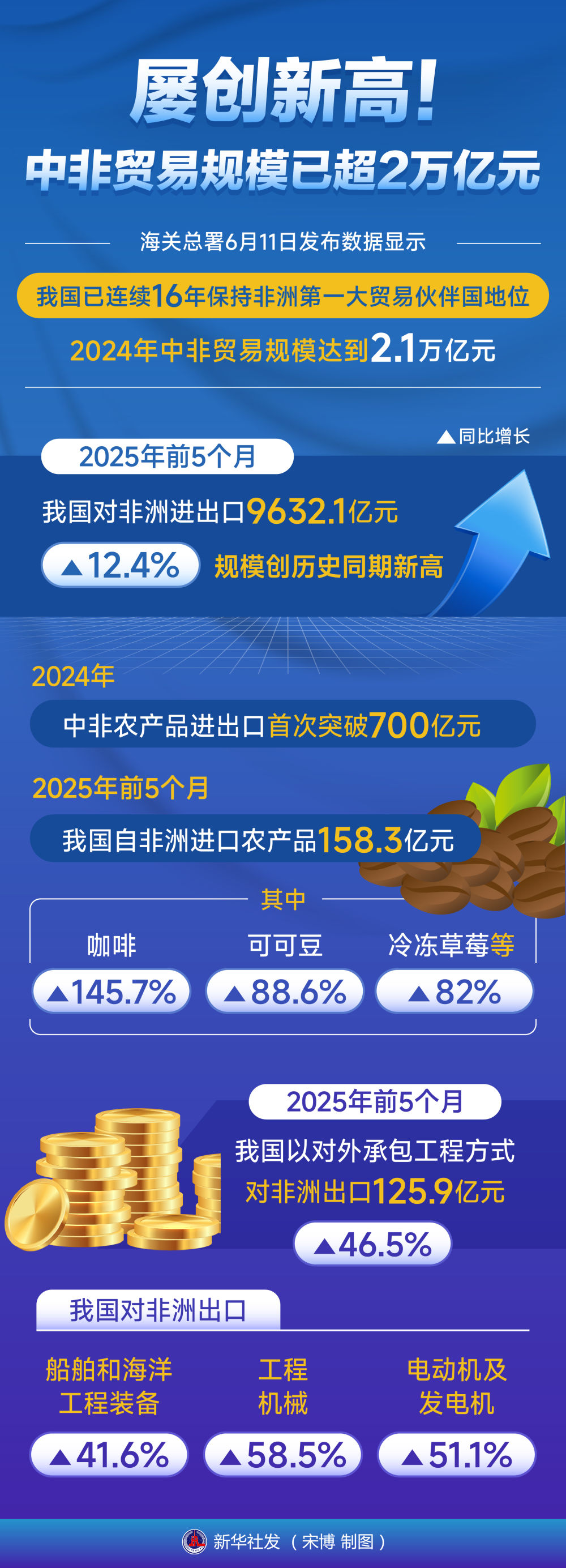
Group 1 - The core viewpoint is that China has maintained its position as Africa's largest trading partner for 16 consecutive years, with trade expected to exceed 2 trillion yuan in 2024, reaching 2.1 trillion yuan [1] - The China-Africa trade index has significantly increased from a base value of 100 in 2000 to 1056.53 in 2024, indicating robust growth in trade relations [1] - In the first five months of this year, China's imports and exports to Africa reached 963.21 billion yuan, marking a year-on-year growth of 12.4% and setting a historical record for the same period [1] Group 2 - Agricultural cooperation has expanded, with agricultural imports from Africa expected to surpass 70 billion yuan for the first time in 2024 [1] - In the first five months of this year, China imported agricultural products worth 15.83 billion yuan from Africa, with significant growth in coffee (145.7%), cocoa beans (88.6%), and frozen strawberries (82%) [1] - Exports of pesticide formulations and agricultural machinery to Africa increased by 12% and 41%, respectively, during the same period [1] Group 3 - Infrastructure construction cooperation has shown significant results, with Africa being China's largest market for foreign contracted projects since 2022 [2] - In the first five months of this year, China's exports to Africa through foreign contracted projects amounted to 12.59 billion yuan, reflecting a year-on-year increase of 46.5% [2] - Exports of ships, marine engineering equipment, engineering machinery, electric motors, and generators to Africa also saw substantial growth, with increases of 41.6%, 58.5%, and 51.1%, respectively [2]
新疆乌苏市市场监管局开展回访“名特优新”个体工商户
Zhong Guo Shi Pin Wang· 2025-08-12 04:53
Group 1 - The core viewpoint emphasizes the proactive measures taken by the Urumqi Market Supervision Bureau to support individual businesses and enhance the local economy through targeted initiatives and policy implementation [1][2] - The bureau has organized a special follow-up action for "famous, characteristic, superior, and new" individual businesses, focusing on understanding their operational conditions and evaluating the effectiveness of policies [1] - A total of 12 issues raised by individual businesses have been resolved on-site, demonstrating the bureau's commitment to addressing immediate concerns and facilitating resource coordination [1] Group 2 - The Urumqi Market Supervision Bureau is exploring innovative measures to support the development of the private economy, aiming to help individual businesses overcome fragmentation and activate economic growth [2] - The bureau has prioritized the cultivation of four categories of individual businesses, including well-known and characteristic ones, with a focus on local specialties such as catering and unique agricultural products [2] - Participation in events like the Beijing Olympic City Sports Culture Festival showcases the region's agricultural products, enhancing visibility and market reach for local businesses [2]
外媒:世贸组织确认巴西已就美国关税措施启动争端磋商程序
Zhong Guo Xin Wen Wang· 2025-08-11 23:17
Core Viewpoint - Brazil has initiated dispute consultation procedures with the World Trade Organization (WTO) against the United States, claiming that the U.S. tariff measures violate multiple trade agreements [1] Group 1: Trade Relations - On August 11, the WTO confirmed Brazil's complaint regarding U.S. tariffs [1] - Brazil's President Lula stated that the U.S. has no authority to impose a 50% tariff on Brazilian goods [1] - The U.S. government issued an executive order on July 30, imposing a 40% tariff on Brazilian imports starting August 6, raising the total tariff rate on most Brazilian products to 50% [1] Group 2: Economic Impact - Brazil plans to implement emergency measures to mitigate the economic and social impacts of the U.S. tariffs [1] - The affected Brazilian products include meat, coffee, and fruits, which are significant to Brazil's export economy [1]
“金融活水”浇灌塞上沃土
Qi Huo Ri Bao Wang· 2025-08-11 23:01
Group 1 - The training session aims to enhance risk management capabilities of agricultural enterprises in Yinchuan through the use of futures and derivatives [1][2] - The agricultural industry in Yinchuan is a key pillar for local economic development, facing increased operational pressures due to international commodity price fluctuations and extreme weather [2][3] - Futures markets serve as a crucial tool for price discovery, risk management, and resource allocation, helping agricultural producers stabilize costs and revenues [2][3] Group 2 - The Dalian Commodity Exchange (DCE) has been actively collaborating with local governments and financial institutions, serving over 1.8 million farmers through various risk management programs [3][5] - The training focused on core agricultural products like soybean meal and corn, providing practical applications of risk management tools [3][4] - Experts emphasized the importance of avoiding misconceptions about hedging and encouraged businesses to develop strategies based on industry needs [4][5] Group 3 - The training included both theoretical knowledge and practical case studies, fostering interaction between participants and instructors [5] - Companies expressed intentions to explore new models combining futures pricing with contract farming to enhance collaboration across the supply chain [5][6] - Future initiatives will focus on deepening services for local enterprises to leverage futures tools for risk management and competitiveness [5]