
快餐

Search documents
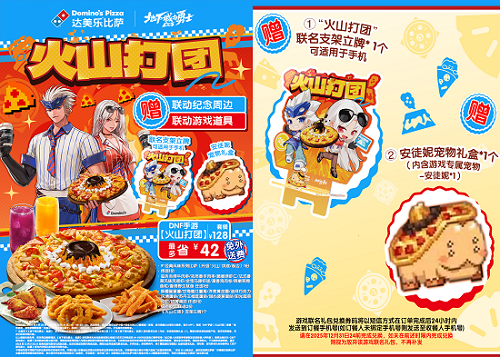
勇士集结火山打团!达美乐比萨 ×《地下城与勇士:起源》联动上线,开启美味探险之旅!
Sou Hu Wang· 2025-09-25 03:54
Core Points - The collaboration between Domino's Pizza and the popular mobile game "Dungeon & Fighter: Origin" features a special "Volcano Raid" meal package, combining culinary creativity with gaming elements [1][3][5] - The promotional period for this collaboration runs from September 25, 2025, to December 24, 2025, with limited-time offers available at designated stores [1][10] - The meal package includes a choice of cheese or cocoa "volcano" pizza, with a maximum discount of 42 yuan, and comes with exclusive in-game items and merchandise [1][5][10] Company Overview - Domino's Pizza, established in 1960, operates over 21,000 restaurants in more than 90 countries as of Q2 2025, with over 1,200 stores in mainland China [9] - The company emphasizes quality ingredients, including imported cheese and a variety of meats and vegetables, ensuring a high standard of pizza production [9] - Domino's Pizza offers a delivery guarantee of 30 minutes, enhancing customer service and satisfaction [9][10] Industry Context - "Dungeon & Fighter" is a well-known RPG fighting game that has maintained popularity for over a decade, with its mobile version "Dungeon & Fighter: Origin" being well-received in China [3][5] - The collaboration represents a growing trend of cross-industry partnerships, merging food and gaming to enhance customer engagement and brand loyalty [1][3]


未来3年投入4亿元培养人才 揭密每年培训1万人的麦当劳中国汉堡大学
Di Yi Cai Jing· 2025-09-24 14:52
Core Insights - McDonald's China announced an investment of over 400 million yuan in talent training and development over the next three years [2] - The Hamburger University trains nearly 10,000 students annually, with over 200,000 employees participating in online learning each year [2] - Hamburger University focuses on the restaurant service industry, teaching both hard skills related to restaurant operations and soft skills [2] Training and Development - Hamburger University, established in Shanghai in 2010, is the seventh globally and currently has 11 locations worldwide [2] - The CEO of McDonald's China, Zhang Jiayin, noted that the number of restaurants has grown from over 1,000 in 2010 to more than 7,400 today, serving over 1.3 billion customers annually [2] - The university has begun to increase interactions with other industries, including leadership courses for suppliers and companies like Coca-Cola [2] Educational Partnerships - Over 600 educational institutions have partnered with Hamburger University, with more than 200 using its resources as educational materials [2] - This collaboration aims to achieve a true integration of industry and education, providing a comprehensive system that meets the needs of educational institutions [2]

揭密每年培训1万人的麦当劳中国汉堡大学
第一财经· 2025-09-24 13:55
Core Viewpoint - McDonald's China plans to invest over 400 million yuan in talent training and development over the next three years, emphasizing the importance of employee education in the fast-food industry [3][4]. Group 1: Investment and Training - McDonald's China will invest more than 400 million yuan in talent training and development over the next three years [3]. - Each year, nearly 10,000 trainees complete their training at Hamburger University, and over 200,000 employees participate in online learning [3]. - Hamburger University, established in Shanghai in 2010, is the seventh globally and focuses on the restaurant service industry, teaching both hard and soft skills [3]. Group 2: Collaboration and Industry Engagement - Currently, over 600 educational institutions collaborate with Hamburger University, with more than 200 using its resources as educational materials, achieving a true integration of industry and education [4]. - The training team at Hamburger University has begun to engage with other industries, including leadership courses for suppliers and companies like Coca-Cola [3].

麦当劳中国宣布未来三年投资4亿元用于人才培训和发展
Zheng Quan Ri Bao Wang· 2025-09-24 06:43
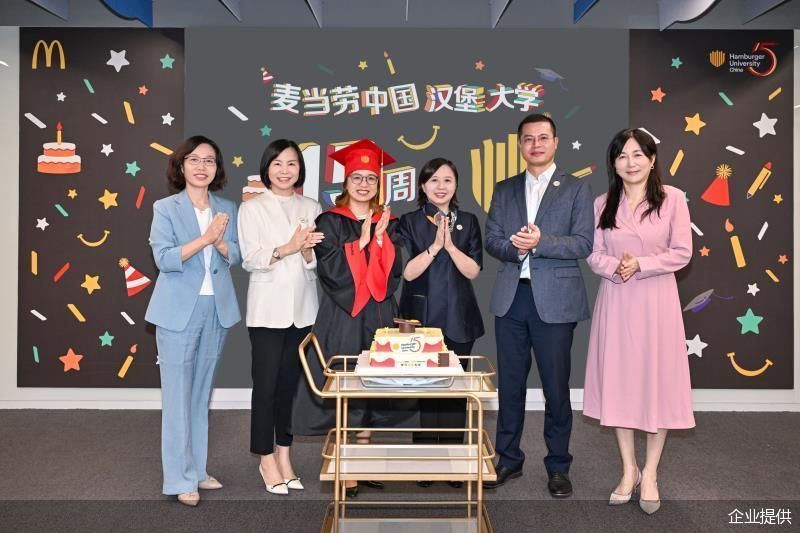
Core Insights - McDonald's China celebrated the 15th anniversary of its Hamburger University, which has trained nearly 10,000 students annually, focusing on talent development and empowerment [1][2] - The company plans to invest over 400 million yuan in talent training and development over the next three years, aiming to upgrade Hamburger University to meet the demands of the digital age [1][3] Company Overview - Since its establishment in 1955, McDonald's has adhered to its core values of quality, service, cleanliness, and value for money [2] - Hamburger University was founded in 1961 to ensure consistent and high-quality burger production across all McDonald's restaurants [2] - McDonald's China Hamburger University was established in Shanghai in 2010, becoming the seventh Hamburger University globally, and has modernized its curriculum to align with both global experiences and local market needs [2] Training and Development - The university focuses on both hard skills, such as restaurant operations, and soft skills, including leadership and human-centered care, making it a unique institution in the restaurant service industry [2] - Currently, there are 16 leadership academies across China, with approximately 100 experts, and nearly 200,000 employees utilize the "McDonald's e-learning" platform annually [2] Future Directions - Hamburger University will continue to evolve by integrating AI technology and personalized learning, expanding industry collaboration, and fostering a supportive growth environment for restaurant management talent [3] - The focus will be on three main directions: becoming smarter, more open, and more attentive to comprehensive growth [3]
月薪3万,也不敢吃“快餐界爱马仕”
创业邦· 2025-09-24 04:08
Core Viewpoint - The article discusses the current state and market dynamics of the spicy hot pot (麻辣香锅) industry, highlighting its high prices and the paradox of its continued popularity despite consumer complaints about costs [5][39]. Group 1: Market Dynamics - The spicy hot pot has evolved from a local specialty to a recognized dining category, with approximately 3,583 new related enterprises registered in China from January to November 2024, and a total of over 29,000 existing businesses [35]. - Despite the perception of being expensive, the spicy hot pot remains popular, with significant online engagement, including over 8.91 billion views on Douyin and more than 440,000 related posts on Xiaohongshu [38]. - The market for spicy hot pot is characterized by a lack of dominant brands, with 54.2% of brands having five or fewer stores, indicating a fragmented market with substantial growth potential [45]. Group 2: Pricing Strategies - The pricing system of spicy hot pot often obscures the actual costs, with items priced per weight or portion, leading to consumer confusion and higher bills than expected [13][15]. - For example, the price of certain ingredients can be significantly higher in restaurants compared to supermarkets, with a comparison showing that 200g of green bamboo shoots costs 17 yuan in a restaurant but only 5.98 yuan in a grocery app [17]. - The additional costs, such as base pot fees ranging from 10 to over 20 yuan, further contribute to the perception of high prices, making the dining experience feel more like a hot pot than a casual meal [29]. Group 3: Consumer Behavior - The article notes a shift in consumer behavior, with many opting to prepare spicy hot pot at home due to the high costs associated with dining out, as evidenced by the popularity of home-cooking tutorials on social media [49][51]. - The appeal of spicy hot pot remains strong among young consumers, who continue to seek out recipes and share their experiences online, indicating a lasting affection for the dish despite its pricing issues [55]. - The article suggests that the spicy hot pot industry faces challenges in distinguishing itself from similar dining options like hot pot and spicy noodles, leading to a competitive market environment [48].

金拱门vs肯德基:中国市场内幕大揭秘
Sou Hu Cai Jing· 2025-09-24 02:47
Core Insights - The competition between McDonald's and KFC in China is more significant than commonly perceived, with notable differences in their operational strategies and market presence [3][4]. Brand Ownership and Structure - McDonald's in China operates under the name "Golden Arches" and is an authorized operator of the U.S. brand, lacking the autonomy that KFC enjoys as a publicly listed entity in the U.S. [3][4]. Product Offerings - KFC has successfully localized its menu with items like "Old Beijing Chicken Roll" and "Spicy Noodle Bowl," while McDonald's has been slower to adapt, maintaining a more traditional menu [3][4]. Store Expansion and Market Strategy - KFC has over 10,000 stores in China, significantly outpacing McDonald's, which has around 4,000 stores. KFC's strategy focuses on penetrating lower-tier cities, while McDonald's targets urban areas [4][6]. Corporate Culture - KFC has shifted towards a more localized management style, while McDonald's retains a more traditional American corporate culture, although it is beginning to adapt post-acquisition by CITIC [4][5]. Marketing Strategies - KFC employs "hunger marketing" tactics with limited edition items, while McDonald's focuses on long-term promotions and discounts [4][5]. Food Safety and Employee Treatment - Both brands maintain strict food safety standards, but McDonald's has a slightly better reputation in this area. Employee wages at McDonald's are marginally higher, but KFC offers more advancement opportunities due to its larger number of stores [5][6]. Consumer Demographics - KFC appeals to a broader demographic, including families, while McDonald's is favored by younger consumers seeking authentic American flavors [5][6]. Delivery and Innovation - KFC benefits from a faster delivery system through Yum! Brands, while McDonald's collaborates with multiple delivery platforms for promotions. KFC introduces new products more frequently, whereas McDonald's focuses on fewer, high-success items [6]. Dining Experience - KFC restaurants are generally larger and more family-oriented, while McDonald's prioritizes quick turnover with compact seating arrangements [6]. Localization vs. Globalization - The competition between these two American brands in China highlights the balance between localization and maintaining international brand identity, with both achieving significant success [6].

潍坊|风筝之都向全球发出金秋邀约
Da Zhong Ri Bao· 2025-09-24 01:25
Core Viewpoint - The 2025 Weifang International Kite Festival and Weifang Kite Carnival aims to promote cultural exchange, deepen cooperation, and foster development globally through the medium of kites [2] Group 1: Event Overview - The event was announced on September 19, 2023, in Beijing, attended by diplomats from multiple countries and over 30 media outlets [2] - Weifang has developed the kite festival over 42 years, becoming a significant platform for cultural and economic exchange [2] Group 2: Economic Impact - Weifang has introduced the first local regulation on the kite industry, promoting its growth and resulting in over 800 operating entities, with products exported to more than 50 countries, capturing over 80% of the global market [3] - The kite industry has created over 100,000 jobs through a complete industrial chain covering raw material supply, design, production, and tourism services [3] Group 3: Cultural Significance - The kite symbolizes peace and friendship, with the festival highlighting the beauty of cultural heritage and its transmission through generations [2][3] - Weifang is integrating the kite culture with modern industries, aiming to transform it from a cultural symbol into an economic engine [3] Group 4: Upcoming Activities - The Weifang Kite Carnival will feature over 20 events from late September to late October, including celebrations for the 76th anniversary of the People's Republic of China [3][4] - The festival emphasizes four dimensions: competition, culture, sports, and trade, showcasing the city's vitality and development opportunities [3][4]
Perfat Technologies获融资;奈雪进入纽约;盒马CEO将兼任CMO
Sou Hu Cai Jing· 2025-09-23 15:20
Investment Dynamics - Finnish startup Perfat Technologies raised 20.879 million RMB in Series A funding, led by Newtree Impact and Beyond Impact. The company has developed a plant oil conversion technology that transforms liquid oils into solid functional fats, reducing fat content by 80% and calories by 30% compared to traditional fats, while adding dietary fiber [3] - McDonald's plans to invest 200 million USD (approximately 1.4 billion RMB) in regenerative agriculture practices across U.S. ranches over the next seven years, covering 4 million acres across 38 states. This is the largest investment by McDonald's in the U.S. to support regenerative agriculture [5] - M Stand acquired Shanghai restaurant brand RAC BAR, which was established in 2017 and operates several locations in Shanghai. The acquisition allows RAC BAR to maintain independent operations at its original location [8][9] - Regal Food, a UK baking manufacturer, acquired soft drink brand Suncrest, known for its tropical fruit-flavored beverages. This acquisition aims to expand Regal Food's beverage product portfolio and create new growth opportunities in the UK and international markets [10][12] - Saks Global is negotiating to sell 49% of its luxury department store Bergdorf Goodman for approximately 1 billion USD. The sale could help stabilize Saks Global's financial situation, which is burdened by over 4 billion USD in debt [13][15] - Winland Foods and La Doria merged to create a new food manufacturing entity valued at 4 billion USD, named Windoria. The merger aims to enhance product offerings and strengthen the supply chain for retailers and food distributors globally [18] - SPC has reached a cooperation agreement with Fonterra to produce Fonterra brand products at its Carrum Downs factory for overseas markets. This partnership is expected to enhance the flexibility of regional supply chains in the dairy processing sector [21] - Nayuki Tea launched a pop-up store in Flushing, New York, attracting significant foot traffic in a Chinese community area. The store's location is strategically chosen due to lower rental costs compared to Manhattan and the presence of other Chinese tea brands [23] - Jean-Marc Bellaiche, former CEO of Printemps, will become the CEO of Sani/Ikos Group, a resort operator, starting January 1. His transition reflects a trend of fashion industry leaders moving into the hospitality sector [24] - Hema announced a major organizational restructuring, with CEO Yan Xiaolei also taking on the role of Chief Merchandise Officer (CMO) to enhance product development and supply chain management, aiming to strengthen Hema's competitive position in the fresh and instant retail market [28]

加码人才培训和发展 麦当劳中国宣布未来三年投资4亿元
Bei Jing Shang Bao· 2025-09-23 11:29
Core Insights - McDonald's China celebrates the 15th anniversary of Hamburger University and announces an investment of over 400 million RMB in talent training and development over the next three years [1][3] - The focus of Hamburger University will be on three main directions: becoming "smarter, more open, and more focused on holistic growth" to create a talent cultivation system for the digital age [1][4] Investment and Development - McDonald's China plans to invest over 400 million RMB in talent training and development in the next three years [1] - The university aims to enhance its training programs by incorporating AI tools, virtual mentors, and personalized learning paths [3] Training and Collaboration - Hamburger University will break down corporate boundaries by collaborating with industry associations, educational institutions, and non-profit organizations to co-create courses and share resources [3] - The university currently has 16 leadership academies across the country and approximately 100 experts, with nearly 200,000 employees learning through the "McDonald's e-learning" platform each year [3] Employee Development - Training at Hamburger University enhances employees' operational management skills, leadership abilities, and understanding of McDonald's culture and values [4] - The university aims to cultivate more outstanding restaurant management talents by integrating AI technology, expanding industry collaboration, and providing personalized growth support [4]
产品战略再升级!鱼你在一起全球首家酸菜鱼+烫捞门店落地北京
Jiang Nan Shi Bao· 2025-09-22 07:30
Core Insights - The company has launched a new store in Beijing with a fresh design and a new product line called "烫捞" (hot pot), which has attracted significant customer interest and long queues on opening day [1] - The new product line features seven unique soup bases, including classic herbal bone soup and international flavors like Singapore Laksa and Thai Tom Yum, aiming to enhance product competitiveness and customer satisfaction [2] - The strategic focus on the hot pot segment is seen as a key growth opportunity, leveraging the company's existing strengths in product development and ingredient quality to meet rising consumer demand [3] Product Development - The new "烫捞" series addresses industry pain points such as limited flavors and ingredient homogeneity by offering diverse soup bases and high-quality ingredients [2] - The introduction of premium seafood and a six-meter open display for ingredients enhances customer choice and experience [2] Market Strategy - The hot pot category is positioned as a response to the growing demand for branded and standardized fast food, with the company aiming to create a new growth curve following its success with "酸菜鱼" (sour cabbage fish) [3] - The combination of "酸菜鱼" and "烫捞" products is expected to optimize store efficiency and attract customers during non-peak hours, thereby increasing overall profitability [3] Cultural Integration - The new store design incorporates traditional Chinese aesthetics and modern elements, creating a unique dining environment that reflects both cultural heritage and contemporary trends [4] - The brand's international expansion has been positively received, with high customer ratings in markets like Malaysia, indicating a successful blend of Eastern culinary traditions with global tastes [5] Global Expansion - The company has over 2,500 stores worldwide, including locations in the US, Canada, Singapore, Malaysia, and Thailand, showcasing its commitment to globalizing Chinese cuisine [5] - The new product line and cultural aesthetic are part of a broader strategy to convey the diversity and confidence of Chinese cuisine on the international stage [5]