
环保

Search documents
广东发布金融支持产业链整合兼并方案 探索将并购重组、资产盘活等纳入国企考核体系
Shang Hai Zheng Quan Bao· 2025-11-26 18:28
Core Viewpoint - The Guangdong Provincial Financial Management Bureau has launched an "Action Plan" to support enterprises in optimizing their industrial chain layout through mergers and acquisitions, aiming to enhance the competitiveness and quality of the industrial chain [1][2]. Group 1: Financial Support for Industrial Chain Integration - The "Action Plan" emphasizes the importance of financial empowerment for the collaborative development of upstream and downstream enterprises in the industrial chain, focusing on directing financial resources to key areas of integration and mergers [2][3]. - The plan aims to create a world-class industrial cluster by 2027, enhancing the advantages of the Guangdong-Hong Kong-Macao Greater Bay Area and improving the efficiency of integration services [2]. Group 2: Encouragement of Mergers and Acquisitions - The plan encourages listed companies to utilize various payment tools, such as shares and convertible bonds, to facilitate mergers and acquisitions, thereby attracting more social capital and enhancing sustainable development capabilities [3][4]. - It supports the establishment of industrial merger funds by listed companies, focusing on critical upstream and downstream segments of the industrial chain [3]. Group 3: Capital Market Development - The "Action Plan" promotes the improvement of comprehensive service platforms for enterprise listings and encourages technology-driven companies to list on the Growth Enterprise Market and Science and Technology Innovation Board [4]. - Guangdong's capital market has seen significant activity in mergers and acquisitions, with over 100 transactions completed in the past year, amounting to nearly 1,000 billion [4]. Group 4: State-Owned Enterprise Resource Integration - The plan includes measures to integrate quality resources within state-owned enterprises, exploring the inclusion of mergers and asset revitalization in their performance evaluation systems [5][6]. - It highlights the importance of using existing financing platforms for asset restructuring and equity swaps to enhance asset securitization levels [6]. Group 5: Recent Mergers and Acquisitions Examples - Notable recent mergers include Guangdong Hongda's acquisition of Xinjiang-listed company Xuefeng Technology for 2.2 billion, enhancing its production capacity [6]. - Another example is the acquisition of Hong Kong-listed company Yuefeng Environmental by Hanlan Environment for 11.1 billion HKD, expanding its operations across 54 cities [6].
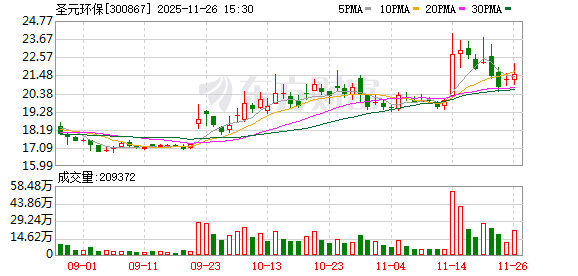
圣元环保:公司主营业绩主要体现在垃圾发电产业
Zheng Quan Ri Bao· 2025-11-26 12:08
Core Viewpoint - The company is focusing on its core business in waste-to-energy while actively exploring new industries for future growth opportunities [2] Group 1: Current Operations - The company's main revenue is derived from the waste-to-energy sector, specifically through waste incineration power generation [2] - The company is currently developing new projects, including taurine raw material and Xiamen Ruiji Hotel, which are still under construction and not yet operational [2] Group 2: New Business Initiatives - In the hydrogen energy sector, the company has established partnerships with various institutions, including Xiamen University and Southwest Chemical Research Design Institute, to collaborate on technology research and project implementation [2] - The company will comply with information disclosure requirements if new business initiatives meet the relevant standards [2] Group 3: Asset Management - The sale of the wastewater business assets is pending approval from local government authorities, and the company is actively working to expedite this process [2]


万科和CPO小作文
Datayes· 2025-11-26 11:31
Group 1: Vanke Debt Situation - Vanke's debt situation is under scrutiny as a report suggests that the local government is considering a "market-oriented" approach to handle its debt [1][2] - A working group previously estimated a funding gap of approximately 150 billion RMB (about 21.1 billion USD) for Vanke, with total interest-bearing liabilities reported at around 362.9 billion RMB (51.1 billion USD) as of September 30 [3] - Vanke faces imminent challenges with two domestic bonds maturing in December, totaling 2 billion RMB and 3.7 billion RMB, respectively [4] Group 2: Market Reactions and Implications - The market is reacting to rumors that Shenzhen has sought assistance from Beijing regarding Vanke's debt situation, leading to speculation about potential outcomes [4] - The report indicates that the Shenzhen government can no longer support Vanke independently, suggesting a need for intervention from higher authorities [2] Group 3: Industry Trends and Stock Performance - The TMT sector has experienced significant fluctuations, with the rolling 40-day excess return narrowing to a historical low of around -7.5%, indicating a potential bottoming out [10] - Recent reports highlight a strong performance in the optical communication sector, driven by rumors of Google placing a substantial order, which has positively impacted related stocks [14][22]



主力资金丨3股尾盘获主力资金大幅抢筹
Zheng Quan Shi Bao Wang· 2025-11-26 11:21
Group 1 - The A-share market showed mixed performance on November 26, with major indices fluctuating, while sectors like pharmaceuticals and semiconductors saw gains, whereas shipbuilding and aerospace sectors faced declines [1] - The net outflow of main funds in the Shanghai and Shenzhen markets reached 11.01 billion yuan, with 15 sectors experiencing net inflows, particularly automotive, textile and apparel, and comprehensive industries, each exceeding 300 million yuan [1] - The basic chemical industry led the net outflow with 1.13 billion yuan, followed by social services, real estate, and non-bank financial sectors, each exceeding 600 million yuan [1] Group 2 - Five stocks recorded net inflows exceeding 1 billion yuan, with a total of 63 stocks seeing net inflows above 100 million yuan [2] - The CPO concept stocks continued to strengthen, with New Yisheng and Zhongji Xuchuang attracting net inflows of 1.646 billion yuan and 1.306 billion yuan, respectively [3] - Yangguang Power saw a net inflow of 1.243 billion yuan, while Inspur Information reported a net inflow of 1.128 billion yuan, with the company announcing a share buyback of 2.25 billion yuan [4] Group 3 - At the market close, the main funds experienced a net outflow of 1.541 billion yuan, with retail and food and beverage sectors leading in net inflows [5] - Three stocks, including Yaowang Technology and Dongxin Co., saw net inflows exceeding 100 million yuan at the close, with Dongxin Co. hitting the daily limit [6]





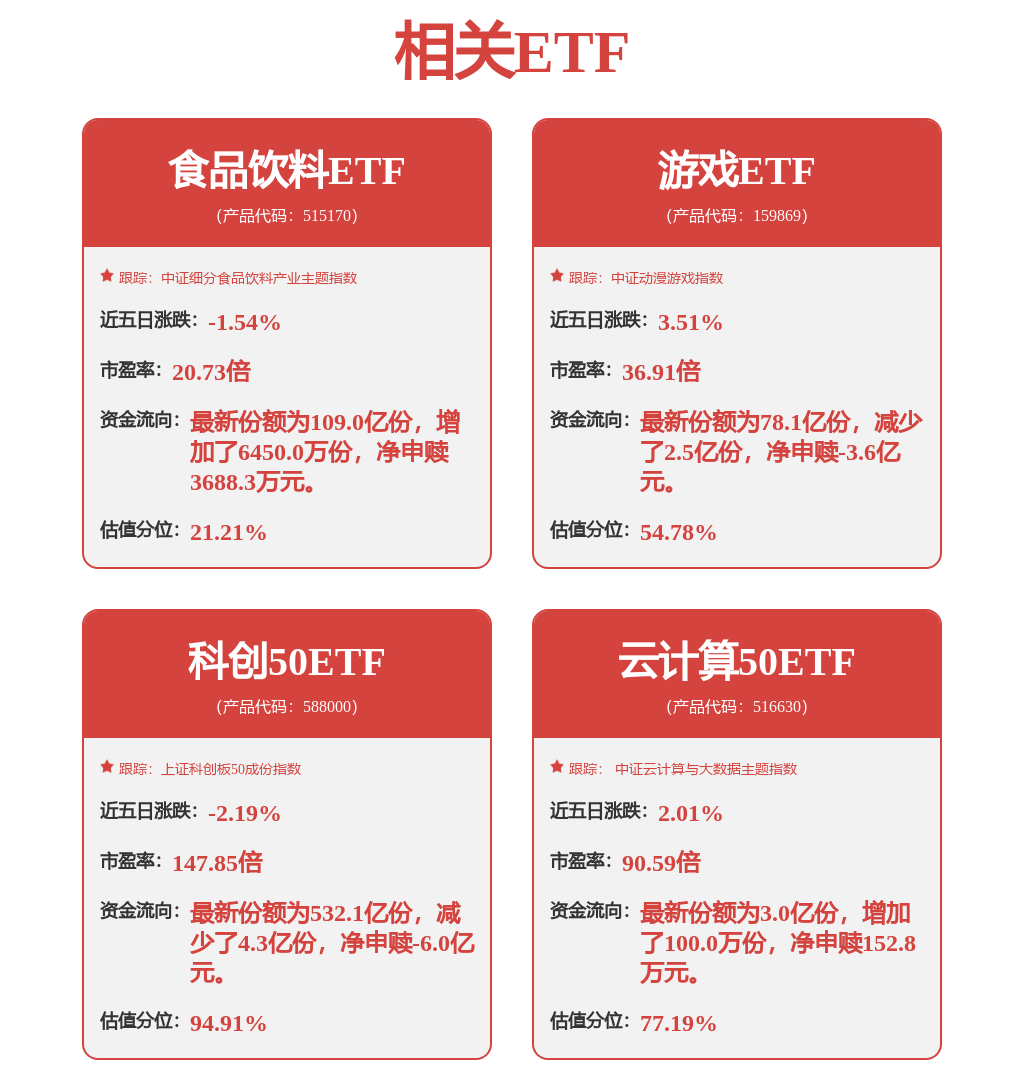
华新环保:截至11月20日公司股东人数为17099户
Zheng Quan Ri Bao Wang· 2025-11-26 10:40
证券日报网讯华新环保(301265)11月26日在互动平台回答投资者提问时表示,截至11月20日,公司股 东人数为17099户。 ...
津膜科技:截至2025年11月20日,公司的股东人数为16839户
Zheng Quan Ri Bao Wang· 2025-11-25 12:10
证券日报网讯津膜科技(300334)11月25日在互动平台回答投资者提问时表示,截至2025年11月20日, 公司的股东人数为16,839户。 ...

首届“绿智未来”可持续发展全球挑战赛决赛暨颁奖典礼成功举办
Xin Lang Cai Jing· 2025-11-25 07:44
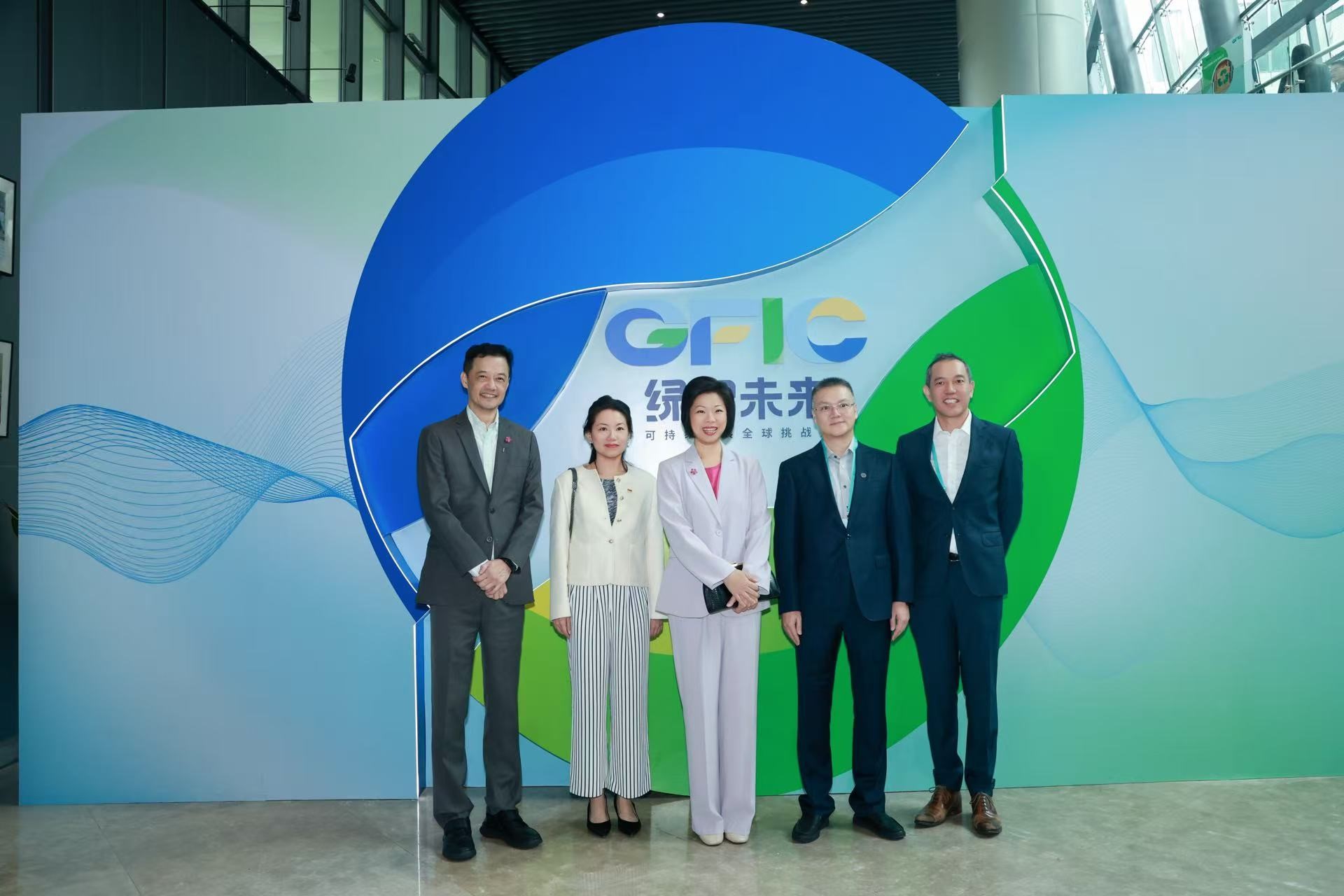
新加坡外交部兼内政部高级政务部长、国会议员沈颖女士,新加坡驻华大使馆副馆长、公使衔参赞周溯理女士,深圳市南山区副区长蔡淡宏先生,祥峰中国 创始管理合伙人郑俊聪先生,淡马锡基金会董事郭书实先生,淡马锡基金会董事Zuraidah Abdullah女士,淡马锡基金会执行董事兼首席执行长黄文雄先生, 能源基金会首席执行官兼中国区总裁邹骥先生,联合国开发计划署可持续发展目标影响力指导委员会委员、社会价值投资联盟(深圳)主席、理事长马蔚华 先生,红杉中国投资合伙人、红杉碳中和研究院院长李俊峰先生,味全集团董事长室特别助理吕学君先生,一带一路环境技术交流与转移中心(深圳)、上 海市经济和信息化委员会、深圳市前海金融发展局等相关部门领导,以及政府部门、企业、行业协会、金融机构、科创平台、学术机构、非营利组织代表等 500余人出席活动,见证这一重要时刻。 主办方嘉宾合影 挑战赛由祥峰投资中国基金(以下简称"祥峰中国")和淡马锡基金会共同主办,旨在发掘技术创新、商业可行的优质项目,助力全球可持续发展目标的实 现。本届挑战赛聚焦工业脱碳、能源转型、绿色农业、降污减排四大赛道,自4月23日启动以来,共征集到来自全球约70多个国家及地 ...
音频 | 格隆汇11.25盘前要点—港A美股你需要关注的大事都在这
Ge Long Hui A P P· 2025-11-24 23:16
Group 1 - The Nasdaq index surged by 2.69%, with Tesla and Google both rising over 6%, while the Chinese index increased by 2.82% [2] - WTI January crude oil futures rose by 1.34%, and spot gold increased by 1.8% [2] - The probability of the Federal Reserve lowering interest rates by 25 basis points in December has risen to 80% [2] Group 2 - Goldman Sachs' chief economist expects the Federal Reserve to lower rates in December [2] - Deutsche Bank has raised its target for the S&P 500 index to 8000 points for next year [2] - Bank of America predicts that gold prices could reach $5000 per ounce by 2026 [2] Group 3 - The People's Bank of China conducted a 10 trillion yuan MLF operation on November 25 [2] - S&P has raised its GDP forecast for China to 4.4% for next year [2] - Net inflows into emerging market ETFs have continued for the fifth consecutive week, with a corresponding trend of capital inflow into China [2] Group 4 - Xiaomi Group's Lei Jun invested over 100 million Hong Kong dollars to increase his stake in the company [2] - The second-largest shareholder of Saiwei Electronics, the National Fund, reduced its stake by 1.07% from September 23 to November 24 [2] - Southbound funds net bought 8.5 billion Hong Kong dollars in stocks, significantly increasing positions in Alibaba and Tencent [2]
东江环保全资子公司厦门绿洲收到税务行政处罚决定书
智通财经网· 2025-11-24 11:59
Core Viewpoint - Dongjiang Environmental (00895) has received a tax administrative penalty from the Xiamen Municipal Taxation Bureau for tax evasion related to the purchase of used home appliances, resulting in a fine of RMB 202.42 million [1] Group 1: Tax Evasion Details - Xiamen Oasis, a wholly-owned subsidiary of Dongjiang Environmental, acquired 350 VAT invoices from a third party, resulting in a tax deduction of RMB 3.8556 million and an understated business cost of RMB 22.6802 million, leading to tax underpayment [1] - The tax evasion occurred between September and October 2015, with the company being penalized under Article 63 of the Tax Collection and Administration Law of the People's Republic of China [1] Group 2: Penalty and Company Response - The penalty for the tax evasion is set at 0.5 times the amount of tax evaded, totaling RMB 202.42 million [1] - Following the change of control to Guangdong Guangsheng Holding Group in October 2016, the company has been conducting self-inspections and improving internal management to prevent future occurrences of such issues [1] - The company aims to address historical issues legally and enhance communication with administrative bodies while strengthening the understanding of relevant laws and regulations [1]

东江环保(002672.SZ):子公司收到税务行政处罚决定书
Ge Long Hui A P P· 2025-11-24 10:32
本次税务行政处罚涉及的违法违规事项发生于2015年10月之前,自2016年10月公司控股股东变更为广东 省广晟控股集团有限公司后,公司逐步自查并规范各项业务的内部管理,强化各个环节的责任意识。公 司将依法正确处理历史遗留问题,加强与行政机关的沟通及相关法律法规的学习,避免此类情况再次发 生。 格隆汇11月24日丨东江环保(002672.SZ)公布,全资子公司厦门绿洲环保产业有限公司(简称"厦门绿 洲")于近日收到国家税务总局厦门市税务局第二稽查局下发的《税务行政处罚决定书》。厦门绿洲于 2015年9月-10月期间向个人销售方收购旧家电,取得销售方以外的第三方沭阳源丰再生资源有限公司开 具的增值税专用发票350份,认证抵扣税额3,855,625.86元,列支主营业务成本22,680,152.75元,造成少 缴税款的后果已构成偷税。依据《中华人民共和国税收征收管理法》第六十三条第一款,厦门绿洲在账 上少列收入造成少缴税款已构成偷税,对厦门绿洲偷税的行为处所偷税款0.5倍的罚款合计2,024,203.58 元。 ...