农产品种植

Search documents
玉米周报:部分企业开始停收玉米玉米价格继续震荡偏弱-20250819
Zhe Shang Qi Huo· 2025-08-19 11:48
1. Report Industry Investment Rating There is no information provided regarding the report industry investment rating. 2. Core Viewpoint - The corn market is in a stage of oscillating downward, and the later price center is expected to decline. Due to high yields, imported corn supplements the market supply, and the overall supply is sufficient. The price difference between corn and wheat remains in the substitutable range, with wheat being widely used as a substitute for corn. Alongside the substitution of millet and other grains, these factors suppress the corn price. The planting area of new crops is high, and the expected yield per unit is good, so the new crop yield is still expected to be abundant. The lowest planting cost of the new crop on the futures market is about 2,000 yuan/ton, and the cost center continues to shift downward. Under multiple negative factors, it is expected that c2509 will oscillate downward, and the later price center is expected to shift downward [7]. 3. Summary by Directory Domestic Corn Supply - **Supply**: The domestic corn price continues to oscillate weakly, and the growth of new - season corn is good. The current main variable is the weather during the growth period, especially rainfall. The NDVI data shows that the growth of corn in Northeast China is significantly better than in previous years, while in North China, although affected by extreme weather, the growth is still around the annual average. Overall, the expected yield per unit of corn in the main production areas is good [9][10]. - **Import**: The scale of corn imports has significantly decreased. In June 2025, the total corn import volume was 156,400 tons, a year - on - year decrease of 82.99% and a month - on - month decrease of 3.21 tons. From January to June 2025, the total corn import volume was 785,300 tons, a year - on - year decrease of 92.88%. The USDA estimates that China's corn imports in the 2024/25 season will be 4 million tons, lower than 23.41 million tons in the 2023/24 season [17][19][20]. - **Substitutes**: Feed enterprises are purchasing wheat to replace corn, and the substitution pressure of imported substitutes is decreasing. The price difference between corn and wheat in North China is near parity, and wheat has a high cost - effectiveness, exerting great pressure on the feed - use substitution of corn. In June 2025, the import volume of barley decreased by 23.83% year - on - year, and the import volume of sorghum decreased by 32.71% year - on - year [29][30]. Demand - **Feed and Livestock Farming**: The feed demand in the livestock farming industry is rigid, but the breeding profit is average. In June 2025, the national industrial feed production was 27.67 million tons, a month - on - month decrease of 0.1% and a year - on - year increase of 6.6%. The inventory of breeding sows, the parent - stock of white - feather broilers, and the hatching volume of laying - hen chicks are all at high levels, indicating a rigid feed demand. However, the breeding profit of self - breeding and self - raising pigs is at a low level, the profit of broiler breeding is seasonally rising, and the profit of laying - hen breeding has deteriorated [34][35][36]. - **Deep - processing**: The operating rate of corn starch enterprises in Heilongjiang has increased significantly, but the deep - processing production profit is severely in the red. The operating rate of major corn starch enterprises nationwide has rebounded to a neutral level, with Shandong and Heilongjiang showing relatively high rates. The corn starch production has also increased, but the downstream提货量 is low, and the production profit is severely in the red. The consumption of corn by corn alcohol enterprises has slowed down, and the operating rate has reached a new low [55][56]. Inventory - **Corn Trade and Inventory**: The inventory of trade channels and downstream users is gradually decreasing, and the starch inventory is significantly high. As of August 8, the inventory of the four northern ports continued to decline, and the domestic trade inventory of southern ports fluctuated downward. The inventory of feed enterprises continued to decrease, and the inventory of deep - processing enterprises decreased seasonally. The starch inventory of major starch enterprises continued to reach a new high in the past eight years [83][84][85]. Basis and Spread - **Basis**: The report provides the basis data of corn 01, 05, 09 contracts at Jinzhou Port and the basis data of starch 01, 05, 09 contracts in Jilin area on August 14, 2025 [117][119][121]. - **Spread**: The report provides the spread data of corn 5 - 9, 9 - 1, and the spread data of starch 1 - 5, 5 - 9, 9 - 1, as well as the spread data between corn and starch 01, 05, 09 contracts [127][128][129]. Corn Warehouse Receipt Quantity - As of August 14, 2025, the corn warehouse receipt quantity was 222,298 hands, and the corn starch warehouse receipt quantity was 25,000 hands [140]. Industrial Chain Operation Suggestions - **Traders**: For procurement management, build inventory and seek to buy corn at low prices. Use a 100% hedging ratio, buy the c2509 - C - 2400 option at an entry price of 8. For inventory management, sell corn at high prices and use a 100% hedging ratio, short the c2509 contract at an entry price of 2300 [4]. - **Downstream Enterprises**: For procurement management, when in need of corn raw materials and worried about price increases, use a 100% hedging ratio, buy the c2509 - C - 2400 option. For inventory management, when the raw material inventory is high and worried about price drops, use a 100% hedging ratio, short the c2509 contract at an entry price of 2300 [4].
农文旅商联动援疆,这些变化正在发生
Di Yi Cai Jing· 2025-08-19 11:09
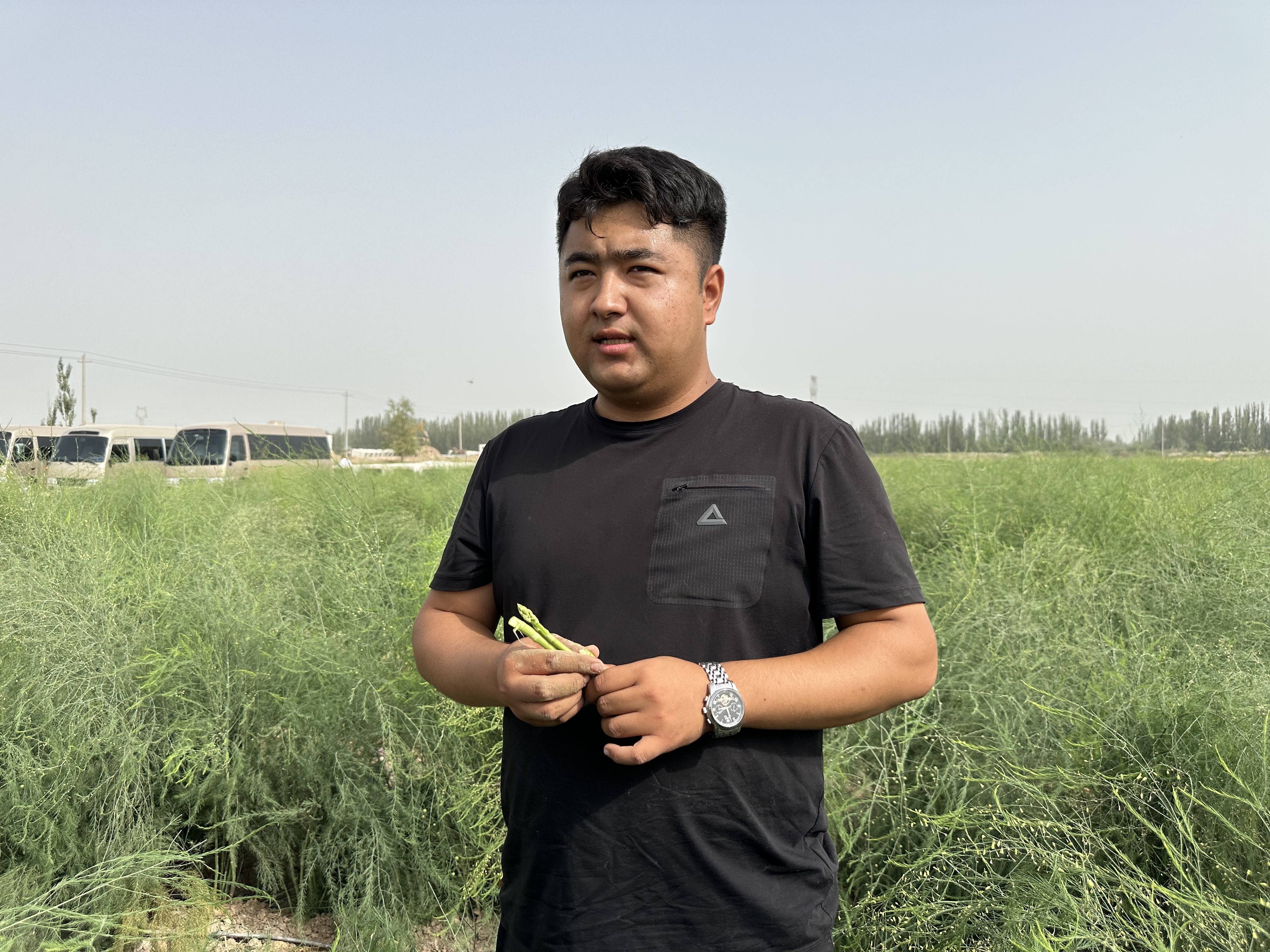
Group 1 - Xinjiang is promoting the integration of agriculture, culture, tourism, and commerce to enhance local economic development [1] - The introduction of new agricultural varieties and deep processing initiatives is optimizing the agricultural structure in the Kashgar region [1] - The collaboration between various provinces and Xinjiang is driving rural revitalization and creating new economic opportunities [1] Group 2 - The introduction of asparagus cultivation in Akto County is a significant development, with local farmers learning advanced planting techniques [5][6] - A 10-year land transfer contract has been established, ensuring a steady income for local farmers and collective benefits [6] - The employment model at the asparagus base is providing around 250 job opportunities, enhancing local income levels [7] Group 3 - The development of high-end agricultural products is being prioritized, with initiatives to enhance the processing of local fruits [11] - The establishment of the "Yuejia New Mei Industry Park" is facilitating cold storage and direct shipping of products, significantly reducing logistics costs [11] - Future plans include expanding the industry chain and improving product quality to meet market demands [12] Group 4 - The integration of cultural tourism is being emphasized, with initiatives to attract visitors to local agricultural sites [16] - The "Fig Industry + Cultural Tourism" model is being developed in Atushi City, aiming to create a vibrant rural economy [16][17] - Local farmers are experiencing significant income increases due to tourism and agricultural initiatives, with some reporting monthly earnings rising from 2,000 to 8,000 yuan [17] Group 5 - The establishment of the "Lujingqing" edible fungus ecological technology demonstration park is promoting agricultural diversification and tourism [21] - The park is designed to provide educational experiences and job opportunities for local residents, fostering community engagement [21] - The integration of agricultural production with tourism is seen as a promising avenue for economic development in the region [22]

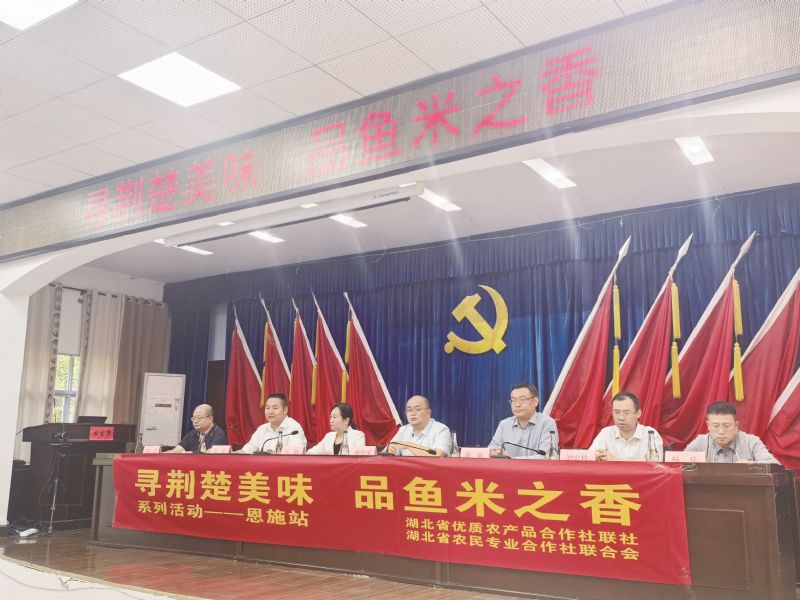
湖北头雁领航打响优质农产品品牌 扶持17市州龙头企业引领产业发展
Chang Jiang Shang Bao· 2025-08-18 00:05
Core Viewpoint - The revitalization of the "Chinese Party Ginseng" industry in Enshi, Hubei, is being accelerated through initiatives like the "Seeking Jingchu Delicacies and Tasting the Fragrance of Fish and Rice" event, highlighting the importance of leading enterprises and innovative agricultural practices in driving local economic growth [4][5][10]. Group 1: Industry Background - Enshi Prefecture's unique geographical features and climate have fostered a variety of geographical indication products, with "Ban Party" ginseng being a notable example [6]. - The history of Ban Party ginseng cultivation exceeds 600 years, and it is recognized as one of China's four famous ginseng varieties, being the only one with a "national-level" designation [6][7]. Group 2: Historical Context - The peak period for the Ban Party industry was in the 1980s and 1990s, with significant economic contributions, including an annual output value exceeding 20 million yuan in 2000 [7]. - However, the industry faced decline due to over-reliance on chemical fertilizers and a focus on quantity over quality, leading to a reduction in cultivation area from over 10,000 acres to around 2,000 acres [8]. Group 3: Recent Developments - In 2022, a local entrepreneur initiated a revival of traditional cultivation methods, leading to the establishment of the China Ban Party Museum and the resumption of the "Chinese Ban Party Festival" after a 10-year hiatus [9]. - The Hubei Provincial Farmers' Cooperative Association aims to identify and support more leading enterprises to enhance the branding and market presence of high-quality agricultural products from Hubei [5][10]. Group 4: Educational and Collaborative Efforts - The collaboration between Wuhan University of Light Industry and local enterprises marks a new phase in talent development, aiming to enhance the quality and efficiency of the Ban Party industry [11]. - Innovative models such as "Farmers' Field Schools" and "Technology Small Courtyards" are being promoted to facilitate the integration of advanced agricultural techniques and enhance product quality [12].

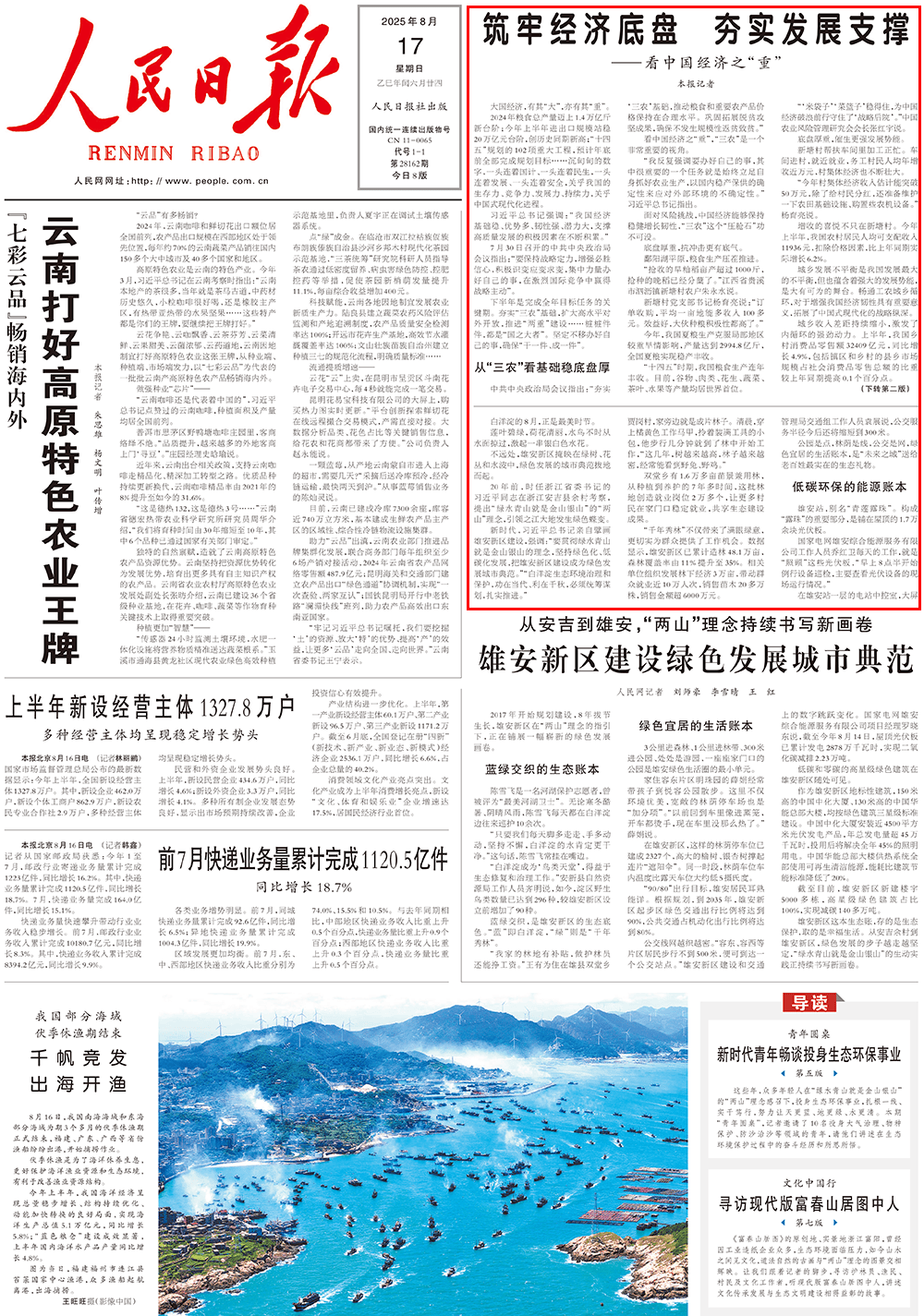
筑牢经济底盘,夯实发展支撑——看中国经济之“重”
Sou Hu Cai Jing· 2025-08-17 05:00
Group 1 - Yunnan's coffee and fresh-cut flower exports are significant, with approximately 70% of products sold domestically and to over 40 countries and regions [1] - The province has established 36 provincial seed industry bases, achieving breakthroughs in key technologies for flowers, coffee, and vegetables [2] - The agricultural sector in Yunnan is leveraging technology, such as soil sensors and precision fertilization, to enhance productivity [2] Group 2 - Yunnan has built over 7,300 cold storage facilities, facilitating efficient cold chain logistics for agricultural products [3] - The province's agricultural department is promoting brand development and organizing annual supply-demand matching events, with online retail sales projected to reach 48.79 billion yuan in 2024 [3] - The establishment of a "green channel" for agricultural exports has improved efficiency in customs and transportation [3] Group 3 - The agricultural sector in Yunnan is characterized by a focus on highland specialty agriculture, with products like tea, coffee, and medicinal herbs being highlighted as key advantages [1][2] - The province's agricultural quality and safety measures have led to a 100% detection rate for agricultural product quality [2] - The integration of technology in agriculture is expected to enhance the overall production capacity and market competitiveness of Yunnan's agricultural products [2]
云南打好高原特色农业王牌
Ren Min Ri Bao· 2025-08-16 22:03
Core Viewpoint - Yunnan's highland specialty agriculture is thriving, with significant exports of coffee and fresh-cut flowers, positioning the province as a leader in agricultural exports in Western China [1][5]. Group 1: Agricultural Production and Innovation - Yunnan's coffee and fresh-cut flower exports rank among the top in China, with approximately 70% of vegetable products sold domestically and internationally [1]. - The province has made substantial advancements in agricultural breeding, reducing the breeding time for certain crops from 30 years to 10 years, with six new varieties approved by national authorities [2]. - Yunnan has established 36 provincial seed industry bases, achieving breakthroughs in key breeding technologies for flowers, coffee, and vegetables [2]. Group 2: Technological Advancements in Agriculture - Smart farming techniques are being implemented, such as soil monitoring sensors and integrated water and fertilizer systems, enhancing crop yields and quality [3]. - In a modern tea garden demonstration base, new cultivation methods have increased the new shoot emergence by 11.1%, resulting in an additional income of 400 yuan per acre [3]. Group 3: Supply Chain and Logistics - Yunnan has developed over 7,300 cold storage facilities with a capacity of nearly 740 million cubic meters, facilitating the efficient transport of fresh agricultural products [5]. - The province has initiated a series of measures to enhance the branding and marketing of its agricultural products, including organizing at least six annual supply and demand matching events [5]. - The establishment of a "green channel" for agricultural exports has streamlined the inspection process, allowing for quicker and more efficient export of products to Southeast Asia [5].
数字赋能乡村 电商助农惠农
Ren Min Wang· 2025-08-16 15:02
Core Viewpoint - The establishment of the Fujian E-commerce Agricultural Assistance Alliance and the launch of the "Farming Products of Fujian: Waiting for You in My Hometown" live streaming event aim to enhance the sales of local agricultural products through digital platforms, promoting rural revitalization and economic growth in Fujian province [1][4][10]. Group 1: E-commerce and Agricultural Development - The Fujian E-commerce Agricultural Assistance Alliance was officially established on August 13, 2023, to integrate resources from various sectors including education, media, and finance, facilitating the entire agricultural product sales chain from source to consumer [10]. - The live streaming initiative has successfully conducted 15 events over two years, engaging over a hundred influencers and generating significant sales, contributing to the exploration of new pathways for digital rural development [8][10]. - In 2024, the online sales of agricultural products in Fujian are projected to exceed 64 billion yuan, marking a 16% year-on-year increase, positioning the province among the top in the nation [8][10]. Group 2: Digital Rural Revitalization - Fujian province is set to become the first national digital rural pilot area, a collaboration between the Central Cyberspace Administration and the Ministry of Agriculture and Rural Affairs, providing new opportunities for rural revitalization [4][10]. - The alliance aims to create a more efficient online communication matrix, enhancing the integration of digital technology into all aspects of agricultural production, processing, distribution, and sales [10][11]. - The initiative emphasizes the importance of content quality and ecological environment, aiming to foster a vibrant network environment that supports rural industry revitalization [11][12]. Group 3: Local Agricultural Products - Key local agricultural products include the "Tongxin White Lotus" with an annual production of 4,500 tons, "Zherong Prince Ginseng" with over 6,000 tons, and "Duwai Pomelo" with an annual output of 56,000 tons, all of which are vital to local economies and farmers' income [4][10]. - The initiative highlights the rich agricultural heritage and quality assurance of these products, which have been cultivated by generations of local farmers [4][12].

蛋白粕周报:美豆种植面积下调,利多进口成本-20250816
Wu Kuang Qi Huo· 2025-08-16 14:59
1. Report Industry Investment Rating No relevant content provided. 2. Core Viewpoints of the Report - USDA significantly reduced the soybean planting area, with the US soybean production decreasing by 1.08 million tons month - on - month. In the short term, it is bullish for CBOT soybeans. However, given the global oversupply of protein raw materials, the upward momentum of soybean import costs is insufficient. Currently, due to the low valuation of US soybeans, the positive impact of EPA policies, and the sole supply of soybeans from Brazil from September to January, it is expected to maintain a stable and slightly upward trend. - The domestic soybean meal market is still in a seasonal oversupply situation, and it is expected that the spot market may start destocking in September. Therefore, the soybean meal market has both bullish and bearish factors. It is recommended to try long positions at the lower end of the soybean meal cost range, pay attention to crushing margins and supply pressure at the upper end, and focus on the progress of Sino - US tariffs and new drivers on the supply side [9][10][11]. 3. Summary by Relevant Catalogs 3.1. Weekly Assessment and Strategy Recommendation - **International Soybeans**: This week, USDA lowered the US soybean planting area by about 2.5 million acres. Farmers switched to corn due to the decline in fertilizer prices. After the yield per unit was increased, the total production decreased by about 1 million tons month - on - month. The inventory - to - sales ratio of US soybeans in the 25/26 season dropped from 7.06% to 6.66%, and that of global soybeans in the 25/26 season decreased from 29.65% to 29.38%. Trump called on China to buy soybeans, and US soybeans rose due to these two factors. The Brazilian premium quotes remained firm as there was no actual soybean trade between China and the US, and the soybean import cost increased significantly this week. In the future, the valuation of US soybeans is at a low level, and Brazilian soybean quotes are supported by China's vessel bookings and Sino - US trade relations. If Sino - US soybean trade resumes later, the rebound of US soybeans and the decline of Brazilian premiums may offset each other. Overall, the overseas soybean market is in a state of low valuation, support, and oversupply, with no clear directional driver yet, but the domestic soybean import cost is in a slightly stronger and stable state due to a single supply source. - **Domestic Double - Meal**: This week, the domestic soybean meal spot prices mainly followed the futures prices higher. The increase in soybean import costs drove the soybean meal futures to strengthen. This week, domestic trading was average, and提货 was at a relatively high level. The inventory days of feed enterprises were 8.35 days, slightly higher than the same period last year and down 0.02 days month - on - month. As of August 12, institutional statistics showed that vessel bookings were 13.79 million tons in March, 10.29 million tons in April, 11.81 million tons in May, 12.72 million tons in June, 10.69 million tons in July, 9.17 million tons in August, 8.31 million tons in September, and 4.23 million tons in October. The current vessel - booking progress indicates that the domestic soybean inventory may decline around the end of September, and domestic soybean - related prices may bottom out and fluctuate before that. In the future, attention should be paid to Sino - US negotiations and Brazilian premium information [9]. - **Trading Strategy**: For the unilateral strategy, the market is expected to be volatile. Given the bullish and bearish factors in the soybean meal market, it is recommended to try long positions at the lower end of the soybean meal cost range, pay attention to crushing margins and supply pressure at the upper end, and focus on the progress of Sino - US tariffs and new drivers on the supply side. No information on the arbitrage strategy was provided [11]. 3.2. Futures and Spot Markets - **Spot Prices**: Included charts of the spot prices of soybean meal in Dongguan, Guangdong and rapeseed meal in Huangpu, Guangdong to show the price trends [17][18]. - **Basis of Main Contracts**: Included charts of the basis of the soybean meal 09 contract and the rapeseed meal 09 contract to show the basis trends [20][21]. - **Spreads**: Included charts of various spreads such as the soybean meal 09 - 01 spread, soybean meal 09 - rapeseed meal 09 spread, etc., to show the spread trends [22][23]. - **Fund Positioning**: Included charts of the net long positions of US soybean and US soybean meal managed funds to show the fund positioning trends [25][27][28]. 3.3. Supply Side - **US Soybean Planting Progress**: Included charts of the US soybean planting progress, emergence rate, flowering rate, and good - to - excellent rate to show the growth situation of US soybeans [30][31]. - **Weather Conditions**: Mentioned that La Nina may occur from October 2025 to January, and included charts related to El Nino outlook, La Nina probability, and the impact of La Nina on precipitation and climate in North America and South America [33][36][39]. - **US Soybean Export Progress**: Included charts of the total export contracts of US soybeans to China in the current market year, the sales completion rate of US soybeans in the current year, the total export contracts of US soybeans in the current market year, and the cumulative export shipments of US soybeans to China in the current market year to show the export situation of US soybeans [50][51]. - **China's Oilseed Imports**: Included charts of the monthly imports and forecasts of soybeans and rapeseeds in China to show China's oilseed import situation [53][54]. - **China's Oil Mill Crushing Situation**: Included charts of the soybean and rapeseed crushing volumes of major oil mills in China to show the crushing situation of Chinese oil mills [55][56]. 3.4. Profit and Inventory - **Oilseed Inventory**: Included charts of the soybean port inventory and the rapeseed inventory of major oil mills in China to show the oilseed inventory situation [59][60]. - **Protein Meal Inventory**: Included charts of the soybean meal inventory and forecast of coastal major oil mills and the rapeseed meal inventory of coastal major oil mills to show the protein meal inventory situation [62][63]. - **Protein Meal Crushing Profit**: Included charts of the crushing profit of imported soybeans in Guangdong and the crushing profit of imported rapeseeds along the coast to show the protein meal crushing profit situation [64][65]. 3.5. Demand Side - **Soybean Meal Demand**: Included charts of the cumulative transaction volume of soybean meal in major oil mills in the crop year and the apparent consumption of soybean meal to show the demand situation of soybean meal [66][67]. - **Breeding Profit**: Included charts of the average profit per pig in self - breeding and self - raising and the breeding profit of white - feather broilers to show the breeding profit situation [69][70].
深圳市富瑞农产品保健食品有限公司成立 注册资本30.888万人民币
Sou Hu Cai Jing· 2025-08-16 06:44
Company Overview - Shenzhen Furu Agricultural Products Health Food Co., Ltd. has been established with a registered capital of 308,880 RMB [1] - The legal representative of the company is Qiu Guangsheng [1] Business Scope - The company engages in various activities including the cultivation of Dendrobium, fruit planting, sales of agricultural products, and initial processing of edible agricultural products [1] - It also sells pre-packaged health foods, food products (limited to pre-packaged), and conducts online sales of food [1] - Additional activities include the purchase and cultivation of traditional Chinese medicine, wholesale and retail of daily necessities, and sales of construction materials and hardware products [1] Licensed Operations - The company is authorized to produce beverages and engage in liquor business, subject to approval from relevant authorities [1]
加纳薯蓣价格暴跌
Shang Wu Bu Wang Zhan· 2025-08-15 16:01
(原标题:加纳薯蓣价格暴跌) 据"加纳新闻网"8月13日报道,加纳东部地区的薯蓣(山药)正遭受有史以来最严重的价格暴跌, 农场交货价已从最近几季的每百块茎6000多塞地暴跌至400塞地,许多种植户因无法收回成本陷入财务 危机。 跌价原因在于产销对接不畅、收获期供应过剩以及运输成本高昂,由于储存方式有限,农民们争相 在薯蓣变质前仓促出售。这场危机如今威胁着以薯蓣种植为经济支柱的地区的粮食安全和就业。如果政 府不加以干预,随着农民放弃种植薯蓣,加纳作为全球最大薯蓣出口国的地位可能会逐渐丧失。 ...
NASS vs. FSA —— 再论8月USDA报告
对冲研投· 2025-08-15 12:39
Core Viewpoint - The article focuses on the adjustments made in the August USDA report regarding the new crop soybean balance sheet, emphasizing the flexibility of yield adjustments compared to planting area estimates, and the potential impact of weather conditions on soybean production [4][14]. Group 1: Yield Adjustments - The USDA report indicates that soybean yields in most major producing states have been revised upwards, with some states reaching historical highs due to favorable weather conditions in July [5]. - Historical data shows that there has been no significant bias in the August yield estimates compared to final yields over the past 20 years, suggesting that yield adjustments can be substantial [7]. - Weather forecasts indicate ongoing risks, with dry conditions in early August potentially affecting soybean yields during critical growth stages [10]. Group 2: Planting Area Estimates - The article discusses the differences in planting area estimates between NASS and FSA, with NASS estimating 8.09 million acres and FSA estimating 7.976 million acres for soybean planting in 2025, a difference of approximately 1 million acres [15]. - NASS uses a comprehensive data collection method, while FSA relies on producer reports, leading to differences in data coverage and classification [16][17]. - The article suggests that the FSA's preliminary planting area can be used to estimate NASS's final planting area, with projections indicating a potential reduction of about 1.5 million acres from the June report [27]. Group 3: Market Outlook - The soybean market outlook indicates that if the U.S. and China reach an agreement on tariff reductions, soybean exports could increase, potentially tightening the soybean balance sheet further [14]. - Conversely, if significant yield losses occur, the USDA may reduce export and crushing estimates to stabilize ending stocks [14]. - The pricing dynamics for soybean meal are influenced by U.S.-China trade relations, with potential upward price pressure if trade agreements are reached, despite possible short-term supply pressures [28].