消费金融

Search documents
非银:OpenAI全栈发力,AI生态不断完善
Ge Long Hui· 2025-10-09 22:22
Group 1 - OpenAI collaborates with Nvidia and AMD to establish 10 GW and 6 GW computing power partnerships, enhancing AI ecosystem development [1][2] - The AI sector is witnessing significant investments, with xAI raising $10 billion for a supercomputer project, and Nvidia planning to invest $100 billion in AI infrastructure [2] - The introduction of Sora2 by OpenAI aims to create a "generation-consumption-interaction" closed-loop ecosystem [2] Group 2 - The securities industry is expected to benefit from intelligent investment research and advisory services, with a recommendation for leading companies to develop specialized models and products [1] - The consumer finance sector is seeing rapid implementation of intelligent customer service, marketing, and risk control scenarios [1] - Financial technology companies are focusing on payment, auto finance, and digital asset scenarios, with notable partnerships and technological advancements [3]


注册资本刚达标的幸福消金陷三重困局:股权流拍、资金依赖、增速腰斩
Sou Hu Cai Jing· 2025-10-08 07:12
Core Viewpoint - The consumer finance industry is undergoing significant restructuring, with registered capital compliance becoming a survival threshold for licensed institutions. Hebei Xingfu Consumer Finance Co., Ltd. has increased its registered capital to meet regulatory requirements, but underlying issues such as equity pledges, funding shortages, and weak profitability remain concerning [2][3][5]. Group 1: Capital Increase and Compliance - Hebei Xingfu's capital increase of 363 million yuan represents a nearly 60% growth, allowing it to meet the minimum capital requirement of 1 billion yuan set by the new regulations [3]. - The capital increase is seen as a "passive compliance" move, as failure to do so would have resulted in non-compliance risks by April 2024 [3][4]. - The company's equity structure has remained unchanged since 2017, with major shareholders facing financial difficulties, raising concerns about the stability of its ownership [3][4]. Group 2: Equity Issues and Shareholder Dynamics - Attempts to resolve equity issues through judicial auctions have failed, with shares of major shareholders being auctioned off at decreasing prices but ultimately going unsold [4]. - Key questions remain unanswered regarding the involvement of new shareholders, proportional contributions from existing shareholders, and whether the largest shareholder can meet the new requirement of holding at least 50% [4]. - Ongoing uncertainty regarding equity could hinder decision-making efficiency and limit future financing options, posing a significant challenge to the company's growth [4]. Group 3: Financial Dependency and Asset Management - The company heavily relies on external financing, particularly from its major shareholder, Zhangjiakou Bank, which has become its primary source of funding through frequent and large-scale related transactions [5][6]. - In 2023, the company engaged in 80 related borrowing transactions totaling approximately 165.7 billion yuan, indicating a reliance on its major shareholder for liquidity [5]. - To alleviate financial pressure, the company has been disposing of non-performing assets, with approximately 400 million yuan in personal bad loans being sold, highlighting its challenges in credit risk management [6]. Group 4: Business Performance and Growth Challenges - As of the end of 2024, the company's total assets were 12.592 billion yuan, ranking 23rd among 30 licensed consumer finance companies, with revenue growth slowing significantly [7]. - The company's reliance on high-cost external platforms for loan origination has compressed profit margins, contributing to its declining profitability [7][8]. - The lack of a diversified financing structure and stable revenue generation capabilities poses a risk of further entrenchment in a low-growth position within the industry [8]. Group 5: Future Outlook and Strategic Needs - The recent capital increase only allows the company to meet compliance thresholds, but deeper issues such as equity pledges, funding dependencies, and business transformation need to be addressed for sustainable growth [8]. - The ability to attract quality new shareholders, establish a diversified financing system, and enhance risk control and profitability will be critical for the company's future in the consumer finance sector [8].


深化消费者权益保护工作,中邮消费金融切实履行社会责任
Sou Hu Cai Jing· 2025-10-08 03:26
Core Viewpoint - Zhongyou Consumer Finance is committed to protecting financial consumer rights, emphasizing the importance of consumer protection in financial services and fulfilling corporate social responsibility [1][2] Group 1: Consumer Protection Initiatives - Zhongyou Consumer Finance actively promotes measures to safeguard consumer rights, creating a safe and trustworthy consumption environment [1] - The company utilizes both online and offline methods to enhance consumer risk awareness and prevention capabilities [1] - Online initiatives include the "Zhongyou Wallet" app and official channels that provide educational content on various scams, helping consumers recognize and avoid risks [1] - Offline efforts involve community engagement through financial education zones and materials that improve financial literacy and risk awareness among consumers [1] Group 2: Targeted Education and Training - The company leverages digital technology to enhance educational outreach, particularly focusing on vulnerable groups such as the elderly and youth [2] - Financial education initiatives are expanded to increase the reach and effectiveness of consumer protection policies [2] - Internal training programs are conducted to improve employee service awareness and capabilities, ensuring that consumer rights are effectively maintained [2] Group 3: Future Commitment - Zhongyou Consumer Finance plans to continue strengthening its consumer rights protection efforts with proactive actions and robust measures [2] - The company aims to contribute to the healthy and stable development of the financial market through its ongoing initiatives [2]
马上金融:“催收乱象”难止 头部消费金融企业遭质疑
Sou Hu Cai Jing· 2025-10-02 05:31
Core Viewpoint - The announcement from Ma Shang Consumer Finance reveals ongoing issues with collection practices, particularly involving a major shareholder's subsidiary, raising concerns about the independence and fairness of their collection operations [2][9]. Group 1: Collection Practices and Issues - Ma Shang Consumer Finance has been under scrutiny for its collection practices, with reports of associations with problematic collection agencies, including Chongqing Xinmeng Technology Development Co., which has been involved in illegal collection activities [3][4]. - The company reported a revenue of 15.149 billion yuan for the year 2024, positioning itself as a leading licensed consumer finance entity in China [2]. - The collection process is critical for managing credit risk, yet it remains a high-risk area with frequent issues, prompting regulatory bodies to implement stricter guidelines [3][5]. Group 2: Complaints and Regulatory Attention - There are over 77,000 complaints against Ma Shang Consumer Finance on the Black Cat Complaint platform, highlighting issues such as threats and harassment, personal data leaks, unauthorized charges, and high-interest loans [5][6][8]. - Specific complaints include aggressive collection tactics, unauthorized membership fees, and loans with annual interest rates exceeding the legal limit of 24% [6][8]. - Regulatory bodies have taken notice, with the company facing penalties for inadequate pre-loan assessments and poor management of outsourced collection agencies [8][9]. Group 3: Related Party Transactions and Risks - Chongqing Xinmeng is a wholly-owned subsidiary of Beijing Zhongguancun KJ Technology Co., which is the second-largest shareholder of Ma Shang Consumer Finance, creating a complex relationship that raises questions about compliance and governance [9][10]. - The intertwined ownership and management structures between Ma Shang and its collection agencies may lead to non-transparent practices, including potential profit transfers and tax evasion [10][11]. - Despite significant investments in compliance and technology for collection processes, the effectiveness remains questionable due to the reliance on related parties for collection services [10].

招联一副总经理任职资格获批
Bei Jing Shang Bao· 2025-09-30 13:28
Core Viewpoint - The Shenzhen Financial Regulatory Bureau has approved the appointment of Wang Yaonan as the Deputy General Manager of the Zhaolian Consumer Finance Co., Ltd. [1] Company Summary - Wang Yaonan has been appointed as the Deputy General Manager of Zhaolian Consumer Finance Co., Ltd. [1] - The approval was granted by the Shenzhen Financial Regulatory Bureau as per the information from the National Financial Supervision and Administration [1]
助贷新规来了!银行圈定“白名单” 24%红线迎考验
Bei Ke Cai Jing· 2025-09-30 09:04
Core Viewpoint - The implementation of the new regulations on internet lending by commercial banks marks a shift towards compliance and risk management, moving away from the previous unregulated growth phase in the industry [6][21][22]. Group 1: Regulatory Changes - The new regulations, effective from October 1, require commercial banks to manage their internet lending partnerships through a whitelist system, ensuring transparency and accountability in their collaborations [9][10]. - Banks and consumer finance companies are increasingly disclosing their partnered lending platforms, with major players like Ant Group, JD.com, and Tencent being preferred partners [4][8][12]. - The regulations aim to control the comprehensive financing costs for borrowers, with a focus on keeping them below 24%, which poses challenges for many lending platforms [15][20]. Group 2: Market Dynamics - The market is currently in a state of observation regarding how to implement the new lending practices, with many platforms scaling back operations due to uncertainty [5][17]. - The shift towards compliance is expected to impact smaller banks more significantly, especially those that heavily rely on lending platforms for customer acquisition [22][24]. - The competition in the lending market is anticipated to evolve from a focus on scale and traffic to a focus on risk management capabilities and financial technology [23]. Group 3: Implications for Financial Institutions - Financial institutions are urged to enhance their risk management practices and ensure that their internal policies align with the new regulations [23]. - The new regulations may create a more challenging environment for smaller banks, which need to leverage their local advantages and avoid homogeneous competition [24]. - The emphasis on compliance and risk management is expected to drive banks to improve their operational capabilities and customer service standards [22][23].

多方协同筑屏障 30余家机构为高校学子撑起金融消费“安全伞”
Sou Hu Cai Jing· 2025-09-30 02:01
Core Points - The event "Safeguarding Youth, Worry-Free Consumption" aims to enhance financial education and create a healthy consumption environment on campus, initiated by the Shenzhen Consumer Council and other organizations [1][3] - The activity focuses on protecting the financial rights of young students and ensuring consumption safety through various interactive formats, including skits and anti-fraud lectures [3][5] - The event gathered nearly a thousand students, highlighting the importance of financial literacy among youth who are often vulnerable to financial scams [3][6] Group 1 - The event integrates resources from government, industry associations, universities, and market institutions to build a collaborative financial education model [3][12] - The Shenzhen Consumer Council emphasizes that financial education in schools is crucial for protecting youth consumption rights and promoting a healthy market [5][12] - The event featured real-life case studies of financial fraud, educating students on common scams and prevention strategies [6][10] Group 2 - Interactive experiences, such as skits depicting financial risks, helped students better understand their financial rights [8][10] - Financial institutions provided one-on-one consultations to address practical financial questions, enhancing student engagement [8][12] - The event serves as a replicable model for financial education in other universities, aiming to equip students with essential financial skills for their future [12]

平安消费金融深入推进金融教育宣传工作,彰显为民办实事的情怀
Sou Hu Cai Jing· 2025-09-29 12:20
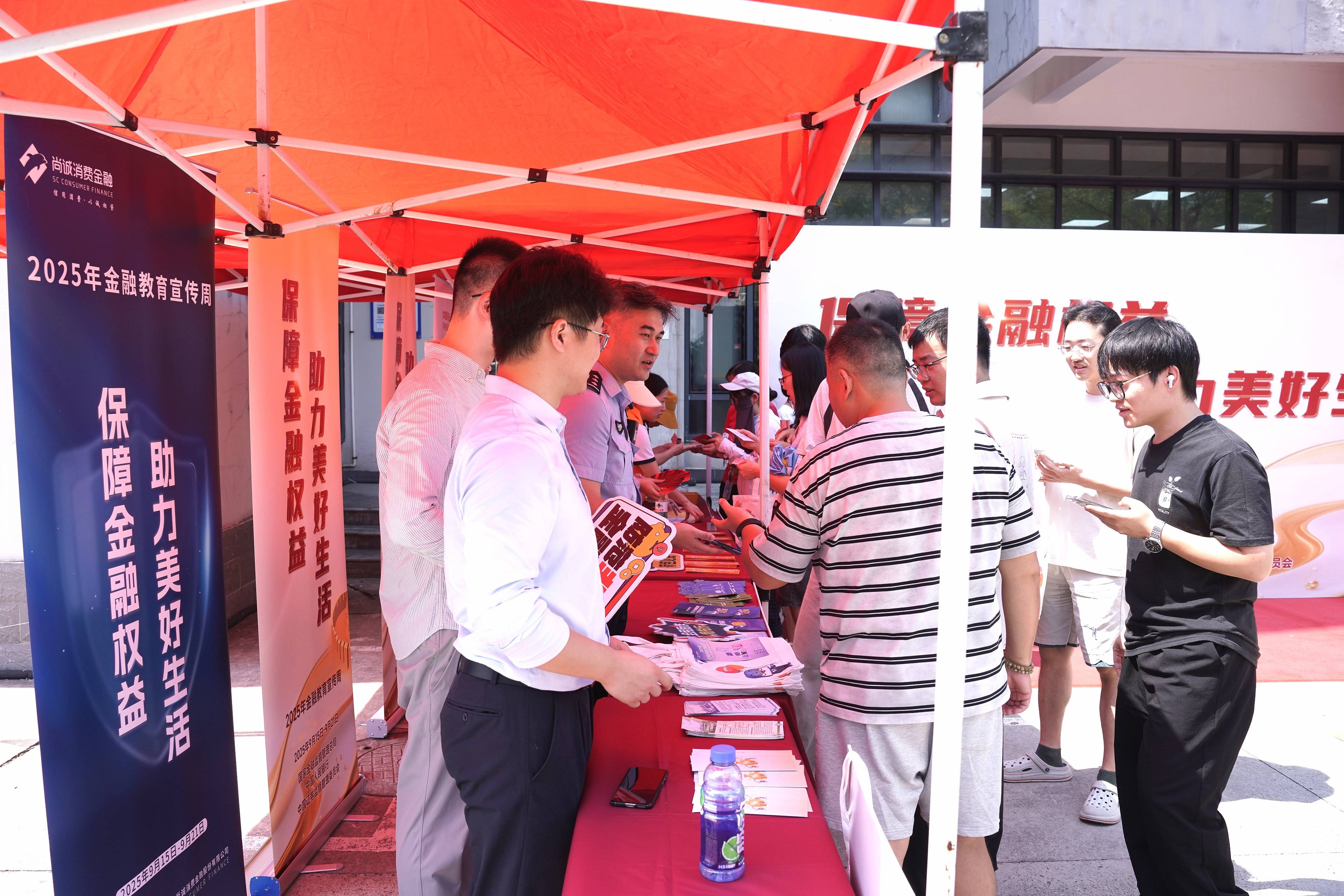
Core Viewpoint - The importance of financial education in today's complex financial market is emphasized, with a focus on enhancing public financial literacy and protecting consumer rights through various initiatives by financial institutions [1][4]. Group 1: Financial Education Initiatives - Financial institutions are encouraged to make financial education a long-term and regular effort, aiming to improve the financial literacy of the public [1]. - Ping An Consumer Finance has launched a "Financial Education Month" campaign targeting three groups: the elderly, youth, and new citizens, in collaboration with various organizations [1][4]. - The company has conducted targeted financial knowledge education activities in rural areas and communities to enhance the financial fraud awareness of elderly consumers [4]. Group 2: Targeted Outreach - Ping An Consumer Finance has partnered with local police to conduct financial education activities in universities, focusing on protecting the rights of the youth [4]. - The company has organized multiple financial fraud prevention seminars for new citizens and working professionals in major urban areas [4]. Group 3: Online and Offline Integration - The company is actively expanding its financial education outreach through a combination of online and offline methods, utilizing platforms like Douyin and WeChat for broader engagement [9]. - As of June 2025, Ping An Consumer Finance has conducted over 260 financial knowledge dissemination activities, reaching more than 15 million people [9]. - The ongoing efforts aim to make financial education more accessible and relatable to consumers, ensuring that risk awareness is effectively communicated [9].
分期乐:以科技赋能消费金融,助力实体经济高质量发展
Sou Hu Cai Jing· 2025-09-29 08:30
Group 1: Core Business and Market Position - The core business segment of Lexin Group, Fenqile, has established a differentiated competitive advantage in the consumer finance sector through its "scenario + installment" model [1] - As of the end of Q2 2025, the inclusive business initiative "Believe in Small Dreams" has served over 4 million users, with over 70% of users from lower-tier cities, demonstrating its role in supporting the real economy [1] Group 2: Target Audience and Consumer Experience - Fenqile Mall focuses on the consumption needs of the post-95 generation, offering innovative services such as the "Zhenpin Hui" quality brand section and a factory-direct supply model [2] - The platform has obtained the highest-level authorization from well-known domestic and international brands in high-frequency categories like beauty and 3C, creating a trust loop among brands, platforms, and users [2] - The scenario-based solutions provided by Fenqile effectively lower purchase barriers and enhance consumption flexibility for young consumers [2] Group 3: Technological Advancements and Risk Control - Fenqile's inclusive business has optimized the entire process with online precise risk control, on-site services, and the fastest loan disbursement in 1 minute, driven by Lexin Group's self-developed "Singularity" AI model [3] - The AI model has been deeply applied in research efficiency, internal tools, and business empowerment scenarios, with plans to expand from 50 to over 100 AI intelligent positions by the end of the year [3] - This technological empowerment has transformed the traditional "people find funds" model into an intelligent matching system of "funds find people," supporting the growth of individuals and small enterprises [3] Group 4: Commitment to Social Responsibility and Future Outlook - Fenqile adheres to a user-centric philosophy, covering diverse needs such as personal consumption and small business financing, serving over 200 million high-quality growth customers [4] - Lexin Group has been recognized six times in the "Top 500 Service Enterprises in China," highlighting its benchmark value in promoting consumption growth and serving the real economy [4] - Looking ahead, Fenqile aims to deepen technological research and enhance the application of the "Singularity" AI model and intelligent agent matrix to create a safer and more efficient consumer finance ecosystem [4]

暖消费、促产业,谁是普惠金融“摆渡人” ?
Nan Fang Du Shi Bao· 2025-09-29 08:09
Core Insights - The article highlights the pressing financial needs of over 300 million new urban residents in China, who face significant spending pressures while trying to integrate into city life, alongside the challenges faced by businesses in the home appliance and 3C sectors due to long settlement cycles and high upfront costs [2][6][10] Group 1: New Urban Residents' Financial Needs - The new urban population, which includes over 60% blue-collar workers, struggles with high upfront costs for essential items like electric bikes and household appliances, leading to a conflict between their rigid needs and payment capabilities [6][7] - JD Finance's "Baitiao" product offers innovative solutions to alleviate these financial pressures, such as interest-free installment plans for purchasing electric bikes, making it easier for blue-collar workers to acquire necessary tools for their jobs [7][12] - Young graduates face significant rental pressures, often needing to pay high deposits and multiple months' rent upfront, which can be a heavy burden for those with low starting salaries [8][9] Group 2: Business Challenges with National Subsidy Policies - The national subsidy policies aimed at stimulating consumption present challenges for businesses, including long subsidy processes and high upfront financing requirements, which hinder their ability to fulfill market demand [10][11] - JD, as a direct sales entity, assumes the responsibility of upfront subsidy payments, allowing it to streamline the process for its merchants and improve cash flow efficiency [11][12] - JD's supply chain financial technology integrates consumer finance with supply chain finance, creating a closed loop that enhances the efficiency of capital turnover for businesses [11][12] Group 3: Financial Innovation and Market Integration - JD Finance's initiatives focus on addressing both consumer pain points and industry bottlenecks, aiming to create a win-win situation for social welfare and business profitability [12] - The emphasis is on understanding consumer needs and providing simple, efficient, and low-cost financial solutions that can effectively support urban residents and businesses alike [12]