零食

Search documents
三只松鼠(300783):抖音和分销驱动增长 费投加大导致盈利承压
Xin Lang Cai Jing· 2025-09-02 00:50
Core Viewpoint - The company reported mixed financial results for the first half of 2025, with revenue growth but significant declines in net profit, indicating challenges in profitability despite revenue increases in certain segments [1][2]. Financial Performance - In H1 2025, the company achieved revenue of 5.478 billion yuan, a year-on-year increase of 7.94%, while net profit attributable to shareholders was 138 million yuan, down 52.22% year-on-year [1]. - Q2 2025 revenue was 1.754 billion yuan, reflecting a year-on-year growth of 22.77%, but net profit was a loss of 101 million yuan, with losses widening compared to the previous year [1]. Revenue Breakdown - Online revenue in H1 2025 was 4.295 billion yuan, up 5% year-on-year, with Douyin, JD, and Tmall contributing 1.478 billion, 808 million, and 882 million yuan respectively, showing growth of 20.8%, 1.9%, and a decline of 18.6% [2]. - Offline distribution revenue reached 938 million yuan, a significant increase of 40.2% year-on-year, while store revenue was 187 million yuan, down 18.7% [2]. Product Performance - In H1 2025, revenue from nuts, baked goods, and comprehensive categories was 2.731 billion, 682 million, and 1.398 billion yuan respectively, with comprehensive category revenue growing by 49.7% year-on-year [2]. Cost and Profitability - The company's gross margin for H1 2025 was 25.08%, a decrease of 0.77 percentage points year-on-year, primarily due to rising raw material costs for nuts [2]. - In Q2 2025, the gross margin was 21.57%, down 0.33 percentage points year-on-year, reflecting pressure on profitability from increased costs [2]. Expense Analysis - In Q2 2025, the expense ratios for sales, management, R&D, and financial costs were 24.16%, 5.16%, 0.33%, and 0.17% respectively, with sales expenses rising due to increased market investments [3]. - The increase in management expenses was attributed to higher property depreciation and amortization costs [3]. Strategic Outlook - The company is accelerating its full-category layout and aims for long-term growth through a "high-end cost-performance" strategy, focusing on new snack launches and optimizing supply chain efficiency [3]. - The company is also exploring self-branded "lifestyle stores" to enhance customer reach and service quality [3]. Earnings Forecast - The company expects revenues of 12.534 billion, 14.779 billion, and 16.739 billion yuan for 2025-2027, with year-on-year growth rates of 18%, 18%, and 13% respectively [4]. - Projected net profits for the same period are 230 million, 567 million, and 720 million yuan, with a significant recovery expected in 2026 [4].

可选消费W35周度趋势解析:全球奢侈品板块触底反弹,A/H业绩落地主导各子行业表现-20250901
Haitong Securities International· 2025-09-01 14:31
研究报告 Research Report 可选消费 W35 周度趋势解析:全球奢侈品板块触底反弹,A/H 业绩落地主导各子行业表现 Week 35 Discretionary Trends: Global Luxury Sector Bottoms Out and Rebounds, A/H Results Drive Sub-sector Performance [Table_yemei1] 观点聚焦 Investment Focus | 股票名称 | 评级 | 股票名称 | 评级 | | --- | --- | --- | --- | | 耐克 | Outperform 石头科技 | | Outperform | | 美的集团 | Outperform 科沃斯 | | Outperform | | 京东集团 | Outperform 永辉超市 | | Outperform | | 海尔智家 | Outperform 波司登 | | Outperform | | 安踏体育 | Outperform 李宁 | | Outperform | | 格力电器 | Outperform 苏泊尔 | | Outperf ...
零食板块2025中报总结:行业成长分化,个股亮点显著
GOLDEN SUN SECURITIES· 2025-09-01 11:52
Investment Rating - The industry investment rating is maintained as "Add" [5] Core Viewpoints - The snack sector is experiencing differentiated growth, with individual companies showing significant highlights. In H1 2025, the overall revenue of the snack sector was 25.51 billion yuan, a year-on-year decrease of 2.2%. The sector's net profit attributable to shareholders was 1.09 billion yuan, down 40.3% year-on-year, primarily due to cost pressures and the weakening of channel dividends [1][10][12] - In Q2 2025, the snack sector's revenue reached 11.09 billion yuan, a year-on-year increase of 2.2%. However, the net profit attributable to shareholders dropped to 250 million yuan, a decrease of 55.1% year-on-year, indicating increased profit pressure due to cost and expense pressures [2][12] - The report highlights three types of companies that are expected to perform well: those that create core blockbuster products, those that rapidly expand channels, and those that continuously innovate [2][20][22] Summary by Sections Industry Overview - In H1 2025, the snack sector's overall revenue was 25.51 billion yuan, down 2.2% year-on-year. The decline is attributed to the timing of the Spring Festival affecting inventory preparation and a return to normal operating rhythms in Q2 [10][12] - The average gross margin for the snack sector in H1 2025 was 28.3%, a decrease of 2.1 percentage points year-on-year, primarily due to rising costs and changes in channel structure [11][18] Q2 Performance - The snack sector's revenue in Q2 2025 was 11.09 billion yuan, up 2.2% year-on-year, indicating a return to positive growth despite seasonal challenges. However, net profit fell to 250 million yuan, down 55.1% year-on-year, reflecting significant profit pressure [2][12] - The average gross margin in Q2 2025 was 28.4%, down 1.7 percentage points year-on-year, influenced by rising costs and changes in channel structure [13][18] Growth Catalysts - The report emphasizes the importance of product innovation and channel expansion as key growth drivers. Companies that can create blockbuster products and effectively expand their channels are expected to outperform [20][21] - The report identifies specific companies with strong growth potential, including Wei Long, Yan Jin Pu Zi, and You You Food, which are leveraging product demand and channel expansion to drive growth [22] Investment Recommendations - The report suggests focusing on companies that can successfully execute growth strategies along two main lines: product innovation and channel expansion. Key companies highlighted include Wei Long, Yan Jin Pu Zi, You You Food, and Wan Chen Group, which are expected to benefit from favorable market conditions [22]


食品饮料行业周报:中报圆满收官,关注基本面稳健的标的-20250901
CHINA DRAGON SECURITIES· 2025-09-01 10:49
Investment Rating - The report maintains an investment rating of "Recommended" for the food and beverage industry [2][34]. Core Insights - The food and beverage sector saw a 2.13% increase last week, with notable gains in the snack (+10.20%), dairy (+2.67%), and liquor (+2.14%) sub-sectors. The report highlights that the release of performance pressures in the liquor sector and stable growth in leading companies in snacks, dairy, and condiments are key factors for the positive outlook [6][34]. - The report emphasizes the resilience of the liquor sector, particularly in the context of recent policy impacts, suggesting that valuation recovery may precede fundamental improvements. It recommends focusing on specific companies within the liquor sector that are expected to rebound [34]. - The snack sector is identified as having strong growth potential driven by new retail formats and product categories, with significant revenue increases reported by leading companies [35]. Summary by Sections Market Performance - The food and beverage index increased by 2.13%, ranking seventh among major sectors. The snack sector led with a 10.20% increase, followed by dairy and liquor [16][34]. Liquor Sector Analysis - In the first half of 2025, only a few liquor companies, including Kweichow Moutai and Wuliangye, reported positive revenue and net profit growth. The report notes that the liquor demand has been under pressure since the second quarter due to policy changes, but expectations for recovery are building [6][34]. - Recommendations include focusing on companies like Shede Liquor, Shanxi Fenjiu, and Kweichow Moutai for their potential in valuation recovery [34]. Snack Sector Analysis - The snack sector is highlighted for its growth potential, with companies like Youyou Foods and Wancheng Group reporting substantial revenue increases of 45.59% and 109.33%, respectively. The report suggests that new consumer trends favoring health and self-satisfaction will drive further growth in this sector [35][30]. Key Company Performance - Kweichow Moutai reported a stock price of 1,480.00 yuan with an expected EPS growth from 68.64 yuan in 2024 to 74.38 yuan in 2025 [36]. - Wuliangye's revenue for the first half of 2025 was 527.71 billion yuan, showing a 4.19% year-on-year increase [32]. - Hai Tian Wei Ye achieved a revenue of 152.3 billion yuan, reflecting a 7.59% increase, with a net profit growth of 13.35% [29].





花生上树了?AI 竟然敢这么玩
3 6 Ke· 2025-09-01 02:12
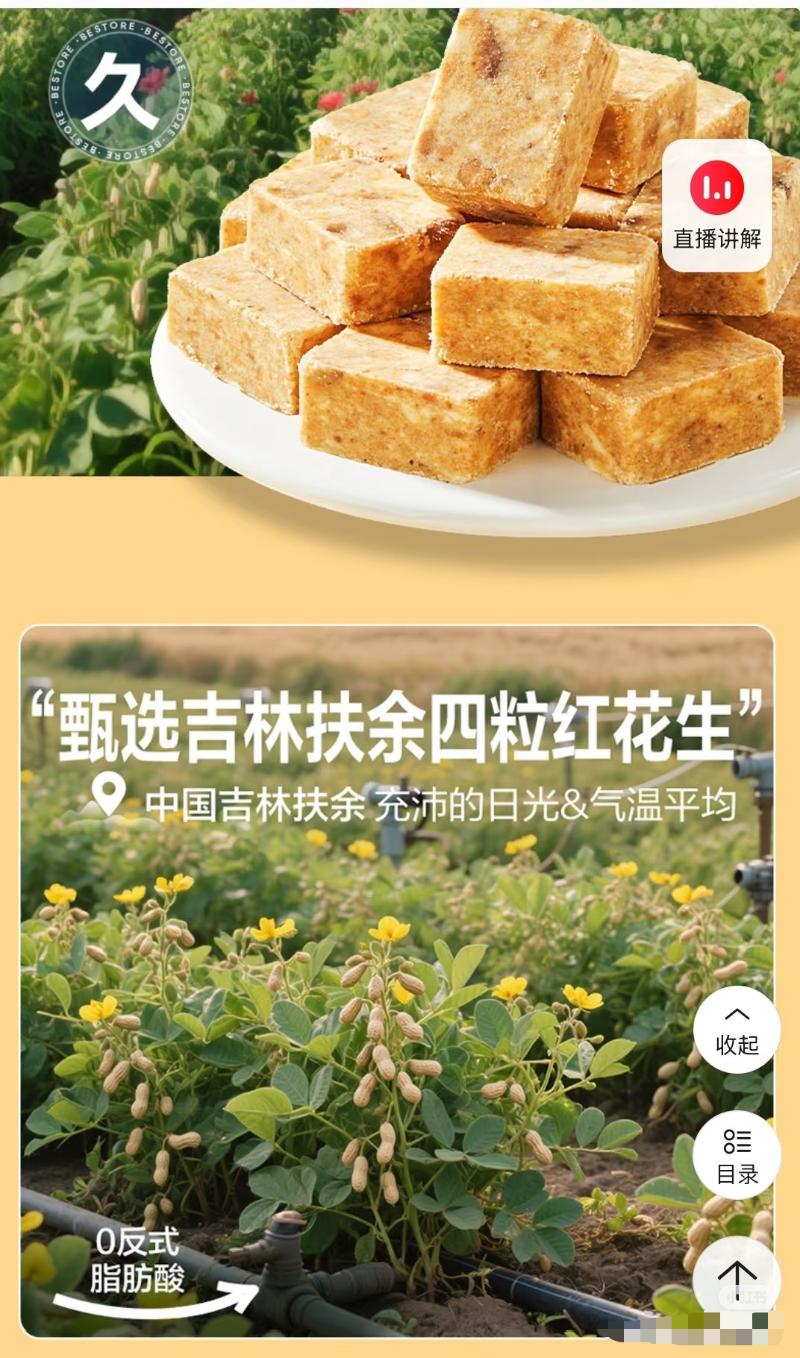
Core Viewpoint - The incident involving the snack brand Liangpinpuzi highlights the pitfalls of using AI-generated images in marketing, leading to public ridicule and brand damage due to unrealistic representations of products [6][53]. Group 1: Incident Overview - Liangpinpuzi used an AI-generated image depicting peanuts hanging from trees, which is biologically inaccurate as peanuts grow underground [3][6]. - The brand issued an apology on August 28, acknowledging the error and updating the promotional materials [6][53]. - The incident drew attention from media outlets, including CCTV, which emphasized the natural growth conditions of peanuts [6]. Group 2: Broader Implications of AI in Marketing - The use of AI in advertising has led to various absurdities, such as images of six-fingered models and unrealistic product representations [13][23]. - AI's limitations in understanding common knowledge can result in misleading visuals that do not align with reality, raising concerns about consumer trust [10][53]. - The incident serves as a warning for brands to maintain oversight and quality control when utilizing AI technologies in their marketing strategies [53][55]. Group 3: Consumer Awareness and Future Considerations - The reliance on AI-generated content may lead to a shift in consumer perception, making it harder to distinguish between genuine and manipulated images [54][55]. - Consumers are encouraged to approach overly perfect or bizarre visuals with skepticism, as the prevalence of AI in marketing continues to grow [55].


“花生上树”,企业营销更要小心AI幻觉
Bei Jing Shang Bao· 2025-08-31 15:55
一方面,不少企业海报营销直接面向消费者。以良品铺子为例,"花生上树"有可能对公众构成常识性误 导,尤其是对生活常识尚处于积累阶段的青少年群体产生错误的教育影响。 近日,良品铺子某款产品的宣传图片显示"花生在树上结果"被指"缺乏常识"。良品铺子方面对此回应 称:"由于公司在工作中的疏忽,在电商平台商品详情页中错误使用了由AI生成的图片素材。" 花生本是地上开花、地下结果的作物,海报中的花生果实却高高悬挂枝头,与"落花生"的生物学特性相 悖。 随着人工智能生产工具的普及,企业采用AI生成广告图片可以降低成本、提升效率,本是一件顺势而 为的事情。 但对AI的使用,不能完全放手不管,更不能一劳永逸。企业设计一款宣传海报的工作,从以往可能费 时费力的单线操作,到如今分分钟速成的海量选择,使用者的责任不是轻了,反而是更重了。 不少类似失误虽然由AI引发,却不能一味甩锅AI。违背常识的设计恰恰是给内容使用者、审核者敲响 警钟,对事实层面的核查提出了更高要求。 相比于个人使用者,企业营销因为传播面广、传播速度快,更要警惕AI幻觉在应用中暴露出的风险。 不用AI助力、没有AI意识的话,很快就会落后。但如何有效使用AI、负责任地 ...
【西街观察】“花生上树”,企业营销更要小心AI幻觉
Bei Jing Shang Bao· 2025-08-31 11:04
Core Viewpoint - The incident involving a misleading advertisement by a well-known snack brand highlights the risks associated with the use of AI in marketing, emphasizing the need for companies to maintain a higher standard of fact-checking and oversight despite the efficiency gains from AI tools [1][2][3]. Group 1: AI in Marketing - The use of AI-generated images can lower costs and improve efficiency for companies, but it also increases the responsibility of users to ensure accuracy and adherence to common knowledge [1][3]. - The misleading portrayal of peanuts in the advertisement could misinform consumers, particularly younger audiences still developing their understanding of basic facts [2][3]. - Companies must recognize the potential pitfalls of relying too heavily on AI, which can lead to homogenized outputs and factual errors if not properly managed [3]. Group 2: Brand Reputation and Consumer Trust - The presence of a factually incorrect advertisement raises questions about the brand's quality control processes and can negatively impact its reputation [2]. - As AI technology continues to advance, companies must balance efficiency with the need for responsible usage and thorough content verification to maintain consumer trust [3]. - Industries that rely heavily on public trust and brand reputation must be particularly cautious of the errors that can arise from AI usage, as these can lead to significant reputational damage [3].
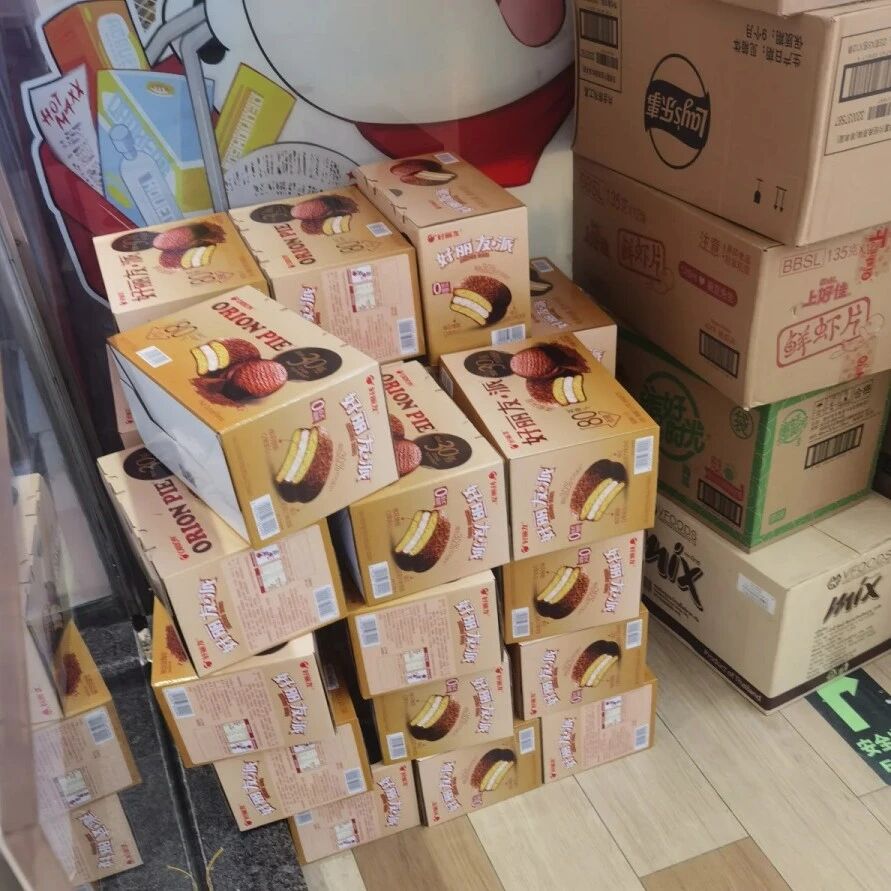
疑似被下架“山姆同款”在折扣店出售,好丽友回应
凤凰网财经· 2025-08-31 10:49
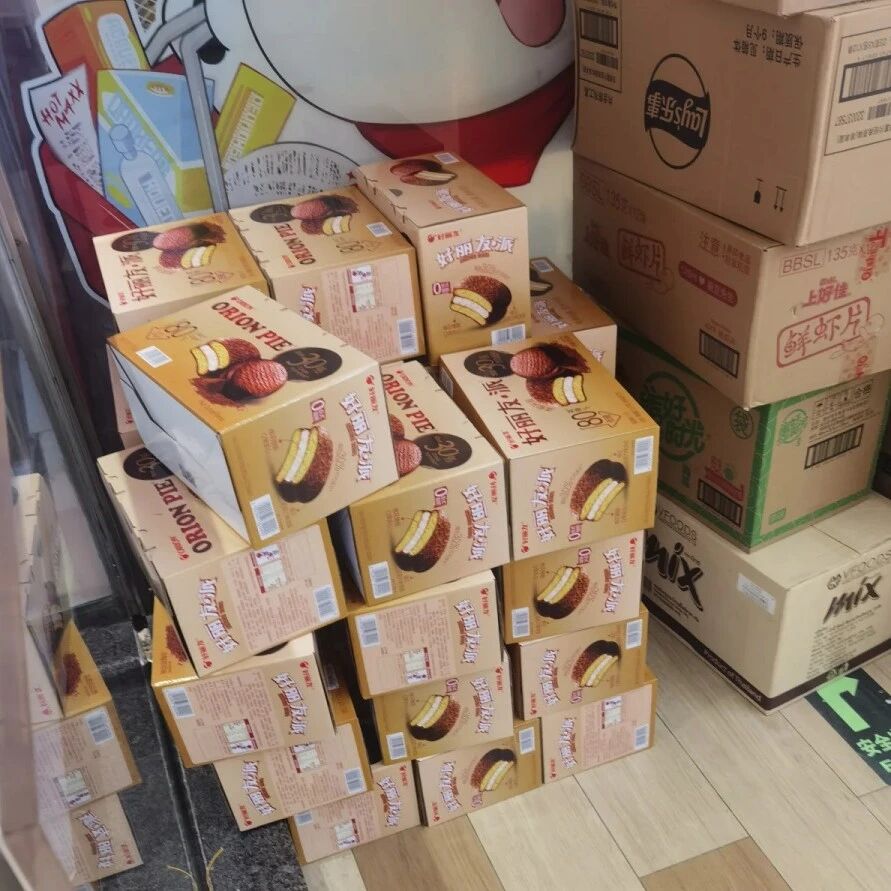
Group 1 - The product "low-sugar Orion pie" was previously sold at Sam's Club for 49.9 yuan and has been removed from their shelves due to selection issues [1] - The product is now available at a discount chain called "Good Sale," priced at 32.9 yuan per box, with a shelf life until November [3] - Good Sale primarily sells near-expiry discount items and assists brands in clearing out inventory, with over 950 stores nationwide as of June this year [3] Group 2 - Orion's spokesperson confirmed that the low-sugar pie was removed from Sam's Club due to stock issues and that there are no plans to sell it through other stores [4] - Orion reported a 8.1% year-on-year increase in sales to 777.2 billion won in Q2, with sales in the Chinese market growing by 3.0% to 304.8 billion won, accounting for over 40% of total sales [5] - The change in Sam's Club's product selection strategy has led to public criticism, with some members feeling that the store is losing its unique offerings [7]
疑似被下架“山姆同款”在折扣店出售,好丽友回应
21世纪经济报道· 2025-08-31 05:39
Core Viewpoint - The article discusses the recent emergence of a low-sugar Orion cake in a discount store called "Good Sale," which was previously removed from Sam's Club, raising questions about product distribution and inventory management in the retail sector [1][4][9]. Group 1: Product Availability and Pricing - The low-sugar Orion cake was previously sold at Sam's Club for 49.9 yuan but was taken off the shelves in July due to selection issues [4]. - The same product is now available at Good Sale for 32.9 yuan per box, with a shelf life until November [6]. - Good Sale primarily sells discounted items, including near-expiry and unsold products, and has over 950 stores nationwide as of June this year [7]. Group 2: Company Responses and Market Impact - Sam's Club confirmed that the low-sugar Orion cake is no longer available due to stock issues and stated that they do not sell this product to other stores [9]. - Orion's representative indicated that the company is utilizing Good Sale to quickly clear out inventory, asserting that the product quality remains intact [9]. - Orion reported a 8.1% year-on-year increase in sales to 777.2 billion won in Q2, with sales in the Chinese market growing by 3.0% to 304.8 billion won, accounting for over 40% of total sales [9].
行业周报:中报承压下微光渐显,业绩分化中孕育新机-20250831
KAIYUAN SECURITIES· 2025-08-31 03:32
Investment Rating - The industry investment rating is "Positive" (maintained) [1] Core Views - The food and beverage index increased by 2.1% from August 25 to August 29, ranking 7th among 28 sectors, underperforming the CSI 300 by approximately 0.6 percentage points. The snack (+10.2%), dairy (+2.7%), and liquor (+2.1%) sectors performed relatively well [4][12] - In Q2 2025, the food and beverage sector's revenue grew by 5.6% year-on-year, showing a slight recovery compared to Q1 2025 (+4.6%). However, profits declined by 2.1%, a decrease from Q1 2025 (+0.3%). The liquor sector saw a significant revenue growth decline of -5.0% in Q2 compared to +1.7% in Q1, primarily due to the impact of alcohol bans [4][12] - The report indicates a further widening of performance differentiation among companies, with leading firms like Kweichow Moutai and Haitian Flavor Industry maintaining stable growth, while some second-tier brands experienced revenue slowdowns. This reflects an increasing market share trend for leading companies amid external pressures [4][12] - The report suggests that most industries are expected to continue a recovery process in the second half of 2025, with a potential gradual upward shift in demand curves. It recommends focusing on leading companies for investment [4][12] Summary by Sections Weekly Insights - The food and beverage index increased by 2.1%, ranking 7th among sectors, and underperformed the CSI 300 by about 0.6 percentage points. The snack, dairy, and liquor sectors showed relative strength [12][13] Market Performance - The food and beverage sector's performance was below the market average, with a 2.1% increase, while snacks, dairy, and liquor sectors outperformed [12][13] Upstream Data - Some upstream raw material prices have decreased. For instance, the price of fresh milk was 3.0 CNY/kg, down 5.6% year-on-year, while pork prices were 20.0 CNY/kg, down 27.4% year-on-year [19][22] Liquor Industry News - The 29° Wuliangye "One Heart" has begun pre-sale, with a price of 399 CNY per bottle. Kweichow Moutai also launched a high-end product priced at 998 CNY per bottle [41][42] Memorandum - Attention is drawn to the shareholder meeting of Salted Fish on September 5, 2025, along with other companies holding meetings [43][47]