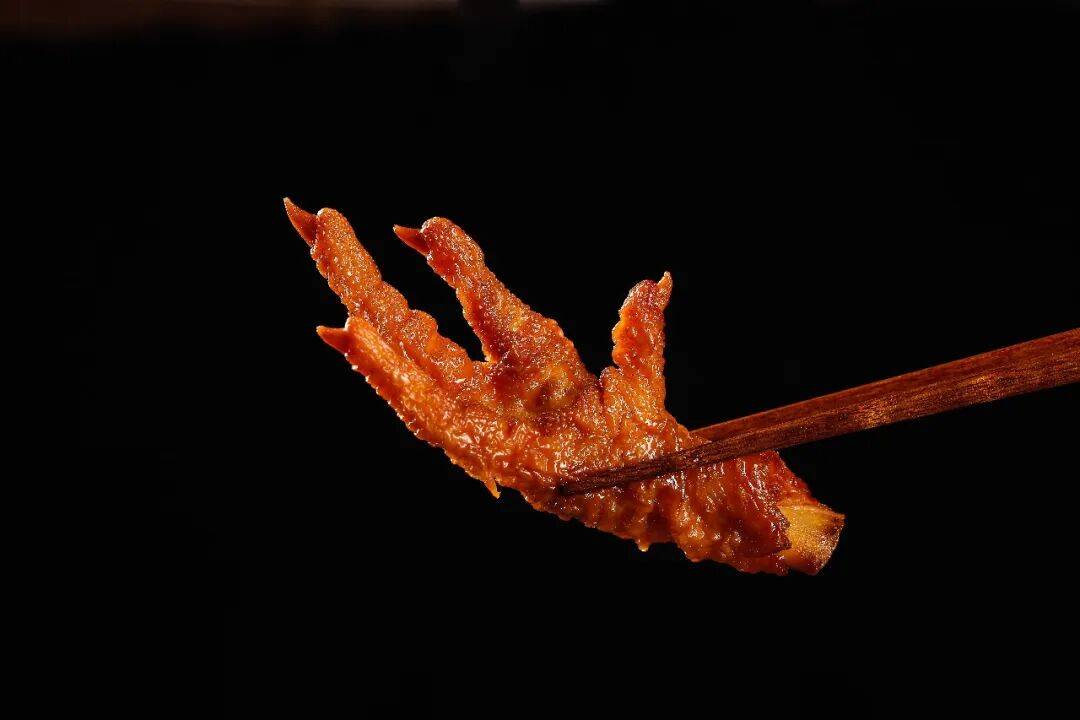
虎皮凤爪

Search documents
不囤肉、找特产 肉品年货迎来新需求
Xin Jing Bao· 2026-02-11 08:44
Core Insights - The meat product market for the upcoming Spring Festival is undergoing significant changes, with a shift towards regional specialties and a focus on fresh consumption rather than bulk buying, particularly among the younger generation [1][2][3] Group 1: Consumer Behavior - The younger generation, particularly those born after 2000, is moving away from bulk purchasing of meat products, opting instead for fresh, immediate consumption [2][3] - Consumers are reassessing the "preparation cost" associated with the Spring Festival, leading to a preference for purchasing only what is needed for the short holiday period [2][3] - The trend of not stockpiling is supported by stable supply channels, allowing consumers to buy quality meat products as needed [3] Group 2: Supply Chain and Retail Strategies - Tyson Foods has prepared for the traditional sales peak before the Spring Festival by doubling its inventory across the country, particularly in East China [3] - Retailers like Shouheng Group and Wumart have activated supply assurance systems and promotional activities to ensure a steady supply of goods during the holiday [3][4] - Wumart's promotional activities, such as "Crazy 4:30," cater to consumer needs for fresh ingredients and holiday supplies, enhancing convenience and efficiency [4] Group 3: Product Trends and Preferences - There is a growing consumer interest in regional specialties and traceability in food products, with a focus on freshness and quality control [5][6] - The demand for unique and high-quality regional products is driving brands to collaborate with suppliers that have verified quality standards [6][7] - Meat snack gift boxes are increasingly emphasizing auspicious themes, with packaging designed to convey good fortune, reflecting a shift in consumer preferences towards meaningful gifting [8][9] Group 4: Market Competition and Brand Strategy - The competition in the meat product market has shifted from price wars to value-driven strategies, where brands need to establish flavor differentiation and cultural resonance [9] - Brands are focusing on emotional communication through product design and marketing narratives to enhance customer loyalty and repeat purchase intentions [9]
王小卤霉变、麦当劳翻车、周生生纠纷、好想来扣人:消费市场的信任防线与品牌危机
Sou Hu Cai Jing· 2026-02-07 02:16
Group 1 - The core issue for Wang Xiaolu is the contradiction between high pricing and weak quality control, leading to consumer skepticism about "high price, low quality" products due to ineffective supply chain management [3][8] - McDonald's faces a cultural misalignment in its marketing strategy, where the superficial use of traditional elements fails to resonate with local cultural sensitivities, resulting in public backlash [3][11] - Chow Sang Sang's response to quality complaints about its gold products highlights a disconnect between brand promises and actual product quality, damaging consumer trust through inadequate crisis management [4][13] Group 2 - The incident involving Hao Xiang Lai reveals significant management flaws in protecting consumer rights, particularly regarding minors, as the rapid expansion of the chain has led to insufficient training and oversight [5][17] - The essence of the Wang Xiaolu issue is a failure in quality control due to a marketing-heavy approach that neglects supply chain integrity, which could lead to long-term brand damage as consumer loyalty wanes [8][20] - The McDonald's controversy illustrates the pitfalls of cultural appropriation in marketing, where a lack of genuine understanding of local customs can lead to negative consumer perceptions and brand ridicule [11][20] Group 3 - The crisis response from Chow Sang Sang demonstrates a tendency to evade direct accountability, which can further erode consumer trust rather than restore it [4][13] - The management incident at Hao Xiang Lai underscores the risks associated with prioritizing rapid growth over effective management practices, particularly in safeguarding consumer rights [5][18] - The overarching lesson for brands is the necessity of balancing short-term marketing strategies with long-term trust-building through genuine quality assurance and cultural respect [20][21]


量贩零食巨头港交所上市,行业存活率仅50%的零食店还能赚钱吗?
Sou Hu Cai Jing· 2026-02-06 09:23
Core Insights - The listing of "Mingming Hen Mang" on the Hong Kong Stock Exchange marks a significant milestone for China's snack retail industry, with the company achieving a scale of 21,000 stores and an annual transaction volume exceeding 66 billion HKD, raising 3.67 billion HKD in financing [1][3] - Despite the capital market's enthusiasm, many snack stores face operational difficulties, with nearly half of the stores struggling to survive beyond two years, leading to a growing sense of anxiety among franchisees and individual store owners [1][4] Group 1: Industry Growth and Challenges - The snack discount store sector is projected to have a compound annual growth rate of 38% from 2019 to 2024, indicating significant potential for future growth [3] - The operational reality for many snack stores is harsh, with franchisees experiencing extended payback periods averaging 29 months, and a decline in single-store monthly revenue from 313,600 RMB in 2024 to 300,700 RMB in 2025 [4] - The industry faces common challenges, including intense competition characterized by product homogeneity, leading to price wars that erode long-term profitability [5][8] Group 2: Operational Risks and Market Dynamics - The reliance on private label and OEM products results in weak brand loyalty and minimal differentiation among stores, making it easy for consumers to switch based on price or convenience [8] - Food safety and supply chain management pose significant risks, with 60-70% of complaints related to food safety issues, highlighting the vulnerabilities in quality control across the supply chain [9] - The simple and replicable business model of discount snack stores attracts many entrepreneurs, but the high initial costs and low customer retention make it difficult for many to recover their investments [12] Group 3: Profitability and Competitive Landscape - The industry is trapped in a price war, with "Mingming Hen Mang" reporting a gross profit margin of only 9.73% in the first half of 2025, significantly lower than traditional supermarkets [14] - The complexity of managing a vast supply chain with thousands of SKUs leads to inefficiencies and high logistics costs, which can severely impact profitability [16][17] - Future success in the snack retail sector will depend on operational efficiency and the ability to manage costs effectively, as demonstrated by international discount retailers like Aldi [18] Group 4: Future Directions and Strategies - The industry may see a bifurcation, with leading companies leveraging capital to enhance supply chain capabilities and explore new growth opportunities, while smaller brands focus on niche markets or regional specialties [19] - As price competition intensifies, companies must prioritize product differentiation, customer experience, and brand trust to establish sustainable competitive advantages [20] - The listing of "Mingming Hen Mang" serves as a turning point, indicating that future success will hinge on efficient supply chains and unique product offerings rather than merely expanding store numbers [23]

不按常理出牌,王小卤抽象“转鸡”快乐迎新年
Sou Hu Wang· 2026-02-06 08:49
Core Insights - Wang Xiaolu has successfully created a unique brand image by launching the abstract and quirky "Zhuan Ji" IP, resonating with young consumers during the Lunar New Year season [1][16] - The brand's marketing strategy focuses on emotional connection and social engagement, utilizing creative content to capture the attention of the target audience [2][16] Marketing Strategy - Wang Xiaolu produced three distinct and engaging creative videos for the "Zhuan Ji" IP, which quickly gained popularity on social media, leading to user-generated content and widespread sharing [2][4] - The brand's approach emphasizes a user-centric content strategy, integrating humor and relatability to enhance brand visibility and engagement [2][16] Social Media Impact - The hashtag ChiJiZhuanJi related videos surpassed 46 million views across platforms, showcasing the viral nature of the campaign and its ability to engage users [4] - The brand's creative marketing efforts have led to significant online buzz, with the "Zhuan Ji" concept becoming a trending topic among young consumers [4][11] Offline Engagement - Wang Xiaolu has strategically integrated the "Zhuan Ji" IP into key urban locations, such as subway stations and airports, creating immersive brand experiences that resonate with daily commuters [7][9] - High-traffic flash events in 23 Wanda Plazas across 10 cities attracted over 2.5 million visitors, demonstrating the effectiveness of offline engagement in enhancing brand exposure [11] Sales Performance - The "Zhuan Ji" themed gift boxes have topped multiple rankings on Douyin, indicating strong consumer interest and sales performance during the Lunar New Year shopping season [14] - The brand's live streaming events have transformed shopping into an engaging experience, successfully converting online traffic into sales while reinforcing brand identity [14][16] Brand Positioning - Wang Xiaolu's marketing strategy reflects a shift from merely selling snacks to selling emotions, embedding the "Zhuan Ji" concept into the cultural fabric of the Lunar New Year [16][17] - The brand's unique approach to marketing, characterized by humor and creativity, has established a distinct brand identity that stands out in a crowded market [17]

凤爪保质期内发霉冲上热搜!知名零食品牌回应
Nan Fang Du Shi Bao· 2026-02-02 04:07
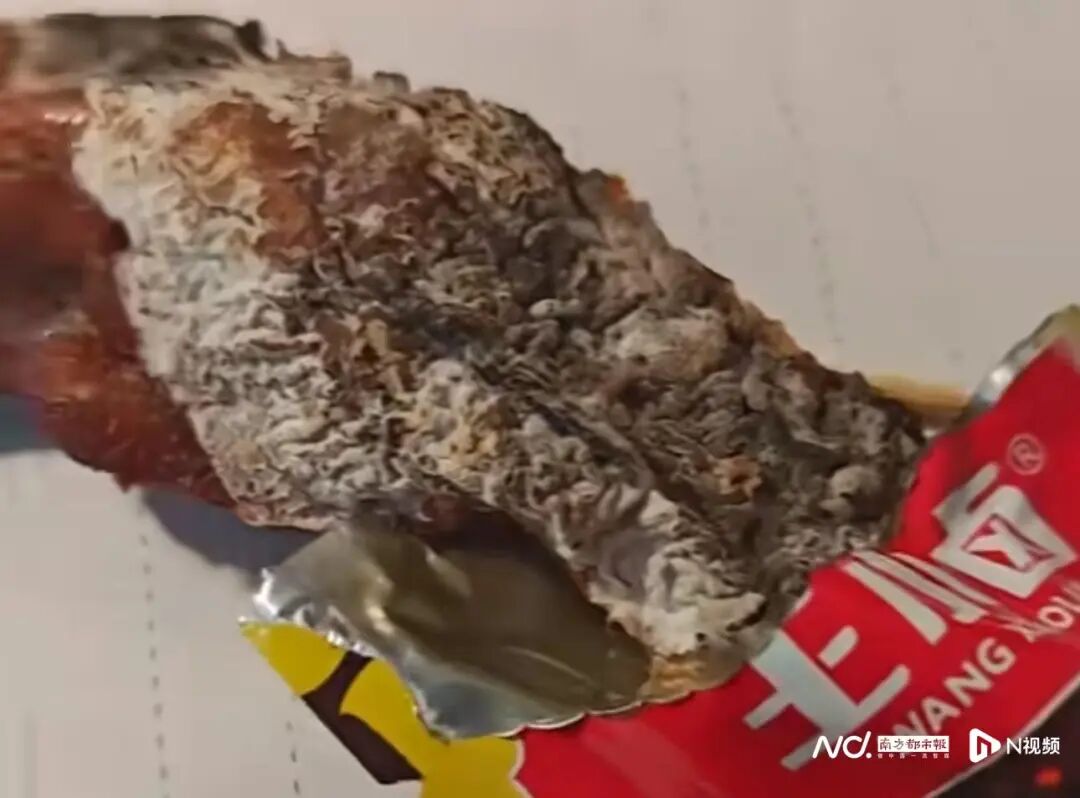
Core Viewpoint - A consumer reported that a product from Wang Xiaolu, specifically tiger skin chicken feet, was found to be moldy and spoiled despite being within the expiration date, leading to a public relations issue for the brand [1][3]. Group 1: Consumer Incident - A consumer from Hangzhou purchased three bags of tiger skin chicken feet for 36.22 yuan, and upon opening, discovered the product had turned black and developed white mold [1]. - Wang Xiaolu's customer service attributed the issue to potential damage during storage or transportation rather than a production flaw, offering compensation at ten times the price of a single package, which the consumer declined [1]. Group 2: Company Response - Following the consumer's feedback, Wang Xiaolu conducted a thorough review of the production process and packaging materials, finding no abnormalities in samples from the past nine months [3]. - The company confirmed that the production process includes high-temperature sterilization and vacuum packaging, which should prevent microbial growth, indicating that the spoilage was likely due to packaging damage during logistics [3]. - On January 29, the company processed a refund and compensation of 500 yuan to the consumer, who later expressed understanding and removed the complaint from social media [3]. Group 3: Company Background and Performance - Wang Xiaolu is an online snack brand that launched its tiger skin chicken feet product in April 2019, achieving 20 million yuan in revenue in its first year and 200 million yuan in the second year, becoming the top seller in the chicken snack category on Tmall during the 618 shopping festival [5]. - The brand expanded into offline channels in 2020, and by early 2022, offline sales surpassed online sales, with annual revenue exceeding 1 billion yuan [5]. - According to data from Frost & Sullivan, Wang Xiaolu has maintained the top sales position in the tiger skin chicken feet category for six consecutive years and has sold over 1.2 billion bags of its flagship product [5]. - The brand has attracted significant investment, securing multiple funding rounds from notable investors, including Source Code Capital and Challenger Capital [5].
“开袋发现鸡爪已发霉”,网红零食品牌回应
Nan Fang Du Shi Bao· 2026-02-01 10:36
Group 1 - The core issue involves a consumer complaint regarding moldy and spoiled chicken feet purchased from Wang Xiaolu's online store, leading to significant social media attention and a subsequent investigation by the company [1][3]. - Wang Xiaolu's management stated that the product's spoilage was likely due to damage during storage or transportation rather than a production issue, and they conducted a thorough review of their production and quality control processes [3][5]. - The company reported that they processed a refund and compensation of 500 yuan to the consumer, who later retracted her complaint after receiving the compensation [3][5]. Group 2 - Wang Xiaolu is recognized as a popular online snack brand, having transitioned to offline sales channels in 2020, with offline sales surpassing online sales for the first time in 2022, achieving annual revenue exceeding 1 billion yuan [5]. - The brand has maintained a leading position in the sales of tiger skin chicken feet for six consecutive years and has sold over 1.2 billion bags of this product [5].

网友称“开袋发现鸡爪已发霉”,网红零食品牌回应
Nan Fang Du Shi Bao· 2026-01-31 16:01
Group 1 - The core issue involves a consumer complaint regarding moldy and spoiled chicken feet purchased from Wang Xiaolu's e-commerce flagship store, leading to significant social media attention and a subsequent investigation by the company [1][3]. - Wang Xiaolu's management stated that the product's quality was not compromised during production, attributing the spoilage to potential damage during storage or transportation, which could have led to packaging breaches and subsequent mold growth [3][6]. - The company has a strong market presence, being recognized as the leading brand in the sales of tiger skin chicken feet for six consecutive years, with total sales exceeding 1.2 billion bags [6]. Group 2 - Following the consumer's complaint, Wang Xiaolu promptly processed a refund and compensation of 500 yuan, which led to the consumer retracting her negative posts on social media [3]. - The brand has successfully transitioned from online to offline sales, achieving over 1 billion yuan in revenue in 2022, with offline sales surpassing online for the first time [6].

王小卤客服回应鸡爪被曝发霉变质:已在事件发生次日与顾客沟通协商,完成赔偿
Cai Jing Wang· 2026-01-31 06:07
Group 1 - The core issue involves a consumer reporting that Wang Xiaolu's chicken feet product showed signs of mold and spoilage, specifically blackened chicken feet with white mold on the surface [1] - Wang Xiaolu's customer service responded by stating that they communicated with the customer the day after the incident and completed compensation [1] - The online store's customer service explained that the product is vacuum-packed after high-temperature frying, indicating that spoilage should not occur during production, suggesting that the issue likely arose from damage during transportation [1]
浙江省嘉兴市市场监督管理局“你点我检”食品安全监督抽检信息通告(2025年第6期)
Zhong Guo Zhi Liang Xin Wen Wang· 2026-01-20 08:12
Core Viewpoint - The Jiaxing Market Supervision Administration conducted a food safety inspection based on public feedback, resulting in the testing of 166 samples across 16 categories, with 163 passing and 3 failing the safety standards [3][4]. Group 1: Inspection Results - A total of 166 samples were tested, with 163 passing and 3 failing the food safety standards [3]. - The three non-compliant products include: 1. Tiger skin chicken feet from Liji Mingzhang Food Co., which contained sorbic acid and its potassium salt exceeding the limit of 0.075g/kg, with a measured value of 0.223g/kg [4]. 2. Baked fragrant wheat slices from Hongyu Food Co., which had a peroxide value of 0.47g/100g, exceeding the standard limit of 0.25g/100g [4]. 3. Freshwater shrimp from a local market, which contained enrofloxacin at 555µg/kg, surpassing the permissible level of 100µg/kg [4]. Group 2: Regulatory Actions - The Jiaxing Market Supervision Administration has mandated local regulatory bodies to take legal action against the vendors of the non-compliant products [4]. - The authorities have instructed relevant food businesses to immediately remove the non-compliant products from shelves to mitigate risks [4].
烟火漫人间 百味见真章——《烟火里的中国》解码餐饮行业的韧性与新生
新华网财经· 2025-12-15 11:13
Core Viewpoint - The article explores the vibrant and diverse landscape of the Chinese dining industry, highlighting various successful brands that embody the essence of traditional and modern culinary experiences, showcasing their innovation and resilience in the market [4][5][6][8][9][10][14][15]. Group 1: Brand Success Stories - **Walaida**: Established in 2010, Walaida has become a leading brand in the bullfrog segment with over 300 stores nationwide, innovating with unique flavors and a focus on dining experience [4]. - **Zhang Liang**: Since its inception in 2008, Zhang Liang has transformed street food into a standardized chain, emphasizing fresh ingredients and introducing bone broth to cater to health-conscious consumers, with thousands of stores across the country [5]. - **Xiong Miao Lai**: This brand targets young consumers with a trendy approach to hot pot, featuring unique dishes and interactive dining experiences, ensuring high-quality ingredients and food safety [6]. - **Yuanji Yun Jiao**: Founded in 1996, this brand focuses on fresh, handmade dumplings, maintaining a standardized quality across over a thousand stores while preserving the traditional essence of dumplings [8]. - **Zhu Guangyu Hot Pot**: In just five years, this brand has expanded from a local shop to an international presence, emphasizing traditional flavors and innovative dishes, with a strong focus on cultural representation in its overseas locations [9]. - **Mobi U Chuang**: This group supports restaurant brand incubation and operations, helping various brands maintain consistent quality and expand their market reach through a robust supply chain [10]. Group 2: Industry Trends and Consumer Insights - The article emphasizes the importance of maintaining the original flavors and quality of food while adapting to modern consumer preferences, showcasing how brands are innovating to meet diverse tastes [4][5][6][8][9][10][14]. - The concept of "smoky fire" is highlighted as a representation of the warmth and connection in dining experiences, reflecting the economic vitality of the country [15]. - The collaboration with Daya Drinks illustrates the significance of beverage offerings in enhancing dining experiences, adapting to various culinary settings [11][13]. Group 3: Future Outlook - The article suggests that the future of the Chinese dining industry will see more brands innovating while preserving traditional values, with a focus on expanding both domestically and internationally [15]. - The ongoing evolution of consumer preferences, particularly among younger demographics, will drive further innovation in product offerings and dining experiences [6][10].