人工智能

Search documents
——光研之声2026年4月联合月报:市场的三个潜在拐点-20260330
EBSCN· 2026-03-30 11:48
Current Strategy Viewpoints - The market experienced significant volatility in March, primarily influenced by external uncertainties, particularly the US-Iran conflict, which affected global capital markets and led to noticeable adjustments in Chinese assets [1] - Despite the adjustments, market liquidity remained stable, indicating resilience in the trading structure, with current market corrections reflecting a certain degree of overseas risk impact [1] Potential Market Turning Points - Potential turning points in April may arise from three directions: 1. Better-than-expected performance from listed companies, with improvements anticipated in overall earnings, particularly in technology and cyclical sectors [2] 2. Continued support for medium- to long-term capital inflows into the market, which may be triggered by previous market corrections [2] 3. Easing of external risk factors, which could serve as a direct catalyst for market upward momentum, although predictability remains low [2] Sector Recommendations - Focus on sectors that have previously experienced significant declines, those benefiting from rising commodity prices, and industries likely to exceed performance expectations [3] - Recommended sectors include resources, essential consumption, hard technology, and government investment-related areas, with particular attention to high-growth industries in annual and quarterly reports, mainly in resources and technology [3] Macro Perspective - The report highlights a structural advantage for Chinese exports amid high global energy prices, which may drive orders back to China, as seen in previous years [9] - The first quarter economic data is expected to show slight year-on-year declines due to high base effects, but underlying economic momentum is recovering, supported by investment policies and signs of recovery in major real estate markets [9] Financial Engineering - The A-share market has shown wide fluctuations since March, with a cautious risk appetite among leveraged funds, indicating a potential continuation of "high-low cut" trading strategies [13] - The report notes a divergence in market sentiment, with some sectors experiencing increased crowding, particularly in transportation, construction, and utilities [13] Fixed Income Market - The bond market's future trajectory will depend on marginal changes in economic fundamentals and monetary policy, with expectations of potential easing measures earlier than anticipated [15][16] - The report suggests that inflation's impact on bond yields will be limited, with temporary pressures manageable and unlikely to push yields significantly above current levels [16] Industry Insights - The report emphasizes the importance of the AI sector, particularly in the context of the GTC conference, where advancements in AI technology are expected to drive significant demand and investment opportunities [20][24] - The renewable energy sector is highlighted for its growth potential, particularly in light of geopolitical tensions affecting energy security, with significant increases in exports of solar inverters and electric vehicles [28][29] High-End Manufacturing - The report identifies key opportunities in high-end manufacturing, particularly in robotics and the North American AI supply chain, with significant developments expected in production capabilities and market demand [32][34] - Recommendations include focusing on companies involved in advanced robotics, AI-driven technologies, and mining machinery, which are poised to benefit from increased capital expenditures in these areas [34] Mechanical Manufacturing - The report notes a rise in demand for data center equipment driven by increased power needs, with significant growth in related sectors such as generators and cooling systems [38] - The focus on controlled nuclear fusion and low-altitude economy is expected to create investment opportunities in infrastructure and equipment manufacturing [39]


科创创业AI指数:双线精选,一键布局全景AI链
GF SECURITIES· 2026-03-30 11:05
Group 1 - The Sci-Tech Innovation and Entrepreneurship AI Index (932456.CSI) was officially launched on May 14, 2025, to reflect the overall performance of large and mid-cap growth companies with core artificial intelligence attributes in the Sci-Tech Innovation Board and the ChiNext market [1][3] - The index aims to provide a comprehensive view of AI core assets across sectors, highlighting the balance between domestic and overseas computing power chains and focusing on high-elasticity computing targets [9][10] - The index includes 50 securities selected based on their average market capitalization and liquidity, specifically those involved in providing foundational resources, technical support, and applications for artificial intelligence [10] Group 2 - The AI industry is transitioning from a training phase to a reasoning phase, indicating a shift towards profitable application commercialization, with significant capital expenditures from cloud vendors continuing to expand [14][17] - The consumption of tokens, which are critical for validating the AI industry's real demand, has surged, reflecting the increasing penetration and commercialization of AI large models [19][20] - The supply-demand imbalance in the AI sector, driven by explosive computing power demand and a shortage of storage chips, is expected to sustain the price increase in the AI value chain [22][23] Group 3 - The index focuses on mid to large-cap growth styles, with a significant portion of its weight in companies with market capitalizations over 100 billion, providing strong support through leading firms [36][38] - The index achieves a balanced risk profile by covering three major technology sectors: semiconductors, communication equipment, and software development, effectively mitigating the risks associated with over-concentration in a single sector [45][46] - The index's structure allows for exposure to both upstream and downstream segments of the AI industry chain, capturing the benefits of the entire cycle while maintaining a focus on core computing power [48][52] Group 4 - The profitability outlook for the index is strong, with projected net profit growth rates significantly outpacing major broad-based indices, indicating a high degree of certainty in earnings driven by the AI sector [56][57] - The index has demonstrated a high annualized return of 50.02%, with a relatively high annualized volatility of 40.78%, indicating a strong risk-reward profile suitable for capturing industry trends [61]
定增市场双周报2026.03.16-2026.03.29:折价率创新低,β收益分化-20260330
Shenwan Hongyuan Securities· 2026-03-30 10:44
Group 1: Market Dynamics - As of March 30, 2026, 18 new private placement projects were added, a decrease of 4 from the previous period, with 6 projects terminated, also down by 3[4] - The number of projects awaiting approval stands at 662, with 75 having passed the review, a decrease of 8[8] - The average discount rate for competitive bidding projects reached a record low of 1.36%, down 13.26 percentage points, while the market price discount rate averaged 4.16%, down 11.80 percentage points[4] Group 2: Project Analysis - Jiangfeng Electronics plans to raise up to 1.928 billion yuan for projects related to semiconductor materials, with expected revenue growth exceeding 20% in 2024 and 2025[4] - iFLYTEK aims to raise up to 4 billion yuan for AI education projects, with the AI industry expected to grow at a compound annual growth rate of 32.1% from 2024 to 2029[4] - The average price-to-sales (PS) and price-to-book (PB) ratios for Jiangfeng Electronics are 10.75X and 7.83X, respectively, while iFLYTEK's PS and PB ratios are 4.63X and 6.12X[4] Group 3: Investment Insights - 62.5% of the newly unlocked competitive bidding projects yielded positive returns, with an average absolute return of 13.88% and an excess return of 1.30%[4] - The average market price discount rate for newly listed competitive projects was 15.24%, with some projects exceeding 22%[4] - The average subscription premium rate for competitive projects was 12.05%, reflecting a 4.35 percentage point increase[4]


Token要成新货币了,但你真的知道它是什么吗?
虎嗅APP· 2026-03-30 10:26
Core Viewpoint - The article discusses the concept of Token, its significance in the AI industry, and how it is becoming a foundational element of a trillion-dollar market, as stated by NVIDIA's CEO Jensen Huang [13]. Group 1: Definition and Evolution of Token - Token has three common meanings: a credential for identity verification, a cryptocurrency representation, and a language substitute in AI models [15]. - The concept of Token can be traced back to the Type-Token distinction proposed by philosopher Charles Sanders Peirce, which differentiates between abstract forms (Type) and their specific instances (Token) [16][18]. - The evolution of Token in the digital age began in the 1960s with its role in programming languages, where it became a substitute for syntax [24]. Group 2: Challenges in Natural Language Processing - Natural language presents unique challenges for Tokenization, including vocabulary explosion, out-of-vocabulary words, and languages without spaces [26][27][29]. - Traditional methods of Tokenization struggle with these challenges, leading to inefficiencies in processing languages like Chinese and other non-Latin scripts [30]. Group 3: Byte Pair Encoding (BPE) and Its Impact - The introduction of Byte Pair Encoding (BPE) revolutionized Tokenization by allowing the model to determine how to segment language based on frequency rather than predefined rules [34][43]. - BPE effectively addresses issues of vocabulary size and out-of-vocabulary words by breaking down language into smaller units, allowing for more efficient processing [39][43]. - The BPE method has been adapted to a byte-level approach, enabling models to handle any language without needing prior knowledge of character sets [46][47]. Group 4: Economic Implications of Token Usage - The cost of using AI models is directly tied to Token consumption, with different languages requiring varying amounts of Tokens for the same semantic content [51][56]. - English typically consumes the least Tokens, while languages like Chinese and smaller languages can require significantly more, leading to economic disparities in AI usage [57][60]. - This disparity reflects a broader trend where languages with less representation in training data face higher costs and reduced efficiency in AI applications [65]. Group 5: Implications for AI Performance - The Tokenization process can lead to performance discrepancies in AI models, where high-frequency terms are processed efficiently while low-frequency terms may be fragmented and less reliable [76]. - The article highlights that the AI's ability to accurately process information is often inversely related to the rarity of the terms involved, which can affect critical applications in law, medicine, and education [78].


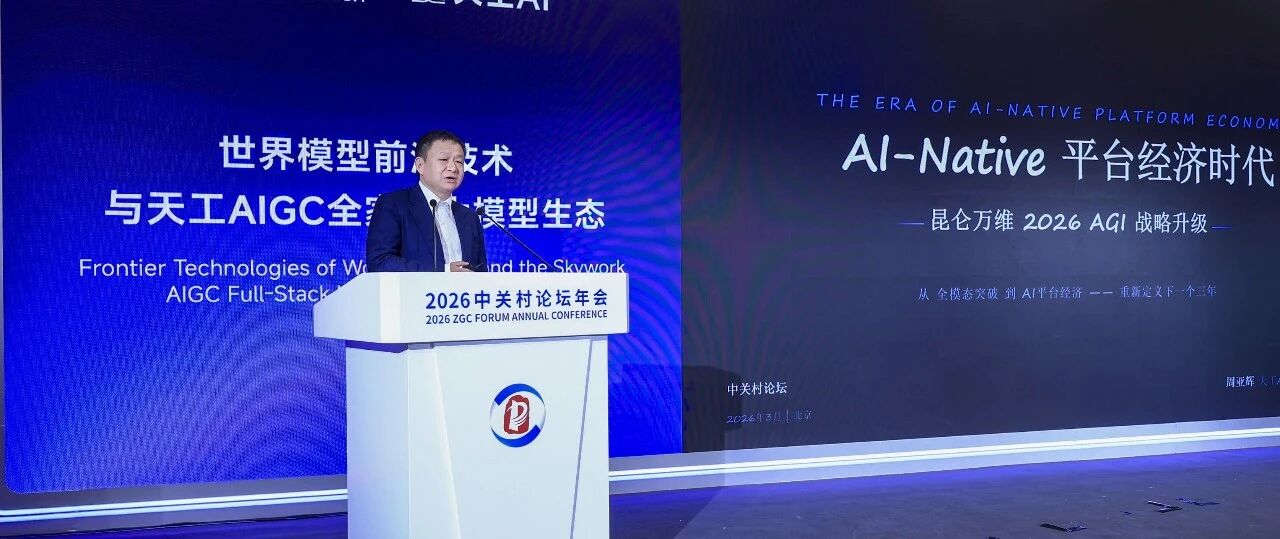
三大模态模型全部登顶后,昆仑万维正式披露了 2026 年 AGI 战略
Founder Park· 2026-03-30 10:14
Core Insights - Kunlun Wanwei and its subsidiary Tiangong AI are positioned uniquely in the Chinese AI landscape, not fitting into the typical categories of major tech players like BAT or ByteDance, yet their diverse business operations and unique market position make them a significant player across technology, finance, and the internet [2][3]. Group 1: AGI Strategy and Ecosystem - In 2026, Kunlun Wanwei's video model SkyReels V4 achieved the top position in the global evaluation platform Artificial Analysis for "text-to-video (including audio)," surpassing competitors like Google Veo 3.1 [3]. - The company's AGI strategy has evolved into a "3+1" ecosystem architecture, consisting of four SOTA models at the base, three AI-native platforms in the middle, and a super agent at the top, aimed at enhancing creativity and transitioning to an AI Native platform economy [3][10]. - The three AI-native platforms include DramaWave, an AI version of Netflix with 80 million monthly active users, Mureka, an AI music platform, and a gaming platform that allows voice interaction [12][10]. Group 2: Technological Innovations - The Matrix-Game 3.0 model addresses key challenges in interactive world modeling, significantly improving memory, scene generalization, and generation quality, achieving real-time generation at 40 FPS in 720P resolution [16][24]. - SkyReels V4 is the first video generation model to support multi-modal input and joint audio-video generation, utilizing a dual-stream architecture for precise alignment of audio and video [32][34]. - Mureka V9 enhances music creation by integrating reasoning capabilities, allowing the model to understand the emotional context and structure of music, thus producing higher quality outputs [37][40]. Group 3: Market Position and Future Outlook - The AI video generation market is highly competitive, with major players like OpenAI and Google, but Kunlun Wanwei aims to redefine the landscape by reconstructing the logic of video generation from the ground up [30][31]. - The company's ambition is to create a comprehensive multi-modal ecosystem that benefits content creators by lowering barriers and costs, potentially leading to a significant increase in the number of creators globally [41][44]. - Kunlun Wanwei aspires to transition from a tool provider to a standard-setting entity in the AI-native platform economy, similar to Apple's ecosystem approach, aiming for a complete system and experience for users [45][46].
智能体应用研究系列(一):AI应用元年,OpenClaw引领Agent发展
CMS· 2026-03-30 09:17
Investment Rating - The report maintains a positive investment rating for the AI application industry, particularly focusing on OpenClaw and related sectors [3]. Core Insights - The report emphasizes that the industry has entered a new phase of collaboration between major tech companies and local policies, with cloud computing services being the most certain direction for growth [1]. - OpenClaw is identified as the fastest-growing open-source AI agent application framework globally, with significant advancements in product positioning, technical architecture, and market dynamics [1][10]. - The report suggests actively monitoring key players in cloud computing, domestic computing chips, computing leasing, and AI infrastructure sectors [1]. Summary by Sections 1. Overview of OpenClaw - OpenClaw is an open-source, cross-platform AI agent application framework designed for local operation and message-driven interaction, significantly lowering user deployment barriers [10]. - The framework has rapidly gained popularity due to its user-friendly installation and configuration processes, allowing for quick deployment and usability [12][26]. 2. Development Trajectory - OpenClaw achieved remarkable growth, becoming one of the most popular open-source projects within four months of its launch, surpassing established frameworks like React in GitHub stars [15][17]. - The project has undergone significant milestones, including rebranding and community engagement, which have contributed to its rapid expansion [13][14]. 3. Industry Attention and Ecosystem Growth - The ecosystem surrounding OpenClaw has seen explosive growth, with over 39,802 skills available in the ClawHub skill store, driven by contributions from a large developer community [18][19]. - Major cloud service providers have responded quickly to OpenClaw's rise, offering one-click deployment solutions, which enhance accessibility for enterprise users [22][24]. 4. Technological Innovations - OpenClaw's unique features include a simplified skill extension mechanism through SKILL.md, which allows for natural language programming, significantly lowering the barrier for skill development [28]. - The framework employs a lane-aware FIFO queue for task scheduling and a layered memory architecture to optimize performance in complex task scenarios [30][32]. 5. Strategic Moves by Tech Giants - Major tech companies, including NVIDIA, Google, and AWS, are actively positioning themselves in the AI agent space, launching products and services that integrate with OpenClaw [42][44][46]. - Domestic tech giants like Tencent, Baidu, and Xiaomi have also quickly adapted to OpenClaw's capabilities, launching various applications and services that leverage its framework [47][49][52].
人民日报:从中国式现代化理论领悟为什么中国一定能成功|宏观经济
清华金融评论· 2026-03-30 09:11
Core Viewpoint - The article emphasizes that the theory of Chinese-style modernization is the key to understanding why China can succeed and provide certainty and positive energy to the world [6][7]. Group 1: Chinese-style Modernization - Chinese-style modernization is characterized as a significant achievement of the Communist Party of China (CPC) and a new path for human modernization [1][4]. - The theory is seen as a comprehensive guide for China's development, addressing various challenges and promoting high-quality, sustainable growth [8][12]. Group 2: Economic Growth and Planning - During the 14th Five-Year Plan period, China's economy is expected to grow at an average rate of 5.4%, which is significantly higher than the global average [4]. - The government has set a growth target of 4.5% to 5% for the current year, emphasizing the importance of effective execution of plans [4][5]. Group 3: New Development Concepts - The new development concept aims to guide quality, efficiency, and dynamic changes in modernization efforts, addressing issues of unbalanced and insufficient development [9][10]. - The concept is crucial for resolving the main social contradictions in China, focusing on improving the quality of development [10][11]. Group 4: New Quality Productivity - The theory of new quality productivity is introduced as essential for enhancing economic competitiveness and driving high-quality development [19][21]. - The focus is on optimizing traditional industries and fostering emerging industries through technological innovation [19][20]. Group 5: New Type of National System - The new type of national system is highlighted as a critical mechanism for leveraging the advantages of centralized efforts in major projects, particularly in technology [26][27]. - The emphasis on artificial intelligence and other emerging technologies is seen as vital for maintaining competitive advantages in global markets [27][30]. Group 6: New Development Pattern - The construction of a new development pattern is framed as a strategic deployment to enhance resilience and competitiveness in the face of global uncertainties [35][39]. - The domestic market is identified as a key driver of economic growth, contributing an average of 86.8% to growth from 2021 to 2024 [39][40]. Group 7: Global Engagement and Openness - China's approach to openness is characterized by a commitment to expanding international cooperation and trade, particularly with emerging markets [44]. - The establishment of free trade zones and the promotion of international trade events are part of the strategy to enhance global economic integration [43][44].

欧洲AI自主战略提速!法国创企Mistral获8.3亿美元债务融资 扫货英伟达芯片建大型数据中心
Zhi Tong Cai Jing· 2026-03-30 08:26
Core Insights - Mistral, a leading French AI startup, has secured $830 million in debt financing to purchase 13,800 NVIDIA chips for a large data center near Paris [1][2] - This financing marks Mistral's first debt issuance and reflects growing investor confidence in European AI companies amid competition with US and Chinese firms [1] - The data center is expected to be operational by Q2 2026, with plans for a second data center in Sweden and a target of 200 megawatts of computing capacity across Europe by the end of 2027 [2] Company Overview - Mistral provides AI models to the French armed forces and positions itself as a European alternative to leading US AI companies, catering to governments and enterprises seeking greater technological independence [2] - The CEO of Mistral emphasized the importance of expanding infrastructure in Europe to empower clients and ensure that AI innovation remains central to European development [2]
两年增长超千倍!AI时代统一度量衡定了,投资机会有哪些?
券商中国· 2026-03-30 06:32
Core Viewpoint - The official Chinese translation of "Token" as "词元" has been widely recognized, marking a significant development in the AI industry and emphasizing the importance of continuous learning and cognitive iteration for fund managers to capture excess returns in technology investments [1][2][3]. Group 1: Definition and Importance of Token - "Token" (词元) is defined as a fundamental unit for AI large models, with its consumption scale highly correlated with the large-scale application of AI [3]. - The Chinese government recognizes "Token" as a key industrial element, establishing a new standard for measurement in the AI era [3]. - The daily average usage of tokens in China is projected to reach 100 billion by early 2024 and escalate to 100 trillion by the end of 2025, with a significant increase to 140 trillion in March of this year, reflecting over a thousand-fold growth in two years [3]. Group 2: Economic Implications of Token - The rapid growth in token usage is creating a positive feedback loop, driving demand for infrastructure and enhancing productivity across various industries, transforming AI into a quantifiable and tradable digital commodity [4]. - AI is shifting from training to high-frequency reasoning and intelligent applications, leading to increased demand across the entire infrastructure and application ecosystem [4]. Group 3: Investment Opportunities in Token Economy - The token economy is gaining attention in the investment community, with its core value becoming increasingly prominent [5]. - Investment opportunities are categorized into four main areas: upstream computing power providers, large model companies, downstream application sectors, and supporting services [5][6]. - Upstream focuses on computing infrastructure and hardware, while midstream involves large models and cloud platforms, and downstream includes AI applications like intelligent agents [6]. Group 4: Future Trends and Challenges - The investment landscape is evolving with new terminologies and concepts emerging, presenting both challenges and opportunities for fund managers [9]. - Continuous learning and cognitive iteration are essential for investors to keep pace with rapid technological advancements and industry changes [10]. - Fund managers are encouraged to develop interdisciplinary research frameworks to understand technological evolution and capture investment opportunities at the intersection of technology maturity and market penetration [10].

上海科创投董事长朱民:以硬科技投资逻辑锚定具身智脑赛道,以长资本赋能未来产业生态
IPO早知道· 2026-03-30 05:43
Core Viewpoint - The article emphasizes the importance of hard technology investment, highlighting the principles of "technology barriers as king, long-term value as fundamental, domestic substitution as essential, and industrial landing as root" [2] Group 1: Event Overview - The "Embodied Intelligence AI Software and Hardware Ecosystem Integration Working Group" meeting and the first Embodied Intelligence Technology Ecological Conference were held in Shanghai on March 27, 2026, to promote the development of the embodied intelligence industry [3] - The conference aimed to build a collaborative innovation ecosystem through deep cooperation among government, industry, academia, research, and application [3] Group 2: Investment Logic and Opportunities - The chairman of Shanghai Technology Venture Capital Group, Zhu Min, discussed the investment logic and ecological opportunities in the embodied intelligence field, emphasizing the need for long-term capital to empower the ecosystem [4][5] - The core logic of hard technology investment is summarized in four aspects: technology barriers, long-term value, domestic substitution, and industrial landing [6] Group 3: Key Investment Tracks - The first track focuses on the "embodied brain," particularly on algorithms and large models, assessing originality and adaptability for physical interaction [7] - The second track, "embodied small brain," emphasizes the importance of core component control systems, focusing on domestic substitution and scalability [8] - The third track involves the overall application and scene application of embodied intelligence, prioritizing essential scenarios and commercial viability [9] Group 4: Capital and Ecosystem Integration - The company aims to leverage its capital to connect the entire embodied intelligence industry ecosystem, focusing on four types of synergies: investment-loan linkage, industry-academia-research collaboration, industry chain linkage, and policy-market linkage [9][10] - The goal is to support early-stage research and development, facilitate technology transfer, and promote commercial landing of products in the embodied intelligence sector [10]