
光电子信息

Search documents
加速建设“世界光谷” 东湖高新区GDP连续7年领跑全市
Chang Jiang Ri Bao· 2026-01-26 00:43
Group 1 - The core viewpoint of the news highlights the significant economic growth and industrial development in the Optics Valley region, with a projected GDP of 336 billion yuan by 2025, maintaining a leading position in the city for seven consecutive years [1] - The industrial added value has seen a year-on-year growth of 13.1%, sustaining double-digit growth for 24 months, indicating robust industrial investment and performance [1] - Tax revenue has increased by 18.2% year-on-year, with over 70% of this growth attributed to high-tech industries, showcasing the region's strong contribution to the economy [1] Group 2 - The Optics Valley's electronic information industry has surpassed 650 billion yuan, solidifying its leading advantage, while the integrated circuit industry has also crossed the 100 billion yuan mark [1] - The region has established a strategic technology force with a matrix of national laboratories and innovation platforms, enhancing its innovation capabilities significantly [2] - The total number of enterprises in the area exceeds 167,000, with 5,821 high-tech enterprises, indicating a robust growth in the business ecosystem [2] Group 3 - The integration of industry and city development is accelerating, with significant infrastructure improvements such as 84 kilometers of rail transit and over 1,000 kilometers of municipal roads [2] - The population in the area has grown by 30%, with service population surpassing 2 million, reflecting the region's attractiveness and livability [2] - The future goal is to establish "World Optics Valley" with a comprehensive strength ranking among the top five national high-tech zones within five years, aiming for significant progress by 2035 [2]

2025年GDP十强城市预估排名出炉:上海第1,苏州远超成都,南京入围?
Sou Hu Cai Jing· 2026-01-24 17:39
Core Insights - The 2025 GDP forecast for China's top ten cities reveals a competitive landscape, with Shanghai and Beijing maintaining their positions as economic powerhouses, while cities like Shenzhen, Chongqing, and Guangzhou are rapidly advancing [1][3]. Group 1: Shanghai and Beijing - Shanghai's GDP is projected to reach 5.67 trillion yuan, an increase of 278.2 billion yuan from the previous year, with significant contributions from the Zhangjiang Science City and Yangshan Port, which has been the world's busiest container port for 19 consecutive years [1][5]. - Beijing's GDP is expected to surpass 5.2 trillion yuan, growing by 388 billion yuan, driven by a surge in tech startups in Zhongguancun and a digital economy that constitutes over 65% of its GDP [3][5]. Group 2: Emerging Cities - Shenzhen's GDP is forecasted to hit 3.89 trillion yuan, with a growth rate of 5.68%, bolstered by major players like BYD in the electric vehicle market, which holds a 12% global share [5][7]. - Chongqing's GDP is anticipated to reach 3.37 trillion yuan, with a notable contribution from the automotive sector, where companies like Changan and Seres account for 12% of its GDP [7]. - Guangzhou's GDP is projected at 3.23 trillion yuan, supported by investments in AI and digital economy sectors, with local companies contributing significantly to national testing mileage in smart vehicles [7]. Group 3: Other Notable Cities - Suzhou's GDP is expected to be 2.79 trillion yuan, with a strong focus on nanotechnology and a 20% annual growth in patents in biomedicine and integrated circuits [7]. - Chengdu is set to achieve a GDP of 2.5 trillion yuan, with a remarkable growth rate of 6.57%, driven by advancements in electronic information and new energy industries [8]. - Hangzhou's GDP is forecasted at 2.3 trillion yuan, with its digital economy core industries accounting for over 30% of its GDP, showcasing a transition from an e-commerce hub to a smart city [8]. - Wuhan's GDP is projected to reach 2.23 trillion yuan, with significant contributions from the optoelectronic information industry and a resilient economic recovery post-pandemic [8]. - Nanjing's GDP is expected to be 1.93 trillion yuan, with high-tech industries like integrated circuits and new energy vehicles making up over 55% of its GDP [9].


中国光谷发布3551人才举荐制精准引才
Zhong Guo Xin Wen Wang· 2026-01-20 11:08
Core Viewpoint - The implementation of the "3551 Talent Recommendation System" in Wuhan's East Lake High-tech Zone aims to accelerate the gathering of high-level talents across various industries by decentralizing talent evaluation authority to different hiring entities [1][2][3] Group 1: Talent Recommendation System Structure - The "3551 Talent Recommendation System" includes a recommendation framework consisting of "green channels," "fast channels," and "special channels" to meet diverse talent recruitment needs [1] - The "green channel" focuses on incentivizing existing talent through a selection process involving industry department recommendations and employer endorsements [2] - The "fast channel" targets high-growth companies and major innovation platforms, allowing newly recruited or negotiating key talents to apply for funding support upon employment [1][2] - The "special channel" emphasizes public service support, incorporating education, health, and cultural sectors, with specialized recommendations from industry authorities [1] Group 2: Addressing Past Evaluation Mechanism Issues - The "3551 Talent Recommendation System" introduces a "three-dimensional coordination" logic to address previous evaluation mechanism shortcomings, aligning talent supply with industry policies and needs [2] - The system allows for a more flexible approach to talent evaluation, enabling younger talents in fields like artificial intelligence to be considered, which may have been overlooked in traditional systems [2] - The initiative aims to enhance talent stability and attract high-end talents by providing financial support and accompanying services that are quickly accessible [2] Group 3: Objectives and Impact - The primary goal of the "3551 Talent Recommendation System" is to create a more open selection mechanism and a precise support system, ultimately achieving deeper integration of talent and industry [3] - The system is designed to invigorate the talent ecosystem in the East Lake High-tech Zone, particularly benefiting industries such as optoelectronic information and life health [2][3]
武汉18条举措推进研发产业化 单个项目最高支持2000万
Chang Jiang Shang Bao· 2026-01-20 00:17
Core Viewpoint - Wuhan Municipal Government has released a plan to accelerate the cultivation of R&D enterprises and promote the industrialization of R&D from 2025 to 2027, aiming to strengthen the city's R&D service foundation and establish 30 municipal concept verification centers and 200 pilot platforms by 2027 [1][2] Group 1: R&D Enterprise Cultivation - The plan outlines 5 areas and 18 measures to foster R&D enterprises, accelerate R&D industrialization, and support the launch of new business models and technologies [2][3] - By 2027, the number of municipal R&D centers is expected to exceed 1,200, with over 300 R&D enterprises and more than 30 foreign R&D centers established [2][3] Group 2: R&D Investment and Support - The plan includes a "seedling plan" for startup tech companies, selecting 200 high-growth startups annually for up to 500,000 yuan in funding over three years for R&D activities [4] - For newly recognized high-tech enterprises, rewards of 100,000 yuan and 50,000 yuan will be provided for first-time and re-recognition, respectively [4] Group 3: R&D Ecosystem Optimization - Measures to enhance R&D support services include deepening university-industry cooperation and improving R&D support services, with a reward of up to 1 million yuan for technology transaction achievements [3] - The plan emphasizes attracting R&D talent, enhancing financial support for innovation, and promoting the application of new technologies [3][5] Group 4: Cluster Development - The plan aims to create 3-5 high-level R&D enterprise clusters in various districts, focusing on sectors such as biomedicine, optical electronics, and new energy vehicles [5] - Districts are encouraged to develop specific support policies, with financial rewards for recognized national small and medium-sized enterprise clusters [5]
“光纤上车”爆发前夜,武汉抢占“光车融合”先机
第一财经· 2026-01-19 07:58
Core Viewpoint - The article discusses the emergence of L3-level autonomous driving and its impact on the automotive industry, particularly highlighting the integration of optical communication technology, which is expected to drive a new phase of cluster development in the sector [2][4]. Group 1: Industry Development - The automotive and optoelectronic information industries are key drivers of Wuhan's economic growth, with the city housing eight passenger car manufacturers and over 1,000 auto parts companies, achieving a total vehicle production capacity of 2.27 million units [4][5]. - By 2025, the scale of Wuhan's optoelectronic information industry is projected to reach approximately 850 billion yuan, with electronic information manufacturing contributing about 445 billion yuan and software business revenue around 405 billion yuan [5]. - The automotive industry in China is expected to surpass 10 trillion yuan in revenue by 2025, providing significant application scenarios for new technologies such as semiconductors and artificial intelligence [5][6]. Group 2: Technological Integration - The "optical-vehicle integration" initiative aims to address critical areas such as automotive-grade chips and smart sensors, establishing a collaborative research mechanism among various stakeholders [2][6]. - Companies like Wuhan Haiwei Technology and Wuhan Binary Semiconductor are leading advancements in automotive display technology and high-speed optical communication, respectively, with the latter's first domestically produced automotive-grade MCU chip set to launch this year [6][7]. - The transition from copper to optical fiber in vehicles is anticipated to enhance data transmission speed and reduce weight, with industry leaders predicting significant economic benefits from this shift [7]. Group 3: Challenges and Recommendations - The integration of communication, optoelectronics, and artificial intelligence into the automotive sector presents challenges such as technical compatibility, standardization, and supply chain barriers [7]. - To facilitate deeper integration, it is recommended to establish collaborative innovation platforms to address foundational issues in technology linkage, standard development, and certification [7].
“光纤上车”爆发前夜,武汉抢占“光车融合”先机
Di Yi Cai Jing· 2026-01-19 06:53
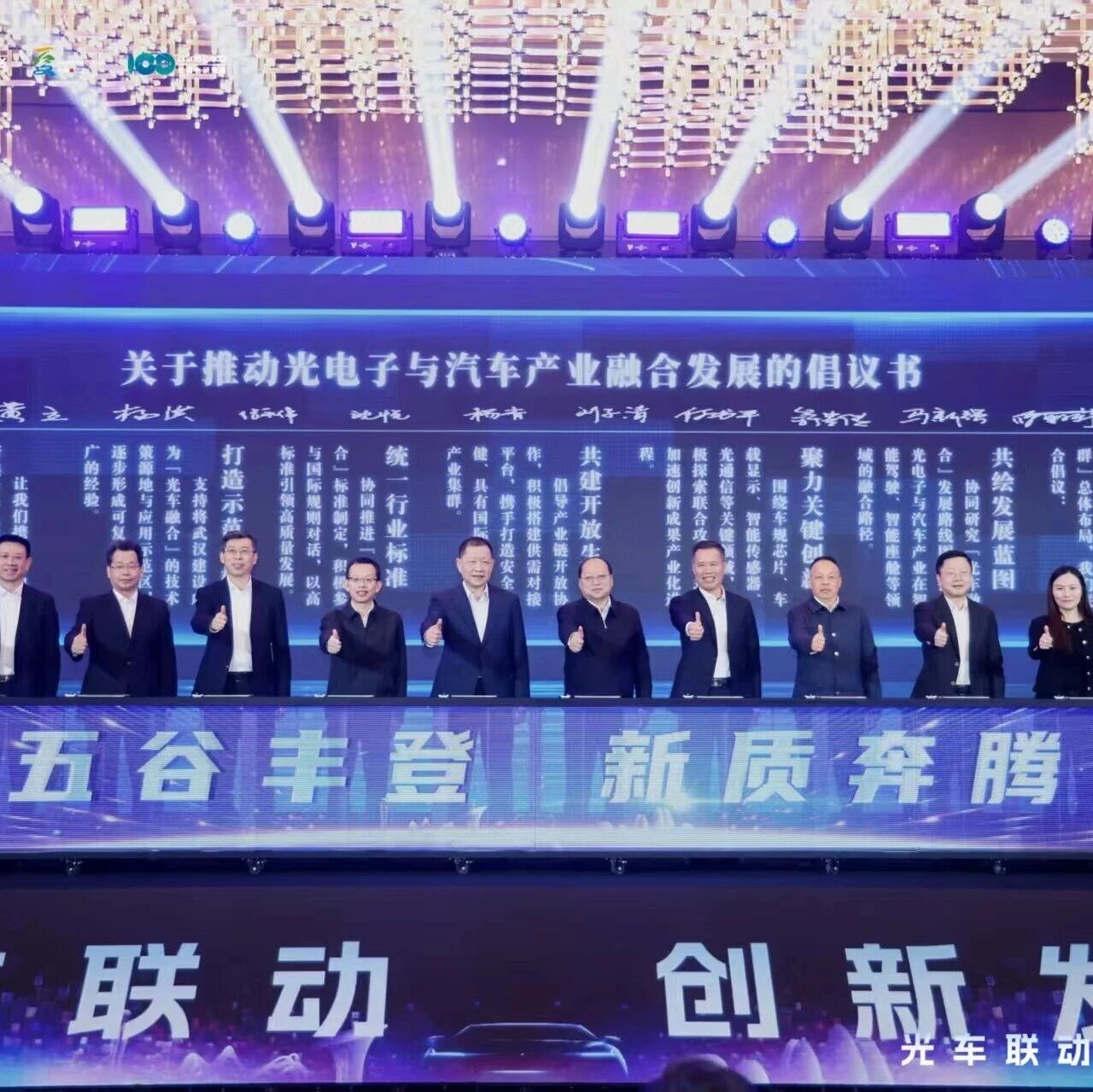
Core Insights - The automotive industry is entering a new phase characterized by the integration of optical communication technology, driven by the advent of Level 3 autonomous driving, which is expected to lead to a significant growth in vehicle-mounted optical communication systems [1][4] Group 1: Industry Collaboration and Initiatives - A "Light-Car Interaction" initiative was signed by major companies including Dongfeng Motor, China Information Communication Technologies, and others, aiming to establish a collaborative mechanism to tackle key challenges in automotive technology such as vehicle-grade chips and smart sensors [1] - Wuhan is positioning itself as a technological hub for "light-car integration," with a focus on developing and demonstrating applications in this field [1][4] Group 2: Economic Impact and Industry Growth - The optical information and automotive industries are identified as key drivers of Wuhan's economic development, with the city housing eight passenger car manufacturers and over 1,000 automotive parts companies, achieving a total vehicle production capacity of 2.27 million units [3] - By 2025, the optical information industry in Wuhan is projected to reach a scale of approximately 850 billion yuan, with electronic information manufacturing contributing about 445 billion yuan and software business revenue expected to be around 405 billion yuan [3] Group 3: Technological Advancements - The automotive sector is expected to generate over 10 trillion yuan in revenue by 2025, providing significant application scenarios for new technologies such as semiconductors and artificial intelligence [4] - Wuhan Haiwei Technology has successfully addressed reliability challenges in automotive-grade displays, leading to a projected compound annual growth rate of 50% during the 14th Five-Year Plan period [4] Group 4: Fiber Optic Communication in Automotive - Wuhan Binary Semiconductor, a joint venture between China Information Communication Technologies and Dongfeng Motor, is focusing on high-speed fiber optic communication technology for vehicles, with plans for large-scale implementation by 2030 [5] - Fiber optics are expected to replace traditional copper wiring in vehicles due to their advantages in bandwidth, weight, and electromagnetic interference resistance, with potential economic benefits reaching the hundred billion yuan level [5] Group 5: Challenges and Recommendations - The integration of communication, optics, and artificial intelligence into the automotive sector faces challenges such as technology alignment, standard adaptation, and supply chain barriers [6] - Recommendations include building collaborative innovation platforms to address foundational issues in technology integration and developing supply chain connectivity to facilitate the entry of innovative technology companies into the automotive industry [6]


“光纤上车”爆发前夜 武汉抢占“光车融合”先机
Di Yi Cai Jing· 2026-01-19 06:50
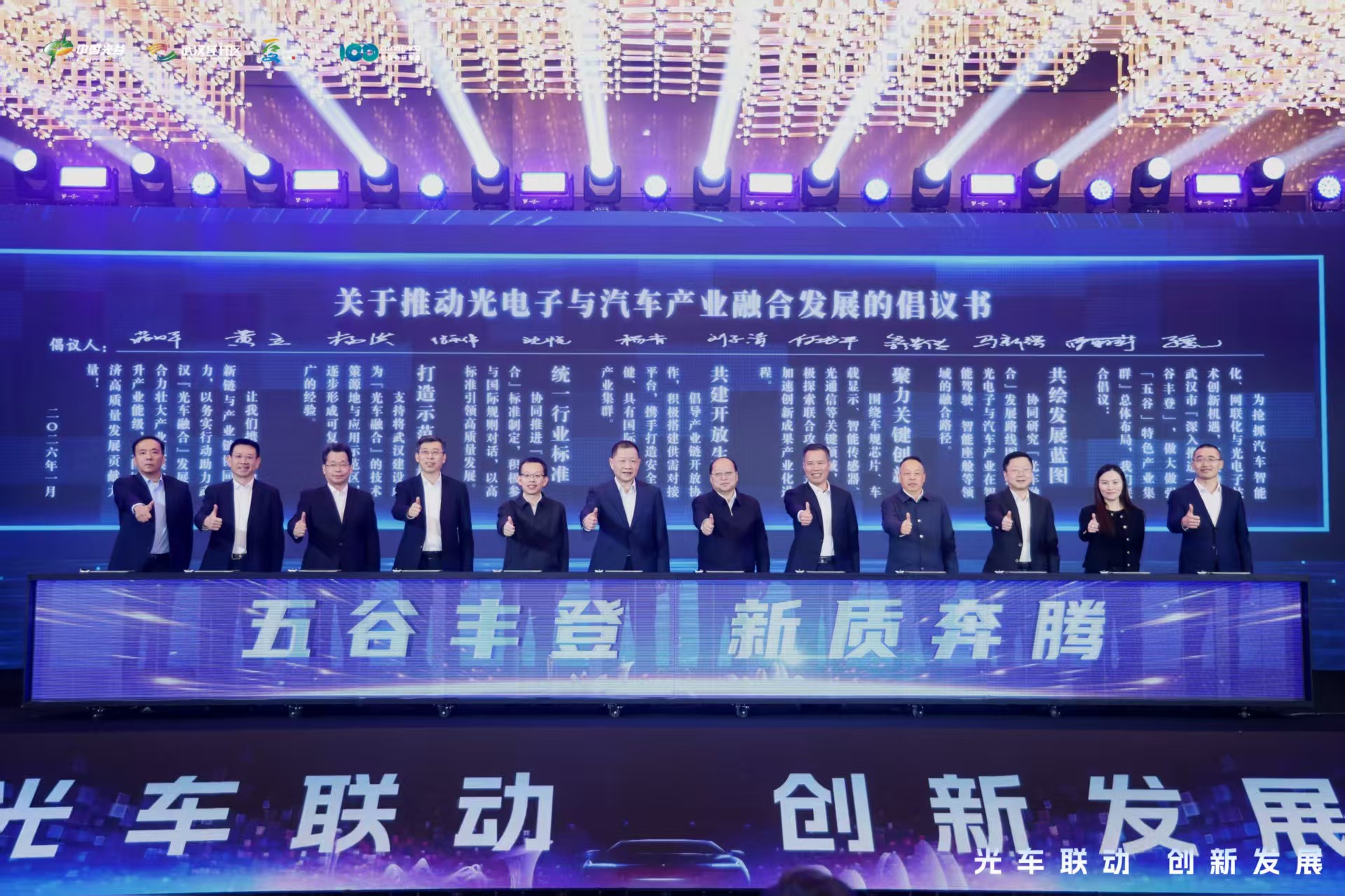
Group 1 - The core viewpoint is that the integration of optical communication technology in the automotive industry is expected to lead to a significant transformation, marking the beginning of a new phase characterized by "optical-vehicle fusion" technology [1][2] - A collaborative initiative called "Optical-Vehicle Linkage" was signed by several companies and local governments in Wuhan, focusing on key areas such as automotive-grade chips, smart sensors, and optical communication [1] - Wuhan is positioned as a key hub for both the optical information and automotive industries, with a production capacity of 2.27 million vehicles and a historic increase in the share of new energy vehicles to 55% [1][2] Group 2 - The optical information industry in Wuhan is projected to reach a scale of approximately 850 billion yuan by 2025, with electronic information manufacturing contributing about 445 billion yuan and software business revenue at 405 billion yuan [2] - The automotive industry in China is expected to exceed 10 trillion yuan in revenue by 2025, providing significant application scenarios for new technologies such as semiconductors and artificial intelligence [2] - Companies like Wuhan Haimei Technology and Wuhan Binary Semiconductor are making advancements in automotive-grade reliability and high-speed optical communication technology, respectively, with the latter's first domestically produced high-performance MCU chip set to be launched this year [3] Group 3 - Yang Zhiyong, chairman of Wuhan Binary Semiconductor, emphasized the advantages of optical fibers over traditional copper cables, including higher bandwidth, lighter weight, and better resistance to electromagnetic interference [3] - Changfei Company, a leader in the optical fiber market, predicts that the economic benefits from the transition to optical fibers in vehicles could reach a scale of hundreds of billions [4] - Zhang Yongwei, chairman of the Automotive Industry Association, highlighted the need for a sustainable industrial ecosystem to facilitate the deep integration of communication, optics, and artificial intelligence into the automotive sector [4]
党旗在基层一线高高飘扬|华工科技:党建“光立方”照亮创新征途
Xin Hua She· 2026-01-16 10:06
Core Insights - The article highlights the advancements made by Huagong Technology in the field of optical modules, particularly the development of a 1.6T optical module that showcases superior performance [1][3]. Group 1: Technology Development - Optical modules are identified as a critical component in optical communication, especially in the AI era, facilitating high-speed interconnectivity for AI server clusters and ensuring low-latency data transmission for large model training [2]. - Huagong Technology has made significant breakthroughs in key technologies for AI computing clusters, including the development of an 800G silicon optical module and the industry's first 3.2T TCP optical engine [2]. Group 2: Industry Challenges - The article discusses the long-standing foreign monopoly on key optical module technologies, which has severely restricted the development of China's optical communication industry [2]. - To address these challenges, Huagong Technology established the Huagong Zhengyuan AI Computing Power Center to tackle issues such as material scarcity, signal attenuation, and high chip energy consumption [2]. Group 3: Organizational Structure and Innovation - The company has implemented a unique "Light Cube" party-building work method, focusing on organization, talent, and innovation to enhance its competitive advantage [4]. - Over the past three years, nearly 300 employees have applied to join the party, with 117 new members coming from business backbones, indicating a strong commitment to organizational cohesion and responsibility [4]. Group 4: Future Outlook - The company aims to increase innovation investment and empower young scientific talents, contributing to the construction of a technologically strong nation [4].
武汉出台政策加快培育研发型企业,单个项目最高2000万元支持
Chang Jiang Ri Bao· 2026-01-16 09:23
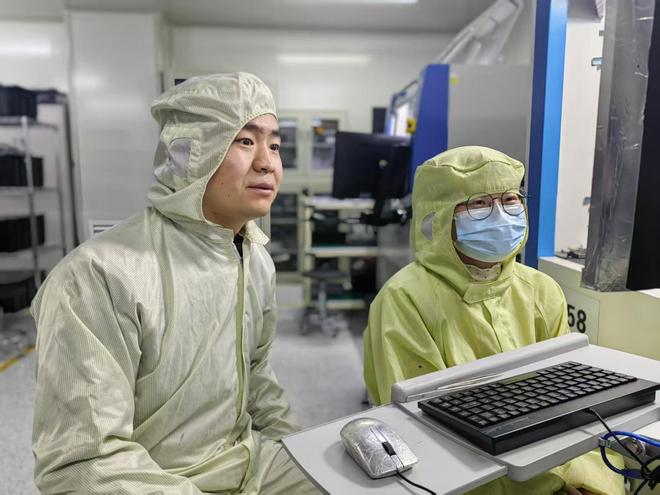
Group 1 - The core objective of the "Implementation Plan for Accelerating the Cultivation of R&D Enterprises and Promoting R&D Industrialization" is to strengthen the innovation role of enterprises and support the establishment of a nationally influential technology innovation center in Wuhan by 2027 [1] - By 2027, the plan aims to establish 30 city-level concept verification centers, 200 pilot test platforms, and exceed 1,200 city-level enterprise R&D centers, with over 300 R&D enterprises and more than 30 foreign-funded R&D centers [1][2] - The plan emphasizes the creation of 3-5 R&D industrial clusters in key sectors such as optoelectronic information, health, and biotechnology [1] Group 2 - The plan includes a "Seedling Plan" for startups, providing up to 500,000 yuan in R&D support for selected high-growth enterprises over three years, and rewards for high-tech enterprises upon initial and re-certification [2] - For leading enterprises, the "Gazelle Plan" and "Leading Plan" offer annual R&D subsidies of 300,000 yuan and support for establishing industry innovation joint laboratories with a total funding of 20 million yuan per year for three years [2] - The plan also proposes that R&D institutions within enterprises can register as independent legal entities, receiving up to 5 million yuan annually for three years based on their incremental R&D investment [2] Group 3 - The plan provides rewards of up to 1 million yuan for enterprises purchasing technological achievements and accelerates the construction of verification centers and pilot platforms in cutting-edge fields like quantum technology and advanced semiconductors [3] - It emphasizes the importance of talent, finance, and intellectual property protection, offering various support measures for innovative talent, including housing guarantees, project support, financial rewards, and housing subsidies [3]
光谷人才基金累计投资企业440余家 子基金总规模49.92亿
Chang Jiang Shang Bao· 2026-01-12 23:49
Group 1 - The "China Optics Valley 3551 International Entrepreneurship Competition and Talent Fund 10th Anniversary Conference" was held in Wuhan, showcasing the achievements of the Optics Valley Talent Fund, which has invested in over 440 companies with a total fund size of 4.992 billion yuan, leveraging nearly 10 times social capital [1][2] - The "3551 Talent Plan" has attracted nearly 400 projects to settle in Optics Valley over the past 16 years, with the competition expanding its reach to global innovation hubs like Silicon Valley, London, and Tokyo, resulting in over 5,000 project entries [2][3] - The newly established Optics Valley Venture Capital Group aims to promote early-stage, small, long-term, and hard technology investments, creating a matrix-style "Optics Valley Capital" system to empower technological and industrial innovation [4] Group 2 - The conference saw the awarding of 11 sub-funds as "Optics Valley 3551 Talent Fund Partners," emphasizing investment in early-stage and hard technology ventures [3] - The Optics Valley region currently hosts 71 listed companies and over 5,800 high-tech enterprises, with a total of more than 167,000 companies, indicating a robust entrepreneurial ecosystem [4] - The establishment of 51 venture capital funds with a total scale of 12.1 billion yuan, including three seed funds of 250 million yuan each, reflects a strong commitment to supporting innovation and entrepreneurship [4]