智能驾驶

Search documents
地平线机器人与宁德时代子公司时代智能达成战略合作
Zheng Quan Ri Bao Wang· 2026-02-10 04:44
随着市场对汽车智能化的需求日益强烈,时代智能与地平线机器人此次合作,将成为汽车"智能载 体"与"智能大脑"深度耦合的重要探索。 地平线机器人与宁德时代渊源深厚,是彼此长期信赖的伙伴。早在2021年1月份,宁德时代便与 BaillieGifford、云锋基金联合领投了地平线机器人的C2轮融资,一路见证并支持地平线机器人的成长。 此次地平线机器人与时代智能的战略合作,标志着双方关系实现了从资本合作到技术共研、产品共创的 跨越,携手迈入了共同创造价值的新阶段。 秉持"全维利他,开放共赢"的生态理念,地平线机器人始终坚持以用户价值为核心,为产业提供智能化 关键技术。公司已与超过200家产业链伙伴建立开放共赢的合作关系,并与博世、电装、采埃孚等全球 顶尖Tier-1达成战略合作,共同构建成熟的规模化量产交付体系与全球产业生态。此次与时代智能的携 手,是地平线机器人作为智能驾驶计算方案引领者,拓展技术边界、深化商业场景的又一重要实践。 本报讯(记者袁传玺)2026年2月9日,地平线机器人与宁德时代(300750)旗下子公司——宁德时代(上 海)智能科技有限公司(简称"时代智能")签署战略合作协议。双方将聚焦新能源汽车智能 ...


地平线机器人-W涨近4% 与宁德时代子公司时代智能达成战略合作
Zhi Tong Cai Jing· 2026-02-10 02:09
目前,地平线机器人-W已成为国内首个突破千万级出货量的智驾科技品牌,产品解决方案已获得全球 27家车企(42个车企品牌)的广泛采用。其最新推出的行业首个量产的一段式端到端全场景辅助驾驶系统 ——地平线HSD (Horizon SuperDrive ) 正在助力行业进入智驾普惠新纪元。 地平线机器人-W(09660)涨近4%,截至发稿,涨3.63%,报8.56港元,成交额2.35亿港元。 消息面上,2月9日,地平线机器人-W与宁德时代(300750)旗下子公司——宁德时代(上海)智能科技有 限公司(简称"时代智能")签署战略合作协议。根据协议,时代智能将提供其磐石底盘系列化产品与技 术,地平线机器人-W则将贡献其全场景辅助驾驶产品以及解决方案等汽车智能化核心能力。双方通过 软硬协同、跨域融合,共同探索从底层架构到顶层应用的完整智能化体系,为海内外OEM客户提供更 具竞争力与多样化的产品选择与服务支持。 ...
港股异动 | 地平线机器人-W(09660)涨近4% 与宁德时代子公司时代智能达成战略合作
智通财经网· 2026-02-10 02:05
目前,地平线机器人-W已成为国内首个突破千万级出货量的智驾科技品牌,产品解决方案已获得全球 27家车企(42个车企品牌)的广泛采用。其最新推出的行业首个量产的一段式端到端全场景辅助驾驶系统 ——地平线HSD (Horizon SuperDrive™) 正在助力行业进入智驾普惠新纪元。 消息面上,2月9日,地平线机器人-W与宁德时代旗下子公司——宁德时代(上海)智能科技有限公司(简 称"时代智能")签署战略合作协议。根据协议,时代智能将提供其磐石底盘系列化产品与技术,地平线 机器人-W则将贡献其全场景辅助驾驶产品以及解决方案等汽车智能化核心能力。双方通过软硬协同、 跨域融合,共同探索从底层架构到顶层应用的完整智能化体系,为海内外OEM客户提供更具竞争力与 多样化的产品选择与服务支持。 智通财经APP获悉,地平线机器人-W(09660)涨近4%,截至发稿,涨3.63%,报8.56港元,成交额2.35亿 港元。 ...
原宁德时代执行总裁朱威出任地平线总裁
Cai Jing Wang· 2026-02-09 12:28
2月9日,从地平线获悉,原宁德时代执行总裁朱威将出任地平线总裁,原地平线总裁陈黎明将转任副董 事长。 加入宁德时代前,朱威曾任法雷奥中国区副总裁,负责汽车舒适及辅助驾驶业务。其职业经历横跨智能 驾驶和新能源,并在国内和国际业务上都有丰富的经验。 公开资料显示,朱威本科毕业于中国科学技术大学精密仪器专业,拥有耶鲁大学商学院MBA学位。在 宁德时代任职8年,负责公司乘用车以及海外储能业务。 ...
智驾、机器人双周报1:Tesla物理AI战略全面提速-20260209
HTSC· 2026-02-09 11:50
Investment Rating - The report maintains an "Overweight" rating for the automotive and technology sectors [5]. Core Insights - Tesla's Q4 gross margin exceeded expectations at 20.1%, driven by a strong performance in the energy business, despite a decline in net profit due to Bitcoin devaluation and increased stock-based compensation [2][10]. - The report emphasizes the acceleration of Tesla's physical AI transformation strategy, with a focus on autonomous driving and robotics [10][13]. - The global regulatory framework for Level 4 (L4) autonomous driving is rapidly forming, which is expected to benefit companies with global compliance capabilities [3][19]. Summary by Sections Industry Perspective - Tesla's Q4 performance shows a gross margin of 20.1%, significantly above the expected 17.0%, marking the highest level in two years [10][12]. - The automotive delivery faced pressure, with a total of 418,000 vehicles delivered in Q4, a year-over-year decline of 16% [12]. - The energy business continues to thrive, with a record gross profit of $1.1 billion and a gross margin of 28.6% [12]. Autonomous Driving - Tesla's Full Self-Driving (FSD) will transition to a subscription model, eliminating the one-time purchase option, reflecting confidence in the FSD experience and future penetration [14]. - The Robotaxi fleet in Austin has begun operating with a small number of vehicles without safety drivers, marking a significant step towards fully autonomous operation [16]. - Tesla has established a data center in China to support the FSD rollout without the need for data to leave the country [17]. Robotics - The Optimus Gen3 robot is set to debut in Q1 2026, with production lines being repurposed from Model S/X to focus on robotics [18]. - The robotics software ecosystem is evolving, with significant advancements in control systems that enhance autonomous capabilities [23]. - The report highlights the increasing attention on the robotics supply chain as companies prepare for mass production [18]. Market Recommendations - Key stock recommendations include Xiaopeng Motors, Coboda, SOTON, Horizon Robotics, Top Group, Hesai Technology, Minth Group, and Yinlun [7]. - The report suggests a focus on companies with strong production capabilities and those positioned to benefit from the shift towards robotics and autonomous driving [10][18].




独家丨原宁德时代执行总裁朱威,出任地平线总裁
雷峰网· 2026-02-09 10:15
Core Viewpoint - The appointment of Zhu Wei as the new president of Horizon Robotics is expected to enhance collaboration between Horizon and CATL, leveraging Zhu's extensive experience in smart driving and new energy sectors to drive the integration of intelligent automotive systems and electric vehicle technologies [2][5]. Group 1: Leadership Changes - Zhu Wei, former executive president of CATL, will take over as president of Horizon Robotics, while former president Chen Liming will transition to vice chairman, focusing on major strategic decisions and governance improvements [2][7]. - Zhu Wei holds a degree in precision instruments from the University of Science and Technology of China and an MBA from Yale, bringing a wealth of experience from his eight years at CATL, where he managed passenger vehicle and overseas energy storage businesses [2]. Group 2: Strategic Collaborations - CATL and Horizon have maintained a long-standing capital and business collaboration, which is expected to strengthen further with Zhu Wei's leadership [3][4]. - In June 2025, a joint venture named Zhaofu Intelligent was established by Hello, Ant Group, and CATL, focusing on L4 autonomous vehicle operations, with Horizon providing key chips and systems, while CATL's battery technology supports energy needs, creating a synergistic "smart driving + energy" ecosystem [5]. Group 3: Leadership Contributions - Chen Liming, who has been with Horizon since September 2021, previously held significant roles at Bosch, where he contributed to the establishment of the Bosch chassis control systems R&D center in China [7]. - Under Chen's leadership, Horizon evolved from a "technical team" to a "regular army," laying the groundwork for the company's scaling and operational stability [7].

小马智行-W(02026):智能驾驶龙头,Robotaxi商业化初步落地
China Post Securities· 2026-02-09 09:57
证券研究报告:电子 | 公司点评报告 发布时间:2026-02-09 股票投资评级 买入 |首次覆盖 个股表现 资料来源:聚源,中邮证券研究所 公司基本情况 | 最新收盘价(港币) | 103.70 | | --- | --- | | 总股本/流通股本(亿股) | 4.34 / 3.52 | | 总市值/流通市值(亿港币)449.58 / 365.49 | | | 52 周内最高/最低价 | 136.90 / 85.60 | | 资产负债率(%) | 9.85% | | 市盈率 | -18.1 | | 第一大股东 | 彭军 | 研究所 智能驾驶龙头,Robotaxi 商业化初步落地 ⚫ 事件 2026 年 2 月 4 日,公司发布 2025 年业绩预告:2025 年度预期亏 损约 69.0 百万美元至 86.0 百万美元,较 2024 年度的 275.0 百万美 元大幅收窄约 68.7%至 74.9%;亏损收窄主因系报告期内对上市公司 的投资公允价值变动收益增长所致。 ⚫ 投资要点 广州 UE 模型率先转正,Robotaxi 商业化路径初步验证,2026 年 车队规模有望预计达 3000 台。截至 2025 ...
争夺智驾第一梯队:轻舟智航的“双面榜单”
第一财经· 2026-02-09 09:41
Core Viewpoint - The article discusses the competitive landscape of the intelligent driving sector, highlighting the market share rankings of various companies and the emergence of QCraft as a significant player in the NOA (Navigation on Autopilot) market, while questioning the validity of these rankings due to differing methodologies and market segments [3][4][7]. Market Share Rankings - According to a report by Gaogong Intelligent Automotive Research Institute, Huawei leads the market with over 41% share, followed by QCraft with over 21%, Momenta with over 16%, and Zhuoyue Technology with over 5% [5]. - The rankings reveal a disparity in market positioning, as QCraft is not listed among the top players in the high-end market segment (vehicles priced above 300,000 yuan), where Huawei dominates with nearly 70% market share [6][7]. QCraft's Rise and Challenges - QCraft, founded in 2019 by former Waymo employees, has gained prominence by becoming the core supplier for Li Auto's AD Pro version, significantly boosting its system deployment to over 1 million units [9]. - However, reliance on a single major client, Li Auto, poses risks, as many automakers are increasingly developing their own autonomous driving solutions, with 14 out of the top 20 brands in NOA deliveries having self-developed systems [9][10]. Market Dynamics and Competition - QCraft is actively seeking to diversify its client base by partnering with other automakers like Chery and Geely, but these companies are also building their own autonomous driving systems, which could limit QCraft's market opportunities [10][11]. - The intelligent driving market is becoming increasingly competitive, with major players like Huawei and Horizon aiming to make advanced driving features available in lower-priced vehicles, creating a "red ocean" of competition [12][14]. Future Outlook - QCraft aims to promote high-level autonomous driving in vehicles priced around 100,000 yuan, with the belief that "driving equality" will be achieved as urban NOA becomes a standard feature [13]. - The competition is not just about market share but also about cost control, iteration efficiency, and deployment speed, which are essential for survival in a market where automakers are developing their own technologies [14].
争夺智驾第一梯队:轻舟智航的“双面榜单”
Di Yi Cai Jing· 2026-02-09 06:44
Core Viewpoint - The competition in the intelligent driving sector is intensifying, with various organizations releasing differing market share rankings for Navigation on Autopilot (NOA) systems, leading to confusion about the leading players in the industry [1][2]. Group 1: Market Share Rankings - Huawei leads the NOA market with over 41% market share, followed by QCraft (Lightyear) with over 21%, Momenta with over 16%, and Zhuoyue Technology with over 5% [2]. - Lightyear's rise to second place has prompted increased visibility and promotional efforts from the company, which recently announced that its passenger car assistance system has surpassed 1 million units in deployment [2]. - Contrarily, in the high-end market segment (vehicles priced above 300,000 yuan), Lightyear does not appear in the rankings, with Huawei holding nearly 70% of the market share [2][3]. Group 2: Competitive Landscape - The rankings highlight the dynamic and complex nature of the intelligent driving market, with no consensus on whether the structure is "one strong and many strong" or "two strong and many strong" [3]. - Lightyear's absence from certain reports indicates the distinction between overall market share and high-value market segments [3]. Group 3: Strategic Partnerships and Risks - Lightyear's market position is closely tied to its partnership with Li Auto, which has significantly boosted its system deployment [4]. - The company transitioned from focusing on L4 autonomous minibuses to L2+ production systems in 2022, capitalizing on the growth of Li Auto's sales [4]. - However, reliance on a single major client poses risks, as many automakers are developing their own autonomous driving solutions [4][5]. Group 4: Industry Trends and Challenges - Lightyear is actively seeking to diversify its client base by engaging with other automakers like Chery and Geely, who are also building their own intelligent driving systems [5][6]. - The intelligent driving sector is becoming increasingly competitive, with major players like Huawei and Horizon aiming to make advanced driving features available in lower-priced vehicles [7]. - The current landscape suggests that merely ranking companies is insufficient; firms must establish core barriers in cost control, iteration efficiency, and deployment speed to secure a place in the top tier of the market [8].
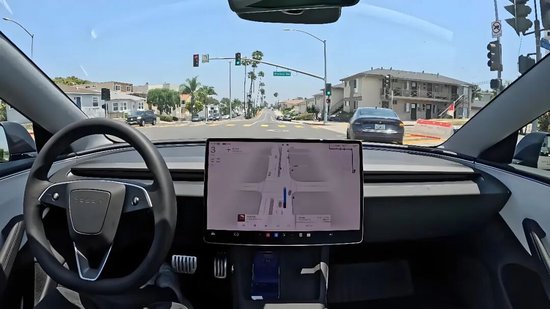
FSD神话褪色:当“老司机”遇上中国马路
Xin Lang Cai Jing· 2026-02-09 03:50
炒股就看金麒麟分析师研报,权威,专业,及时,全面,助您挖掘潜力主题机会! 来源:杰哥科技眼 2026年2月,特斯拉FSD自动辅助驾驶套件在中国已推送近一年,舆论却两极撕裂:一边是"遥遥领 先"的拥趸,称其"像真人开车";另一边是车主晒出的罚单合集——压线、闯红灯、误入非机动车 道,"驾照分不够扣"。 FSD到底被神化了吗?它是中国路况的最佳解吗? 一、FSD的"人味",是优势也是软肋 必须承认,FSD有其惊艳之处。 纯视觉方案下,它能在无车道线的路口靠右行驶,能丝滑变道、预判加塞,红灯前缓缓刹停如老司机 ——这种"拟人感",远超多数依赖高精地图+激光雷达的国产智驾。 其底层逻辑也足够先进:端到端神经网络+世界模型,让AI通过观看数百万小时人类驾驶视频"自学成 才",而非执行预设规则。这使其在开放道路具备强泛化能力,甚至能模仿大货车路线试探前行,展现 出某种"思考感"。 但问题恰恰出在这里:太像人,也会犯人的错。 在美国空旷高速上,FSD可零接管穿越4397公里;但在中国,它会在实线前"效率优先"强行变道,在左 转专用车道直行,在斑马线前因行人犹豫而长时间停滞。更危险的是,它对"中国特有元素"几近失明: 外卖骑 ...