未来产业

Search documents
“十五五”系列谈 | 以扩大有效投资促进区域经济高质量发展
Sou Hu Cai Jing· 2025-12-02 00:51
Core Viewpoint - The article emphasizes that effective investment is a complex system process involving the coupling and collaborative evolution of technological innovation, institutional innovation, and spatial optimization, rather than merely a capital input behavior [1][2]. Group 1: New Requirements and Challenges - The "14th Five-Year Plan" period is crucial for China to advance towards socialist modernization, facing unprecedented challenges and requirements due to profound changes in domestic and international environments [2][4]. - The global landscape is undergoing a new round of technological revolution and industrial transformation, with disruptive technologies reshaping national core competitiveness and increasing the strategic importance of investment [3]. Group 2: Effective Investment and New Quality Productivity - Effective investment is defined as capital formation activities that serve high-quality development goals, focusing on nurturing and expanding new quality productivity [5]. - New quality productivity is characterized by technological innovation as the core driving force, with significant improvements in total factor productivity as a key indicator [6]. Group 3: "Technology-Institution-Space" Analysis Framework - The "Technology-Institution-Space" (TIS) framework illustrates that successful investment activities result from the positive interaction of technology, institutions, and spatial dimensions [7]. - The technology dimension focuses on R&D innovation, digital infrastructure, and high-skilled human capital, which directly determines the height and advancement of new quality productivity [7]. - The institutional dimension emphasizes creating an environment conducive to innovation, including a robust intellectual property protection system and a fair market environment [7]. - The spatial dimension involves optimizing regional functional layouts and constructing modern infrastructure networks to promote the clustering and scaling of new quality productivity [7]. Group 4: Progress and Challenges in Effective Investment - Despite a slowdown in fixed asset investment growth, significant progress has been made in the effectiveness of investment, with a clear trend towards structural optimization [14]. - High-tech industry investment has maintained double-digit growth, significantly outpacing overall fixed asset investment growth, indicating a shift towards new quality productivity core areas [14]. - Challenges remain in aligning technology, institutions, and spatial dimensions, leading to issues such as insufficient basic research investment and a lack of effective technology transfer mechanisms [16][18]. Group 5: Recommendations for a High-Efficiency Investment Ecosystem - To expand effective investment, a shift from "project thinking" to "ecosystem thinking" is necessary, focusing on creating a self-optimizing and virtuous cycle investment ecosystem [21]. - Recommendations include optimizing R&D investment structures, enhancing basic research funding, and establishing market-oriented concept verification centers to bridge the gap between laboratory results and market applications [22][23]. - Institutional reforms should aim to deepen financial supply-side structural reforms and enhance the protection of intellectual property rights to stimulate innovation [24][25]. - Spatial strategies should promote differentiated and specialized investments, avoiding homogeneous competition and ensuring that new infrastructure aligns with local industrial needs [26][27].
适应产业变革 打造类型化产业金融服务新模式
申万宏源研究· 2025-12-01 06:38
Core Viewpoint - The article emphasizes the need for financial institutions to develop new service models that align with the demands of emerging industries, particularly in new consumption, new technology, new digital, new terminal, and future industries, as these sectors are becoming crucial for China's economic growth [6][7][8]. Group 1: Importance of New Industries - Emerging industries are becoming a significant driving force for economic development, with the new economy's added value reaching 24.3 trillion yuan in 2024, accounting for 18.01% of GDP, an increase of 0.43 percentage points from the previous year [8]. - As of June 2025, there are 25.36 million registered new economy enterprises in China, a year-on-year increase of 6.6%, representing over 40% of the total number of enterprises [8]. Group 2: Characteristics of New Economy Industries - New economy industries differ from traditional ones in four key aspects: driving forces, industry chain ecology, risk characteristics, and value connotation [9][10]. - New economy industries rely more on digital, technological, and model-driven growth, leading to tighter interdependencies within the industry chain and higher innovation risks [9]. Group 3: Financial Service Models for New Consumption - New consumption industries face challenges in asset valuation and sustainable business model assessment due to their reliance on intangible assets [11][12]. - Financial institutions must consider the multi-dimensional value of new consumption, focusing on emotional, cultural, and social values, and develop a reasonable valuation system [12][13]. Group 4: Financial Service Models for New Technology - New technology industries are crucial for innovation-driven growth, with over 500,000 high-tech enterprises in China as of 2024, an increase of 83% since 2020 [14]. - Financial institutions face challenges in understanding technology risks, information asymmetry, and differing valuation logic across various technology sectors [14][15]. Group 5: Financial Service Models for New Digital Industries - The digital economy's added value is projected to exceed 43% of GDP by 2024, with rapid growth in sectors like industrial internet and smart manufacturing [17]. - Financial institutions need to enhance their valuation and pricing capabilities for new digital industries, as current market practices are insufficient [18][19]. Group 6: Financial Service Models for New Terminal Industries - New terminal industries, characterized by deep integration of manufacturing, digital, and technology, require financial services that adapt to their complex ecosystem [21][22]. - Financial institutions must optimize their value assessment capabilities and provide integrated financial solutions for the entire industry chain [22][23]. Group 7: Financial Service Models for Future Industries - Future industries are marked by technological breakthroughs and significant risks, necessitating innovative financial service models that address these uncertainties [24][25]. - Financial institutions should leverage policy funds and private equity investments to support the development of future industries while managing associated risks [26][27].

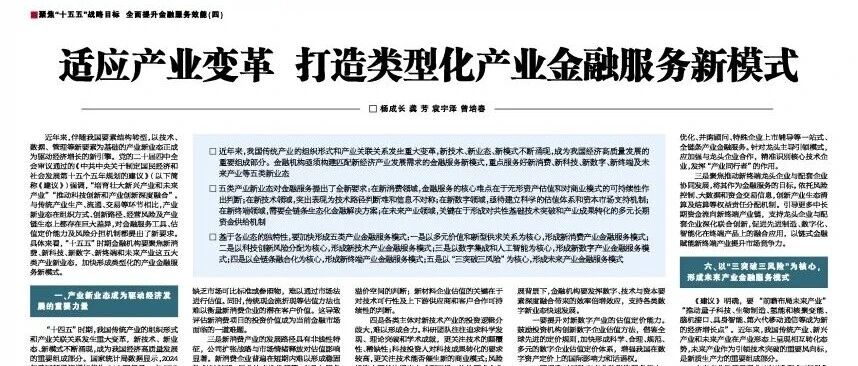
上证观察家 | 适应产业变革 打造类型化产业金融服务新模式
Sou Hu Cai Jing· 2025-12-01 00:40
Core Insights - The transformation of traditional industries in China has led to the emergence of new technologies, business models, and industries, which are crucial for high-quality economic development [10][11] - Financial institutions need to develop new service models that align with the demands of new economic industries, focusing on five categories: new consumption, new technology, new digital, new terminals, and future industries [10][13] Group 1: New Economic Industries - New economic industries are becoming a significant driving force for economic development, with the added value of the new economy reaching 24.3 trillion yuan in 2024, accounting for 18.01% of GDP, an increase of 0.43 percentage points from the previous year [11] - As of June 2025, there are 25.36 million registered new economy enterprises in China, representing over 40% of the total number of enterprises, with a year-on-year growth of 6.6% [11] Group 2: Financial Service Requirements - The five new economic categories present unique requirements for financial services, including challenges in intangible asset valuation and sustainable business model assessment in new consumption, technology path judgment and information asymmetry in new technology, and the need for a scientific valuation system in new digital industries [10][12] - Financial institutions must accelerate the formation of tailored financial service models for each of the five new economic categories, focusing on diverse value creation and innovative supply-demand relationships [10][12] Group 3: New Consumption Financial Services - New consumption industries are crucial for expanding domestic demand, with a shift towards service, value, cultural, and green consumption, maintaining over 10% growth in sectors like leisure and tourism despite overall consumption pressure [14] - Financial institutions face challenges in serving new consumption industries due to the intangible nature of core assets, lack of market comparables for valuation, and the non-linear growth paths of new consumption enterprises [15][16] Group 4: New Technology Financial Services - New technology industries are vital for innovation-driven development, with over 500,000 high-tech enterprises in China as of 2024, marking an 83% increase since 2020 [18] - Financial institutions encounter challenges in serving new technology industries, including limited understanding of technological innovation, information asymmetry regarding non-financial metrics, and differing valuation logic across various technology sectors [19][20] Group 5: New Digital Financial Services - The digital economy is rapidly growing, with its added value exceeding 43% of GDP in 2024, driven by sectors like industrial internet and smart manufacturing [21][22] - Current financial services for new digital industries are insufficient, with low representation in the A-share market and a need for improved valuation and pricing capabilities [22][23] Group 6: New Terminal Financial Services - New terminal industries, characterized by deep integration of manufacturing, digital, and technology, require financial services that respond to complex ecological collaboration relationships [24][25] - Financial institutions must optimize value assessment capabilities and provide integrated financial solutions for the entire industrial chain, focusing on collaboration with leading enterprises [25][26] Group 7: Future Industry Financial Services - Future industries are marked by breakthroughs in common technologies and face significant risks, including feasibility of technology paths and market demand realization [27][28] - Financial institutions should innovate comprehensive financial service models to address the uncertainties faced by future industries, leveraging government funds and private equity investments to support development [29]
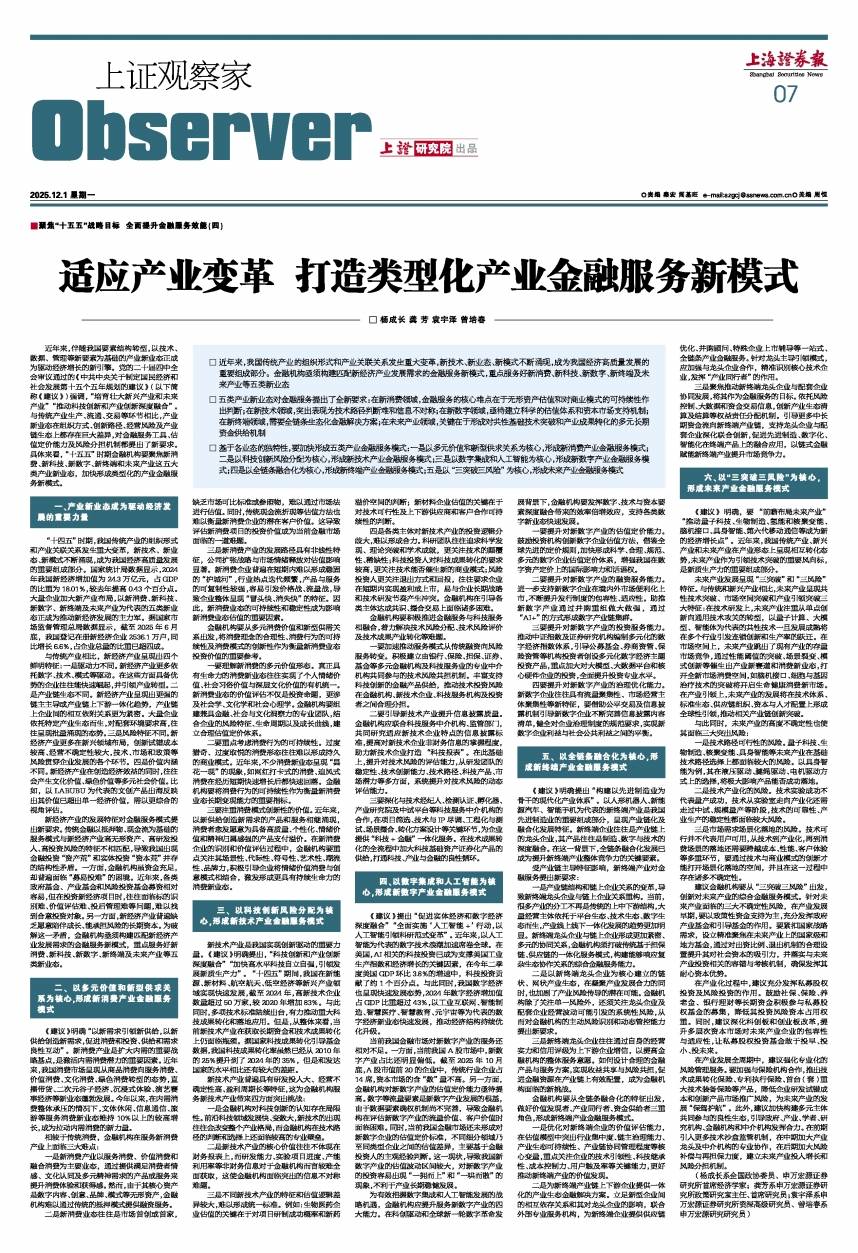
适应产业变革 打造类型化产业金融服务新模式
Shang Hai Zheng Quan Bao· 2025-11-30 18:29
Core Insights - The article emphasizes the need for financial institutions in China to develop new financial service models that align with the evolving demands of new economic industries, particularly focusing on five categories: new consumption, new technology, new digital, new terminals, and future industries [1][4]. Group 1: New Economic Industries - New economic industries are becoming a significant driving force for economic development, with the added value of the new economy projected to reach 24.3 trillion yuan in 2024, accounting for 18.01% of GDP, an increase of 0.43 percentage points from the previous year [2]. - As of June 2025, there are 25.36 million registered new economy enterprises in China, representing a year-on-year growth of 6.6% and exceeding 40% of the total number of enterprises [2]. Group 2: Characteristics of New Economic Industries - New economic industries exhibit distinct characteristics compared to traditional industries, including different driving forces, tighter interdependencies within the industrial chain, higher operational risks, and the creation of diverse social values alongside economic benefits [3]. Group 3: Financial Service Requirements - The traditional financial service model, which relies on collateral and cash flow, is incompatible with the high intangible assets and risks associated with new economic industries, leading to a structural contradiction of "asset scarcity" in financial investment and "capital scarcity" in real investment [4]. Group 4: New Consumption Financial Service Model - The new consumption industry is crucial for expanding domestic demand, with a shift towards service, value, cultural, and green consumption. Financial institutions face challenges in providing services due to the intangible nature of core assets and the lack of market comparables for valuation [5][6]. - Financial institutions must understand the multi-dimensional value of new consumption, focusing on emotional, cultural, and social values, and establish a reasonable valuation system [6][7]. Group 5: New Technology Financial Service Model - The new technology industry is vital for innovation-driven growth, with over 500,000 high-tech enterprises in China as of 2024, an increase of 83% since 2020. However, challenges remain in securing long-term funding and converting technological achievements into marketable products [8][9]. - Financial institutions need to address challenges such as limited understanding of technological innovations, information asymmetry, and differing valuation logic across various new technology sectors [9][10]. Group 6: New Digital Financial Service Model - The digital economy is rapidly growing, with its value added expected to exceed 43% of GDP by 2024. However, financial services for new digital industries are currently insufficient, with a low representation of digital enterprises in the A-share market [11][12]. - Financial institutions must enhance their valuation capabilities for new digital industries and develop a diverse range of investment products to support the growth of digital enterprises [12][13]. Group 7: New Terminal Financial Service Model - The new terminal industry, characterized by deep integration of manufacturing, digital, and technology, requires financial services that can adapt to the evolving relationships within the industrial chain [14][15]. - Financial institutions should provide integrated financial solutions that consider the interdependencies among new terminal enterprises and their supply chains, focusing on value assessment and collaborative development [15][16]. Group 8: Future Industry Financial Service Model - Future industries are marked by breakthroughs in common technologies and face significant risks, including the feasibility of technological paths and the challenges of market demand realization [18][19]. - Financial institutions are encouraged to innovate comprehensive financial service models that address the uncertainties of future industries, leveraging government funds and private equity investments to support long-term development [19][20].
攻坚深层次改革 锚定未来产业新增长点
Zhong Guo Zheng Quan Bao· 2025-11-27 20:21
Core Viewpoint - The "14th Five-Year Plan" period is crucial for solidifying the foundation of socialism modernization and achieving high-quality economic development in China [1] Economic Development Focus - The focus during the "14th Five-Year Plan" should be on the real economy, optimizing traditional industries, and nurturing new productive forces while promoting emerging industries as pillars of future growth [1][2] - Financial resources should be efficiently allocated to address structural challenges, with a strong emphasis on serving the real economy and enhancing wealth management for residents [1] Industry Classification and Development - The "14th Five-Year Plan" categorizes industries into traditional, emerging, and future sectors, each requiring different approaches to develop new productive forces [2] - Traditional industries currently account for 80% of China's manufacturing and are essential for the real economy, despite the growth potential of emerging and future industries [2] Traditional Industry Insights - Traditional industries still hold significant growth potential, but face challenges such as insufficient demand and the need for urbanization and high-quality real estate development [2][3] - Approximately 30% of China's manufacturing output is for export, with traditional industry products contributing significantly to trade surpluses, necessitating a balance between enhancing competitiveness and promoting balanced trade [2] Financial Reform and Budget Management - The "14th Five-Year Plan" proposes deepening zero-based budgeting reforms to optimize fiscal expenditure and enhance budget performance management [4] - Zero-based budgeting requires every expenditure to be justified anew, potentially leading to more efficient allocation of resources compared to traditional baseline budgeting [4] Financial Sector Development - The plan emphasizes the development of various financial sectors, including technology finance, green finance, and wealth management, with technology finance being prioritized for its strategic importance [6][7] - Direct financing is essential for supporting technological innovation, and recent capital market reforms aim to facilitate this by allowing unprofitable companies to list [6] Wealth Management Importance - With over 400 million middle-income individuals in China, there is a growing demand for professional wealth management to enhance asset value [7] - Wealth management is seen as a key area for financial services, promoting the conversion of savings into investments, which benefits both residents and capital markets [7]
中国银河证券:机械设备基本面整体稳健 重点关注AI基建、未来产业、周期复苏
智通财经网· 2025-11-27 00:48
Core Insights - The overall mechanical equipment index outperformed the market in 2025, with significant gains in humanoid robots, AI PCB equipment, and lithium battery equipment, particularly in solid-state battery technology [1][2] - The fundamentals of the mechanical equipment sector are showing steady growth, with a recovery in the lithium battery equipment and machine tool segments [1][2] Investment Opportunities for 2026 - Investment opportunities in the mechanical equipment sector for 2026 can be categorized into three main areas: 1. Focus on AI-related technology growth, including AI PCB equipment, gas turbines, and liquid cooling systems [2] 2. Emphasis on future and emerging industries as highlighted in the 14th Five-Year Plan, which includes humanoid robots, controllable nuclear fusion, low-altitude economy, deep-sea economy, and commercial aerospace [2] 3. Selection of high-quality stocks in cyclical industries with upward beta characteristics, such as engineering machinery, wind power equipment, and lithium battery equipment [2] AI Infrastructure and Equipment Demand - The demand for computing power is surging, with a focus on AI PCB equipment, AIDC equipment, and liquid cooling systems: 1. AI PCB equipment is expected to benefit from the AI computing revolution, leading to increased demand and higher value per unit [3] 2. AIDC equipment will see growth driven by the construction of AI data centers, with diverse power supply needs being met by gas turbines and nuclear power [3] 3. Liquid cooling systems are anticipated to become mainstream due to the limitations of traditional air cooling under high power demands, leading to explosive market growth [3] Future and Emerging Industries - Key areas of focus in future and emerging industries include: 1. Humanoid robots, with attention on Tesla's Gen3 release and domestic production ramp-up [4] 2. Controllable nuclear fusion, with significant projects entering critical construction phases [4] 3. Low-altitude economy, which is moving towards commercialization, necessitating investment in low-altitude infrastructure [4] 4. Deep-sea technology, with substantial potential for domestic substitution in equipment and key components [4] 5. Commercial aerospace, which is expected to drive demand for related equipment due to favorable policy directions [4] Industry Performance Expectations - The mechanical equipment sector is expected to perform well, with: 1. Engineering machinery benefiting from stable domestic demand and potential for increased market share for domestic brands [4] 2. Wind power equipment experiencing high growth due to clear domestic targets and accelerated international expansion [4] 3. Lithium battery equipment poised for a new round of expansion, with solid-state battery industrialization trends accelerating [4]

金融赋能未来产业发展:从理论逻辑到制度路径|政策与监管
清华金融评论· 2025-11-22 10:26
Core Viewpoint - Future industries, driven by disruptive technologies, are becoming a key variable in shaping the global competitive landscape, relying on both technological breakthroughs and effective financial support [1][3]. Group 1: Global Future Industry Competition - Future industries are characterized by their strategic, leading, disruptive, and uncertain nature, representing a new wave of technological revolution and industrial transformation [3]. - Major economies are accelerating their layout in future industries, with the U.S. investing heavily in semiconductor, clean energy, and AI sectors through legislative measures like the CHIPS and Science Act and the Inflation Reduction Act [3]. - The EU and Japan are also implementing policies to promote core technology breakthroughs and supply chain autonomy, indicating a shift in focus from traditional industry efficiency to future industry dominance [3]. Group 2: Financial Support for Future Industries - The adaptability of the financial system is crucial for transforming innovation potential into real productivity, as highlighted by the 2024 implementation opinions from the Ministry of Industry and Information Technology [4]. - Financial policies are being aligned with industrial policies to support future industries, with frameworks established for structural monetary policy, special credit, and industrial funds [4]. - The transformation of policies into actionable financial practices requires a deep understanding of the inherent rules and realities of financial support for future industries [4]. Group 3: Theoretical Mechanisms of Financial Support - The uncertainty and externalities of innovation necessitate financial systems that can structurally adapt to support future industries, as traditional market mechanisms are often insufficient [6]. - Future industries face high investment costs, long cycles, and significant risks, making them less attractive to short-sighted private capital [6]. - The public good nature of future industry outcomes often leads to underfunding and innovation gaps due to the inability of firms to internalize the positive externalities of their innovations [6]. Group 4: Structural Constraints of Existing Financial Systems - The existing financial system, rooted in industrialization, struggles to support future industries due to its focus on collateral, cash flow, and historical credit [7][8]. - There are three main mismatches: information mismatch, time mismatch, and structural mismatch, which hinder effective financial support for future industries [8]. - Financial institutions often lack the ability to assess technological potential and commercial pathways, relying instead on traditional financial metrics [8].
民企人才需求保持旺盛态势
Liao Ning Ri Bao· 2025-11-19 00:49
高端装备智能化改造及汽车新能源转型等技术迭代需求,促使相关企业集中引才以支撑产能扩张与 技术攻坚。数据显示,工程机械与高端重型装备、精细化工、汽车及零部件3个产业集群人才需求进一 步集中,占比超过半数,合计需求人数较二季度提高5.05个百分点,需求人数占比连续两个季度保持正 增长。 近日,辽宁老工业基地重点产业集群三季度人才需求目录发布,我省民营企业人才需求始终保持旺 盛态势,提出人才需求的民营企业户数和需求人数均较二季度有所增长。 新兴产业人才需求攀升。新能源、新材料、生物医药、数字经济、新一代信息技术、节能、未来产 业等战略性新兴产业人才需求占比较二季度上升0.64个百分点。 岗位、专业需求集中度相对平稳。需求排名前十的岗位分别是销售服务、机械工程师、营销管理、 化工产品生产通用工艺人员、软件工程师、会计师、主管、市场开发、人事专员/经理/主管、电气工程 师,合计需求4657人,占需求总人数的21.01%,人数与占比与二季度相比基本持平,销售服务、机械 工程师的岗位需求仍稳居前两位。 ...
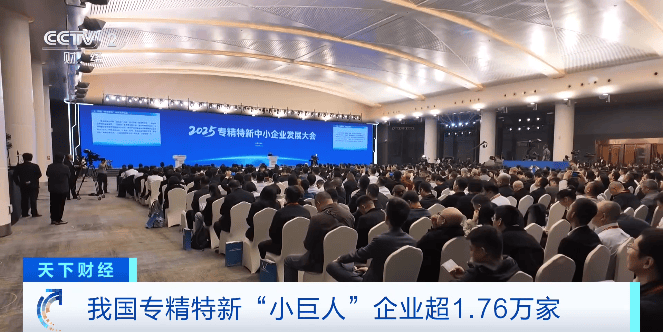
我国专精特新“小巨人”企业超1.76万家
Sou Hu Cai Jing· 2025-11-13 13:00
Core Insights - The development conference for specialized, refined, and innovative small and medium-sized enterprises (SMEs) was held in Chongqing, highlighting the growth and support for these businesses in China [1] Group 1: Growth of Specialized SMEs - China has cultivated over 17,600 "little giant" enterprises and more than 140,000 specialized, refined, and innovative SMEs, with over 600,000 quality SMEs being progressively nurtured [1][3] - During the 14th Five-Year Plan period, the number of specialized SMEs increased from less than 40,000 to over 140,000, while "little giant" enterprises grew from over 5,000 to 17,600 [3] Group 2: Contribution of SMEs to the Economy - SMEs account for 99.9% of all enterprises in China, 84.3% of employment, and 78% of total assets [3] - In 2024, 75.3% of effective invention patents were independently developed by SMEs, with "little giant" enterprises averaging 26.6 invention patents each and over 30 million yuan in R&D investment [5] Group 3: Industry Distribution and Innovation - Over 60% of "little giant" enterprises focus on industrial foundational sectors, with nearly 80% located in key industrial chain segments [7] - 90% of these enterprises directly support at least three well-known domestic or international companies, with around 6,000 "little giant" enterprises involved in future industries such as quantum technology, artificial intelligence, and low-altitude economy [7]
母基金研究中心助力中央广播电视总台首届《直通未来年度盛典》
母基金研究中心· 2025-11-08 08:47
Group 1 - The event "Directly Connecting to the Future Annual Ceremony" was held in Suzhou, Jiangsu Province, focusing on the theme "The Future of Industry, Industry of the Future" to showcase future industry samples and share emerging technology commercialization models [2] - The ceremony aligns with the strategic direction of nurturing and expanding emerging and future industries as outlined in the 20th Central Committee's Fourth Plenary Session, presenting innovative achievements in future industry tracks and analyzing application scenarios and development paths [4][5] - The event featured key figures from various sectors, including the Ministry of Industry and Information Technology and representatives from leading future industry companies, highlighting advancements in low-altitude economy, artificial intelligence, embodied intelligence, commercial aerospace, brain-computer interfaces, and future energy [7][8] Group 2 - The ceremony included discussions on the development, opportunities, and challenges in the commercial aerospace sector, featuring industry leaders and experts [11] - The Mother Fund Research Center announced the initiation of the 2025 annual list evaluation to encourage excellence in private equity mother funds and promote healthy development in the equity investment industry [13][17]