
清洁电器

Search documents
春光科技:拟向特定对象增发募资不超过约7.76亿元
Mei Ri Jing Ji Xin Wen· 2025-12-11 09:22
Group 1 - The core point of the article is that Chunguang Technology (SH 603657) announced a plan to issue shares to specific investors, which has been approved by the company's board of directors [1] - The share issuance will involve no more than 35 specific investors and will not exceed 30% of the total share capital prior to the issuance, amounting to approximately 40.56 million shares based on current capital [1] - The company aims to raise no more than approximately 776 million yuan through this issuance, with the share price set at no less than 80% of the average trading price over the 20 trading days prior to the pricing date [1] Group 2 - As of the report, Chunguang Technology has a market capitalization of 4.7 billion yuan [2] - The company's revenue composition for the year 2024 is entirely from clean electrical appliances, accounting for 100% of its revenue [1]

春光科技拟定增股票募资不超7.76亿元
智通财经网· 2025-12-11 09:16
Core Viewpoint - Spring Technology (603657.SH) has announced a plan to issue A-shares to specific investors, aiming to raise up to 776 million yuan for various projects [1] Group 1: Fundraising Details - The share issuance will target no more than 35 specific investors [1] - The total amount to be raised is capped at 776 million yuan, which includes the gross proceeds before deducting issuance costs [1] Group 2: Use of Proceeds - The net proceeds from the fundraising will be allocated to several projects, including: - The construction of a new facility for Suzhou Shangteng Technology, with an annual production capacity of 8 million clean electrical appliances [1] - The establishment of a production base in Vietnam [1] - Supplementing working capital and repaying bank loans [1]
春光科技:12月11日召开董事会会议
Mei Ri Jing Ji Xin Wen· 2025-12-11 09:16
Group 1 - The core point of the article is that Chunguang Technology (SH 603657) held its fourth second board meeting on December 11, 2025, to review the proposal for amending the company's Board Secretary Work Regulations [1] - For the year 2024, Chunguang Technology's revenue composition is entirely from clean appliances, accounting for 100.0% [1] - As of the report date, Chunguang Technology has a market capitalization of 4.7 billion yuan [1]
春光科技(603657.SH)拟定增股票募资不超7.76亿元
智通财经网· 2025-12-11 09:09
Core Viewpoint - Spring Technology (603657.SH) plans to issue A-shares to specific investors, aiming to raise up to 776 million yuan for various projects and working capital [1] Group 1: Fundraising Details - The issuance will target no more than 35 specific investors [1] - The total amount to be raised is capped at 776 million yuan, which will be net of issuance costs [1] Group 2: Use of Proceeds - The raised funds will be allocated to the following projects: - Construction of a new facility for producing 8 million clean electrical appliances annually at Suzhou Shangteng Technology [1] - Development of a production base in Vietnam [1] - Supplementing working capital and repaying bank loans [1]
网传“一夜之间解散其苏州团队,涉及员工近百人” 德尔玛三季度净利大降四成
Shen Zhen Shang Bao· 2025-12-07 22:49
德尔玛三季报显示,今年前三季度累计营收23.84亿元,同比微降0.63%;净利润8872.47万元,同比下 滑14.66%。单季实现营业收入6.99亿元,同比下滑10.26%;归属净利润仅2004.41万元,同比下降 44.34%。 与此同时,德尔玛三季度经营现金流净额较2024年同期大幅下降71.16%,主要因薪酬支出增加——其 前三季度支付给职工现金达4.06亿元及部分供应商账期缩短所致。公司的销售费用、研发费用和管理费 用同时在持续上升:第三季度,德尔玛销售费用率高达18.58%,同比上升0.37个百分点;2025年第三季 度管理费用率为10.09%,同比上升0.35个百分点。与此同时,其毛利率不升反降——相较二季度,德尔 玛三季度毛利率小幅下降0.87个百分点。 【深圳商报讯】(记者谢惠茜)近期,市场上关于德尔玛(301332)"一夜之间解散其苏州团队,涉及员 工近百人"的消息传得沸沸扬扬。对此,德尔玛最新回应称,有关苏州公司已解散并不属实。不过其此 前曾宣布对苏州地区部分业务进行重大调整,此次调整是基于当前市场环境变化及经营发展需求,旨在 优化资源配置,更好地支撑长期战略布局。 知情人士指出,此次苏 ...
25W48周观点:黑五销售额创纪录;iRobot面临破产-20251207
Huafu Securities· 2025-12-07 10:46
Investment Rating - The report assigns a "Buy" rating for the industry, indicating that the overall return is expected to exceed the market benchmark by more than 20% within the next six months [77]. Core Insights - Black Friday sales reached a record high, with total online sales during the shopping week (Thanksgiving to Cyber Monday) amounting to $44.2 billion, a year-on-year increase of 7.7%. Notably, Black Friday online sales hit $11.8 billion, up 9.1% year-on-year [3][13]. - The report highlights a significant performance in the cleaning appliance sector, with sweeping robot sales in Europe reaching 390,000 units, a 41% increase year-on-year, and in North America, sales reached 210,000 units, up 58% year-on-year [3][14]. - iRobot is facing bankruptcy, which may lead to further optimization of the overseas market landscape for sweeping robots. The report suggests focusing on domestic leaders in the sweeping robot market, such as Roborock and Ecovacs [5][20]. Summary by Sections Black Friday Sales Performance - Online sales during Black Friday reached a record $11.8 billion, with a year-on-year growth of 9.1%. The overall retail sales (excluding automobiles) increased by 4.1%, with e-commerce channels growing by 10.4% [3][13]. - The average selling price of goods increased by 7%, while the number of items purchased decreased by 2%, indicating a trend of consumer price sensitivity [14]. iRobot's Financial Situation - iRobot's main manufacturer, Picea, acquired $191 million of iRobot's unpaid loans, becoming its primary creditor. If iRobot fails to meet financial covenants by January 15, 2026, it may trigger a default [4][19]. - iRobot is currently negotiating with Picea for a solution to its debt issues, but the likelihood of reaching an agreement outside of bankruptcy is considered low [20]. Market Trends and Data - The home appliance sector saw a weekly increase of 1.7%, with specific segments like white goods and black goods showing gains of 2.0% and 0.1%, respectively [21]. - The report also notes fluctuations in raw material prices, with LME copper and aluminum increasing by 5.83% and 1.38% week-on-week [21].
黑五销售额创纪录;iRobot面临破产——25W48周观点:家用电器-20251207
Huafu Securities· 2025-12-07 10:30
行 家用电器 2025 年 12 月 07 日 业 研 究 家用电器 黑五销售额创纪录;iRobot 面临破产——25W48 周观点 投资要点: 黑五销售额创纪录,消费分化趋势显著 行 业 定 期 报 告 黑五网一销售额创纪录,线上增速远超线下。根据亿恩网、Adobe Analytics 数据,网络购物周(感恩节至网络星期一五天)总线上销售 额达 442 亿美元,同比增长 7.7%,其中黑色星期五线上销售额创纪录 达 118 亿美元,同比增长 9.1%,网络星期一线上销售额达 142.5 亿美 元,同比增长 7.1%。根据 21 世纪经济报道、Mastercard SpendingPulse, 美国黑五当天零售总销售(剔除汽车)同比增长 4.1%,其中电商渠道 增长 10.4%,线下门店销售增长 1.7%。根据出海网,黑五期间,玩具、 电子产品及运动用品领跑热卖榜单,乐高、宝可梦卡牌、任天堂 Switch、 PS5、AirPods、KitchenAid 等传统节日热销商品表现抢眼。 清洁电器黑五表现亮眼。根据石头科技黑五战报:1)欧洲:扫地 机全渠道销量达 39 万台,同比+41%,洗地机全渠道销量同比+36 ...


欠中国代工厂超25亿元,美知名机器人公司爆雷,濒临破产!一度占据80%美国市场,其机器人曾深入福岛核电站辐射区帮助关闭核反应堆
Mei Ri Jing Ji Xin Wen· 2025-12-05 15:26
Core Viewpoint - iRobot, once a leader in the robotic vacuum industry, is facing severe financial distress, including liquidity issues and debt default risks, leading to a potential bankruptcy situation [1][3]. Financial Situation - iRobot's main contract manufacturer, Picea, acquired $191 million in unpaid loans from iRobot, becoming its primary creditor [2]. - As of late 2025, iRobot owes Picea a total of over $350 million, while its cash and cash equivalents stand at only $24.8 million [2]. - iRobot's Q3 2025 revenue was $146 million, a 24.6% decline year-over-year, with a net loss of $9.9 million compared to a profit of $15.1 million in the same period the previous year [3]. Historical Context - Founded in 1990, iRobot launched the first Roomba vacuum in 2002 and was once a dominant player in the market, holding over 80% market share in the U.S. [6][10]. - In 2022, iRobot's revenue fell by 24% to $1.1834 billion, with a net loss of $286.3 million [6]. Market Dynamics - iRobot's revenue in key regions declined significantly in 2022: EMEA down 43%, U.S. down 18%, and Japan down 6% [7]. - The company faces intense competition from local Chinese brands, which have rapidly advanced in technology and product offerings [7][12]. Acquisition Attempts - Amazon attempted to acquire iRobot for approximately $1.7 billion in 2022, but the deal was abandoned due to antitrust scrutiny [12]. - Following the failed acquisition, iRobot laid off about 350 employees, representing 31% of its workforce, and refocused on core floor care innovations [12]. Current Developments - Picea's involvement as a creditor raises questions about its motivations, with analysts suggesting it may seek to protect its receivables and leverage iRobot's brand and patents for potential asset recovery [16]. - Despite the financial turmoil, iRobot's stock surged nearly 74% following the announcement of Picea's acquisition of its debt, indicating market speculation on potential recovery strategies [18].



戴森于中国市场重磅推出两款清洁新品 全球首发“真Ai清洁机器人”
Huan Qiu Wang· 2025-12-04 08:16
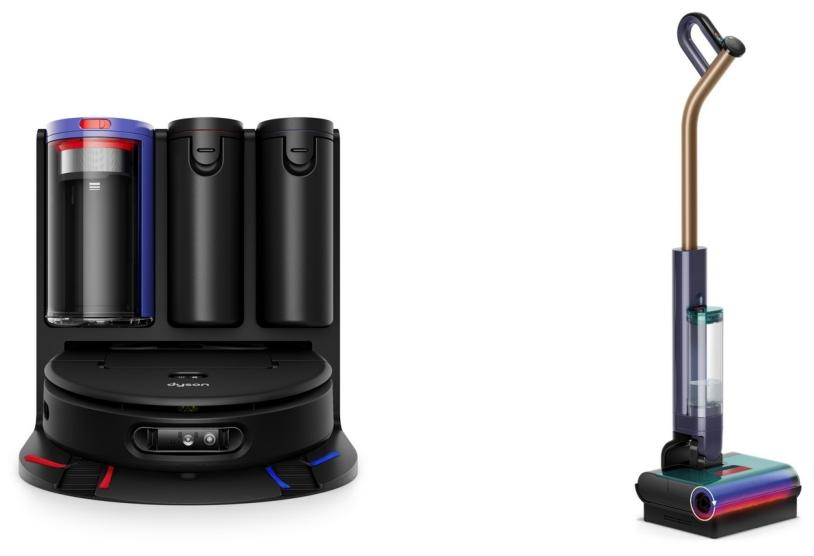
Core Insights - Dyson has launched two new cleaning products in the Chinese market: the Dyson True Ai Robot Vacuum and the Dyson Clean+Wash Hygiene Floor Washer, aimed at meeting diverse consumer needs based on deep insights into Chinese households [1] Group 1: Product Features - The Dyson True Ai Robot Vacuum integrates advanced AI technology with Dyson's optical detection technology, creating a comprehensive "perception-recognition-adaptation-action" intelligent cleaning system [4] - It can intelligently identify nearly 200 types of household objects and processes environmental information in real-time, utilizing an AI processor capable of processing a trillion pieces of information per second [6] - The robot features a flexible cleaning capability that adapts to different types of stains and dirt levels, switching between dry and wet cleaning modes based on the detected surface material [6] Group 2: Cleaning Efficiency - The robot employs a closed-loop process of "cleaning-detection-recleaning" to ensure no stains are left behind, with a 27mm ultra-wide wet mop roller that releases 60-degree hot water to remove stains [7] - It boasts a powerful 18,000Pa motor and a composite brush design that achieves a 99% cleaning rate on hard surfaces for specific debris types [7] - The robot automatically adjusts suction power and mop height when detecting carpets, enhancing cleaning efficiency and preventing cross-contamination [7] Group 3: User Experience - Dyson has incorporated a self-cleaning system into the robot's base, allowing it to empty its dustbin without losing suction and reducing maintenance frequency [8] - The base supports hot water cleaning and drying functions, achieving a 99.99% sterilization rate against bacteria, while the filter captures particles as small as 0.1 microns [8] - Users can control the cleaning modes and schedules through the MyDyson app, with all data processed locally to ensure privacy [8] Group 4: New Product Launch - The Dyson Clean+Wash Hygiene Floor Washer features a no-filter design to eliminate odors and blockages, enhancing user experience [9] - Its brush contains 84,000 ultra-fine fibers, a 30% increase in density compared to the previous generation, and includes nylon bristles for improved hair pickup [9] - The washer operates at a speed of 250 RPM to effectively remove debris and stains while ensuring continuous wetting of the roller for optimal cleaning [11] Group 5: Future Outlook - Dyson aims to redefine the cleaning experience by continuously innovating products and technologies to meet the evolving cleaning needs of Chinese consumers [11] - The company focuses on addressing overlooked cleaning challenges and fulfilling fundamental user requirements to enhance overall living experiences [11]
联合行业-出海链大涨解读与重点推荐
2025-12-04 02:22
Summary of Key Points from Conference Call Records Industry or Company Involved - **Industry**: Outbound Supply Chain, E-commerce Logistics, Manufacturing, Home Appliances, Cement, Pet Food - **Companies**: Financial Securities, Jitu Express, Beibu Gulf Port, Xiaogoods City, Zhongchong Co., Ltd. Core Points and Arguments - **Outbound Supply Chain Growth**: Financial Securities recommends leading companies in the outbound supply chain due to benefits from U.S. fiscal expansion, capital inflow from emerging markets, and a shift in policy focus towards manufacturing, which will drive growth through increased industry concentration and global demand recovery [1][3][4] - **"Running Horse 50" Portfolio**: The portfolio is constructed using the RCA competitive advantage index to select export-advantaged products, resulting in an excess return of approximately 4% since its launch [1][5] - **Jitu Express Performance**: Jitu Express is experiencing significant growth in Southeast Asia and Latin America, particularly driven by e-commerce platforms like TikTok, with package growth rates reaching 79% in Q3 [1][6][7] - **Beibu Gulf Port Growth**: The port has seen a 22.7% increase in cargo throughput and double-digit growth in container throughput, benefiting from trade with ASEAN countries [1][7] - **Focus on Mechanical Products**: In the current interest rate cut cycle, attention is drawn to mechanical products with significant alpha attributes, particularly tools and pet sales, which are showing signs of recovery [1][8][9] - **Home Appliance Export Trends**: The home appliance export chain is expected to show a trend of internal stability and external strength by 2026, with emerging markets projected to achieve double-digit growth [1][13][14] - **Xiaogoods City Export Performance**: Xiaogoods City reported a 26% year-on-year increase in import and export scale, with exports reaching 550 billion yuan [1][19][21] - **Cement Industry Opportunities**: The cement industry is focusing on overseas expansion, particularly in Southeast Asia and Africa, where per capita cement demand is still low [1][16][17] - **Zhongchong Co., Ltd. Global Supply Chain**: The company has established factories in various countries, benefiting from tariff exemptions under trade agreements, and is expected to see significant production value growth in the coming years [1][22][23] Other Important but Possibly Overlooked Content - **Market Adjustment Factors**: The market is experiencing adjustments due to unresolved overseas liquidity issues and uncertainties regarding future monetary policy, with the Shanghai Composite Index seen as a potential bottoming point around 3,800 [2] - **Emerging Market Investment**: Emerging markets like Mexico are benefiting from capital outflows from the U.S., leading to increased local employment and consumption [1][4] - **Pet Food Market Growth**: The global pet food market is valued at $150 billion, with significant growth potential for Chinese brands in overseas markets [1][23]
