
现代服务业

Search documents
稳中求进 提质增效 确保“十五五”开好局起好步
Da Zhong Ri Bao· 2026-01-28 01:09
1月27日上午,山东省第十四届人民代表大会第四次会议在山东会堂隆重开幕。周乃翔代表省人民 政府向大会作政府工作报告。政府工作报告分三个部分:2025年及"十四五"时期工作回顾、"十五五"时 期经济社会发展目标任务、2026年重点工作。 回顾"十四五" 现代化强省建设实现良好开局 1经济综合实力实现新跃升 5基础设施建设实现新跃升 6城乡区域协调发展实现新跃升 7文化繁荣发展实现新跃升 8人民生活水平实现新跃升 数读"十四五" 全省地区生产总值年均增长5.9%、高于全国0.5个百分点 经济总量连续跨过3个万亿元大关,占全国比重由2020年的7.2%提升至7.4%,在北方地区占比由 20.5%提升至21.1% 2现代化产业体系实现新跃升 3科技创新能力实现新跃升 4美丽山东建设实现新跃升 19条标志性产业链立起先进制造业强省"四梁八柱",国家先进制造业集群达到6个 国家制造业单项冠军达到274家,专精特新"小巨人"1356家,均居全国前列 服务业对经济增长贡献率提升至59.1% 全社会研发投入年均增长11.5%、高于全国1个百分点 高新技术企业5年增加2万多家 非化石能源发电装机达到1.39亿千瓦,占比由31%提 ...
立足特色优势打造新质生产力重要实践地
Jing Ji Ri Bao· 2026-01-27 23:10
Core Viewpoint - Hainan aims to achieve high-quality development by leveraging its unique resources and free trade port policies, focusing on modern industrial systems and technological innovation to enhance productivity and economic growth [1][2]. Group 1: Economic Development and Industry Focus - During the "14th Five-Year Plan" period, Hainan is prioritizing the development of four main industries: tourism, modern services, high-tech industries, and tropical agriculture, with a focus on integrating innovation resources [2]. - By 2024, Hainan's R&D expenditure is projected to reach 10.961 billion yuan, marking a 22.1% increase year-on-year, the highest growth rate in the country [2]. - The contribution of the four main industries to the regional GDP is expected to reach 67.2% by the first three quarters of 2025, an increase of 14.2 percentage points compared to 2020 [2]. Group 2: Agricultural Innovation - Hainan is positioned as a key player in seed production, with over 800 related enterprises and more than 10,000 professionals engaged in seed breeding, contributing to a market value exceeding 18 billion yuan [3]. - The province aims to implement a seed industry revitalization action plan, focusing on biotechnology and AI to enhance research capabilities and develop a modern seed industry cluster [3]. Group 3: Marine Economy - Hainan has jurisdiction over approximately 2 million square kilometers of ocean, making it an ideal location for deep-sea research and marine technology development [4]. - The marine economy's contribution to Hainan's GDP is projected to exceed 200 billion yuan, accounting for 35.5% of the total [4]. Group 4: Aerospace Industry - Hainan is developing a comprehensive commercial aerospace industry chain, leveraging its geographical advantages for cost-effective launches and safe landing zones [4]. - The Wenchang Space Launch Site is becoming a significant hub for the aerospace industry, with plans to expand satellite manufacturing and rocket assembly capabilities [4]. Group 5: Green and Digital Economy - Hainan is focusing on green low-carbon industries, with over 70% of its power generation from clean energy sources, and aims to develop a digital economy with nearly 500 core enterprises by 2025 [5][6]. - The province plans to foster digital applications in various sectors, including health and entertainment, while promoting the development of semiconductor and biopharmaceutical industries [5]. Group 6: Policy and Institutional Framework - Hainan is working to enhance its free trade port policy framework to optimize resource allocation and market expansion, aiming to create a conducive environment for international trade and investment [6]. - The province seeks to align with international trade rules and enhance cooperation in technology innovation, particularly in biotechnology and marine equipment [6].
城市更新的光谷挑战,专家:探寻产城融合新动能
第一财经· 2026-01-26 14:30
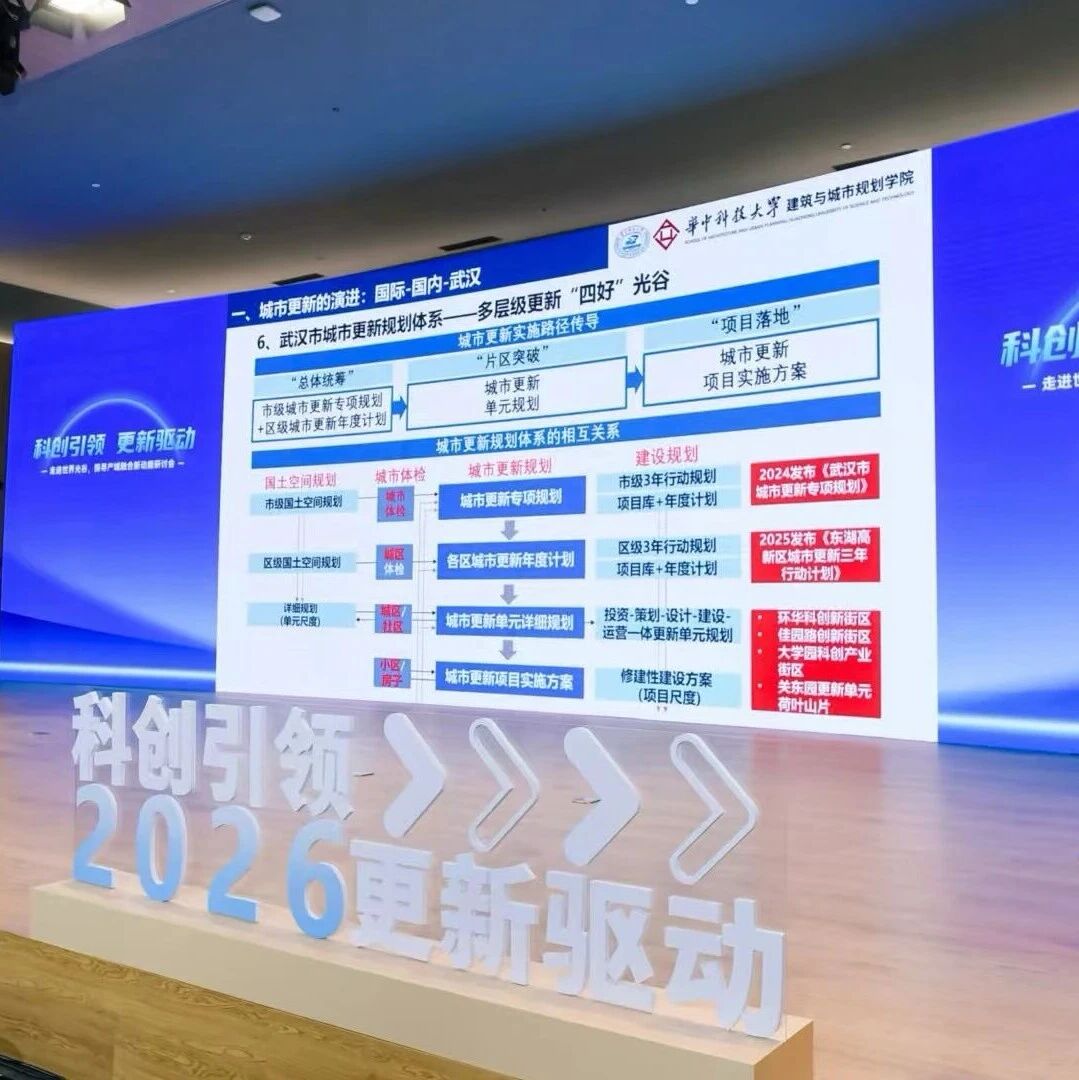
Core Viewpoint - Wuhan is advancing the "Five Reforms and Four Goods" urban renewal initiative, focusing on transforming existing urban areas rather than primarily on new city development. The experience and challenges of urban renewal in the Optics Valley, a new district, are explored [3][6]. Group 1: Urban Renewal Drivers - The urban renewal in Optics Valley is driven by three main forces: 1. **Large Enterprises**: Transformation of old factories into modern industrial research and development spaces, integrating historical memory with innovative functions [5]. 2. **Universities**: Development of knowledge cities by dissolving boundaries between campuses and urban areas, creating seamless connections within open knowledge districts [5]. 3. **Ecological Framework**: Establishing a green civilization by linking various districts through ecological corridors, promoting a livable wetland city model [5]. Group 2: Institutional Innovations - To achieve the above drivers, institutional innovations are necessary: 1. **Tax and Financial Mechanisms**: Proposing a shared financial mechanism to reduce high renovation costs for enterprises and optimize industrial space [6]. 2. **Land Use Models**: Exploring mixed-use land models around universities to allow flexible property rights and long-term leasing to startups [6]. 3. **Ecological Investment**: Addressing the high costs of wetland restoration by converting ecological value into development capital through mechanisms like VEP and TDR [6]. Group 3: Future Urban Competitiveness - The future urban competition will focus on functionality and ecology, aiming to provide an ideal habitat for innovative talents and enterprises that integrates living, working, and creating [7]. - The Hubei Provincial Science and Technology Investment Group is working on urban renewal projects to optimize street aesthetics, pedestrian systems, and commercial layouts, creating integrated designs for businesses and talent [7].

城市更新的光谷挑战,专家:探寻产城融合新动能
Di Yi Cai Jing· 2026-01-26 13:29
由光纤通信产业起步,光谷发展出光电子信息、生物医药、高端装备制造、环保节能、现代服务业五大战略性支柱产业。产业是光谷的立身之本,但产业高 地的"虹吸效应"已不足以支撑"世界光谷"的愿景。 大厂驱动,大学驱动,大湖驱动。 武汉正在推进"五改四好"城市更新,与中心城市旧城改造为主的城市更新不同。新城区光谷推进城市更新有哪些探索经验和挑战? 1月26日,一场主题为"科创引领,更新驱动——走进世界光谷,探寻产城融合新动能"的研讨会在光谷召开。 东湖高新区管委会相关负责人表示,目前,光谷正经历从增量扩张迈向存量提升的转型期。经过三十多年的高速发展,城市空间格局基本成型,"增量空间 有限,而发展需求无限"的矛盾日益突出。同时,前期快速扩张也留下了部分区域产业与居住失衡、老旧园区与城区活力不足、公服配套覆盖密度和品质亟 待提升等待解难题。 要实现上述三大驱动,还需要搭配制度创新。谭刚毅说,传统更新模式下,企业改造成本高、政府财税回收周期长,导致"大厂"更新动力不足,产业空间难 以实现结构性优化,建议建立产业空间联动的财税增量共享机制,建立三级联动利益分配测算体系,预测资金平衡状态并形成闭环反馈,推动动态产业更 新。在大学驱 ...
中国光谷GDP上新台阶 “两创融合”聚势突破
Zhong Guo Xin Wen Wang· 2026-01-26 09:35
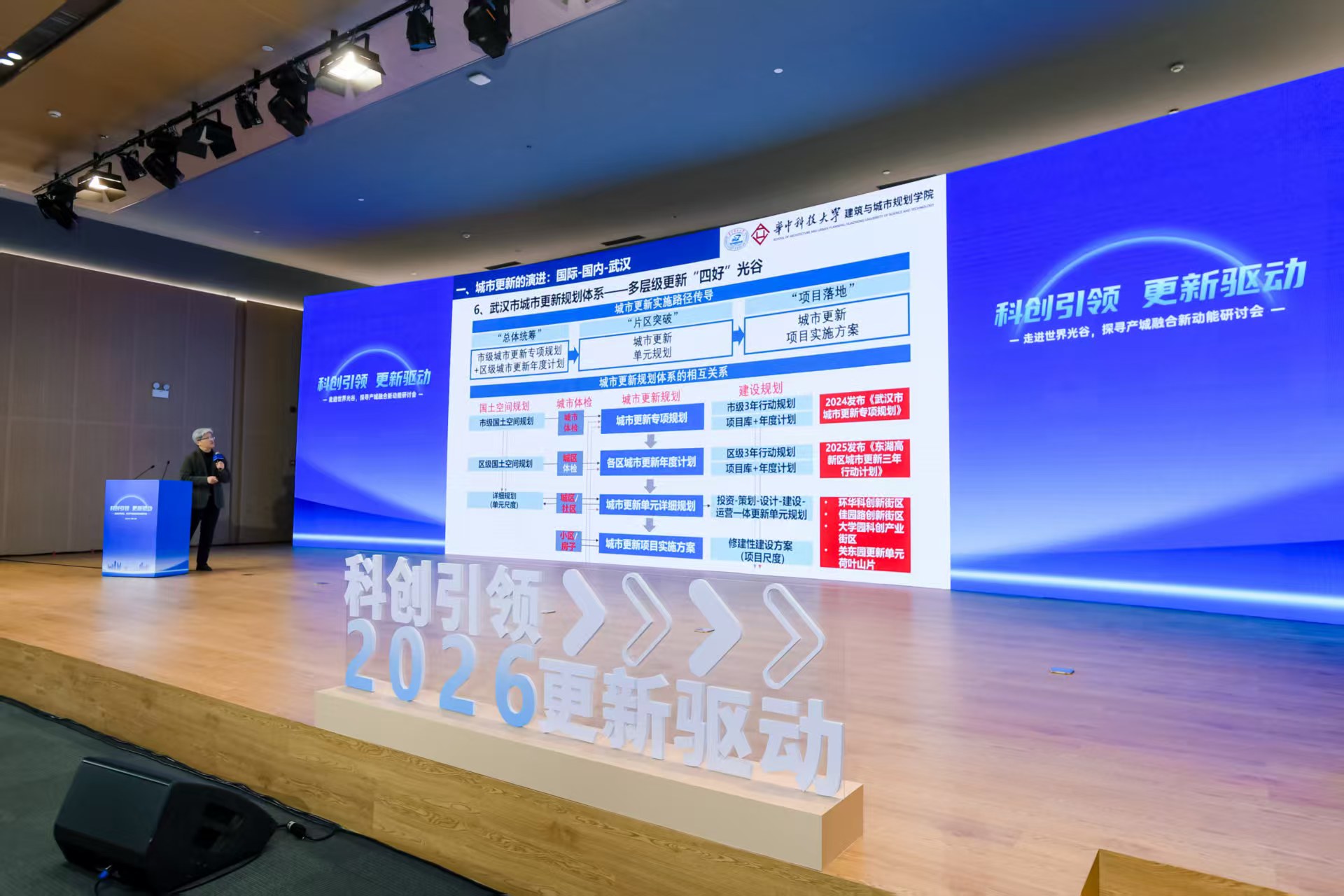
Core Insights - Wuhan East Lake High-tech Zone, also known as "China Optics Valley," aims for a regional GDP of 336 billion yuan by 2025, with a nearly 140 billion yuan increase during the 14th Five-Year Plan period, reflecting an average nominal growth rate of nearly 11% [1] Group 1: Economic Development - The East Lake High-tech Zone has accelerated the integration of technological and industrial innovation, focusing on a "dual innovation" approach to drive breakthroughs [1] - During the 14th Five-Year Plan, the region completed over 260 billion yuan in industrial investments, with more than 200 projects exceeding 1 billion yuan completed and operational [3] - The total number of enterprises in the region surpassed 169,000, with over 5,800 high-tech enterprises, contributing to the growth of the optoelectronic information and life health industries into a trillion-yuan scale [3] Group 2: Innovation and Technology - By 2025, the optoelectronic information industry in the East Lake High-tech Zone is expected to exceed 650 billion yuan, with significant advancements in humanoid robots, brain-machine interface chips, and manned flying cars [3] - The region has established a strategic technology force matrix, including 1 national laboratory, 13 national key laboratories, and 66 national-level innovation platforms, with R&D investment intensity reaching 9.4%, ranking third among national high-tech zones [3] Group 3: Future Goals - Looking towards the 15th Five-Year Plan, the East Lake High-tech Zone aims to build world-class scientific cities, industrial clusters, and technology cities, with a goal to rank among the top five high-tech zones in China [4] - The region plans to establish a "12N" modern industrial system, focusing on creating a trillion-yuan advanced manufacturing cluster in optoelectronic information and 500 billion yuan clusters in life health and modern services [4][5]
GDP增长目标为何定在5%左右?
Xin Lang Cai Jing· 2026-01-25 19:17
Core Viewpoint - The government work report by Mayor Yin Yong outlines a "task list" for 2026, setting a GDP growth target of around 5% and a public budget revenue growth of approximately 4%, while aiming to keep the urban unemployment rate below 5% [1][2]. Economic Growth Targets - The 5% GDP growth target is crucial for the start of the 14th Five-Year Plan, reflecting the need to balance "necessity" and "possibility" in economic development [1]. - Achieving an average economic growth rate of around 4.5% over the next decade is projected to double the economic output by 2035, making the 5% target a strategic move to avoid future pressures [1]. Responsibilities and Support Conditions - The growth target aligns with Beijing's responsibilities as the capital, aiming to lead in the journey towards the second centenary goal, having already established a moderately prosperous society [2]. - The economic scale is expected to surpass 5 trillion yuan by 2025, providing a quantitative foundation for the 5% growth target, supported by advancements in new production capabilities and traditional industry upgrades [2]. Artificial Intelligence Industry Growth - By 2025, the core AI industry in Beijing is projected to reach a scale of 450 billion yuan, with over 2,500 AI companies and 209 registered large models [3]. - The integration of AI in various sectors, including tourism and healthcare, is expected to enhance service quality and operational efficiency [3]. Policy Support and Innovation - A series of policies will support the 5% growth target, focusing on enhancing technological innovation, improving talent circulation, and boosting the transformation of scientific achievements [4]. - The report emphasizes the importance of combining investment in physical and human resources to unlock economic potential and address external challenges [4].
为“福气之城”配强服务底座
Su Zhou Ri Bao· 2026-01-23 00:26
Group 1 - The core viewpoint emphasizes that a city with a high happiness index is inherently service-oriented, as demonstrated by Suzhou's government work report highlighting the warmth of a service-oriented government [1] - Suzhou's ability to attract talent is significantly linked to its rich service resources, comfortable service experiences, and strong service dynamics [1] - Over the past five years, Suzhou has made its urban happiness more tangible, with over 80% of public budget expenditure allocated to people's livelihoods, and the income disparity between urban and rural residents reduced to a ratio of 1.76:1 [1] Group 2 - The historical and cultural depth of Suzhou enhances its comprehensive service capabilities, with a focus on optimizing urban functions and addressing public concerns in the government work report [2] - Suzhou is actively promoting the integration of industry and city, continuously upgrading services and improving efficiency, while recognizing the need for further enhancements in service precision, inclusivity, and sustainability [2] - The city aims to innovate urban services during the "14th Five-Year Plan" period, reinforcing its status as a "city of fortune" and painting a picture of happiness [2]
苏锡通园区亮相省新春恳谈会 中奥苏通生态园成跨国合作焦点
Yang Zi Wan Bao Wang· 2026-01-22 03:12
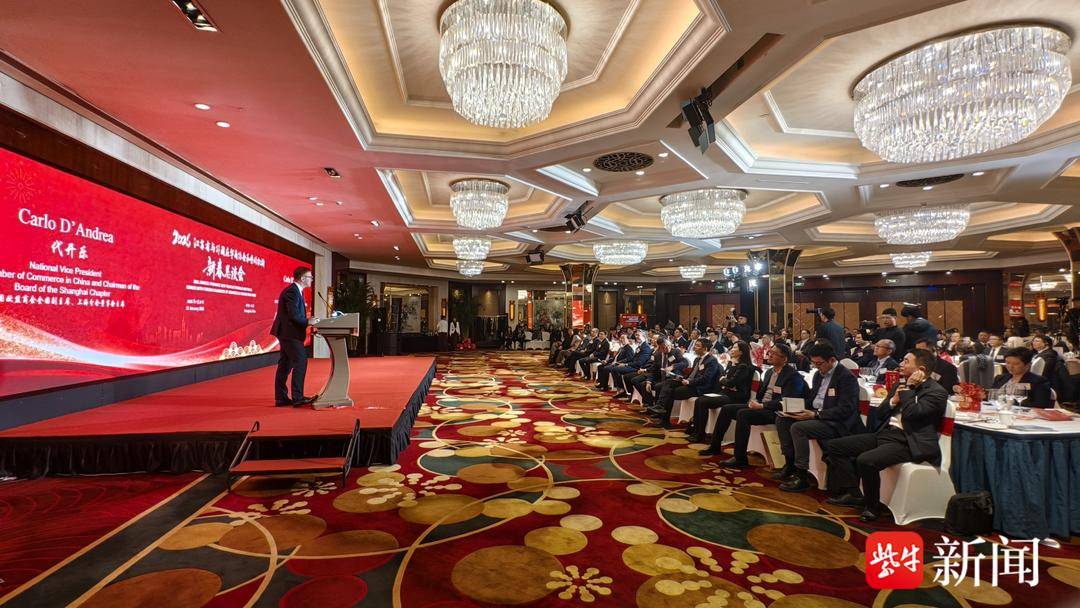
Core Viewpoint - The Jiangsu Province and foreign business associations and consulting institutions held a New Year symposium in Shanghai, highlighting the Su-Xi-Tong Technology Industrial Park as a key platform for cross-river integration and development, showcasing the achievements of the China-Austria Su-Tong Ecological Park in international cooperation [1][3]. Group 1: Economic Performance - The China-Austria Su-Tong Ecological Park has demonstrated significant economic contributions, generating one-fifth of the fiscal revenue, one-fourth of the scale industrial enterprises, and one-third of the high-tech enterprises in Nantong with only an additional 7 square kilometers of industrial land [3]. - In 2025, the park's industrial investment grew by 11.7%, leading the region in several core economic indicators such as retail sales of consumer goods and industrial output [3]. Group 2: Development History - The development of the China-Austria Su-Tong Ecological Park reflects the friendly cooperation between China and Austria, starting from the vision established in October 2011, the establishment of the park in 2012, to the signing of a memorandum in March 2015 that elevated cooperation to a national strategic level [3]. - The park has attracted over 130 high-quality foreign enterprises and has supported local companies like Crystal Technology and Shima Power in expanding internationally [3]. Group 3: Industrial System and Future Goals - The park's "3+1" modern industrial system includes leading industries such as intelligent equipment, electronic information, and new energy, complemented by a robust modern service sector and a low-carbon development focus [4]. - The Su-Xi-Tong Park aims to double its regional GDP and fiscal revenue, triple its scale industrial output to exceed 100 billion, and increase the proportion of high-tech manufacturing to 45% during the 14th Five-Year Plan period [4]. Group 4: Invitation for Cooperation - The Deputy Secretary of the Party Working Committee of Su-Xi-Tong Park extended an invitation for collaboration with business associations, consulting institutions, and multinational companies, emphasizing the commitment to reform and innovation to create a favorable business environment [6].
不同类型企业都能享有政策红利
Xin Hua Ri Bao· 2026-01-21 23:23
Group 1 - The core viewpoint of the news is the introduction of eight supportive policies aimed at enhancing enterprise development in Jiangsu Province, combining both existing and new financial support measures [1][2][3] - The manufacturing loan interest subsidy policy has been optimized and expanded, allowing two types of enterprises to directly benefit from interest subsidies, specifically "C manufacturing" enterprises and recognized "little giant" enterprises [1] - The modern service industry loan interest subsidy policy has seen improvements, with a budget of 150 million yuan for 2026, increasing the subsidy rate from 1% to 1.5%, and expanding the eligible sectors to include various service industries [2] Group 2 - Jiangsu has implemented a "fiscal + financial" strategy to address enterprise financing challenges, resulting in significant financial support for sectors such as technology innovation and advanced manufacturing [3] - The province has introduced a comprehensive framework of 20 measures and over 60 policy points to support high-quality economic development, with 4.6 billion yuan allocated for fiscal subsidies [3] - The policies aim to leverage financial resources, with over 600 billion yuan mobilized to support various sectors, including small and micro enterprises [3]
GDP破5万亿,北京新动能挑大梁
Xin Lang Cai Jing· 2026-01-21 16:27
Core Insights - Beijing's GDP is projected to exceed 5 trillion yuan by 2025, achieving a growth rate of 5.4% compared to the previous year, marking a significant milestone in the "14th Five-Year Plan" period [2] - The economic growth is achieved amidst a backdrop of reducing non-capital functions and transitioning from extensive to refined development, indicating a high-quality leap in the capital's economy [2] Economic Performance - The manufacturing sectors, particularly computer, communication, and automotive industries, experienced substantial growth rates of 20.2% and 17.7%, respectively, driven by new energy vehicles, consumer electronics, and integrated circuits [3] - The added value of strategic emerging industries and high-tech manufacturing increased by 15.5% and 7.5%, with production of new energy vehicles and lithium-ion batteries surging by 1.4 times and 1.2 times, respectively [3] Industry Dynamics - The modern service sector grew by 5.8%, nearing 4.5 trillion yuan, reinforcing its role as a stabilizing force in Beijing's economy, showcasing the deep integration of manufacturing and service industries [4] - The growth in high-tech manufacturing is accompanied by a simultaneous boom in productive service industries, indicating a robust industrial ecosystem that enhances resilience against external uncertainties [4] Future Outlook - Despite the rapid growth in emerging sectors, sustained policy support and market cultivation are essential for these sectors to become the backbone of a trillion-yuan economy [5] - Maintaining strategic focus on high-precision and high-tech development is crucial, ensuring the continued leadership of industries like computing and automotive while proactively positioning for future industries [6]