
稳定币

Search documents
本土牌照与国际互认双轮驱动:香港Web3.0浪潮下的稳定币合规治理最优解
Sou Hu Cai Jing· 2025-08-04 16:19
Core Insights - Hong Kong's Monetary Authority (HKMA) has announced a timeline for the issuance of the first stablecoin licenses, expected to be granted in early 2026, indicating a strategic approach to global stablecoin governance [1][2] - The HKMA's regulatory framework for stablecoins is set to take effect on August 1, 2023, with a clear application process for interested institutions [1][2] - The introduction of the USDV stablecoin, initiated by the Vanuatu Ministry of Finance, marks a significant step in Hong Kong's dual-track regulatory strategy [3][4] Regulatory Framework - The HKMA's stablecoin regulations will require existing institutions to submit license applications by October 31, 2025, with those not approved facing exclusion from the Hong Kong market [2] - The licensing process includes high compliance standards focusing on asset custody, redemption mechanisms, and anti-money laundering measures [2][6] - The dual-track approach combines local licensing with international recognition, allowing for the entry of compliant stablecoins from sovereign nations [2][4] International Recognition - The USDV project serves as a benchmark for Hong Kong's international recognition mechanism, addressing the challenges faced by small nations in the global financial system [4][5] - The compatibility of Vanuatu's legal framework with Hong Kong's regulatory environment facilitates the issuance of USDV, which avoids compliance issues faced by private stablecoins [4][6] Regional Network and Strategic Goals - USDV aims to cover 12 Asia-Pacific economies, focusing on sectors like fisheries and tourism, aligning with HKMA's goal to enhance offshore RMB liquidity [5][6] - The ChainStream platform, developed by a Hong Kong company, will provide real-time insights into cross-border payment data, enhancing regulatory oversight [5][6] Technological Standards and Compliance - The ChainStream platform encodes HKMA's compliance requirements into blockchain rules, promoting the global adoption of Hong Kong's regulatory standards [6][7] - This model allows for diversified investment in low-risk assets, enhancing Hong Kong's position as a financial hub while ensuring risk control [6][7] Future Outlook - The HKMA's delay in issuing licenses until 2026 is aimed at building a robust regulatory and technological infrastructure [7][8] - The successful implementation of the dual-track system may lead to a significant influx of stablecoins into Hong Kong, potentially reaching a scale of billions of dollars [8]
专访金杜律所费思:稳定币监管的香港路径与全球博弈
Xin Lang Cai Jing· 2025-07-31 23:42
Core Insights - Stablecoins are evolving from a niche concept in the cryptocurrency space to a key player in reshaping international payment systems and financial landscapes [1] - The recent regulatory developments in Hong Kong and the United States signify a new phase for the global stablecoin market, with implications for compliance and operational frameworks [10] Regulatory Frameworks - Hong Kong's Financial Management Authority has established a rigorous evaluation system for stablecoin license applications, emphasizing the practicality and sustainability of stablecoin projects [3] - The regulatory framework in Hong Kong allows for flexibility in the definition of stablecoins, potentially accommodating various asset-backed forms in the future [4] - The U.S. legislation supports the development of dollar-backed stablecoins while limiting the advancement of Central Bank Digital Currencies (CBDCs), aiming to maintain the dollar's dominance in the digital economy [6][9] Market Dynamics - The relationship between CBDCs and stablecoins is characterized by competition and coexistence, with each serving different market needs [6] - Cross-border payment capabilities are a core application for stablecoins, prompting regulatory bodies in Hong Kong and other jurisdictions to explore mutual recognition of licenses and regulatory cooperation [7] - Hong Kong's regulatory measures aim to protect consumers by restricting the issuance of stablecoins to licensed entities, thereby preventing unregulated foreign stablecoins from entering the market [8] Comparative Analysis - The regulatory models in Hong Kong and the U.S. differ significantly, with Hong Kong adopting a centralized and efficient approach, while the U.S. employs a complex multi-layered regulatory system [9] - Hong Kong prioritizes investor protection and aims to create a transparent and secure market environment, contrasting with the U.S. focus on reinforcing the dollar's position in the global digital payment system [9][10]


“沸腾”!刚刚,涨停潮来了
Zhong Guo Ji Jin Bao· 2025-07-30 03:28
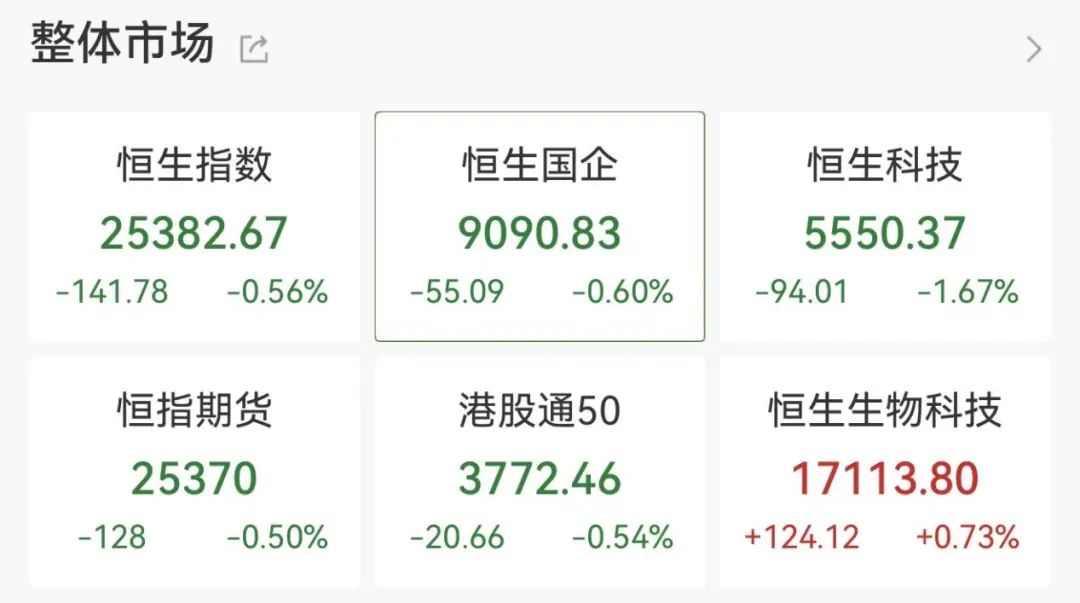
Market Overview - The pharmaceutical sector experienced a significant rally, with multiple stocks hitting the daily limit up, including Nanjing New Pharmaceutical, which achieved a 20% increase [3][4] - The overall A-share market showed mixed results, with the Shanghai Composite Index up by 0.41%, while the Shenzhen Component and ChiNext Index fell by 0.24% and 1.06%, respectively [1] - In the Hong Kong market, major electric vehicle manufacturers like Li Auto and Xpeng Motors saw declines, with Li Auto dropping over 10% [1] Pharmaceutical Sector - The pharmaceutical sector saw a broad increase, with notable stocks such as Nanjing New Pharmaceutical (20% increase), Qizheng Pharmaceutical (10.02% increase), and Dongcheng Pharmaceutical (10% increase) reaching their daily limit up [3][4][5] - The market capitalization of Nanjing New Pharmaceutical reached 3.9 billion, while Qizheng Pharmaceutical's market cap was 15.2 billion [4] - The rise in the pharmaceutical sector is attributed to favorable policy adjustments in the healthcare sector, which are reshaping the industry landscape and allowing high-quality companies to be revalued [7] Stablecoin Sector - The stablecoin and digital currency sectors faced downward pressure, with several stocks, including Dongxin Peace and Hengbao, declining by over 5% [8][9] - The Hong Kong Monetary Authority announced a new regulatory framework for stablecoin issuers, which is set to take effect on August 1, with a limited number of licenses expected to be issued by the end of the year [10]
7月30日早间新闻精选
news flash· 2025-07-30 00:18
Group 1 - The China-US trade talks held in Stockholm resulted in an agreement to extend the suspension of the US's 24% tariffs and China's countermeasures for another 90 days [1] - The Ministry of Finance emphasized the need for a more proactive fiscal policy and plans to accelerate the issuance and use of ultra-long special government bonds and local government special bonds [1] - The International Monetary Fund (IMF) raised China's economic growth forecast for this year by 0.8 percentage points to 4.8%, reflecting stronger-than-expected economic activity in the first half of the year [1] Group 2 - The PCB industry has seen a significant improvement in market conditions compared to the same period last year, particularly for high-end products, with increased demand and rising prices reported [2] - WuXi AppTec announced an increase in the share repurchase price limit from 90.72 yuan to 114.15 yuan per share for its upcoming buyback [2] - Shijia Photon reported a 1712% year-on-year increase in net profit, driven by the mass shipment of its 1.6T optical module products [2] Group 3 - Shenghong Technology plans to issue H-shares and list on the Hong Kong Stock Exchange [3] - The stock of Quzhou Development is suspended as it plans to purchase shares of Xianlead Electronics Technology [3] - Dong'an Power announced a change in its indirect controlling shareholder to China Chang'an Automobile [3] Group 4 - The three major US stock indices collectively fell, with the Dow down 0.42%, the Nasdaq down 0.38%, and the S&P 500 down 0.28%, as most popular tech stocks declined [3] - WTI crude oil futures rose by 3.75% to $69.21 per barrel, while Brent crude oil futures increased by 3.53% to $72.51 per barrel [3] Group 5 - Novo Nordisk lowered its 2025 sales growth outlook to 8%-14% from a previous forecast of 13%-21% [4] - The Federal Reserve is expected to maintain interest rates in its upcoming decision [4]
私募大咖,最新发声!
中国基金报· 2025-07-28 06:40
Core Viewpoint - The article emphasizes that the future of investment lies in technology sectors, particularly in humanoid robots, AI healthcare, new consumption, stablecoins, and cyclical sectors, indicating a significant revaluation moment for Chinese assets [2][4]. Group 1: Humanoid Robots - The humanoid robot industry presents enormous market opportunities, with a potential demand in China reaching 3 billion units, translating to a market size of several trillion yuan, far exceeding the real estate sector [4][5]. - The year 2024 is anticipated to be a pivotal year for humanoid robots, with advancements driven by companies like Tesla, leading the industry from concept to mass production [5]. - The supply chain for humanoid robots is expected to accelerate, with various applications emerging in logistics, warehousing, and service sectors, making it an opportune time for investment [5]. Group 2: AI in Scientific Research - AI for Science (AI4S) is identified as a transformative approach in scientific research, utilizing deep learning and machine learning to handle large-scale data and build accurate scientific models [7]. - The application of AI in drug development and materials chemistry is highlighted, with AI significantly reducing time and costs while increasing efficiency and success rates in new drug discovery [8]. Group 3: New Consumption and Stablecoins - The consumption sector in China, as the world's second-largest consumer market, is poised for significant investment opportunities, especially as marginal changes can lead to substantial returns [8]. - The stablecoin market, currently valued at $250 billion, is projected to grow significantly, with estimates suggesting it could reach approximately $2 trillion by 2028 and between $5 trillion to $7.5 trillion by 2030 [8]. Group 4: Cyclical Sectors - The article discusses the cyclical nature of the economy, indicating that the current phase is the third inventory cycle's upward stage, with potential investment opportunities in sectors like polysilicon and coal due to recent price surges [9]. - The balance between long-term investments in emerging technologies and short-term investments in cyclical sectors is emphasized as a strategic approach [9].

从非主流到风口:巨头们为何纷纷下注稳定币?
3 6 Ke· 2025-07-27 06:33
Group 1 - Stablecoins are rapidly moving from the periphery of the crypto industry to the center of the global financial stage, with significant developments such as Circle's successful IPO and the implementation of stablecoin regulations in Hong Kong [1][9][10] - Major companies like Ant Group and JD.com are lobbying to issue RMB-pegged stablecoins, aiming to diversify their revenue sources and enhance China's international currency status [2][10] - The market for stablecoins is projected to grow significantly, with estimates suggesting it could reach $2 trillion by 2028, driven by increasing demand for tokenized assets and financial instruments [13][15] Group 2 - Financial institutions and tech giants are investing heavily in stablecoin infrastructure, with Stripe acquiring Bridge.xyz for $1.1 billion, indicating a strong belief in the market's potential [3][4] - Companies like Amazon and PayPal are exploring their own stablecoin initiatives, further highlighting the competitive landscape and the potential for substantial profits [4][6][7] - Banks are also entering the stablecoin market, with institutions like ANZ and Citibank planning to launch their own stablecoins, reflecting a broader trend of traditional finance embracing digital assets [8][10] Group 3 - Hong Kong is positioning itself as a leader in the Web 3.0 space, with the passage of the Stablecoin Regulation Act and a surge in applications from companies seeking licenses [9][10][12] - The introduction of a regulatory framework in Hong Kong is expected to solidify its status as an international financial center, with over 50 companies anticipated to apply for licenses [10][12] - The establishment of a "sandbox" for stablecoin testing in Hong Kong aims to foster innovation while ensuring compliance, which is crucial for the development of a secure and transparent stablecoin market [12] Group 4 - The speed and liquidity of stablecoin transactions are seen as major advantages, particularly in cross-border payments and B2B transactions, where they can significantly enhance efficiency [17][20] - The growing acceptance of stablecoins among financial institutions is evident, with a shift in focus from pilot projects to full-scale implementation, as confidence in the technology increases [20][21] - The demand for tokenized mutual funds and ETFs is expected to rise, with estimates suggesting a market value of $400 billion by 2030, indicating a shift towards blockchain-based financial products [13][15]

中金缪延亮:稳定币、金融市场和人民币国际化
中金点睛· 2025-07-25 00:47
Core Viewpoint - Stablecoins have the potential to become a new type of financial infrastructure, bridging the gap between the crypto world and traditional finance, and their development should be strategically considered by China [2][3]. Group 1: What are Stablecoins? - Stablecoins are defined as "the most decentralized among centralized assets and the most centralized among decentralized assets," highlighting their dual nature of being rooted in blockchain technology while also requiring regulatory oversight [3][7]. - They are linked to fiat currencies, which means they must comply with traditional financial regulations, thus acting as a bridge between the crypto and real worlds [3][8]. - The potential applications of stablecoins include cross-border payments, asset preservation, and integration into decentralized finance (DeFi) ecosystems [3][22]. Group 2: Impact on Financial Markets - Stablecoins can enhance payment efficiency, offering low-cost and fast transactions, particularly beneficial for cross-border payments [38]. - They can improve financial inclusivity, especially in high-inflation economies, by providing a means for asset preservation [41][42]. - However, stablecoins may pose risks to monetary stability and sovereignty in countries with weak financial systems, potentially undermining local currencies and monetary policies [45][46]. Group 3: Influence on International Monetary System - Stablecoins depend on the credit of fiat currencies, primarily the US dollar, and their rise could reshape global capital flows and the international monetary system [54][56]. - They may create new demand in regions with weak financial infrastructure, acting as a substitute for traditional banking systems [55]. - The emergence of stablecoins could challenge the dominance of the US dollar, as they provide alternative payment channels and may facilitate the rise of non-US currencies [56]. Group 4: China's Participation in Stablecoin Development - China should consider issuing offshore RMB stablecoins as a priority to participate in the development of stablecoins, leveraging its position as a major global trade player [5][57]. - The development of stablecoins could enhance China's financial resilience and flexibility in international trade, providing alternatives to traditional payment methods [57]. - However, the potential for stablecoins to bypass capital controls poses significant regulatory challenges for China [4][57].

回购注入战略强心针!华检医疗(01931)“Newco+RWA交易所+稳定币”强势“破圈”
智通财经网· 2025-07-24 02:43
Core Viewpoint - The article highlights the innovative strategy of Huajian Medical (01931) in leveraging Web3 technology and real-world asset (RWA) tokenization to revolutionize the liquidity of innovative drug assets, marking a significant shift in the global financial landscape [1][2]. Group 1: Market Dynamics - The RWA market, excluding stablecoins, is projected to reach $245.5 billion by June 2025, with expectations to expand to $16.1 trillion by 2030, representing 10% of global GDP [2]. - The total market capitalization of global stablecoins has reached $263.6 billion, supported by regulatory frameworks such as the U.S. "Genius Act" and Hong Kong's "Stablecoin Regulation" [2]. Group 2: Strategic Initiatives - Huajian Medical is pursuing a dual listing in Hong Kong and the U.S. to enhance financing channels and promote capital synergy [1]. - The company aims to create a "NewCo + RWA" Web3 exchange ecosystem centered around high-tech medical innovation assets, issuing a proprietary stablecoin (IVDD) and applying for a stablecoin license in the U.S. [1][6]. Group 3: Innovative Financing Model - The RWA tokenization allows for the fragmentation and digitalization of physical assets, enabling 24/7 trading and global liquidity, which is particularly beneficial in the medical innovation sector [2][4]. - By tokenizing assets, Huajian Medical can lower investment thresholds, attracting global capital and improving financing efficiency in the innovative drug industry [4][6]. Group 4: Compliance and Regulatory Strategy - Huajian Medical's strategy includes establishing a fully owned subsidiary in New York for stablecoin license applications while participating in Hong Kong's regulatory sandbox for stablecoins [7]. - The company is developing three foundational infrastructures: an RWA tokenization platform, an IVDD stablecoin issuance and clearing system, and a "coin-stock linkage" mechanism with dual listings [7]. Group 5: Capital Market Signals - The company has executed a stock buyback of 141,000 shares at an average price of HKD 3.16 per share, signaling management's confidence in the strategic direction and market outlook [1][8]. - The IVDD stablecoin holders will have preferential rights to subscribe for Huajian Medical's shares, creating a value cycle between crypto capital and traditional equity markets [8].
稳定币加速融入主流金融体系,上半年总供应量超2500亿美元
Guo Ji Jin Rong Bao· 2025-07-23 13:49
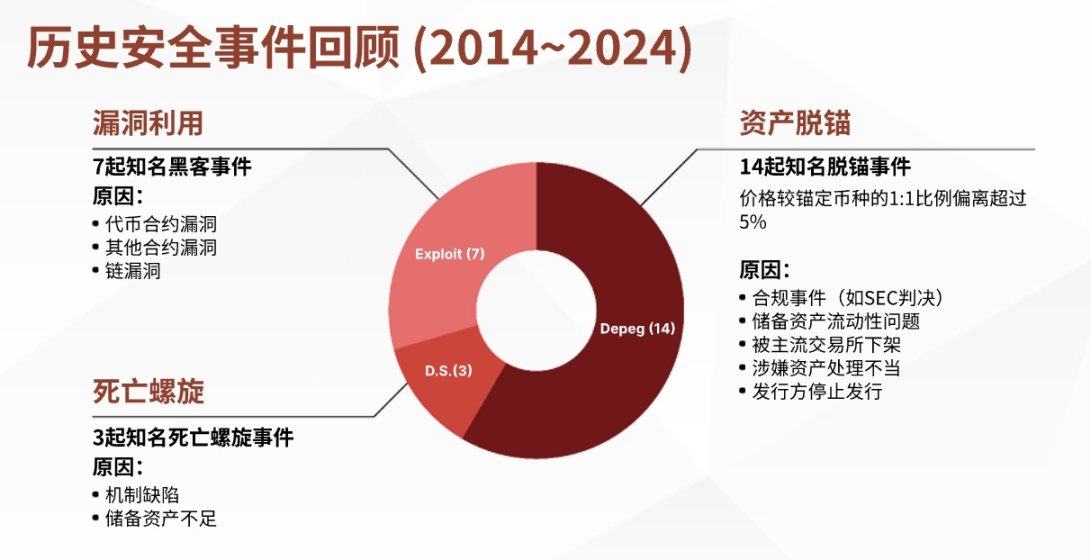
Core Insights - The report by CertiK highlights the continuous expansion of the stablecoin market in the first half of 2025, with a total supply reaching $252 billion and a monthly settlement volume increase of 43% [1] - User engagement has significantly improved, with the total number of holding addresses surpassing 120 million as of Q3 2024 [1] - USDT remains the most widely held stablecoin, with over 5.8 million addresses, approximately 2.6 times that of USDC [1] Market Performance - The stablecoin market is experiencing notable growth, with USDC's market capitalization rising to $61 billion, making it the fastest-growing mainstream stablecoin due to its MiCA license and successful listing [1] - PayPal's PYUSD has doubled its market capitalization by integrating with the Solana network and launching a holding rewards program [1] - RLUSD has maintained zero security incidents since its launch, establishing a strong market position through its reliability in institutional applications [1] Risk Landscape - The stablecoin industry faces increasing security and compliance challenges, with 344 security incidents reported in the first half of 2025, resulting in total losses of $2.47 billion, a historical high [2] - Operational errors, such as the Bybit private key leak, have become a primary source of losses, with a single incident causing a loss of $1.5 billion [2] - Stablecoins are increasingly being used by hackers for money laundering, particularly on networks like TRON, which poses significant compliance risks [4] Regulatory Developments - Regulatory measures are reshaping the market landscape, with the advancement of the STABLE and GENIUS Acts in the U.S. Congress and the full implementation of the EU's MiCA regulation [4] - Compliance pressures are leading to market differentiation, where licensed and transparent reserve projects gain higher market trust, while non-compliant issuers are being marginalized [4] - Traditional financial institutions are actively piloting stablecoin projects, with Societe Generale launching a compliant USD stablecoin, USDCV, and other banks like Bank of America and Santander developing related projects [4] Future Trends - The report forecasts that RWA (Real World Asset) backed and yield-bearing stablecoins will become the main innovation line, potentially capturing 8% to 10% of the market by the end of the year [5] - RWA-backed stablecoins align with global regulatory trends towards stablecoin compliance by anchoring to off-chain assets like government bonds [5] - Yield-bearing stablecoins are attracting institutional investors and high-net-worth individuals due to their "on-chain money market fund" characteristics [5] Risk Management - The introduction of new models brings complex counterparty and strategic risks, emphasizing the need for rigorous risk management, transparent operational mechanisms, and proactive compliance stances for sustainable development of stablecoin projects [8]
CertiK Skynet报告发布稳定币排行,USDT、USDC、PYUSD与RLUSD位列前茅
Globenewswire· 2025-07-23 11:00
Core Insights - The report by CertiK highlights the rapid integration of stablecoins into the mainstream financial system, with a total supply surpassing $250 billion and a monthly settlement volume growth of 43% to $1.4 trillion in the first half of 2025 [1][2]. Market Performance - The total supply of stablecoins reached $252 billion in the first half of 2025, with a significant increase in user activity, as the total number of holding addresses exceeded 120 million [2]. - USDT remains the most widely held stablecoin with over 5.8 million addresses, approximately 2.6 times that of USDC [2]. Risk Landscape - The stablecoin industry is experiencing a shift in risk patterns, with a total of 344 security incidents leading to losses of $2.47 billion, marking a historical high [3]. - Operational errors, such as the Bybit private key leak, have become a major source of losses, with a single incident causing a loss of $1.5 billion [3]. Regulatory Developments - Regulatory frameworks like the STABLE Act and MiCA regulations are reshaping the stablecoin landscape, increasing compliance pressures and leading to market differentiation [4]. - Traditional financial institutions are actively piloting stablecoin projects, with notable examples including Societe Generale's compliant USD stablecoin [4]. Future Trends - The report forecasts that RWA-backed and yield-bearing stablecoins will drive innovation, potentially capturing 8% to 10% of the market by the end of the year [5]. - RWA-backed stablecoins align with global regulatory trends, while yield-bearing stablecoins attract institutional and high-net-worth investors [5].