量子计算

Search documents
“产业出题、科技答题” ——以科技突破拓展未来产业发展的速度、广度、深度
Ren Min Ri Bao· 2026-02-06 22:55
Group 1 - The core theme of the news is the emphasis on technological innovation as a driving force for the development of future industries, highlighting the importance of breakthroughs in technology for enhancing the speed, breadth, and depth of industrial growth [1][4] - The new type of national system is identified as a key guarantee for promoting the development of future industries, enabling strategic patience and long-term stable investment that the market cannot provide [4][10] - The integration of research institutions, manufacturing enterprises, and application sectors is crucial for accelerating the transformation of technological achievements into industrial applications [3][9] Group 2 - The focus on key core technology breakthroughs is essential, with a call for industries to present challenges that technology must address, ensuring that technological innovation is driven by actual market needs [2][10] - The development of high-performance bioreactors in the biomanufacturing sector is highlighted, showcasing a successful case of overcoming technological monopolies through collaborative innovation [2][3] - The rise of quantum computing in Hefei is noted, with significant advancements in both foundational research and industrial applications, indicating a robust growth trajectory for the quantum industry [5][6] Group 3 - The role of enterprises as the main body of technological innovation is emphasized, with a focus on cultivating leading technology companies that can drive industries towards high-end fields [7][8] - The establishment of innovative joint entities that combine research, clinical applications, and enterprise involvement is presented as a model for fostering deep cooperation and innovation in future industries [9][10] - The need for strategic, forward-looking, and systematic layouts in basic research is stressed, as it serves as the foundation for technological innovation and future industrial development [6][10]
规模最大量子材料模拟器研制成功
Huan Qiu Wang Zi Xun· 2026-02-06 02:06
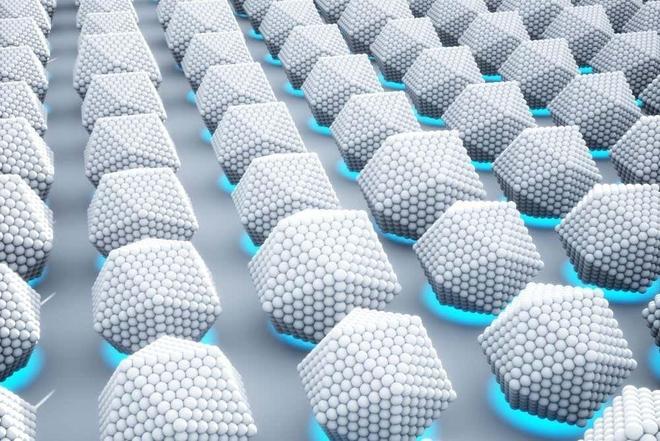
来源:科技日报 科技日报记者 刘霞 澳大利亚硅量子计算公司科学家在4日出版的《自然》杂志发表论文,宣布成功研制出迄今规模最大的 量子材料模拟器——"量子孪生"。这款由磷原子嵌入硅芯片构建的15000量子比特阵列,为研究复杂量 子材料提供了前所未有的实验平台,有望帮助科学家精准建模尚未完全理解的新材料与新分子。 "量子孪生"不仅能揭示奇特而潜在有用的量子材料的工作机制,还将助力未来材料的定向设计与性能优 化。这一突破对超导体等材料研究尤为重要,这些材料的独特性质源于量子效应,传统计算机难以直接 模拟,往往需依赖繁复的数学近似,而在量子模拟器上,这些效应却能被真实还原。 团队通过精密操控,将单个磷原子逐一定位在硅基底上,每个原子即成为一个可控的量子比特。通过排 列成规则的二维方格,"量子孪生"可模仿真实材料中原子的结构布局。其15000量子比特的规模远超以 往同类装置,此前最先进的模拟器仅基于数千个超冷原子实现。 团队还在芯片上集成了电子元件,精确调控电子的行为。例如,调节向网格中注入电子的难易程度,或 控制电子在不同位置间"跃迁"的概率。这种高度可调性,使得模拟材料中的电流输运过程成为可能。 传统计算机在处理大 ...

最大规模量子材料模拟器制成
Ke Ji Ri Bao· 2026-02-05 23:13
Core Insights - Australian silicon quantum computing company has developed the largest quantum material simulator to date, named "quantum twin," which consists of a 15,000 qubit array built with phosphorus atoms embedded in silicon chips, providing an unprecedented experimental platform for studying complex quantum materials [1] Group 1: Quantum Twin Capabilities - The "quantum twin" can reveal the working mechanisms of exotic and potentially useful quantum materials, aiding in the directed design and performance optimization of future materials [1] - This breakthrough is particularly significant for the study of superconductors, whose unique properties stem from quantum effects that traditional computers struggle to simulate accurately [1] Group 2: Technical Specifications - The team achieved precise control by positioning individual phosphorus atoms on a silicon substrate, with each atom acting as a controllable qubit, arranged in a regular two-dimensional grid to mimic the atomic structure of real materials [1] - The scale of 15,000 qubits far exceeds previous devices, which were based on thousands of ultra-cold atoms [1] Group 3: Applications and Future Potential - The platform has already simulated a classical theoretical model describing the phase transition of materials from conductors to insulators and measured the system's Hall coefficient changes with temperature, revealing its response characteristics under magnetic fields [2] - The "quantum twin" is expected to tackle controversial scientific challenges, such as the mechanisms of high-temperature superconductivity, which remain unclear despite traditional superconductors having well-defined principles [2] - Additionally, the "quantum twin" could support research in drug development and artificial photosynthesis [3]
海外科技周报(26/01/26-26/01/30):特朗普提名鹰派美联储主席,大宗趋势暴跌何去何从-20260205
Hua Yuan Zheng Quan· 2026-02-05 11:21
Investment Rating - Investment rating: None [4] Core Insights - The report highlights strong order performance in the AI energy sector, with GEV securing approximately 24GW of gas turbine demand in Q4 2025, and a total of 83GW of orders and capacity reserved until 2029, aiming for 100GW by the end of 2026 [5][13][14] - In the fintech sector, BREAD Financial led the market with a 5.5% increase after reporting Q4 2025 earnings that exceeded market expectations, while the overall sector remains under pressure [16][21] - Quantum computing companies like Honeywell and IonQ are making significant strides, with Honeywell's Quantinuum raising approximately $840 million and IonQ acquiring Seed Innovations and Skyloom to enhance its enterprise-level platform [28][29][31] Summary by Sections AI Energy - The AI energy sector saw GEV's strong performance with 24GW of new gas turbine demand and a total of 83GW of orders, with expectations to reach 100GW by 2026 [5][13] - The company anticipates a significant increase in gas turbine production by Q3 2026 and a doubling of grid equipment capacity from 2024 to 2028 [14] - The report notes a positive outlook on the U.S. emergency power auction mechanism, which could accelerate the construction of stable, dispatchable power sources [14] Fintech - The fintech sector experienced a downturn, with most companies declining, except for BREAD Financial, which reported a 5.5% increase in stock price after strong Q4 earnings [16][21] - Visa has implemented Apple Pay for Chinese cardholders, enhancing cross-border payment capabilities, while NITMX is working on cross-border payment systems with major Chinese payment service providers [21][22] - The report suggests that cross-border payments are transitioning from a "channel competition" phase to a "infrastructure reconstruction" phase, driven by high-frequency consumption scenarios [23] Quantum Computing - The quantum computing sector saw Honeywell's Quantinuum achieve significant funding and partnerships, integrating its products with NVIDIA's AI technology [28][29] - IonQ is advancing its enterprise-level platform through acquisitions, enhancing its capabilities in machine learning and quantum networking [31] - The report emphasizes IonQ's strategy to build a comprehensive platform covering quantum computing, networking, sensing, and security [31] Commercial Aerospace - The commercial aerospace sector experienced a slight decline, with key companies like Honeywell and RTX reporting strong earnings despite market fluctuations [36] - Honeywell's Q4 sales reached $9.8 billion, with a 6% year-over-year increase, while RTX reported $24.2 billion in sales, a 12% increase from the previous year [36]
商业航天界的“拼多多”要IPO了,商业卫星企业走向资本市场;工信部推动量子科技等领域攻关突破,中国科学家在量子世界实现了一项关键控制——《投资早参》
Mei Ri Jing Ji Xin Wen· 2026-02-03 23:39
Market News - The three major US stock indices closed lower, with the Dow Jones down 0.34%, Nasdaq down 1.43%, and S&P 500 down 0.83%. Popular tech stocks fell, with Boton down over 3%, and Microsoft, Nvidia, and Meta down over 2% [1] - International oil prices rose, with WTI crude oil up 3.12% at $64.08 per barrel and Brent crude oil up 2.88% at $68.21 per barrel. Gold prices saw a significant rebound, with spot gold rising 6.44% to $4956.21 per ounce [2] Industry Insights - Tianyi Space Technology Co., Ltd. has completed IPO counseling registration with the Hunan Securities Regulatory Bureau, aiming to enter the capital market. The company is recognized as a pioneer in the commercial satellite sector in China, particularly in SAR satellite operations [3] - The satellite internet sector is becoming a new frontier in global technology competition, with the satellite communication industry expected to reach a market size of 200 billion to 400 billion yuan by 2030, with an annual compound growth rate of 10%-28% [4] - The Ministry of Industry and Information Technology emphasized the importance of advancing major national science and technology projects, focusing on breakthroughs in 6G, quantum technology, and brain-computer interfaces [5] - The Central Document No. 1 outlines strategies for rural revitalization, emphasizing the development of e-commerce in rural areas to enhance agricultural productivity and improve farmers' livelihoods [7]
上海:更大力度培育壮大长期资本耐心资本
Zhong Guo Zheng Quan Bao· 2026-02-03 20:27
● 本报记者 李梦扬 2月3日,上海市第十六届人大四次会议开幕,上海市市长龚正作《政府工作报告》。龚正表示,综合各 方面因素,建议今年全市经济社会发展的主要预期目标为全市生产总值增长5%左右。上海将聚焦"五个 中心"建设,强化"四大功能",不断巩固拓展经济稳中向好势头;加快构建现代化产业体系,制定实施 脑机接口、量子计算、硅光、6G等领域未来产业培育方案;深入实施"人工智能+"行动,新增50家以上 先进智能工厂;更大力度培育壮大长期资本、耐心资本,完善产融对接机制,推动更多金融资源用于支 持扩大内需、科技创新、先进制造、绿色发展和中小微企业。 报告表示,过去一年,上海聚力落实国家重大战略任务,"五个中心"建设扎实推进。加快构建现代化产 业体系,有力推进集成电路装备、零部件、材料、EDA软件等全产业链攻关,深入实施"模塑申城"工 程,完善高端医疗器械、智能终端、智算云、具身智能、商业航天等产业发展政策,推进大飞机规模化 系列化发展,制定实施脑机接口、量子计算、硅光、6G等领域未来产业培育方案,多措并举促进服务 业创新发展,产业基础高级化、产业链现代化水平进一步提升。 报告提出,今年要推进临港科创城建设,加快打造 ...
【科技日报】突破量子热化难题,我国78量子比特芯片实验成果登上《自然》
Ke Ji Ri Bao· 2026-02-03 02:52
实验显示,预热化阶段系统保留初始信息、熵增受抑,结束后纠缠快速增长、信息呈体积律扩散, 经典算法无法精准描述。78比特芯片虽非当前最高比特数,却凭借创新方案、特色测控与芯片性能协 同,首次在量子模拟器上实现超越周期驱动的可调预热化研究,为量子模拟提供新范式。 该成果为人工驱动调控量子系统开辟新方向,可与时间晶体、多体局域化等热点问题结合,同时为 大规模量子模拟数值方法提供新思路。该团队表示,未来将研制百比特以上超导芯片,探索更复杂的多 体问题,力争实现"可验证的实用化量子优势",推动量子计算从基础研究迈向实用化。 1月28日,中国科学院物理研究所/北京量子信息科学研究院智能量子团队联合北京大学等国内外机 构,在78量子比特超导芯片"庄子2.0"上完成量子系统预热化调控实验,相关成果在线发表于《自然》 国际期刊,为理解与控制复杂量子动力学迈出关键一步。 量子系统热化是指能量与信息均匀分布、趋近热平衡的过程,过快热化会导致量子信息丢失,直接 制约量子计算实用化。研究发现,量子系统受外场驱动时并非立即混乱,而是存在稳定的"预热化平 台",类似冰融水时温度长期维持在0℃的阶段,该反直觉现象超出经典计算机模拟能力。团队 ...
2月2日早餐 | 贵金属巨震;元宝红包刷屏
Xuan Gu Bao· 2026-02-02 00:09
Market Overview - Trump's nomination of Waller as Fed Chair sparked hawkish market expectations, leading to a rise in PPI inflation data and a decline in US stocks, with the S&P 500 down 0.43%, Dow Jones down 0.36%, and Nasdaq down 0.94% [1] - The dollar rose 0.84%, marking its largest single-day increase since May 2025, while gold prices plummeted by 10%, falling below $4900 [2] - The Nasdaq Golden Dragon China Index fell by 2.36%, with notable movements in Chinese stocks, including Yilong Energy soaring over 3000% and Kingsoft Cloud dropping 7% [1] Commodity and Bond Market - The 10-year US Treasury yield rose by 1.21 basis points, while the 2-year yield fell by 3 basis points [2] - Oil prices initially followed the downward trend of other commodities but later increased, with January seeing a rise of over 14%, marking the best monthly performance since July 2023 [3] AI and Technology Developments - Nvidia's CEO Jensen Huang confirmed the company's participation in a significant investment round for OpenAI, potentially the largest in history [7] - The FCC approved SpaceX's application to deploy a million satellites to create an AI data center network in orbit [8] - A German team developed a high-performance single-photon source, achieving a 92% interference visibility, a breakthrough for quantum communication [9][16] Domestic Developments - The Beijing Economic and Technological Development Zone Management Committee issued a plan to accelerate the construction of an AI city by 2026-2027, focusing on creating an open-source collaborative ecosystem [10] - The National Development and Reform Commission and the National Energy Administration announced a new pricing mechanism for energy storage, aiming to enhance the development of the storage sector [16] Stock Market Strategies - Analysts predict that the recent ETF redemption wave is ending, providing a recovery window for large-cap stocks, with a shift from small-cap to large-cap and from themes to quality [12] - The A-share market is expected to maintain upward momentum supported by favorable domestic fundamentals and policies, despite external disturbances [11] Company Earnings Forecasts - New Yi Sheng forecasts a net profit of 9.4 billion to 9.9 billion yuan for 2025, a year-on-year increase of 231.24% to 248.86% due to rising demand for high-speed products [19] - Guoxuan High-Tech anticipates a net profit of 2.5 billion to 3 billion yuan for 2025, benefiting from the rapid growth in the new energy vehicle and energy storage markets [20] - Zhongjin Company expects a net profit of 8.542 billion to 10.535 billion yuan for 2025, driven by robust growth in investment banking and wealth management sectors [21]
21对话|中科院范桁:中国的量子计算机科技取得前沿性推进
2 1 Shi Ji Jing Ji Bao Dao· 2026-02-01 14:58
1月29日,全球顶级科学期刊《自然》杂志刊登了中国科学院物理研究所在量子计算领域的研究成果, 科研团队创新性地采用随机多极驱动(RMD) 技术,通过调节驱动序列的复杂度和节奏,成功实现对预 热化平台持续时间的精准控制。 2019年,谷歌基于53量子比特超导处理器"悬铃木",在随机量子电路采样任务中,仅以200秒时间完成 当时最强超算需1万年以上的计算量,引发全球对量子计算实现"量子优越性"的空前关注。 然而,量子计算实现通用计算,并超越经典计算机的终极梦想,仍有待学界有效对抗量子退相干,实现 量子纠错,提高量子计算稳定性和存储信息能力的方式来获得,而量子预热化平台是量子系统保持信息 存储的重要技术,也是人们尚未完全理解和控制的复杂系统特殊性质。 此次中科院物理研究所通过设计随机多极驱动协议,在78量子比特"庄子2.0"芯片上首次观测到可调控 的预热化平台,不仅验证了全球量子计算领域近年一系列重要理论成果,还进一步验证了"量子优越 性"的存在,预演了全球量子计算发展可以"沿途下蛋",不断解决具有科学价值的科研问题,为量子计 算投入获得正向反馈并实现指数级跨越的未来奠定基础。 近日,21世纪经济报道记者采访了论文 ...
晚报 | 2月2日主题前瞻
Xuan Gu Bao· 2026-02-01 14:34
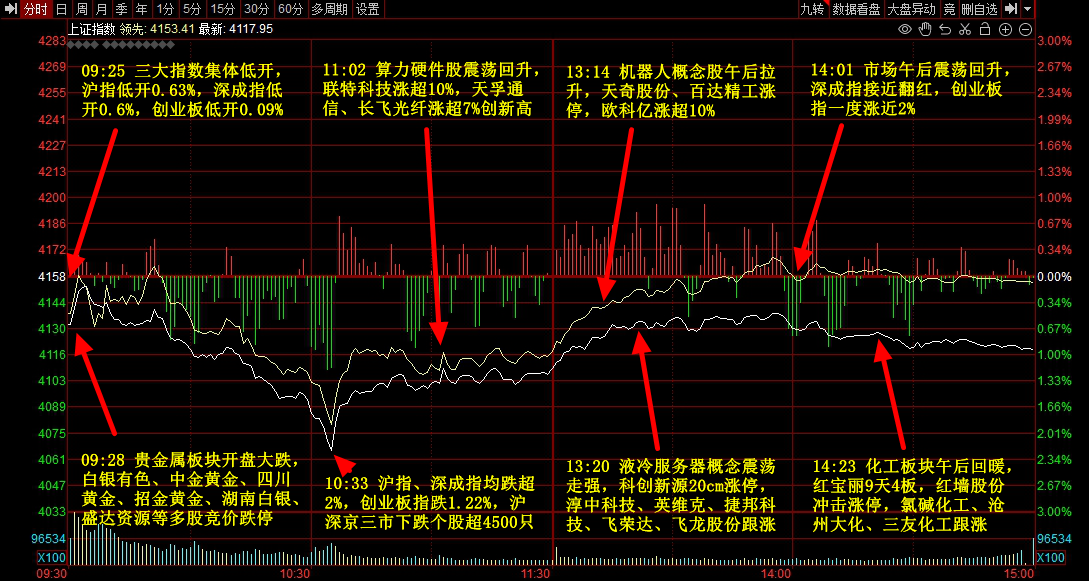
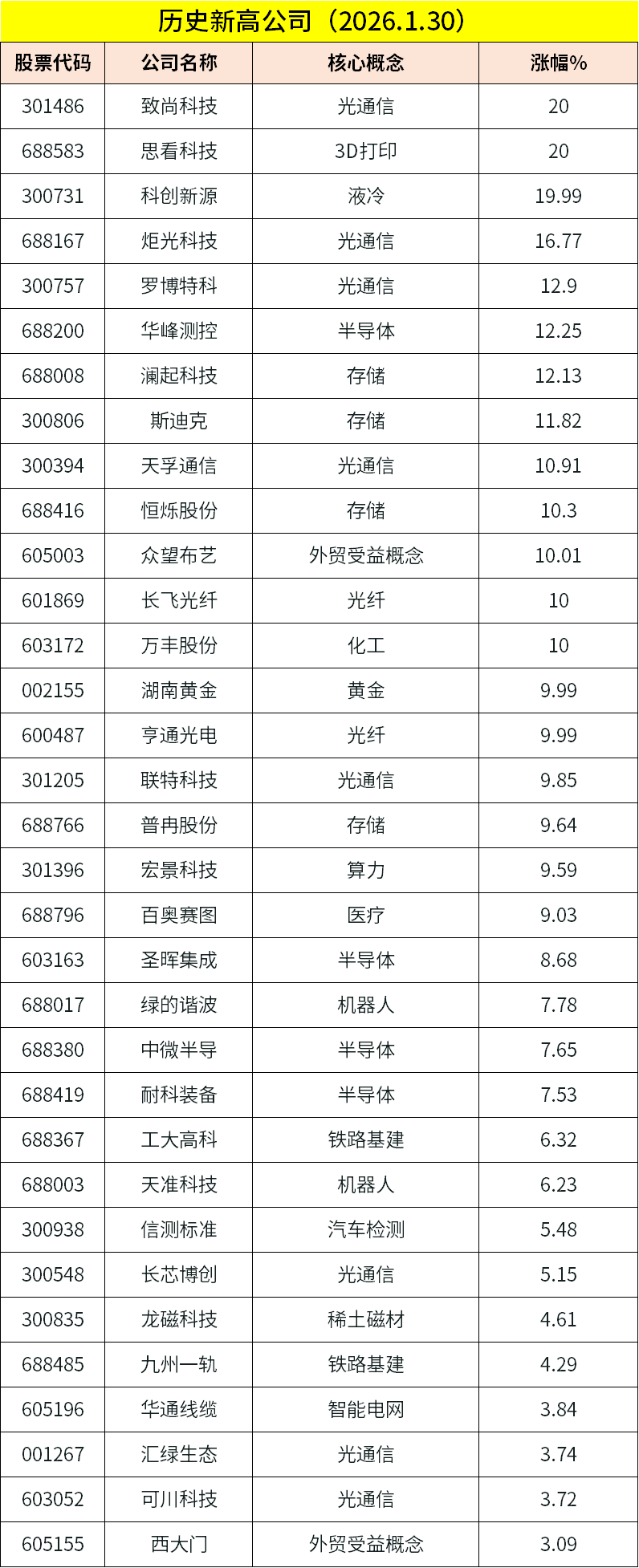
Group 1: Energy Storage - The National Development and Reform Commission and the National Energy Administration have issued a notice to improve the capacity pricing mechanism for power generation, including coal, gas, pumped storage, and new energy storage [1] - Experts indicate that energy storage is a bottleneck in the current power system, and independent energy storage construction can effectively address this issue [1] - Dongguan Securities believes that the flexible adjustment capabilities of new energy storage in China are increasingly prominent, enhancing the development of renewable energy and improving the stability of the power system [1] Group 2: Transformers - Research in Guangdong and Jiangsu shows that many transformer factories are operating at full capacity, with some orders for data center-related transformers extending to 2027 [2] - The global demand for AI computing power is driving the transformer industry, with delivery times in the U.S. increasing from 50 weeks to 127 weeks [2] - By 2025, China's transformer export value is expected to reach 64.6 billion yuan, a nearly 36% increase from 2024 [2] Group 3: AI Applications - Tencent's AI assistant product, Yuanbao, has topped the free app rankings in the Apple Store, indicating strong competition in the AI social networking space [3] - Open-source securities suggest that domestic large model manufacturers are enhancing user and revenue scales through frequent model iterations and leveraging social effects from the Spring Festival [3] Group 4: Space Computing - SpaceX is applying to launch and operate a constellation of up to 1 million satellites with unprecedented computing capabilities to support advanced AI [4] - The satellite deployment aims to operate in narrow orbital shells and will utilize solar power and optical links to connect with existing networks [4] Group 5: Quantum Computing - A team from Germany has successfully demonstrated a high-quality single-photon source operating in the communication C-band, achieving a nearly 92% visibility in two-photon interference [5] - The global quantum technology financing is projected to reach approximately 34.9 billion yuan by Q3 2025, surpassing the total of the previous two years [5] - The quantum computing market is expected to grow from $5 billion in 2024 to over $800 billion by 2035, with a compound annual growth rate exceeding 55% [5] Group 6: Macro and Industry News - The manufacturing purchasing managers' index in China for January 2026 is reported at 49.3%, a decrease of 0.8 percentage points from the previous month [6] - The Beijing Economic and Technological Development Zone has issued a plan to accelerate the construction of an AI city from 2026 to 2027 [6] - The National Health Commission has approved a pilot program for internet diagnosis and treatment in Beijing [6] Group 7: Market Performance - Several companies have reached historical highs, including Zhishang Technology (20% increase), Sikan Technology (20% increase), and Kexin Technology (19.99% increase) [10][11] - The performance of companies in sectors such as optical communication, 3D printing, and storage has shown significant growth, indicating strong market interest [10][11]