
高端装备

Search documents
上海发布先进制造业转型升级三年行动方案 到2028年新增年产值10亿元以上制造业企业100家
Shang Hai Zheng Quan Bao· 2026-02-08 17:31
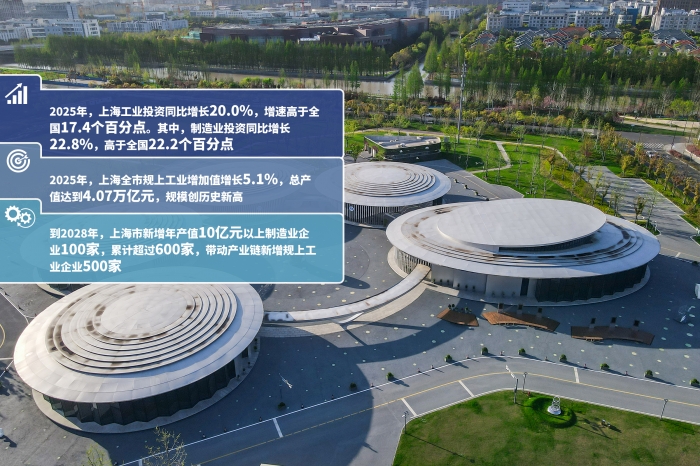
Core Viewpoint - Shanghai is launching a three-year action plan (2026-2028) to support the transformation and upgrading of advanced manufacturing, aiming to add 100 manufacturing enterprises with an annual output value exceeding 1 billion yuan by 2028, totaling over 600 [2] Group 1: Investment and Growth Targets - By 2025, industrial investment in Shanghai is expected to grow by 20.0%, surpassing the national growth rate of 17.4%, with manufacturing investment increasing by 22.8%, higher than the national rate of 22.2% [2] - The action plan aims to drive the establishment of 500 new large-scale industrial enterprises along the industrial chain [2] Group 2: Strategic Paths for Industry Optimization - The action plan outlines three strategic paths: 1. "Optimize and Upgrade" traditional advantageous industries such as petrochemicals and steel [3] 2. "Strategic Leadership" for leading industries like integrated circuits and biomedicine [3] 3. "Promote Growth" for key and emerging industries, including new electronic information and intelligent connected vehicles [3][4] Group 3: Innovation and Technology Development - The plan emphasizes enhancing corporate innovation capabilities, encouraging increased investment in basic research, and providing financial support based on investment levels [4][5] - Focus on breakthrough technologies in laser manufacturing and new energy, as well as core technologies in integrated circuits and high-end equipment [4] Group 4: Digital Transformation and Smart Manufacturing - Shanghai aims to deepen digital transformation through initiatives like "AI + Manufacturing," promoting the application of AI technologies in production processes [4] - By 2028, the goal is to achieve full coverage of smart factories among large enterprises, with a robot density of 600 units per 10,000 people and a digitalization level of over 70% for smart manufacturing equipment [4] Group 5: Elemental Support and Financial Services - The action plan includes strengthening support for talent, space, and funding, with a focus on optimizing financial services for the manufacturing sector [5] - Financial institutions are encouraged to offer lower interest rates and longer-term loans for manufacturing enterprises [5] Group 6: Long-term Development Strategy - The action plan is seen as a long-term strategy for cultivating new productive forces and building new advantages for high-quality development in Shanghai [6] - It aims to create a robust industrial growth engine, enhance the innovation system led by enterprises, and improve the support system for manufacturing development [6][7]

北交所策略专题报告:开源证券从亚马逊CAPEX指引看产业链机遇,关注北交所光器件核心环节
KAIYUAN SECURITIES· 2026-02-08 03:45
Group 1 - Amazon's high CAPEX indicates strong demand for facilities, benefiting optical communication targets [2][12][22] - In 2024 and 2025, Amazon's cash capital expenditures are projected to reach $77.7 billion and $128.3 billion, primarily for technology facilities and fulfillment network construction [2][12] - The optical communication industry is expected to grow steadily, with China's market size projected to reach 147.3 billion yuan in 2024, reflecting a compound annual growth rate of 5.18% from 2021 to 2024 [14][15] Group 2 - The report identifies five optical communication-related companies on the Beijing Stock Exchange and three on the New Third Board, with a total market capitalization of 55.213 billion yuan as of February 6, 2026 [23][24] - Key companies include: - Hengtong Optic-Electric (920045.BJ) focuses on passive optical components, with a market cap of 24.302 billion yuan and a net profit growth of 123.75% [24][25] - Wanyuantong (920060.BJ) specializes in optical module PCBs, achieving a revenue growth of 15.39% [26][28] - Yunling Optoelectronics (874775.NQ) has seen a revenue increase of 78.17% and a net profit growth of 329.30% [29][34] Group 3 - The pharmaceutical and biological industry on the Beijing Stock Exchange showed an average weekly change of +0.14%, while other sectors like high-end equipment and information technology experienced declines [3][35] - The average P/E ratio for the pharmaceutical and biological sector rose to 29.7X, indicating a positive trend in this industry [48] Group 4 - The technology new industry saw a median P/E ratio decrease from 41.5X to 40.6X, with a total market value decline from 531.795 billion yuan to 527.389 billion yuan [4][57][58] - The report highlights that 27 out of 159 companies in the technology new industry experienced stock price increases, with an average decline of -2.18% for the sector [52][54]
上海市经信委:聚焦智能终端、商业航天等,再造万亿级产业新增量
第一财经· 2026-02-07 13:42
Core Viewpoint - Shanghai is focusing on enhancing its industrial capabilities and core competitiveness in 2026, the first year of the "14th Five-Year Plan," by implementing strategies across four key areas [3]. Group 1: National Strategy Implementation - The city will continue to maintain its advantages in leading industries such as integrated circuits and artificial intelligence, aiming for double-digit growth in manufacturing output [3]. - The integration of "IC + AI" will be leveraged to elevate the overall industrial system [3]. Group 2: Industrial Transformation and Upgrading - Shanghai aims to accelerate the transformation of industries like petrochemicals, steel, and light industry towards digitalization and greening, with plans to establish 500 advanced intelligent factories during the "14th Five-Year Plan" [4]. - The application density of industrial robots is targeted to reach 600 units per 10,000 people, and 200 green manufacturing enterprises at the municipal level will be created [4]. Group 3: Economic Growth and New Industries - The city plans to significantly increase the total industrial economy by developing six emerging pillar industries, including next-generation electronic information and intelligent connected new energy vehicles, targeting new sectors like smart terminals and commercial aerospace [3][4]. - The goal is to generate a trillion-level increase in industrial output [3]. Group 4: Industrial Ecosystem Optimization - Shanghai will guide districts to deepen their leading industries through an industrial map, aiming to create 25 billion-level sub-sectors [4]. - The city's industrial added value grew by 5.1% last year, with total output reaching 4.07 trillion yuan, marking a historical high [4]. - The proportion of "new manufacturing" increased from 40% to 45%, while the share of three leading industries in manufacturing rose from 7.8% to 12.4% [4].
瞄准新赛道,上海将再造万亿级产业新增量
Xin Lang Cai Jing· 2026-02-07 11:29
Group 1 - Shanghai aims to expand its industrial economy by focusing on six emerging pillar industries, including new-generation electronic information and intelligent connected vehicles, targeting a trillion-level industrial increment [1][3] - By 2025, Shanghai's industrial added value is projected to grow by 5.1%, with total output reaching 4.07 trillion yuan, marking a historical high [3] - The city will maintain its advantages in leading industries such as integrated circuits and artificial intelligence, accelerating breakthroughs across the entire industrial chain with double-digit growth in manufacturing output [3] Group 2 - Shanghai plans to promote the transformation and upgrading of traditional industries like petrochemicals and steel towards digitalization and greening, aiming to establish 500 advanced intelligent factories during the 14th Five-Year Plan [3] - The city will create 200 green manufacturing enterprises at the municipal level and enhance the business environment to support outstanding companies [3] - Shanghai will guide districts to cultivate leading industries based on an industrial map, aiming to develop 25 billion-level niche markets [3]
中国GDP50强城市大洗牌:苏州远超天津,济南第18,南宁第49
Sou Hu Cai Jing· 2026-02-07 09:04
Core Insights - The article highlights a significant reshuffling of China's urban economy, with Shanghai leading in GDP at 56,708.71 billion, followed by Beijing, while Suzhou emerges as a surprising contender with a GDP of 27,695.1 billion, surpassing Tianjin by 9,156.28 billion [1][3]. Group 1: Economic Performance - Suzhou's GDP growth of 3.86% is attributed to its strong manufacturing base and vibrant private economy, significantly outpacing Tianjin's growth of only 3.39% [3][11]. - Jinan, with a GDP of 14,210.09 billion and a growth rate of 5.04%, showcases its potential driven by innovation and strategic positioning in the Yellow River basin [5][11]. - Nanning, despite being ranked 49th with a GDP of 6,212.46 billion, demonstrates a growth rate of 3.69%, benefiting from its strategic location and cross-border economic activities [7][11]. Group 2: Future Outlook - The article suggests that the competition among cities will intensify, emphasizing the importance of leveraging inherent advantages and embracing transformation for future success [11]. - The economic dynamics in Suzhou, Jinan, and Nanning illustrate a vibrant and evolving landscape, indicating a robust pulse of China's economy [11].
上海市经信委:聚焦智能终端、商业航天等,再造万亿级产业新增量
Di Yi Cai Jing· 2026-02-07 06:21
Group 1 - Shanghai aims to create 25 billion-level segmented tracks tailored to local conditions as part of its "14th Five-Year Plan" and the establishment of a modern industrial system [1] - The city will focus on four main areas: implementing national strategies, accelerating industrial transformation, expanding industrial economic scale, and optimizing the industrial ecosystem [1] - Key industries such as integrated circuits and artificial intelligence will continue to maintain advantages, with manufacturing output expected to sustain double-digit growth [1] Group 2 - In the past year, Shanghai's industrial added value increased by 5.1%, with total output reaching 4.07 trillion yuan, marking a historical high [2] - The proportion of advanced manufacturing in Shanghai rose from 40% to 45%, while the share of three leading industries in manufacturing increased from 7.8% to 12.4% [2] - A new action plan aims to add 100 manufacturing enterprises with annual output value exceeding 1 billion yuan by 2028, contributing to the growth of the industrial chain [2]
大飞机、大邮轮接连取得突破,上海如何进一步提升产业核心竞争力?
Xin Lang Cai Jing· 2026-02-07 05:15
Core Insights - Shanghai aims to achieve an industrial output value exceeding 4 trillion yuan by 2025, marking a historical high, with significant advancements in key sectors such as large aircraft and cruise ships [1] Group 1: Industrial Growth and Achievements - In the past year, Shanghai's industrial added value grew by 5.1%, reaching a total output value of 4.07 trillion yuan, a record high [1] - The proportion of strategic emerging manufacturing industries increased from 40% at the beginning of the 14th Five-Year Plan to 45%, while the share of the three leading industries in manufacturing rose from 7.8% to 12.4% [1] Group 2: Future Development Strategies - Shanghai will focus on four key areas: 1. Implementing national strategies to maintain advantages in integrated circuits and artificial intelligence, aiming for double-digit growth in manufacturing output [2] 2. Accelerating industrial transformation towards digital and green development, with plans to establish 500 advanced intelligent factories and achieve an industrial robot application density of 600 units per 10,000 people [2] 3. Expanding the industrial economy by developing six emerging pillar industries, targeting new sectors such as smart terminals and commercial aerospace [2] 4. Enhancing the industrial ecosystem by guiding districts to cultivate leading industries and creating 25 billion-yuan-level niche markets [2] Group 3: Leadership and Contribution - Shanghai will leverage its leading role to contribute to the construction of a manufacturing powerhouse, embodying a commitment to national responsibilities and innovation [3]
上海市经信委:瞄准智能终端、商业航天、低空经济等新赛道,再造万亿级产业新增量
Mei Ri Jing Ji Xin Wen· 2026-02-07 05:13
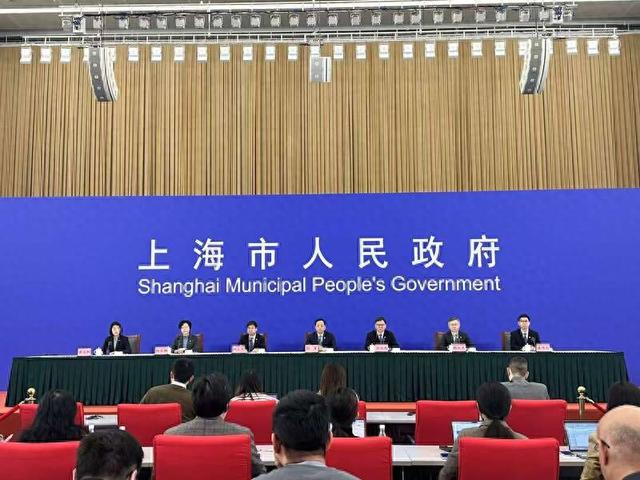
每经AI快讯,2月7日上午,上海市人民政府举行记者会,市经信委主任汤文侃出席并回答记者提问。 汤文侃表示,"十五五"将累计建成500家先进智能工厂,工业 机器人应用密度达600台每万人,创建200 家市级以上绿色制造企业。做大产业经济总量,全力打造新一代电子信息、智能网联新能源汽车、高端 装备等6大新兴支柱产业,瞄准智能终端、商业航天、低空经济等新赛道,再造万亿级产业新增量。 (上观新闻) ...
新股上市时间在哪看?散户必知的4种查询方法
Sou Hu Cai Jing· 2026-02-06 23:13
Core Viewpoint - The implementation of a comprehensive registration system has led to both new stock price drops and surges, making it essential for retail investors to accurately grasp listing times and scientifically analyze subsequent trends to avoid pitfalls in new stock participation [1] Group 1: Information Sources - The official websites of the Shanghai and Shenzhen Stock Exchanges are the primary platforms for new stock information, providing accurate and timely updates without risks of delays or misleading information [3] - Securities company apps, such as those from Dongfang Caifu and Tonghuashun, offer convenient access to new stock information, including listings and subscription details, and allow for one-stop operations [4] - The China Securities Regulatory Commission (CSRC) website provides a source for compliance information, allowing investors to track the approval and registration progress of new stocks [5] - Authoritative financial platforms like Securities Times and Eastmoney aggregate new stock information, offering comprehensive data including listing times and price-earnings ratios [6] Group 2: Investment Strategy - The first step in investment strategy is to assess industry heat, as new stocks in popular sectors are more likely to attract capital and have a lower probability of price drops [7] - Preferred sectors include those supported by policies and high-growth areas such as semiconductors and TMT, which tend to receive strong capital interest [8] - An example is the stock of JN Robotics, which saw a 227.27% increase on its first day due to the favorable conditions in its sector [9] - Conversely, traditional industries with overcapacity and weak growth, such as low-end manufacturing, are more likely to experience price drops [10] Group 3: Valuation Assessment - The core reason for new stock price drops under the registration system is high valuations, necessitating a comparison of valuations before participating in new stock offerings [11] - A key indicator is the issuance price-earnings ratio; if it exceeds the industry average by more than 30%, the stock is likely overvalued, increasing the risk of price drops [12] - Practical tips include comparing the company's valuation metrics with industry leaders and avoiding participation if the valuation is significantly high [13] Group 4: Monitoring Capital Trends - The short-term performance of newly listed stocks is primarily influenced by capital sentiment, requiring close attention to trading volume and institutional movements [14] - Strong signals include significant price increases on the first day with high institutional net buying, indicating strong capital support [15] - Conversely, signals of risk include price drops on the first day with substantial institutional net selling, suggesting significant capital divergence [16] - It is important to note that under the registration system, new stocks have no price fluctuation limits in the first five days, leading to high volatility [17] Group 5: Conclusion - Retail investors should rely on authoritative channels to confirm listing times and use a three-dimensional approach of industry, valuation, and capital trends to assess value, while strictly adhering to risk management practices [18] - The new stock market is increasingly polarized under the registration system, and blind participation can lead to losses; rational inquiry and scientific analysis are crucial for retail investors [19]
加快形成经济发展与改善民生的良性循环
Xin Lang Cai Jing· 2026-02-06 17:54
(来源:衢州日报) 转自:衢州日报 2026年,是实施"十五五"规划的开局之年,也是衢州以高质量发展牵引民生改善、以民生需求激活发展 动能,构建双向赋能良性循环的关键之年。党的二十届四中全会明确提出,"十五五"时期要"注重在发 展中保障和改善民生",深刻揭示了发展与民生相辅相成、互促共进的辩证关系。衢州市八届人大六次 会议审议通过的《衢州市国民经济和社会发展第十五个五年规划纲要》和"十个方面民生实事",立 足"南孔圣地·衢州有礼"城市定位,将党中央战略部署转化为衢州实践,既要以高质量发展筑牢民生保 障物质根基,又要以民生需求牵引发展方向,通过实打实的举措破解民生痛点、激活发展动能,走好具 有衢州特色的共富之路,着力破解"发展与民生如何双向赋能"的时代命题,为新时代市域经济社会协调 发展提供鲜活样本。 一、以产业高质量发展为支撑,筑牢良性循环物质基础 产业是民生改善的根本依托,高质量产业发展能创造更多优质就业岗位、拓宽收入渠道,为民生实事落 地提供坚实支撑。2026年,衢州市要紧扣"工业强市、产业兴市"战略,统筹工业、消费、乡村三大领域 产业发展,以多元赋能壮大实体经济,推动产业发展成果转化为民生福祉,同时依托 ...