锂电

Search documents
容百科技与宁德时代签署超1200亿元采购合作协议
Mei Ri Jing Ji Xin Wen· 2026-01-15 13:12
2025年末至2026年初,以磷酸铁锂为代表的锂电行业,上下游正进行一场轰轰烈烈的"大博弈"。一方 面,铁锂厂商整体亏损近3年,涨价欲望强烈;另一方面,电池厂商下游储能等行业价格持续走低。 《每日经济新闻》记者注意到,1月13日,容百科技(SH688005,停牌)与宁德时代(SZ300750,股价 353.75元,市值1.61万亿元)超1200亿元的采购合作协议引发市场热议。这或成为磷酸铁锂行业有史以 来最大的订单。不过,该事项很快受到上交所问询。上交所要求容百科技全面自查,并完整披露关于上 述协议的全部重要内容。 此举或标志着宁德时代"控盘"磷酸铁锂的计划暂时受挫,后续其与上游磷酸铁锂厂商之间的博弈如何演 绎,值得持续关注。 宁德时代订单规模庞大 2025年末,磷酸铁锂正极厂商集体停产检修,在锂电行业掀起波澜。湖南裕能、万润新能、德方纳米、 安达科技、龙蟠科技等主要磷酸铁锂正极厂商纷纷发布公告,表示将部分产能停产检修。这被业界视为 磷酸铁锂厂商"抱团取暖",以集体停产检修向下游电池厂商施压,从而提高加工费。 这场行动似乎取得了成功。2026年初,鑫椤资讯称,加工费方面,除了个别大客户还在持续谈判,其他 客户 ...


摩根士丹利邢自强:2040年将迎来中国医药界的DeepSeek时刻
Xin Lang Cai Jing· 2026-01-15 11:31
Core Insights - China is demonstrating significant breakthroughs in technological innovation, characterized by three core advantages: industrial chain clusters, a surplus of STEM graduates, and a vast market scale that is difficult for other economies to replicate [1][6]. Industrial Chain Clusters - In regions like the Yangtze River Delta and the Pearl River Delta, thousands of suppliers and engineers are concentrated within a short distance, providing a competitive edge that countries like Mexico, India, and Southeast Asia lack [3][8]. - China graduates nearly 5 million STEM students annually, surpassing the combined total of Europe and the United States [3][8]. AI and Technology - Chinese companies are achieving technological catch-up in the AI sector with only 1/10 of the investment compared to the U.S., and they account for a significant portion of global AI talent [3][8]. - By 2027-2028, China is projected to achieve a 50% domestic production rate in GPU technology, marking a significant advancement [3][8]. Robotics and Automotive Industry - China holds a 60% share of the global leading companies in humanoid robotics, with a strong cost advantage in components like arms and hydraulic systems [4][9]. - It is estimated that 30% of the global increase in humanoid robot supply may come from China in the future [4][9]. Smart Driving and Biopharmaceuticals - China leads globally in smart driving adoption and is experiencing explosive growth in the biopharmaceutical sector [4][10]. - By 2040, it is projected that over one-third of new innovative drugs approved by the U.S. FDA will originate from China [4][10]. Traditional Industries and Export Market - China monopolizes the global refining and processing of rare earths and lithium batteries, continuously enhancing its industrial chain competitiveness [4][10]. - Currently, China accounts for approximately 14% of global exports, with projections suggesting this could rise to nearly 16% or higher in five years, potentially exceeding 17% [4][10]. - The three core advantages and innovations in emerging industries are expected to solidify China's position in the global export market [4][10].


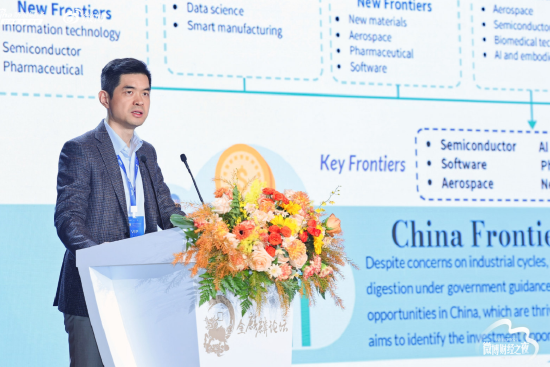
摩根士丹利邢自强:中国每年理工科毕业生接近500万,超过欧洲和美国总和
Xin Lang Cai Jing· 2026-01-15 11:25
Core Viewpoint - China is demonstrating "starry sea" breakthroughs in technological innovation, supported by three core advantages: industrial chain clusters, a surplus of STEM graduates, and a vast market scale, which are difficult for other economies to replicate [1][6]. Industrial Chain Clusters - In regions like the Yangtze River Delta and the Pearl River Delta, thousands of suppliers and engineers are available within a short distance, providing a competitive edge that countries like Mexico, India, and Southeast Asia lack, as they typically engage in only one segment of processing and design [3][8]. - China graduates nearly 5 million STEM students annually, surpassing the total from Europe and the United States combined [3][8]. AI Sector - Chinese companies are achieving technological catch-up in AI with only 1/10 of the investment compared to the U.S., and they account for a significant portion of global AI talent [3][8]. - The focus is on deploying lightweight models for rapid commercial application, which aligns with China's economic realities, and there is optimism that computational limitations will be overcome [3][8]. - Projections indicate that by 2027-2028, China could achieve a 50% domestic production rate in GPU technology [3][8]. Robotics and Automotive Industry - China holds a 60% share of the global leading companies in humanoid robotics, benefiting from cost advantages in components like arms and hydraulic systems [4][9]. - It is estimated that 30% of the global increase in humanoid robot supply may come from China [4][9]. Smart Driving and Biopharmaceuticals - China leads globally in smart driving adoption and is experiencing explosive growth in the biopharmaceutical sector [4][10]. - By 2040, it is projected that over one-third of new innovative drugs approved by the U.S. FDA will originate from China, marking a significant moment for the Chinese pharmaceutical industry [4][10]. Traditional Industries and Export Market - China monopolizes the global refining and processing of rare earths and lithium batteries, continuously enhancing its industrial chain competitiveness [4][10]. - Currently, China accounts for one-seventh of global exports, with expectations to rise to nearly one-sixth or more, potentially exceeding 17% in five years [4][10]. - The three core advantages and innovations in emerging industries are expected to solidify China's position in the global export market, which is anticipated to remain a crucial pillar for economic growth in the coming years [5][10].
光伏及电池产品出口退税调整点评:抢出口驱动显现,光伏、锂电、集运影响几何?
Guo Tai Jun An Qi Huo· 2026-01-15 10:15
1. Report Industry Investment Rating - No relevant information provided. 2. Core Viewpoints - The photovoltaic sector may experience a significant rush - to - export market in the first quarter, which will marginally benefit the demand for related products. The lithium - battery sector, including batteries and ternary materials, has short - term rush - to - export drivers. The "rush - to - export" in the photovoltaic sector will have a certain impact on the container shipping index (European line) [4][18][36]. 3. Summary by Directory 3.1 Photovoltaic Sector - **Export Tax Rebate System**: The export tax rebate system for photovoltaic products dates back to 2013. It has been adjusted several times, and from April 1, 2026, the export tax rebate for photovoltaic cells and modules will be cancelled. The expected cancellation of the tax rebate in 2025 Q3 led to a 10% quarter - on - quarter increase in component exports [7]. - **Impact on the Industry**: China's photovoltaic exports are mainly components, with about 40% going to Europe. After the cancellation of the tax rebate in April, the export cost per watt of components is expected to increase by $0.008 (equivalent to RMB 0.06 per watt), and the export profit per watt will drop to -$0.012, leading to potential losses in component exports [10]. - **European Market Situation**: The overall economic weakness in Europe, subsidy reduction, and limited grid capacity will lead to a 3% year - on - year decline in new photovoltaic installations in 2026. However, there is a clear peak - off - peak cycle. Before the policy adjustment on April 1, there will be a significant rush - to - export market, and component exports in Q1 2026 are expected to increase by 8 - 10GW compared to previous expectations [14]. - **Demand for Related Products**: In the first quarter, domestic installation demand is weak, but the rush - to - export of components will improve overall demand. It is expected to bring about 8 - 10GW of component demand increment, which will marginally benefit the demand for main and auxiliary materials of photovoltaic components [17]. 3.2 Lithium - Battery Sector - **Export Tax Rebate Policy**: The export tax rebate for lithium - ion batteries will be reduced to 9%, 6%, and 0% in December 2024, April 2026, and January 2027 respectively. The first reduction had no obvious impact, and in November 2025, the cumulative year - on - year exports of power and energy - storage batteries increased by 47% and 74% respectively [20]. - **Impact on Leading Enterprises**: The export tax rebate cancellation may reduce the policy support for enterprises by $1.8 billion. However, enterprises with a stable overseas market and strong bargaining power can better withstand the impact [21]. - **Export Demand of Power Batteries**: Power and energy - storage lithium - ion batteries rely on the export market by about 16% and 24% respectively. The core export area for power batteries is Europe. Although affected by US tariffs, the demand has strong resilience, and there will be a moderate "rush - to - export" demand [24]. - **Energy - Storage Batteries**: The domestic energy - storage battery market is highly competitive. With the cancellation of the 9% export tax rebate, there will be a strong "rush - to - export" demand in the Middle East, Chile and other regions. However, the current production capacity of battery factories is nearly saturated, so short - term export increments are limited [28]. - **Ternary Materials**: The export tax rebate for ternary materials and precursors will be reduced from 13% to 0%, with a greater impact on profits. NCM and NCM precursor materials mainly rely on exports to Japan and South Korea. The export tax rebate cancellation will have a greater impact on the upstream of the ternary lithium - battery industry chain and may stimulate a "rush - to - export" demand [31][35]. 3.3 Container Shipping Sector - **Transport Demand**: In 2025, the export of photovoltaic components to 12 European countries decreased by 6% compared to the same period in 2024. It is estimated that the "rush - to - export" of components may lead to the pre - shifting of 20,000 - 50,000 TEU of transport demand on the European line from Q2 to Q1, and the total transport demand on the European - Mediterranean route may increase by 40,000 - 70,000 TEU [39]. - **Impact on Container Shipping European Line**: The concentrated "rush - to - export" may occur from late February to March. The 20,000 - 50,000 TEU transport increment in the photovoltaic industry is difficult to change the monthly - level over - capacity situation. It will have a marginal positive impact on the loading rate from February to March but is negative for the transport demand after April. For the futures market, EC2602 is basically unaffected, and EC2604 has a downward - driving force, but it may not show an overly pessimistic discount [42].
光伏、锂电、汽车杀疯了!“新三样”海外狂卖1.3万亿,中国制造无人能挡
Sou Hu Cai Jing· 2026-01-15 10:09
Core Viewpoint - China's manufacturing industry has demonstrated remarkable resilience and growth, solidifying its position as a global manufacturing powerhouse despite challenges such as trade wars [2][3]. Group 1: Trade Performance - By 2025, China's foreign trade imports and exports are projected to reach 45.47 trillion yuan, setting a historical record [1]. - Exports of the "new three items" (new energy vehicles, lithium batteries, and photovoltaic products) are expected to reach 1.3 trillion yuan, reflecting a 27% increase year-on-year [1]. - In the first 11 months of 2025, China's trade surplus surpassed 1 trillion USD, marking a record high [1]. Group 2: Manufacturing Dominance - China possesses the most comprehensive industrial system globally, leading in the production of a vast majority of 504 industrial products [4]. - The country dominates the global market for lithium batteries, producing over 75% of the world's supply, and six of the top ten battery manufacturers are based in China [5]. - China's new energy vehicle production accounts for 60% of the global market share, with two out of every three electric vehicles sold worldwide being manufactured in China [6]. Group 3: Technological Advancements - China has made significant strides in high-tech manufacturing, including breakthroughs in solid-state batteries and high-speed rail technology, which have become symbols of Chinese manufacturing excellence [9]. - The country is also advancing in critical areas such as quantum communication and high-voltage transmission technology, with commercial applications being implemented globally [10]. - Despite existing gaps in high-end chips and key materials, China is actively working to overcome these challenges, with notable progress in domestic production capabilities [8].
西磁科技:未来锂电行业扩产将不再盲目 而是集中于头部企业
Xin Jing Bao· 2026-01-15 09:13
Core Viewpoint - The lithium battery industry is experiencing a recovery driven by increased demand for power batteries and energy storage, with a more rational approach to expansion expected in the next 1-2 years [1][2] Company Overview - Ningbo Ximic Technology Development Co., Ltd. (referred to as "Ximic Technology") was established in August 2003 and is recognized as a national-level specialized and innovative "little giant" enterprise [1] - The company specializes in the research, design, and production of magnetic filters and various magnetic application components [1] - As of September 2025, Ximic Technology achieved an operating income of approximately 73.7384 million yuan and a net profit attributable to shareholders of approximately 3.1973 million yuan [1] - Sales revenue from the lithium battery industry accounts for over 50% of the company's total revenue, making it the primary business segment [1] Industry Insights - The recovery in the lithium battery industry is attributed to the growth in demand for power batteries and energy storage, alongside policy and industry collaboration promoting a "de-involution" approach [1] - The industry has undergone a significant correction and is now poised for recovery, with future demand expected to be more rational and focused on leading companies with technological and scale advantages [1] - Two key aspects of this rational approach include: 1. Leading companies will more carefully select suppliers based on product quality and after-sales service following previous expansion [2] 2. The replacement cycle of existing equipment from prior investments will create ongoing market opportunities within the industry [2]
对话基金经理汤戈:储能需求爆发叠加固态电池加速,看好锂电设备投资机会
Sou Hu Cai Jing· 2026-01-15 08:53
Core Viewpoint - The A-share market is expected to reach a total market value of 100 trillion yuan by 2025, with the Shanghai Composite Index breaking 4,000 points, marking a nearly ten-year high. The focus for 2026 will be on identifying new investment opportunities across various sectors, particularly in the context of the ongoing trends in the lithium battery industry [1]. Group 1: Market Performance and Trends - The active start of 2026 is influenced by the market momentum from 2025, driven primarily by margin trading and private equity funds that favor growth themes, leading to increased market activity [4]. - Short-term thematic trading, while lively, is often unsustainable, and the market is expected to shift towards sectors with long-term industrial trends and solid performance support [4][5]. - The current market environment is characterized by rapid rotation of hot topics, with funds likely to shift focus to new sectors after the initial excitement fades [4]. Group 2: Investment Opportunities in Lithium Industry - Investment opportunities in the lithium battery sector are seen as a complex interplay of "cyclical" and "growth" factors, with improvements in supply-demand dynamics and new demands from energy storage and solid-state batteries [1]. - The equipment segment is favored for its direct reflection of expansion expectations, offering the highest valuation elasticity but also experiencing significant volatility [2]. - Continuous demand for energy storage and advanced cooling solutions driven by AI is a key focus area for investment [3]. Group 3: Solid-State Battery Insights - The solid-state battery market has transitioned from experimental phases to engineering stages, with significant investment opportunities emerging in equipment and materials [5][6]. - The equipment segment is expected to have the greatest elasticity due to clear order expectations once technology routes are confirmed, while the materials segment offers both performance and elasticity benefits [6]. - Solid-state batteries are anticipated to coexist with traditional lithium batteries, serving different market needs, with high-end applications likely to adopt solid-state technology first [7]. Group 4: Investment Strategy and Recommendations - The investment strategy should focus on long-term trends and sectors with improving fundamentals rather than chasing short-term market fads [5][8]. - Investors are advised to have a clear logic behind their investments, focusing on sectors driven by industrial trends and price-volume changes, while being cautious of valuation risks [8].
对话基金经理汤戈:储能需求爆发叠加固态电池加速,看好锂电设备投资机会|基遇2026
Sou Hu Cai Jing· 2026-01-15 08:47
Core Insights - The A-share market is expected to reach a total market value of 100 trillion yuan by 2025, with the Shanghai Composite Index surpassing 4,000 points, marking a nearly ten-year high [2] - The focus for investment opportunities in 2026 will be on sectors that align with long-term industrial trends, particularly in the new energy sector [4][5] Investment Opportunities - The lithium battery industry is anticipated to present a complex interplay of "cyclical" and "growth" opportunities, driven by improved supply-demand dynamics and new demands from sectors like energy storage and AI [4][6] - The equipment segment of the lithium battery supply chain is viewed as having the highest valuation elasticity, especially during the early stages of industry upturns [4][7] Market Dynamics - The initial market activity in 2026 is largely influenced by the momentum from 2025, characterized by a significant influx of margin trading and private equity funds favoring growth themes [5] - Short-term thematic trading driven by market sentiment is expected to be unsustainable, necessitating a shift towards sectors with clear long-term growth potential [5][6] Solid-State Battery Insights - Solid-state batteries have transitioned from experimental phases to engineering stages, presenting tangible investment opportunities, although widespread adoption may not occur until after 2030 [6][7] - The investment value in the solid-state battery supply chain is highest in the equipment and materials segments, with the latter potentially experiencing explosive demand due to new material requirements [7][8] Application and Transition - The consumer electronics sector is likely to be the first to adopt solid-state batteries on a large scale due to lower cost sensitivity compared to the automotive sector [8] - The half-solid-state battery technology is seen as a transitional phase, with investment strategies considering both immediate opportunities and long-term trends in solid-state technology [8][9] Investment Philosophy - The core investment philosophy emphasizes identifying opportunities based on industrial trends, cyclical patterns, and company performance changes [9] - Investors are advised to focus on sectors driven by clear industrial trends and to understand the valuation elasticity of different segments to avoid chasing inflated valuations [9]

宁德时代反击受挫?容百科技超1200亿大单受问询
Mei Ri Jing Ji Xin Wen· 2026-01-15 08:41
2025年年末至2026年年初,以磷酸铁锂为代表的锂电行业,上下游正进行一场轰轰烈烈的"大博弈"。 一方面,铁锂厂商整体亏损近三年,涨价欲望强烈;另一方面,电池厂商下游储能等行业价格也持续走 低。 1月13日,容百科技与宁德时代超1200亿元的采购合作协议引得整个市场热议,这或将成为磷酸铁锂行 业有史以来最大的订单。不过,该事项很快受到上交所问询。上交所要求容百科技全面自查,并完整披 露关于上述协议的全部重要内容。 此举或标志着宁德时代"控盘"磷酸铁锂的计划暂时受挫,后续其与上游磷酸铁锂厂商之间的博弈如何演 绎,值得持续关注。 磷酸铁锂"大博弈" 2025年年末,磷酸铁锂正极厂商集体停产检修,在锂电行业掀起波澜。湖南裕能、万润新能、德方纳 米、安达科技、龙蟠科技等主要磷酸铁锂正极厂商纷纷发布公告,表示将部分产能停产检修。 这被业界视为磷酸铁锂厂商"抱团取暖",以集体停产检修向下游电池厂商施压,从而提高加工费。 这场行动似乎取得了成功。2026年年初,鑫椤资讯称,加工费方面,除了个别大客户还在持续谈判中, 其他客户基本全部接受了部分供应商加工费提涨1000元/吨的要求。 然而,宁德时代的反击很快到来。 1月13 ...
20cm速递|碳酸锂价格暴涨36.71%!海力风电涨9.32%,创业板新能源ETF华夏(159368)逆势涨1.12%
Mei Ri Jing Ji Xin Wen· 2026-01-15 06:38
Group 1 - The A-share market experienced fluctuations on January 15, 2026, with the ChiNext New Energy ETF (Hua Xia, 159368) rising by 1.12% against the trend [1] - Lithium mining stocks showed resilience, with Hai Li Wind Power increasing by 9.32%, Zhong Wei New Materials by 6.86%, Xian Dao Intelligent by 4.36%, and Xin Qiang Lian by 4.14% [1] - The trading volume of the ChiNext New Energy ETF reached 65.93 million yuan, making it the top performer among similar funds [1] Group 2 - The benchmark price for industrial-grade lithium carbonate was reported at 160,000.00 yuan per ton, a 36.71% increase from the beginning of the month [1] - The inter-ministerial joint meeting on the development of the energy-saving and new energy vehicle industry emphasized enhancing the self-controllable capabilities of the supply chain and accelerating breakthroughs in solid-state batteries and advanced autonomous driving technologies [1] - Northeast Securities anticipates that the export tax rebate rate for lithium battery products will gradually decrease, with an expected increase in demand for lithium carbonate by 40,000 to 50,000 tons in 2026, intensifying supply constraints [1] Group 3 - The ChiNext New Energy ETF (Hua Xia, 159368) is the largest ETF fund tracking the ChiNext New Energy Index, covering various sectors within the new energy and new energy vehicle industries, including batteries and photovoltaics [2] - The ETF has high elasticity, with a potential increase of up to 20%, and the lowest fee rate, with a total management and custody fee of only 0.2% [2] - As of December 30, 2025, the fund's scale reached 676 million yuan, with an average daily trading volume of 70.75 million yuan over the past month [2]