茶饮

Search documents
霸王茶姬盘前涨2.69% Q3业绩即将放榜
Jin Rong Jie· 2025-11-28 09:46
Core Viewpoint - Bawang Chaji (CHA.US) is set to release its Q3 financial results on November 28, with analysts predicting earnings per share of $0.40 and revenue of $458.31 million [1] Group 1: Financial Performance - Analysts expect Bawang Chaji's earnings per share to be $0.40 [1] - Projected revenue for the company is $458.31 million [1] Group 2: Product Launch and Milestones - On November 17, Bawang Chaji celebrated its 8th anniversary and launched the new product "Boya Juexian - Floral Aroma" [1] - The initial product, Boya Juexian, has sold over 1.25 billion cups from January 1, 2022, to June 30, 2025, according to Sullivan data [1]
美股异动丨霸王茶姬盘前涨2.69% Q3业绩即将放榜
Ge Long Hui· 2025-11-28 09:21
Core Viewpoint - Bawang Chaji (CHA.US) is experiencing a pre-market increase of 2.69% ahead of its Q3 earnings report scheduled for November 28, with analysts projecting an earnings per share of $0.40 and revenue of $458.31 million [1] Group 1: Financial Performance - The company is expected to report earnings per share of $0.40 for Q3 [1] - Projected revenue for the quarter is $458.31 million [1] Group 2: Product Launch and Milestones - Bawang Chaji celebrated its 8th anniversary on November 17 and launched a new product, Boya Juexian - Huaxiang [1] - The initial product, Boya Juexian, has sold over 1.25 billion cups from January 1, 2022, to June 30, 2025, according to Sullivan data [1]
PingPong为益禾堂提供全球资金综合管理服务
Jing Ji Guan Cha Wang· 2025-11-28 09:11
Core Viewpoint - PingPong has announced a strategic partnership with the well-known domestic tea brand Yihotang to enhance its global expansion and overseas market penetration through integrated payment and fund management services [1] Group 1: Company Overview - Yihotang has been in the tea beverage industry for 13 years, covering 28 provincial-level administrative regions and over 300 cities in China [1] - The brand has signed contracts for over 8,000 stores globally and serves more than 1 billion consumers annually, with a loyal membership base of 75 million [1] - Yihotang has achieved over 80% coverage in national universities [1] Group 2: Strategic Partnership Details - The collaboration with PingPong will focus on addressing payment scenario adaptations for overseas stores and improving cross-border fund management efficiency [1] - PingPong will leverage its localized payment network in Southeast Asia and global fund management capabilities to support Yihotang's international strategy [1] - Since initiating its international strategy, Yihotang has opened over 60 stores in key Southeast Asian markets such as Thailand, Vietnam, and Malaysia [1]
业绩断崖下滑,预制奶茶也没人喝了......
东京烘焙职业人· 2025-11-28 08:33
Core Viewpoint - The article highlights a significant transformation in the Chinese tea beverage market, contrasting the declining performance of traditional brands like Xiangpiaopiao with the rapid growth of new tea drink companies such as Mixue Ice City and Guming, indicating a shift in consumer preferences from instant tea to freshly made tea drinks [4][12]. Group 1: Xiangpiaopiao's Challenges - Xiangpiaopiao, once a leading brand in the instant tea market, reported a revenue of 1.035 billion yuan in its half-year report, a year-on-year decline of 12.21%, and a net profit loss of 97 million yuan, a staggering drop of 230.13% [6]. - The decline is primarily attributed to a 31.04% drop in sales revenue from its instant tea products, which has significantly impacted overall performance [6]. - In response to these challenges, Xiangpiaopiao is attempting to reposition its brand towards younger and health-conscious consumers by launching new products like "original leaf freshly brewed milk tea" and "ancient five red warm milk tea" [6][10]. Group 2: Growth of Freshly Made Tea Brands - In contrast, new tea drink companies such as Mixue Ice City, Guming, and others have shown remarkable growth, with a combined revenue exceeding 33 billion yuan and a total net profit of over 5 billion yuan in the first half of the year [12]. - Mixue Ice City achieved a revenue of 14.87 billion yuan, a year-on-year increase of 39.3%, and a net profit of 2.72 billion yuan, up 44.1% [12]. - Guming also reported impressive growth, with a revenue of 5.363 billion yuan, a 41.2% increase, and a net profit surge of 121.51% [12]. Group 3: Market Dynamics and Consumer Preferences - The tea beverage industry is experiencing a shift towards health and freshness, with consumers increasingly prioritizing product ingredients and health benefits, leading to a rise in fresh fruit and vegetable drinks [17]. - The competition is intensifying as freshly made tea brands establish robust supply chains, with Mixue Ice City achieving 100% self-sourcing of core ingredients and Guming providing rapid cold chain delivery to 98% of its stores [19]. - The integration of online and offline channels is becoming crucial for brand expansion, as consumers view tea drinks not just as beverages but as social and emotional experiences [18].




茶百道捐赠500万港元,驰援香港大埔火灾救援
Xin Lang Cai Jing· 2025-11-27 14:42
Core Viewpoint - The article highlights the rapid response from various sectors in Hong Kong to support victims of the fire in Tai Po, with a specific focus on the donation made by Cha Bai Dao to aid recovery efforts [1] Group 1: Company Actions - Cha Bai Dao announced a donation of 5 million HKD to assist affected individuals with medical care, housing, and post-disaster reconstruction [1] - The company expressed heartfelt wishes for the safety and quick recovery of the affected residents [1] - Cha Bai Dao also paid tribute to the firefighters and rescue personnel working tirelessly on the front lines [1]
12月金股
Tai Ping Yang Zheng Quan· 2025-11-27 14:41
Group 1: Communication Sector - The report highlights the strong fundamentals of the digital virtual goods operator, Bee Assistant (301382.SZ), with a stable business base and rapid growth in IoT and cloud terminal services [4] - The company is expected to benefit from AI trends due to its strategic investments in AI-related areas [4] Group 2: Medical Sector - United Imaging Healthcare (688271.SH) is identified as a leading domestic medical imaging equipment manufacturer with a comprehensive product line including CT, MR, MI, XR, RT, and ultrasound [4] - The company has made significant breakthroughs in core technologies and successfully launched high-end products like ultra-high field MR and digital PET-CT, which are at the forefront of global standards [4] - Anticipated revenue recognition from delayed orders in 2024 is expected to boost performance in the second half of 2025, supported by new funding for equipment upgrades [4] Group 3: Consumer Goods Sector - Gu Ming (1364.HK) is noted as a highly certain and scalable player in the tea beverage sector, with strong same-store sales and rapid franchisee payback periods [4] - The company is expected to emerge as a stable growth and expansion leader during the industry reshuffle in 2026 [4] Group 4: Home Appliances Sector - Midea Group (000333.SZ) reported a 13% year-on-year revenue increase in the ToC segment for Q1-Q3 2025, driven by high-end brands and an optimized product structure [5] - The ToB segment saw an 18% revenue increase, with significant growth in new energy and industrial technology sectors [5] - The company's focus on robotics is expected to enhance its product offerings and support long-term revenue growth [7] Group 5: Chemical Sector - Excellent New Energy (688196.SH) is positioned well in the biofuel industry, with a robust capacity layout for biodiesel and bio-based materials [7] - The company is accelerating its biodiesel project with a projected post-tax internal rate of return of 28.94%, enhancing its market competitiveness [7] Group 6: Financial Sector - Industrial and Commercial Bank of China (601398.SH) is characterized by its stability and high dividend yield, making it a preferred choice for investors seeking certainty [7] - The bank's net profit showed a slight year-on-year increase of 0.33% for the first three quarters of 2025, with non-interest income growing by 11.3% [7] Group 7: Transportation Sector - Jinjiang Shipping (601083.SH) reported a remarkable 64% year-on-year increase in net profit for Q3, outperforming peers [7] Group 8: Retail Sector - China Duty Free Group (601888.SH) is experiencing a recovery in duty-free sales, benefiting from increased domestic tourism and expectations of policy support [7] Group 9: Agriculture Sector - Tian Kang Biological (002100.SZ) is positioned to benefit from rising pig prices as the industry undergoes capacity reduction, potentially enhancing profitability [8] Group 10: Electronics Sector - Huadian Co., Ltd. (002463.SZ) is experiencing high growth in server switch business driven by AI demand, with ongoing capacity expansion and improved profitability [8]





全球化再提速:印尼双店三日GMV超28万元,美国市场连开四店
Sou Hu Cai Jing· 2025-11-27 06:19
Core Insights - The Chinese tea brand, Jasmine Milk Tea, has opened two new stores in Jakarta, Indonesia, marking its entry into the sixth overseas market and demonstrating its global expansion strategy [1][3] - The brand has also opened four new locations in the United States, indicating simultaneous growth in both hemispheres [1] Expansion in Southeast Asia - The entry into the Indonesian market is based on a thorough analysis of the Southeast Asian market, with Indonesia being the largest economy in the region and having a young population that aligns with the brand's target demographic [3] - The brand's rapid expansion into culturally similar markets like Indonesia follows its successful entry into Thailand, showcasing a shift towards a more coordinated regional strategy [3] Localization Strategy - Jasmine Milk Tea emphasizes a "global standard + local integration" operational model, blending Eastern aesthetics with local elements in its store designs and marketing campaigns [5] - The brand's marketing activities, such as the "Molly Tea Garden" pop-up event in Indonesia, aim to immerse consumers in the unique charm of Eastern aesthetics [5] Product Innovation - The brand has adapted its product offerings to cater to North American consumer preferences by adjusting tea extraction ratios to enhance the "tea flavor" experience [7] - It maintains a balance between global quality and local adaptation by offering a selection of proven products alongside its classic tea series [7] Supply Chain Development - Jasmine Milk Tea employs a "cross-border + local" dual-track model for supply chain management, partnering with local suppliers to source ingredients like fresh milk, which helps reduce logistics costs and improve operational efficiency [9] - The brand integrates global quality control standards into its local supply chain to ensure consistent product quality across international locations [9] Global Expansion Progress - The brand's global store count has surpassed 2,000, with over 30 locations outside of China, covering markets such as the United States, Canada, Australia, the UK, Thailand, and Indonesia [9] - The brand's first store in the U.S. has achieved a stable monthly GMV of approximately $500,000, demonstrating sustainable operational capabilities in mature markets [11] Cultural Confidence and Future Plans - Jasmine Milk Tea's global journey represents not only store expansion but also the output of Chinese brand innovation and cultural confidence [11] - The brand plans to continue its steady overseas market development, aiming to introduce more consumers to the unique appeal of Eastern tea beverages [11]

一场精心策划的“智商税”,收割了多少想暴富的县城青年
首席商业评论· 2025-11-27 04:12
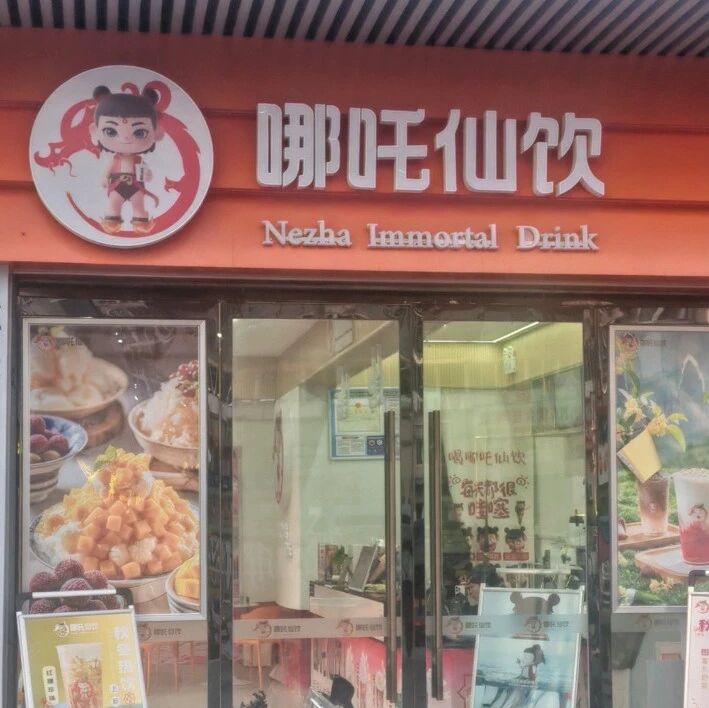
Core Viewpoint - The article discusses the rise and fall of the brand "Nezha Xianyin," highlighting the humorous yet critical public perception of its business model and the challenges faced by its franchisees [5][7][12]. Group 1: Brand Perception and Public Reaction - "Nezha Xianyin" is perceived as a brand that humorously exploits the popularity of the "Nezha" IP, leading to a mix of ridicule and ironic support from the public [5][8]. - The brand's marketing strategy has sparked a wave of online engagement, with users creatively promoting it despite acknowledging its flaws, thus creating a viral phenomenon [9][12]. - The public's reaction includes exaggerated claims about the brand's appeal, with some even suggesting it has magical qualities to attract customers, showcasing a blend of satire and genuine interest [9][12]. Group 2: Franchise Challenges and Business Model - Many franchisees have reported significant difficulties, including poor location choices and low sales, leading to financial losses and store closures [7][13]. - The franchise model has been criticized for its lack of transparency, with many franchisees feeling misled about the brand's potential and operational support [17][19]. - The article reveals that the parent company of "Nezha Xianyin" has been involved in questionable practices, including a lack of operational legitimacy and a history of company cancellations, raising concerns about the brand's sustainability [12][13]. Group 3: Fast Franchise Model Risks - The article highlights the risks associated with "fast franchise" models, where companies lure potential franchisees with low entry costs and high returns, often leading to exploitation [17][19]. - Many entrepreneurs fall victim to these schemes due to a lack of understanding of the franchise process and the importance of verifying company credentials [19]. - The narrative emphasizes that while the new tea beverage market may still hold potential, the allure of easy profits can lead to significant losses for those who do not conduct thorough due diligence [19].
茶百道20251126
2025-11-26 14:15
Summary of Tea Baidao Conference Call Company Overview - **Company**: Tea Baidao - **Industry**: Beverage (Tea and Coffee) Key Points Sales Performance and Growth - November same-store sales growth driven by new products like Solid Mango Pomelo Sago, averaging 40 cups per store daily, contributing over 10% to single-store GMV [2][5][6] - Company maintains a product strategy of 20% innovation and 80% standardization to meet existing customer needs [2][7] - Optimistic outlook for 2026 single-store and same-store performance despite limited growth in 2025 due to low base effects from 2024 [2][9] New Product Development - New products significantly contribute to sales; for instance, Solid Mango Pomelo Sago accounted for about 22% of new product contributions in early 2025, rising to nearly 30% by October [3][5] - The company plans to continue introducing new products while keeping the SKU count around 30 to cater to consumer demand [6][7] Coffee Business Expansion - Initiated coffee business trials in the second half of 2025, with plans to open approximately 200 stores by year-end, primarily in first-tier cities [2][10] - Average cup sales for coffee expected to be around 30 cups, with imported automatic coffee machines costing about 70,000 to 80,000 yuan each [10][12] Store Opening Plans - Plans to open about 1,000 new stores in 2026, focusing on lower-tier markets to balance overall store structure [2][11][18] - Emphasis on multi-store operations for existing franchisees in lower-tier markets to reduce internal competition [18] Financial Performance - Improvement in single-store profit and payback period, with most stores recovering costs in 10 to 16 months, a reduction of 1 to 2 months from the previous year [3][23] - Long-term gross margin expected to stabilize around 33%, with anticipated profit margins of 15% to 16% in the second half of 2025 [3][27][34] Market Position and Competition - Significant room for expansion in lower-tier markets, particularly in Sichuan, where many stores are concentrated in Chengdu [20] - Competing effectively against local brands in advantageous regions due to higher frequency of new product launches and strong supply chain support [21][22] Overseas Expansion - Focus on expanding in the Korean market, with positive results from new stores in Southeast Asia and plans for further growth in Europe and North America [30][31][35] - Overseas markets generally show better profitability compared to domestic markets due to higher GMV contributions and lower rental costs [35] Dividend and Capital Expenditure Plans - Company maintains a dividend payout ratio of 60% to 80%, aiming to distribute as much profit as possible to shareholders [32] - Annual capital expenditure of approximately 300 to 500 million yuan focused on supply chain and digitalization improvements [33] Consumer Trends and Pricing Strategy - High reliance on takeaway sales, with approximately 60% of sales coming from delivery platforms [36] - Average selling price for 2025 is around 17 yuan, with plans to maintain pricing within a reasonable range to attract consumers while introducing higher-margin products [38]
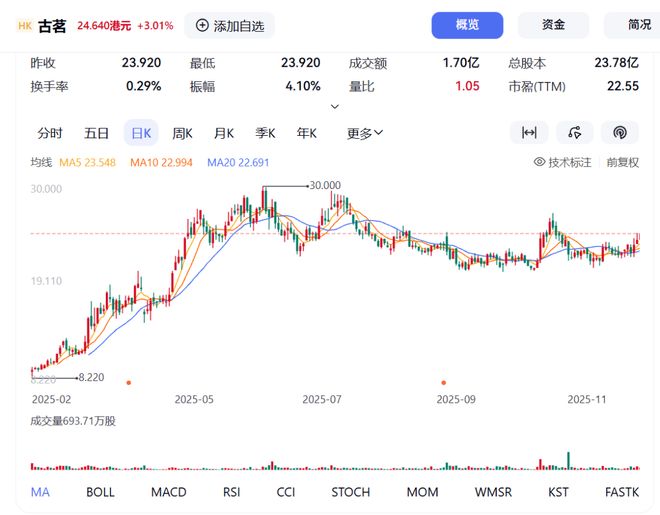
古茗高管再次套现16亿,钱都流向了海外信托
Xin Lang Cai Jing· 2025-11-26 13:02
Core Viewpoint - The article discusses the financial performance and controversial dividend distribution of the tea company, Gu Ming, highlighting its rapid growth and the implications of its business model on investor confidence and market perception [2][4][21]. Financial Performance - Gu Ming reported a revenue growth of over 41% in the first half of the year, with a net profit margin close to 29%, making it a standout performer in the tea industry [2][3]. - The company achieved a revenue of nearly 57 billion yuan and a net profit exceeding 16 billion yuan, marking a year-on-year increase of over 121% [3][4]. - As of November 26, Gu Ming's total market capitalization exceeded 58 billion HKD, doubling since its IPO [5]. Dividend Distribution - Gu Ming announced a special dividend exceeding 22 billion HKD, which is more than the 18.13 billion HKD raised during its IPO [7][8]. - Over 70% of the dividend, approximately 16 billion HKD, will flow into the family trust accounts of its core shareholders, raising questions about the company's motives for going public [7][8][13]. - This marks the second significant dividend distribution within a year, totaling nearly 40 billion HKD, with core shareholders receiving over 28 billion HKD [13][21]. Business Model and Growth - Gu Ming's revenue primarily comes from selling goods and equipment to franchisees, rather than direct consumer sales, indicating that its growth is tied to the expansion of its franchise network [16][19]. - As of mid-2025, Gu Ming had over 11,000 stores, but the growth rate of new franchisees has shown signs of slowing down [16][17]. - The company experienced a decline in new store openings and an increase in store closures, with a closure rate of 6.8% in 2024 and a franchisee attrition rate of 15.18%, significantly higher than competitors [17][19]. Market Competition and Challenges - The saturation of the market has led to increased internal competition among Gu Ming's stores, which may negatively impact profitability for franchisees [19][20]. - The article suggests that the reluctance of experienced franchisees to open new stores indicates a lack of profitability in the current market environment [19][20]. Investor Sentiment - The actions of Gu Ming, particularly the large dividend payouts to major shareholders shortly after going public, have raised concerns among investors about the company's long-term intentions and financial health [21][22].