量子科技

Search documents
龙虎榜复盘 | 英伟达重磅产品点燃多板块走强,机构10亿扫货光伏龙头股
Xuan Gu Bao· 2025-10-29 10:50
Group 1: Institutional Trading Insights - Today, 38 stocks were listed on the institutional trading leaderboard, with 24 stocks seeing net purchases and 14 stocks experiencing net sales [1] - The top three stocks with the highest net purchases by institutions were: Sunshine Power (1.055 billion), Keda Guochuang (273 million), and Lian Te Technology (267 million) [1][2] Group 2: Sunshine Power Financial Performance - Sunshine Power reported a Q3 earnings per share of 5.73 yuan and a net profit of 11.881 billion yuan, reflecting a year-on-year growth of 56.34% [2] Group 3: Quantum Technology Collaborations - Tianrongxin has invested in Anhui Wentian Quantum and established a strategic partnership, focusing on quantum information technology with multiple international and domestic patents [3] - Keda Guochuang has made investments in Guoyi Quantum and Jiuzhang Quantum, and has engaged in minor software business collaborations within the quantum industry chain [4] Group 4: PCB/Copper Clad Laminate Market - A report from Shanghai Securities indicates that Nvidia's Rubin utilizes M9 materials, benefiting the upstream materials for AI PCBs amid an upgrade wave [5] - Currently, M7 and M8 levels remain mainstream for high-end AI servers, while M9 level advancements are becoming a market focus [5]

英伟达革命性入局,量子科技位列6大未来产业之首,如何投资?
Ge Long Hui A P P· 2025-10-29 10:50
Core Insights - The quantum technology sector is experiencing significant growth, driven by NVIDIA's recent launch of NVQLink and China's strategic focus on quantum technology as a key future industry in its "14th Five-Year Plan" [1][7][23] Industry Developments - NVIDIA's NVQLink connects quantum processors with its GPU supercomputers, addressing previous challenges in quantum computing related to environmental noise and error correction [5][20] - The Chinese government aims to establish quantum technology as a new economic growth point, with various initiatives already in progress, such as the launch of the world's first four-channel single-photon detector and the "Lighting Up a Hundred Cities" plan by China Mobile [7][8] Market Potential - The global quantum technology market is projected to exceed $6.1 billion by 2025, with China's market expected to reach 11.56 billion yuan, reflecting a compound annual growth rate (CAGR) of over 30% [9] - The quantum computing market alone is anticipated to grow significantly, with estimates suggesting a global market size of $21.55 billion by 2030 [17][18] Key Technologies and Companies - Key areas of technological advantage in China include quantum communication, quantum computing, and quantum measurement, with leading companies such as GuoDun Quantum and HeXin Instruments making significant strides [12][20] - GuoDun Quantum reported a 283.92% year-on-year increase in quantum computing revenue in the first half of 2025, indicating strong business growth [20] Investment Opportunities - The focus for investors should be on core hardware components such as dilution refrigerators and measurement control systems, which are essential for quantum computing [15][18] - Companies like GuoDun Quantum and HeXin Instruments are positioned to benefit from the growing demand for quantum technology, with HeXin Instruments planning to acquire a majority stake in a leading dilution refrigerator manufacturer [20][21]


为什么这项突破性技术使2025年成为“国际量子科学与技术年”
科尔尼管理咨询· 2025-10-29 09:33
Core Insights - The article emphasizes the strategic importance of quantum technology, highlighting its inclusion in China's "14th Five-Year Plan" as a national strategic pillar industry aimed at breakthroughs in quantum communication, quantum computing, and quantum precision measurement [1] Group 1: Quantum Technology Developments - Global companies, including Apple, are increasingly focusing on quantum technology, with Apple announcing a significant upgrade to its iMessage encryption using a post-quantum encryption protocol called PQ3 [3] - Quantum computing is expected to revolutionize encryption methods, as traditional encryption systems may soon reach their limits due to the superior processing capabilities of quantum computers [4][5] - Experts estimate that quantum computing applications could be realized within 7 to 10 years, with potential impacts on various fields such as chemistry, logistics, and energy distribution [7] Group 2: Quantum Computing Principles - Quantum computers operate using quantum bits (qubits) that can exist in a superposition of states, allowing for parallel processing of information [5] - The phenomenon of entanglement in quantum mechanics enables qubits to be interconnected, meaning changes to one qubit can instantly affect others, regardless of distance [5] Group 3: Quantum Communication and Security - Quantum key distribution is a significant application of quantum technology, providing secure generation and transmission of encryption keys, although it faces challenges related to infrastructure and complexity [13] - The launch of the first quantum satellite by Germany and China's successful intercontinental quantum communication link demonstrate advancements in quantum communication technology [9][10] Group 4: Global Initiatives and Regulations - The United Nations has declared 2025 as the "Quantum Year," promoting global awareness of quantum technology [15] - The U.S. National Institute of Standards and Technology (NIST) is developing post-quantum encryption standards to protect against quantum computer attacks, with plans to transition all sensitive systems to these standards by 2035 [16] - The European Union is investing in quantum research through initiatives like the Quantum Flagship Program, which has a budget of €1 billion to advance quantum technologies [17] Group 5: Industry Implications - Companies across various sectors are increasingly adopting quantum solutions to maintain competitiveness, focusing on quantum encryption and anti-quantum encryption methods [17] - The second quantum revolution is anticipated to bring significant advancements, with more developments expected in the coming years [18]

英伟达革命性入局,量子科技位列6大未来产业之首,如何投资?
格隆汇APP· 2025-10-29 09:31
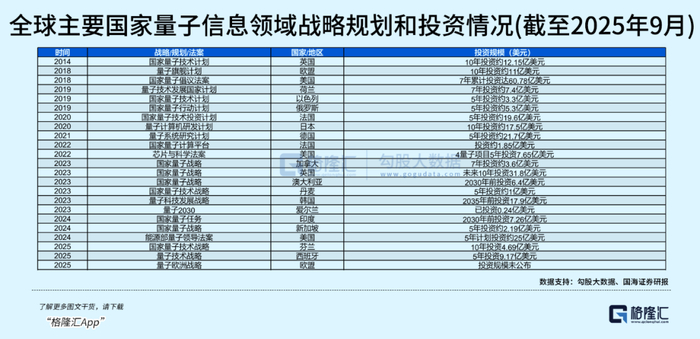
Core Insights - The article highlights the recent surge in interest and investment in quantum technology, particularly following NVIDIA's launch of NVQLink, which integrates quantum processors with GPU supercomputing [2][4][7]. - China's "14th Five-Year Plan" positions quantum technology as a leading future industry, indicating its importance in the global technological competition over the next decade [2][11]. Investment Plans and Scale - Various countries have made significant investments in quantum technology, with the U.S. leading with a cumulative investment of approximately $6.078 billion over seven years through the National Quantum Initiative Act [3]. - The global quantum technology market is projected to exceed $6.1 billion by 2025, with China's market expected to reach approximately 11.56 billion yuan, reflecting a compound annual growth rate (CAGR) of over 30% [14]. Technological Advancements - Quantum technology is transitioning from laboratory research to commercial applications, with NVIDIA's NVQLink enhancing the operational capabilities of quantum computers by addressing environmental noise issues [4][7]. - Key technological advantages in China are identified in three areas: quantum communication, quantum computing, and quantum measurement, with notable companies leading in these sectors [16]. Key Companies and Market Dynamics - GuoDun Quantum is recognized as a leading player in China's quantum technology sector, reporting a 283.92% year-on-year increase in quantum computing revenue [25][26]. - HeXin Instruments is pursuing a strategic acquisition to enhance its position in the dilution refrigerator market, which is critical for quantum computing [27]. - Other notable companies include BenYuan Quantum and GuoYi Quantum, which are making strides in quantum computing technologies and have secured international orders [28]. Market Opportunities - The dilution refrigerator market is expected to grow significantly, with predictions indicating a global market size of $19.4 billion by 2030, and China's market reaching $5.4 billion [21]. - The control system market for quantum computing is projected to reach $21.74 billion by 2030, driven by increasing technical demands as quantum bit counts rise [24]. Future Outlook - The convergence of NVIDIA's entry, supportive government policies, and rapid technological advancements is setting the stage for significant growth in the quantum technology sector [34]. - Investors are encouraged to focus on core hardware components like dilution refrigerators and control systems, which are seen as having high certainty in terms of market demand and growth potential [34].
A股收评 | 沪指站稳4000点!利好突袭北证50暴涨逾8% 新一轮突破将开启?
智通财经网· 2025-10-29 07:13
Market Overview - A-shares experienced a significant rise, with the Shanghai Composite Index closing at 4000 points, up 0.70%, while the Shenzhen Component Index rose by 1.95% and the ChiNext Index increased by 2.93% [1] - The North Exchange 50 Index surged over 8%, indicating strong market momentum [1] Policy and Regulatory Developments - The chairman of the North Exchange, Lu Songbin, announced ongoing optimization of the North Exchange index system and plans to launch the North Exchange 50 ETF, enhancing trading convenience [1] - The Beijing Securities Regulatory Bureau, in collaboration with the municipal financial office, introduced implementation opinions to promote long-term capital entering the market [1][2] Sector Performance 1. Photovoltaic Sector - The photovoltaic sector saw a strong afternoon surge, with stocks like Longi Green Energy and others hitting the daily limit [3] - In September, China's newly installed photovoltaic capacity reached 9.7 GW, a 31.79% increase from August [3] - Financial reports indicate a recovery in industry chain prices and a consensus against disorderly competition [3] 2. Hainan Free Trade Zone - The Hainan Free Trade Zone concept gained traction, with stocks such as Hainan Development and others reaching their daily limit [5] - The Hainan Free Trade Port is set to officially launch on December 18, with various sectors accelerating policy implementation [5] 3. Quantum Technology - The quantum technology sector showed repeated strength, with stocks like Shenzhou Information and others hitting the daily limit [7] - Nvidia's launch of NVQLink aims to connect quantum computing with GPU computing, indicating growth potential in the quantum technology market [7] - The global quantum technology market is projected to exceed $6.1 billion by 2025, with China's market expected to reach 11.56 billion yuan, reflecting a compound annual growth rate of over 30% [7] Analyst Insights - Pacific Securities noted that the recent breakthrough of the Shanghai Composite Index above 4000 points provides a solid foundation for future highs, suggesting that any pullback should be viewed as a buying opportunity [8] - Industry analysts emphasize the importance of focusing on technology-driven sectors, particularly in light of the "14th Five-Year Plan" and the ongoing economic transformation [10][11]
收评:北证50指数大涨8.41%,沪指站稳4000点,光伏储能、有色金属板块集体爆发
Xin Lang Cai Jing· 2025-10-29 07:08
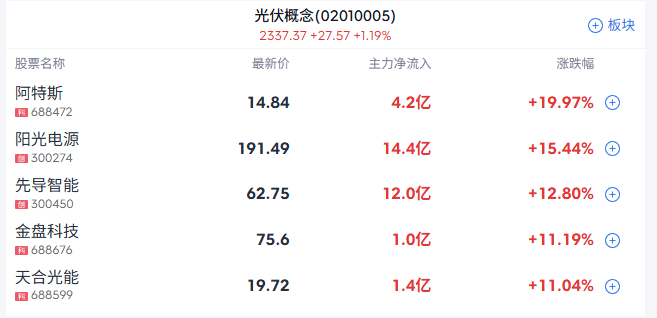
Market Performance - The three major A-share indices collectively rose, with the Shanghai Composite Index increasing by 0.7%, the Shenzhen Component Index by 1.95%, and the ChiNext Index by 2.93% [1] - The North Stock 50 surged by 8.41% [1] - The total trading volume in the Shanghai, Shenzhen, and Beijing markets reached 22,907 billion yuan, an increase of 1,254 billion yuan compared to the previous day [1] - Over 2,600 stocks in the market experienced gains [1] Sector Performance - The leading sectors included Hainan Free Trade Zone, photovoltaic equipment, industrial metals, batteries, securities, gaming, and quantum technology, all showing significant gains [1] - The banking sector, film and television industry, liquor, and local stocks from Fujian province saw declines [1] Notable Stocks - The photovoltaic equipment and energy storage sectors saw a strong afternoon rally, with stocks like Canadian Solar, LONGi Green Energy, and Tongwei Co. hitting the daily limit [1] - Sungrow Power Supply reached a new intraday high [1] - The non-ferrous metals sector also performed well, with copper and zinc leading the gains; major stocks like Zhongjin Lingnan Nonfemet Company and Jiangxi Copper Company saw significant increases [1] - The Hainan Free Trade Zone stocks, including Hainan Development Holdings, Hainan Airlines, and Hainan Haishi, also performed actively [1] Market Dynamics - There was a rotation among various sectors, including securities, gaming, and quantum technology [1] - Conversely, several banks experienced declines, with Chengdu Bank, Shanghai Pudong Development Bank, and Xiamen Bank leading the losses [1] - Local stocks from Fujian province showed mixed performance, with companies like Xiamen Xinda, Haixia Environmental Protection, and China Wuyi experiencing declines [1]
“十五五”规划建议稿解读:乘势而上,因势利导
Yin He Zheng Quan· 2025-10-29 05:44
Group 1: Economic Development - The "15th Five-Year Plan" is a critical period for achieving socialist modernization by 2035, with a target GDP growth rate of around 5% during this period[2] - The plan emphasizes high-quality development as the primary task, aiming for significant achievements in this area[2] - By 2035, the goal is to reach a per capita GDP level comparable to that of moderately developed countries, which is projected to be approximately 21,000 USD[25] Group 2: Industrial and Technological Advancement - The plan focuses on building a modern industrial system, highlighting advanced manufacturing as a leading sector[3] - Key areas for technological self-reliance include new energy, quantum technology, and artificial intelligence, aiming for international leadership in these fields[3] - Strengthening the integration of technological innovation with industrial innovation is a priority[3] Group 3: Domestic Market and Consumption - Enhancing domestic demand is crucial, with a strong emphasis on boosting consumer spending as a top priority[3] - The plan outlines strategies for effective investment expansion to stimulate economic growth[3] Group 4: Financial and Open Economy - The "15th Five-Year Plan" aims to accelerate the construction of a financial powerhouse and promote the internationalization of the Renminbi[3] - It emphasizes a cooperative and win-win approach to expand autonomous openness in the economy[3] Group 5: Agricultural and Cultural Development - Accelerating agricultural modernization and leveraging regional strategic advantages are key components of the plan[3] - The plan also stresses the importance of cultural confidence and the value of the cultural industry, aiming to stimulate cultural innovation and creativity[3]
站上4000点!重磅利好突袭!
天天基金网· 2025-10-29 05:24
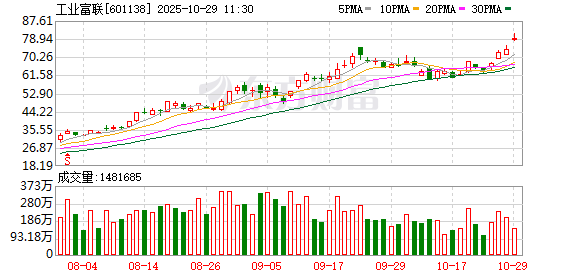
Market Overview - The Shanghai Composite Index has once again surpassed 4000 points, with a notable increase of 0.37% to close at 4002.83 points [6] - The Shenzhen Component Index rose by 0.9%, while the ChiNext Index increased by 1.35% [6] Key Highlights - The stock market is witnessing significant movements in four main sectors: computing power industry, financial sector, new energy sector, and non-ferrous metals [3][4][5][6] Computing Power Industry - Nvidia's stock reached an all-time high, stimulating the computing power industry chain, with Industrial Fulian seeing a 7.16% increase and hitting a historical high market capitalization of 1.57 trillion yuan [3] Financial Sector - The financial sector is experiencing a surge, particularly in the securities segment, with Huazhang Securities hitting the daily limit and a notable increase in trading volumes [4][8] - The securities sector is viewed as having a strategic configuration opportunity, with the A-share market capitalization exceeding 100 trillion yuan, enhancing long-term growth potential for brokerage firms [12] New Energy Sector - The new energy sector is rebounding, with leading stocks such as CATL, Longi Green Energy, and Sungrow Power seeing significant gains [5][14] - Sungrow Power reported a 32.95% year-on-year increase in revenue for the first three quarters, amounting to 66.402 billion yuan, and a 56.34% increase in net profit [16] - CATL's third-quarter report showed a revenue of 283.072 billion yuan, up 9.28% year-on-year, and a net profit of 49.034 billion yuan, reflecting a 36.2% increase [17] Non-Ferrous Metals Sector - The non-ferrous metals sector is also experiencing a rebound, with industrial metals leading the gains [6] Quantum Technology Sector - The quantum technology sector is seeing significant growth, with stocks like Keda Guokuan and Fujida experiencing substantial increases [18] - Recent positive news in the quantum technology field includes Nvidia's announcement of a new architecture aimed at integrating GPU computing with quantum processors, and the awarding of the 2025 Nobel Prize in Physics to notable quantum physicists [21] - Investment opportunities in quantum information are being highlighted, particularly in quantum computing, communication, and precision measurement [21]







\十五五\规划将量子科技列为未来产业核心赛道,关注北交所量子科技产业链企业:北交所科技成长产业跟踪第四十八期(20251026)
Hua Yuan Zheng Quan· 2025-10-29 05:21
Group 1 - The "14th Five-Year Plan" includes quantum technology as a core future industry, with a focus on quantum computing, communication, and measurement [7][8][10] - By 2025, China's quantum technology market is expected to exceed 20 billion yuan, with a compound annual growth rate of 35%-40% [2][33][35] - The global quantum computing market was valued at 1.1 billion USD in 2022 and is projected to grow to approximately 7.6 billion USD by 2027 [14][16] Group 2 - The median price-to-earnings (P/E) ratio for the information technology sector on the Beijing Stock Exchange increased by 5.26% to 62.4X [43][54] - The median market capitalization for electronic device companies on the Beijing Stock Exchange rose from 2.28 billion yuan to 2.43 billion yuan [45][48] - The median P/E ratio for mechanical equipment companies on the Beijing Stock Exchange increased from 52.5X to 54.4X, with total market capitalization rising from 117.67 billion yuan to 123.18 billion yuan [50][52]
万亿巨头 冲击涨停 历史新高!
Zhong Guo Zheng Quan Bao· 2025-10-29 04:45
Market Overview - The Shanghai Composite Index has once again surpassed the 4000-point mark, closing at 4002.83 points, up 0.37% [2] - The Shenzhen Component Index rose by 0.9%, while the ChiNext Index increased by 1.35% [2] Key Highlights - Nvidia's stock reached an all-time high, stimulating the computing power industry chain, with Industrial Fulian rising by 7.16% and reaching a market value of 1.57 trillion yuan [2] - The financial sector saw significant gains, particularly in the securities segment, with Huazhang Securities hitting the daily limit [3][4] - The new energy sector rebounded, with leading stocks such as CATL, LONGi Green Energy, and Sungrow Power increasing in value [2][6] - The non-ferrous metals sector also experienced a rebound, leading the industrial metals sector [2] Financial Sector Performance - The securities sector index rose by 2.28%, with notable stocks like Huazhang Securities and Northeast Securities increasing by 10.05% and 9.73%, respectively [4][5] - The overall market capitalization of A-shares has surpassed 100 trillion yuan, providing a broad growth space for securities firms [5] New Energy Sector Performance - The new energy sector showed strong performance, with solid-state batteries, photovoltaic equipment, and BC batteries experiencing price increases [6] - Sungrow Power reported a 32.95% year-on-year increase in revenue for the first three quarters, reaching 66.402 billion yuan, and a 56.34% increase in net profit [8] - CATL's revenue for the same period was 283.072 billion yuan, up 9.28%, with a net profit increase of 36.2% [8] Quantum Technology Sector Performance - The quantum technology sector saw significant gains, with stocks like Keda Guokong and Fujida rising sharply [9][10] - Recent positive news in the quantum technology field includes Nvidia's announcement of a new open system architecture for quantum computing and the awarding of the 2025 Nobel Prize in Physics for contributions to quantum mechanics [10][11] - Analysts suggest focusing on investment opportunities in quantum computing, communication, and precision measurement sectors [11]