
生猪养殖

Search documents
生猪行情旺季不旺 猪价为何承压?记者调查
Huan Qiu Wang Zi Xun· 2025-12-23 14:38
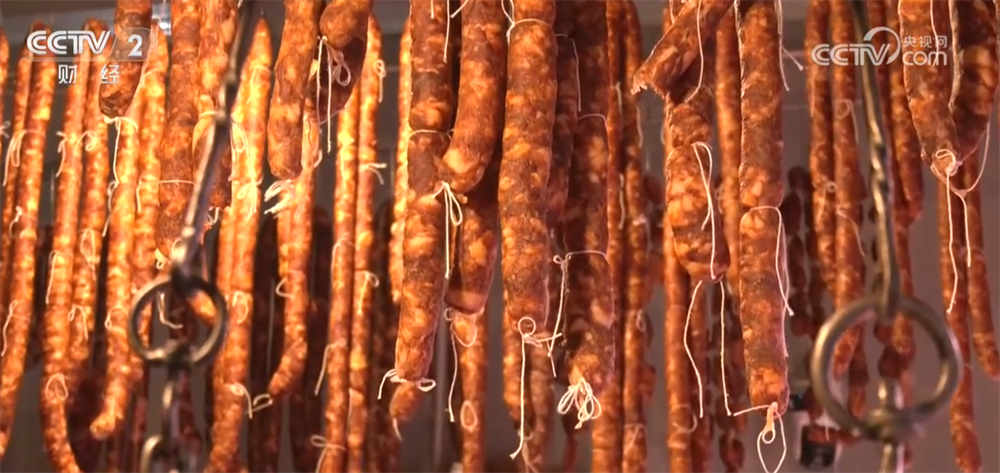
Core Viewpoint - The pork market is experiencing a seasonal downturn despite entering the winter sales peak, leading to pressure on pork prices due to various factors affecting both demand and supply [1]. Group 1: Demand Factors - In southern China, the demand for pork products, particularly for traditional items like cured meat and sausages, has decreased significantly, with consumers purchasing less than in previous years [3]. - Current prices for pork cuts such as belly meat are around 9 yuan per jin, and leg meat is about 8 yuan per jin, which is 3-4 yuan lower per jin compared to the same period last year, yet sales volumes remain below last year's levels [5]. - The delayed timing of the upcoming Spring Festival has also postponed some concentrated purchasing demand, limiting support for pork prices from the consumer side [7]. Group 2: Supply Factors - The supply side remains under pressure due to an expansion in industry capacity following two years of high profitability in pig farming. As of the end of Q3 2025, the national pig inventory reached 437 million heads, a year-on-year increase of 2.3% [7]. - The average daily slaughter volume of monitored sample enterprises was 211,200 heads in December, reflecting a modest year-on-year increase of 0.37%, indicating that supply remains ample due to high levels of breeding sows [9]. - The breeding sow inventory fell below 40 million heads for the first time in 17 months but still exceeds the normal holding level of 39 million heads, contributing to the current supply surplus [7].

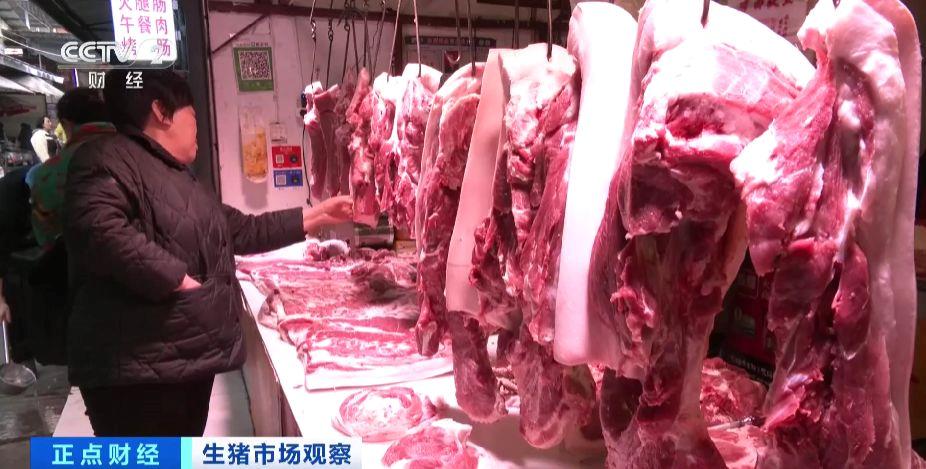
旺季不旺成常态!从扩产能到控成本,生猪行业迎来大洗牌!
Yang Shi Wang· 2025-12-23 06:06
Group 1 - The current pig market is experiencing a seasonal downturn, with lower consumer demand and prices not rising as expected during the winter season [1][2] - In Sichuan, the average price of pork is around 12.13 yuan/kg, down 0.7% week-on-week and 27.1% year-on-year, indicating a prolonged low-price environment [3] - The number of breeding sows in China has decreased to below 40 million for the first time in 17 months, but remains above the normal level of 39 million [1] Group 2 - Many pig farmers are facing losses, with self-breeding operations losing approximately 100-130 yuan per head, and purchased piglets resulting in losses of 160-200 yuan per head [3] - The industry is shifting from a focus on capacity expansion to cost control, risk management, and value extraction along the supply chain [4] - Companies are adopting advanced technologies and management practices, such as precision feeding and genetic improvements, to enhance productivity and reduce costs [4]

西部证券:猪价持续低迷 建议把握生猪养殖板块布局机会
智通财经网· 2025-12-23 05:48
Group 1 - The core viewpoint of the report indicates that the listed pig companies' slaughter volume in November 2025 reached 18.2581 million heads, representing a year-on-year increase of 26.67% but a month-on-month decrease of 2.96% [1][2] - The cumulative slaughter volume of listed pig companies from January to November 2025 was 176 million heads, with a year-on-year growth of 21.42%, indicating stable growth around 20% [2] - The report suggests seizing investment opportunities in the pig farming sector, focusing on companies with strong growth in slaughter volume and stable operations, recommending Muyuan Foods (002714.SZ), Wens Foodstuff Group (300498.SZ), Tangrenshen (002567.SZ), Huatong Food (002840.SZ), and Juxing Agriculture (603477.SH) [1] Group 2 - The operating revenue of listed pig companies in November 2025 was 22.5556 billion yuan, down 17.03% year-on-year and 4.94% month-on-month [3] - The sales revenue from commodity pigs for leading companies in November was 9.390 billion yuan for Muyuan, 5.199 billion yuan for Wens, and 1.812 billion yuan for New Hope, with year-on-year declines of 20.43%, 14.19%, and 11.61% respectively [3] - The decline in revenue is attributed to a larger decrease in pig prices compared to the increase in slaughter volume, with cumulative revenue from January to November 2025 amounting to 268.644 billion yuan, a slight year-on-year increase of 2.09% [3] Group 3 - The average selling price of pigs in November increased by 1.60% month-on-month but decreased by 30.05% year-on-year [4] - The average selling prices for leading companies were 11.56 yuan/kg for Muyuan, 11.71 yuan/kg for Wens, and 11.54 yuan/kg for New Hope, with year-on-year declines of 28.73%, 29.92%, and 30.02% respectively [4] - The decline in average selling prices is due to ample supply and weak demand during the peak season, with expectations of low prices persisting until the Spring Festival [4] Group 4 - The average weight of pigs slaughtered in November was 105.80 kg per head, showing a month-on-month decrease of 0.35% and a year-on-year decrease of 3.31% [5] - Leading companies reported average weights of 123.04 kg for Muyuan, 101.98 kg for Wens, and 100.17 kg for New Hope, with month-on-month declines and varying year-on-year changes [5] - The decrease in average weight is a result of companies voluntarily reducing slaughter weights in response to market conditions [5]



生猪价格持续低位运行 养殖行业“优化产能+管理成本”多举措转向新阶段
Yang Shi Wang· 2025-12-23 03:31
Group 1 - The core issue in the pork market this winter is the unexpected low demand during the traditional peak season, leading to downward pressure on prices [1][3] - In southern China, the slow decline in temperatures has resulted in lower-than-expected demand for preserved meats, while the later timing of the Spring Festival has delayed concentrated purchasing [3][10] - As of the end of Q3 this year, the national pig inventory reached 437 million heads, a year-on-year increase of 2.3%, indicating an oversupply situation [3][10] Group 2 - Current pork prices are significantly lower than last year, with prices for pork belly at 9 yuan/kg and for front and hind leg meat at around 8 yuan/kg, down by 3-4 yuan/kg compared to the same period last year [4][10] - The average national pig price in the second week of December was 12.13 yuan/kg, down 0.7% week-on-week and down 27.1% year-on-year, reflecting a prolonged period of low prices [10][12] - Many pig farmers are experiencing losses, with self-breeding operations losing approximately 100-130 yuan per head and purchased piglet operations losing 160-200 yuan per head [12] Group 3 - The industry is undergoing adjustments, with a shift from capacity expansion to a focus on cost control, risk management, and value extraction along the supply chain [13] - Companies are implementing advanced technologies, such as intelligent feeding systems and genetic breeding improvements, to enhance productivity and reduce costs [12][13] - Major enterprises are extending their operations downstream into slaughtering, meat processing, and brand fresh products to mitigate cyclical risks in the breeding segment [13]
天域生物跌2.04%,成交额976.56万元,主力资金净流入30.56万元
Xin Lang Zheng Quan· 2025-12-23 01:52
Group 1 - The core viewpoint of the news is that Tianyu Biological has experienced a decline in stock price and financial performance, indicating potential challenges for the company in the market [1][2]. - As of December 23, Tianyu Biological's stock price was 7.67 yuan per share, with a market capitalization of 2.225 billion yuan. The stock has decreased by 4.72% year-to-date and 15.44% over the past 60 days [1]. - The company has seen a net inflow of main funds amounting to 305,600 yuan, with significant buying and selling activity on the stock [1]. Group 2 - Tianyu Biological operates in the agriculture, forestry, animal husbandry, and fishery sector, specifically in pig farming, and is involved in various related concepts such as characteristic towns and PPP concepts [2]. - For the period from January to September 2025, the company reported a revenue of 536 million yuan, a year-on-year decrease of 14.23%, and a net profit attributable to shareholders of -1.61 million yuan, a decrease of 125.22% [2]. - The company has not distributed any dividends in the past three years, with a total payout of 34.54 million yuan since its A-share listing [3].

2025年第218期:晨会纪要-20251223
Guohai Securities· 2025-12-23 00:48
Group 1: CRO Demand and Pricing - The demand for CRO services is recovering, with a tight supply of experimental monkeys leading to price increases. The price of 3-5 year old macaques has risen to 140,000 yuan each, indicating a supply-demand imbalance in the domestic innovative drug R&D sector [4][5]. - In 2025, from January to November, domestic financing for innovative drugs reached 4.086 billion USD, a year-on-year increase of 10.6% compared to 2024. This reflects a significant recovery in the demand for innovative drug R&D [4]. Group 2: Bond Market Strategies - As the year-end approaches, bond market strategies are converging towards reducing duration and increasing leverage. The interbank bond market leverage ratio increased by 0.23 percentage points to 107.68% as of December 19 [8][9]. - Funds are focusing on short- to medium-term credit bonds, with a notable shift towards buying credit bonds while net selling government bonds. This indicates a strategy of selling rates and buying credit [9]. Group 3: Automotive Industry Developments - Changan Deep Blue and BAIC Blue Valley's Arcfox have received the first batch of L3 level approval for autonomous driving vehicles, marking a significant milestone in China's policy and regulatory framework for autonomous vehicles [12]. - The Great Wall Ora 5 was launched with a suggested retail price range of 99,800 to 133,800 yuan, featuring advanced driver assistance systems and a design that continues the Ora "cat" series [13][14]. - The automotive sector's performance is closely aligned with the overall market, with the A-share automotive index showing a slight decline of 0.1% during the week of December 15 to 19 [11]. Group 4: Chemical Industry Insights - The price of liquid chlorine has increased to 114 yuan/ton, up 11.76% week-on-week, driven by improved demand from downstream industries [26]. - Industrial-grade lithium carbonate prices rose to 102,000 yuan/ton, an increase of 8.51%, while battery-grade lithium carbonate reached 104,250 yuan/ton, up 8.31%, indicating strong demand in the energy storage sector [26]. - The chemical industry is expected to benefit from a shift towards domestic substitutes for semiconductor materials due to geopolitical tensions, with a focus on companies involved in photolithography and electronic chemicals [17][19]. Group 5: Swine and Poultry Industry Trends - The swine industry is entering a phase of accelerated capacity reduction, with regulatory measures aimed at stabilizing pig prices. The expectation is that price adjustments will be gradual rather than abrupt [43]. - The poultry sector is showing signs of improvement, with a focus on the white feather chicken breeding segment, which has seen a steady increase in breeding stock [44]. Group 6: Real Estate Market Outlook - The report forecasts that in 2026, the total sales area of commercial housing will reach 780 million square meters, with significant contributions from third- and fourth-tier cities [49]. - The supply of new homes in first-tier cities is expected to decline due to reduced land supply, with a projected 28% year-on-year decrease in land transaction area [50]. - The new home price index is expected to perform better than the second-hand home price index, with a slight year-on-year decline of 1.2% for new homes compared to a 5.8% decline for second-hand homes [52].
生猪养殖行业简析报告
Jia Shi Zi Xun· 2025-12-22 14:16
Investment Rating - The report does not explicitly state an investment rating for the swine farming industry Core Insights - The swine farming industry in China is a strategic pillar for national economy and CPI stability, currently transitioning towards large-scale operations with a significant reduction in smallholders and a rise in large enterprises like Muyuan Foods, which has an annual output of 71.6 million pigs, creating a strong scale and cost moat [4] - The industry is characterized by two main business models: "self-breeding and self-raising" represented by Muyuan, and "company + farmer" represented by Wens, with feed costs accounting for approximately 75% of total breeding costs, highlighting the importance of cost control [5] - Future opportunities include the upgrade of consumption structure towards deep processing, the proliferation of intelligent breeding technologies, and the reassessment of assets due to self-sufficient breeding sources, while challenges include reliance on imported feed materials, ongoing risks from African swine fever mutations, and high fixed costs due to asset-heavy operations [6] Summary by Sections 1. Industry Position and Competitive Landscape - The Chinese swine farming industry is crucial for food security and CPI stability, primarily using a "three-way cross" breeding system for commercial production. The industry is accelerating towards scale, with an increasing number of large farms (over 50,000 heads) and a decreasing number of smallholders, with major players like Muyuan Foods dominating the market [4] 2. Business Model and Policy Evolution - The main business models are "self-breeding and self-raising" (capital-intensive, strong control) and "company + farmer" (light asset, rapid expansion). The policy focus has shifted from early environmental regulations and post-ASF supply guarantees to current "counter-cyclical regulation" and "capacity optimization," marking the end of the era of simple scale expansion [5][16] 3. Future Opportunities and Challenges - Opportunities lie in the upgrade of consumption structure, the spread of intelligent breeding technologies, and the reassessment of breeding assets. Challenges include strategic vulnerability due to dependence on imported feed materials, ongoing risks from ASF, and high fixed costs associated with transitioning from light to heavy assets [6][48][49][50] 4. Industry Overview - The swine industry is a cornerstone of China's food culture and economy, with pork consumption accounting for over 60% of meat consumption. The supply-demand dynamics are the most significant factors affecting the industry [7] 5. Breeding System - The breeding system in China primarily employs a three-way crossbreeding method, utilizing different breeds to enhance productivity and disease resistance [10] 6. Scale of the Industry - The swine industry is expected to see an output of over 700 million pigs by 2025, following a cyclical pattern of stability, decline, and recovery influenced by factors such as ASF [18] 7. Industry Chain - The swine farming industry chain includes upstream suppliers (feed, veterinary products), midstream farming entities, and downstream processing and retail sectors, with the farming segment being the core [22][24] 8. Cost Structure - Feed constitutes the largest portion of breeding costs, with energy feeds making up 75% of total feed costs. The cost structure varies significantly between different farming models [25][26] 9. Policy Changes - The last decade has seen a shift in policies from strict environmental regulations to a focus on capacity optimization and quality improvement, indicating a transition towards a more sustainable industry model [16] 10. Competitive Landscape - The competitive landscape is dominated by a few large enterprises, with Muyuan Foods leading the market with a significant output, allowing it to maintain a competitive edge during price downturns [35]
——农林牧渔行业周报:猪价承压,关注去化进程-20251222
Guohai Securities· 2025-12-22 11:03
Investment Rating - The report maintains a "Recommended" rating for the agriculture, forestry, animal husbandry, and fishery industry [1] Core Insights - The swine industry is entering an accelerated phase of capacity reduction, with a focus on positioning at the bottom of the market. Regulatory measures are being reinforced to stabilize pig prices, which are expected to face downward pressure in the short term due to increased market supply [3][15] - The poultry sector shows signs of fundamental improvement, with a focus on the white feather chicken breeding segment and potential price recovery in the future [4][28] - The animal health sector is closely monitoring the clinical trial progress of African swine fever vaccines, which could enhance market conditions for leading companies in the sector [5][38] - The pet industry continues to experience rapid growth, with domestic brands gaining strength and improving profitability [8][60] Summary by Sections Swine Industry - The average price of live pigs is reported at 11.53 CNY/kg, with a slight weekly increase. The number of breeding sows has decreased by 1.1% month-on-month [14][15] - Key investment recommendations include leading companies such as Muyuan Foods and Wens Foodstuffs, with additional attention on Dekang Agriculture and Shennong Group [3][15] Poultry Industry - The white feather chicken breeding segment has seen a total of 107.21 thousand sets updated from January to October 2025, with a balanced import and self-breeding ratio [4][28] - Recommended companies in this sector include San Nong Development and Lihua Shares [4][28] Animal Health - The animal health industry has faced losses for over three months, with expectations of continued low pig prices. The clinical trials for the African swine fever vaccine are a critical step towards commercialization [5][38] - Companies to watch include BioStock, Kexin Biological, and Ruipu Biological [5][38] Planting Industry - Grain prices are fluctuating, with corn prices at 2244 CNY/ton and wheat prices at 2515 CNY/ton. The pig-to-grain ratio is reported at 5.03 [44][48] - Investment suggestions focus on companies with strong positions in genetically modified seeds, such as Suqian Agricultural Development and Longping High-Tech [6][48] Feed Industry - Feed prices are experiencing fluctuations, with pig feed priced at 3.33 CNY/kg and chicken feed at 3.45 CNY/kg. The industry is expected to see increased concentration [49][50] - Recommended companies include Haida Group and He Feng Shares [49][50] Pet Industry - The pet market is projected to reach 300.2 billion CNY in 2024, with a year-on-year growth of 7.5%. The number of pet dogs and cats is also on the rise [59][60] - Recommended companies in the pet food sector include Guibao Pet, Zhongchong Shares, and Petty Shares [59][60]


徽县:全链思维“破题”生猪产业高质量发展
Xin Lang Cai Jing· 2025-12-22 09:04
Core Viewpoint - The article emphasizes the comprehensive development of the pig industry in Huixian, focusing on modernization, brand marketing, and ecological agriculture to achieve high-quality growth and establish the "Huixian Pig" regional public brand [1] Group 1: Industry Development Strategy - Huixian is transforming its pig industry from traditional free-range farming to modern large-scale breeding and brand marketing, aiming to reduce costs, weight, and pollution while enhancing epidemic prevention and overall efficiency [1] - The strategy includes a full industry chain approach to promote high-quality development in the pig sector, ensuring cost reduction and improved profitability across all stages of the supply chain [4] Group 2: Breeding and Genetic Improvement - The breeding strategy focuses on "protection first, short introduction and long cultivation," utilizing "reciprocal hybridization" and "supporting systems" to develop the best hybrid combinations suited for local conditions [2] - Plans are in place to establish a core breeding farm with an investment from Huifeng Agricultural and Animal Husbandry Co., aiming to introduce 1,200 great-grandparent breeding pigs by 2025, increasing the total breeding stock to over 30,000 with a good breed rate exceeding 99% [2] Group 3: Technological Advancement - A three-tier technical service network is being established to promote superior breeds and efficient farming techniques, enhancing the technological capabilities of farmers through training and on-site guidance [3] - Automation in large-scale farms has led to a 15% reduction in overall costs, with a 98% conception rate for sows, showcasing the effectiveness of modern farming practices [3] Group 4: Value Chain Enhancement - The industry is adopting a full value chain approach to reduce intermediary costs and ensure profitability at every stage, fostering collaboration between companies, cooperatives, and farmers [4] - The establishment of 1,314 large-scale pig farms, including seven leading enterprises with over 10,000 pigs, has significantly increased income for participating farmers, averaging an annual increase of 32,000 yuan per household [4] Group 5: Sustainable and Ecological Practices - The integration of organic recycling and ecological protection is a key focus, with the introduction of a project to process 20,000 tons of organic fertilizer annually, utilizing livestock waste and straw [4] - This initiative not only addresses pollution and waste management but also supports local economies by providing stable dividends and job opportunities, contributing to a multi-faceted win in economic, ecological, and social benefits [4]
农林牧渔行业2026年策略:产业转型升级,静候周期拐点
Dongxing Securities· 2025-12-22 08:20
Investment Summary - The report suggests focusing on three main investment themes for the agricultural sector in 2026: pig farming, feed and animal health, and pet food [4][5][6]. Group 1: Pig Farming - The supply-demand dynamics in the pig farming industry are improving, with a continued oversupply expected to pressure prices in the first half of 2026, leading to ongoing industry losses [4][16][19]. - The structural changes in pig farming post-African swine fever have led to increased scale and a rise in short-term farmers, resulting in narrower price fluctuations and reduced supply-demand conflicts [4][16][49]. - Cost management is crucial for pig farming companies to achieve excess returns and long-term growth, with significant differentiation expected among companies based on cost advantages [4][50][61]. - The report highlights that the valuation of the sector is at a low point, with expectations for recovery in the valuations of leading companies, particularly those with cost advantages like Muyuan Foods [5][61]. Group 2: Feed and Animal Health - The animal health sector is experiencing a weakening of its cyclical attributes, with research and innovation becoming the core focus for long-term growth [6][62][66]. - The feed market is characterized by competition in the domestic market, with an emphasis on cost control and precision management, while international markets present new growth opportunities for leading companies [6][62][66]. - The report recommends companies with strong research capabilities and cost control, such as Pulaike and KQ Bio, for long-term investment [6][62]. Group 3: Pet Food - The pet food market is expected to continue its growth despite short-term disruptions from tariffs, with domestic brands gaining market share [6][7]. - The report emphasizes the importance of adapting to consumer trends towards health and refinement in product offerings, which is likely to enhance market share and profitability for domestic brands [6][7].


