
抗通缩

Search documents
荀玉根:26年牛市将逐步走向第三阶段,老登资产有重估机会
Sou Hu Cai Jing· 2026-01-03 05:21
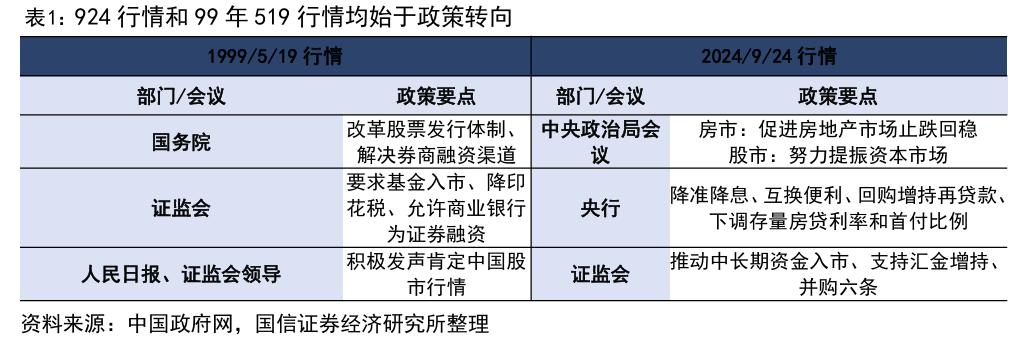
Core Viewpoint - The report by the chief economist of Guosen Securities, Xun Yugen, indicates that the current bull market, which began on September 24, 2024, is expected to continue due to persistent policy easing and a recovery in the fundamentals of the economy [1] Group 1: Market Conditions - The bull market is compared to the one that started on May 19, 1999, highlighting that the environment of deflation and policy easing remains unchanged [1] - The current bull market cycle is not yet complete, as market sentiment has not reached an extreme level [1] Group 2: Fundamental Recovery - The recovery of fundamentals is expected to expand from specific sectors to a broader market, supported by increased retail investment [1] - The bull market is anticipated to enter its second and third phases, with a shift in focus from computing infrastructure to applications in the technology sector [1] Group 3: Sectoral Insights - The technology sector is projected to be the focal point of policy support, with significant advancements expected in artificial intelligence applications across various industries [1] - Historical patterns suggest that leading sectors in the latter stages of a bull market often include application areas of dominant industries, as seen in previous bull markets [1] Group 4: Technology Trends - The current technology market is expected to transition from hardware to application, with breakthroughs in cost and performance of artificial intelligence accelerating its commercialization [1]
国信证券:A股26年牛市的变与不变
智通财经网· 2026-01-03 03:26
Core Viewpoint - The 26-year bull market is characterized by continued policy easing, an incomplete bull market cycle, and a shift in the market's fundamental recovery and structural dynamics [1][2][20]. Group 1: Unchanging Factors - The policy environment remains accommodative, similar to the 1999 bull market, with a focus on combating deflation through various monetary and fiscal measures [3][4][8]. - Historical patterns of bull and bear market cycles suggest that the current bull market is not yet at its peak, as market sentiment has not reached extreme levels [12][13]. Group 2: Changing Factors - The fundamental recovery is expected to expand from specific sectors to a broader market, supported by increased retail investor participation as the bull market progresses into its later stages [21][22][25]. - The technology sector is anticipated to shift from infrastructure development to application expansion, with traditional assets like liquor and real estate potentially facing revaluation opportunities [42][43].


——农林牧渔行业周报:猪价承压,关注去化进程-20251222
Guohai Securities· 2025-12-22 11:03
Investment Rating - The report maintains a "Recommended" rating for the agriculture, forestry, animal husbandry, and fishery industry [1] Core Insights - The swine industry is entering an accelerated phase of capacity reduction, with a focus on positioning at the bottom of the market. Regulatory measures are being reinforced to stabilize pig prices, which are expected to face downward pressure in the short term due to increased market supply [3][15] - The poultry sector shows signs of fundamental improvement, with a focus on the white feather chicken breeding segment and potential price recovery in the future [4][28] - The animal health sector is closely monitoring the clinical trial progress of African swine fever vaccines, which could enhance market conditions for leading companies in the sector [5][38] - The pet industry continues to experience rapid growth, with domestic brands gaining strength and improving profitability [8][60] Summary by Sections Swine Industry - The average price of live pigs is reported at 11.53 CNY/kg, with a slight weekly increase. The number of breeding sows has decreased by 1.1% month-on-month [14][15] - Key investment recommendations include leading companies such as Muyuan Foods and Wens Foodstuffs, with additional attention on Dekang Agriculture and Shennong Group [3][15] Poultry Industry - The white feather chicken breeding segment has seen a total of 107.21 thousand sets updated from January to October 2025, with a balanced import and self-breeding ratio [4][28] - Recommended companies in this sector include San Nong Development and Lihua Shares [4][28] Animal Health - The animal health industry has faced losses for over three months, with expectations of continued low pig prices. The clinical trials for the African swine fever vaccine are a critical step towards commercialization [5][38] - Companies to watch include BioStock, Kexin Biological, and Ruipu Biological [5][38] Planting Industry - Grain prices are fluctuating, with corn prices at 2244 CNY/ton and wheat prices at 2515 CNY/ton. The pig-to-grain ratio is reported at 5.03 [44][48] - Investment suggestions focus on companies with strong positions in genetically modified seeds, such as Suqian Agricultural Development and Longping High-Tech [6][48] Feed Industry - Feed prices are experiencing fluctuations, with pig feed priced at 3.33 CNY/kg and chicken feed at 3.45 CNY/kg. The industry is expected to see increased concentration [49][50] - Recommended companies include Haida Group and He Feng Shares [49][50] Pet Industry - The pet market is projected to reach 300.2 billion CNY in 2024, with a year-on-year growth of 7.5%. The number of pet dogs and cats is also on the rise [59][60] - Recommended companies in the pet food sector include Guibao Pet, Zhongchong Shares, and Petty Shares [59][60]



南华期货煤焦产业周报:关注冬储需求释放-20251221
Nan Hua Qi Huo· 2025-12-21 13:24
Report Industry Investment Rating - Not provided in the document Core Viewpoints of the Report - The core contradiction in the coking coal and coke market lies in the divergence in coking coal production data, weak replenishment demand from coking enterprises, and the potential for further price cuts in coke. However, with the approaching winter storage, the inventory structure of coking coal is expected to improve, and the downward space of the coking coal futures market may be limited. For coke, after the third round of price cuts, the driving force for valuation repair may weaken, and end - users can consider selling hedging opportunities at low basis levels. The overall trend is expected to be in a volatile consolidation phase [1][11]. - The price ranges are predicted as follows: JM2605 is expected to trade between 1050 - 1198, and J2605 is expected to trade between 1680 - 1768 [9]. Summary by Relevant Sections Chapter 1: Core Contradictions and Strategy Recommendations 1.1 Core Contradictions - Coking coal production data from Fenwei and Steel Union diverge. Steel Union data shows mine production increase and inventory accumulation, while Fenwei data shows production decrease and inventory accumulation. Coking enterprises are less enthusiastic about replenishing inventory due to expected price cuts, and the inventory structure of coking coal continues to deteriorate [1]. - The average daily customs clearance of Mongolian coal this week exceeded 1500 vehicles per day. The Australian coal price index was stable with a slight increase. The price difference between domestic and international coal is severely inverted, and the import window for seaborne coal is narrowing, so the subsequent arrival of coking coal at ports may decline [1]. - The third - round price cut of coke has officially started. The current immediate coking profit is near the break - even point. After the third - round price cut, some coking enterprises are expected to face slight losses. The coking enterprise operating rate decreased slightly due to environmental protection restrictions, and the demand for coke shrank as blast furnace hot metal production decreased rapidly, leading to a marginal deterioration of the coke fundamentals [1]. 1.2 Market Positioning - The price range of JM2605 is predicted to be 1050 - 1198, and that of J2605 is predicted to be 1680 - 1768. The current 20 - day rolling volatility of coking coal is 37.95%, with a historical percentile of 74.63%. The current 20 - day rolling volatility of coke is 33.24%, with a historical percentile of 72.10% [9]. 1.3 Basic Data Overview - In terms of coking coal supply, the operating rate of 523 coking coal mines increased by 1.31 percentage points week - on - week, and the average daily raw coal production increased by 2.91 tons. The average daily clean coal production of 314 coal washing plants decreased by 0.63 tons [9]. - In terms of coking coal inventory, the total sample inventory increased by 29.11 tons week - on - week. The inventory of 523 mine raw coal and 523 mine clean coal increased, while the inventory of 314 coal washing plant clean coal decreased [9]. - In terms of coke supply, the capacity utilization rate of all - sample independent coking enterprises decreased by 1.11 percentage points week - on - week, and the average daily coke production decreased by 0.98 tons [9]. - In terms of coke inventory, the total sample inventory decreased by 3.32 tons week - on - week. The inventory of all - sample independent coking enterprises increased, while the inventory of 247 steel mills and ports decreased [9]. Chapter 2: This Week's Important Information and Next Week's Key Events 2.1 This Week's Important Information - **Positive Information**: Indonesia plans to impose a 1 - 5% export tax on coal from 2026; relevant departments issued the "Benchmark and Baseline Levels for Key Areas of Clean and Efficient Coal Utilization (2025 Edition)"; the National Development and Reform Commission proposed to expand domestic demand and promote consumption; and market - related departments emphasized the construction of a unified national market and the control of high - energy - consuming and high - emission projects [20]. - **Negative Information**: Some steel products were included in the export license management scope; in November, the year - on - year growth rate of industrial added value above designated size was 4.8%, the year - on - year growth rate of total retail sales of consumer goods was 1.3%, and the year - on - year decline of national fixed asset investment from January to November was 2.6% [22][23]. 2.2 Next Week's Key Events - On Monday, pay attention to China's one - year loan prime rate as of December 22. - On Tuesday, pay attention to the preliminary value of the annualized quarterly rate of the US core PCE price index in the third quarter. - On Wednesday, pay attention to the number of initial jobless claims in the US for the week ending December 20. - The 19th session of the 14th National People's Congress Standing Committee will be held from December 22 to 27 [24]. Chapter 3: Futures Market Interpretation 3.1 Price - Volume and Capital Analysis - **Unilateral Trend**: From a technical analysis perspective, after getting support near 1000 points, the main coking coal futures contract rebounded rapidly driven by improved sentiment and basis repair. If there is no new driving force in the future, the JM05 contract is expected to fluctuate between 1050 - 1198. The coke trend still follows coking coal, and the J05 contract is expected to fluctuate between 1680 - 1768 [25]. - **Calendar Spread Structure**: This week, the 1 - 5 reverse spread of coking coal strengthened, and the 1 - 5 positive spread of coke strengthened. The term structure remains in a deep C - shape, indicating an over - supplied industrial pattern [29]. - **Basis Structure**: This week, the main coking coal futures contract rebounded strongly. The prices of Mongolian coal at ports and some coal types in Shanxi followed the increase, and the 05 basis shrank. Currently, the coking coal basis is moderately high. From the perspective of valuation repair, the rebound space of the coking coal futures market may be larger than that of coke. The spot price of coke has started the third - round price cut, and the futures market rebounded rapidly following coking coal. Currently, the coke futures market has a premium over the dry - quenched coke warehouse receipt after the third - round price cut, and industrial customers with open positions are advised to sell for hedging [33]. Chapter 4: Valuation and Profit Analysis 4.1 Upstream - Downstream Profit Tracking in the Industry Chain - This week, the prices of Mongolian coal at ports and some coal types in Shanxi increased following the futures market. With the upcoming third - round price cut of coke, the immediate coking profit is expected to continue to shrink. As the iron ore spot price rebounded following the futures market, the profitability of downstream steel mills decreased slightly [36]. 4.2 Import - Export Profit Tracking - This week, the minimum customs clearance at the 288 port was about 1491 vehicles, and the maximum was 1637 vehicles, with an average daily customs clearance of over 1500 vehicles. In terms of profit, the Mongolian coal quotation fluctuated following the futures market, and the long - term contract trade profit first decreased and then increased. Recently, the Australian coal price has been firm. Although the spot price of some domestic coking coal has rebounded following the futures market, the price difference between domestic and international coal is still inverted, and the subsequent arrival of coking coal at ports is expected to decline [39][45]. Chapter 5: Supply - Demand and Inventory Projection 5.1 Supply - Side Projection - Limited by over - production checks and safety supervision, the production increase space of coking coal mines in the fourth quarter may be limited. According to the seasonal forecast of the operating rate, the average weekly production of coking coal in December is expected to be around 948 - 950 tons. In terms of imports, based on the customs clearance of Mongolian coal and the shipping volume of seaborne coal, the average weekly net import volume of coking coal in December is estimated to be about 240 tons. Due to stricter environmental protection restrictions in some areas recently, the coke production capacity has declined marginally, and the weekly coke production in December is expected to remain at 768 - 770 tons [60][62]. 5.2 Demand - Side Projection - Based on the SMM maintenance data, the estimated daily hot metal production next week is 222.74 tons, and the hot metal production the week after next is expected to be 224.05 tons [65]. 5.3 Supply - Demand Balance Sheet Projection - The coking coal and coke supply - demand balance sheets show the production, net import, total supply, supply - converted theoretical hot metal, actual hot metal, explicit inventory, and the difference between theoretical and actual hot metal and inventory changes in each week from Week 40, 2025, to Week 53, 2026 [67].
去产能迎来加速阶段,养殖ETF(159865)飘红,关注“含猪量”约60%的养殖ETF
Mei Ri Jing Ji Xin Wen· 2025-12-10 02:31
Group 1 - The swine industry has entered a regulatory period, with relevant departments strengthening control measures to manage pig prices through capacity reduction [1] - In the short term, pig prices are under downward pressure due to an expected increase in pig slaughter volume in the second half of the year and the potential digestion of large pig inventories [1] - The current round of regulatory measures is unlikely to be very aggressive, with a focus on continuous policy adjustments to restore pig prices to a reasonable range [1] Group 2 - Opportunities in the swine industry are expected to arise from performance realization driven by low costs and value reassessment due to increased dividends [1] - The Livestock ETF (159865) tracks the China Securities Livestock Index (930707), which selects listed companies involved in livestock breeding and feed processing to reflect the overall performance of the livestock industry [1] - The China Securities Livestock Index covers multiple sub-sectors, including livestock breeding, feed, and animal health, demonstrating strong industry representation [1]
——农林牧渔行业周报:去产能迎来加速阶段,布局生猪底部-20251208
Guohai Securities· 2025-12-08 14:31
Investment Rating - The report maintains a "Recommended" rating for the agriculture, forestry, animal husbandry, and fishery industry [1] Core Viewpoints - The swine industry is entering an accelerated phase of capacity reduction, presenting opportunities for investment at the bottom of the market [3][4] - The poultry sector's fundamentals are expected to improve, with a focus on marginal changes in the cycle [4][5] - The animal health sector is closely monitoring the progress of African swine fever vaccine clinical trials, which could enhance the industry's competitive landscape [6][7] - The pet economy is thriving, with domestic brands rapidly emerging and improving profitability [9][10] Summary by Sections Swine Industry - The average price of live pigs in November was 11.69 yuan/kg, with a month-on-month change of 0 yuan/kg [15] - The number of breeding sows as of the end of October was 39.9 million, a decrease of 1.1% month-on-month and 2.1% year-on-year [15][16] - Investment suggestions include leading companies such as Muyuan Foods and Wens Foodstuffs, with a focus on low-cost performance and dividend increases [16] Poultry Industry - The price of white feather broiler parent stock chicks was 41 yuan/set, down 6 yuan from the previous week [31] - The poultry sector is seeing a gradual recovery, with a recommendation for companies like Shennong Development and Lihua Stock [32] Animal Health - The profitability of self-breeding pigs has been negative for over two months, impacting the animal health sector [40] - Companies like Bio-Pharmaceuticals and Keqian Bio are recommended due to their strong business layouts and customer resources [6][40] Planting Industry - The price of corn was 2229 yuan/ton, with a month-on-month increase of 0.5% and a year-on-year increase of 8% [45] - Companies with early reserves in genetically modified seeds are recommended, including Suqian Agricultural Development and Longping High-Tech [50] Feed Industry - The price of feed for fattening pigs was 3.32 yuan/kg, with a month-on-month decrease of 20 yuan/ton [51] - The feed industry is expected to see increased concentration, with recommendations for Haida Group and He Feng Stock [52] Pet Industry - The pet consumption market in urban China is projected to reach 300.2 billion yuan in 2024, with a year-on-year growth of 7.5% [58] - Recommended companies in the pet food sector include Guibao Pet and Zhongchong Stock, with a focus on the pet medical sector as well [59]

南华煤焦产业风险管理日报-20251201
Nan Hua Qi Huo· 2025-12-01 03:21
1. Report Industry Investment Rating - No industry investment rating is provided in the report. 2. Core Views of the Report - The supply of coking coal has limited marginal changes, but the terminal steel mills are under profit pressure, and the molten iron production continues to decrease, resulting in a slight oversupply of coking coal. The supply of coke is expected to increase, and there may be a pressure of inventory accumulation. The coking coal 01 contract has a clear short - term bearish trend, while the far - month 05 contract has medium - to - long - term long - allocation value. The current valuation of the coke main contract is reasonable, and it is not recommended to blindly participate in the downward market [4]. - There is still a rigid demand for winter storage, and the price decline will stimulate restocking demand. The macro - policy expectations of the first year of the "15th Five - Year Plan" and the "anti - deflation" policy will provide bottom support for the far - month contracts. However, the expectation of coke price cuts is increasing, and coke enterprises are cautious in purchasing, leading to marginal accumulation of upstream mine inventories. The 01 contract is suppressed by warehouse receipts, and a short - term bearish trend has formed [8]. 3. Summary by Relevant Catalogs 3.1. Double - Coking Price Range Forecast - **Price Range and Volatility**: The price range forecast for coking coal (01) in the month is 1000 - 1200, with a current 20 - day rolling volatility of 24.37% and a historical percentile of 41.27%. The price range forecast for coke (01) in the month is 1500 - 1750, with a current 20 - day rolling volatility of 23.45% and a historical percentile of 40.92% [3]. - **Risk Management Strategies**: - **Procurement for Coking Plants**: With the rapid decline of the coking coal main contract on the futures market and the relatively slow adjustment of spot prices in Shanxi, the basis is still high. Terminal users with coking coal procurement plans can wait for the spot price to decline before purchasing [3]. - **Management for Steel Mills**: As the first round of spot price cuts for coke is imminent and the futures market has already priced in 5 rounds of cuts, the space for further price cuts is limited. Steel mills should control coke arrivals and sell coke put options [3][4]. - **Sales Management for Coking Plants**: After the fourth round of spot price increases for coke is implemented, the futures price follows the decline of coking coal, the basis of coke strengthens, and the valuation is moderately high. Coking plants holding coke spot are advised to speed up sales [3]. 3.2. Black Warehouse Receipt Daily Report - **Warehouse Receipt Data**: The warehouse receipt data of various black commodities such as rebar, hot - rolled coil, iron ore, coking coal, coke, ferrosilicon, and ferromanganese on different dates are provided, showing their day - on - day and week - on - week changes [4]. - **Core Logic and Strategy Suggestions**: - **Core Logic**: The supply of coking coal has limited marginal changes, and the demand decreases, resulting in a slight oversupply. The supply of coke is expected to increase, and there may be inventory accumulation pressure. The spot price of coke may face more than 2 rounds of price cuts [4]. - **Strategy Suggestions**: Hold short positions in the coking coal 01 contract, and wait for a clear stabilization signal to layout long positions in the 05 contract. It is not recommended to blindly participate in the downward market of coke [4]. 3.3. Coal - Coking Futures and Spot Price Data - **Futures Price Spread**: The price spreads between different contracts of coking coal and coke on different dates are provided, including 09 - 01, 05 - 09, and 01 - 05 [6]. - **Spot Price and Profit**: The spot prices of various coking coal and coke products, as well as import and export profits, coking profits, and price ratios are provided [7]. 3.4. Factors Affecting Coal - Coking Prices - **Positive Factors**: There is still a rigid demand for winter storage, and the macro - policy expectations of the first year of the "15th Five - Year Plan" and the "anti - deflation" policy will provide bottom support for the far - month contracts [8]. - **Negative Factors**: The expectation of coke price cuts is increasing, and coke enterprises are cautious in purchasing, leading to marginal accumulation of upstream mine inventories. The 01 contract is suppressed by warehouse receipts, and a short - term bearish trend has formed [8].
农业板块2025半年报业绩综述:拨云见日
ZHESHANG SECURITIES· 2025-09-15 13:48
Investment Rating - The industry investment rating is "Positive" [3] Core Viewpoints - The report highlights that the agricultural sector is experiencing a recovery, with specific segments such as the pig and beef industries showing signs of improvement. Cost reduction and efficiency enhancement are key drivers for performance improvement in the pig sector, while the beef sector is witnessing a rebound from a cyclical low [6][7][47]. Summary by Sections 1. Pig Industry - The pig sector has shown significant improvement in performance, with 15 listed pig companies achieving a revenue of 196.98 billion yuan in the first half of 2025, a year-on-year increase of 19%. The net profit attributable to shareholders reached 16.33 billion yuan, up 625% year-on-year [9]. - The average pig price has been under pressure, dropping to a low of 13.96 yuan/kg in June 2025. However, leading companies like Muyuan and Wens continue to maintain high profitability per head due to their efficiency advantages [15][42]. - Recommendations include focusing on low-cost, high-certainty leaders such as Muyuan and Wens, as well as high-growth small pig companies like Shennong Group and Juxing Agriculture [7][43]. 2. Beef Industry - The beef sector is experiencing a cyclical recovery, with live cattle prices increasing significantly since mid-February 2025. As of September 8, 2025, the prices for fattened bulls, calves, and cull cows have risen by 2.39, 8.33, and 3.18 yuan/kg respectively [47]. - The report notes that the overall beef market is supported by a trend towards protein upgrading, which is expected to continue despite economic fluctuations [57]. 3. Animal Health Sector - The animal health sector is stabilizing, with a focus on the development of pet business. The rapid release of pet vaccines is anticipated to enhance valuations across companies [7]. 4. Seed Industry - The seed market is shifting from quantity to quality competition, with a focus on superior varieties as the core competitiveness of seed companies. The report emphasizes the importance of resource integration and mergers in the seed industry [7]. Companies with strong variety reserves, such as Dabeinong and Longping High-Tech, are expected to benefit [7].
太平洋证券:板块轮涨 静待新高
Sou Hu Cai Jing· 2025-09-14 08:10
Group 1: Market Overview - The bond market is expected to challenge new lows, with a target set for the low point of September 30, 2024 [1][5] - A-shares are showing a strong upward trend, particularly in the North Star 50 index, which is anticipated to lead the market [2][5] - The commodity market is expected to maintain a bullish outlook, with a focus on long positions [3][5] Group 2: Sector Performance - The chemical, agriculture, steel, and photovoltaic sectors are at historical lows, providing a higher margin of safety for investors [2] - Semiconductor and optical module sectors have reached their adjustment space, and holding positions is recommended for potential gains [2] - The innovative drug sector has shown resilience after a recent drop, indicating a buying opportunity for high-growth stocks [2] Group 3: Economic Indicators - The U.S. labor market shows signs of slowing, with August non-farm payroll data indicating a softening, which supports a dovish stance from the Federal Reserve [2] - The U.S. economy remains robust, with second-quarter GDP growth revised upward and corporate profits continuing an upward trend since 2021 [2] - China's social financing scale increased by 26.56 trillion yuan in the first eight months of 2025, indicating strong liquidity in the market [4]

聚酯数据周报-20250727
Guo Tai Jun An Qi Huo· 2025-07-27 09:49
Group 1: Report Industry Investment Rating - No information provided in the document Group 2: Core Views of the Report - PX: Unilateral trend weakens, pay attention to PXN profit hedging and locking, and future Asian PX supply will gradually recover [3] - PTA: Unilateral trend weakens, the industry can hedge at high prices, and pay attention to the 01 contract long PX short PTA [4] - MEG: Short at high prices, with limited upside space for the unilateral price [5][6] - Polyester: The possibility of further large - scale production cuts is decreasing, and the overall load is expected to recover in August [4][174] Group 3: Summary According to the Directory PX Valuation and Profit - PX forward curve shifts up as a whole, and profits are repaired. PXN rises, and gasoline cracking spreads decline, with Asian aromatics blending demand weakening [16][28][34] - Aromatic valuations rise as a whole, toluene disproportionation profits are acceptable, and the PX - MX spread remains high [45] Supply and Demand - In June, PX domestic production increased to 3.19 million tons, and this week's operating rate was 79.9% (-1.2%). Future Asian PX supply will gradually recover [57][65][66] - In June, the import volume was 770,000 tons. South Korea's PX exports to China in May were 30,000 tons, a month - on - month increase of 40,000 tons, and China's imports from Saudi Arabia continued to be low [68][70] Inventory - In June, Longzhong's monthly PX inventory decreased to 4.35 million tons (-160,000 tons) [87] PTA Valuation and Profit - Spot supply increases, mainly conduct basis reverse hedging and monthly spread positive hedging operations. PTA processing fees are at a relatively low level, and pay attention to the compression position of PTA processing fees under high valuations [98][107] Supply and Demand - This week's PTA operating rate remained at 79.7%. In August, pay attention to the maintenance and restart of multiple devices, and the new 3 - million - ton device of Sanfangxiang Hailun Petrochemical is expected to start [111][118] - In June, the export volume was 260,000 tons, and it is expected to recover in July - August. Port inventory continues to rise, and the cumulative amplitude of total inventory is lower than expected [119][134] MEG Valuation and Profit - Unilateral valuation is in a volatile market, and monthly spreads decline, with limited downward space. MEG's relative valuations to ethylene oxide, styrene, and plastics have all rebounded to the highest level this year, and profits in each link have been significantly repaired [148][153][155] Supply and Demand - Import volume: 620,000 tons in June, expected 630,000 tons in July, expected below 600,000 tons in August, and expected to recover in September. Domestic coal - based ethylene glycol plant operating rate increased to 74%; the total domestic ethylene glycol load was 66% (-1.37%) [5] - The reduction of filament factories has limited impact on the overall polyester operating rate. The current visible inventory is low, and the invisible inventory has continued to rise month - on - month [6][167] Polyester Supply and Demand - This week's polyester operating rate was 88.7% (+0.2%), and large - scale production cuts are expected to come to an end. The overall load is expected to recover in August [171][174]