
茶饮

Search documents
喜茶手绘定制杯贴走红,闲鱼代画5-25元价格不等
Xin Lang Cai Jing· 2025-11-26 05:23
Core Viewpoint - Recently, Heytea has reintroduced the "DIY Cup Sticker" feature in its WeChat ordering mini-program, allowing consumers to create personalized stickers for their drinks, which has led to the emergence of a drawing service industry on platforms like Xianyu [3][4]. Group 1: New Features and Consumer Engagement - The "DIY Cup Sticker" feature enables consumers to design their own stickers by hand or input text, which are then printed and attached to their drink cups, gaining popularity among users [4]. - The rise of this feature has stimulated a new service industry on Xianyu, where various merchants offer drawing services for these stickers, with prices ranging from 5 to 25 yuan depending on complexity [3][4]. Group 2: Market Trends and Competitive Landscape - Other coffee brands have previously experimented with similar interactive marketing strategies, such as hand-drawn cup stickers, indicating a trend in the beverage industry towards low-cost, engaging consumer interactions [7]. - Heytea's recent collaboration strategy has seen a contraction compared to previous years, with a notable partnership in August with a Japanese manga IP that resulted in high demand for limited edition products [7]. Group 3: Strategic Direction - In February, Heytea announced a strategic shift to avoid price wars and excessive expansion, aiming for a differentiated strategy by 2025, which includes not engaging in low-price competition and halting new partnership applications [8].


中国茶饮,正在美国卷出一个新市场
3 6 Ke· 2025-11-26 01:03
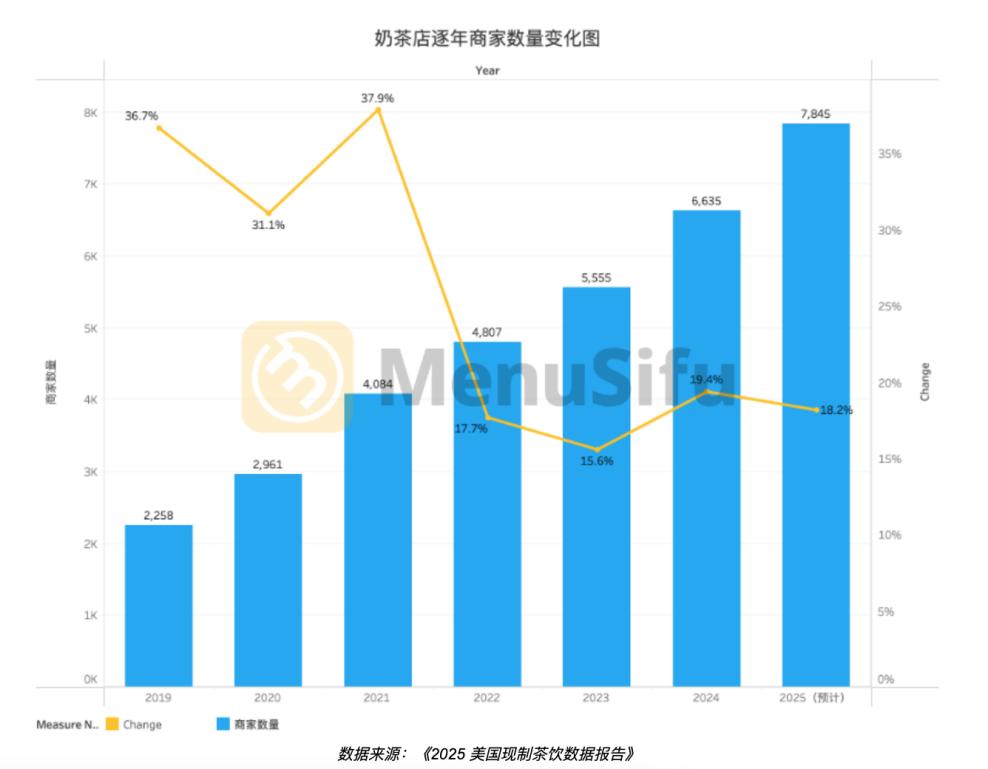
Core Insights - The rise of Chinese tea brands in the U.S. is reshaping consumer habits and creating new market dynamics, with a significant increase in bubble tea shops expected to reach 7,845 by 2025 from 6,636 in 2024 [1][2] - The U.S. bubble tea market is valued at $2.6 billion and is growing at an annual rate of 9.1%, indicating strong potential for expansion [2][3] - No single bubble tea brand currently holds more than 5% market share in the U.S., suggesting a fragmented market with ample opportunities for growth [3] Market Entry Strategies - Heytea aims to position itself as a premium brand, directly competing with Starbucks by opening its first overseas LAB store in Times Square, New York, with a price point of $9.9 per item, which attracted significant customer interest [4] - Bawang Chaji adopts a different approach by pricing its products lower, with a large cup priced at $5.95, aiming to capture a broader consumer base in a competitive market [4] - Mixue Ice Cream and Tea is implementing a dual-coast strategy, opening stores in high-traffic areas like Manhattan and Hollywood, focusing on offering affordable products in premium locations [5] Challenges Faced - High operational costs in the U.S., including rent and labor, pose significant challenges for Chinese tea brands, necessitating higher revenue per store to achieve profitability [8] - The investment required for a single store in the U.S. can exceed $1 million, with substantial costs associated with securing prime locations [8] - Cultural differences and consumer perceptions of tea as a sweet beverage complicate market entry, as American consumers typically prefer higher sugar content in their drinks [9][10] Future Strategies for Success - Successful market entry requires precise location selection, with data indicating that at least 30,000 shopping centers in the U.S. can support bubble tea brands [12] - Product localization is crucial, as American consumers have different taste preferences, with a growing demand for brown sugar and matcha products [14] - Brands are expanding their offerings by bundling tea with other food items, enhancing customer experience and increasing average transaction values [15] Long-term Sustainability - Establishing a localized supply chain is essential for long-term success, with brands like Heytea investing in regional warehouses to control costs and ensure product consistency [16] - Cultural integration and brand value creation are vital, as brands need to offer a unique experience that differentiates them from traditional coffee shops and fast-food tea outlets [17] - The journey for Chinese tea brands in the U.S. is expected to be a long-term endeavor, focusing on gradual brand building and cultural assimilation rather than immediate profits [17]

固体杨枝甘露一天卖出25万份!当液体讲不出新故事 茶饮卷向新赛道
Di Yi Cai Jing· 2025-11-25 14:37
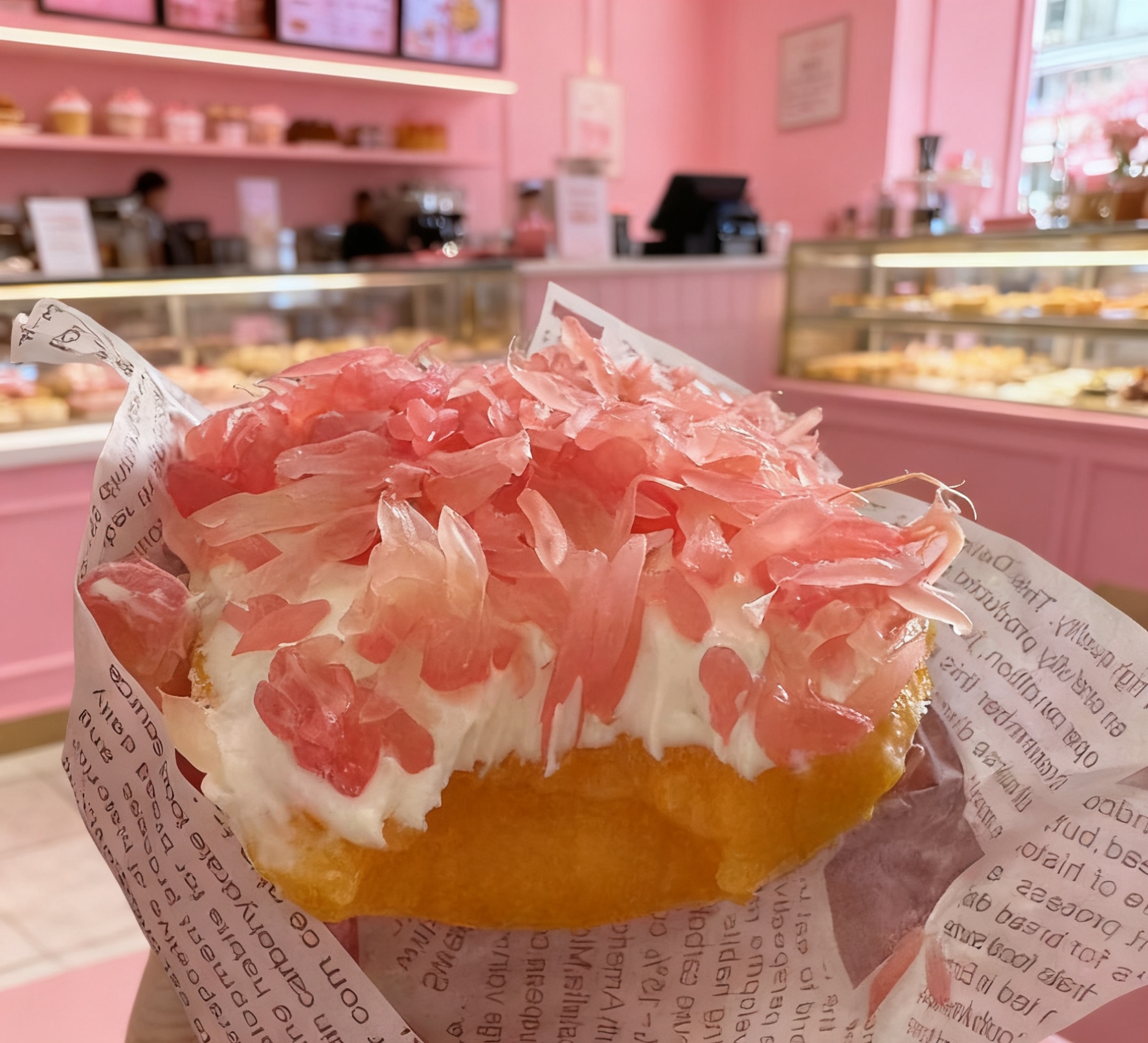
Core Insights - The emergence of "solid mango pomelo sago" has become a trending topic on social media, reflecting the new tea beverage industry's struggle for differentiation and growth in a saturated market [1][2] Industry Trends - The solid mango pomelo sago can sell 100-200 cups per day during peak times, with a total national sales volume of nearly 250,000 cups on its first day of launch [2] - Major brands such as Tea Baidao, Hushang Ayi, Yihe Tang, and others have introduced their versions of solid mango pomelo sago, indicating a trend of cross-industry participation [2] - The new product features fresh mango, live bacteria yogurt, and various toppings, enhancing the flavor profile and consumer experience [2] Market Dynamics - The new tea beverage sector is experiencing intensified competition, leading to a phenomenon of "old products with new forms" as brands seek to innovate [3] - The solidification and dessertification of beverages are seen as necessary evolutions in a highly competitive market, pushing brands to explore new growth points and differentiation [3][5] Profitability and Challenges - The profit margin for solid mango pomelo sago is relatively low, with initial pricing at 19 yuan and net earnings around 9-10 yuan per cup after discounts [4] - Concerns exist regarding the potential dilution of brand identity and product quality due to the rush to follow trends, which could impact core product development [5][6] Consumer Behavior - The solid version of mango pomelo sago is perceived as a creative solution to consumer fatigue with liquid beverages, transforming the consumption experience from drinking to eating [5][6] - The trend of sharing creative consumption experiences on social media is driving sales, but there are risks of losing repeat customers who may prefer traditional tea options [6]
固体杨枝甘露一天卖出25万份!当液体讲不出新故事,茶饮卷向新赛道
Di Yi Cai Jing· 2025-11-25 12:37
Core Insights - The emergence of "solid mango sago" as a trending dessert reflects the new tea beverage industry's struggle for differentiation and growth in a saturated market [2][4] - The product has gained significant popularity, with sales reaching approximately 250,000 cups on its first day of launch across the country [3] - Major brands, including Tea Baidao, have introduced their versions of solid mango sago, indicating a competitive rush to capitalize on this trend [3][4] Industry Trends - The new tea beverage sector is experiencing intensified competition, leading to a trend of "solidification" and "dessertization" of drinks as brands seek to innovate and differentiate [7][9] - The introduction of solid products is seen as a necessary evolution in a market where traditional liquid beverages struggle to tell new stories [9] - Analysts suggest that while the trend may dilute brand focus and quality in the short term, it represents a maturation and expansion of the tea beverage category [9] Market Dynamics - Solid mango sago has a relatively low profit margin, with initial pricing around 19 yuan, resulting in net earnings of 9-10 yuan per cup after discounts [8] - The complexity of producing solid products may lead to operational challenges, including increased training and supply chain costs, which could impact overall efficiency [9] - The risk of losing customer loyalty to traditional beverages exists if brands overly focus on solid products, potentially leading to a dilution of brand identity [9]
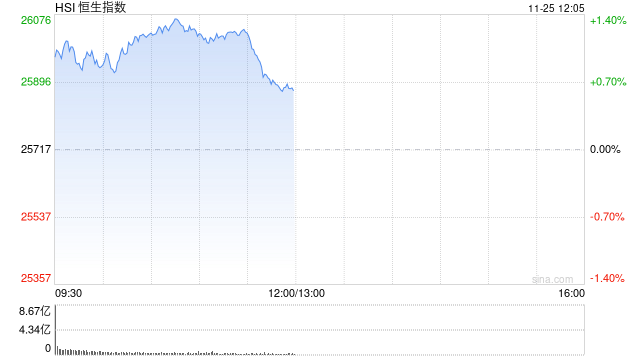
港股午评:恒指涨0.61%科指涨1.15%!科网股活跃汽车股走强,小米集团涨超4%,阿里巴巴涨超2%,洛阳钼业涨2%
Sou Hu Cai Jing· 2025-11-25 04:21
Core Points - The Hang Seng Index and its sub-indices experienced collective gains, with the Hang Seng Index rising by 0.61% to 25,873.27 points, the Hang Seng Tech Index increasing by 1.15%, and the National Enterprises Index up by 0.75% [5] - Xiaomi Group's stock surged over 4% following an announcement that its founder and CEO Lei Jun purchased 2.6 million shares at an average price of approximately 38.58 HKD per share, totaling over 100 million HKD [2][5] - New consumption concept stocks, particularly Gu Ming, saw significant gains, with Gu Ming's stock rising over 5% after launching new products priced at 16 HKD and 18 HKD [4][5] Group 1: Stock Performance - Xiaomi Group's stock closed at 40.440 HKD, reflecting a 4.60% increase [3][6] - Other notable performers included Bilibili, which rose over 5%, and Baidu, which increased by over 3% [5] - The automotive sector also showed strength, with companies like Li Auto and BYD experiencing gains [3][5] Group 2: Market Trends - The new consumption sector is expanding, as evidenced by Gu Ming's introduction of new products aimed at diversifying its offerings [4] - The non-ferrous metals sector is gaining momentum, with companies like Luoyang Molybdenum rising over 2% amid increased expectations of a Federal Reserve rate cut in December [7][8] - The probability of a 25 basis point rate cut by the Federal Reserve in December has risen to 82.9%, which is expected to positively impact the non-ferrous metals sector [7]


古茗早盘涨超5% 公司布局糖水赛道 全国上新慢炖好料系列产品
Zhi Tong Cai Jing· 2025-11-25 02:20
据社交平台数据统计,仅"古茗桃胶木薯炖奶"相关话题在小红书上线数日便吸引超2.2万条用户讨论, 浏览量突破700万次,部分门店甚至出现供不应求的断货现象。据悉,新茶饮品牌集体布局糖水赛道的 背后,是行业对"低门槛+高毛利"商业模式的深度探索。有业内人士分析指出,茶饮与糖水在原料供应 链与制作场景上高度重叠,品牌可复用现有资源快速切入市场。数据显示,糖水类产品毛利率普遍超过 65%,盈利空间显著。 古茗(01364)早盘涨超5%,截至发稿,涨5.57%,报24.66港元,成交额2557.42万港元。 消息面上,近日,古茗在全国门店推出两款定价分别为16元起、18元起的慢炖好料新品,采用限定新杯 包装,标注原料产地与工艺,如湖北溏心桃胶、广西黄心木薯、福建古田银耳等,炖煮60分钟以上,并 搭配黑糖珍珠等小料。古茗称该系列是对糖水品类的探索,旨在打造品牌特色,此前曾推出云南泡鲁达 广受好评。此次上新也反映出茶饮品牌向糖水赛道延伸的趋势。 ...
港股异动 | 古茗(01364)早盘涨超5% 公司布局糖水赛道 全国上新慢炖好料系列产品
Zhi Tong Cai Jing· 2025-11-25 02:05
据社交平台数据统计,仅"古茗桃胶木薯炖奶"相关话题在小红书上线数日便吸引超2.2万条用户讨论, 浏览量突破700万次,部分门店甚至出现供不应求的断货现象。据悉,新茶饮品牌集体布局糖水赛道的 背后,是行业对"低门槛+高毛利"商业模式的深度探索。有业内人士分析指出,茶饮与糖水在原料供应 链与制作场景上高度重叠,品牌可复用现有资源快速切入市场。数据显示,糖水类产品毛利率普遍超过 65%,盈利空间显著。 智通财经APP获悉,古茗(01364)早盘涨超5%,截至发稿,涨5.57%,报24.66港元,成交额2557.42万港 元。 消息面上,近日,古茗在全国门店推出两款定价分别为16元起、18元起的慢炖好料新品,采用限 定新杯包装,标注原料产地与工艺,如湖北溏心桃胶、广西黄心木薯、福建古田银耳等,炖煮60分钟以 上,并搭配黑糖珍珠等小料。古茗称该系列是对糖水品类的探索,旨在打造品牌特色,此前曾推出云南 泡鲁达广受好评。此次上新也反映出茶饮品牌向糖水赛道延伸的趋势。 ...
一场精心策划的“智商税”,收割了多少想暴富的县城青年
凤凰网财经· 2025-11-24 12:47
Core Viewpoint - The article discusses the rise and fall of the brand "Nezha Xianyin," which has gained attention through social media humor and irony, despite its questionable business practices and the dubious status of its parent company [1][3][27]. Group 1: Brand Perception and Social Media Impact - "Nezha Xianyin" has been humorously dubbed with titles like "the true new emperor of the milk tea world," reflecting a mix of irony and sarcasm from netizens [1][3]. - The brand's marketing strategy relies heavily on social media engagement, where users mockingly praise the product, creating a viral effect that boosts its visibility [26][14]. - Despite the negative commentary, the brand has sparked a unique online phenomenon where users express exaggerated support, contributing to its "black-red" popularity [26][16]. Group 2: Business Model and Franchise Issues - The franchise model of "Nezha Xianyin" has been criticized for misleading potential franchisees, often leading them to poor location choices and low sales [8][60]. - Reports indicate that the parent company of "Nezha Xianyin" was dissolved in December 2024, raising concerns about the legitimacy of the current franchise operations [28][27]. - The current franchise operator, "Hangzhou Fenghuolun Catering Management Co., Ltd.," has no clear connection to the original company and lacks a proper operational structure, as evidenced by zero social security contributions in 2024 [35][32]. Group 3: Franchisee Experiences and Financial Viability - Franchisees have reported significant financial losses, with some claiming that their daily sales barely cover operational costs, despite high initial investment requirements [48][45]. - The high costs associated with joining the franchise, including a franchise fee of 138,000 and additional expenses, have left many franchisees feeling deceived [48][56]. - Many franchisees were lured by promises of low barriers to entry and high returns, only to find themselves in a challenging business environment with little support from the franchisor [72][60].

年轻人正捧红一批“地域文旅奶茶”
Xin Lang Cai Jing· 2025-11-24 03:36
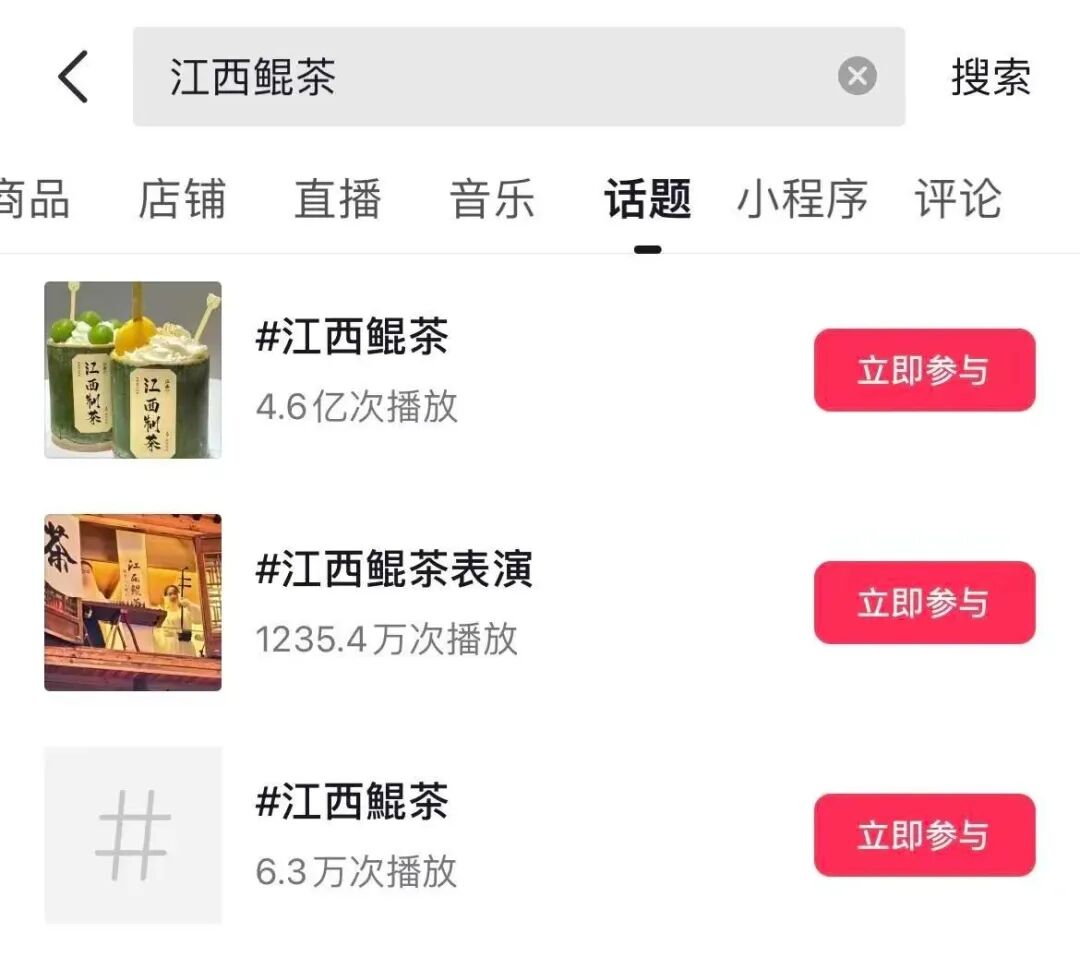
Core Insights - A new wave of tea shops focusing on "regional + cultural tourism" characteristics is gaining popularity, successfully expanding nationwide while traditional tea shops struggle with price wars [2][6][14] Group 1: Market Trends - The rise of tea shops like Jiangxi Kunchá and Yunglong Tea in Xuzhou showcases the success of integrating local culture and tourism into their branding, leading to significant social media engagement and sales [2][4][6] - Jiangxi Kunchá's Wan Shou Gong store reportedly achieves monthly revenues exceeding 1 million yuan, with a total of 20 locations established in various cities [4][6] - Yunglong Tea has opened 8 stores in Xuzhou, consistently ranking in the top three on local review platforms, indicating strong consumer demand [4][6] Group 2: Consumer Engagement - The popularity of these tea shops is driven by their ability to create immersive cultural experiences, appealing to young consumers who prioritize unique photo opportunities during their travels [2][6][11] - Social media platforms like Xiaohongshu and Douyin have seen significant discussions and views related to these tea brands, with Jiangxi Kunchá generating over 23,000 discussions and 460 million views on Douyin [2][4] Group 3: Product Innovation - Many of these tea shops incorporate local ingredients into their products, enhancing their connection to regional culture, such as Yunglong Tea's focus on Han culture and Jiangxi Kunchá's "Wagon Series" [12][13] - The use of local ingredients has been scaled, with brands like Quchashan utilizing nearly 1,000 tons of local materials in their products, showcasing a commitment to regional authenticity [12][13] Group 4: Competitive Landscape - The success of "regional + cultural tourism" tea shops has led to a surge in imitation stores, which often lack unique cultural elements and may face challenges in differentiation [14][17] - The industry is experiencing a trend of product and marketing homogenization, with many brands replicating popular items without innovation, leading to decreased consumer interest [17][18] Group 5: Strategic Collaborations - Collaborations with cultural tourism entities are becoming a strategy for brands to enhance their market presence, as seen with Yihe Tang's partnership with Handan tourism to create themed products [13][18] - Successful collaborations focus on deep cultural integration rather than superficial branding, as demonstrated by Bawang Chaji's engagement with local cultural performances [18]
茶饮出海:以东方韵味,打开海外茶饮新市场
Zhong Guo Jing Ji Wang· 2025-11-24 02:01
Core Insights - The Chinese tea beverage market is increasingly focusing on international expansion as domestic competition intensifies, with brands like Mixue Ice City, Heytea, and Bawang Tea Sister accelerating their overseas strategies [1][4] - Mixue Ice City has announced a significant push for international growth, launching dedicated channels for overseas franchises and expanding to 16 countries and regions [1][5] - Heytea has successfully entered multiple international markets, leveraging localized products and a comprehensive operational framework to enhance its brand presence [2][3] Group 1: Market Expansion - Mixue Ice City began its international expansion in 2018 and has since entered 12 countries, achieving notable success in Kazakhstan with a first-month revenue exceeding 430,000 yuan [1][2] - Heytea has opened stores in 11 cities across the U.S., Canada, and the U.K. since 2025, with its first LAB store in New York selling over 3,500 cups on its opening day [2][3] Group 2: Localization Strategy - Mixue Ice City emphasizes local consumer preferences, introducing products like chocolate ice cream in Malaysia and mint lemonade in Vietnam to cater to regional tastes [2][4] - Heytea has launched over 20 culturally inspired drinks in the past year, with products like "Matcha Coconut Blue" becoming bestsellers in North America and the U.K. [3] Group 3: Competitive Advantages - Chinese tea brands benefit from their cultural heritage, a robust supply chain, and the ability to blend traditional tea-making techniques with local consumer preferences, enhancing their appeal in foreign markets [4] - The industry recognizes the importance of understanding local markets and establishing a strong foothold before expanding further, promoting a win-win approach to local development [4]