
银行

Search documents
建设银行信用卡中心被罚575.27万元:客户资信水平调查严重违反审慎经营规则等
Xin Lang Cai Jing· 2026-03-23 07:40
Core Viewpoint - China Construction Bank's credit card center has been fined a total of 5.75 million yuan for serious violations of prudent operating rules related to customer credit investigations, credit limit management, and installment fund management [1] Group 1: Penalties and Violations - The total penalty imposed on China Construction Bank's credit card center amounts to 5.75265231 million yuan [1] - Specific violations include serious breaches in customer credit level investigations, credit limit management, and installment fund management [1] - Two officials, Yi Huihui and Han Liang, received warnings and fines of 50,000 yuan each for their roles in the violations [1]

深化跨境协同 南京银行与法国巴黎银行联手落地6亿美元可持续债
Sou Hu Cai Jing· 2026-03-23 07:19
Core Insights - Beijing Construction Engineering (Hong Kong) Co., Ltd. successfully issued dual-currency sustainable development bonds totaling $600 million with a maturity of 3 years and an interest rate of 4.1% [1] - The issuance was led by BNP Paribas as the main underwriter, with Nanjing Bank Beijing Branch participating in the investment, marking a significant project in enhancing cross-border financial collaboration [1] Group 1 - The bond issuance utilized Reg S rules, featuring a dual-currency structure in USD and RMB, which balances international market liquidity and the trend of RMB internationalization [1] - Nanjing Bank Beijing Branch leveraged its local client advantages to participate deeply in the bond investment, successfully subscribing $44 million, providing stable support for the issuance [1] - The strategic partnership between Nanjing Bank and BNP Paribas has been deepening in areas such as cross-border investment banking, green finance, and global funding business since its establishment [1] Group 2 - The successful issuance of the cross-border sustainable bond serves as a practical example of the collaborative framework of "joint capital, joint clients, and joint business" between the two banks [1] - The integrated service model of "overseas main underwriting + domestic investment" enhances the complementarity of global resources and local service capabilities, ensuring smooth pricing and distribution of the bonds [1] - Future collaboration will focus on sustainable finance, cross-border investment and financing, and supply chain finance, aiming to create a higher level of financial service model for international market participation [2]

建设银行南昌分行推进产品和服务创新升级,全力助推春耕备耕
Xin Lang Cai Jing· 2026-03-23 06:44
Core Viewpoint - The article highlights the proactive role of China Construction Bank (CCB) in supporting agricultural development and rural revitalization through innovative financial products tailored for farmers and agricultural enterprises [3][9]. Group 1: Financial Support for Agriculture - CCB has positioned itself as a key player in providing financial services to support rural revitalization, focusing on enhancing local specialty industries and improving agricultural productivity [3][9]. - The bank has introduced the "Agricultural Machinery Cloud Loan" product, which offers convenient and quick access to credit for farmers, addressing their funding needs for purchasing modern agricultural machinery [5][8][9]. - As of mid-March, CCB's Nanchang branch has issued loans totaling 173 million yuan to over 3,400 farmers, with 73 million yuan specifically allocated to the Agricultural Machinery Cloud Loan [9]. Group 2: Case Studies of Beneficiaries - Huang Fengyang, a farmer, successfully acquired a new tractor through the "Agricultural Machinery Cloud Loan," which significantly improved his farming efficiency and reduced labor costs [5][6][8]. - Jiangxi Dajiazhu Seed Industry Co., a high-tech agricultural enterprise, has established over 3,600 acres of research and development bases and has developed 33 national pepper varieties, benefiting from CCB's tailored financial support [12][14]. - The company received a 3 million yuan loan from CCB, which facilitated its expansion and research efforts, allowing it to enhance its product offerings and contribute to local employment [13][14]. Group 3: Technological Integration in Agriculture - CCB's financial products are designed to support the integration of technology in agriculture, enabling farmers to adopt modern practices and improve productivity [16][20]. - The bank collaborates with agricultural technology companies to provide funding solutions that address the unique challenges faced by the agricultural sector, such as lack of collateral and high financing costs [17][18]. - The implementation of smart agricultural practices, such as precision farming and modern irrigation systems, has been made possible through CCB's financial assistance, leading to increased crop yields and efficiency [16][20].


沪指跌破3800点
21世纪经济报道· 2026-03-23 06:37
Market Overview - The Shanghai Composite Index has recently continued to decline, with a drop of 4% in the afternoon of the 23rd, falling below 3,800 points, and a daily decline of 157 points, closing at 3,819.91 points [1] - Major indices weakened, with the Shenzhen Component Index dropping over 4.01% and the ChiNext Index falling by 3.82% [6] - Nearly 5,200 stocks in the Shanghai and Shenzhen markets declined, with around 220 stocks experiencing a drop of over 9% [6] Sector Performance - The sectors that saw the largest declines included non-ferrous metals, aquaculture, airport and shipping, and pharmaceutical biology [6] - The banking sector continued to expand its losses in the afternoon, with Agricultural Bank of China, Zhangjiagang Bank, and Xiamen Bank all dropping over 5%, while several other banks like Industrial and Commercial Bank of China and Postal Savings Bank of China fell by more than 3% [6] Commodity Market - Gold prices plummeted, breaking below $4,300, marking a significant drop of $1,000 in one month, while silver also experienced a sharp decline of 7% [8]

金融工程:AI识图关注红利低波、银行、地产
GF SECURITIES· 2026-03-23 06:31
- The report utilizes convolutional neural networks (CNN) to model the relationship between charted price-volume data and future prices, mapping learned features to industry thematic indices[74][75] - The thematic indices configured using CNN include the CSI Dividend Low Volatility Index, CSI Bank Index, CSI 800 Bank Index, CSI Mainland Real Estate Thematic Index, and CSI 800 Real Estate Index[75] - The CNN-based approach focuses on standardizing price-volume data into charts for analysis, as referenced in prior deep learning studies like "AI Recognition and Classification of Stock Price Trends Based on Convolutional Neural Networks"[74]
海外因素冲击,股指大幅调整
Guo Mao Qi Huo· 2026-03-23 05:47
1. Report Industry Investment Rating - Not provided in the content 2. Core Viewpoints of the Report - Currently, considering both internal and external factors, it is expected that the stock index will continue its weak oscillation pattern. In the future, as the overall economic tone meets expectations, multiple policies continue to work together to promote economic growth, macro - liquidity remains abundant, and capital market policies aim to nurture a "slow - bull" market, the stock index is expected to have room for an upward trend. With the easing of external geopolitical situations and the recovery of market risk appetite, the stock index is expected to consolidate and resume its upward movement. The investment view is to go long in the medium - to - long term, and the trading strategy is to choose the right time to go long in the medium - to - long term, with overseas geopolitical factors being the risk to watch [3]. 3. Summary by Relevant Catalogs 3.1 Main Views and Strategy Overview - **Economic and Corporate Profits**: The economic indicators from January to February continued the pattern of "mixed hot and cold". The production side was strong, with the added value of industrial enterprises above designated size increasing by 6.3% year - on - year, higher than the market expectation of 5.0%. The demand side was generally weak. The total retail sales of consumer goods from January to February was 75,815 billion yuan, with a year - on - year increase of 2.5%, in line with market expectations. The investment growth rate turned slightly positive, with national fixed - asset investment (excluding rural households) reaching 52,721 billion yuan, a year - on - year increase of 1.8%. Infrastructure investment was the core driver, with a year - on - year increase of 11.4%, while real estate investment was still in the adjustment period, with a 11.1% decline in real estate development investment from January to February [3]. - **Policy**: The probability of "bottom - support" policies in the capital market has increased. The A - share capital market remains well - funded, providing strong support for the stock index. After the sharp adjustment of the stock index last week, the probability of policy - level support has increased [3]. - **Overseas Factors**: The uncertainty of the Middle East conflict persists, impacting the equity market. The tightening of the global geopolitical situation has pushed up oil prices, increased global inflationary pressure, and restricted the interest - rate cut space of major overseas central banks, leading to a risk of tightening global liquidity. The upstream energy price increase has squeezed the profit margins of domestic mid - and downstream high - end manufacturing industries [3]. - **Liquidity**: Market sentiment cooled significantly last week, and A - share trading volume shrank sharply. The average daily trading volume decreased by 244.62 billion yuan compared with the previous week [3]. 3.2 Stock Index Market Review - **Index Performance**: Last week, the Shanghai - Shenzhen 300 Index fell 2.19% to 4,567; the Shanghai 50 Index fell 2.47% to 2,883.9; the CSI 500 Index fell 5.82% to 7,760; the CSI 1000 Index fell 5.25% to 7,783.4 [5]. - **Industry Index Performance**: Most Shenwan primary industry indices declined. Only the communication (2.1%) and banking (0.4%) sectors rose, while non - ferrous metals (- 11.8%), basic chemicals (- 10.5%), steel (- 10.3%), comprehensive (- 8%), and building materials (- 7.9%) sectors led the decline [7]. - **Futures Volume and Open Interest**: The trading volume of CSI 300 futures, Shanghai 50 futures, CSI 500 futures, and CSI 1000 futures increased by 34.03%, 44.45%, 20.74%, and 26.76% respectively. The open interest of CSI 300 futures, Shanghai 50 futures, and CSI 500 futures decreased by 3.86%, 4.31%, and 2.05% respectively, while the open interest of CSI 1000 futures increased by 2.77% [11]. - **Futures Premium and Discount**: As of March 20, the monthly contracts expired. The annualized discounts of the next - month contracts IF2604, IH2604, IC2604, and IM2604 were 7.71%, 1.11%, 10.66%, and 9.32% respectively; the annualized discounts of the current - quarter contracts IF2606, IH2606, IC2606, and IM2606 were 7.08%, 2.51%, 10.37%, and 11.51% respectively; the annualized discounts of the next - quarter contracts IF2609, IH2609, IC2609, and IM2609 were 7.04%, 3.57%, 9.75%, and 11.32% respectively [12]. - **Cross - Variety Spread Performance**: The spread between the Shanghai - Shenzhen 300 and the Shanghai 50 was 1,683.2, at the 97.5% historical quantile level; the spread between the CSI 1000 and the CSI 500 was 23.4, at the 23.9% historical quantile level; the ratio of the Shanghai - Shenzhen 300 to the CSI 1000 was 0.6, at the 26.9% historical quantile level; the ratio of the Shanghai 50 to the CSI 1000 was 0.6, at the 20.3% historical quantile level [17]. 3.3 Stock Index Influencing Factors - Liquidity - **Central Bank Operations**: The central bank conducted 242.3 billion yuan of reverse repurchase operations this week, with 176.5 billion yuan of reverse repurchases maturing, resulting in a net injection of 65.8 billion yuan. Next week, 242.3 billion yuan of reverse repurchases will mature, and 450 billion yuan of MLF will mature on Wednesday [23]. - **Market Volume and Margin Trading**: As of March 19, the margin trading balance of A - shares was 2,641.71 billion yuan, a decrease of 1.57 billion yuan from the previous week. The proportion of margin trading purchases in the total market trading volume was 9%, at the 63.7% quantile level in the past ten years. The average daily trading volume of A - shares last week decreased by 244.62 billion yuan compared with the previous week. As of March 20, the risk premium rate of the Shanghai - Shenzhen 300 was 5.3, at the 53.4% quantile level in the past ten years [29]. 3.4 Stock Index Influencing Factors - Economic Fundamentals and Corporate Profits - **Macroeconomic Indicators**: In February 2026, the industrial added value increased by 6.3% year - on - year; fixed - asset investment increased by 1.8% year - on - year; real estate investment decreased by 11.1% year - on - year; infrastructure investment increased by 11.4% year - on - year; social consumer goods retail increased by 2.8% year - on - year; the urban surveyed unemployment rate was 5.3%; CPI was 1.3%; PPI was - 0.9%; the increment of social financing was 23,855 billion yuan; the growth rate of social financing stock was 8.2%; the new RMB loans were 8,458 billion yuan; M1 was 5.9%; M2 was 9.0%; exports increased by 39.6% year - on - year; imports increased by 13.8% year - on - year; the manufacturing PMI was 49.0%; the non - manufacturing PMI was 49.5% [32]. - **Corporate Profit Indicators**: The year - on - year growth rates of net profit attributable to shareholders of the Shanghai - Shenzhen 300, Shanghai 50, CSI 500, and other major broad - based indices, as well as the ROE (TTM) of these indices, are presented in the report [43]. The profitability of Shenwan primary industry indices, including the year - on - year growth rate of net profit attributable to shareholders and ROE (TTM), is also provided [44]. 3.5 Stock Index Influencing Factors - Policy Driven - **Recent Macro - Policy Trends**: A series of policies have been introduced, including setting economic growth targets, fiscal policies such as deficit ratios, special bond issuance, and measures to expand domestic demand. In the real estate sector, policies aim to maintain stability and adjust housing purchase restrictions. In the capital market, policies focus on improving the market mechanism and increasing support [48][49][50]. 3.6 Stock Index Influencing Factors - Overseas Factors - **US Economic Data**: In February, the US manufacturing PMI was 52.4%, a 0.2 - percentage - point decrease from the previous value; the non - manufacturing PMI was 56.1%, a 2.3 - percentage - point increase from the previous value. The consumer confidence index in March was 55.5, a 1.1 increase from the previous value. The seasonally - adjusted unemployment rate in February was 4.4%, and the number of new non - farm payrolls was - 92,000. In January, the year - on - year increase in PCE was 2.83%, and the year - on - year increase in core PCE was 3.06%. The year - on - year increase in CPI was 2.4%, and the year - on - year increase in core CPI was 2.5% [61][63][68]. 3.7 Stock Index Influencing Factors - Valuation - **Index Valuation**: As of March 20, 2026, the rolling price - to - earnings ratios of the Shanghai - Shenzhen 300, Shanghai 50, CSI 500, and CSI 1000 were 14, 11.4, 35.1, and 47.2 respectively, at the 77.7%, 77.3%, 76.7%, and 67% quantile levels since October 2014 [70].
全球市场再次开启无差别抛售模式
第一财经· 2026-03-23 05:47
2026.03. 23 本文字数:2425,阅读时长大约4分钟 作者 | 第一 财经 后歆桐 周一(23日)亚太交易时段,随着中东局势进一步压制投资者情绪,从亚太主要股指到加密货币再 到黄金,再次进入"跌跌不休"模式。布伦特原油期货继续下跌,至111.97美元/桶。WTI原油期货下 跌0.6%,至97.64美元/桶。两者价差超过14美元/桶,这是多年来两者准价格之间最大的价差。 Strategas Research首席市场策略师维罗内(Chris Verrone)表示,不断扩大的价差可能预示 着"此次石油危机已达顶峰"。他还补充,布伦特原油期货价格高企可能会促使交易员将这场冲突持续 时间延长纳入考量。 富达全球宏观总监蒂默(Jurrien Timmer)在社交平台发帖称:"这一切到底意味着什么?为什么风险 资产下跌、美元受追捧,而债券收益率和比特币价格却在上涨?问题太多了。" 日韩股市跌超5% Asymmetric Advisors日本股票策略师阿瓦达斯(Amir Anvarzadeh)在报告中写道,无论接下来 发生什么,短期通胀前景已经非常明朗。美国总统特朗普向伊朗发出48小时最后通牒,要求其重新 开放霍尔 ...

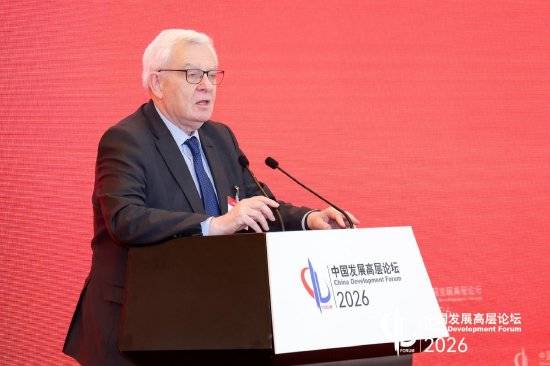
法国巴黎银行董事长:释放消费潜力关键在于改善储蓄配置,转向养老金等长期金融工具
Sou Hu Cai Jing· 2026-03-23 05:17
Group 1 - The core focus of the speech is on consumption in China, emphasizing it as a fundamental issue and a policy matter, with a dual approach on financing consumption and boosting consumer confidence [3][4] - Consumption finance has become a significant part of China's financial system, showing a 1% increase in 2025, indicating a solid foundation for consumer demand and a transition to a more mature phase of consumption finance [4] - The company believes in the necessity of expanding credit accessibility to support consumer spending and the real economy while maintaining strict risk control and compliance standards to ensure long-term stability in the consumption finance sector [4][5] Group 2 - The transformation of household savings is essential to unlock consumption potential, focusing on improving the allocation of savings towards long-term and diversified financial instruments, which can enhance family confidence [5][6] - Policy actions are crucial for establishing a robust pension system and appropriate incentives, with a call for collaboration between public policy and private sector investments to reshape consumer confidence and promote consumption potential in China [6]

港股周观点:冲突升级,港股承压-20260323
Soochow Securities· 2026-03-23 05:10
Group 1 - The report indicates that global markets weakened, with the Hang Seng Index and its sub-indices all declining, particularly the Hang Seng Technology Index which fell by 2.12% [1] - The report highlights that the energy sector led gains with a 0.9% increase, while the materials sector experienced the largest decline at 11.3% [1] - Concerns over increased capital expenditures by major tech companies like Tencent and Alibaba are pressuring technology stocks, leading to a cautious market sentiment [1] Group 2 - The report notes a net outflow of 6.3 billion HKD from southbound funds, a significant decrease from the previous week's outflow of 58.7 billion HKD [2] - The report mentions that the net inflow into ETFs targeting the Hong Kong market has slowed, with a total scale decreasing to 437.88 billion HKD, down by 1.65 billion HKD [2] - The report identifies the top net inflows in sectors such as financials, non-essential consumer goods, and information technology, while materials saw net outflows [2] Group 3 - The outlook suggests that sustained high oil prices may delay the Federal Reserve's shift in policy, increasing global liquidity pressure and continuing to suppress emerging risk assets like Hong Kong stocks [3] - The report warns of potential further declines in the Hang Seng Technology Index due to ongoing geopolitical uncertainties and high volatility in the U.S. market [3] - The report recommends a defensive investment strategy, emphasizing the importance of value dividends and the potential of China's new energy sector as a scarce global asset [3] Group 4 - Key upcoming data and events include the Bank of Japan's monetary policy meeting minutes on March 25 and U.S. initial jobless claims on March 26 [4] - The report lists several important earnings reports from companies such as Xiaomi and Meituan scheduled for the upcoming week [4]
农业银行3月23日发售26年记账式附息(五期)国债(续发)
Xin Lang Cai Jing· 2026-03-23 04:59
Core Viewpoint - China Agricultural Bank announced the issuance of the 2026 Book-Entry Interest-Bearing Government Bond (Phase V) on March 23, 2026, with a maturity yield of 1.8001% and a full price of 99.67 yuan per unit [1][2]. Group 1: Bond Details - The bond, referred to as "26 Interest-Bearing Government Bond 05 (Continuation 1)", has a fixed interest rate and a remaining term of 9.93 years, with interest payments made semi-annually on February 25 and August 25 each year [1][2]. - The principal will be repaid on February 25, 2036, along with the final interest payment [1][2]. Group 2: Subscription Information - The bond will be available for subscription to individual investors, financial institutions, and non-financial institutional investors across the country, with a minimum subscription unit of one bond (face value of 100 yuan) [3]. - Subscription can be made through various channels including China Agricultural Bank's branches, online banking, and mobile banking, with no upper limit on the number of subscriptions [3]. Group 3: Investor Protection - To protect investor rights, the Central Government Securities Depository and Clearing Co., Ltd. offers account verification services, allowing investors to check their bond balance starting from the listing date by calling a designated phone number [2][3].
