
数据中心

Search documents
【AI与电力、新药研发、中国经济复苏.....一文读懂高盛行研团队2026年十大投资主题】高盛2026年十大投资主题聚焦:AI基础设施投资转向数据中心内部及电力供应商;医药研发从减肥药转向心血管领域;中国经济增长将超市场预期,技术进步和出口为主要驱动力等。美联储政策、关税裁决等政治不确定性...
Sou Hu Cai Jing· 2026-01-03 12:48
Group 1 - The core investment themes identified by Goldman Sachs for 2026 include a shift in AI infrastructure investment towards data centers and power suppliers [1] - Pharmaceutical research is transitioning from weight loss drugs to cardiovascular treatments, indicating a change in focus within the healthcare sector [1] - China's economic growth is expected to exceed market expectations, driven primarily by technological advancements and exports [1] Group 2 - Political uncertainties, such as Federal Reserve policies and tariff decisions, are anticipated to dominate the market in the first half of the year [1]

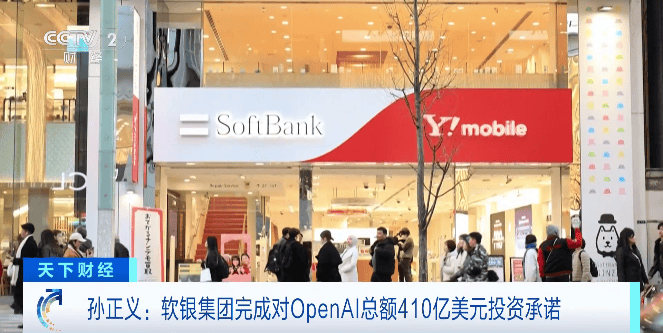
孙正义:软银集团完成对OpenAI总额410亿美元投资承诺
Sou Hu Cai Jing· 2025-12-31 15:46
Core Viewpoint - SoftBank Group has completed a total investment commitment of $41 billion in OpenAI, making it the second-largest external shareholder after Microsoft, with a shareholding ratio exceeding 10% [1][3]. Investment Details - The investment was finalized on December 26, with an initial agreement reached on March 31 for a maximum investment of $40 billion. The first round of investment of $7.5 billion was completed in April through the SoftBank Vision Fund 2 [3]. - The latest investment of $22.5 billion was also made through the same fund, along with $11 billion from third-party co-investors, bringing the total investment to $41 billion [3]. Strategic Moves - SoftBank's CEO Masayoshi Son has been increasing investments in artificial intelligence throughout the year. In March, SoftBank acquired all shares of U.S. semiconductor design company Ampere for $6.5 billion [5]. - In October, SoftBank acquired ABB Group's robotics business for $5.375 billion. Additionally, on December 29, SoftBank announced a final acquisition agreement for U.S. data center investment company DigitalBridge for $4 billion in cash at $16 per share [5]. - These moves indicate SoftBank's strategy to vertically integrate the AI industry chain, from chip design and computing infrastructure to core applications [5].


从加密货币到计算:数据中心繁荣带动人工智能基础设施股上涨
Xin Lang Cai Jing· 2025-12-31 14:19
Group 1 - Application Digital's stock price is projected to increase by approximately 215% by 2025 due to a growing number of contracts with AI developers, highlighting the demand for its data centers [1][2] - Hut 8's stock price has surged by about 126% this year, driven by partnerships in AI infrastructure and expansion announcements that reposition the company as a provider of data centers and high-performance computing [2] - Coreweave's stock price has risen approximately 85% this year, propelled by significant cloud computing contracts with clients like Meta and OpenAI [2] - Oracle's stock price increased by about 18% in 2025, mainly due to its collaboration with OpenAI on the Stargate project, although concerns remain regarding bond issuance for future capital expenditures [2] - Equinix's stock price has declined by approximately 18% this year, attributed to delays in completing a major revenue-boosting transaction and a downward revision of its annual revenue forecast [2] - The Global X Data Center & Digital Infrastructure ETF has risen about 28% this year, outperforming the S&P 500 index, which has increased by approximately 17% [2]




飞荣达:消费电子客户包括H公司、三星、荣耀、联想、戴尔、Meta及其他重要客户等
Xin Lang Cai Jing· 2025-12-31 06:23
Core Viewpoint - The company Feirongda (300602.SZ) has a diverse range of applications for its products across various sectors, including consumer electronics, network communication, data centers, servers, new energy vehicles, photovoltaic energy storage, artificial intelligence, medical devices, and home appliances [1][4]. Group 1: Client Segments - Data center and server clients include major companies such as H Company, ZTE, Cisco, Inspur, Datang Mobile, Yonghong Super Micro, H3C, Super Fusion, Lenovo, Wistron, Wistron NeWeb, Compal, Asus, Oriental Communication, and Shenzhou Kuntai [1][4]. - Consumer electronics clients feature prominent names like H Company, Samsung, Honor, Lenovo, Dell, HP, Xiaomi, and Meta, among others [1][4]. - Other consumer clients include GoerTek and Sony [1][4]. Group 2: New Energy and Automotive Clients - New energy vehicle battery manufacturers include CATL, BYD, Xinwangda, LG New Energy, Zhongchuang Xinhang, Ruipu Lanjun, Guoxuan High-Tech, and Funeng Technology [1][4]. - Automotive clients consist of GAC, BAIC, Changan, Geely, Li Auto, NIO, Xiaopeng, and Seres [1][4]. Group 3: Inverter and Control Clients - Inverter clients include H Company, GoodWe, and Solis, among other significant customers [1][6]. - Control system clients comprise Huichuan and Weimais [1][6].


广聚能源:公司在数据中心建设与运营领域已积累了较为成熟的实施路径
Zheng Quan Ri Bao Wang· 2025-12-31 04:47
Core Viewpoint - Guangju Energy (000096) is actively expanding its presence in the IDC and intelligent computing sectors through investments in industrial funds and its stake in Zhicheng Energy Cloud, which holds a 32% share [1] Group 1: Company Strategy - The company is currently following up and evaluating the Nanshan District Intelligent Computing Center project [1] - Guangju Energy has developed a mature implementation path in data center construction and operation over recent years [1] - The company possesses integrated deployment and operational experience, which positions it well for future technological upgrades and business extensions [1] Group 2: Industry Engagement - Guangju Energy maintains regular communication with enterprises in the intelligent computing center sector [1] - This ongoing engagement is aimed at preparing for potential technological advancements and business opportunities in the future [1]

A股盘前市场要闻速递(2025-12-31)
Jin Shi Shu Ju· 2025-12-31 03:01
Group 1 - The Ministry of Finance announced that individuals selling residential properties purchased for more than two years will be exempt from value-added tax starting January 1, 2026 [1] - The National Development and Reform Commission (NDRC) released a plan to optimize the "Two New" policy for 2026, expanding support to various sectors including old community elevator installations and consumer goods replacement [2] - A special bond issuance of 625 billion yuan has been approved to support the "Two New" policy, aimed at boosting consumer demand during peak seasons [2] Group 2 - The Ministry of Commerce and eight other departments issued detailed guidelines for the 2026 vehicle replacement subsidy program, offering significant financial incentives for scrapping older vehicles [2] - China National Airlines announced a purchase agreement for 60 Airbus A320NEO aircraft, with a total catalog price of approximately 9.53 billion USD, to be delivered between 2028 and 2032 [4] - Zijin Mining expects a net profit increase of approximately 59%-62% for 2025, projecting a profit of around 51-52 billion yuan [4] Group 3 - Tianpu Co. announced a stock suspension for verification after a significant price increase of 718.39% from August 22 to December 30 [5] - Guotou Zhonglu plans to acquire 100% of China Electronic Engineering Design Institute for 6.026 billion yuan, with a premium of 147.4% over the asset's book value [6] - Shengxin Lithium Energy intends to acquire a 30% stake in Qicheng Mining for 2.08 billion yuan, which is developing a lithium mine with a production capacity of 3 million tons per year [6] Group 4 - Haoshi Electromechanical reported small-scale applications of its products in leading commercial aerospace companies, indicating potential for increased orders in the growing market [7] - Jinpan Technology signed a contract for an overseas data center project worth approximately 696 million yuan, which is expected to positively impact the company's long-term performance [8] - Salt Lake Co. plans to acquire a 51% stake in Wenkang Salt Lake for 4.605 billion yuan, aiming to enhance its competitive position in the lithium and potassium resource market [9] Group 5 - Zhaofeng Co. announced a 1.53 billion yuan investment in the industrialization of intelligent robots and high-end precision components for automotive smart driving [10] - Baiwei Storage's subsidiary plans to acquire shares in Niu Xin Semiconductor, focusing on high-speed interconnect technology and related solutions [10]






数据港股价涨1.1%
Xin Lang Cai Jing· 2025-12-31 02:20
Group 1 - The core viewpoint of the news is that DataPort's stock has seen a slight increase of 1.1%, reaching a price of 30.43 CNY per share, with a trading volume of 170 million CNY and a turnover rate of 0.78%, resulting in a total market capitalization of 21.86 billion CNY [1] - DataPort, established on November 18, 2009, and listed on February 8, 2017, is primarily engaged in data center server hosting services and network bandwidth services, with 99.31% of its revenue coming from IDC services and 0.69% from IDC solutions [1] Group 2 - Among DataPort's top ten circulating shareholders, a fund under Huatai-PineBridge has reduced its holdings by 383,800 shares, now holding 2.9837 million shares, which accounts for 0.42% of the circulating shares [2] - The China Securities Shanghai State-Owned Enterprise ETF (510810) has a current scale of 7.994 billion CNY, with a year-to-date return of 8.06% and a one-year return of 6.42% [2] - The fund manager, Wu Zhenxiang, has a tenure of 15 years and 333 days, with the fund's total asset scale at 19.781 billion CNY, achieving a best return of 200.37% and a worst return of -31.53% during his tenure [2]

大同集团(00544.HK)拟成立合资实体以收购美国两处数据中心
Ge Long Hui· 2025-12-30 13:56
Group 1 - The company has entered into a non-binding letter of intent to establish a joint venture in Delaware, USA, with a third party, where the company will hold 60% equity and the partner will hold 40% [1] - The joint venture plans to acquire two data centers in the US, currently used for Bitcoin mining, with a total capacity of 30 megawatts, for an estimated price of $11.4 million, subject to adjustments based on due diligence results [1] - The potential acquisition may include various real estate, power agreements, customer agreements, equipment, mining infrastructure, and other assets related to Bitcoin mining services [1] Group 2 - The company is an investment holding firm facing challenges in its current operations, which include cold storage and food and beverage trading, while exploring opportunities for diversification and sustainable growth [2] - The target assets require specialized warehouse facilities for managing high energy loads and maintaining precise temperature control, aligning with the company's existing cold storage business [2] - The potential acquisition represents a strategic extension into high-energy industrial infrastructure management, aiming to transform the company into a diversified high-end storage infrastructure operator, generating stable recurring revenue through space leasing and power management fees [2] - Acquiring land and secured power capacity in the US provides the company with multi-purpose industrial real estate assets, which could be utilized in high-demand computing sectors like AI data centers, enhancing long-term resilience and value [2]
大同集团拟于美国成立合资企业收购两处数据中心
Zhi Tong Cai Jing· 2025-12-30 13:55
Core Viewpoint - Datong Group (00544) has signed a non-binding letter of intent to establish a joint venture in Delaware, USA, with a third party, acquiring two data centers for Bitcoin mining, with a total capacity of 30 megawatts and an estimated purchase price of $11.4 million [1][2] Group 1 - The joint venture will be owned 60% by the company's subsidiary and 40% by the joint venture partner [1] - The target assets require specialized warehouse facilities for storing computing equipment, managing high power loads, and maintaining precise temperature control systems, which are critical to the group's current cold storage business [1] - The potential acquisition is seen as a strategic extension of the group's core expertise in managing high-energy industrial infrastructure [1] Group 2 - The acquisition of land and secured power capacity provides the group with multi-purpose industrial real estate assets, which can be utilized for other high-demand computing fields, such as AI data centers, enhancing the long-term resilience and value of the group's business and assets [2]
AI军备竞赛的终点,或是一场关于铀的“全球狩猎”
3 6 Ke· 2025-12-30 12:11
Group 1 - The article discusses the clash between the rapidly evolving world of artificial intelligence (AI) and the slow-moving, capital-intensive nuclear energy sector, highlighting a structural shift in energy demand driven by AI [1] - A survey of over 600 global investors reveals that 63% view the power demand from AI as a significant change in nuclear energy planning, indicating that this is not a temporary spike but a lasting trend [1] - The traditional narrative around energy efficiency is failing, as advancements in chip efficiency lead to increased resource consumption, exemplified by the Jevons Paradox [2] Group 2 - The uranium market is experiencing a "dual-speed" dynamic, with short-term price volatility contrasting with a long-term supply gap, as current uranium mining can only meet less than 75% of future reactor demands [3] - Over 85% of surveyed investors expect uranium prices to reach between $100 and $120 per pound by 2026, with some predicting a rise to $135 per pound, which reflects a desperate incentive price rather than a healthy market signal [4] - The shift towards private ownership of nuclear energy infrastructure is occurring, as large-scale AI companies secure long-term power purchase agreements, raising questions about who will bear the costs of necessary grid upgrades [6] Group 3 - The geopolitical landscape surrounding uranium supply is critical, with Western nations attempting to rebuild their uranium supply chains while facing significant bottlenecks tied to Russian interests [7] - Emerging markets like China, South Korea, and the UAE are proactively investing in nuclear energy, recognizing its importance for national survival, with China currently constructing more reactors than the rest of the world combined [7] - The article suggests that limited uranium supply could lead to higher prices and a global political scramble for purchase agreements, indicating that control over uranium is essential for maintaining a competitive edge in AI [7]