煤炭

Search documents
——2026.03.09-2026.03.13日策略周报:两会顺利结束,A股指数窄幅震荡-20260315
Xiangcai Securities· 2026-03-15 09:53
Core Insights - The A-share index experienced narrow fluctuations during the week of March 9-13, 2026, with the Shanghai Composite Index slightly down by 0.70%, while the ChiNext Index rose by 2.51% [2][3][11] - The fluctuations were attributed to ongoing geopolitical tensions, particularly the conflict between the US and Iran, and the conclusion of China's Two Sessions, which led to stable domestic policy progress [3][14] - February export data showed a significant year-on-year increase of 39.60%, contributing to positive market expectations for the first quarter of 2026 [6][27] Industry Performance - Among the 31 first-level industries, coal and electric equipment saw the highest weekly gains of 5.03% and 4.55%, respectively, while defense and petroleum sectors faced declines of 6.64% and 4.33% [4][19] - In the second-level industries, wind power equipment and batteries led with weekly increases of 11.74% and 9.73%, while oil service engineering and precious metals showed significant year-to-date gains of 49.71% and 37.52% [4][24] - The third-level industries saw coal chemical and wind power components with weekly gains of 14.80% and 13.37%, and year-to-date leaders included oil and gas refining engineering with a 66.88% increase [5][24] Investment Recommendations - Long-term, the year 2026 is viewed as a starting point for the 14th Five-Year Plan, with expectations for continued proactive fiscal and moderately loose monetary policies to support stable economic growth and a "slow bull" market for A-shares [7][28] - Short-term strategies suggest a defensive approach, focusing on dividend-related sectors and industries benefiting from Middle Eastern conflicts, such as oil and gas extraction, coal chemical, and new energy sectors [9][28]
煤炭行业周报:煤价淡季判断难深跌,夏季有望跟随海外弹性-20260315
GUOTAI HAITONG SECURITIES· 2026-03-15 09:32
Investment Rating - The report rates the coal industry as "Overweight" [2]. Core Viewpoints - The report suggests that the seasonal decline in coal prices is unlikely to be severe, with expectations for summer prices to follow international trends. A strategic bullish outlook is maintained for the energy supercycle over the next 5-10 years [2][3]. - Geopolitical tensions, particularly involving the US, Israel, and Iran, have led to a significant increase in international coal prices by 20%, which has raised expectations for global coal demand. Domestic coal prices are expected to stabilize above 700 RMB/ton by the end of March, with potential increases to over 800 RMB/ton as summer demand rises [2][3]. - The report emphasizes the importance of strategic investments in leading companies such as Yancoal Australia, China Shenhua, and others, which are expected to show growth over the next five years [2][3]. Summary by Sections Coal Price Tracking - As of March 13, 2026, the price of Q5500 coal at Huanghua Port is 741 RMB/ton, down 14 RMB/ton (-1.9%) from the previous week. The Q5000 price is 659 RMB/ton, down 16 RMB/ton (-2.4%) [6][9]. - Domestic coal supply remains stable, while imports are expected to decrease. The overall supply-demand balance for coal is anticipated to improve earlier than expected due to geopolitical factors [2][3]. Coking Coal Data Tracking - As of March 13, 2026, the price of main coking coal at Jingtang Port is 1590 RMB/ton, down 20 RMB/ton (-1.2%). The price for Hebei-produced coking coal remains stable at 1480 RMB/ton [41][48]. - Despite a decline in iron production, there are strong expectations for a rebound in demand due to the resumption of high furnace operations [2][3]. Inventory and Transportation - As of March 13, 2026, Qinhuangdao's coal inventory has increased to 6.6 million tons, up 930,000 tons (16.4%) from the previous week. Northern ports' total inventory is 31.97 million tons, up 783,000 tons (2.5%) [25][30]. - Domestic transportation costs have risen, with the OCFI rates for Qinhuangdao to Guangzhou and Shanghai increasing by 19.2% and 4.3%, respectively [27][34]. Market Performance - The coal sector outperformed the broader market, with a 5.42% increase compared to a 0.70% decline in the Shanghai Composite Index. Notable gainers include China Xuyang Group (40.08%) and Baofeng Energy (21.20%) [81].





农业涨价逻辑受青睐:权益ETF周度跟踪-20260315
HUAXI Securities· 2026-03-15 07:50
1. Report Industry Investment Rating - Not provided in the report 2. Core View of the Report - As of the market conditions on March 13, combining the "Gain - Crowding" quadrant chart and ETF fund flow, the agricultural sector is worthy of continuous attention. The agricultural sector is steadily increasing in holdings, possibly due to capital betting on the price - rising logic. The breeding sector shows a net inflow of funds, and its upward space depends on policy strength. The coal and battery sectors have a net outflow of funds and may experience short - term fluctuations. The chemical sector has a high participation difficulty [1][23]. 3. Summary According to the Directory 3.1 Market Review - From March 9 - 13, the market fluctuated and declined. As of March 13, 2026, the closing price of the Wind All - A Index was 6750.45, a 0.48% decrease from March 6 [6]. - The ChiNext performed better. From March 9 - 13, most major stock indexes pulled back. The ChiNext Index and the Shenzhen Component Index rose by 2.51% and 0.76% respectively, while the Science and Technology Innovation 50 and the CSI 500 fell by 2.88% and 1.44% respectively [9]. - Stock - type ETFs maintained a net outflow. From March 9 - 12, stock - type ETFs had a net outflow of 20.904 billion yuan, with a larger outflow scale compared to March 2 - 5. Among them, broad - based index ETFs had a net outflow of 28.299 billion yuan, industry - index ETFs had a net outflow of 1.364 billion yuan, and theme - index ETFs had a net inflow of 4.807 billion yuan [11][12]. - At the industry level, batteries and coal led the gains. The battery index rose by 8.40%, and its crowding - degree quantile since 2020 rose to 68.6%, an increase of 37.4 percentage points. The coal index rose by 6.60%, and its crowding - degree quantile since 2020 rose 7.50 percentage points to 59.70%. Aerospace and military industry and non - ferrous metals fell significantly, and their crowding degrees declined from high levels. The agricultural and livestock sector rose moderately, with little change in crowding degree. The chemical industry index fell slightly, but its crowding degree increased significantly [15][16]. 3.2 Follow - up Attention - The agricultural sector is steadily increasing in holdings and is a direction for capital to bet on the price - rising logic. The agricultural ETF rose 2.68% this week, with a net inflow of 717 million yuan. It has had a net inflow for 9 consecutive days, with a cumulative 1.095 billion yuan, accounting for 29.48% of its fund scale [23]. - The breeding sector also shows a net inflow of funds, and its upward space depends on policy strength. The breeding ETF rose 1.54% this week, with a net inflow of 447 million yuan. If the policy implementation intensity increases, the price of live pigs may recover, and the sector still has upward space [23]. - The chemical sector has a high participation difficulty. From March 9 - 12, the chemical ETF fell 0.42%, with a net outflow of 557 million yuan. After the Spring Festival, the cashing pressure in the sector increased, and from February 24 to March 13, there was a cumulative net outflow of 1.39 billion yuan. The index crowding degree has risen to a relatively high level since 2020 [24]. - The coal and battery sectors have a net outflow of funds and may experience short - term fluctuations. The battery ETF and the coal ETF rose 8.49% and 6.63% respectively this week, with net outflows of 309 million yuan and 795 million yuan respectively. The battery sector may adjust in the short term, and the subsequent market of the coal sector is greatly affected by the situation in the Middle East [24].
“十五五”定调,A股韧性体现在哪些板块?
Zhong Guo Yin He Zheng Quan· 2026-03-15 07:50
Market Performance - The A-share market experienced a fluctuation with the overall index declining by 0.48% from March 9 to March 13, 2026[2] - The ChiNext Index rose by 2.51%, while the Science and Technology Innovation 50 and North China 50 indices fell over 2%[4] - The daily average trading volume decreased to 24,987 billion yuan, down by 1,459.12 billion yuan from the previous week[11] Fund Flow - The margin trading balance increased to 26,646.47 billion yuan, up by 191.00 billion yuan from the previous week[13] - A total of 21 new equity funds were established this week, with a total issuance of 19.824 billion units, representing a 54.93% share of new fund issuance[19] - Global funds saw a net outflow of 3.615 billion USD from A-shares, reversing from a net inflow of 1.471 billion USD the previous week[27] Valuation Changes - The PE (TTM) ratio for the overall A-share index decreased by 0.44% to 23.33 times, placing it at the 94.22% percentile since 2010[36] - The PB (LF) ratio fell by 0.27% to 1.93 times, situated at the 56.66% percentile since 2010[36] - The bond yield spread for A-shares was 2.4717%, near the 42.78% percentile level since 2010[36] Investment Outlook - The government work report emphasizes domestic demand, fostering new growth drivers, and high-level technological self-reliance as key tasks[47] - The "14th Five-Year Plan" focuses on high-quality development and modern industrial system construction, indicating a long-term investment logic shift towards quality[47] - The market is expected to transition from "emotion-driven" to "fundamentals-driven," with corporate earnings becoming the core anchor for future trends[47]
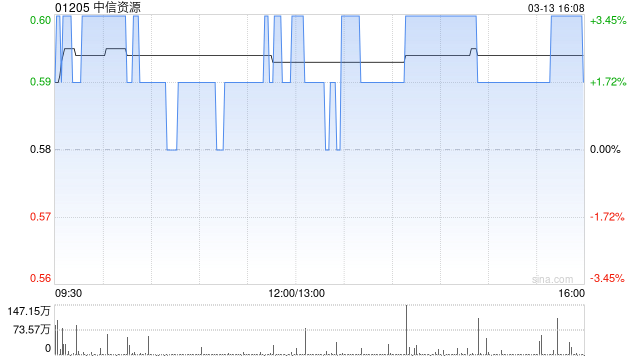
中信资源发布年度业绩 股东应占溢利1.71亿港元同比减少70.2%
Xin Lang Cai Jing· 2026-03-15 07:44
Group 1 - The core viewpoint of the article is that CITIC Resources (01205) reported its annual performance for the year ending December 31, 2025, showing a significant increase in revenue but a substantial decrease in profit attributable to shareholders [1][5]. Group 2 - The company achieved a revenue of HKD 14.965 billion, representing a year-on-year increase of 57.6% [1][5]. - The profit attributable to ordinary shareholders was HKD 171 million, which reflects a year-on-year decrease of 70.2% [1][5]. - Earnings per share were reported at HKD 0.0217 [1][5]. Group 3 - The decrease in profit is primarily attributed to several factors: a significant decline in the average selling prices of crude oil and coal, a substantial increase in the cost of raw materials, particularly alumina used in the Portland Aluminium Smelter, and the cessation of ownership in Alumina Limited from July 18, 2024, leading to a significant reduction in profits from joint ventures [1][5]. - Additionally, a joint venture involved in the extraction, production, and sale of oil, as well as the production and sale of road asphalt and clarified oil, reported losses due to a year-on-year decline in average crude oil prices [1][5].

周观点:能源问题久期拉长或将推动海外衰退交易-20260315
Huafu Securities· 2026-03-15 06:58
Group 1 - The core viewpoint of the report suggests that if energy issues persist, expectations for overseas recession may increase significantly [2][3] - The report indicates that the U.S. dollar may benefit from prolonged energy issues, potentially aiding the U.S. in maintaining credit expansion temporarily [3] - New energy transactions are expected to outperform in the context of high energy costs combined with recession expectations [3][18] - The report highlights that if energy issues continue, the price transmission in agriculture may be better than in industrial sectors [3][19] - The medium-term outlook is positive for coal, new energy, agriculture, electricity, oil, and U.S. capital goods related to inflation [3] - The long-term outlook favors insurance, central state-owned enterprises, anti-involution strategies, and Chinese internet companies [3] Group 2 - The report notes that the U.S. inflation de-escalation process is showing signs of slowing down, with the overall CPI rising to 0.3% month-on-month, driven by energy prices [8][12] - Core CPI has slightly decreased to 0.2% month-on-month but remains stable at 2.5% year-on-year, indicating that inflation levels are still above the Federal Reserve's long-term target of 2% [8][10] - The report emphasizes that core services inflation remains sticky, with housing prices increasing by 3.0% year-on-year and healthcare services accelerating to 4.1% [10][12] - The report discusses the impact of energy disruptions on overseas recession expectations, indicating that prolonged energy issues could lead to a significant increase in recession probabilities [17] - It is noted that agricultural prices may transmit better than industrial prices due to the rigid demand for food and the direct impact of rising energy costs [19]
港股市场速览:整体业绩下修反转,能源板块上涨强势
Guoxin Securities· 2026-03-15 03:26
证券研究报告 | 2026年03月15日 港股市场速览 优于大市 整体业绩下修反转,能源板块上涨强势 股价表现:整体回撤放缓,能源板块强势 本周,恒生指数-1.1%(上周-3.3%),恒生综指-1.0%(上周-3.8%)。风格 方面,小盘(恒生小型股+1.5%)>大盘(恒生大型股-1.0%)>中盘(恒生 中型股-2.2%)。 主要概念指数多数下跌。上涨幅度较大的主要有恒生科技(+0.6%);下跌 幅度较大的主要有恒生生物科技(-4.0%)。 国信海外选股策略组合多数下跌。上涨的主要有自由现金流 30(+1.6%); 下跌的主要有 ROE 策略进攻型(-4.9%)。 11 个行业上涨,19 个行业下跌。上涨的主要有:煤炭(+11.5%)、石油石 化(+8.5%)、电力设备及新能源(+7.0%)、传媒(+3.8%)、汽车(+2.4%); 下跌的主要有:国防军工(-8.2%)、纺织服装(-4.8%)、机械(-4.0%)、 房地产(-3.9%)、银行(-3.6%)。 估值水平:整体略有回落,行业分化显著 本周,恒生指数估值(动态预期 12 个月正数市盈率,后同)-0.2%至 11.2x; 恒生综指估值-0.6%至 1 ...
国泰海通香江策论之数据周报:伊朗局势延续,能源价格高企-20260315
Haitong Securities International· 2026-03-15 03:04
Liquidity Data - The US Dollar Index surged 1.6% to 100.5, the highest since November last year, driven by geopolitical tensions[2] - Brent crude oil rebounded to over $103 per barrel, following initial declines, influenced by US-Iran tensions and Trump's remarks[2] - Precious metals faced pressure, with gold down 2.9% and silver down 4.6% for the week[2] - Southbound funds in Hong Kong saw a net inflow of HKD 52.4 billion from March 9 to 12, while overseas investors recorded a net inflow of HKD 5.4 billion from March 5 to 11[2] Market Insights - The 10-year US Treasury yield rose by 14.2 basis points to 4.27%, reflecting increasing inflation concerns[13] - The coal sector is expected to enter a new upcycle, with a confirmed bottom in Q2 2025[37] - Energy storage demand is surging, leading to tighter lithium supply[37] - Urea prices have significantly increased due to Middle Eastern tensions, with a projected 20% rise in the fertilizer index by 2025[43] - The Hong Kong market saw a rise in short-selling activity, with the overall short-selling ratio increasing to 21%[18]
国信期货焦煤焦炭周报:宏观叠加外部扰动,煤焦偏强震荡-20260315
Guo Xin Qi Huo· 2026-03-14 23:35
1. Report Industry Investment Rating - Not provided in the document 2. Core Viewpoint of the Report - The coking coal and coke markets are experiencing a strong and volatile trend due to macroeconomic factors and external disturbances. The supply side is generally loose, while the demand side is under pressure. The market is waiting for the resumption of production in the spring by steel mills [60]. 3. Summary According to the Table of Contents 3.1 Double - Coking Market Review - Not provided in the document 3.2 Macroeconomic and Policy - **Economic Data**: In February 2026, the manufacturing PMI dropped to 49.0%, and the non - manufacturing business activity index slightly rose to 49.5%. The national industrial producer price index decreased by 0.9% year - on - year, with a narrowing decline, and increased by 0.4% month - on - month [13]. - **Domestic Policy**: The central bank will continue to implement a moderately loose monetary policy and increase counter - cyclical adjustment. The "15th Five - Year Plan" was passed, setting a growth target of 4.5% - 5% and emphasizing high - quality development and domestic demand expansion [13]. - **Overseas Conflict**: Iran's new supreme leader stated that the leverage of blocking the Strait of Hormuz would continue to be used [13]. 3.3 Fundamental Situation of Coking Coal - **Production**: In December 2025, the raw coal production of industrial enterprises above the designated size was 4.4 billion tons, a year - on - year decrease of 1.0%. From January to December, the production was 48.3 billion tons, a year - on - year increase of 1.2%. As of this Friday, the operating rate of 523 sample coal mines was 87.16%, a week - on - week increase of 5.77% [17]. - **Import**: In December 2025, China's coking coal imports reached 13.7698 million tons, a year - on - year increase of 28.57%. The total import volume in 2025 was 118.6256 million tons, a year - on - year decrease of 2.66%. It is expected that imports from Russia and Mongolia will continue to increase in 2026 [20]. - **Inventory**: As of this Friday, the coking coal inventory of 523 sample mines was 2.7768 million tons, a week - on - week decrease of 85,800 tons. The main port coking coal inventory was 2.6755 million tons, a week - on - week decrease of 1,500 tons. The coking coal inventory of sample coking enterprises was 8.1493 million tons, a week - on - week increase of 187,800 tons. The coking coal inventory of sample steel mills was 7.7763 million tons, a week - on - week decrease of 19,900 tons [25][29][33]. 3.4 Fundamental Situation of Coke - **Supply**: In December 2025, the coke production was 42.74 million tons, a year - on - year increase of 1.9% and a month - on - month increase of 2.5%. From January to December, the production was 504.12 million tons, a year - on - year increase of 2.9% [36]. - **Coking Enterprise Operation**: As of this Friday, the capacity utilization rate of 230 sample independent coking enterprises was 72.39%, a week - on - week increase of 0.1% [40]. - **Inventory**: As of this Friday, the coke inventory of independent coking enterprises was 564,300 tons, a week - on - week decrease of 67,700 tons. The main port coke inventory was 1.9638 million tons, a week - on - week decrease of 67,300 tons. The coke inventory of 247 sample steel mills was 687,550 tons, a week - on - week increase of 162,900 tons [44][48][52]. - **Demand**: In December 2025, China's crude steel production was 68.18 million tons, a year - on - year decrease of 10.3%. The daily average hot metal production of 247 sample steel mills was 2.212 million tons, a week - on - week decrease of 63,900 tons [56]. 3.5 Outlook for the Future of Double - Coking - The supply of coking coal is in a loose pattern, and the high - volume import of Mongolian coal suppresses prices. The coke supply is relatively abundant, but the demand is under pressure. The market is waiting for the resumption of production by steel mills in the spring. The market is expected to be strong and volatile due to macroeconomic factors and external disturbances [60].
信号突变!“HALO资产”,突然爆火!双重焦虑之下,谁才值得重仓?
券商中国· 2026-03-14 23:33
Core Viewpoint - The article discusses the recent market shift towards "HALO assets" (Heavy Asset, Low Obsolescence) due to geopolitical tensions and fears of AI disruption, leading to a decline in "light asset" growth stocks and a rise in traditional sectors like resources, transportation, and utilities [1][2]. Group 1: HALO Assets - "HALO assets" are characterized by heavy assets and low obsolescence, making them attractive for value investors. They are seen as stable investments that can provide consistent returns over time [2][6]. - Notable examples of "HALO assets" include China Shenhua, Shaanxi Coal, and China National Offshore Oil Corporation, which have shown significant long-term price appreciation [2][6]. - The article emphasizes the importance of valuation and shareholder return culture when investing in "HALO assets," as high valuations can lead to prolonged periods before investors see returns [7]. Group 2: Market Dynamics - Geopolitical tensions and a shift towards nationalism have increased the focus on heavy asset companies, which are viewed as the backbone of national economies [3]. - The rise of AI has created anxiety among tech giants, leading to a flight of capital towards traditional heavy asset companies as a hedge against potential disruptions [4][10]. - The article notes that "HALO assets" have historically provided substantial returns, with companies like China Shenhua and Shaanxi Coal seeing increases of 601.96% and 868.51% respectively over the past decade [6][9]. Group 3: Investment Characteristics - "HALO assets" are favored for their simplicity, low valuations, high dividends, and sustainable cash flows, making them suitable for long-term investment strategies [6]. - The article highlights that the current A-share market offers several "HALO assets" with dividend yields exceeding 3% and valuations below 20 times earnings, indicating potential investment opportunities [7][8]. - The performance of "HALO assets" is often driven by their underlying business fundamentals, as seen in the significant profit growth of companies like Yuexiu Expressway and Sheneng Holdings over the past decade [6][9].