自动驾驶

Search documents
CES上的“物理AI”拐点:Robotaxi走向规模化,人形机器人供应链悄然形成
Hua Er Jie Jian Wen· 2026-01-14 04:09
Core Insights - The report from Deutsche Bank predicts that 2026 will mark a significant transition for AI in the physical world, particularly in the fields of autonomous vehicles and humanoid robots, moving from testing to scaling [1] Group 1: Humanoid Robots - The supply chain for humanoid robots is forming, with suppliers transitioning to provide integrated solutions and core components [1] - Schaeffler aims to be a key player in humanoid robotics by offering integrated planetary gear actuators, showcasing a compact unit with a torque range of 60–250 Nm [4] - Companies like NEURA and Hyundai Mobis are collaborating to leverage automotive supply chains for humanoid robot manufacturing [4] Group 2: Autonomous Vehicles - The deployment of Robotaxis is gaining momentum, with significant commercial activity expected in 2026, particularly with Tesla's planned launch [10] - Waymo has provided over 10 million paid rides and is expanding its services to international markets, indicating a shift from concept to operational data [15] - Mobileye plans to launch L4 Robotaxi services in Los Angeles this year, showcasing the industry's movement towards real-world applications [15] Group 3: Technology and Innovation - Nvidia remains the dominant player in onboard processors for humanoid robots, with companies like Boston Dynamics utilizing its technology for advanced capabilities [3] - The shift from scripted actions to visual-language-action (VLA) models allows robots to reason and adapt to new environments [3] - The competition in training methods is evolving, focusing on efficient closed-loop systems that integrate real-world data with simulations [7] Group 4: Cost Reduction and Scalability - The cost reduction formula for humanoid robots is driven by increased production volume and improved supplier negotiations [9] - Companies are targeting significant cost reductions, with projections indicating that manufacturing costs could drop from $200,000 to $50,000 as production scales [10] - Visteon is introducing modular solutions to help automakers integrate AI capabilities without overhauling existing architectures, enhancing cost competitiveness [13] Group 5: Market Dynamics - The CES 2026 event highlighted a shift in focus from feasibility to scalability and cost reduction in both autonomous vehicles and humanoid robots [14] - The industry's future will depend on tracking supply chain integration, production capacity, and unit cost curves rather than just innovative demonstrations [14]

探寻世界模型最优解!SGDrive:层次化世界认知框架,VLA再升级(理想&复旦等)
自动驾驶之心· 2026-01-14 00:48
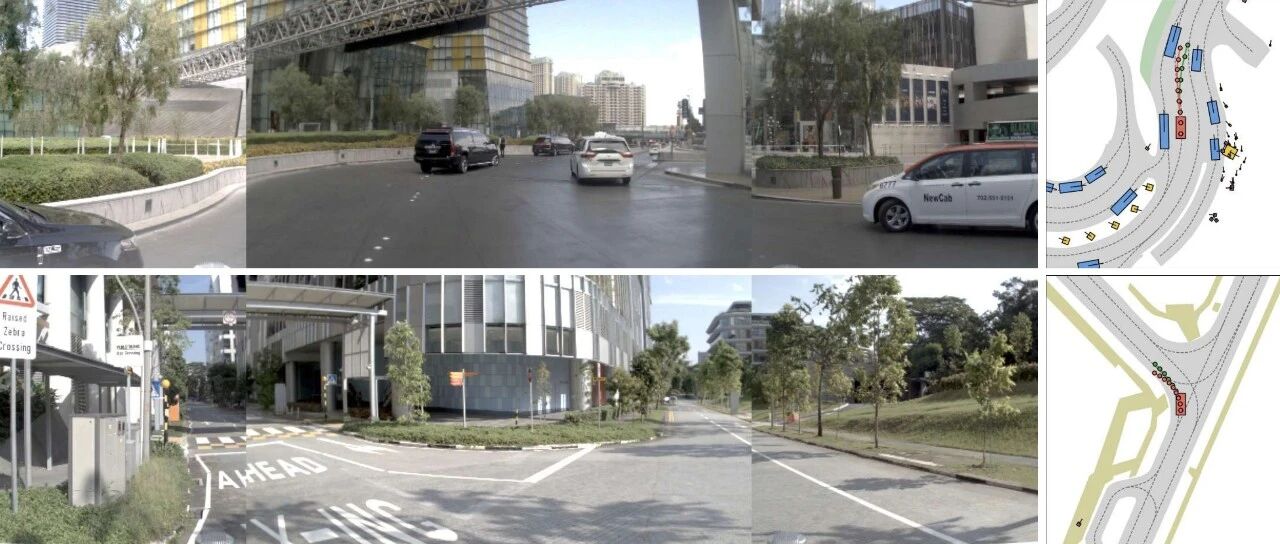
Core Insights - The article discusses the SGDrive framework, which integrates structured and hierarchical world knowledge into Visual-Language Models (VLM) for enhancing autonomous driving safety and reliability [3][52]. Group 1: Background and Motivation - Recent advancements in end-to-end (E2E) autonomous driving technologies have been significant, evolving from UniAD to SparseDrive, but existing methods often lack explicit causal reasoning and high-level scene understanding [6][12]. - The emergence of Large Language Models (LLM) and Visual-Language Models (VLM) has prompted researchers to integrate their rich prior knowledge and complex reasoning capabilities into driving tasks to address the shortcomings of traditional E2E methods [6][12]. Group 2: SGDrive Framework - SGDrive proposes a hierarchical world cognition framework that decomposes driving understanding into a scene-agent-goal structure, aligning with human driving cognition [3][15]. - The framework enhances VLM's 3D spatial perception by explicitly activating the model's ability to perceive and represent structured world knowledge, which is crucial for trajectory generation and collision avoidance [3][15]. Group 3: Methodology - The framework is modeled to solve two complementary sub-problems: extracting representative world knowledge and predicting future world states [16]. - A set of special query tokens is introduced to guide the model's attention towards driving-relevant knowledge and predict its future evolution [17][20]. Group 4: Experimental Results - SGDrive achieved state-of-the-art (SOTA) performance on the NAVSIM benchmark, surpassing larger general VLMs and previous leading driving VLM methods, demonstrating the effectiveness of hierarchical world knowledge learning [40][41]. - The model outperformed existing methods in key collision-related metrics, validating the hypothesis that explicit predictions of spatiotemporal layouts and dynamic agent interactions enhance safety [40][41]. Group 5: Ablation Studies - Ablation studies indicate that the hierarchical world representation significantly improves the model's understanding of the 3D driving environment, leading to more accurate trajectory predictions [42]. - The structured attention mechanism effectively prevents information leakage and cross-category noise, resulting in clearer and more task-specific embeddings [45].

百度Apollo Go首个海外控制中心落成
Shang Wu Bu Wang Zhan· 2026-01-13 15:21
Group 1 - The core point of the article is the inauguration of Baidu's first overseas Apollo Go autonomous driving operation control center in Dubai, which aims to support the development of smart transportation in the region [1] Group 2 - The control center will be responsible for fleet management, charging, software updates, and safety testing [1] - This initiative marks Baidu's expansion beyond China, indicating its commitment to international growth in the autonomous driving sector [1]

小马智行+北汽新能源合作升级 中东欧洲成新战场
Nan Fang Du Shi Bao· 2026-01-13 15:09
Core Viewpoint - The strategic partnership between autonomous driving company Pony.ai and BAIC New Energy has evolved into a comprehensive "five-in-one" collaboration, marking a transition from a single project phase to a fully integrated system phase, enhancing product co-creation, market expansion, industrial collaboration, ecosystem building, and capital integration [1][2]. Group 1: Product Co-Creation - The collaboration will leverage the successful mass production experience of the Extreme Fox Alpha T5 Robotaxi to develop a broader range of L4 Robotaxi products, transitioning from a "single model" to a "full spectrum" approach [2]. - The partnership aims to extend proven technology solutions to high-end smart driving models in the passenger car market, facilitating strategic resource integration [2]. Group 2: Market Expansion - The companies plan to deepen their domestic market presence while also promoting the "Chinese solution" internationally, focusing on the Middle East and European markets, thereby achieving comprehensive global output of vehicles, technical standards, operational models, and business ecosystems [2]. - Pony.ai's prior localization experience in eight countries, including Luxembourg and Qatar, will support their international expansion efforts [2]. Group 3: Ecosystem Building - BAIC New Energy will integrate its travel platforms and after-market resources, such as maintenance and charging, with Pony.ai's Robotaxi fleet, creating a seamless value chain from research and development to production, operation, and maintenance [2]. Group 4: Capital Integration - The partnership will deepen existing mutual investments, forming a long-term strategic bond around technology research and development, supply chain investment, and global market expansion [2]. Group 5: Future Development - The mass production of 600 units has not only helped Pony.ai exceed its 2025 target of 1,000 Robotaxis but also strengthens its confidence in achieving a target of 3,000 units by the end of 2026, marking a significant step for China's intelligent connected vehicle industry [3].
【重磅深度/文远知行】立足国内发力海外,RoboX商业化落地龙头
东吴汽车黄细里团队· 2026-01-13 13:41
Investment Highlights - The company, WeRide, established in 2017, is a leading L4 autonomous driving company with a diverse product line including Robotaxi, Robobus, Robovan, and Robosweeper, alongside L2+ driver assistance services. As of Q3 2025, the total revenue reached 171 million yuan, a year-on-year increase of 144%, with Robotaxi business being the core growth driver, contributing approximately 35.3 million yuan, a staggering increase of 761.0% year-on-year, accounting for 20.7% of total revenue. The gross margin stood at 32.9%, with a net loss of 307.3 million yuan. As of September 30, 2025, cash and capital reserves amounted to 5.4 billion yuan, supporting R&D investments and scaling expansion for long-term competitiveness [3][4]. L4 Industry Overview - The company is the only entity globally to have obtained autonomous driving licenses in eight countries. In China, it has achieved fully unmanned commercial operations in Beijing and Guangzhou, with each Robotaxi completing up to 25 rides per day during operational hours. The company has also received qualifications for unmanned demonstration applications in Shanghai [4][5]. - The Robotaxi business is accelerating towards a commercial turning point, with a clear path to profitability. The integration of end-to-end architecture and advanced technologies has significantly improved safety and reduced accident rates compared to human drivers. The BOM cost has decreased from over 1 million yuan to below 300,000 yuan, with ongoing optimization of the unit economic model [5][30]. - The market for Robotaxi in China is expected to reach 200 billion yuan by 2030, with the potential to replace parts of the traditional and private transportation markets. The theoretical reach of Robotaxi in developed and underdeveloped regions is estimated to be 4.4 and 3.4 times that of the Chinese market, respectively [5][41][45]. Company Analysis - WeRide is positioned as a technology leader in the Robotaxi sector, benefiting from gradual policy openings, continuous breakthroughs in autonomous driving technology, and cost reductions in the supply chain. Revenue projections for 2025-2027 are 555 million, 945 million, and 1.987 billion yuan, respectively, with corresponding price-to-sales ratios of 43.0, 25.2, and 12.0 times [7]. - The company has established a solid equity structure with significant investments from industry players, including Nvidia and major automotive companies, totaling over 1.1 billion USD in funding prior to its IPO [56][57]. - The governance structure is stable, with the founder holding a significant voting power, ensuring effective decision-making [60]. Financial Analysis - The company is currently in an investment phase, with L2+ and L4 businesses contributing to revenue. The service revenue has seen rapid growth due to partnerships, while product revenue is derived from various autonomous vehicle models [66]. - Cash reserves are robust, with 5.4 billion yuan available as of Q3 2025, bolstered by successful financing rounds, ensuring liquidity and supporting ongoing operations [71]. Technological Core - WeRide's competitive edge is built on its self-developed technology stack, including the WeRideOne platform, which integrates advanced driving algorithms and a comprehensive sensor suite for enhanced safety and operational efficiency [75].

英伟达还是放不下自动驾驶
虎嗅APP· 2026-01-13 13:35
Core Viewpoint - The article discusses NVIDIA's recent announcements at CES, particularly the launch of the open-source VLA model, Alpamayo, aimed at revolutionizing autonomous driving technology and its implications for the automotive industry [5][8]. Group 1: NVIDIA's Innovations - NVIDIA introduced the Alpamayo model, which integrates Vision-Language-Action (VLA) technology for autonomous driving, allowing vehicles to interpret sensor data into language and symbols for decision-making [6][10]. - Alpamayo is the first open-source VLA model, providing a foundational framework for automakers to develop their own autonomous driving solutions, thus lowering development costs and complexity [12][14]. - The model is complemented by the AlpaSim simulation framework and a dataset containing over 1,727 hours of driving data, offering a comprehensive toolkit for automotive companies [12][14]. Group 2: Competitive Landscape - The VLA model has attracted interest from various automakers, including Xiaopeng, Li Auto, and others, who are also pursuing similar technologies [10][11]. - Tesla's Full Self-Driving (FSD) system appears to utilize a similar VLA architecture, indicating a competitive race in the autonomous driving sector [10][11]. - Despite Tesla's advancements, NVIDIA's Alpamayo aims to provide a more explainable and controllable decision-making process compared to traditional end-to-end models [11][12]. Group 3: NVIDIA's Business Strategy - NVIDIA's automotive business, while dominant in high-level autonomous driving, has not met revenue expectations compared to its data center operations, prompting a strategic shift [17][22]. - The company aims to provide standardized tools and frameworks to automakers, allowing them to leverage NVIDIA's technology without needing extensive in-house development capabilities [22][26]. - By offering Alpamayo and associated tools, NVIDIA seeks to maintain its market position while addressing the needs of traditional automakers who may lack advanced algorithm development capabilities [23][26].

马斯克科技生态链系列之国内深度绑定解码
Xin Lang Cai Jing· 2026-01-13 11:54
Core Insights - Elon Musk's technological ecosystem is rapidly evolving, integrating six key industries: commercial space (SpaceX), brain-machine interfaces (Neuralink), humanoid robots (Optimus), autonomous driving (FSD), artificial intelligence (X AI), and hyperloop (The Boring Company) [1][19] - The technological advancements and mass production efforts are reshaping the global tech industry landscape and presenting certain investment opportunities for domestic companies in related sectors [1][19] Group 1: Deep Binding from Components to System Integration - The production of Tesla's Optimus robot is set to begin, with a target of 100,000 units by 2026, but the localization rate of core components is still below 30%, leaving significant market penetration opportunities for domestic high-barrier companies [21] - Top Group is a core supplier for Tesla's vehicle chassis and has entered the testing phase for Optimus's rotating joints, showcasing strong system integration capabilities [21] - Greentech Harmonic is a leading global harmonic reducer supplier, with its Y series products passing Tesla's extreme conditions test and set to deliver 10,000 units by 2025 [21] - Sanhua Intelligent Control is leveraging its experience in automotive thermal management to quickly enter the robot electromechanical actuator and thermal management systems market [21] - Mingzhi Electric is one of the few companies capable of mass-producing hollow cup motors, which are critical for achieving human-like dexterity in robotic hands [21] Group 2: L5 Autonomous Driving - Hardware and Software Integration - Tesla's Full Self-Driving (FSD) is accelerating its rollout, with deep participation from the Chinese supply chain in hardware iteration and software adaptation [22] - Desay SV is supplying the autonomous driving domain controller to Tesla's North American supply chain, with FSD-related orders expected to reach 1.2 billion yuan by 2025 [22] - Lianchuang Electronics is the main supplier of vehicle-mounted lenses for Tesla's HW4.0, holding approximately 60% market share [22] - Zhongke Chuangda, as a leading vehicle operating system provider, is continuously optimizing AI model efficiency on Tesla's platform to support smooth FSD software deployment [22] Group 3: Technical Collaboration - Patent Sharing and Capability Building - Some companies, while not supplying on a large scale, are building long-term barriers through technical cooperation [23] - Changying Precision has reached a cross-licensing agreement with Tesla regarding flexible sensors, enhancing its technological moat in robot perception [23] - Sanhua Intelligent Control is jointly developing actuator efficiency optimization solutions to enhance Optimus's operational endurance [24] - Yanshan Technology's pure vision autonomous driving solution aligns closely with FSD technology, currently supporting Tesla indirectly through international Tier 1 suppliers [24] Group 4: Potential Tracks - From Benchmarking to Entry - In commercial space, Chinese companies are gaining certification in key areas as SpaceX's Starlink accelerates deployment [25] - Tongyu Communication has developed a microwifi antenna module that has passed SpaceX interface certification, expected to supply 60% of Starlink's dedicated modules starting Q3 2025 [25] - Xinyi Communication's subsidiary is the exclusive supplier of high-frequency connectors for Starlink ground terminals, with annual revenue projected to exceed 1.5 billion yuan [25] - Blue Arrow Aerospace is the only domestic company mastering reusable liquid oxygen-methane rocket technology, establishing a significant barrier in low-cost, high-frequency launches [25] Group 5: Brain-Machine Interfaces - Complementary Paths for Cooperation - Neuralink focuses on invasive methods, while Chinese companies are exploring non-invasive and clinical translation paths [30] - Yanshan Technology's non-invasive BCI technology complements Neuralink's approach, indicating clear cooperation potential if Neuralink expands into consumer products [30] - Hanwei Technology's subsidiary has developed ultra-flexible sensors that are cost-competitive and have entered the international supply chain [30] - Sanbo Brain Science is the only private hospital in China with clinical implantation qualifications for brain-machine interfaces, performing over 30,000 surgeries annually [30] Group 6: Indirect Competition and Strategic Value - Some companies, while not directly collaborating with Musk's ecosystem, play a crucial role in national projects, fulfilling "domestic substitution" responsibilities [31] - China Satellite and China Satcom are leading the "Star Network Project," competing with Starlink in satellite manufacturing and operations [31] - Cambrian is developing AI chips that meet xAI's computational needs, presenting potential entry points if Tesla or xAI expands their supply chains [32] - Four-dimensional Map has over 60% market share in high-precision mapping, providing core positioning services for Tesla in China [33] Group 7: Selection Logic for "Invisible Champions" - Companies that meet the criteria of "technological leadership, low public recognition, high industry relevance, and sustained innovation barriers" have emerged as key players [34] - Mingzhi Electric is a global leader in hollow cup motors, essential for dexterous robotic hands [34] - Sanhua Intelligent Control is a dual leader in thermal management and actuators, validated by Tesla [34] - Top Group excels in system integration from chassis to joint assembly, showcasing deep binding [34] - Industrial Fulian is the largest server manufacturer globally, benefiting directly from xAI's computational expansion [34] - Blue Arrow Aerospace is the only player in liquid oxygen-methane reusable rockets, shaping the future of China's commercial space industry [34]

中国最有潜力的科技公司都在这里了…第18届创业邦年会完整议程公布!
创业邦· 2026-01-13 10:35
Core Insights - The article discusses the upcoming 18th Entrepreneur China Annual Conference and the CYZone Future Unicorn 100 Summit, highlighting the significance of identifying future unicorn companies and investment trends for 2026 [2][5][11]. Event Highlights - The conference will feature discussions on the latest trends in technology investment and the characteristics of successful unicorns, including insights from top investors [10][11]. - Key topics include the impact of AI on entrepreneurship and investment strategies, as well as the resilience of the Hong Kong stock market [22][23]. Agenda Overview - The event is structured into several chapters, focusing on themes such as enduring success in a competitive landscape and the future of unicorns in the market [17][19]. - Notable sessions include keynote speeches from industry leaders and panel discussions on global expansion and financial empowerment in technology [19][22]. Data Insights - The article mentions the 2025 Global Unicorn Company Observation Report, which will provide insights into record financing and emerging investment opportunities [6][11]. - It highlights the number of companies that have successfully gone public and those that have secured new financing after being recognized as unicorns [13][14][15].
摸底地平线HSD一段式端到端的方案设计
自动驾驶之心· 2026-01-13 10:14
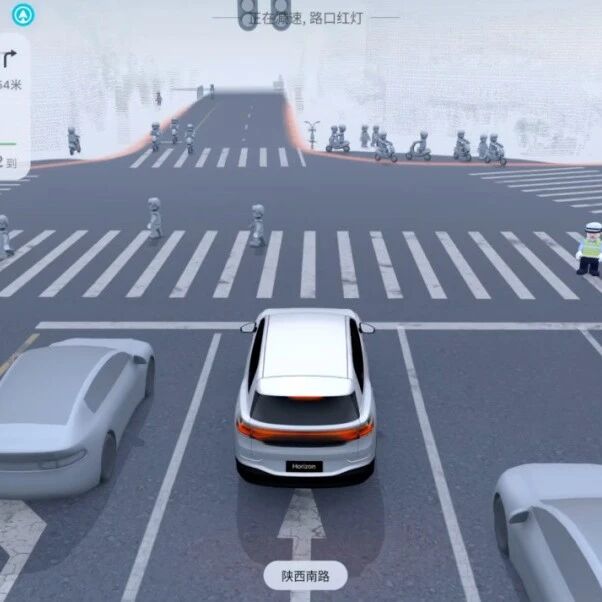
Core Insights - The article discusses two core papers from Horizon Robotics: DiffusionDrive and ResAD, focusing on their contributions to end-to-end autonomous driving solutions [2][3]. DiffusionDrive - The overall architecture of DiffusionDrive consists of three parts: perception information, navigation information, and trajectory generation [6]. - Perception information includes dynamic/static obstacles, traffic lights, map elements, and drivable areas, emphasizing the need to convey perception tasks to planning tasks in an end-to-end manner [6]. - Navigation information is crucial for avoiding incorrect routes, especially in complex urban environments like Shanghai, where navigation challenges are significant [7]. - The core of trajectory generation is "Truncated Diffusion," which leverages fixed patterns in human driving behavior to reduce training convergence difficulty and inference noise [8]. - The article outlines a method for trajectory generation using K-Means clustering to describe common human driving behaviors, which simplifies the training process [9]. - The anchor-based trajectory generation approach reduces training difficulty and enhances real-time inference capabilities, although concerns about trajectory stability over time are raised [10]. ResAD - ResAD introduces a residual design that predicts the difference between future trajectories and their inertial extrapolations, rather than generating future trajectories directly [12]. - The residual regularization is essential for managing the increasing residuals over time, ensuring that the model focuses on the true diversity of driving behaviors [13][14]. - The design allows for different noise perturbations in the trajectory generation process, adjusting learning difficulty based on the noise applied in lateral and longitudinal directions [15]. - ResAD features a trajectory ranker that utilizes a transformer model to predict metric scores based on top-k trajectory predictions and environmental information [16]. - The regularized residual supervision effectively separates the inertial component from predictions, addressing data imbalance issues in training [17]. Conclusion - Both papers from Horizon Robotics provide valuable insights and methodologies for enhancing autonomous driving technology, encouraging further exploration and development in the field [18].
华泰证券今日早参-20260113
HTSC· 2026-01-13 05:10
Group 1: Fixed Income Market Insights - In the second week of January, the real estate sector showed a significant decline in new home heat, while second-hand homes saw a slight increase, remaining below last year's levels, indicating a need for price improvement [2] - Industrial production showed a widening year-on-year decline in freight volume, with a mixed performance in production rates across sectors, particularly in coking and chemicals, while construction materials like cement showed a slight narrowing in supply-demand decline [2] - External demand indicators showed a year-on-year decline in throughput, but continued resilience in exports to South Korea and Vietnam, while consumer demand for travel and automotive purchases showed signs of recovery [2] Group 2: Real Estate Sector Analysis - The Hong Kong real estate market is experiencing a recovery, with November housing prices continuing to rise, and December private residential transaction volumes significantly increasing year-on-year, reaching a twenty-year high for new home sales [6] - Retail sales in Hong Kong showed a rebound, with November retail rental declines significantly narrowing, indicating a positive trend for commercial real estate [6] - The report recommends focusing on Hong Kong-listed property companies, particularly New World Development and Link REIT, which are expected to benefit from the ongoing recovery in the market [6] Group 3: Electric Power Equipment and New Energy - The adjustment of export tax rebates for battery products is expected to lead to a short-term surge in battery exports, intensifying supply-demand tensions in lithium and related sectors, while long-term effects may favor companies with overseas production capabilities [7] - Recommended companies include CATL, EVE Energy, and others, which are well-positioned to benefit from the changing landscape in the battery industry [7] Group 4: Nonferrous Metals Sector - The report indicates that profits in the electrolytic aluminum sector are expected to rise in the first half of 2026, driven by a tightening supply-demand balance despite current weak downstream purchasing sentiment [8] - The anticipated seasonal demand in the "golden three silver four" months is expected to support aluminum prices and profit margins [8] Group 5: Technology Sector Developments - NVIDIA's acquisition of Groq is highlighted as a significant strategic move, emphasizing the importance of low-latency inference technology in the evolving AI landscape [9] - This acquisition is expected to enhance NVIDIA's capabilities in the Agentic AI sector, aligning with industry trends towards more responsive AI systems [9] Group 6: Semiconductor Industry Insights - The report discusses the increasing capital expenditure in the semiconductor cleanroom sector, driven by the demand for advanced manufacturing processes, with expectations of significant growth in the global semiconductor market [11] - Companies involved in cleanroom construction are expected to see improved profitability due to the high demand and limited supply of skilled labor in overseas markets [11] Group 7: Key Company Recommendations - Junwei Electronics is recommended for a buy rating, with a target price of 42.1 yuan, as it transitions from a precision resistor leader to a comprehensive current detection solution provider [12] - The report also highlights the potential of WeRide, with a buy rating and target prices set for both Hong Kong and US markets, due to its dual focus on domestic and international markets for autonomous driving [13]