啤酒

Search documents
思瀚发布《啤酒行业产业链态势及发展前景趋势报告》
Sou Hu Cai Jing· 2026-01-16 08:56
Core Insights - The Chinese alcoholic beverage market is projected to grow from RMB 2.0 trillion in 2019 to nearly RMB 2.3 trillion by 2024, with a compound annual growth rate (CAGR) of 2.2% [3] - The beer market in China is expected to increase from RMB 604.3 billion in 2019 to RMB 734.7 billion by 2024, with a CAGR of 4.0% [5] - The craft beer segment is experiencing rapid growth, with its market size projected to rise from RMB 12.5 billion in 2019 to RMB 63.2 billion by 2024, achieving a CAGR of 38.4% [8] - Domestic beer companies are gaining market share, with their retail sales expected to reach RMB 468.7 billion by 2024, increasing their market share from 58.8% in 2019 to 63.8% [10] Alcoholic Beverage Industry Overview - The Chinese alcoholic beverage industry includes various types of drinks with an alcohol content above 0.5% vol, such as liquor, beer, and wine [3] - The market is expected to reach nearly RMB 2.8 trillion by 2029, with an increased CAGR of 4.3% [3] Beer Industry Development Stages - The beer industry has evolved through four stages: initial development (1900-1978), steady growth (1979-2012), market consolidation (2013-2018), and high-end, diversified development (2019-present) [4][5] - The current phase is characterized by a shift towards high-end, quality, and diverse beer products, driven by the preferences of the younger generation [5] Beer Industry Supply Chain - The beer industry supply chain consists of upstream raw material supply, midstream brewing and brand operation, and downstream distribution channels [6] - Key raw materials include malt, hops, yeast, and water, while packaging materials like glass bottles and aluminum cans are crucial for product quality [7] Market Segmentation - The beer market is divided into industrial beer and craft beer, with craft beer showing significantly higher growth rates [8] - The retail value of industrial beer is projected to grow from RMB 591.8 billion in 2019 to RMB 671.5 billion by 2024, with a CAGR of 2.6% [8] Distribution Channels - The beer market is primarily driven by on-premise consumption channels, such as bars and restaurants, while off-premise channels are also expanding [9] - The on-premise market is expected to grow from RMB 465.8 billion in 2024 to RMB 546.4 billion by 2029, while off-premise channels will increase from RMB 268.9 billion to RMB 382.9 billion in the same period [9] Future Trends - The beer industry is witnessing a trend towards flavor diversification and beverage-like products, appealing to a broader consumer base [11] - The sales channels are diversifying, with new retail formats enhancing consumer access and experience [12] - There is a growing emphasis on green production practices, with brands adopting sustainable manufacturing processes [13]

食品饮料行业双周报(2026、01、02-2026、01、15):茅台发布市场化运营方案,关注春节备货-20260116
Dongguan Securities· 2026-01-16 07:56
Investment Rating - The report maintains an "Overweight" rating for the food and beverage industry, expecting the industry index to outperform the market index by over 10% in the next six months [57]. Core Insights - The report highlights that Kweichow Moutai has released a market-oriented operation plan, with a focus on inventory preparation for the Spring Festival. The white liquor sector is experiencing a weak recovery in demand, prompting Moutai to implement various measures to adapt to market and consumer trends [4][52]. - The SW food and beverage industry index rose by 0.64% from January 2 to January 15, 2026, but underperformed the CSI 300 index by approximately 1.98 percentage points [11][12]. - Approximately 76% of stocks in the industry recorded positive returns during the same period, with notable gainers including Ziyuan Food (+33.73%) and Haoxiangni (+21.90%) [14]. - The overall price-to-earnings (PE) ratio for the industry is approximately 20.47 times, which is below the five-year average of 31 times, indicating a potentially undervalued sector [15][18]. Summary by Sections Market Review - The SW food and beverage industry index underperformed the CSI 300 index, with a rise of 0.64% from January 2 to January 15, 2026, ranking 28th among Shenwan's primary industries [11]. - Most sub-sectors also lagged behind the CSI 300 index, with the pre-processed food sector showing the highest increase of 4.91%, while the dairy sector experienced the largest decline of 3.70% [13]. Industry Data Tracking - **Liquor Sector**: The price of Feitian Moutai decreased to 1520 RMB per bottle, down 20 RMB from January 1, while the prices of other brands remained stable [21]. - **Condiment Sector**: Prices for soybean meal and white sugar increased slightly, while glass prices saw a decrease [24]. - **Beer Sector**: The price of aluminum increased significantly, while the price of corrugated paper decreased [31]. - **Dairy Sector**: The average price of fresh milk was 3.02 RMB per kilogram, showing a slight decrease [39]. - **Meat Sector**: The average wholesale price of pork rose to 18.00 RMB per kilogram, reflecting a month-on-month increase [41]. Important News - The report notes a 3.4% year-on-year decline in retail sales of tobacco and alcohol in November 2025, indicating potential challenges in consumer demand [43]. - A slight decrease in the national white liquor price index was reported for December, suggesting price stabilization in the market [44]. Company Announcements - Kweichow Moutai announced a share repurchase plan and a market-oriented operation strategy aimed at adapting to market changes [50]. - Eastroc Beverage projected a significant increase in annual net profit for 2025, indicating strong performance in the soft drink sector [51].

跳出生肖俗套,燕京U8以“好运即发”重构春节营销新范式
Jin Rong Jie· 2026-01-16 07:04
Core Insights - The article discusses the challenges brands face in effectively marketing during the Chinese New Year, highlighting the need for emotional resonance with consumers amidst a saturated market [1][5] - Yanjing Beer has introduced a new marketing slogan "Good Luck is Coming" that breaks away from traditional zodiac narratives, aiming to connect with contemporary consumer emotions [1][3] Group 1: Marketing Strategy - Yanjing U8's slogan "Good Luck is Coming" encapsulates a rich cultural meaning, symbolizing prosperity and good fortune, which resonates with consumers' personal aspirations and family hopes [3][5] - The brand's approach avoids complex narratives, instead using the universally understood concept of "good luck" to foster a shared vision of a positive future [3][6] - Yanjing U8 aims to differentiate itself in a market where traditional zodiac designs lead to creative fatigue, establishing a long-term communication theme that transcends annual symbols [6][10] Group 2: Consumer Engagement - The marketing strategy targets individual emotional experiences, addressing consumers' reflections on the past year and hopes for the new year, thus creating a more intimate connection [9][10] - By focusing on social settings like gatherings and personal celebrations, Yanjing U8's messaging encourages consumers to actively engage with the brand, enhancing the likelihood of purchase and sharing [9][10] Group 3: Sales Performance - Yanjing Beer has successfully transformed the traditionally slow first quarter into a growth engine through strategic marketing, activating various consumer scenarios such as year-end parties and family gatherings [12][13] - Recent sales data indicates that Yanjing U8 has seen significant increases in both sales volume and market share during the first quarter, demonstrating the effectiveness of their marketing campaign [17] - The brand's innovative approach to holiday marketing has redefined consumer cycles and tapped into existing market potential, proving that emotionally resonant marketing can create demand and alter consumption habits [17][18]


重庆嘉威撤诉,重庆啤酒合同纠纷案终结
Xin Lang Cai Jing· 2026-01-16 02:55
Core Viewpoint - The legal dispute between Chongqing Beer and its associate company Chongqing Jiawei has been resolved, with Chongqing Jiawei withdrawing its lawsuit following a mediation agreement, which will not significantly impact the company's profits in the current or future periods [1][3]. Group 1: Legal Proceedings - Chongqing Jiawei filed a lawsuit against Chongqing Beer in October 2023, claiming contract violations and seeking compensation for losses, resulting in a court ruling that ordered Chongqing Beer to pay 353 million yuan [4]. - The lawsuit was officially terminated after Chongqing Jiawei withdrew its complaint, adhering to a mediation agreement reached in the Chongqing High People's Court [1][3]. - In December 2025, Chongqing Beer announced plans to settle the dispute by paying 100 million yuan as part of the mediation agreement [2][4]. Group 2: Company Background - Chongqing Jiawei is an associate company of Chongqing Beer, in which Chongqing Beer holds a 33% indirect stake [4]. - The two companies entered into a 20-year exclusive sales agreement in 2009, allowing only Chongqing Jiawei to produce the "Shancheng" brand beer, which must be sold exclusively through Chongqing Beer [4].

重庆啤酒20260115
2026-01-16 02:53
Summary of Chongqing Beer Conference Call Industry Overview - The overall beer market in 2025 is expected to remain flat, with significant product innovations such as tea-flavored beer and one-liter packaging, and changes in distribution channels, particularly the rise of non-on-premise channels, which are growing rapidly. Online sales account for a low percentage of about 4-5% of total sales [2][6]. Company Performance and Strategy - Uusu beer has seen growth in both domestic and international sales, while Lebao has experienced three consecutive years of growth. However, the Chongqing and Dali brands are facing challenges. International brands like Carlsberg and local brands such as Fenghua Xueyue have achieved double-digit growth [2][4]. - The company plans to launch approximately 300 new products in 2024 to meet diverse consumer demands [2]. - The company emphasizes precise advertising spending and has increased the promotion of one-liter canned products, optimizing brand combinations and improving management efficiency to control costs [3][18]. - The dividend payout ratio is expected to remain around 90%-100% in the coming years, and the company is open to acquisitions that align with its industry chain [3][27]. Sales Channels and Consumer Trends - The beer market is currently in a mature state with no significant demand breakthroughs. The shift from on-premise to off-premise consumption is expected to continue, driven by technological advancements and changes in consumer habits [8][16]. - The company has observed a significant increase in canning rates, from approximately 18% in 2019 to nearly 29% by the third quarter of 2025, reflecting the growing importance of non-on-premise channels [16]. Product Innovation and Future Plans - The company is focused on continuous innovation in flavors, packaging, and sales models, with new products like tea-flavored beer and one-liter cans being introduced [9][10]. - The company has plans to launch non-alcoholic beer products and is exploring high-end products to increase unit prices, such as the one-liter can [10][11]. - Future product launches include Uusu brand's Jin Junmei tea beer and amber lager, as well as various regional products tailored to local market demands [10][11]. Cost Management and Raw Material Procurement - The company has locked in prices for major raw materials and packaging for the upcoming year, expecting cost savings on barley and other materials, with a slight increase in aluminum can prices having a minimal impact [13]. - The overall procurement cost savings are anticipated to positively contribute to gross margins [13]. Market Challenges and Opportunities - The company faces challenges in raising selling prices (SP) due to potential declines in overall demand, which is a significant concern for the industry [14]. - The high-end market is growing, with an increasing share of female consumers, leading to the introduction of products that cater to this demographic [15]. Long-term Strategy and Outlook - The company is focused on implementing the "Sail 27" strategy until 2027, aiming to develop the Chinese market while adjusting to the group's overall direction, including potential expansions into beverage categories following acquisitions [21][22]. - The company is also monitoring the impact of imported beers on the domestic market, although specific data on market share is not available [23]. Conclusion - Chongqing Beer is navigating a challenging market landscape with a focus on innovation, cost management, and strategic growth through new product launches and potential acquisitions, while adapting to changing consumer preferences and market dynamics [2][3][10][14].
经营与重整并行:泰山啤酒称保障产品稳定供应
Sou Hu Cai Jing· 2026-01-16 02:15
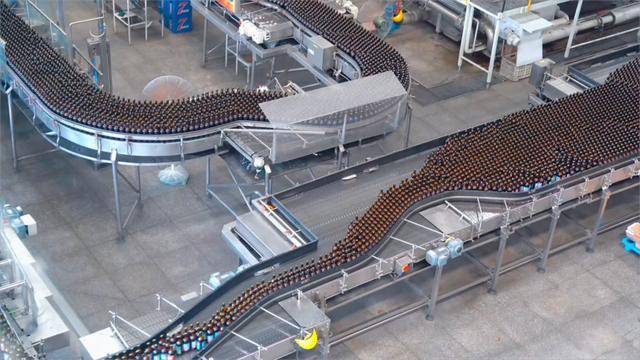
Core Viewpoint - Taishan Beer is undergoing a bankruptcy reorganization, which is viewed as a necessary step for long-term development rather than a sign of impending closure. The company aims to resolve historical debt issues and refocus on production and consumer service [5]. Group 1: Production and Operations - The production line operates at a consistent pace of 40,000 bottles per hour, maintaining a "7-day model" standard even during the reorganization process [3]. - The first night shift after the court's acceptance of the reorganization was conducted without interruption, demonstrating the company's commitment to its operational standards [3]. Group 2: Company History and Market Position - Taishan Beer has developed into a vibrant brand over 20 years, pioneering a 7-day shelf-life raw beer in 2010 and creating a unique sales model that connects factories directly to consumers [7]. - The company has expanded its market presence significantly, with over 3,000 specialized stores across 28 provinces and cities, primarily in Shandong [7]. Group 3: Financial Performance and Future Plans - In 2024, Taishan Beer is projected to achieve a revenue of 50.152 million yuan, with a sales volume of 80,000 tons in 2025, maintaining revenue levels from the previous year [9]. - The company plans to launch 13 new products in 2025 and has received the prestigious "Qingzhu Award" in the industry, indicating strong performance in product development and market expansion [9]. Group 4: Consumer Impact and Marketing Strategy - The reorganization is not expected to affect consumers, as the company remains committed to product quality and freshness [10]. - Future marketing strategies will focus on younger consumer demographics, enhancing the competitiveness of specialized stores, and aiming for a target of "1,000 stores per province" [10].
智通港股沽空统计|1月16日
智通财经网· 2026-01-16 00:28
Group 1 - The top short-selling ratios are led by China Resources Beer (100.00%), Lenovo Group (95.24%), and JD Health (94.15%) [1] - The highest short-selling amounts are recorded for Alibaba (3.923 billion), Tencent Holdings (2.552 billion), and Trip.com Group (1.172 billion) [1][2] - Meituan, Kanglong Chemical, and Haitong Securities have the highest deviation values at 55.33%, 50.16%, and 48.65% respectively [1] Group 2 - The top ten short-selling ratios include China Resources Beer (100.00%), Lenovo Group (95.24%), and JD Health (94.15%) with respective amounts of 11,700, 7,019,200, and 150,000 [2] - The top ten short-selling amounts show Alibaba at 39.23 billion, Tencent at 25.52 billion, and Trip.com at 11.72 billion with respective short-selling ratios of 17.78%, 15.59%, and 7.41% [2] - The top ten deviation values highlight Meituan (55.33%), Kanglong Chemical (50.16%), and Haitong Securities (48.65%) with their respective short-selling amounts [2]




重庆啤酒股份有限公司关于公司涉及诉讼进展暨收到撤诉裁定的公告
Zhong Guo Zheng Quan Bao - Zhong Zheng Wang· 2026-01-15 23:50
Core Viewpoint - The lawsuit involving Chongqing Beer Co., Ltd. has been withdrawn, and this development will not have a significant adverse impact on the company's profits for the current and future periods [2][7]. Group 1: Lawsuit Background - Chongqing Jiawei Beer Co., Ltd. filed a lawsuit against the company on August 8, 2024, regarding a contract dispute [4]. - The company received the civil complaint and court summons on September 10, 2024, with the case number (2024) Yu 0104 Min Chu 6639 [4]. Group 2: Progress of the Lawsuit - On January 14, 2026, the company received a civil ruling from the court, allowing Chongqing Jiawei to withdraw the lawsuit [5]. - The lawsuit involved a claim amounting to RMB 30,580,015.32 and associated litigation costs [2]. Group 3: Impact on the Company - The withdrawal of the lawsuit will not have a significant adverse effect on the company's current or future profits [7]. - The company will continue to fulfill its information disclosure obligations in accordance with relevant laws and regulations [7].
可持续发展信披渐成“必答题”
Jing Ji Ri Bao· 2026-01-15 21:28
自2026年1月1日起,证监会修订发布的《上市公司治理准则》正式施行,明确规定上市公司按照证券交 易所的规定发布可持续发展报告。A股上市公司ESG(环境、社会和公司治理)信息披露逐渐从"选做 题"变为"必答题",A股市场逐步走入ESG强制披露时代。 随着ESG在全球范围内蓬勃兴起,近年来,越来越多A股上市公司拥抱ESG理念,积极履行社会责任, 主动进行信披。数据显示,共有2481家A股上市公司披露2024年ESG报告,披露率达46.09%。与此同 时,ESG信披正成为国际市场衡量A股上市公司高质量发展的"第四张报表"。截至2025年11月初,MSCI 中国A股指数成分股有36.8%的企业ESG评级提升,全球领先评级(AAA、AA级)的家数占比由2024年 底的7.2%大幅跃升至14%,是近年来最大的一次提升,领先评级公司数量由"十三五"末期的2家增长至 54家,折射出A股上市公司ESG信披的量质齐升。 "目前A股上市公司在能源消耗、水资源消耗等核心环境指标的披露率仍不足40%,供应链间接排放等关 键数据的披露率更是低至约5%,信息决策参考价值有待提高。"安永大中华区ESG可持续发展主管合伙 人李菁认为,要进一 ...
金星啤酒赴港IPO,冲刺“精酿第一股”
Shang Hai Zheng Quan Bao· 2026-01-15 14:28
Core Insights - The company aims to raise funds primarily to enhance production capacity, expand sales channels, promote marketing and brand building, and drive product innovation and portfolio expansion [2] Company Overview - Founded in 1982, the company has established 16 beer production bases across 9 provinces in China, with an annual production capacity of 2 million tons and over 150 national honors [4] - The company has successfully transitioned to focus on "Chinese craft beer," establishing a leading position in this niche market amid a slowdown in the traditional beer industry [4] Product Performance - The company's Chinese craft beer products ranked first in national sales as of 2024, integrating elements of Chinese tea culture, medicinal food culture, and fruit culture into unique craft beer offerings [4] - Notable product launches include "Jinxing Maojian Chinese Craft Beer" in August 2024, "Jinxing Candied Hawthorn" in May 2025, and "Jinxing Peach" in September 2025, all of which have garnered significant market attention [4] Financial Growth - The company reported significant revenue growth, achieving revenues of 356 million yuan, 730 million yuan, and 1.109 billion yuan for the first three quarters of 2023, 2024, and 2025, respectively, with net profits of 12 million yuan, 125 million yuan, and 305 million yuan [4] - The contribution of Chinese craft beer to total revenue reached 78.1% in the first three quarters of 2025, with gross margins increasing from 27.3% in 2023 to 47% in 2025 [5] Industry Trends - The Chinese craft beer market has experienced rapid growth, with retail sales increasing from 12.5 billion yuan in 2019 to 63.2 billion yuan in 2024, reflecting a compound annual growth rate (CAGR) of 38.4% [7] - The market share of craft beer in the overall Chinese beer market rose from 2.1% to 8.6% from 2019 to 2024, with projections indicating it could reach 19.6% by 2029 [7] Future Outlook - The market for "Chinese-flavored craft beer" is expanding even faster, with retail sales projected to grow from 1.5 billion yuan in 2019 to 11.1 billion yuan in 2024, achieving a CAGR of 49.3% [11] - The average price of beer in China is expected to rise from 14.6 yuan per liter in 2019 to 17.2 yuan in 2024, with further increases anticipated by 2029 [12] - The company is positioned to benefit from the growing trend of quality consumption and the increasing popularity of innovative flavors, appealing to younger consumers and expanding its market reach [13]