商业地产

Search documents
以商业地产之力促产城融合发展
Zheng Quan Ri Bao· 2025-11-21 16:22
Core Viewpoint - The article emphasizes the importance of urban high-quality development during the "14th Five-Year Plan" period, highlighting the need for cities to transition from "quantitative accumulation" to "qualitative leap" through industrial integration and commercial real estate transformation [1] Group 1: Role of Commercial Real Estate - Commercial real estate is evolving into an "accelerator" for industrial innovation, responding to the diverse needs arising from emerging industries such as biomedicine and new energy vehicles, which significantly increase the demand for customized spaces like laboratories and industrial parks [3] - The expansion of digital economy infrastructure is driving a surge in demand for new types of real estate, such as data centers and smart office spaces, potentially leading to investment scales reaching trillions of yuan, representing a substantial market opportunity [3] Group 2: Multi-Industry Integration - The traditional commercial real estate model of merely building and renting properties is becoming obsolete; instead, there is a shift towards creating integrated "commercial bodies" that combine multiple industry functions and smart infrastructure [4] - Developers are encouraged to adapt their layouts and industry combinations based on urban development trends, capturing differentiated demand opportunities from regional industries and moving towards a composite functional development path that aligns with smart city initiatives [4] Group 3: Urban Renewal as a New Engine - Urban renewal is crucial for the high-quality development of large and mega cities, with a projected market capacity of approximately 20 trillion yuan during the "14th Five-Year Plan" period [5] - The focus of urban renewal should be on creating a new urban ecosystem through the integration of culture, technology, industry, and commerce, promoting the use of green and low-carbon products to reconstruct urban commercial spaces [5] Group 4: Challenges and Opportunities - Integrating cultural and industrial elements into commercial real estate poses challenges, as homogenized developments may not enhance value; thus, developers must strategize on resource integration to ensure a complete and orderly operational ecosystem [6] - Innovations in financial tools like REITs are opening new funding channels for commercial real estate, providing the necessary support for innovation and enhancing the role of commercial real estate as a driving force for urban renewal [6]
锦和商管:股东锦和集团质押950万股
Mei Ri Jing Ji Xin Wen· 2025-11-21 08:57
Group 1 - The company, Jinhe Business Management, announced that its major shareholder, Jinhe Group, has pledged 9.5 million shares, bringing the total pledged shares to 61.5 million, which accounts for 22.44% of Jinhe Group's holdings [1] - For the fiscal year 2024, the company's revenue composition is projected to be 74.26% from leasing and 25.74% from property services and other sources [1] - As of the announcement, Jinhe Business Management has a market capitalization of 2.8 billion yuan [1]

超80家首进品牌 新城控股南阳高新吾悦广场解锁城市消费新体验
Sou Hu Cai Jing· 2025-11-21 08:02
11月21日,新城控股(601155.SH)位于河南南阳的高新吾悦广场盛大开业。作为集团在南阳落地的第 二个商业项目,高新吾悦广场深度融合购物、餐饮、娱乐、亲子、文化等多元业态,打造一站式消费体 验新地标。随着该项目正式投入运营,新城控股在南阳成功构建起覆盖核心商圈与新兴板块的"一城双 店"战略布局,不仅进一步激活区域商业活力,更以"五边形经营理念"为核心,持续为南阳城市经济高 质量发展注入强劲动能。 80余家首进品牌 打造差异化竞争优势 据悉,南阳高新吾悦广场地处南阳高新技术产业开发区核心地段,地理位置优越。项目以"秀水南阳"为 主题,深度融入城市人文与历史特色,依托汉城河生态资源打造生态绿廊、立体退台及近万平方米的空 中花园,构建南阳首个亲水商业综合体标杆;同时,通过宛风汉韵市集、卧龙文化街区等十大场景,重 塑城市文化新地标。 在品牌矩阵上,南阳高新吾悦广场汇聚超200个优质品牌,其中80余家为"首进南阳",涵盖9家河南首店 及70余家南阳首店,包括盒马鲜生、会飞的哈林、滏晓、出出出山、见青山等,不仅进一步丰富城市消 费业态,更有效破解区域商业同质化竞争。以盒马鲜生为例,作为豫南首店,其创新模式将满足周边 ...



中信建投万字报告!展望2026年经济、债市、全产业链投资策略
Sou Hu Cai Jing· 2025-11-20 23:47
Group 1: Investment Strategies Overview - CITIC Securities released a comprehensive report on investment strategies for 2026, covering global capital markets, macroeconomic policies, A-shares, overseas markets, bond markets, asset allocation, and industry investment strategies [1] - The report includes insights from 19 research teams and spans approximately 30,000 words [1] Group 2: Pharmaceutical and Biotech Investment Strategies - The Chinese pharmaceutical industry is entering a critical phase characterized by "innovation realization + global layout," supported by population and domestic demand, as well as manufacturing capabilities [3][4] - The industry needs to focus on internal supply chain security and compliance while exploring diversified international expansion [3] - Key investment opportunities for 2026 include innovation commercialization, global breakthroughs, policy optimization, and industry mergers and acquisitions [3][5][6] Group 3: Medical Device Investment Strategies - The medical device sector is expected to see performance improvements in 2026 due to policy easing, new product launches, and international expansion [14] - The long-term investment opportunities in this sector stem from innovation, internationalization, and mergers and acquisitions [14] - The industry is witnessing a shift towards high-value consumables and innovative technologies such as brain-computer interfaces and AI in healthcare [14][15] Group 4: Consumer Healthcare and Bioproducts - The traditional Chinese medicine sector is expected to recover from short-term pressures, with improved demand anticipated by year-end [9] - The blood products industry is focusing on supply growth and consolidation, with significant demand for immunoglobulin and factor products [10] - The vaccine sector is under pressure but is expected to improve with new product sales and international expansion [10] Group 5: Banking Sector Investment Strategies - The banking sector is expected to continue its weak recovery in 2025, with a focus on high dividend strategies [25][26] - The sector's fundamentals are stabilizing, with credit growth projected at 7%-8% and non-interest income expected to improve [26] - High dividend yield strategies are favored, particularly for state-owned banks and those with solid fundamentals [27] Group 6: Wealth Management and Financial Products - The wealth management sector is entering a phase of product transformation and structural optimization, with an expected growth rate of 10% in 2026 [28][33] - The focus is on multi-asset and multi-strategy products, with a significant increase in mixed product offerings anticipated [29][30] - The integration of AI and digital technologies is expected to enhance risk management and operational efficiency in wealth management [30] Group 7: Non-Banking Financial Institutions - The securities industry is poised for a new growth cycle, driven by policies that enhance capital market inclusivity and adaptability [35][36] - The industry is experiencing a shift from self-operated models to collaborative, light-asset business strategies [36][37] - The internationalization of Chinese securities firms is gaining momentum, providing new opportunities for growth [38][39] Group 8: Insurance Sector Trends - The insurance industry is expected to undergo significant changes during the "14th Five-Year Plan" period, focusing on balancing interests among insurers, channels, and customers [43][44] - Key trends include the transformation of savings products, innovation in health insurance, and the development of new distribution channels [43][44] - The sector is anticipated to benefit from improved performance and valuation recovery, presenting investment opportunities [43][44] Group 9: Food and Beverage Sector - The food and beverage sector is recovering from a prolonged downturn, with a focus on premium products like liquor and health-oriented snacks [48][49] - The liquor industry is expected to stabilize as consumer confidence improves, with a focus on high-quality brands [49][50] - The snack and beverage segments are seeing growth driven by health trends and innovative product offerings [52][53]

新晋央企中国雅江集团出手买地,已在成都设立4家公司
第一财经· 2025-11-20 08:42
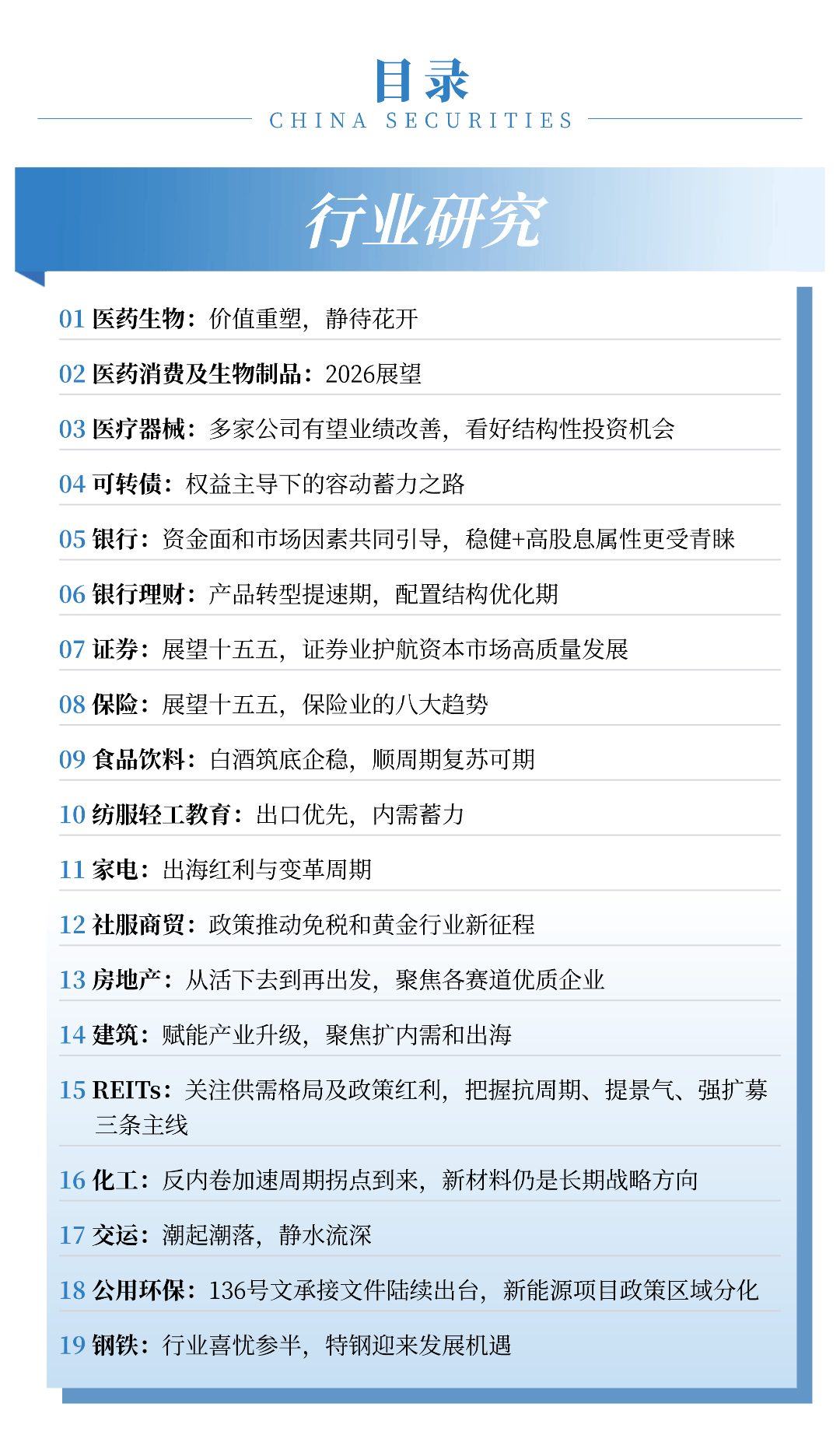
本文字数:901,阅读时长大约2分钟 2025.11. 20 中国雅江集团设立之后,陆续开始进行业务布局。根据国家企业信用公示系统,今年9月和10月分别 在北京和成都设立分公司,同时,在成都又布局多个子公司。 作者 | 第一财经 李秀中 成都成为新成立的央企中国雅江集团重点布局的一个城市。继上月在成都注册多家分公司、子公司 后,中国雅江集团开始在成都购地,推动各个业务单元落地。 11月20日,成都市公共资源交易服务中心发布拍卖会公告,中国雅江集团有限公司成都分公司竞得 成都市锦江区柳江街道祝国寺社区三宗商业服务业地块,净用地面积分别约为26.8亩、30.9亩和 23.8亩,成交楼面价为3094元/平方米、3098元/平方米和3275元/平方米。 | | 拍卖会成交结果一览表(2025年11月20日) | | | | | | | 公式 C | | --- | --- | --- | --- | --- | --- | --- | --- | --- | | नि | 日期:2025-11-20 分享到:(★)(6)(6)(6)( | | | | | | | 官方 | | | | | | | | | CONSUL ...

新晋央企中国雅江集团出手买地,已在成都设立4家公司
Di Yi Cai Jing Zi Xun· 2025-11-20 07:37
成都成为新成立的央企中国雅江集团重点布局的一个城市。继上月在成都注册多家分公司、子公司后, 中国雅江集团开始在成都购地,推动各个业务单元落地。 11月20日,成都市公共资源交易服务中心发布拍卖会公告,中国雅江集团有限公司成都分公司竞得成都 市锦江区柳江街道祝国寺社区三宗商业服务业地块,净用地面积分别约为26.8亩、30.9亩和23.8亩,成 交楼面价为3094元/平方米、3098元/平方米和3275元/平方米。 | | | | | 拍卖会成交结果一览表(2025年11月20日) | | | | 254 | | --- | --- | --- | --- | --- | --- | --- | --- | --- | | 用 | | | 日開:2025-11-20 | 分享到:(女)(4)(品) | | | | 官方 | | | | | | | | | | 25 原标 | | 拍卖公告 2026-10-31 | 序号 | 宗地编号 | 宗地位置 | 净用地面积 | 起始份 | 咸交给 | 觉得人 | | | | | JJ08(09):2025-049 | 确江区胸江侧道祝国中社区 | 17894.71平方米,合 ...
运营为核,存量时代商业地产的价值跃迁
Xin Lang Cai Jing· 2025-11-20 07:24
Core Insights - The Chinese commercial real estate sector is undergoing a significant paradigm shift from extensive growth to meticulous management of existing assets, driven by policies aimed at expanding domestic demand and upgrading consumption [1][10] - The market is characterized by a dual trend of recovering consumer spending and pressure on investment, with retail sales reaching 365,877 billion yuan and a growth rate of 4.46% in the first nine months of 2025, while new office construction area has decreased by 22.3% year-on-year [1][2] Market Dynamics - The market is experiencing a deep adjustment that accelerates industry differentiation, with only 8% of commercial real estate companies generating 42% of industry revenue, indicating a growing concentration of market power among leading firms [2] - The top companies are leveraging quality assets and operational capabilities to navigate through cycles, while smaller firms face challenges such as weak operations and low revenues [2] Operational Strategies - In a market dominated by existing assets, light asset operations and stock transformation are key strategies for companies to break through, as exemplified by Vanke's successful transformation of the Shenzhen iN City Square, achieving a 97% occupancy rate [3][4] - The core value of commercial real estate is shifting from physical space to operational capability, with companies adopting innovative strategies to enhance competitiveness and revenue generation [4][10] Consumer Trends - Structural changes in consumer demand are providing new growth opportunities, with the elderly and young populations becoming the main consumer forces, leading to the rise of new business models such as community commerce and pet economy [4][5] - The pet economy alone has surpassed 300 billion yuan, indicating a significant market potential for pet-friendly commercial spaces [4] Innovation and Technology - The commercial operation model is evolving from single leasing to a comprehensive approach that includes content, services, and marketing, with companies focusing on creating differentiated services as a competitive advantage [5][6] - Technological innovations are supporting refined operations, with Vanke utilizing AI and smart service systems to enhance project management efficiency and consumer experience [6] Capital Market Trends - The capital market is undergoing adjustments, with a notable increase in transactions of office assets, totaling approximately 398 billion yuan in the first nine months of 2025, and a shift towards financial institutions and leading industry companies as primary investors [6][9] - The expansion of public REITs for consumer infrastructure is attracting more capital to quality retail properties, fostering a cycle of capital empowerment, operational upgrades, and value enhancement [6][10] Future Outlook - The consensus from the 2025 Commercial Annual Conference indicates that stock updates represent a core opportunity, with over 200 million square meters of commercial properties in first-tier cities over 30 years old, 40% of which are underperforming [10] - The industry is expected to gradually achieve a "spiral" development through enhanced operational capabilities and capital ecosystem improvements, with a focus on projects that can activate value through space transformation and content restructuring [10]

湾里项目冲刺开业 通州经济注入新动能
Bei Jing Shang Bao· 2025-11-19 15:54
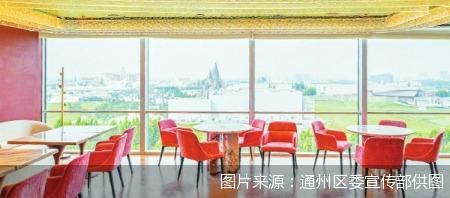
Core Insights - The "Wanli" project, an international commercial and entertainment complex, is nearing its official opening, with total investment exceeding 10 billion yuan [1] - The project has completed construction acceptance and is currently in trial operation, set to officially open to the public by the end of this year [1] Economic Development - Cultural tourism is a key driver for enhancing urban quality and improving public welfare, forming a core support for the "3+1" main functions of Beijing's sub-center [3] - The region's GDP is expected to grow at an average annual rate of over 6% during the 14th Five-Year Plan, with a 10.9% growth in the first three quarters of this year, ranking second in the city [3] - Since the construction of the sub-center began in 2016, fixed asset investment has exceeded 960 billion yuan, maintaining over 100 billion yuan annually for five consecutive years [3] Industrial Growth - The industrial output value in the region has an average annual growth rate of 23.7% during the 14th Five-Year Plan, ranking first in the city [3] - The automotive manufacturing output ranks third in the city, while urban and pharmaceutical industries rank third and fourth, respectively [3] Policy and Regulatory Environment - The recent issuance of the city's first "comprehensive permit for cultural, commercial, tourism, and sports integration projects" has streamlined 12 approval items into one, reducing the approval time from 90 to 30 working days [4] - This policy supports new industries and business formats, with the Wanli project being a direct beneficiary [4] Project Details - The Wanli project covers a total development area of approximately 500,000 square meters, consisting of Wangfujing WellTown, NuoLan Hotel, and Tingyun Town, connected seamlessly by bridges [4] - The core business area, Wangfujing WellTown, has over 90% of its leasing completed, aiming to introduce over 500 well-known domestic and international brands, with more than 60% being new to Tongzhou [4] - The NuoLan Hotel has already opened, featuring a rooftop infinity pool with views of Universal Studios, and the entire project is expected to be fully operational by the end of the year [4] Future Prospects - The Wanli project is anticipated to enhance the cultural tourism matrix of Tongzhou, integrating daytime entertainment with nighttime consumption [5] - The project is expected to contribute to a new phase of commercial prosperity and cultural vitality in the city’s sub-center [5]
北京通州百亿级“不夜城”开业倒计时!六成“首店”
Bei Jing Shang Bao· 2025-11-19 15:08
Core Insights - The Wangfujing WellTown project has exceeded 90% in leasing progress, aiming to introduce over 500 well-known domestic and international brands, with more than 60% of these brands entering Tongzhou for the first time, positioning it as the largest outlet complex in North China [1][4] Economic Development - The "Bayli" project, a major international commercial and entertainment complex, has completed construction and is in trial operation, set to officially open to the public by the end of this year, with a total investment exceeding 10 billion [2] - The region's GDP is projected to grow by over 6% annually during the 14th Five-Year Plan period, with a 10.9% growth in the first three quarters of this year, ranking second in the city [2] - Since the construction of the urban sub-center began in 2016, fixed asset investment has surpassed 960 billion, maintaining over 100 billion annually for five consecutive years [2] Industrial Growth - The industrial output value in the Tongzhou area has an average annual growth rate of 23.7% during the 14th Five-Year Plan, moving from 9th to 5th in the city, with its share increasing from 2.8% to over 6% [3] - The automotive manufacturing sector ranks 3rd in the city, while urban and pharmaceutical industries rank 3rd and 4th respectively [3] Consumer Trends - Tourism consumption in the area is expected to reach 19.7 billion in 2024, a year-on-year increase of 19.6%, and has grown 3.7 times compared to the end of the 13th Five-Year Plan [4] - The Bayli project is seen as a key driver for the "spillover effect" from Universal Studios, enhancing the region's daytime entertainment and nighttime consumption offerings [5] Project Features - The Bayli project encompasses approximately 500,000 square meters, integrating Wangfujing WellTown, NuoLan Hotel, and TingYun Town, with seamless connections to subway lines [4] - The project features a high proportion of experiential retail, with 50% of its offerings, including a 35-meter indoor waterfall and the largest naked-eye 3D screen in North China [4] Future Outlook - The opening of the Bayli project is expected to usher in a new phase of commercial prosperity and cultural vitality in the urban sub-center along the Grand Canal [6]

艺术与商业融合 北京环球金融中心强化社群属性
Bei Jing Shang Bao· 2025-11-19 14:29
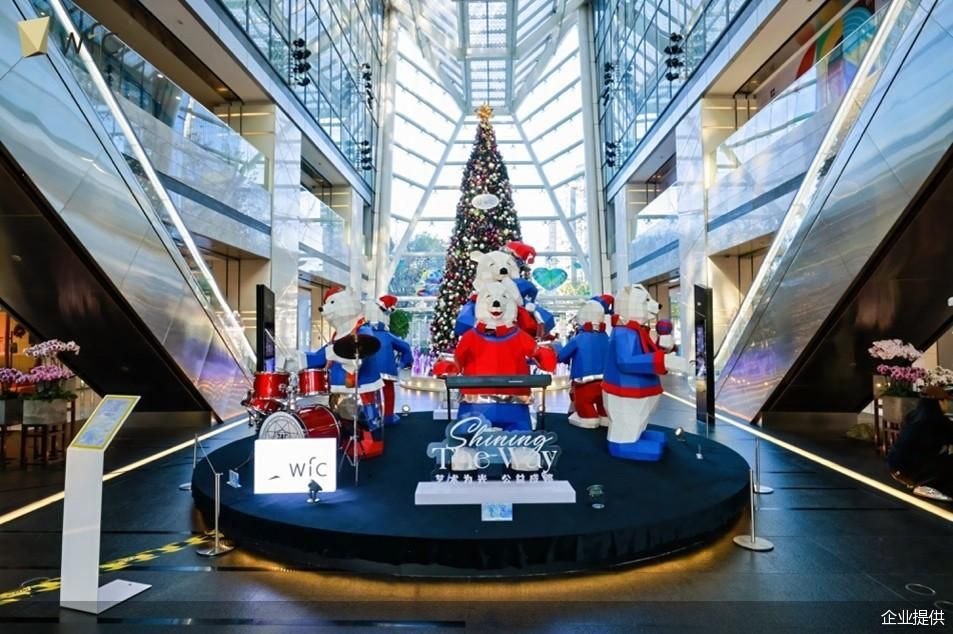
Core Viewpoint - The article highlights the launch of the third season of public welfare art activities at the Beijing Universal Financial Center (WFC) by Hang Lung China, emphasizing the integration of art and public welfare to enhance community engagement and cultural value [1][3]. Group 1: Event Overview - The third season of public welfare art activities at WFC features a variety of events, including an art installation by the "Little Bear Starlight Orchestra," community co-creation, and a fun market, creating a diverse experience of "public welfare + art" [1]. - This season continues the innovative practices from previous events, focusing on spatial presentation, artistic expression, and community participation, further deepening the integration of commercial space with public welfare and art [3]. Group 2: Community Engagement - WFC aims to attract public participation through diverse activities, enhancing community cohesion and interaction [3]. - The event includes a themed market that creates a composite commercial space, expanding community interaction through charity sales and various cultural products [3]. Group 3: Sustainable Development - WFC has been collaborating with public welfare organizations, charitable institutions, and artists for years, making sustainable development practices a core part of its "soft operation" strategy [3]. - By incorporating artistic elements into everyday spaces, WFC seeks to create aesthetic experiences for office workers and the public, aiming to transform into a cultural energy hub [3].