
汽车

Search documents
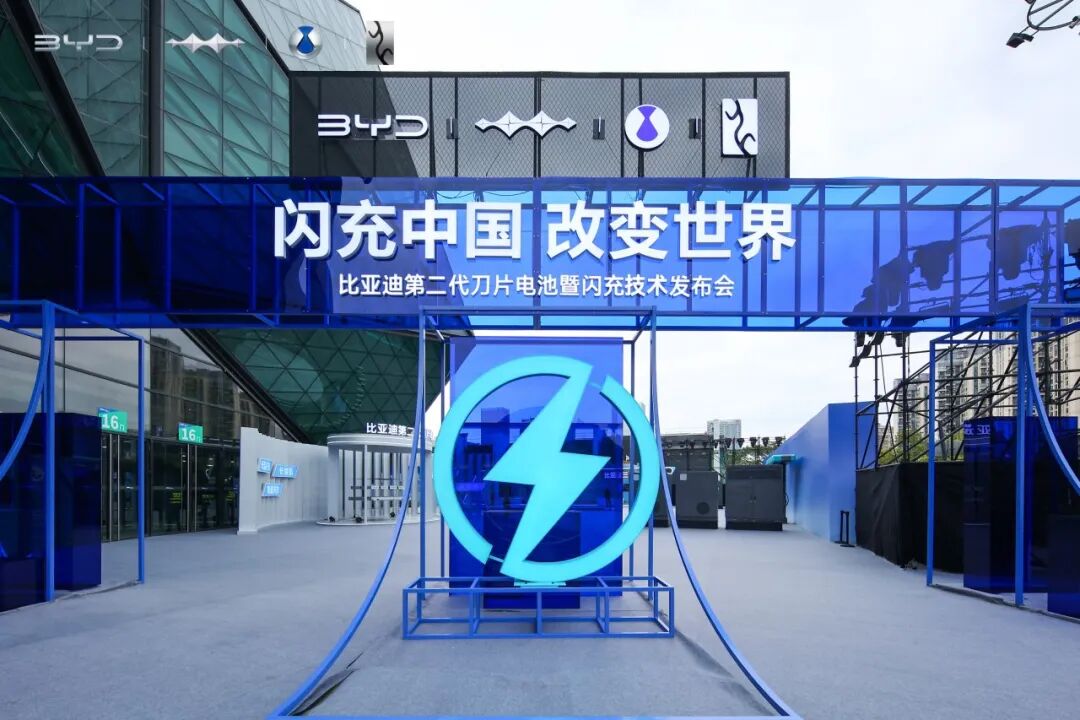
从充电焦虑到无感支付,比亚迪闪充站破局
Xin Lang Ke Ji· 2026-03-11 13:31
Core Viewpoint - BYD has announced an ambitious plan to build 20,000 fast charging stations across China by the end of 2026, aiming to enhance the electric vehicle charging infrastructure significantly [2] Group 1: Charging Network Expansion - The plan includes 2,000 stations at highway service areas, covering nearly one-third of the highway network, while the remaining 18,000 will be established through partnerships with existing public charging stations [2] - The target is to achieve coverage of 3 kilometers in first and second-tier cities, 5 kilometers in third and fourth-tier cities, and 6 kilometers in fifth and sixth-tier cities [2][12] - The "Dream Station" initiative allows users to request new charging stations, shifting the planning process from a company-driven model to one based on user demand [12][13] Group 2: Technological Advancements - The second-generation blade battery can charge from 10% to 70% in just 5 minutes and from 10% to 97% in 9 minutes, thanks to the "full-link ion flash communication technology system" [4] - The energy density of the second-generation battery has improved by over 5% compared to the first generation, enabling a range of 1,036 kilometers for the Tengshi Z9GT electric vehicle [4] - The battery has also overcome low-temperature performance issues, allowing charging from 20% to 97% in just 12 minutes at -30 degrees Celsius [4] Group 3: Energy Storage System - The 1500kW charging stations are equipped with energy storage systems that allow for low-cost electricity storage during off-peak hours and discharge during peak hours, creating a local power buffering mechanism [5][7] - This design avoids the need for grid upgrades, maximizing station efficiency and ensuring that multiple vehicles can charge simultaneously without power shortages [7] Group 4: User Experience and Market Impact - The charging network's design focuses on user experience, featuring innovations like a T-shaped charging pile that prevents cable tangling and an app for seamless charging and payment [9] - The density of the charging network is expected to enhance user trust in electric vehicles, potentially leading to increased sales and brand loyalty [12][13] - Analysts believe that BYD's approach to integrating electric vehicles, energy storage, and charging networks positions the company as a builder of energy systems rather than just a car manufacturer [13]


当马斯克试图重塑金融系统:特斯拉投资者该兴奋还是警惕
美股研究社· 2026-03-11 11:59
Core Viewpoint - The article discusses Elon Musk's ambition to transform the social media platform X (formerly Twitter) into a comprehensive financial system, akin to a "super app" that integrates social networking with financial services [2][4][6]. Group 1: Transformation of X - Since acquiring Twitter for $44 billion in 2022, Musk has aimed to evolve the platform into an "everything app," allowing users to chat, watch videos, shop, and conduct financial transactions [6][7]. - X Money is a crucial step in this vision, enabling users to perform payments, transfers, and other financial activities directly on the platform, supported by a partnership with Visa for compliance and infrastructure [7][8]. Group 2: Financial Model Shift - The introduction of financial services could fundamentally change X's business model, shifting from an advertising-based revenue model to one that includes transaction fees and financial products, which typically have higher profit margins and greater user retention [7][8]. - The success of this model has been demonstrated in China with WeChat and Alipay, where payment systems have created a closed-loop ecosystem integrating social, consumption, and financial activities [8]. Group 3: Challenges in Western Markets - Despite the success of super apps in Asia, the article highlights the challenges in the U.S. due to a fragmented payment market and entrenched financial institutions, making it difficult for new entrants to disrupt the existing ecosystem [10][11]. - Musk's attempt to create X Money faces significant regulatory hurdles, as handling user funds requires compliance with complex financial regulations, including obtaining state-level money transmitter licenses and adhering to anti-money laundering laws [10][11]. Group 4: Implications for Tesla Investors - The launch of X Money prompts a reevaluation of Musk's broader business landscape, with potential benefits for Tesla if X becomes a successful platform, providing additional cash flow and possibly integrating services [12][13]. - However, there are concerns that Musk's focus on X could detract from his attention on Tesla, especially as the company navigates competitive pressures and technological advancements [12][13]. Group 5: Future Outlook - If X Money succeeds, it could blur the lines between social media and financial services, leading to a new valuation paradigm where social platforms are seen as financial infrastructures [14]. - This evolution may result in Tesla's valuation reflecting not just vehicle sales but also the synergistic effects of Musk's entire business ecosystem, indicating a shift in how capital markets assess value [14].

瑞银:油价波动令电动车总持有成本变吸引 比亚迪股份、宁德时代与理想汽车具良好风险回报
智通财经网· 2026-03-11 09:55
Group 1 - UBS reports that some Chinese automotive and new energy stocks have risen, with Geely Automobile's stock price increasing by 8.5% to HKD 17.44 and CATL rising by 7.5% to HKD 591 [2] - The current geopolitical situation, similar to the 2022 Russia-Ukraine conflict, is causing a rise in oil and lithium prices, which increases the operating costs of fuel vehicles and the manufacturing costs of electric vehicles [2] - UBS maintains a "buy" rating on BYD, CATL, and Li Auto, citing favorable risk-return characteristics [2] Group 2 - The estimated increase in manufacturing costs for electric vehicles compared to 2025 is approximately RMB 7,000 for BEVs, RMB 6,000 for EREVs, RMB 5,000 for PHEVs, and RMB 3,000 for ICE vehicles; fuel vehicle operating costs may rise by about RMB 2,000 annually if oil prices remain stable [2] - In 2022, oil prices surged from USD 80 to USD 130 per barrel, and current oil prices have fluctuated from approximately USD 60 to a peak of USD 120, potentially leading to a retail gasoline price increase in China from RMB 7.5 to about RMB 9 per liter [3] - Compared to four years ago, the current situation shows a milder increase in metal prices, improved competitiveness of electric vehicle products, and increased overseas sales, which help alleviate commodity cost pressures [3] Group 3 - UBS notes that Chinese electric vehicle stocks have underperformed the Hang Seng Index by about 10% this year, with the first quarter's weak demand already reflected in stock prices [4] - The volatility in oil prices makes electric vehicles more attractive from a total cost of ownership perspective, and if inflation expectations regarding commodity costs are realized, demand may recover faster than investors anticipate [4]



融资融券周报:主要指数多数上涨,两融余额继续上升-20260311
BOHAI SECURITIES· 2026-03-11 09:29
- The main indices of the A-share market mostly rose last week, with the ChiNext Index having the largest increase of 3.01%[10][11] - The financing balance of the Shanghai and Shenzhen stock exchanges was 26,287.77 billion yuan, an increase of 34.21 billion yuan from the previous week[13][16] - The top five ETFs by net financing purchases were: China Policy Financial Bond 7-10 Year ETF, China Securities Electric Network Equipment Theme ETF, Huatai-PineBridge CSI 300 ETF, Bosera Convertible Bond ETF, and GF CSI All Index Electric Power ETF[45][46] - The top five stocks by net financing purchases were: Biwin Storage (688525), Huagong Tech (000988), Hengtong Optic-Electric (600487), Demingli (001309), and Dongshan Precision (002384)[48][50] - The top five stocks by net securities lending sales were: Xiechuang Data (300857), BYD (002594), Wanhua Chemical (600309), Gree Electric Appliances (000651), and Haiguang Information (688041)[51][52]
从涨价加剧到滞胀风险-传导的两个阶段-受益的几类资产
2026-03-11 08:11
Summary of Conference Call Notes Industry Overview - The discussion revolves around the impact of rising oil prices on various industries and the potential for stagflation risks in the economy [1][2]. Key Points and Arguments Price Transmission Mechanism - The transmission of rising oil prices to stagflation can be divided into two stages: 1. **Direct Price Transmission**: Oil price increases directly affect downstream industries such as petroleum refining and petrochemicals, leading to cost increases of approximately 16% and 11% respectively for these sectors when oil prices rise by 30% [2][3]. 2. **Economic Downturn Pressure**: Sustained high oil prices can suppress end demand, posing challenges to economic growth and leading to stagflation, where inflationary pressures conflict with the need for economic support [2][3]. Cost Impact on Industries - A 30% increase in oil prices results in significant cost impacts across various sectors: - Directly affected industries like petroleum refining and gas supply see costs rise by 16% and 11% respectively. - Broader industries such as chemicals, metals, and electricity experience cost pressures exceeding 2% due to indirect effects [3][4]. Financial Market Implications - Stagflation expectations can lead to a systemic suppression of risk assets, particularly impacting technology stocks, which have previously benefited from liquidity [3][4]. - The anticipated rise in interest rates to combat inflation may hinder capital expenditures in tech-related sectors, affecting their valuations and growth prospects [3][4]. Sectoral Risk Exposure - Industries with high export dependence, such as home appliances, electronics, and automotive, face greater risks during global demand contractions, with overseas revenue exceeding 20% [4]. - Conversely, sectors reliant on domestic demand, like real estate, public utilities, and food and beverage, show resilience with overseas revenue below 5% [4]. Investment Opportunities and Risk Mitigation Strategies - **Initial Phase**: Investment opportunities focus on sectors benefiting from price increases, including oil, chemicals, and metals, with potential spillover effects into agricultural products [5][6]. - **Subsequent Phase**: As stagflation risks intensify, strategies should shift towards risk aversion, reducing equity exposure and increasing allocations to safe-haven assets like gold and bonds [5][6]. - Defensive sectors such as utilities, food and beverage, and non-bank financials are recommended due to their lower exposure to cost pressures and stronger resilience against demand contractions [6].
A股三大指数收涨,港股蔚来大涨14%,美团、网易、京东健康跌超2%
2 1 Shi Ji Jing Ji Bao Dao· 2026-03-11 07:54
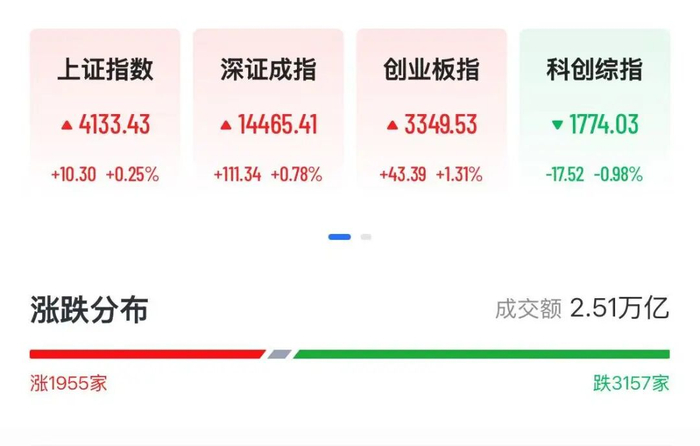
Market Overview - On March 11, the three major indices collectively rose, with the ChiNext Index initially increasing over 2% before retreating, while the Sci-Tech Innovation Index fell by 0.98%. Over 3,200 stocks in the market declined [1][2]. Index Performance - Shanghai Composite Index closed at 4,133.43, up by 10.30 points or 0.25% - Shenzhen Component Index closed at 14,465.41, up by 111.34 points or 0.78% - ChiNext Index closed at 3,349.53, up by 43.39 points or 1.31% - Sci-Tech Innovation Index closed at 1,774.03, down by 17.52 points or 0.98% - The total trading volume reached 2.51 trillion yuan, with 1,955 stocks rising and 3,157 stocks falling [2]. Sector Performance - The energy storage and lithium mining sectors were active throughout the day, with green energy concepts experiencing a surge. Green power stocks saw consecutive gains, and energy-saving wind power stocks hit the daily limit [2]. - The chemical sector saw a strong rally, particularly in coal and salt chemicals, with stocks like Jinniu Chemical and Zhongyan Chemical hitting the daily limit. The ongoing geopolitical conflict in the Middle East has pushed up international oil prices, supporting chemical product costs [2]. - The chemical fiber sector collectively rose, with companies like Zhongfu Shenying increasing over 14%. The price of spandex was raised, with increases of 2,000 yuan/ton for Taihe New Materials and 3,000 yuan/ton for Huahai Spandex reported [2]. Coal Sector - The coal sector experienced fluctuations, with Huadian Energy achieving consecutive gains. Other companies like China Coal Energy and Yanzhou Coal Mining also saw increases [3]. Downward Trends - The small metals sector declined, with companies like Xianglu Tungsten and Zhongtung High-tech dropping over 5%. The gas turbine sector also weakened, with stocks like Jereh and Tunan falling collectively [3]. - The "lobster" concept stocks saw a collective decline, with companies like Kunlun Wanwei and Qingyun Technology dropping over 4% [4]. Hong Kong Market - In the Hong Kong market, the Hang Seng Index fell by 0.21% and the Hang Seng Tech Index decreased by 0.14%. Most popular tech stocks declined, with Meituan, NetEase, and JD Health dropping over 2%. However, automotive stocks surged, with NIO rising over 14% and other companies like Li Auto and Xpeng increasing over 4%. NIO reported a quarterly operating profit of 1.25 billion yuan, marking the company's first quarterly profit [7].



里昂:比亚迪股份技术领先策略有助夺回市占 重申“高度确信跑赢大市”评级
智通财经网· 2026-03-11 07:48
该行指,产业成本通胀与需求疲软显示车企逼近生存边缘,因此预期比亚迪采取的替代性价格战(技术领先功能战)策略,将有助其夺回去年流失的市占,并 为该行看好比亚迪出口的论点铺平道路。 智通财经APP获悉,里昂报告指,观察到比亚迪股份(01211)正重返其擅长的规模经济舒适圈,认为颠覆性快充技术与第二代刀片电池推出,将扩大其与同业 的技术差距。鉴于比亚迪在研发商业化方面的领先能力,预估成本增幅有限。该行重申对比亚迪"高度确信跑赢大市"评级,目标价维持130港元。 ...

A股三大指数收涨,港股蔚来大涨14%,美团、网易、京东健康跌超2%
21世纪经济报道· 2026-03-11 07:45
Market Overview - On March 11, all three major indices closed higher, with the ChiNext Index briefly rising over 2% before pulling back, while the Sci-Tech Innovation Board Index fell by 0.98%. Over 3,200 stocks in the market declined [1] Sector Performance - The energy storage and lithium mining sectors were active throughout the day, with the green electricity concept experiencing a surge, leading to consecutive gains for green power stocks. The wind energy sector also saw stocks hitting the daily limit [3] - The chemical sector showed strong performance in the afternoon, particularly in coal and salt chemicals, with stocks like Jinniu Chemical, Zhongyan Chemical, and Jinpu Titanium Industry hitting the daily limit. The ongoing geopolitical conflict in the Middle East has pushed up international oil prices, supporting chemical product costs [3] - The chemical fiber sector collectively rose, with Zhongfu Shenying increasing over 14%. Prices for spandex were raised, with reports indicating a price increase of 2,000 yuan/ton for products from Taihe New Materials and 3,000 yuan/ton for Huahai spandex [3] - The coal sector experienced fluctuations, with Huadian Energy achieving consecutive gains, and other companies like China Coal Energy and Yanzhou Coal Mining also seeing increases [3] Declining Sectors - The small metals sector saw a decline, with companies like Xianglu Tungsten and Zhongtung High-tech dropping over 5%. The gas turbine sector also weakened, with stocks such as Jereh and Tunan falling collectively [3] - The "lobster" concept stocks experienced a collective drop, with Kunlun Wanwei and Qingyun Technology falling over 4% [3] Hong Kong Market - As of 15:18, the Hang Seng Index fell by 0.21%, and the Hang Seng Technology Index decreased by 0.14%. Most popular tech stocks declined, with Meituan, NetEase, and JD Health dropping over 2%. However, automotive stocks surged, with NIO rising over 14% following the release of its Q4 2025 financial report, which showed an operating profit of 1.25 billion yuan, marking the company's first quarterly profit [6]

吉利汽车盘中涨超8%,极氪8X等高端化进展引关注
Xin Lang Zheng Quan· 2026-03-11 07:03
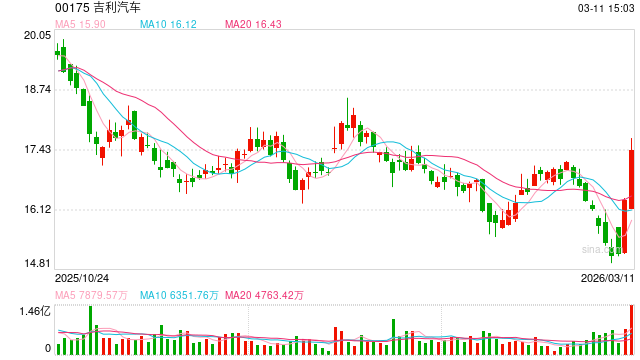
Group 1 - Geely Automobile (0175.HK) showed strong performance on March 11, with its stock price rising significantly, outperforming the Hong Kong market and other automotive stocks, reaching a historical high of HKD 17.48, an increase of 8.77%, with a trading volume exceeding HKD 1885.41 million [2] - The capital market is highly focused on Geely's progress in high-end vehicle development, with the Zeekr 8X set to hold a technology launch event on March 16, featuring the latest G-ASD advanced driver assistance system and the world's first full-stack 900V high-voltage power system, achieving a combined range of over 1000 kilometers and supporting 6C ultra-fast charging technology [4] - A more detailed high-end strategy layout and the financial performance for 2025 will be officially disclosed at Geely's annual performance release on March 18 [4]
1-2月进出口数据点评:算力争夺成为出口主线
Guoxin Securities· 2026-03-11 06:47
Export Performance - In January-February 2026, China's exports increased by 21.8% year-on-year, reaching $656.58 billion, indicating a strong start to the year[2][6] - February alone saw exports of $299.88 billion, with a remarkable year-on-year growth rate of 39.6%, significantly higher than the average growth over the past 12 months[6][13] - The strong export performance is attributed to a recovery in global manufacturing demand and increased competitiveness in high-tech and mechanical products[4][8] Import Trends - Imports also showed robust growth, increasing by 19.8% year-on-year, reflecting both seasonal factors and structural recovery in demand for key commodities[2][14] - Major imports included crude oil, machinery, and agricultural products, with significant increases in the import of rare earths and processed oil products[18][14] - The overall import growth indicates a recovery in domestic manufacturing and a need for replenishing inventories[14][18] Market Outlook - The government emphasizes "expanding high-level opening-up," which is expected to create a more flexible environment for enterprises to engage in global supply chains[4][5] - Despite ongoing trade protectionism from the U.S., recent legal rulings may limit unilateral tariff increases, potentially easing trade tensions[4][5] - The outlook for the rest of the year suggests continued support for exports due to recovering global demand and geopolitical factors, although uncertainties remain[19][5]