
咨询

Search documents
澳洲会计师公会会长戴宾图:AI解放基础工作 财务人员不会被替代 | 服贸会
Zhong Guo Jing Ying Bao· 2025-09-18 17:05
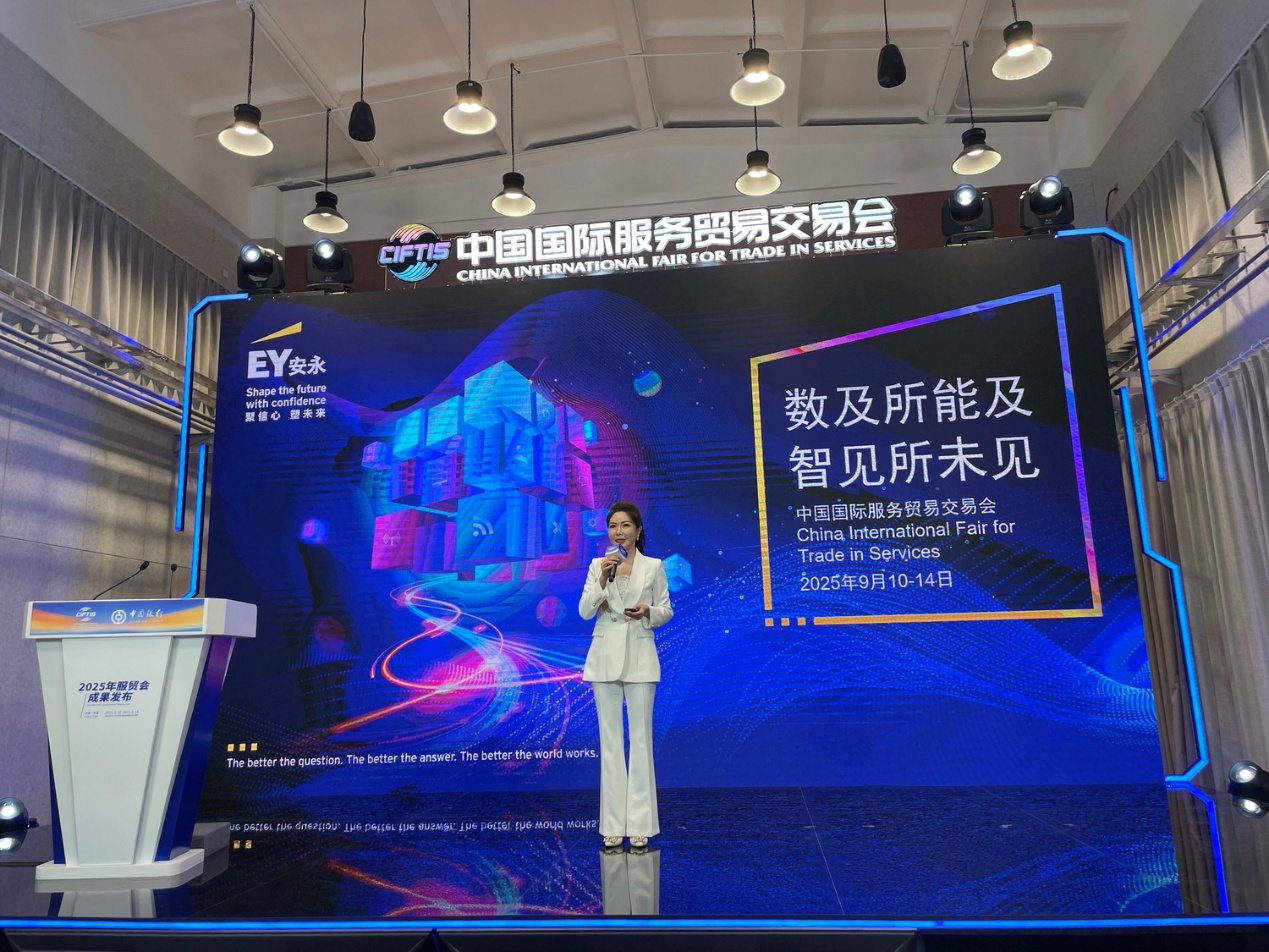
Core Insights - Australia showcased its largest delegation at the 12th China International Fair for Trade in Services, highlighting cooperation potential in finance, education, and professional services [1] - The bilateral trade between China and Australia is significant, with a 2.6% growth projected for the 2023-2024 fiscal year, reaching 325 billion AUD (approximately 1.5 trillion RMB) [1] Group 1: Trade Relations - China remains Australia's largest trading partner, particularly in iron ore, coal, and natural gas, holding a substantial share of Australia's export market [1] - The trade relationship between the two countries has been improving, with a notable increase in trade volume [1] Group 2: Service Trade Cooperation - There is immense potential for cooperation in knowledge-intensive services such as accounting, finance, law, and consulting between China and Australia [2] - Initiatives to jointly cultivate international talent and enhance mutual recognition of professional qualifications are expected to further promote connectivity in the professional services sector [2] Group 3: Impact of Government Policies - China's recent measures to open up the service trade market signal a positive shift towards integrating into the global service economy [2] - The transformation of China's trade structure from goods to services, including AI, digital economy, finance, education, and tourism, is noteworthy [2] Group 4: Talent Development in Finance - The Australian CPA has developed a competency framework for finance professionals, focusing on six core competencies: ethical integrity, professional financial skills, adaptive thinking, big data and digitalization, business acumen, and self-motivation with interpersonal leadership [2][3] - Emphasis is placed on the ability to translate professional knowledge into cross-disciplinary collaboration and practical application, aligning with future employer demands [3] Group 5: Role of Artificial Intelligence - AI is reshaping the finance industry by enabling faster, smarter, and more resilient business development, enhancing compliance risk control, optimizing cash flow management, and establishing data-driven decision-making mechanisms [3] - The challenge lies not in AI itself but in finance professionals' ability to continuously learn and adapt their skills to meet new industry demands [3]
澳洲会计师公会会长戴宾图:AI解放基础工作,财务人员不会被替代 服贸会
Zhong Guo Jing Ying Bao· 2025-09-18 14:13
Core Viewpoint - Australia showcased its largest delegation at the 12th China International Fair for Trade in Services, highlighting cooperation potential in finance, education, and professional services with China [2] Group 1: Trade Relations - China remains Australia's largest trading partner, particularly in iron ore, coal, and natural gas, accounting for a significant share of Australia's export market [2] - The bilateral trade volume between China and Australia is projected to grow by 2.6% in the 2023-2024 fiscal year, reaching AUD 325 billion (approximately RMB 1.5 trillion) [2] Group 2: Service Trade Cooperation - There is substantial potential for cooperation in knowledge-intensive services such as accounting, finance, law, and consulting between China and Australia [3] - China's recent initiatives to open up its service trade market signal a shift from a goods-focused trade structure to include sectors like artificial intelligence, digital economy, finance, education, and tourism [3] Group 3: Talent Development - The Australian CPA has developed a competency framework for accounting talent, which includes six core competency modules: ethical integrity, professional financial skills, adaptive thinking, big data and digitalization, business acumen, and self-motivation with interpersonal leadership [4] - The framework aims to enhance the ability to translate professional knowledge into cross-disciplinary collaboration and practical application, aligning with future employer demands in the accounting sector [4] Group 4: Impact of Artificial Intelligence - Artificial intelligence is reshaping the finance industry by automating routine tasks, allowing finance professionals to transition from traditional controllers to value creators [5] - The challenge lies not in AI itself but in finance professionals' ability to continuously learn and adapt their skills to meet new industry demands [5]


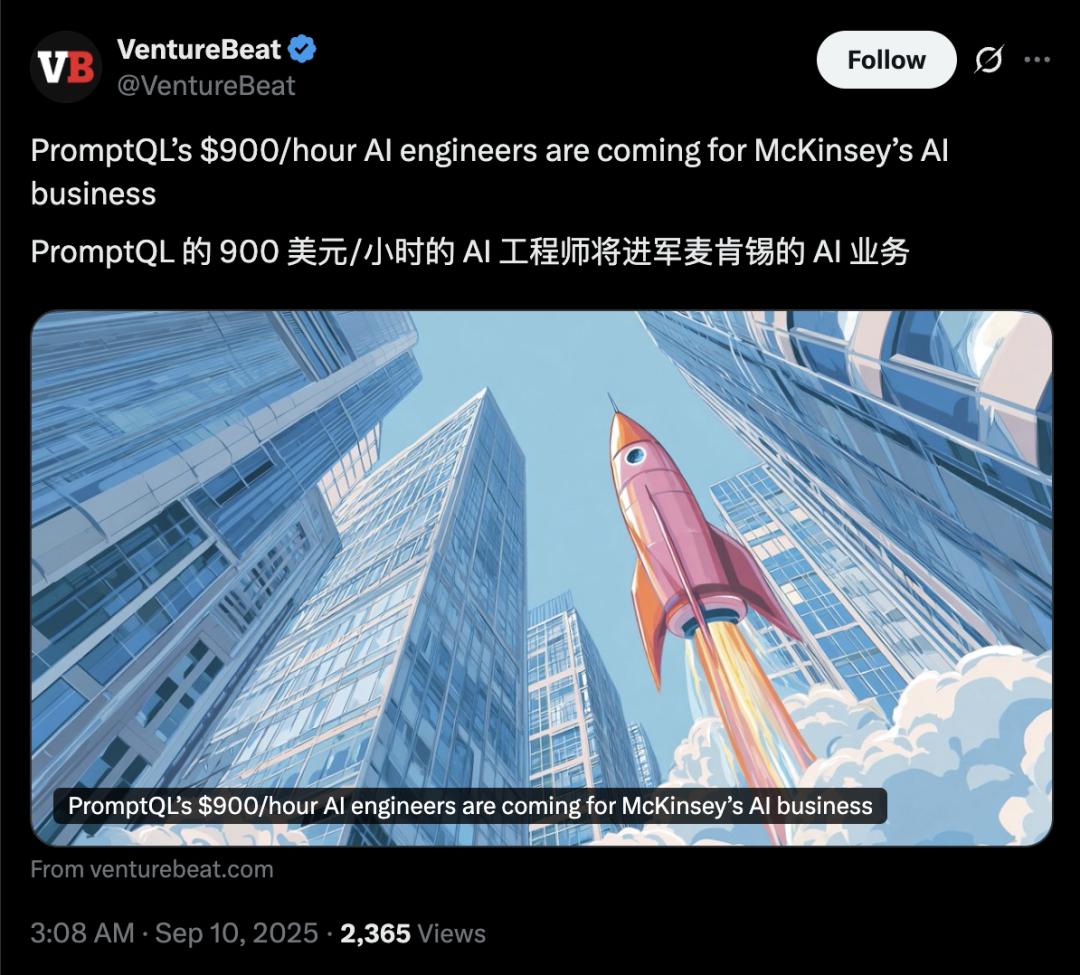
MBA光环破碎,时薪900美元AI工程师抢走麦肯锡饭碗:写代码的正干掉做PPT的
3 6 Ke· 2025-09-15 07:56
Core Insights - AI engineers with a billing rate of $900 per hour are emerging as significant challengers to traditional consulting firms like McKinsey, particularly in the context of high failure rates (95%) of enterprise AI projects [1][4][10] - Hasura has introduced a new model where AI engineers act as consultants, bridging the gap between strategy and execution, which is a departure from traditional MBA-style consulting [1][6][12] Group 1: AI Engineer Consultant Model - Hasura's AI engineers are not only strategists but also hands-on implementers, capable of coding and deploying AI solutions, thus addressing the high failure rates of AI projects [1][6][12] - The role of AI engineers as consultants is reshaping expectations and culture within the consulting industry, highlighting the limitations of traditional MBA consultants in understanding AI's practical applications [6][12][14] Group 2: Market Dynamics and Compensation - The $900 hourly rate for AI engineers is competitive, significantly higher than the $400-$600 charged by partners at major consulting firms, reflecting the high demand for skilled AI professionals [8][9] - Companies are increasingly recognizing the need for "engineering-level" talent to successfully implement AI strategies, leading to a premium on AI engineers as a form of insurance against project failures [12][13] Group 3: Challenges and Critiques - Despite the innovative approach, there are critiques regarding whether simply hiring AI engineers at high rates will resolve the underlying issues causing project failures, such as executive misalignment and inadequate incentives [13][14] - The challenge remains for companies like PromptQL to educate the market and shift the mindset of traditional leaders who are accustomed to conventional consulting methods [14]
致同会计师事务所首席合伙人李惠琦:并购活跃、政策加持 中国企业出海迈入新阶段
Zhong Guo Jing Ying Bao· 2025-09-14 03:18
Group 1 - The core viewpoint of the article highlights the acceleration of Chinese enterprises' globalization across various sectors, including new energy vehicles, lithium batteries, and cultural industries, with a significant increase in foreign direct investment (FDI) [1] - In 2024, China's FDI flow reached $192.2 billion, marking an 8.4% increase from the previous year and accounting for 11.9% of the global share, maintaining a position among the top three globally for 13 consecutive years [1] - By the end of 2024, China's FDI stock is projected to reach $3.14 trillion, continuing its trend of being among the top three globally for eight years [1] Group 2 - The "going out" strategy of Chinese enterprises has evolved into a "technology + brand + ecosystem" collaborative output model, characterized by high-end, diversified, and ecological features [2] - The "new three samples" (new energy vehicles, photovoltaic, and lithium batteries) are leading high-tech exports, transitioning from product trade to full industrial chain output [2] - Cross-border e-commerce continues to drive consumer exports, with Chinese brands dominating sectors such as clothing, electronics, and home goods [2] Group 3 - Professional services such as auditing, consulting, and legal services are increasingly accompanying enterprises abroad, creating an ecosystem synergy effect [3] - Companies are adopting a systematic decision-making framework for selecting overseas destinations, focusing on supply chain layout and customer demographics [4] - The "China +1" strategy is being employed to avoid trade barriers, with investments in regions like Southeast Asia and Mexico to mitigate high tariffs [4] Group 4 - Chinese enterprises are experiencing a significant increase in overseas mergers and acquisitions (M&A), with a notable rise in large transactions despite a slight decrease in the number of deals [5][6] - Emerging markets are becoming more active in cross-border M&A, with countries involved in the Belt and Road Initiative seeing increased investment [5] - The valuation expectations between buyers and sellers are narrowing, with quality targets being pushed to the market [5] Group 5 - The Chinese government is implementing a multi-layered policy system to support enterprises going abroad, including financial credit support and cross-border investment facilitation [7] - Various policy financial products have been introduced to address the financing challenges faced by small and medium-sized foreign trade enterprises [7] - Initiatives such as simplifying the ODI (Overseas Direct Investment) filing process and encouraging enterprises to participate in international exhibitions are part of the support measures [7]
聚焦AI赋能专业服务及欧洲投资新机遇,安永携两项重磅成果亮相服贸会
Zhong Guo Jing Ji Wang· 2025-09-13 08:01
Group 1 - The core viewpoint of the news is that Ernst & Young (EY) has launched innovative products, including "EY Smart Q&A" and the "European Investment Attractiveness Survey Report," highlighting the integration of artificial intelligence (AI) and professional knowledge in the context of global green transformation and digital economy [1][4] - EY Smart Q&A, based on the self-developed METIS AI platform, focuses on five sectors: audit, tax, strategy and transactions, consulting, and financial services, addressing challenges like information fragmentation and delayed responses [1][2] - The latest version 3.0 of EY Smart Q&A emphasizes corporate ESG management and disclosure needs, providing a closed-loop intelligent solution that includes ESG narrative generation, topic library construction, vision mapping, and carbon accounting [2] Group 2 - The "European Investment Attractiveness Survey Report" has been published for 20 consecutive years, tracking over 5,000 foreign investment projects in Europe annually, analyzing the competitiveness and attractiveness of the European market [4] - The 2025 report indicates a decline in the number of FDI projects in Europe for the second consecutive year due to economic stagnation, high energy prices, and geopolitical tensions, with nearly 40% of companies pausing, reducing, or canceling their investment plans in Europe [5] - Despite the decline in traditional industries like manufacturing and IT services, Europe shows potential in attracting growth industries, particularly in energy, AI, life sciences, and electronics, suggesting that Chinese companies should seize high-quality development opportunities in structural changes [5]
助力蓉品蓉企出海 成都企业“走出去”专业服务联盟成立
Si Chuan Ri Bao· 2025-09-11 07:11
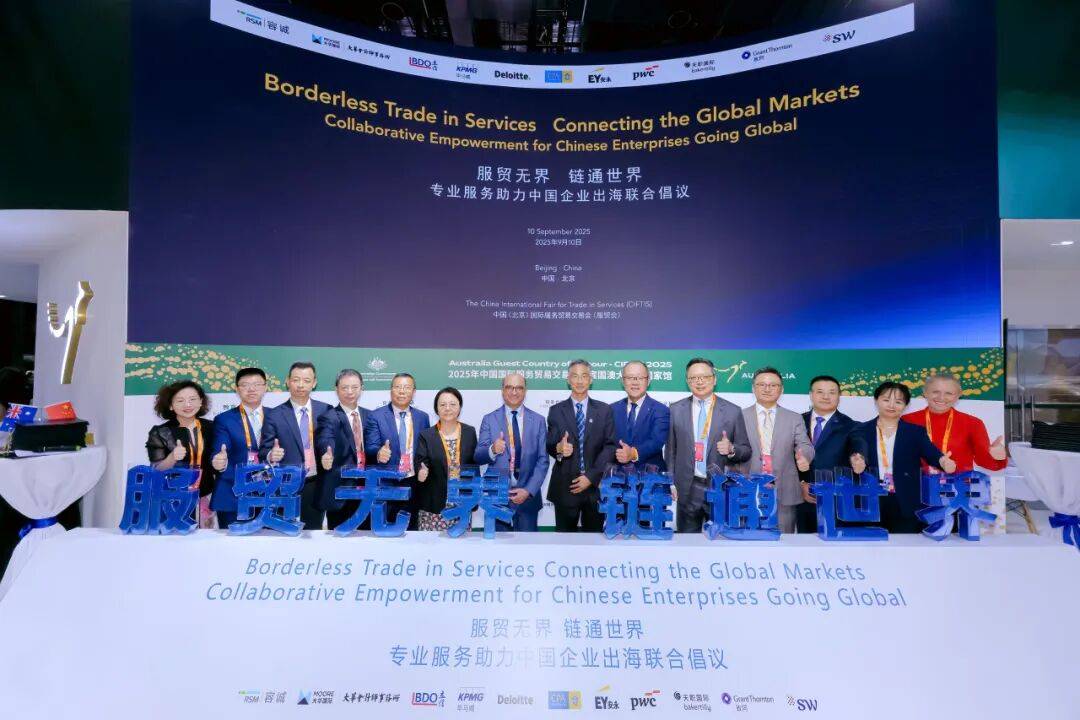
Core Points - Chengdu's "Going Global" Professional Service Alliance was established to support local enterprises in international expansion, comprising 18 professional institutions from various sectors [1] - The alliance offers comprehensive services including market research, legal compliance, logistics, and overseas rights protection, aiming to provide tailored solutions for companies venturing abroad [1] - A comprehensive service center for enterprises going global is being prepared, which will include modules for foreign trade networks, professional service alliances, offline service scenarios, and online digital service systems [1] Group 1 - The "Going Global" Professional Service Alliance includes service providers from 16 fields such as law, finance, and consulting [1] - The alliance has engaged over 50 international service providers to create a collaborative ecosystem for information sharing and service delivery [1] - The initiative aims to foster new foreign trade growth and incubate market entities for Chengdu's products and enterprises [1] Group 2 - The first batch of member institutions includes KPMG and King & Wood Mallesons, among others [1] - The service center will help attract foreign trade and economic activities, nurturing headquarters for outbound enterprises [1] - The project emphasizes the importance of building a network of "Open Chengdu" partners to enhance international cooperation [1]
专访英中贸易协会总裁白彼得:中英合作可以实现“1+1>2”的效果
Di Yi Cai Jing· 2025-09-11 04:12
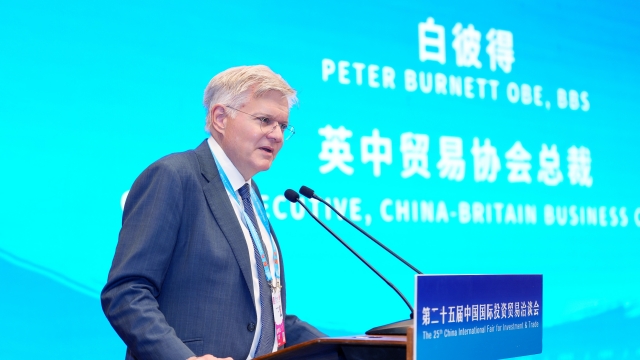
Group 1: Overview of UK-China Economic Cooperation - The UK is the second largest direct investment destination for China in Europe and the third largest source of foreign investment for China in Europe [1] - The total trade volume between China and the UK has exceeded $130 billion in 2024, with an average daily trade amount of $360 million [1] - As of July 2025, the UK has made actual investments exceeding $35 billion in China, while China's direct investment stock in the UK has surpassed $32 billion [1] Group 2: Trade and Investment Dynamics - The trade cooperation between China and the UK covers a wide range of sectors, including machinery, electronics, new energy vehicles, textiles, education, insurance, finance, and consulting [1] - The UK has over 13,000 enterprises established in China, indicating a strong presence in the Chinese market [1] - The UK is actively participating in major trade exhibitions in China to expand cooperation opportunities [2] Group 3: Future Cooperation Potential - The UK government’s modern industrial strategy aligns well with China's priority areas, particularly in clean energy, financial services, creative industries, life sciences, and professional services [6] - The sports industry, particularly the English Premier League, represents a significant service trade sector between the two countries, with a large fan base in China [6] - UK companies can leverage China's innovation ecosystem, as many UK unicorns are concentrated in technology [7] Group 4: Strategic Insights - UK businesses are advised to focus on partnerships that best serve their goals and interests in the context of global trade tensions [8] - Confidence in the Chinese market among UK enterprises is expected to increase due to China's rapid economic growth and technological innovation [9] - The UK-China Trade Association aims to support UK companies in China while also facilitating Chinese companies' entry into the UK market [10]
36氪出海·中东|IFZA自由区如何成为国际业务扩张的加速通道?
3 6 Ke· 2025-09-11 03:32
Core Insights - The UAE free zones, particularly IFZA, are becoming strategic starting points for global entrepreneurs aiming for international expansion due to their unique advantages [2][3][4] Group 1: Advantages of UAE Free Zones - The UAE free zones allow 100% foreign ownership, simplifying the process of entering different regulatory environments and providing operational flexibility for businesses [3][4] - Proximity to world-class logistics hubs, such as ports and airports, enhances market accessibility for products and services, facilitating efficient international reach [3][4] - Free zones are designed to foster innovation, offering support for startups in sectors like fintech, AI, and advanced manufacturing through accelerators and mentorship programs [5][6] Group 2: Comparison with Mainland Companies - Free zone companies are ideal for businesses focused on global trade and digital services, benefiting from tax exemptions and simplified setup processes, especially for startups and SMEs [4] - Mainland companies can access a broader UAE market, including government contracts, but require local sponsorship and face more complex regulatory processes [4] - Understanding business goals and operational needs is crucial for selecting the best investment path between free zones and mainland setups [4] Group 3: Operational Efficiency - The registration process in IFZA is transparent and relatively low-cost, particularly suitable for SMEs in trade, consulting, and services [12] - Companies can register remotely within 5-7 working days, with each license covering multiple business activities without additional fees [12] - IFZA provides professional consulting services, including banking, licensing, and legal advice, along with shared and virtual office options for startups [12]

破解出海合规难题,AI+赋能企业全球化新布局——安永服贸会首日洞察
Sou Hu Cai Jing· 2025-09-10 17:09
Group 1 - The core viewpoint emphasizes the collaboration between China and Australia to explore opportunities for Chinese enterprises going global, focusing on the need for international professional talent in finance and accounting [1][3][7] - The consumption sector is identified as a major driver of China's economic development, with new patterns emerging in overseas investment and exports [1] - Companies are urged to shift from passive compliance to actively building sustainable development systems in response to environmental responsibilities and supply chain challenges [1][12] Group 2 - The Chinese consumption industry is entering a new development model, with a focus on services and experiences as key purchasing factors, alongside trends in foreign direct investment and overseas mergers and acquisitions [10] - The implementation of the EU Deforestation Regulation (EUDR) is pushing companies to reassess their supply chains and environmental responsibilities, necessitating a proactive approach to sustainability [12] - The Chinese government's "Artificial Intelligence +" initiative aims to integrate AI deeply into economic and social frameworks, enhancing risk management and operational efficiency for businesses [13] Group 3 - The platform economy is becoming a crucial force in promoting the integration of industrial, supply, value, and ecological chains, driving sustainable development in the real economy [14]
安永:中国经济“半年报”-奋楫笃⾏,稳中提质
2025-09-04 14:38
Summary of Key Points from the Conference Call Industry Overview - The conference call discusses the overall performance of the Chinese economy in the first half of 2025, highlighting the stability and growth driven by consumer spending [3][10][5]. Core Insights and Arguments 1. **Economic Growth**: In the first half of 2025, China's GDP reached RMB 66 trillion, with a year-on-year growth of 5.3%. Final consumption expenditure contributed 52% to this growth [10][5]. 2. **Consumer Spending**: The total retail sales of consumer goods amounted to RMB 24.5 trillion, reflecting a year-on-year increase of 5.0%. The "trade-in" policy for five major categories drove sales exceeding RMB 1.6 trillion, surpassing the total for the entire year of 2024 [5][25]. 3. **Foreign Trade**: The total import and export of goods reached RMB 21.8 trillion, with a year-on-year growth of 2.9%. High-tech product exports increased by 12.5%, indicating a shift towards a "technology + brand" driven foreign trade structure [5][33]. 4. **Investment Trends**: Fixed asset investment growth slowed to 2.8% year-on-year. The real estate sector remains a significant challenge, with expectations of continued bottoming out in investment [5][21]. 5. **Policy Support**: The government plans to enhance fiscal and monetary policies to support infrastructure investment and stimulate consumer demand. Special bonds and long-term treasury bonds are expected to maintain a rapid issuance pace [8][42]. 6. **Service Consumption Growth**: The focus is on cultivating new growth points in service consumption, particularly in digital life services, cultural and tourism integration, and international service facilitation [8][42]. 7. **Artificial Intelligence and Technology**: The "Artificial Intelligence +" initiative is entering a new phase of commercialization and ecosystem development, with a focus on driving quality upgrades in various sectors [8][42]. 8. **Real Estate Market Dynamics**: The real estate market is transitioning from expansion to quality development, with an emphasis on urban renewal and the utilization of existing land resources [8][42]. Additional Important Insights - **Manufacturing Sector**: The manufacturing PMI index showed a slight decline, indicating a need for more robust growth measures to counteract external uncertainties [16]. - **External Investment Trends**: Despite a 15.2% decline in actual foreign investment, new foreign enterprises increased by 11.7%, particularly in e-commerce and pharmaceutical manufacturing sectors [38]. - **Consumer Confidence**: The increase in household deposits indicates a growing tendency for precautionary savings, which may impact future consumption patterns [42]. This summary encapsulates the key points discussed in the conference call, providing insights into the current state and future outlook of the Chinese economy and its various sectors.