税务

Search documents
If You Make Under $200K, These 3 Tax Credits Could Apply To You This Year
Yahoo Finance· 2026-03-24 15:00
Core Insights - Significant tax credits are available for high earners, with eligibility extending to joint filers earning up to $400,000 and single filers up to $200,000, potentially allowing for refunds [1] Group 1: Retirement Savings Contributions Credit - Low-to-moderate income households contributing to retirement accounts may qualify for the Saver's Credit, which offers credits of 10%, 20%, or 50% of contributions, capped at $1,000 for individuals and $2,000 for married couples [2][3] - Eligibility for the Saver's Credit phases out at specific income levels, detailed on IRS Form 8880 [3] Group 2: Earned Income Tax Credit - The Earned Income Tax Credit (EITC) is a refundable credit aimed at lower-to-moderate-income households, particularly those with qualifying children, with maximum credits ranging from $649 for workers with no children to $8,046 for those with three or more children [3][4] - Eligibility for the EITC is based on income, filing status, and number of children, with specific income limits for different family structures [4] - An estimated one in five eligible taxpayers do not claim the EITC [5] Group 3: Child Tax Credit - The Child Tax Credit (CTC) has higher income thresholds than the EITC, allowing many moderate-income households to qualify, phasing out above $200,000 for single filers and $400,000 for married couples [6] - To qualify for the CTC, households must have children under 17 and earn at least $2,500 in qualifying income, with potential credits of up to $2,200 per qualifying child [6]
2025年中国经济破局谋新,乘势而上
EY· 2026-03-01 08:16
Economic Performance in 2025 - China's GDP surpassed 140 trillion RMB for the first time, growing by 5.0% year-on-year[6] - Final consumption expenditure contributed 52% to economic growth, an increase of 5 percentage points from the previous year[10] - Retail sales of consumer goods increased by 3.7%, with communication equipment sales rising by 20.9% due to the "old-for-new" policy[6] Investment and Trade Dynamics - Fixed asset investment decreased by 3.8%, while high-tech industries saw significant growth, with information services and aerospace manufacturing investments increasing by 28.4% and 16.9% respectively[21] - Total goods trade reached 45.47 trillion RMB, growing by 3.8%, with exports of industrial robots and high-end machine tools increasing by 48.7% and 21.5%[24] Outlook for 2026 - GDP growth target for 2026 is set between 4.5% and 5%, with a focus on stabilizing and improving quality[8] - Emphasis on domestic demand and innovation to drive economic transformation, with policies aimed at enhancing consumer income and expanding service consumption[32] - Continued investment in high-end equipment, renewable energy, and AI is expected to reshape investment structures[32] Risk Management and Policy Measures - Central government policies will focus on urban renewal and managing local government debt risks, with an emphasis on diverse operational models for urban projects[36] - The implementation of a carbon emissions trading market aims to integrate carbon reduction into economic indicators, pushing companies to incorporate sustainability into their strategic decisions[36]
中国税务部门曝光4起骗取出口退税违法案件
Xin Lang Cai Jing· 2026-02-27 10:11
Core Viewpoint - The Chinese tax authorities have exposed four cases of fraudulent export tax refund schemes, highlighting the ongoing issue of tax evasion in the export sector [1][2] Group 1: Fraudulent Activities - Some companies have rebranded non-refundable fertilizer products as refundable industrial chemical products to evade supervision [1] - Other companies have fabricated invoices and created false input tax claims, matching them with real export goods to create a false "invoice-goods consistency" [1] - Additional methods used by companies include multiple layers of fake invoices, false transactions, over-reporting low-value goods, and fraudulent foreign exchange settlements, forming a seemingly intricate tax evasion network [1] Group 2: Enforcement Actions - The tax authorities have imposed penalties on the involved parties, including the recovery of 201 million yuan from three companies in Tianjin and a three-year suspension of their export tax refund processing [1] - The export tax fraud involves multiple sectors such as production, trade, customs, logistics, and foreign exchange, characterized by strong concealment and high difficulty in investigation [1] - Eight departments, including tax and public security, are enhancing collaboration to establish a normalized mechanism for combating tax fraud, creating a comprehensive and integrated enforcement system from administrative law to criminal justice [1] Group 3: Impact and Future Measures - By 2025, the joint efforts of the eight departments are expected to further enhance the mechanism, with a cumulative inspection of 76,000 suspected fraudulent companies and recovery of over 10 billion yuan in export tax losses [1] - The actions taken against tax fraud not only serve as a deterrent to wrongdoers but also protect compliant businesses, thereby maintaining a fair competitive market environment and supporting healthy foreign trade development [2]
涉税犯罪司法裁判趋势研究报告(2026)
华税律师事务所· 2026-02-25 01:45
Investment Rating - The report does not explicitly provide an investment rating for the industry Core Insights - The report highlights significant changes in the judicial interpretation of tax-related crimes, particularly the narrowing of the definition of the crime of issuing false VAT invoices, which will have a long-term impact on judicial practices in tax-related criminal cases [6][10][11] - The report indicates that traditional tax-related crimes continue to be prosecuted vigorously, with the crime of issuing false VAT invoices remaining a primary focus, while there is an increasing trend of judicial practice in categorizing crimes based on intent and consequences [7][58] Summary by Sections 1. Latest Developments in Tax-Related Criminal Justice - The Supreme People's Court and the Supreme People's Procuratorate jointly issued an interpretation regarding the application of laws in tax-related criminal cases, effective from March 20, 2024, marking a significant reform in the legal framework governing tax crimes [9][10] - The interpretation includes 22 articles that comprehensively address various tax-related crimes, including escape from tax, tax evasion, and the issuance of false VAT invoices [10][11] 2. Observations on Judicial Trends in Invoice Cases - From March 20, 2024, to December 31, 2025, a total of 1,022 judgments were made public regarding five major types of tax-related crimes, with the crime of issuing false VAT invoices accounting for 658 cases, indicating its continued prevalence [41][58] - The report notes a significant increase in cases categorized under the crime of issuing false invoices, reflecting a shift in judicial focus towards less severe offenses that do not meet the criteria for more serious tax crimes [38][41] 3. Analysis of Typical Tax-Related Criminal Cases - The report analyzes several key cases that illustrate the application of the new judicial interpretations, highlighting the importance of intent in determining the classification of tax-related crimes [59] - For instance, in the case of Guo and Liu, the court ruled that their actions constituted tax evasion rather than issuing false VAT invoices, emphasizing the need to assess the subjective intent behind the actions [60][61]
税收改革蹄疾步稳开新局
Jing Ji Ri Bao· 2026-02-23 23:17
Core Insights - The recent tax work meetings across various regions emphasize the importance of tax collection reforms to support high-quality economic development and improve the business environment [1][2][3] Group 1: Tax Revenue and Economic Support - Tax revenue is crucial for national financial security, providing support for public services and strategic initiatives. In 2025, Hebei is projected to collect 10,250.5 billion yuan in taxes, with a tax revenue of 5,061 billion yuan, marking a 4.2% year-on-year increase, the highest in history [2] - Sichuan's total tax revenue is expected to exceed 16,000 billion yuan, with tax income surpassing 7,200 billion yuan, reflecting a 3.2% growth [2] - Anhui anticipates a total tax revenue of 10,456.9 billion yuan, with tax income reaching 5,404 billion yuan, a 3.5% increase [2] Group 2: Support for Innovation and Manufacturing - Structural tax reductions and incentives are being implemented to support technological innovation and manufacturing, with over 400 billion yuan in tax incentives in Shaanxi and 140 billion yuan in Hainan [2] - Tax authorities are focusing on precise policy implementation and outreach to ensure that tax benefits reach the intended businesses [2][3] Group 3: Tax Governance and Efficiency - Various regions are enhancing tax governance through comprehensive management and data analysis. Beijing aims to strengthen key tax source management and policy implementation [3] - Jilin is promoting effective measures for tax governance, while Jiangxi is focusing on controlling the entire revenue organization process [3] Group 4: Digital Taxation and Innovation - The initiative "Data-Driven Taxation" is being advanced, with regions like Sichuan and Anhui developing data analysis tools to enhance tax governance and compliance [4] - The "Silver-Tax Interaction" program is helping small and micro enterprises access financing through tax credit systems, with significant loan amounts facilitated in various provinces [5][6] Group 5: International Tax Environment - Regions are accelerating reforms to create an international tax business environment, with initiatives in Inner Mongolia and Hainan aimed at enhancing cross-border tax services [7] Group 6: Legal and Fair Taxation - Efforts to combat tax-related crimes and improve regulatory frameworks have been intensified, with various regions implementing new mechanisms to ensure fair tax practices [8][9] - The focus on platform economy regulation is increasing, addressing challenges posed by the gig economy and ensuring compliance [10]
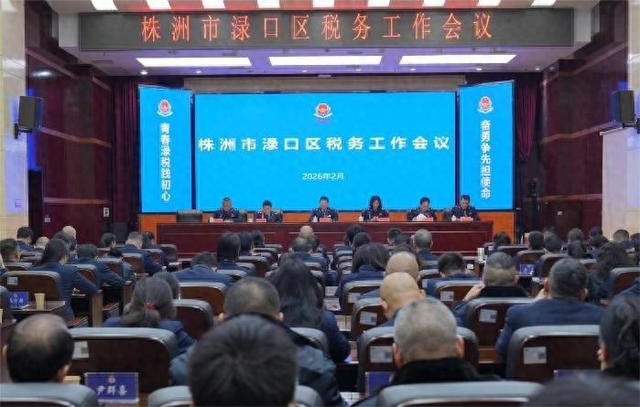
株洲市渌口区税务工作会议召开
Xin Lang Cai Jing· 2026-02-12 10:19
Group 1 - The meeting summarized the achievements of the tax bureau in 2025, highlighting significant results such as "two crowns leading, three breakthroughs, and four examinations striving for excellence" [3] - The tax bureau aims to implement a "strong foundation project" in 2026, focusing on standardizing tax collection and management processes [3] - The meeting emphasized the importance of enhancing tax source management and compliance, as well as improving tax enforcement measures [3][4] Group 2 - The tax bureau plans to strengthen political construction and grassroots party organization to lead high-quality tax development [4] - A focus on team building will be implemented to create a highly professional tax workforce, emphasizing discipline and practical training for young staff [4] - The meeting recognized outstanding units and individuals for their performance in 2025, showcasing the bureau's commitment to excellence [4]

江苏A级纳税人数量全国第一
Xin Hua Ri Bao· 2026-02-11 22:00
Core Insights - The meeting held on February 10 summarized the tax work in Jiangsu for 2025 and the "14th Five-Year Plan" period, while planning for the "15th Five-Year Plan" and 2026 work [1] Tax Revenue and Policy Impact - In 2025, Jiangsu organized a total tax and fee revenue of 30,351.9 billion yuan, with tax revenue reaching 15,801.6 billion yuan, reflecting a year-on-year growth of 3.8% [1] - The province implemented major tax reduction and refund policies supporting technological innovation and manufacturing development, amounting to 3,319.97 billion yuan [1] Achievements and Innovations - Jiangsu was the first in the country to achieve "one-click confirmation" for water resource tax declaration and introduced non-tax credit warnings for social security, with the number of A-level taxpayers ranking first nationwide [1] - During the "14th Five-Year Plan" period, Jiangsu collected over 14.5 trillion yuan in taxes and fees, with new tax reductions and exemptions totaling 1 trillion yuan, accounting for about one-tenth of the national total [1] Future Goals - The meeting emphasized that during the "15th Five-Year Plan" period, the provincial tax system should better showcase a new image of tax administration, aiming to create a politically strong, professionally skilled, effective, and innovative tax system in Jiangsu [1]
全省税务工作会议召开
Liao Ning Ri Bao· 2026-02-10 01:11
Core Viewpoint - The provincial tax work conference in Shenyang summarized the achievements of the tax system in 2025 and the "14th Five-Year Plan" period, while analyzing the tasks and challenges for the "15th Five-Year Plan" period, and outlined key work for 2026 [1] Group 1 - In 2025, the provincial tax system implemented a strong foundation project for tax collection and management under digital transformation, achieving positive results [1] - During the "14th Five-Year Plan" period, the provincial tax system focused on reform and innovation, contributing significantly to the revitalization and development of Liaoning [1] - The "15th Five-Year Plan" period presents new opportunities and challenges for Liaoning's tax system, necessitating a clear understanding of new situations, tasks, and requirements [1] Group 2 - The provincial tax system aims to establish a correct view of performance, strengthen vertical management, and enhance compliance management [1] - Key areas of focus for this year include improving political governance, solidifying tax collection foundations, enhancing tax regulation, optimizing the business environment, and invigorating the workforce [1] - The goal is to achieve "six further efficiency improvements" and elevate the overall work to a new level [1]
2025年甘肃省税收收入平稳增长
Xin Lang Cai Jing· 2026-02-08 00:58
Core Insights - The core viewpoint of the news article is the announcement of the tax revenue targets and reforms by the tax authorities in Gansu Province for the year 2025, highlighting a focus on improving tax collection efficiency and governance [1]. Tax Revenue Projections - In 2025, the tax authorities in Gansu Province aim to collect a total of 3149.5 billion yuan in various taxes and fees, with tax revenue projected at 1546.9 billion yuan, reflecting a year-on-year growth of 2.4% [1]. Tax Management Reforms - The tax department plans to establish 31 reporting management norms for different tax types and implement a collaborative financial management mechanism across provincial, municipal, and county levels [1]. - Gansu will be the first in the nation to promote the integrated transformation of tax service halls and the unified "12366" hotline for tax inquiries, with the intention of sharing these practices nationwide [1]. Quality Control and Compliance - The provincial tax system will adhere to legal and regulatory frameworks for tax collection, ensuring no "over-collection" of taxes, while enhancing the quality of tax revenue monitoring [1]. - Efforts will be made to strengthen tax collection management, improve policy application, and enhance the efficiency of non-tax revenue collection related to social security [1]. Innovative Tax Management Approaches - The tax authorities will deepen reforms in tax collection management, aiming to establish a new "household + matter" management approach for tax sources [1]. - There will be a continued emphasis on building a smart tax system and strengthening the provincial bureau's operational team [1]. Implementation of New Tax Laws - The tax authorities will focus on the effective implementation of the Value-Added Tax Law and its regulations, aiming to set a benchmark for tax collection models at the county level across the nation [1].
漫解税收|新办企业怎么设置账簿?
蓝色柳林财税室· 2026-02-07 01:18
Core Viewpoint - The article discusses the tax reduction policies for individual businesses, emphasizing the importance of compliance with tax regulations and the benefits available to eligible taxpayers [8][11][22]. Group 1: Tax Reduction Policies - Individual businesses with annual taxable income not exceeding 2 million yuan can enjoy a 50% reduction in personal income tax [11]. - This tax reduction policy can be combined with other existing personal income tax benefits [12]. - The policy applies to all forms of taxation methods, including accounting, assessment, and fixed quotas [12]. Group 2: Eligibility and Application - Specific groups such as disabled individuals, elderly, veterans, and impoverished populations can further benefit from this tax reduction policy [12]. - Individual businesses can enjoy the tax reduction during the prepayment of taxes, with annual income assessed based on the current reporting period [12][13]. - If an individual business has income from multiple sources, they must consolidate their income for annual tax reporting to recalculate the tax reduction [12]. Group 3: Reporting and Compliance - Individual businesses must fill out the "Personal Income Tax Reduction Report" to apply for the tax reduction, which will automatically calculate the reduction amount [17]. - The tax reduction policy is effective from January 1, 2023, and will terminate on December 31, 2027 [22].