
家电制造

Search documents
京东与美的签署2026年战略合作协议 冲刺800亿年度销售目标
Sou Hu Wang· 2026-02-12 09:19
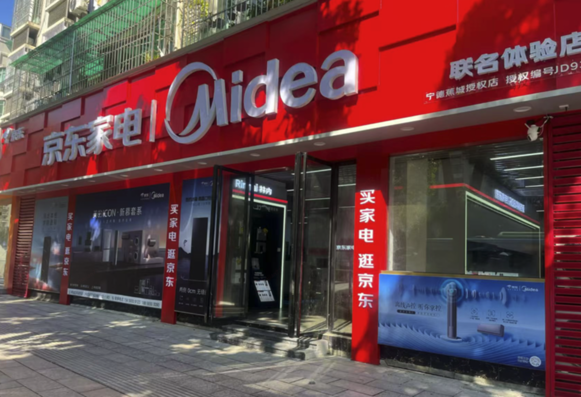
Core Insights - JD.com and Midea have signed a strategic cooperation agreement for 2026, setting a sales target of 80 billion yuan for Midea across JD's channels [1] - Midea has become JD's first home appliance partner to exceed 50 billion yuan in annual sales in 2023, showcasing its strong market position [3] Group 1: Strategic Partnership - The partnership between JD.com and Midea has been ongoing since 2013, with JD being Midea's most stable online and offline sales platform [1][3] - Both companies have collaborated to create numerous best-selling products, enhancing service experience and innovative marketing strategies [1] Group 2: Market Coverage and Expansion - JD.com has established a comprehensive channel network covering nearly 30,000 stores, facilitating Midea's offline sales and product display [3] - In 2025, JD and Midea plan to jointly create around 400 "JD-Midea co-branded stores," focusing on lower-tier markets to boost local consumer choices [3] Group 3: Product Innovation - The two companies will launch new products in 2025, including the "Hualing Shenji II" air conditioner and "Little Wumei 3.0" washing machine, with leading industry standards [3] - Midea's refrigerator "Xiong Duntun 601" achieved over 10,000 units sold within four months, validating the collaboration's effectiveness in driving sales growth [3] Group 4: Consumer Experience - JD and Midea are enhancing consumer service experiences through initiatives like integrated delivery and installation, achieving "0 negative reviews" for Midea's new central air conditioning products [4] - The collaboration aims to provide high-quality home appliance products and services, promoting a shift from price competition to value co-creation in the industry [4]



创维集团(00751.HK):预计年度溢利同比下降约30%
Ge Long Hui· 2026-02-12 09:14
相关事件 格隆汇2月12日丨创维集团(00751.HK)公布,预期集团截至2025年12月31日止年度的年度溢利较截至 2024年12月31日止年度的年度溢利,将录得约30%的下降幅度。 上述预期下降幅度乃主要受中国房地产市场持续下行、销售低迷的影响,集团现代服务业业务板块中建 设发展业务之部分区域物业因此计提减值及导致该业务业绩表现欠佳。集团根据会计准则的要求增加了 相关房地产存货减值准备,主要反映了当前市场环境的变化。未来集团将继续密切关注市场动态,并可 能根据市场变化适时作出调整以反映其资产价值。 此外,集团截至2025年12月31日止年度的业绩也预计受到智能系统技术业务板块表现的影响,归因于市 场竞争环境影响,其整体盈利表现及产品毛利率较去年同比下降。 创维集团(00751.HK):预计年度溢利同比下降约30% 创维集团(00751.HK):光伏板块拟分拆上市 新能 源内在价值有望凸显 ...
申万宏源证券晨会报告-20260212
Shenwan Hongyuan Securities· 2026-02-12 02:58
Core Insights - The report highlights the emergence of "high prosperity spillover" in the AI sector, suggesting that while the fundamental elasticity may not match the high prosperity itself, there is still potential for elasticity in spillover markets [2][11] - It emphasizes the importance of basic bottom-line requirements for spillover markets, indicating that the prosperity cycle needs to confirm a clear bottom [11] - The report suggests that the valuation structure of high prosperity can break through historical averages, but the spillover structure may face challenges [11] Industry Summaries AI Sector - The report identifies specific industries benefiting from AI price spillover, recommending attention to fiberglass and optical fiber due to their favorable valuations and visible price increases [2][11] - Fiberglass is noted for its strong bargaining power in the global supply chain, with a valuation slightly above historical averages, indicating a favorable risk-reward profile [11] - The optical fiber sector is experiencing a recovery in traditional segments alongside expectations for AI business advancements, presenting a high short-term success rate [11] Real Estate - The report indicates that the most challenging period for the real estate sector may be over, with signs of marginal improvement in supply and demand dynamics [11] - Data shows a narrowing decline in key indicators, with a significant reduction in the year-on-year decline of second-hand housing transactions [11] - Policy measures are being implemented to stabilize the real estate market, focusing on risk management and ensuring the protection of livelihoods [11] Consumer Electronics - The report discusses the impact of the "old-for-new" policy on the home appliance market, noting significant sales volumes and revenue generated from this initiative [15][18] - It highlights the performance of various appliance categories, with a focus on the kitchen appliance sector, which is experiencing varied performance amid high base pressures [18] - The report anticipates that the 2026 "old-for-new" policy will continue to benefit leading brands with superior product efficiency and performance [18] Tourism and Hospitality - The report outlines the expected surge in domestic tourism during the extended Spring Festival holiday, predicting a significant increase in passenger transport volumes [21] - It notes a shift in consumer preferences towards high-quality accommodations and diverse travel experiences, driven by family and senior travelers [21] - The report suggests that the tourism market is experiencing a multi-faceted explosion, with emerging destinations gaining popularity [21]

美的医疗铁血突围:不做第二个东芝
2 1 Shi Ji Jing Ji Bao Dao· 2026-02-11 12:28
Core Insights - Midea Group is focusing on the healthcare sector as a strategic pivot, acquiring Carestream Health's international business to enhance its medical imaging capabilities and compete with established players like GE, Philips, and Siemens [2][3][4] - The company is positioning itself for leadership in the medical field, with a strong emphasis on AI technology to drive innovation and efficiency in its healthcare offerings [13][14][17] Group 1: Leadership Transition and Strategic Focus - The key concerns among shareholders include the timing of Chairman Fang Hongbo's retirement and the selection of his successor, which is closely tied to Midea's future direction [2] - Wang Jianguo, seen as a potential successor, is taking on significant roles within Midea's healthcare division, indicating a shift towards a more focused leadership in this sector [2][3] Group 2: Market Position and Competitive Landscape - Midea's healthcare division faces significant challenges from established competitors like Philips, which has a strong market share in medical imaging and a well-developed ecosystem that integrates technology and services [3][7][9] - The company aims to avoid the pitfalls experienced by Toshiba Medical, which struggled to compete in the medical imaging market and ultimately exited the sector [10][11] Group 3: Business Structure and Product Offerings - Midea's healthcare business comprises several entities, including Wandong Medical and KUKA Medical, focusing on a comprehensive ecosystem that spans clinical technology and hospital operations [5][6] - The company is actively working to enhance its product offerings in high-end imaging equipment, although it currently holds a low market share in critical areas like CT and MR imaging [6][8] Group 4: AI Integration and Future Strategies - Midea is leveraging AI technology to transform its healthcare offerings, with plans to integrate AI into its products and services to enhance operational efficiency and patient care [13][14] - The company has committed to significant R&D investments, aiming to establish itself as a provider of comprehensive smart healthcare solutions rather than just medical equipment [14][17] Group 5: Challenges and Future Outlook - Despite its ambitions, Midea's healthcare division must navigate the complexities of the medical industry, which requires a different approach compared to its traditional consumer electronics business [16] - The company has outlined a five-year plan to address potential overlaps and competition between its subsidiaries, ensuring a clear market strategy moving forward [16]

海信家电及附属认购17亿元西部信托理财产品
Zhi Tong Cai Jing· 2026-02-11 11:37
Core Viewpoint - Hisense Home Appliances has announced a financial agreement to invest in trust products, indicating a strategic move to enhance its financial management and investment portfolio [1] Group 1: Financial Agreement - Hisense Home Appliances (stock code: 000921) has entered into a financial agreement with Western Trust to subscribe to trust financial products [1] - The total subscription amount for the trust products is set at RMB 1.7 billion [1] - The subscription period is from September 4, 2025, to February 11, 2026 [1]
中国出口份额还有多大提升空间?
ZHONGTAI SECURITIES· 2026-02-11 10:25
Export Trends - China's export amount as a share of global exports peaked at 14.9% in 2021 but has been below this level from 2022 to 2025[5] - The share of China's export quantity in global exports is expected to increase from 13.2% in 2019 to 17.0% by the third quarter of 2025[12] - The decline in China's export amount share is attributed to low export prices and currency depreciation, with a cumulative price drop of 10.1% from 2023 to 2025[15] Factors Supporting Export Growth - China's export quantity share is projected to continue rising due to accelerated industrial upgrading and a shift towards high-value-added products[12] - The "Belt and Road" initiative has diversified China's export markets, increasing shares in emerging economies like ASEAN and Africa[17] - Trade friction risks are expected to limit further price declines, with potential for stabilization or slight increases in export prices due to policy adjustments[39] Currency and Economic Outlook - The Chinese yuan is expected to appreciate gradually, supported by a resilient export sector and a target for GDP growth of 4.5%-5.0% in 2026[61] - The yuan's effective exchange rate has declined by 16.12% since March 2022, but a recovery is anticipated as trade surpluses continue[56] - By 2025, the yuan is projected to appreciate by 4.4% against the dollar, with increased usage in international trade financing and payments[70]
达飞集团与美的集团战略合作!
Xin Lang Cai Jing· 2026-02-11 10:16
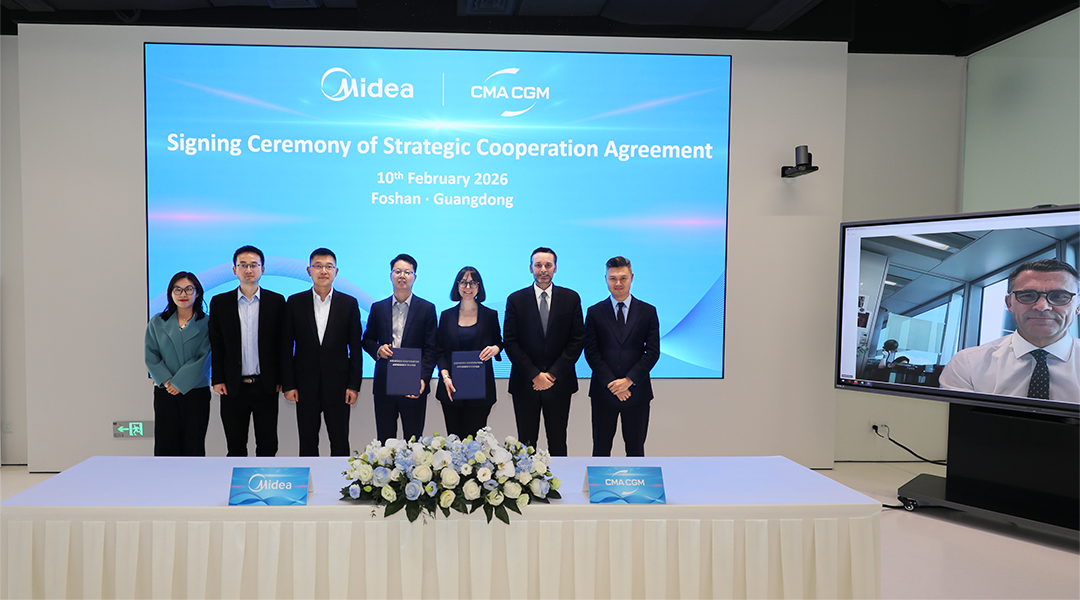
Core Viewpoint - The strategic cooperation memorandum signed between CMA CGM Group and Midea Group aims to enhance global collaboration, focusing on logistics and technological innovation to create smarter, more efficient, and sustainable end-to-end supply chain solutions [1][3]. Group 1: Strategic Collaboration - The signing of the memorandum marks a comprehensive upgrade in the partnership between CMA CGM Group and Midea Group, aligning their strategies in decarbonization, digitalization, and innovation [3][6]. - Key representatives from both companies attended the signing ceremony, indicating a strong commitment to the collaboration [4]. Group 2: Goals and Objectives - The partnership will not only increase transportation volume but also emphasize digital innovation and sustainable solutions to build a resilient supply chain for the future [1][3]. - CMA CGM Group aims to leverage its extensive shipping and logistics network to support Midea Group's global business expansion and strategic goals [6]. Group 3: Industry Impact - The collaboration exemplifies the deep integration and collaborative innovation between the manufacturing and shipping logistics industries, signaling a new chapter of mutual benefits in global supply chain transformation [3][6].
张会洋:欢迎广大人才与企业家选择香洲,成为“城市合伙人”
Nan Fang Du Shi Bao· 2026-02-11 09:45
Core Insights - The 2026 Zhuhai government work report outlines key objectives for the "15th Five-Year Plan," focusing on economic development, talent attraction, and integration with the Guangdong-Hong Kong-Macao Greater Bay Area [2][4]. Economic Development - In 2025, Xiangzhou District achieved a GDP of 202.33 billion yuan, with a year-on-year growth of 2%, contributing the highest growth rate among all districts in Zhuhai [5]. - The total number of market entities reached 211,300, with nearly 2,000 new additions, and the number of large-scale service enterprises surpassed 2,000, with a value-added growth of 7% [5]. - R&D investment in the district amounted to 7.72 billion yuan [5]. Social Welfare - Nine major categories of social welfare spending totaled 6.281 billion yuan, accounting for 85.9% of the general public budget [6]. - The per capita disposable income of residents exceeded 80,000 yuan for the first time, marking a 3% increase, the highest in the city [6]. Regional Attractiveness - Xiangzhou attracted 243 new projects, including 31 projects with over 100 million yuan in investment, and actual foreign investment reached 4.91 billion yuan [6]. - The district's tourism sector saw 29.47 million visitors, generating a total tourism revenue of 33.42 billion yuan, reflecting growth rates of 14.5% and 12.9% respectively [6]. Development Goals for the "15th Five-Year Plan" - The district aims to achieve high-quality development, breakthroughs in reform and opening up, and significant progress in the Greater Bay Area construction [7]. - Key targets include improving living standards, enhancing spiritual civilization, and building a safer Xiangzhou [7]. Strategic Initiatives - The district plans to address three major challenges: transitioning from old to new growth drivers, reshaping urban development patterns, and ensuring high-level social welfare with limited financial resources [8][9]. - The "One Body, Two Wings, Three Belts" development framework will be implemented to strengthen core functions and promote regional collaboration [8]. Consumption and Branding - Xiangzhou is developing into a new consumption center, integrating high-end retail and cross-border consumption, supported by a logistics system linked to the Greater Bay Area [11]. - The district promotes local products under the "Xiangzhou Good Goods" brand, featuring a variety of innovative and traditional products [11]. Talent Attraction - Xiangzhou is positioned as a desirable location for talent and entrepreneurs, emphasizing its ecological environment, development potential, and strong social support systems [13][15]. - The district is actively seeking partnerships with businesses and talents to foster a collaborative development environment [15].

天际股份股价涨5.94%,新疆前海联合基金旗下1只基金重仓,持有2.4万股浮盈赚取5.86万元
Xin Lang Cai Jing· 2026-02-11 02:13
Group 1 - Tianji Co., Ltd. experienced a stock price increase of 5.94%, reaching 43.50 yuan per share, with a trading volume of 1.208 billion yuan and a turnover rate of 5.74%, resulting in a total market capitalization of 21.81 billion yuan [1] - The company, established on March 30, 1996, and listed on May 28, 2015, is located in Shantou, Guangdong Province, and specializes in the research, production, and sales of ceramic cooking appliances and electric kettles, as well as lithium hexafluorophosphate [1] - The revenue composition of Tianji Co., Ltd. includes lithium hexafluorophosphate at 67.27%, sodium phosphinate at 12.80%, small household appliances at 7.86%, hydroxymethylphosphonates at 4.69%, other chemical products at 4.21%, potassium fluoroborate at 2.52%, and diphosphate at 0.63% [1] Group 2 - The Qianhai United Hongxin Mixed A Fund (002780) holds 24,000 shares of Tianji Co., Ltd., representing 2.17% of the fund's net value, making it the ninth largest holding [2] - The fund has a total scale of 39.153 million yuan, with a year-to-date return of 4.55%, ranking 4758 out of 8884 in its category, and a one-year return of 34.75%, ranking 3035 out of 8127 [2] - The fund manager, Zhang Yong, has been in position for 8 years and 319 days, with the fund's total assets amounting to 51.378 million yuan, achieving a best return of 18.46% and a worst return of -36.87% during his tenure [3]

建设智能工厂 “领航”产业升级
Ren Min Ri Bao· 2026-02-10 22:10
Core Insights - The core focus of the article is on the development of intelligent manufacturing in China, emphasizing the role of smart factories as a key battleground in this transformation [1][3]. Group 1: Smart Factory Development - By the end of 2025, the Ministry of Industry and Information Technology and five other departments will announce the first batch of 15 leading smart factories, showcasing the extraordinary level and frontier exploration of intelligent manufacturing in China [1]. - The key advantage of smart factories comes from the high level of collaboration driven by artificial intelligence (AI), which has penetrated over 70% of business scenarios in leading smart factories [1]. - Starting in 2024, China will implement a gradient cultivation action for smart factories, establishing a four-level cultivation system: basic, advanced, excellent, and leading [1]. Group 2: Cross-Factory Collaboration - Leading smart factories are accelerating the breaking down of barriers and exploring cross-factory and cross-industry production collaboration and resource-sharing mechanisms, forming a "smart mother factory + replication promotion" model [2]. - For instance, Baosteel has innovatively constructed an "AI-driven predictive manufacturing" model, which anticipates market demand through AI algorithms, allowing for proactive resource allocation across the entire supply chain [2]. Group 3: Integration of Talent and Technology - The upgrade of smart factories involves not only the re-engineering of production processes and the promotion of technology applications but also the deep integration of innovative talent, intelligent equipment, and flexible production [2]. - In the first batch of leading smart factories, such as Gree Electric Appliances, traditional production lines coexist with intelligent welding equipment, where experienced workers transition to roles as AI trainers, converting their expertise into data and algorithms [2]. Group 4: Future of Workforce and Industry - The pursuit of higher efficiency necessitates the rediscovery and repositioning of human value, promoting the co-evolution of industry and laborers, which is a crucial mission for the future of smart factories [3]. - The current wave of technological revolution and industrial transformation is accelerating, intersecting with China's efforts to shift its economic development model, making the promotion of intelligent manufacturing a strategic move for future competitive advantage [3].