
对外贸易

Search documents
对外贸易展现强劲韧性,聊城“十四五”国际“朋友圈”持续扩容
Qi Lu Wan Bao Wang· 2025-10-17 02:00
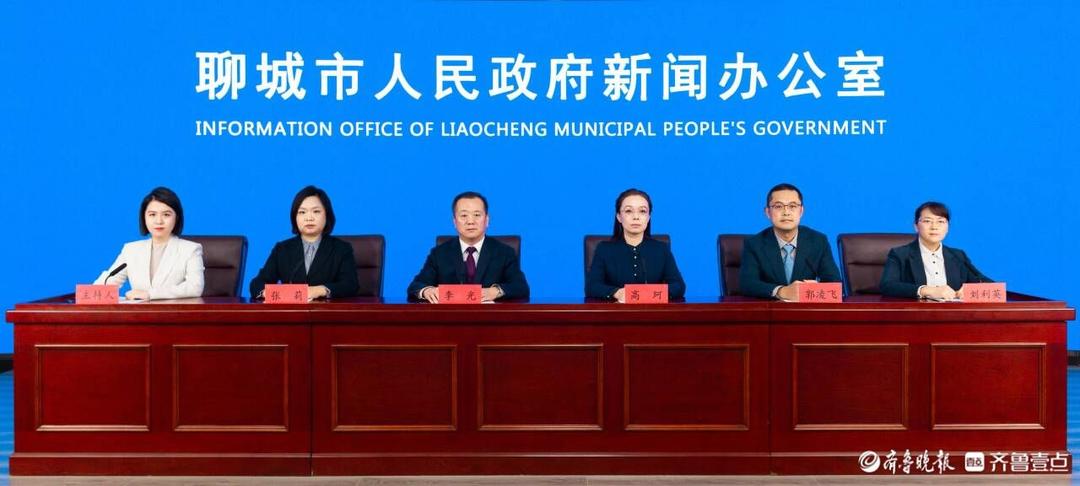
Core Insights - During the "14th Five-Year Plan" period, Liaocheng's foreign trade has demonstrated strong resilience, with significant growth in trade with emerging markets and "Belt and Road" partners [1][3]. Group 1: Trade Performance - In 2024, imports and exports with "Belt and Road" partners reached 21.94 billion yuan, a 146% increase compared to the end of the "13th Five-Year Plan" in 2020, with the share of total trade rising from 21.8% to 34.9% [3]. - Exports to ASEAN amounted to 11.72 billion yuan, while exports to Latin America reached 14.91 billion yuan, representing increases of 221% and 34.2% respectively compared to the end of the "13th Five-Year Plan" [3]. Group 2: Product Structure and Export Dynamics - In 2024, 20 national-level specialized and innovative enterprises achieved a total export value of 880 million yuan, with significant contributions from leading enterprises [4]. - Bus exports totaled 6,381 units, valued at 3.24 billion yuan, accounting for 92.2% of the province's total bus exports, maintaining a leading position within the province [4]. - Agricultural product exports reached 5.15 billion yuan in 2024, with poultry and pet feed exports increasing their share within the province [4]. Group 3: Development of Open Platforms - The logistics hub function has been enhanced with the establishment of the Linqing Bonded Logistics Center and the successful acquisition of the UN international port code for Luxi International Land Port, with cumulative container shipments exceeding 1 million TEUs [5]. - A green product international marketing network has been established, with 24 enterprises approved for used car export qualifications, covering 72 countries and regions [5]. - The number of various platforms has continued to expand, including national cultural export enterprises and provincial-level traditional Chinese medicine service export bases, laying a solid foundation for enhancing foreign trade [5].

中国商务部:将适时推出新的稳外贸政策
Zhong Guo Xin Wen Wang· 2025-10-17 00:39
Core Viewpoint - The Chinese Ministry of Commerce plans to strengthen policy reserves and introduce new measures to stabilize foreign trade in response to the complex global economic environment [1] Group 1: Foreign Trade Performance - In the first three quarters of this year, China's foreign trade maintained a stable growth trend, with a year-on-year import and export growth rate of 4% [1] - In September, the month-on-month growth rate reached a high of 8% year-on-year, marking the continuous acceleration of import and export growth for eight consecutive quarters [1] Group 2: Policy Measures and Support - The Ministry of Commerce will implement existing policies in the foreign trade sector and enhance services for foreign trade enterprises in areas such as finance, employment, and facilitation [1] - The 138th Canton Fair will continue to introduce measures to benefit enterprises, including waiving offline booth fees and online platform costs [1] - Support will be provided for enterprises to participate in various domestic and international exhibitions, along with ongoing trade promotion activities [1] Group 3: Trade Agreements and Tariffs - China aims to sign more high-standard free trade agreements and continuously improve the openness of these agreements [1] - There will be an increase in the proportion of zero-tariff products in goods trade, with a plan to implement 100% zero-tariff measures for products from African countries with diplomatic relations [1] - The China International Import Expo and other open platforms will be leveraged to actively expand the import of high-quality products [1]
商务部:适时推出新的稳外贸政策
Zhong Zheng Wang· 2025-10-16 11:52
Core Viewpoint - Despite the complex and severe global economic and trade environment, China's foreign trade is expected to respond with greater resilience, vitality, and cooperation to various uncertainties [1] Group 1: Policy Effectiveness - The Ministry of Commerce will focus on releasing the effectiveness of policies by implementing existing measures in the foreign trade sector and enhancing services related to finance, employment, and facilitation for foreign trade enterprises [1] - There will be an emphasis on policy promotion and interpretation to ensure that relevant policies reach enterprises quickly and effectively [1] - The Ministry plans to strengthen policy reserves and introduce new measures to stabilize foreign trade as needed [1] Group 2: Trade Promotion - The 138th Canton Fair will continue to introduce measures to benefit enterprises, including waiving fees for offline booths and online platforms [1] - Support will be provided for enterprises to participate in various domestic and international exhibitions, along with ongoing trade promotion activities to facilitate supply and procurement connections [1] - The Ministry will dynamically update and publish "Foreign Trade Promotion Information" and "Country Trade Guides" to offer more overseas market information services to enterprises [1] Group 3: Trade Cooperation - The Ministry aims to promote the signing of more high-standard free trade agreements and continuously enhance the openness of these agreements [1] - There will be an increase in the proportion of zero-tariff products in goods trade, with a push for 100% zero-tariff measures on products for African countries with diplomatic relations [1] - The Ministry will continue to leverage platforms like the China International Import Expo to actively expand the import of high-quality products [1]
利好!商务部:适时推出新的稳外贸政策
券商中国· 2025-10-16 08:21
Group 1 - The Ministry of Commerce will strengthen policy reserves and timely introduce new policies to stabilize foreign trade [1] - In the first three quarters of this year, China's foreign trade faced pressure but showed signs of stability and improvement [1] - The Ministry will focus on releasing policy effectiveness, promoting trade, and deepening trade cooperation [1] Group 2 - The Ministry of Commerce expressed strong opposition to the Netherlands' intervention in the operations of a Chinese semiconductor company [2] - The Ministry criticized the Netherlands for violating contractual spirit and market principles, which could harm its business environment [2] - The Ministry emphasized that the U.S. "penetration rules" severely impact international economic order and threaten the stability of global supply chains [2]
“互利天下”的智慧:从广东外贸一千年看当下开放底气
2 1 Shi Ji Jing Ji Bao Dao· 2025-10-15 13:53
Core Viewpoint - The exhibition "Mutual Benefit in the World: A Thousand Years of Guangdong Foreign Trade" showcases over 200 artifacts, systematically tracing the development of Guangdong's foreign trade since the Tang Dynasty, highlighting its evolution into a global trade hub [2][4]. Summary by Sections Historical Development - The exhibition is divided into four chapters: "Maritime Trade Benefits the Nation," "Merchant Ships Gather," "East-West Exchange," and "New Chapters of Tides," illustrating the historical trajectory of Guangdong's foreign trade from its institutional beginnings to its current global status [2]. - Guangdong's geographical advantages, such as its long coastline and numerous ports, have historically facilitated maritime trade, supported by local manufacturing capabilities [2][7]. - The establishment of the Maritime Trade Office during the Tang Dynasty and the subsequent development of trade regulations during the Song Dynasty laid the groundwork for Guangdong's trade system [8]. Economic Impact - Guangdong's foreign trade volume is projected to exceed 9 trillion yuan by 2024, maintaining its position as China's top trading province for 39 consecutive years [2]. - The Canton Fair, established in 1957, has seen its export transaction volume increase over 200 times since its inception, reflecting the growth of China's foreign trade [4][5]. Global Trade Network - Guangdong has played a pivotal role in China's opening-up policy, particularly in the context of the Guangdong-Hong Kong-Macao Greater Bay Area, which has become a global trade center [4][6]. - The Canton Fair serves as a platform for international economic cooperation, with participation from over 218 countries and regions, showcasing Guangdong's significant role in the global trade network [3][6]. Cultural Significance - The exhibition not only highlights historical artifacts but also aims to create a strong brand for "Guangdong Foreign Trade," contributing to the understanding of China's commitment to openness in international relations [6][7]. - Artifacts from the exhibition, such as the Tang Dynasty ivory carving, provide evidence of Guangdong's active participation in global trade as early as the Tang Dynasty [7][9].
广东外贸一千年威水史:谁是初代“带货王”?
2 1 Shi Ji Jing Ji Bao Dao· 2025-10-15 06:41
Core Insights - The article highlights the historical significance of Guangdong as a trading hub, showcasing its role in global trade over the past thousand years through a special exhibition titled "Mutual Benefit Under Heaven, Guangdong's Foreign Trade for a Thousand Years" [1][2] Group 1: Exhibition Overview - The exhibition opened on October 15 and will last for one year, featuring over 200 exhibits, including 22 national treasures, reflecting Guangdong's vibrant trade history [1] - The exhibition is divided into four sections, illustrating the development of foreign trade in Guangdong from the Tang Dynasty to the present, emphasizing its importance as a key node in the Maritime Silk Road [1][2] Group 2: Historical Context - The exhibition provides a clear historical narrative, showcasing the evolution of foreign trade institutions and the significance of events like the Canton Fair and the Guangdong Free Trade Zone [2] - It highlights the role of Guangdong in the global trade system, with artifacts representing maritime trade and the evolution of foreign trade policies [2] Group 3: Cultural Exchange - The article notes that Guangdong has served as a window for the world to understand Chinese culture, with historical merchants from the region achieving global prominence [2] - It mentions the historical significance of the Thirteen Hongs and the early travel guides used by foreign merchants visiting China, illustrating the long-standing cultural exchange [2]
完整呈现广东外贸发展历程
Ren Min Ri Bao· 2025-10-14 22:12
Core Points - The exhibition titled "Mutual Benefit for All: A Thousand Years of Guangdong Foreign Trade" will open on October 15 and run until October 15, 2026, showcasing over 200 artifacts that highlight Guangdong's unique position and profound impact on China's foreign trade history [1][2] - The exhibition is organized into four main sections: "Initial Prosperity of Maritime Trade," "Gathering of Merchant Ships," "East-West Exchange," and "New Chapters of Trade," reflecting the evolution of Guangdong's foreign trade from its early beginnings to modern developments [1][2] Summary by Sections - **Exhibition Theme and Purpose**: The exhibition aims to trace the development trajectory of Guangdong's foreign trade over a millennium, using artifacts as evidence and institutional frameworks to reflect China's steadfast commitment to openness amid global changes [1][2] - **Artifacts and Presentation**: The exhibition features valuable artifacts such as a Tang dynasty ivory carving, Yuan blue-and-white porcelain, Ming gold ingots, and Qing dynasty wallpapers, combined with documents, charts, and multimedia interactions to recreate trade scenes [2] - **Historical Context**: Key historical milestones are highlighted, including the establishment of maritime trade officials in the Tang dynasty, the implementation of trade regulations in the Song and Yuan dynasties, the "Cohesion of Guangdong and Central China" during the Ming dynasty, and the founding of the Canton Fair in the new China era [2]
商务部发布通告:中美昨日进行工作会谈,中方“打谈”金句引爆国际舆论!
Sou Hu Cai Jing· 2025-10-14 15:46
"打,奉陪到底;谈,大门敞开" - 这句掷地有声的表态不仅在国际社会引发强烈反响,更展现了中方在中美经贸关系中的战略自信与定力。 近日,中国商务部在例行记者会上透露,中美双方于近期举行了工作层级的会谈。这一消息迅速引发国际社会广泛关注。值得注意的是,此次会谈的背景正 值美方宣布对部分中国商品加征100%关税之际,使得这次工作层沟通更具特殊意义。 国际观察家们注意到,当前中美关系呈现出"对话与对抗并存"的复杂态势。一方面,两国保持着必要的工作沟通;另一方面,贸易摩擦的阴影依然挥之不 去。这种微妙局面考验着双方的政治智慧和战略耐心。 01 坚定立场:清晰传达中国态度 商务部此次表态展现出鲜明的外交风格。"打,奉陪到底;谈,大门敞开" 的表述既展现了中方的战略自信,也表明了开放合作的态度。 这次表态包含三个核心要点: 首先,中方明确表示对稀土等相关物项实施的出口管制措施,是基于国内法律法规和国际惯例的正当行为。这些措施在出台前已通过既有对话渠道向美方进 行通报,体现了中方的规则意识和负责任态度。 其次,商务部指出,自中美马德里经贸会谈以来,美方持续推出新的限制性措施,这种行为严重破坏了双方之间的互信基础。 再者,中 ...

“穿越”千年外贸史,粤博“广东外贸一千年”大展即将启幕
2 1 Shi Ji Jing Ji Bao Dao· 2025-10-11 10:11
Core Insights - The exhibition "Mutual Benefit Under Heaven: A Thousand Years of Guangdong Foreign Trade" will open on October 15, 2023, at the Guangdong Provincial Museum, showcasing over 200 artifacts that illustrate the evolution of foreign trade in Guangdong over the past millennium [1][2] - Guangdong has played a crucial role in China's integration into the global economy, particularly since the establishment of the People's Republic of China, with the Canton Fair emerging as a key platform for international trade [1][2] Group 1 - The exhibition will feature artifacts such as gold ornaments from the Southern Song Dynasty and gold ingots from the Ming Dynasty, highlighting the historical significance of Guangdong's foreign trade [1] - The narrative of the exhibition will follow a chronological timeline, covering trade systems from the Tang Dynasty to modern reforms and innovations in free trade zones [1] - Guangdong's foreign trade has continuously evolved, with the province leading in exploring new mechanisms for trade and investment facilitation, particularly through its three major free trade zones [2] Group 2 - The 138th Canton Fair will take place from October 15 to November 4, 2023, with a record exhibition area of 1.55 million square meters and over 32,000 participating companies [2] - The fair is recognized as the longest-running, largest, and most comprehensive international trade exhibition in China, with approximately 3,600 companies participating for the first time [2] - Guangdong is actively participating in the construction of the Guangdong-Hong Kong-Macao Greater Bay Area, contributing to high-level foreign trade openness through regulatory alignment and innovative mechanisms [2]
报告:中国对外贸易多元化格局持续深化 贸易伙伴结构更趋均衡
Zhong Guo Xin Wen Wang· 2025-10-10 03:50
Core Insights - The report indicates that China's foreign trade diversification pattern is deepening, with a more balanced structure of trade partners [1][2] Group 1: Trade Dynamics - China has maintained a trade surplus with the US, ASEAN, Mexico, EU, and BRICS countries over the past two years, with an expansion of trade surplus with ASEAN and EU from January to August 2025 [1] - The export trade share to ASEAN, EU, Japan, and Canada has shown positive growth compared to the same period last year, reflecting a shift in trade patterns [1][3] Group 2: Trade Partner Analysis - The relationship with BRICS countries has evolved from "volatile partners" to "developing partners," indicating a deepening cooperation with emerging markets [3] - Mexico and Canada have shifted from "developing partners" to "volatile partners," reflecting the spillover effects of US tariff policies [3] - South Korea is categorized as a "stable partner," indicating a long-term cooperative relationship between Chinese suppliers and South Korean buyers [3] Group 3: Trade Volatility and Product Structure - The trade volatility index ranks ASEAN, Australia, and the EU as the top three, with significant fluctuations in product categories such as machinery and electronics, jewelry, and optical medical equipment [3] - The category of machinery and electronics, which has the highest export volume, shows notable volatility in ASEAN, BRICS, and EU markets, reflecting structural optimization driven by growth [3] - The report highlights that products representing export transformation and upgrading have seen significant increases in exports to the EU, ASEAN, and BRICS, except for transportation equipment exports to BRICS, which have declined [3]