林下经济

Search documents
广西将试点建设10个林下经济产业综合体
Guang Xi Ri Bao· 2025-08-06 02:36
Core Viewpoint - Guangxi is set to implement a pilot program for the construction of 10 comprehensive forest economy industrial complexes, starting from July 2025 to June 2030, with a focus on ecological sustainability and economic integration [1] Group 1: Project Details - The pilot program will be divided into three batches, with the first batch taking place in three locations: Rongshui Miao Autonomous County, Ziyuan County, and Fuchuan Yao Autonomous County [1] - Each industrial complex will have a construction cycle of three years, aiming to leverage existing facilities such as demonstration bases and tourism areas [1] Group 2: Economic and Ecological Goals - The initiative aims to create a "planting, breeding, and processing" chain, integrating primary, secondary, and tertiary industries to enhance the quality and efficiency of the forest economy [1] - The goal is to promote high-quality development of the forest economy, leading to increased production and income for farmers, and contributing to the overall revitalization of rural areas [1]
广东印发林下经济三年行动方案,2027年总产值将达800亿元
2 1 Shi Ji Jing Ji Bao Dao· 2025-08-05 08:59
Core Viewpoint - The Guangdong provincial government has launched a three-year action plan (2025-2027) to accelerate the high-quality development of the under-forest economy, aiming for significant growth in land utilization and economic output by 2027 [1][2]. Summary by Relevant Sections Action Plan Objectives - The action plan targets eight key tasks including under-forest planting, breeding, processing, landscape utilization, product quality traceability, brand building, sales service, and infrastructure development [1]. - By 2027, the plan aims for over 35 million acres of land utilized for under-forest economy and a total economic output exceeding 80 billion yuan [1]. Implementation Strategies - Local areas are encouraged to tailor their development strategies based on natural conditions, resource endowments, and market demands, promoting various under-forest cultivation and breeding models [2]. - The plan includes the development of distinctive brands such as "Yue Lin Mountain Delicacies" and "Yue Lin Health" to enhance market presence [2]. Technological and Talent Support - The action plan emphasizes the need for technological support, encouraging research institutions and enterprises to address critical issues in production processes to enhance the technological content and added value of the under-forest economy [2]. - There is a focus on cultivating local experts and providing technical training to ensure a skilled workforce for the development of the under-forest economy [2]. Current Achievements and Future Goals - Guangdong has already developed over 32.41 million acres of under-forest economy, generating an output exceeding 52.7 billion yuan, showcasing a successful model for ecological protection and economic development [2]. - The next steps include leveraging ecological construction to create a billion-yuan under-forest economy industry, contributing to high-quality development in Guangdong [3].
聚焦“三新”驱动,共话发展新质生产力创新实践
Xin Hua Wang· 2025-08-04 08:25
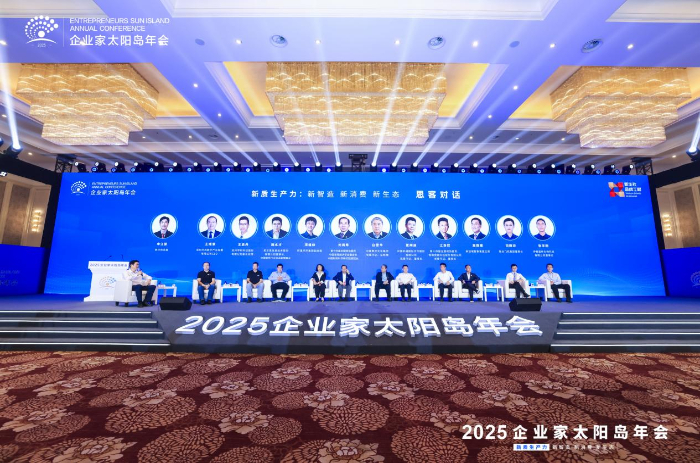
Group 1 - The 2025 Entrepreneurs' Sun Island Annual Conference was held in Harbin, focusing on "New Quality Productivity: New Intelligent Manufacturing, New Consumption, New Ecology" [1][2] - The conference emphasized the importance of developing new quality productivity as a strategic choice for gaining competitive advantages in the context of a global technological revolution [2][3] Group 2 - The concept of "localized development" was discussed, highlighting the need for local governments to reform systems based on regional characteristics to create a conducive business environment [3][4] - The development of low-altitude economy in Heilongjiang was presented as an example of localized development, leveraging the region's industrial base and application scenarios [4] Group 3 - The transition from "manufacturing" to "intelligent manufacturing" is driven by technological innovation, particularly in artificial intelligence and embodied intelligent robotics [5][6] - The integration of data and physical processes is essential for upgrading the manufacturing sector, with a focus on technology fusion and institutional innovation [6] Group 4 - New consumption patterns are reshaping the market, with a significant rise in service-oriented consumption driven by technology [7][8] - The cultural and tourism sectors are experiencing growth through the integration of technology and cultural values, promoting Chinese culture globally [7] Group 5 - The development of new quality productivity requires a collaborative ecosystem for efficient resource allocation, with stable financial support being crucial for high-risk, long-cycle investments [10] - International perspectives on China's new quality productivity highlight the shift of Chinese enterprises from "followers" to "rule definers" in the global market [10]

嘉桦生物:以创新与标准推动东北林下经济特色发展
Xin Hua Wang· 2025-08-04 03:14
Group 1 - The core viewpoint emphasizes the need for ecological protection as the foundation for developing the under-forest economy in Northeast China, focusing on long-term commitment and technological advancement to drive high-quality industrial development [1] - Zhang Xuegang, Chairman of Yichun Jiahua Biological, highlighted the unique advantages of Northeast China's ecological resources, particularly forest resources, for the development of the under-forest economy [1] - The company has invested millions since its establishment in 2015 to overcome two major industrial challenges related to the sustainable collection and preservation of birch sap, achieving a scientific and sustainable approach without preservatives [1] Group 2 - The company has taken the lead in establishing collection and quality standards for birch sap, contributing to the creation of a market for natural active birch sap beverages, which have gained popularity among consumers [1] - Zhang Xuegang shared four key insights on developing the under-forest economy: prioritizing ecological protection, focusing on new industries with long-term commitment, advancing the industry through technology, and establishing a comprehensive standard system for regulated development [1]
东方黄花梨林下经济面积突破万亩
Hai Nan Ri Bao· 2025-07-30 01:26
Core Viewpoint - The article highlights the development of the under-forest economy in Dongfang City, Hainan, showcasing a multi-dimensional growth model that integrates collection, processing, and composite management under the forest [1] Group 1: Economic Development - The under-forest economy in Dongfang City covers an area of 11,569.7 acres, implementing a "collection and processing + composite management" model [1] - The company, Dongfang Yilin Industrial Co., Ltd., emphasizes an ecological closed-loop system involving "breeding + organic fertilizer + tree growth" as part of their under-forest economic strategy [1] Group 2: Agricultural Practices - The integration of traditional forestry with medicinal plants such as Yizhi and Dendrobium under the "Huanghuali + South Medicine" model not only enhances the landscape but also serves as a source of income [1] - Currently, the under-forest economy has been implemented across 50,600 acres, encompassing four main types: under-forest planting, breeding, collection and processing, and forest landscape utilization [1] Group 3: Policy and Infrastructure - The Dongfang Rural Property Rights Trading Center and the Forestry Service Center have established a one-stop service model for "transfer + certification + finance" [1] - The Dongfang City Natural Resources and Planning Bureau has pioneered a "one tree, one certificate, one code" trading model, issuing "identity certificates" for each Huanghuali tree to address industry challenges related to rights confirmation and circulation [1]
红旗渠精神发祥地如何从贫困山区变成幸福家园?
Zhong Guo Huan Jing Bao· 2025-07-24 00:25
Core Viewpoint - Linzhou City has transformed from a poverty-stricken mountainous area to a tourism destination by prioritizing ecological development and implementing the concept of "lucid waters and lush mountains are invaluable assets" [1][8]. Environmental Governance - Linzhou has initiated systematic restoration and enhancement of its natural environment, achieving over 95% effective rural waste management through a market-oriented cleaning model combined with community participation [2]. - The city has engaged 1.56 million people in a "Clean Home" campaign, clearing 865,000 tons of waste and planting 480,000 trees, while also completing toilet renovations for 92% of rural households [2]. - The "All-region Greening" plan has increased forest coverage to 47%, with 1.71 million acres of forest land, including 300,000 acres of economic forest [2]. Resource Recycling - Linzhou has creatively repurposed traditional stone structures from demolished buildings into park landscapes, preserving cultural memory while reducing construction costs [3]. - The city has transformed 1,100 hectares of abandoned homesteads into gardens and orchards [3]. Ecological Industry Development - Linzhou has strategically developed unique ecological industries, facilitating the conversion of "green mountains and clear waters" into economic benefits [4]. - The chrysanthemum industry has been established in Tea Shop Town, generating an annual output of approximately 10 million kilograms and contributing over 35 million yuan to local farmers [4]. - The under-forest economy has been developed by utilizing forest resources for medicinal herbs, generating over 1 million yuan in annual income from 300 acres of medicinal plants [4]. Slope Economy - Linzhou has introduced favorable policies for slope land development, leading to the transformation of 1,500 acres of wasteland into terraced fields for walnut and apple cultivation, providing over 80 jobs [5]. Cultural and Tourism Integration - Linzhou has built a comprehensive tourism system leveraging the Red Flag Canal spirit and the natural resources of the Taihang Mountains, establishing a 5A-level tourist area [6][7]. - The city has developed over 470 boutique homestays, transforming traditional villages into popular tourist destinations [8]. - The integration of tourism and industry aims to achieve a modern industrial system, focusing on high-end, intelligent, and green development [8].
福建省首家林业产业研究院在侨乡永春成立
Zhong Guo Xin Wen Wang· 2025-07-17 16:22
Core Viewpoint - The establishment of the Yongchun Forestry Industry Research Institute marks a significant milestone in the development of the forestry industry in Yongchun County, serving as a collaborative innovation platform that integrates government, enterprises, universities, research institutions, and market users to promote sustainable development in the region [1][2] Group 1: Yongchun Forestry Industry Development - Yongchun County has developed a robust forestry industry characterized by three main pillars: bamboo industry, fragrance industry, and under-forest economy [1] - The bamboo forest area covers 18,000 hectares, with an annual bamboo production of 500,000 tons [1] - The fragrance industry has a total industrial chain output value exceeding 13.5 billion yuan, providing employment for over 30,000 people [1] - The under-forest economy spans 100,000 acres, generating an annual output value of over 500 million yuan [1] Group 2: Innovation and Research - The newly established Youth Doctor Workstation aims to implement a "three transformation model" focusing on practical teaching and research in the field, moving from traditional laboratory settings to hands-on agricultural education [2] - The workshop emphasized discussions on technological innovation driving the transformation and upgrading of Yongchun's forestry industry, enhancing the value chain, and achieving green sustainable development [2]
山西长治因地制宜做优林下富民产业
Zhong Guo Chan Ye Jing Ji Xin Xi Wang· 2025-07-09 00:17
Core Insights - The development of the under-forest economy in Changzhi City, particularly in Tunliu District, is transforming ecological advantages into economic benefits through the cultivation of forsythia fruit and other forest products [1][2][3] Group 1: Economic Development - Tunliu District has developed a large-scale forsythia cultivation industry, utilizing its 520,000 acres of forest land to enhance the under-forest economy [1] - Changzhi City is promoting a "forest + " development model, focusing on four major systems: under-forest planting, breeding, collection and processing, and forest tourism [1][2] - The city has established six major models including forest medicine, forest grass, forest fungi, forest poultry, forest livestock, and forest honey, aiming to convert ecological advantages into development advantages [1][2] Group 2: Mechanisms and Strategies - The city is revitalizing the under-forest economy through collective management, large-scale operations, cooperatives, and enterprise-led initiatives, enriching product supply and extending the industrial chain [2] - A targeted approach is being adopted with a focus on regional characteristics, implementing specific development plans for different counties [2] - Demonstration bases for under-forest economic development are being established to promote the overall growth of the sector [2] Group 3: Current Status and Future Plans - The available planting area for the under-forest economy in Changzhi City is approximately 297,500 acres, with 224,000 acres for breeding [3] - The city plans to develop an additional 45,000 acres of medicinal herbs and 2,000 head of livestock this year, with an expected annual output value of 339 million yuan from forest product processing [3] - Changzhi City is moving towards industrialization, scale, and integration of the under-forest economy, contributing to rural revitalization [3]
金融助力田园生金 铜鼓县探索"绿水青山"转化新路径
Ren Min Wang· 2025-07-07 07:24
Group 1 - Jiangxi Tonggu County has achieved an 88.04% forest coverage rate, leveraging this ecological advantage to innovate a forest economy system centered on forest fungi, forest medicine, and forest tourism [1] - The county has extended its development to include leisure agriculture and deep processing, creating a diversified economic model [1] - Financial support is playing a crucial role in promoting rural revitalization and enhancing industrial growth in the region [1] Group 2 - Jiangxi Chengyuan Leisure Agriculture Co., Ltd. has invested 110 million yuan in a 500-acre rural complex since its establishment in 2019, significantly increasing visitor numbers during holidays due to timely financial support from Agricultural Bank [2] - The collective economy of Yongning Town's Xingyuan Village has surged from 50,000 yuan in 2020 to over 600,000 yuan, creating 41 job opportunities for local villagers [2] - The red pine mushroom industry in Tonggu County is experiencing significant upgrades, with a provincial agricultural leading enterprise receiving 2 million yuan in loans to enhance processing capabilities [2] Group 3 - Agricultural Bank's Tonggu County branch has issued over 150 million yuan in loans to farmers and provided over 70 million yuan in credit to 23 agricultural enterprises from 2024 to May 2025 [3] - This targeted financial support addresses funding bottlenecks for operational entities and facilitates the transformation of ecological value into economic benefits [3] - The county is pursuing a unique development path characterized by "ecological industrialization and industrial ecology," turning vast farmlands into fertile grounds for wealth generation [3]
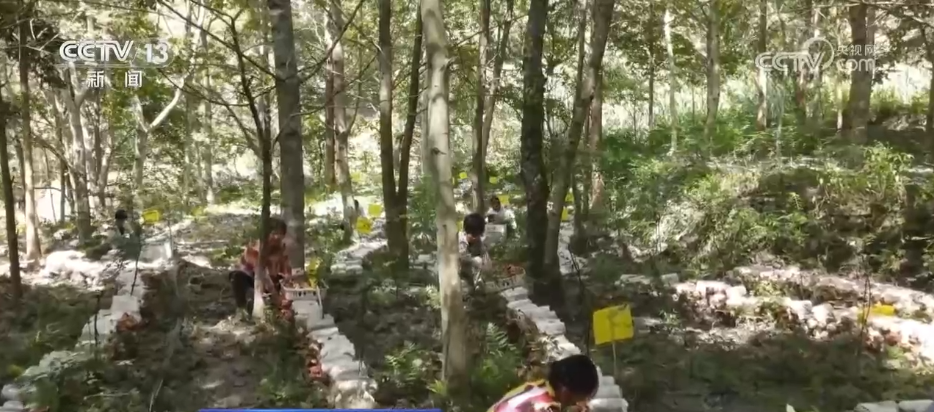
林下经济“点绿成金” “林+”模式为乡村振兴增添绿色动能
Yang Shi Wang· 2025-06-30 04:23
Core Insights - Forest food is the third largest agricultural product in China, following grains and vegetables, with many regions currently harvesting forest foods during the summer [1] - The development of the forest economy is diversifying from single crop cultivation to multi-faceted production, enhancing the added value of forest products [7][8] Group 1: Forest Food Production - In Jiangxi Province, a cooperative has established a 1,000-acre edible mushroom cultivation base, resulting in a 10% increase in mushroom yield due to a new irrigation system supported by the government [1] - In Yunnan's Mengla Town, 20 acres of bamboo fungus are being cultivated under rubber trees, showcasing the potential of forest under-economy [3] - Nationally, over 2 billion tons of various forest foods are produced annually, with more than 2,400 out of 2,800 counties engaged in economic forest cultivation [5] Group 2: Value Addition and Processing - The local mango industry in Lijiang, Yunnan, has developed deep processing capabilities, producing mango juice, dried mango, and frozen fruit blocks, with a sales network extending nationwide and internationally [10] - The processing of fresh fruit into high-value medicinal materials has increased the value of products like bitter orange by over five times through 14 processing steps [12] Group 3: Ecological and Tourism Development - The forest landscape is being utilized to create economic value, with various regions expanding their ecological product value transformation channels [15] - In Zhejiang's Tiantai County, a forest wellness industry has been developed, attracting tourists for health and recreation, with multiple forest wellness bases established [17] - In Heilongjiang's Yichun, the region is leveraging its ecological resources to develop a forest wellness tourism cluster, which has spurred growth in related sectors like homestays and cultural products [19] Group 4: Economic Impact - Since 2018, the National Forestry and Grassland Administration has launched several national forest tourism routes, contributing to an annual output value of approximately 1 trillion yuan from the forest economy, benefiting millions of forest farmers [21]