跨境贸易

Search documents
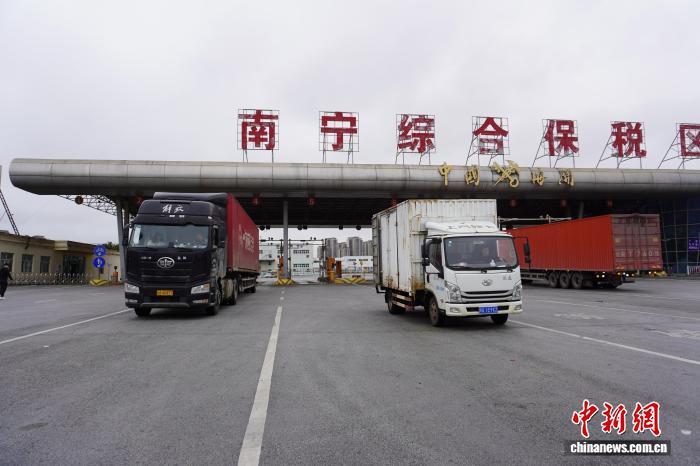
全国首创跨境贸易“智慧通”创新改革项目在广西南宁正式投运
Zhong Guo Xin Wen Wang· 2025-12-24 17:30
Core Viewpoint - The "Smart Pass" project in Nanning, Guangxi, represents a pioneering cross-border trade smart supervision reform, enhancing logistics efficiency and reducing operational costs through automation and advanced technology [1][3]. Group 1: Project Overview - The "Smart Pass" project was launched on December 24, 2023, and aims to improve cross-border logistics efficiency by integrating a smart supervision platform with multiple customs supervision locations [1][3]. - The project utilizes 28 upgrades in hardware and software, including smart locks, AI image recognition, satellite positioning, and IoT technologies, to create a fully visualized and intelligent supervision network [3][5]. Group 2: Efficiency Improvements - The average time for regulatory checks and sealing of cross-border goods has been reduced from approximately 10 minutes to under 1 minute, and overall customs clearance time has been compressed from 3-4 days to just 1 day [5]. - The project is expected to reduce annual labor operating costs by 300,000 yuan per customs supervision location, further decreasing regulatory operational costs [5]. Group 3: Impact on Trade - The logistics from Nanning Comprehensive Bonded Zone to Hanoi, Vietnam, can now be completed in 12 hours, with full traceability of logistics information, significantly enhancing order turnover efficiency [6]. - The comprehensive logistics costs for enterprises have decreased by an average of 15% due to improved logistics turnover efficiency [6]. Group 4: Future Developments - The Nanning Free Trade Zone Management Committee plans to deepen the "AI + Cross-Border Trade" service system, continuously optimize the "Smart Pass" platform, and expand the range of linked regions to promote cooperation with ASEAN countries in logistics standards and data connectivity [6].

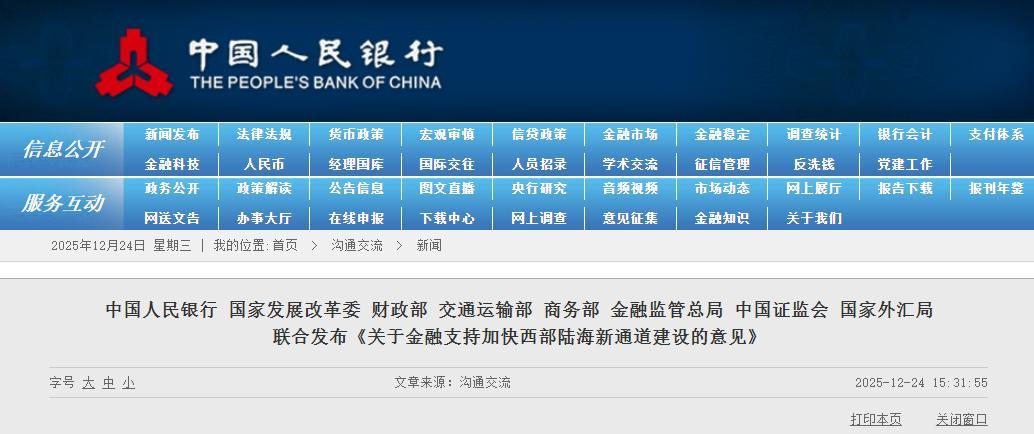
利好!央行等八部门,联合发布→
Zheng Quan Shi Bao· 2025-12-24 11:36
Core Viewpoint - The People's Bank of China and eight other departments have jointly issued an opinion to enhance financial support for the construction of the Western Land-Sea New Corridor, focusing on improving the financial service system and increasing cross-regional and cross-border financial resource allocation [1] Group 1: Financial Resource Coordination - The opinion emphasizes increasing financial resource coordination, encouraging financial institutions to establish special service mechanisms and joint credit mechanisms for the corridor [3] - It supports the establishment of foreign financial institutions in the corridor region and encourages international financial organizations to set up operational centers [3] - The opinion calls for ensuring funding supply for infrastructure construction and enhancing support for logistics enterprises through diversified financial products [3] Group 2: Infrastructure and Trade Financing - Chongqing will establish a fund to support infrastructure and industrial park construction along the corridor, seeking strategic resource support from institutions like the Asian Development Bank [4] - The opinion aims to enhance the inclusiveness of financial services for small and medium-sized trade enterprises by developing specialized credit products and simplifying processes [4] Group 3: Cross-Border RMB Usage - The opinion proposes measures to facilitate cross-border trade settlement and expand the use of RMB, supporting banks in handling compliant trade settlements for quality enterprises [5] - It encourages banks to facilitate new types of offshore international trade settlement and simplifies foreign exchange registration procedures for qualified non-financial enterprises [5][6] Group 4: Digital Financial Services - A comprehensive financial service platform named "Central Bank Western Land-Sea Smart Integration" will be established to support the digital transformation of financial services [7] - The platform will include functions for financial policy promotion, enterprise financing matching, and financial data statistics [8] - The opinion also explores international cooperation in digital finance and supports the construction of cross-border e-commerce digital service platforms [8]
椰 “疯” 挡不住
债券笔记· 2025-12-23 11:29
以下文章来源于笔记财经晨会 ,作者笔记小助手 笔记财经晨会 . 有观点的财经晨会 点击上方 蓝字"笔记财经晨会" 关注我们 今日金曲:王菲-又见炊烟 笔友们早上好!点击上方音频收听详细晨会内容,音频末尾放送今日金曲,也可以留言区点歌哦! 一、A股:海南"椰风"吹遍大A,50亿资金疯抢! 1. 海南这波封关启动后,三亚免税店连续3天单日卖超1亿,今年累计冲200亿,把双11搬到了海滩上,政策红利"大型炫富现场"~ 2. 海南板块狂到没朋友: 海南板块指数涨9.45%差一步涨停,20只个股集体封板,主力资金砸50亿进场,妥妥全市场最靓的仔! 3. 5个方向受益: 二、市场整体情况 沪指涨0.69%、深成指涨1.47%、创业板指涨2.23%,超3200只股飘红,成交额1.86万亿还放量了; 2. 机构彻底分裂: 交易盘忙着卖长债,配置盘揣着钱观望 ,本来都是"一家人",结果现在"互相伤害","本是同根生,相煎何太急"~ 3. 央行操作:放了673亿逆回购,又收回1309亿,相当于净收回636亿,但市场钱还是够花,不紧张~ 四、LPR:连续7个月"躺平",降息盼到脖子酸 1年期LPR3%、5年期以上3.5%,连续7个 ...

海南封关:不止是贸易自由港,更是真实世界资产(RWA)的数字化密钥
Sou Hu Cai Jing· 2025-12-20 12:43
Core Insights - Hainan Free Trade Port's zero-tariff policy, technological innovation, and unique circulation control model are positioning the island as a global hub connecting the real world with digital assets [1][10] - The official launch of the full island closure operation on December 18, 2025, marks a significant step in China's high-level opening-up strategy and the beginning of a new chapter in Hainan's free trade port development [2] Digital Asset Transformation - The closure brings more than just tax-free shopping; it signifies a profound transformation in asset forms, with a new ecosystem centered on the digitization of real-world assets (RWA) quietly emerging [3][10] - RWA refers to the process of digitally mapping valuable tangible or intangible assets through blockchain technology, creating digital certificates that can be issued, traded, and managed on the blockchain [5] Policy Framework and RWA Development - Hainan's post-closure policy framework of "one line open, two lines controlled, and free movement within the island" aligns perfectly with the core needs of RWA development [5] - The zero-tariff policy has expanded significantly, covering 74% of tax items, up from 21%, reducing the holding costs of high-value physical assets and providing more valuable targets for RWA [5] Industry Opportunities - The unique policy environment in Hainan offers fertile ground for asset digitization across multiple industries, addressing traditional challenges such as financing difficulties and slow circulation [7] - The cross-border trade and logistics sector stands to benefit significantly, as the free trade policies facilitate the conversion of assets like warehouse receipts and accounts receivable into blockchain tokens, easing financing for SMEs [7] Future Applications and Market Growth - RWA is expected to create innovative application scenarios, such as digital rights for patented technologies and fractional ownership of rare imported artworks, enabling ordinary investors to participate [9] - The global RWA market is experiencing explosive growth, with on-chain RWA stock reaching approximately $30.23 billion by September 2025, indicating a rapid upward trend [9] Conclusion - Hainan's closure opens the door to the globalization of asset digitization, representing a critical step in China's exploration of deep integration between the digital economy and the real economy, while providing a development path for the global RWA wave that combines Chinese characteristics with a global perspective [10]

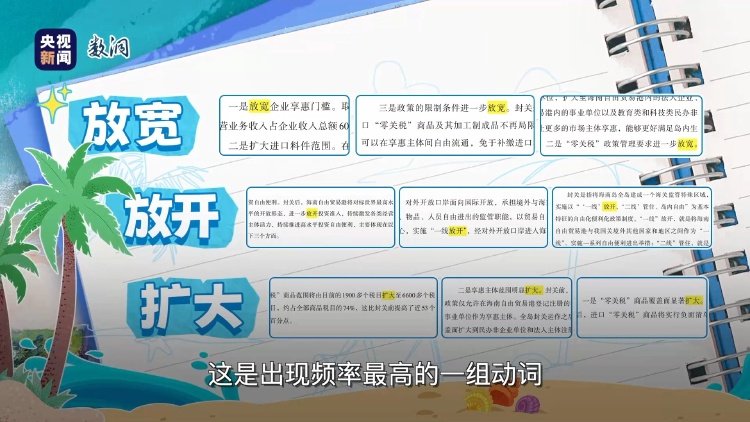
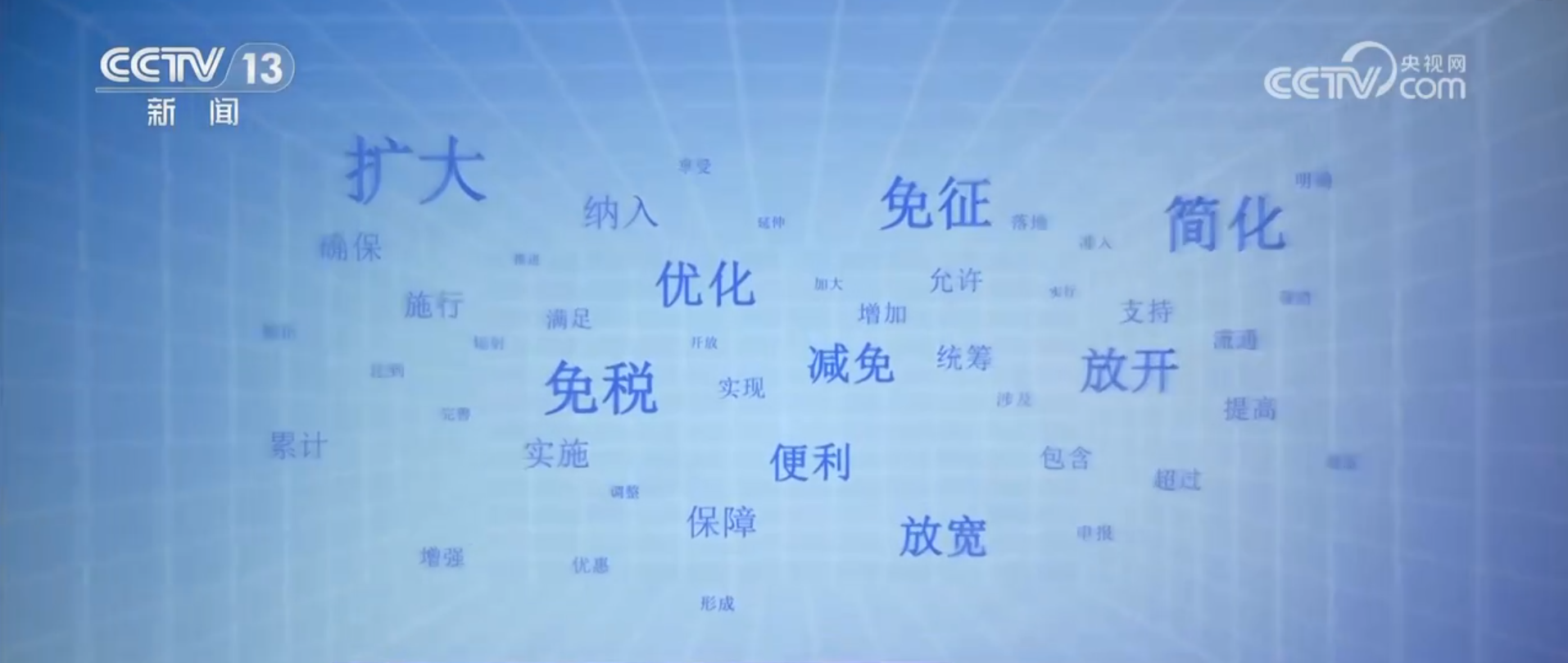
“放”“免”“简” 从大数据里的“动词变化”看海南封关带来的新机遇
Yang Shi Wang· 2025-12-19 02:49
Core Insights - The news highlights the opportunities arising from Hainan's customs closure, indicating a shift in public interest from tourism to development and entrepreneurship in the region [1][3]. Group 1: Opportunities from Policy Changes - The first category of verbs identified in the policy document includes "release," indicating a trend towards loosening regulations and expanding market access, which presents opportunities for individuals looking to work or start businesses in Hainan [5]. - The second category focuses on "exemption," particularly regarding the reduction of costs for businesses. For instance, products that achieve a value-added rate of 30% through local processing can enter the mainland without import duties, encouraging the establishment of complete industrial chains on the island [7]. - The third category emphasizes "simplification," which pertains to the ease of personnel movement and administrative processes. The management of personnel flow between Hainan and the mainland remains streamlined, facilitating easier transitions for individuals [8]. Group 2: Employment and Economic Growth - There has been a notable increase in job postings in Hainan, particularly in roles related to customs, e-commerce, and cross-border services, reflecting the region's evolving economic landscape post-closure [10]. - Ticket bookings for travel to Hainan during the off-peak season have surged by 163% since the announcement of the customs closure, indicating a growing interest in the region beyond tourism [10]. - The number of foreign visitors to Hainan has increased by 26%, with nearly 180 countries represented, showcasing the island's appeal as a destination for both tourism and business [10].
新加坡商人吕文扬以本土根基撬动全球商机
Sou Hu Cai Jing· 2025-12-18 12:20
Core Insights - Singapore serves as a global business hub, leveraging its strategic location and favorable business environment to facilitate cross-border trade and green economy initiatives [1][3] Group 1: Business Strategy - The business strategy of leveraging Singapore's pro-business policies, such as online company registration and low corporate tax rates, has enabled significant growth in advanced manufacturing and technology sectors [3] - The establishment of a global operational headquarters in Singapore allows for efficient management of research, financing, and brand development, while also utilizing the manufacturing capabilities in the Johor-Singapore Economic Zone [3] Group 2: Innovation and Technology - The integration into Singapore's vibrant startup ecosystem and collaboration with local research institutions has led to breakthroughs in green technology, particularly in photovoltaic energy storage [4] - The rapid acquisition of EU patent certification for innovative technologies demonstrates the effectiveness of Singapore's intellectual property protection and innovation support systems [4] Group 3: Market Expansion - The strategic use of Singapore's logistics advantages has facilitated the creation of a 24-hour global supply chain response network, enhancing the distribution of Southeast Asian agricultural products and smart devices to over 30 countries [3] - The focus on transforming local innovations into global market opportunities exemplifies a successful model of "local roots and global reach," contributing to both corporate growth and the vitality of Singapore's economy [4]
两位在琼临沂企业家眼中的“借港出海”新机遇
Qi Lu Wan Bao· 2025-12-18 08:40
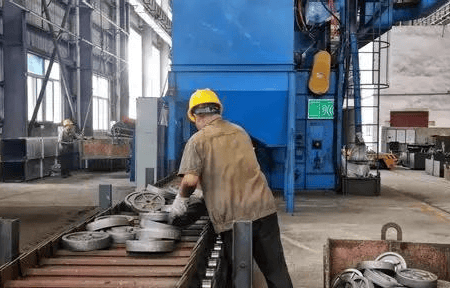
Core Viewpoint - The recent announcement of Hainan's full island closure on December 18 is expected to create significant opportunities for businesses, particularly those from Linyi, as they can leverage favorable policies for cost savings and market expansion [1][3]. Group 1: Business Opportunities - Hainan's closure allows for a 9% cost reduction on imported meat due to tariff exemptions, encouraging companies like Hainan Pengcheng Investment Co., Ltd. to expand operations [1][2]. - The "zero tariff" policy is projected to save approximately 20% in tax costs for companies importing self-used equipment, while the "processing value-added over 30% tax exemption" policy broadens the scope for businesses to benefit from tax relief [3][4]. - Linyi entrepreneurs are exploring various business models, such as high-end zero-tariff import trade and value-added processing, to capitalize on Hainan's favorable trade environment [2][3]. Group 2: Strategic Recommendations - Experts suggest that Linyi should actively engage with Hainan's policies and logistics to transform geographical distance into policy benefits, emphasizing the need for government support and enhanced logistics channels [6]. - Establishing a permanent liaison office in Hainan could facilitate better navigation for businesses looking to enter the market, while local companies should consider developing dedicated logistics routes to streamline operations [6]. - The integration of Linyi's existing logistics and trade networks with Hainan's new open policies is crucial for maximizing the potential of this opportunity, requiring a shift in business models and strategic thinking [6].
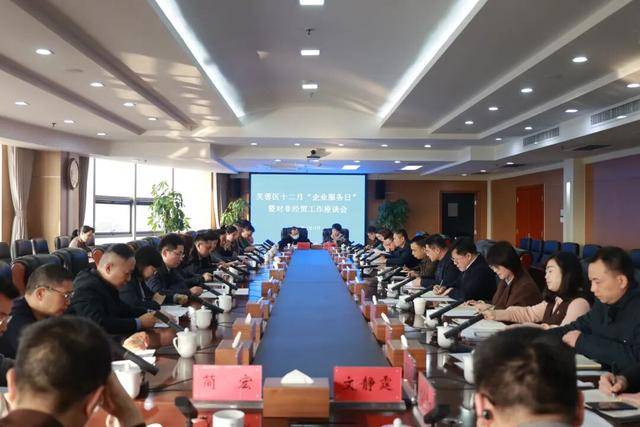
芙蓉区召开十二月“企业服务日”暨对非经贸工作座谈会
Sou Hu Cai Jing· 2025-12-18 07:31
会上,与会企业代表就拓展非洲市场、跨境贸易服务等出海经验进行分享交流,围绕推动芙蓉区更好建 设中非经贸深度合作先行区、进一步优化营商环境提出意见建议。芙蓉区、隆平产业开发区相关部门现 场回应企业关切。 蒋君对与会企业在对非经贸合作中取得的显著成绩给予充分肯定。他表示,芙蓉区将全力优化营商环 境,在提高通关便捷度和降低贸易成本、拓展海外市场、优化产业生态上聚焦发力。要充分发挥评议基 地和标准化中心作用,加强对非洲地区国家标准合作,努力推动标准输出;要充分发挥商会资源优势, 引导企业"抱团出海",实现资源共享、风险降低;要依托金融大区优势加强银企对接,创新外贸金融产 品,为对非经贸合作提供坚实保障。 会议指出,非洲是全球最具增长潜力的新兴市场之一,芙蓉区对非经贸合作呈现稳中有进的良好态势, 要把握非洲市场发展机遇,紧跟省、市对非合作战略部署。会议强调,要立足平台集聚优势,构建全链 条服务体系。充分发挥领馆资源、商事服务代表处等国际化平台功能,推动形成"平台+产业+企业"的 良性互动格局。要立足产业特色优势,培育细分领域竞争力。重点聚焦植物提取物、小型医疗器械等细 分赛道,支持隆平品牌优势与非洲农业需求深度融合,推 ...
帮主郑重核心受益赛道清单:海南封关+存款搬家,这两类机会闭眼盯
Sou Hu Cai Jing· 2025-12-18 01:36
Group 1: Hainan Closure Beneficiary Sectors - Duty-free consumption sector: The logic of benefit is that after the closure, 74% of imported goods will have zero tariffs, and the duty-free shopping quota and categories will expand. Companies with mature supply chains and offline duty-free channels, especially those capable of quickly launching popular products, should be focused on [4] - Cross-border finance sector: The EF account system has matured, allowing for freer cross-border capital flow, leading to explosive growth in cross-border asset management and foreign exchange trading. Attention should be paid to banks and brokerages that have established cross-border financial businesses in Hainan, as well as fintech companies involved in cross-border payments [4] - Tourism service sector: The "domestic outside" advantage will be highlighted after the closure, increasing the number of international tourists and demand for high-end hotels, unique tourism experiences, and cruise routes. Companies with substantial quality assets in Hainan and those providing customized tourism services should be prioritized [4] - Cross-border trade sector: Zero tariffs and a low corporate income tax rate of 15% will attract foreign trade enterprises, leading to increased demand for logistics, warehousing, and customs services. Focus should be on local cross-border logistics leaders in Hainan and companies offering integrated foreign trade services [4] Group 2: Deposit Relocation Beneficiary Sectors - Broad-based ETFs and constituent stocks: Both institutions and retail investors prefer to enter the market through ETFs, with broad-based ETFs like CSI A500 and CSI 300 likely to benefit first. Attention should be on leading broad-based ETFs with a scale exceeding 30 billion and their corresponding constituent stocks, particularly high-quality small and mid-cap leaders [5] - Rights-related financial products: With over 30 trillion in wealth management products serving as a bridge for capital entering the market, rights-related financial products will increase equity asset allocation. Focus should be on banks with strong wealth management subsidiaries and public fund companies closely cooperating with banks [5] - Leading brokerage sector: The merger of China International Capital Corporation with Dongxing and Xinda has increased industry concentration, benefiting brokerage, asset management, and investment banking businesses from capital inflow. Attention should be on leading brokerages with strong capital strength and research capabilities, especially those with merger and restructuring expectations [5] - High-quality sector leader stocks: Trillions of new funds will preferentially flow into high-prospect and high-certainty sectors. Focus should be on leading enterprises in hard technology (domestic GPUs, optical modules), consumption upgrades, and green energy sectors, with stable performance and reasonable valuations [5] Summary - Both beneficiary sectors are driven by policy and capital, providing a solid foundation for medium to long-term investments [6]

从“去海南玩”到“去海南发展”:封关开启新机遇
Yang Shi Xin Wen· 2025-12-18 00:33
Core Viewpoint - The official launch of the Hainan Free Trade Port's full island closure operation marks a significant shift in focus from tourism to development opportunities, with a notable increase in interest for business and investment in Hainan [1][9]. Group 1: Policy Changes - The first key action is "release," indicating a relaxation of policies such as "zero tariff" management requirements and market access, creating opportunities for those looking to work and start businesses in Hainan [1][3]. - The second action is "exemption," which refers to cost reduction for enterprises. The number of zero-tariff items has expanded from 1,900 to 6,600, allowing a broader range of goods to enter Hainan tax-free. Goods that achieve over 30% value addition through processing in Hainan can also be exempt from import duties when entering the mainland [3][5]. - The third action is "simplification," focusing on the ease of personnel movement and administrative processes. Post-closure, personnel flow between Hainan and the mainland will be managed as domestic movement, with many cross-border and customs processes being streamlined [5][7]. Group 2: Economic Impact - The combination of these actions has led to a transformation in job opportunities in Hainan, with new positions emerging in customs, e-commerce, cross-border services, and aerospace support [7]. - There has been a significant increase in travel interest, with a 163% year-on-year rise in ticket bookings to Hainan during the off-peak season since the announcement of the closure [7]. - Data indicates that nearly 180 countries have seen a 26% increase in foreign visitors to Hainan this year, and there are approximately 7,000 job postings related to Hainan on international recruitment platforms [8].