石油

Search documents
西方石油公司紧盯委内瑞拉开发协议
Huan Qiu Shi Bao· 2026-03-12 22:59
Group 1 - Major Western oil companies, including Chevron and Shell, are accelerating efforts to reach extraction agreements in Venezuela's oil-rich regions amid global oil market focus due to Middle East tensions [1][2] - Chevron has reached a preliminary agreement with Venezuela's energy sector to expand the Petropiar joint venture, which covers a large block of proven oil resources that has not been developed for over twenty years [1][3] - Shell is negotiating with the Venezuelan government to develop oil fields in the eastern region, which contain valuable light and medium crude oil reserves, and is also exploring natural gas resources [2][3] Group 2 - The recent interest from Western energy companies in Venezuela is primarily driven by reforms to the country's core oil legislation, which have been accelerated since the U.S. military's control over Venezuelan leader Maduro in January [2][3] - Venezuela's legislative body passed comprehensive reforms to its main oil law, granting foreign companies greater autonomy in operations, exports, and sales of oil, with the possibility of reducing royalties and tax rates based on specific circumstances [3] - The U.S. government has taken control of Venezuela's oil exports, with a $2 billion oil supply agreement in place, although only $500 million has been paid so far [4]


The Strait of Hormuz Is an 'Acute Vulnerability' for Global Trade. Here's What You Need to Know.
Investopedia· 2026-03-12 21:40
Group 1 - The Strait of Hormuz is a critical chokepoint for global trade, with approximately 30% of the world's fertilizer passing through it, highlighting its acute vulnerability amid ongoing conflicts in the region [1] - Iran's Supreme Leader Mojtaba Khamenei has pledged to continue blocking the Strait of Hormuz, which could lead to significant supply-chain disruptions depending on the duration of the conflict [1] - The International Energy Agency (IEA) plans to release 400 million barrels of oil from reserves to mitigate supply shortages, but experts indicate that there is insufficient spare capacity to fully address potential shortfalls [1] Group 2 - Oil prices have surged, with Brent crude futures rising about 8% to around $100 per barrel, indicating a supply shock that is challenging to resolve [1] - The effective closure of the Strait of Hormuz is expected to impact consumer spending, particularly as it coincides with the spring planting season, potentially leading to increased food prices due to higher fertilizer costs [1] - U.S. Energy Secretary Chris Wright stated that operations in Iran will take weeks to stabilize, and the U.S. is currently not prepared to escort tankers through the strait, adding to market uncertainty [1]


Venezuela Needs Its Oil Expats to Come Home. Many Won't Go
Youtube· 2026-03-12 19:38
Group 1 - The political situation in Venezuela significantly impacts the oil industry, causing professionals to hesitate in returning to their jobs [1][2] - Experienced professionals like Romero Nasser and Johnny Alvarez are crucial for the recovery of Venezuela's oil industry due to their understanding of the local reservoirs [2] - Companies face challenges in rebuilding the oil industry, as recruiting foreign engineers is time-consuming and costly, while relying on Latin American workers may lack the necessary institutional knowledge [3]

Oil surges as Iran steps up attacks on ships, ports
Youtube· 2026-03-12 19:30
Group 1 - The price of oil has risen to $94 per barrel despite the planned release of 400 million barrels onto the market [1] - Iran and its proxy forces continue to target ships in the Persian Gulf, indicating ongoing regional tensions [1][2] - The U.S. Navy's protection of ships in the region is currently not operational, with military assets focused on countering Iran's offensive capabilities [2][3] Group 2 - The impact of oil prices on the American economy has diminished over the decades, but it still significantly affects gasoline prices and input costs for various goods [3] - The shipping slowdown is affecting not only oil but also natural gas, fertilizers, and materials used in semiconductor manufacturing [4]
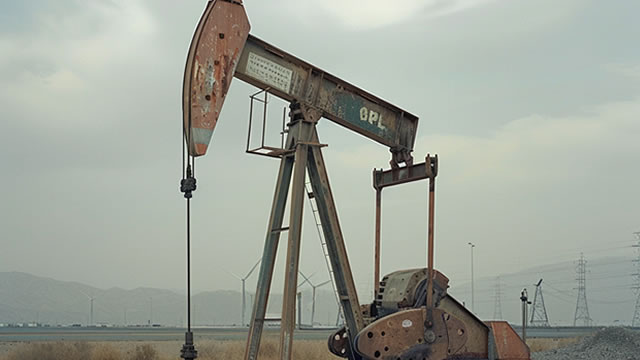
The Fed's Stagflation Problem Is Getting Harder to Ignore
FX Empire· 2026-03-12 18:45
Economic Environment - The Federal Reserve is facing a challenging situation where its dual mandate of controlling inflation and maintaining a healthy labor market is pulling policy in opposite directions [2][4] - Recent labor market figures indicate a cooling momentum, with February's Non-Farm Payrolls report showing a decline of 92,000 jobs and an increase in the unemployment rate to 4.4% [3][4] - Inflation remains elevated, with the Fed's preferred measure, the Personal Consumption Expenditures index, at 2.9% for the headline figure and 3.0% for core PCE, both above the central bank's 2% target [3][4] Stagflation Concerns - The combination of slowing growth and persistent inflation has raised concerns about a stagflationary environment, complicating the policy response for the Federal Reserve [4] - Actions aimed at addressing inflation could further slow economic activity, while policies supporting growth risk keeping price pressures elevated [4] Energy Prices Impact - A recent surge in energy prices, particularly oil, has the potential to exacerbate inflation, affecting transportation, manufacturing, and consumer spending [5] - Elevated energy prices could create ripple effects across the economy, complicating the Federal Reserve's policy decisions [5] Monetary Policy Outlook - Federal Reserve officials are responding cautiously, with some indicating that holding interest rates steady while gathering more data may be the most appropriate course of action [6] - Market expectations reflect uncertainty, with futures pricing suggesting that rate cuts remain possible later in the year, dependent on incoming inflation and growth data [6] Future Considerations - The path for monetary policy may largely hinge on energy markets; if oil prices remain high, inflation risks could delay easing [7] - Conversely, if energy pressures ease while the labor market continues to soften, the case for rate cuts would strengthen [7]

委内瑞拉代总统任命新石油部长
中国能源报· 2026-03-12 15:12
End 欢迎分享给你的朋友! 出品 | 中国能源报(c ne n e rg y) 编辑丨赵方婷 ▲ 保拉·赫纳奥(资料图) 当地时间3月11日,委内瑞拉代总统德尔西·罗德里格斯宣布,任命保拉·赫纳奥为新任石油部长。 保拉·赫纳奥原任委内瑞拉石油部副部长,协助制定行业政策,并监督国家石油公司的日常运营和技术事务。赫纳奥 作为石油工程师,在委内瑞拉石油公司从业超过20年。 罗德里格斯表示,赫纳奥将负责推动能源行业的"复苏和发展",恢复石油生产、促进国家经济发展。 来源:央视新闻客户端 委内瑞拉代总统宣布,任命保拉·赫纳奥为新任石油部长 。 ...

油价迷雾重重:国际能源署成员国抛储之后
第一财经· 2026-03-12 15:11
Core Viewpoint - The article discusses the significant volatility in international oil prices due to changing assessments of oil supply prospects, highlighting the critical role of the stability of the Strait of Hormuz in determining oil price trends and the economic challenges posed by high oil prices to central banks across various economies [2][3]. Group 1: Oil Supply and Market Reactions - The International Energy Agency (IEA) member countries decided to release 400 million barrels of emergency oil reserves, but the impact of this release is limited due to logistical constraints [4]. - The maximum feasible release rate during the coordinated release after the Russia-Ukraine conflict was about 1.2 million barrels per day, which is insufficient to cover the current supply disruption in the Middle East estimated at 16 million barrels per day [4]. - Concerns about the stability of the Strait of Hormuz have led to significant market reactions, with oil prices experiencing sharp fluctuations [8][10]. Group 2: Economic Impact of Rising Oil Prices - The rise in oil prices has already led to increased costs for fossil fuel imports in Europe, amounting to an additional €3 billion (approximately 238 million RMB) over ten days due to military actions by the US and Israel against Iran [5]. - The average gasoline price in the US has surged to over $3.50 per gallon, marking a 20% increase in just 11 days, comparable to price increases seen during the onset of the Russia-Ukraine conflict [5]. - Analysts predict that if the Strait of Hormuz remains closed for 2-4 weeks, oil prices could spike to between $150 and $200, potentially triggering a global energy crisis and leading major economies into stagflation or recession [13]. Group 3: Strategic Responses and Future Outlook - The US is considering various measures to mitigate rising oil prices, including utilizing the Strategic Petroleum Reserve and potentially suspending federal gasoline taxes [6]. - The stability of oil exports through the Strait of Hormuz is deemed crucial for stabilizing oil prices, with experts warning that prolonged disruptions could lead to sustained high prices [11]. - Historical context suggests that significant oil price increases can have severe economic repercussions, as seen during the oil crisis of the late 1970s, which led to a major economic downturn in the US [14][15].
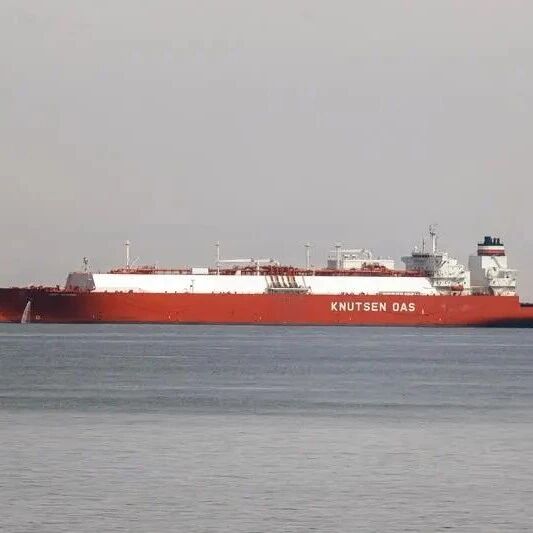
石油股走高 Battalion Oil(BATL.US)飙涨超20%
Zhi Tong Cai Jing· 2026-03-12 14:09
Core Viewpoint - Oil stocks surged significantly, driven by a substantial increase in international oil prices, with concerns over supply disruptions in the Strait of Hormuz due to geopolitical tensions [1] Group 1: Stock Performance - Battalion Oil (BATL.US) soared over 20% [1] - U.S. Energy (USEG.US) rose over 6% [1] - Murphy Oil (MUR.US) increased over 4% [1] - Occidental Petroleum (OXY.US) gained over 3% [1] - ConocoPhillips (COP.US) climbed nearly 2% [1] Group 2: Oil Price Movement - WTI crude oil prices surged over 8%, reaching $94.66 [1] - Brent crude oil prices increased over 7%, reaching $95.78 [1] Group 3: Geopolitical Context - Iranian Supreme Leader Mojtaba Khamenei stated there would be no compromise, insisting the Strait of Hormuz will remain closed [1] - Analyst Dara Doyle noted that Khamenei's remarks were interpreted as very hardline, indicating no signs of Iran preparing to make concessions to the U.S. and Israel [1] - Khamenei's first public statement after taking office emphasized the continuation of the closure of the Strait of Hormuz and threatened to open new fronts in the conflict [1]

美股异动 | 石油股走高 Battalion Oil(BATL.US)飙涨超20%
Zhi Tong Cai Jing· 2026-03-12 14:09
Core Viewpoint - Oil stocks surged significantly due to a sharp increase in international oil prices, driven by geopolitical tensions in the Middle East, particularly statements from Iran's new Supreme Leader [1] Group 1: Oil Stock Performance - Battalion Oil (BATL.US) soared over 20% [1] - US Energy (USEG.US) rose more than 6% [1] - Murphy Oil (MUR.US) increased over 4% [1] - Occidental Petroleum (OXY.US) gained over 3% [1] - ConocoPhillips (COP.US) climbed nearly 2% [1] Group 2: Oil Price Movement - WTI crude oil prices surged over 8%, reaching $94.66 [1] - Brent crude oil prices increased by more than 7%, hitting $95.78 [1] Group 3: Geopolitical Factors - Iran's Supreme Leader, Mojtaba Khamenei, stated that revenge will not be abandoned and the Strait of Hormuz will remain closed [1] - Analyst Dara Doyle noted that Khamenei's remarks were interpreted as very hardline, indicating no signs of Iran preparing to make concessions to the US and Israel [1] - Khamenei's first public statement after taking office emphasized the need to keep the Strait of Hormuz closed and threatened to open new fronts in the war, heightening concerns over potential disruptions in a critical oil supply route [1]




国际油价飙涨9%,黄金白银短线跳水
21世纪经济报道· 2026-03-12 13:53
Group 1 - The core viewpoint of the article highlights the impact of geopolitical tensions on oil prices, particularly following Iran's Supreme Leader's statement about keeping the Strait of Hormuz closed, which led to a significant increase in Brent crude oil prices by 9% to $100 per barrel and WTI crude oil by over 8% to $94.56 per barrel [1][4] - The International Energy Agency (IEA) has significantly revised down its oil supply growth forecast, projecting global oil demand growth to be 640,000 barrels per day by 2026, down from a previous estimate of 850,000 barrels per day, while global oil supply is expected to increase by 1.1 million barrels per day, down from 2.4 million barrels per day [4] - Analysts suggest that the future of oil prices will depend on geopolitical developments, particularly whether conflicts will cease and if oil-producing countries can restore production capacity, as well as the reopening of the Strait of Hormuz [5]